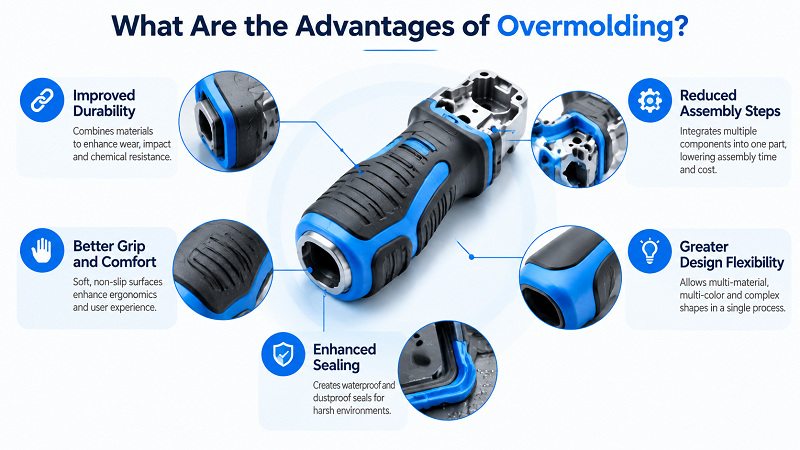
Overmolding is a common process in plastic part manufacturing. It combines different materials into one part. Each material keeps its own strengths. It also improves sealing, waterproofing, and product value. But in daily work, engineers often confuse overmolding with other processes. This is because they are not clear about its advantages. This article will explain the advantages of overmolding in full. It will help you avoid wrong turns in the future.

1. オーバーモールディングとは何ですか?
Overmolding is a multi-material injection molding process that wraps the base material with a second material. The base material can be metal, plastic, or other materials, while the coating layer endows the material with specific properties, such as a soft grip, water resistance, or shock absorption. Overmolding is widely used in industries that require rapid prototyping and custom parts manufacturing. It combines materials such as plastic, rubber, and metal to enhance their functionality.

2. オーバーモールディングの利点とは??
Overmolding has several advantages over other processes.
2.1 Better Product Performance
Overmolding helps engineers improve product performance. It makes parts stronger against impact, chemicals, and harsh environments. It also lets one part use more than one material. For example, a plastic tool handle can be overmolded with a thermoplastic elastomer. This makes it more comfortable to use.
2.2 Less Labor Time and Lower Cost
Overmolding technology enables manufacturers to eliminate time-consuming or costly secondary processing procedures such as bonding or assembly, thereby shortening production time and reducing the production cost of the final product. For instance, by manufacturing an integrated component, manufacturers can reduce overall production time and related labor costs.
The overmolding process can offer greater design flexibility:
This process enables designers to create parts with more complex geometries and more unique functions, which cannot be achieved by other manufacturing methods. By using different materials and colors, overmolded products can not only enhance their visual appeal but also offer additional functional features – for instance, product shells can be overmolded in multiple colors and materials, thus achieving a more aesthetically pleasing design.
2.3 Fewer Secondary Steps
Overmolding removes secondary steps like gluing or assembly. This saves a lot of time and cost. By making one integrated part instead of two or more parts, manufacturers save production time and labor cost.
Overmolding has many advantages for plastic parts. It works best for products that need higher performance, more design freedom, and lower cost.
3. How Does Overmolding Work?
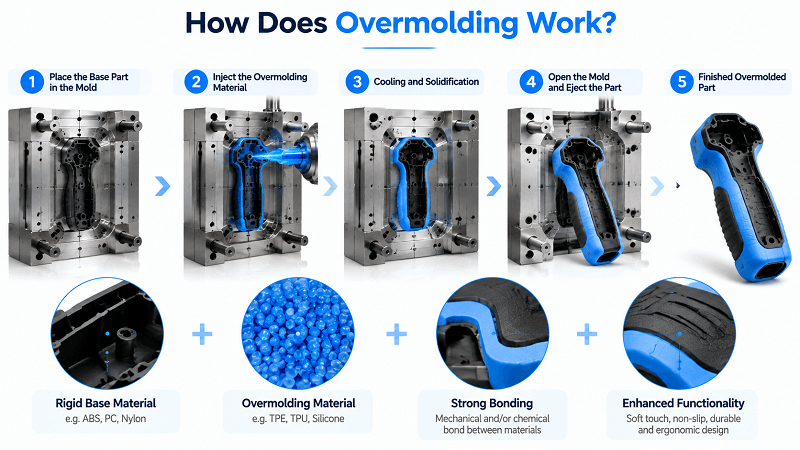
Overmolding is a two-step injection molding process. The first step is to injection mold a basic part from a type of plastic, and this part is called the base material. The base material can be either hard plastic or metal.
The second step is to place the base material into another set of molds and inject the second material, which is usually soft rubber or rubber. This material will be wrapped around the surface of the substrate, forming a thin outer layer. The two materials must be chemically or mechanically bonded; otherwise, the outer layer is prone to fall off. The common combinations are hard plastic and soft rubber, or metal and rubber. The final result is an integral part that is hard inside and soft outside, which is both sturdy and anti-slip, and combines the advantages of both materials.
4. Why Is Material Selection Important in Overmolding?
4.1 It Decides Bond Strength
The two materials must bond chemically or mechanically. Otherwise, the outer layer can peel, lift, or separate. If the materials do not match, the product will not last. Good molds and processes cannot fix this. This is the first key point for overmolding success.
4.2 It Decides Function
The substrate gives strength and support. The overmold layer gives grip, sealing, feel, and wear resistance. The wrong material can affect looks and feel. In serious cases, it can cause the product to fail. For example, a product that needs chemical resistance must use a matching overmold material.
4.3 It Affects Size Stability
The two materials should have close thermal expansion rates. Otherwise, the part may warp after cooling. Processing temperatures must also match. This stops the substrate from softening or deforming during the second injection.
4.4 It Affects Long-Term Reliability
The material pair also decides how the product works over time. Materials with poor heat, weather, or aging resistance can fail early outdoors or in hot places.
4.5 It Decides Cost and Processing Window
Different materials have different processing windows, temperatures, and cycles. These affect production speed and scrap rate. Material choice also decides if extra mechanical locks, surface texture, or support structures are needed.
概要
Material selection is not just “hard plus soft.” It must match the use, the environment, and the process. Choose the right materials, and overmolding works well.
5. What Is the Main Purpose of Overmolding Material Technology?
5.1 Combine the Good Points of Two Materials
Put a hard structure and a soft functional layer into one part. The substrate gives strength, rigidity, and size stability. The overmold layer gives grip, sealing, cushioning, and a comfortable feel. One part then has both “hard” and “soft” abilities.
5.2 ユーザーエクスペリエンスの向上
Soft overmolding makes the product more comfortable to hold. It is less likely to slip. It also reduces fatigue during long use. It works well for handheld products like tool handles, sports equipment, and medical devices. It meets ergonomic needs.
5.3 Add More Functions
The overmold layer can seal, waterproof, absorb shock, or insulate. The soft outer layer fits tightly to the substrate. It keeps moisture, dust, or chemicals out. It also absorbs impact and vibration. This protects the inner structure.
5.4 Simplify Production and Improve Consistency
One or two injection steps combine the hard structure and the soft layer. This removes the later step of putting on a soft cover. It reduces part count and assembly steps. It lowers labor cost and inventory work. It also improves product consistency.
5.5 Increase Product Value
Different colors and hardness levels can be overmolded. This creates two-color looks or local soft-grip effects. It improves product quality and appearance. It also makes the product more competitive.
概要
The main goal is to let one part have strength, comfort, sealing, and good looks. It is easy to use and lasts long.
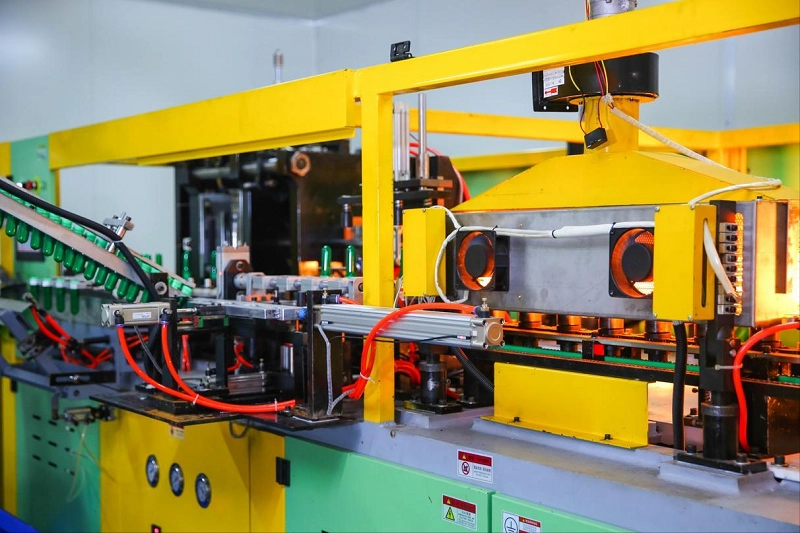
6. What Are the Wide Material Choices for Overmolding?
Material choice determines bonding, feel, flexibility, chemical resistance, heat resistance, color, and processing window. Soft-touch TPE may act differently on substrates like ABS, nylon PA, PP, POM, or PEEK. The substrate and overmold material should be chosen together, not bought separately.
Some material pairs can form chemical bonds under the right process conditions. Other pairs may need mechanical locks, holes, ribs, grooves, surface texture, or assembly structures. This is because chemical bonding is weak. Buyers should clarify what the second material is for. It may be for soft touch, sealing, grip, electrical insulation, impact absorption, shock reduction, or color marking.
| 材料 | Item | コンテンツ |
| TPE / TPU | 演算 | Soft-touch grips, sealing rings, grip layers, cushion pads |
| リスク | Peeling, flash, tackiness, color change | |
| お問い合わせ | Hardness, color, surface texture, adhesion testing | |
| ABS / ABS-PC | 演算 | Rigid substrate for housings and handles |
| リスク | Heat deformation, sink marks, appearance mismatch | |
| お問い合わせ | Substrate grade, visible surfaces, dimensional tolerances | |
| ナイロンPA | 演算 | Structural substrate with strength and wear resistance |
| リスク | Moisture sensitivity, dimensional change, bonding variation | |
| お問い合わせ | Drying conditions, glass fiber content, operating environment | |
| PP / POM / PEEK | 演算 | Functional substrate where chemical or thermal properties are critical |
| リスク | Bonding difficulty, shrinkage mismatch, processing window | |
| お問い合わせ | Material grade, bonding method, validation requirements |
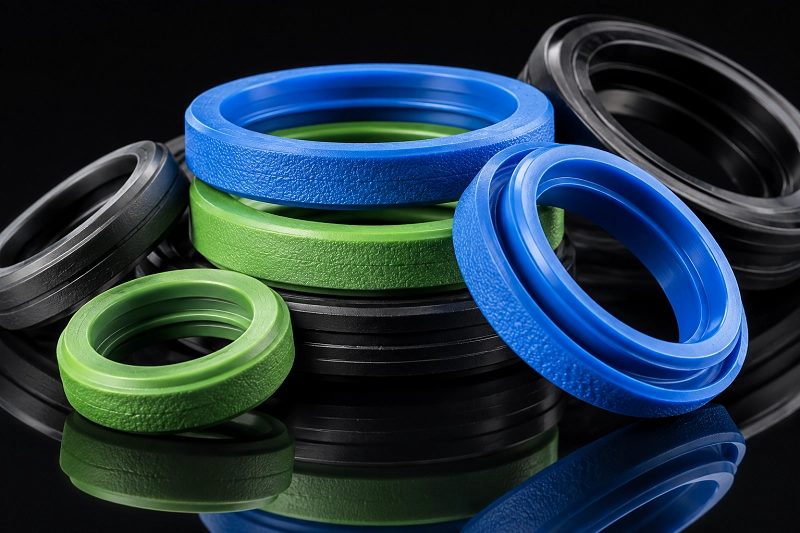
7. How Does Overmolding Improve Your Injection Molding Project?
7.1 Better Grip and Ergonomics
After overmolding with soft material, the surface is softer and has more friction. It is more comfortable to hold and less likely to slip. It works well for tool handles, sports equipment, and medical devices. It also reduces fatigue during long use.
7.2 Sealing and Protection
The overmold layer fits tightly to the substrate. It can seal electronic parts or protect precision parts from impact, dust, and moisture. It works well for outdoor electronics and housings for medical instruments.
7.3 Shock Absorption and Cushioning
Soft overmold material absorbs vibration and impact. It makes tools and electronics more comfortable to use. It also cushions drops or collisions. This extends product life.
7.4 Simpler Assembly and Lower Cost
Overmolding combines two steps into one. It reduces part count and assembly steps. It lowers labor cost and inventory work. The overmold layer forms a chemical or mechanical bond with the substrate. Bond strength is much higher than soft materials glued on later. It does not peel or separate easily over long use.
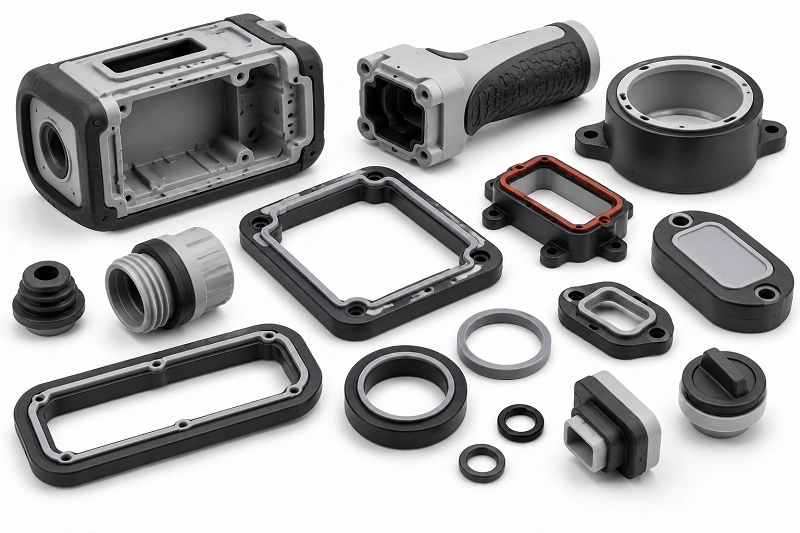
8. What Functions Can Overmolding Technology Achieve?
Overmolding can achieve many functions. They are mainly shown below.
8.1 Better Grip Comfort and Slip Resistance
By overmolding a soft material on the outer layer, the surface feels softer and has more friction. Users can hold it without slipping easily. It also reduces fatigue during long use.
8.2 より優れた密閉性と防水性
The soft outer layer fits tightly to the substrate and forms a good seal. It keeps moisture, dust, or chemicals out. This is useful for products that need waterproofing or dust protection, such as outdoor electronics and medical instrument housings.
8.3 Two-Color Appearance and Local Soft-Grip Effects
基材に異なる色や硬度の層を重ね成形することが可能です。これにより、ツートンカラーの外観や、部分的なソフトグリップ効果を実現できます。デザインの自由度が高まり、製品の外観と手触りが向上します。
8.4 Impact and Vibration Absorption
The soft outer layer absorbs impact and vibration. It protects the hard inner structure. It cushions drops or collisions. This extends product life.
8.5 Fewer Parts and Simpler Assembly
Traditional methods need a separate soft cover made and then assembled. Overmolding combines two steps into one. This reduces part count and assembly steps. It lowers labor costs and inventory work.
8.6 Strong Bond
The overmold layer forms a chemical or mechanical bond with the substrate during molding. Bond strength is much higher than soft materials glued or slipped on later. It does not peel, fall off, or separate easily over long use.
8.7 Better Feel and Ergonomics
The soft outer layer improves the product’s feel and grip comfort. It makes the product more ergonomic. This is good for handheld products and wearable devices.
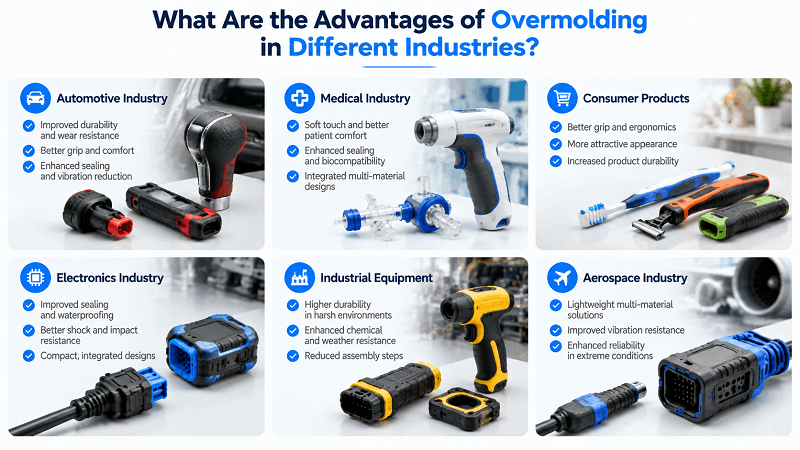
9. What Are the Advantages of Overmolding in Different Industries?
9.1メディカルデバイス
Soft overmolding improves grip comfort and slip resistance. Silicone overmold layers are biocompatible. They can handle high-temperature sterilization. They work well for surgical instrument handles and endoscope grips.
9.2 電動工具
A hard plastic substrate with TPE soft overmolding gives grip, shock absorption, and insulation. It improves operating safety. This is a common solution for drills, angle grinders, and other tools.
9.3家電
Overmolding creates two-color looks and a soft touch. It also improves waterproof and dustproof performance. It is common in phone cases, earphone housings, and smartwatch bands.
9.4自動車産業
Parts like steering wheels, gear shifters, and seals use overmolding. This improves feel, reduces noise, and enhances sealing.
9.5 日用品
Toothbrush handles, razors, and cookware grips use soft overmolding. This improves comfort and slip resistance.
9.6 産業用機器
Control panels, instrument grips, and industrial handles use overmolding. This improves durability and operating safety.

10.オーバーモールディングメーカーとしてNOBLEを選ぶ理由
NOBLEはオーバーモールディングプロジェクトを全面的にサポートします。設計レビューや材料選定のお手伝いをいたします。部品設計の改善に役立つDFM(製造性設計)フィードバックを提供します。基材とオーバーモールディングの両方に対応する精密金型を製作します。手動オーバーモールディングとツーショットオーバーモールディングに対応しています。また、接着品質を確認するためのインライン検査も実施しています。小ロット生産から大量生産まで、あらゆる規模の生産に対応可能です。トレーサビリティを確保するため、すべての工程記録を保持しています。これは医療プロジェクトにおけるISO 13485の要件を満たしています。試作品から量産まで、プロセス全体をサポートします。
FAQs of Overmolding:
1. オーバーモールディングとは何ですか?
Overmolding is a manufacturing process that molds one material over an existing part to create a multi-material component with improved function and appearance.
2. What are the main advantages of overmolding?
The main advantages include improved product durability, better grip and comfort, enhanced sealing, reduced assembly steps, and greater design flexibility.
3. How does overmolding improve product performance?
Overmolding combines different materials to add features such as impact resistance, vibration reduction, waterproof sealing, and better user comfort.
4. Can overmolding reduce manufacturing costs?
Yes. Overmolding can reduce costs by integrating multiple parts into one component and minimizing secondary assembly processes.
5. What materials are commonly used in overmolding?
Common materials include TPE, TPU, silicone, rubber, ABS, PC, nylon, and other engineering plastics selected based on product requirements.