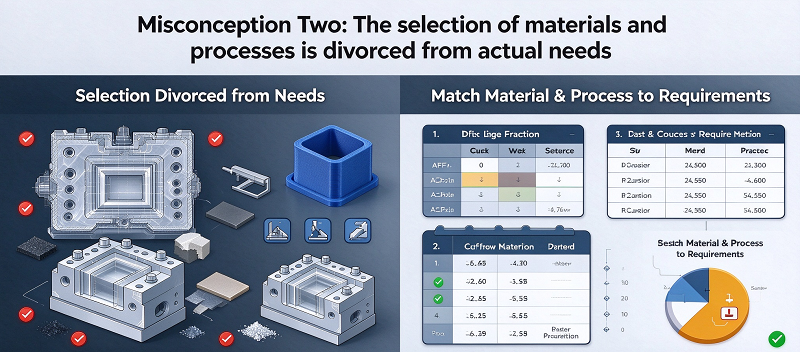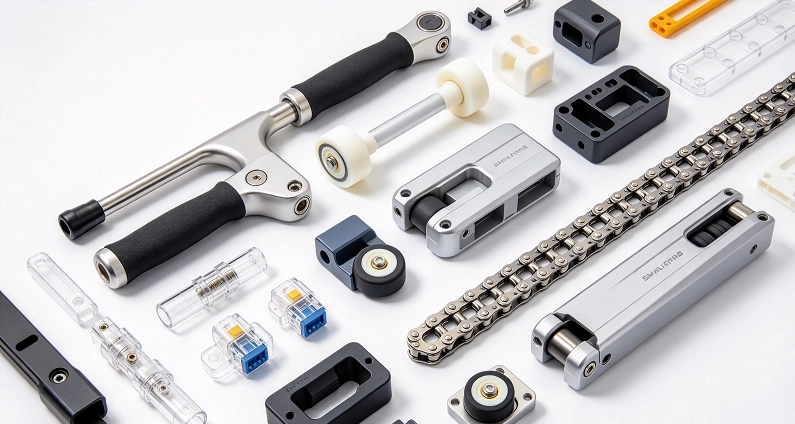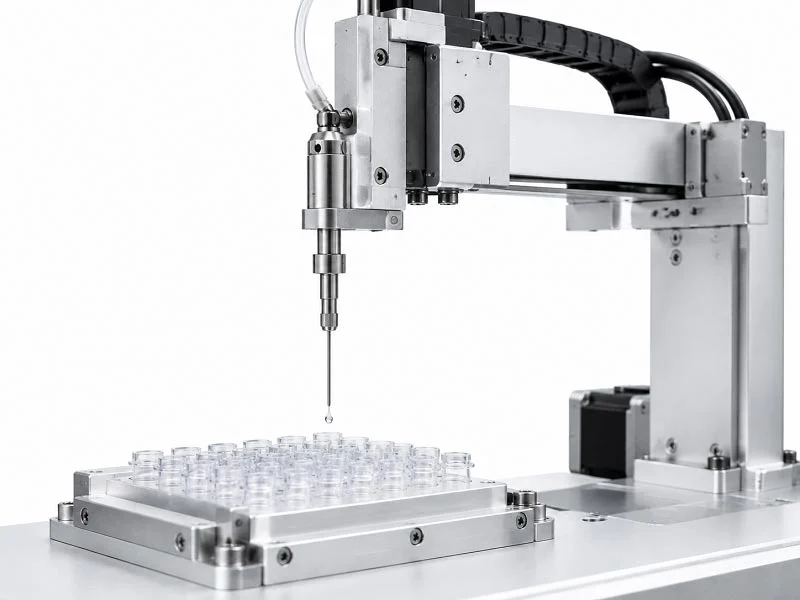
You need the right materials for liquid handling robot parts. Engineering plastics like PEEK and PTFE stand up to harsh chemicals. Metals such as 316 stainless steel and aluminum give strong support and stiffness. Key processes include CNC machining, injection molding, and laser cutting. Your choice depends on performance needs, cost targets, and how many parts you want to make. Automated liquid handling uses robotic automation parts for exact tasks. Your medical lab depends on durable liquid handling equipment and advanced liquid handling technology. Research work needs tight tolerances. High-throughput uses need tough liquid handling machines and dependable liquid handling systems. Simple DIY builds require minimal investment, while industrial systems demand greater capital. Part quality depends on picking materials with care.
Important Requirements for Liquid Handling Robot Parts
Chemical Resistance and Precision Tolerances
Chemical exposure controls your material choices more than anything else. You can’t just choose a plastic or metal just by its name. The exact mix of chemicals is very important. For example, 20% sodium hydroxide may work fine with a polycarbonate manifold, but an 80% concentration causes damage and leaks. In that case, PEEK is the safer choice for your liquid handling robot parts.
You should check chemical compatibility charts before you finish your design. These charts rate materials from Excellent to Severe based on how certain chemicals break them down. Temperature also changes things. Stainless steel 316 works great with detergents at room temperature, but it breaks down above 22°C. For hot biological processes, ceramic parts are a more reliable choice.
| Material | Resistance to Acids | Resistance to Solvents |
| PVDF | Strong acids | Chlorinated, aliphatic, aromatic solvents |
| PP | Most chemicals (except acetone and fluorinated/chlorinated chemicals) | Most chemicals (except acetone and fluorinated/chlorinated chemicals) |
| PET(g) / CPE(+) | Acids and bases | Alcohols (EtOH, IPA) |
| Nylon | Not specified | IPA, Solvents (acetone, glycerol) |
| PC | Some acids and bases | Water and alcohols |
Precision tolerances affect your choice of manufacturing process. When your design demands tight tolerances, CNC machining provides the necessary consistency. Injection molding can also keep tight tolerances, but only at high volumes where tooling costs make sense. Your robotic liquid dispensing system needs these tolerances to work correctly.
Applications Driving Part Specifications
Different applications have different needs for your parts. Serial dilution steps need valves that seal many times without mixing samples. PCR setup needs pipette tips that are certified clean. Sample normalization needs accurate equipment that stays precise over thousands of cycles.
| Material & Purity Requirement | Certified Specification |
| Tip base material | Medical-grade polypropylene (PP), non-cytotoxic, biologically inert, highly transparent |
| Contamination-free certification | Free of RNase, DNase, DNA, ATP, PCR inhibitors, and endotoxin |
| Sterility assurance | SAL 10⁻⁶ via irradiation per ANSI/AAMI/ISO 11137-2006 |
| Manufacturing environment | ISO 14644-1/GMP Class 7 cleanrooms, ISO 9001 certified process |
These liquid handling methods drive your automation to perform better. Each application type uses different parts of your liquid handling machines. A lab running PCR tests needs contamination-free liquid handling technology more than anything else. Another lab doing compound screening might focus on speed and throughput. Your equipment must fit the specific task you do.
Think about how these needs affect each other. A valve that works great for water-based buffers might fail with organic solvents. A pipette tip certified for PCR costs more than a regular tip, but that cost stops experiments from failing. Companies like NOBLE, a top manufacturer in China, know these trade-offs and help you pick the right materials and processes for your specific uses.
Commonly Used Materials for Liquid Handling Robot Parts
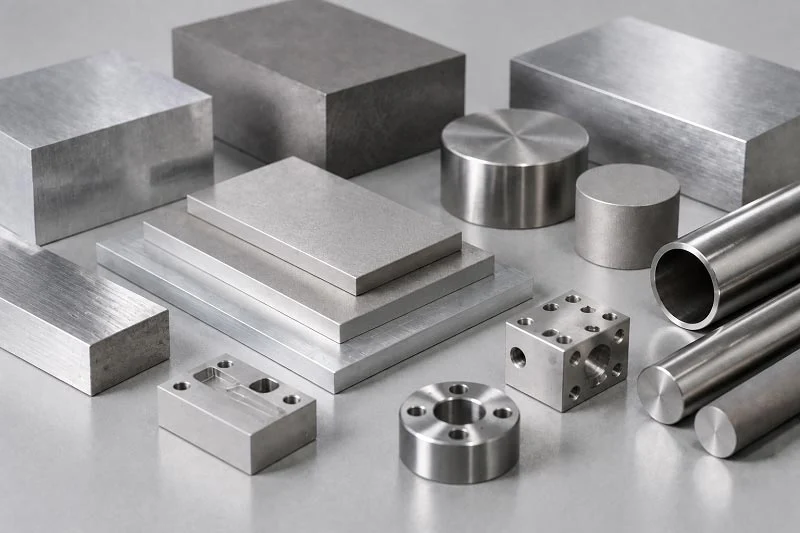
Engineering Plastics
PEEK
PEEK is very strong and works well for tough liquid handling robot parts. Its tensile strength is 90-100 MPa, so it keeps its shape even under steady pressure. Choose PEEK when keeping exact dimensions is very important. This plastic resists most organic and water-based liquids, but strong sulphuric acid and some halogens can damage it. PEEK costs much more than other plastics. Still, that cost is worth it for high-load or safety-critical uses. In semiconductor equipment, PEEK forms structural robotic arms and positioning fixtures. Those same traits suit moving parts in your liquid handling systems. The material holds tight tolerances even when parts face repeated stress. You pay more for PEEK, but you gain dependability where failure costs far more than the material.
PTFE
PTFE resists almost all chemicals. No common lab reagent will break it down. This plastic also has very low friction and non-stick properties. You find PTFE in seals, static wetted parts, and chemical delivery systems. Its tensile strength is only 20-35 MPa, so it cannot support heavy structural loads. The material deforms under pressure. Yet for harsh chemical environments, PTFE stays the safest choice. It also costs less than PEEK, making it attractive for uses that do not need high mechanical strength. Pharmaceutical and food processing industries rely on PTFE for its purity and resistance. For seals and tips that touch harsh reagents, PTFE protects your samples and your equipment. You trade mechanical rigidity for unmatched chemical safety.
For uses needing high chemical resistance, low friction, and a more cost-effective option, PTFE is likely ideal. PEEK, while more expensive, offers better mechanical strength and temperature resistance, which may justify its higher cost in demanding uses.
For disposable parts, polypropylene serves as a budget-friendly option. Medical-grade polypropylene resists most chemicals and costs little per part. Many pipette tips use this material because you throw them away after each use.
Metals
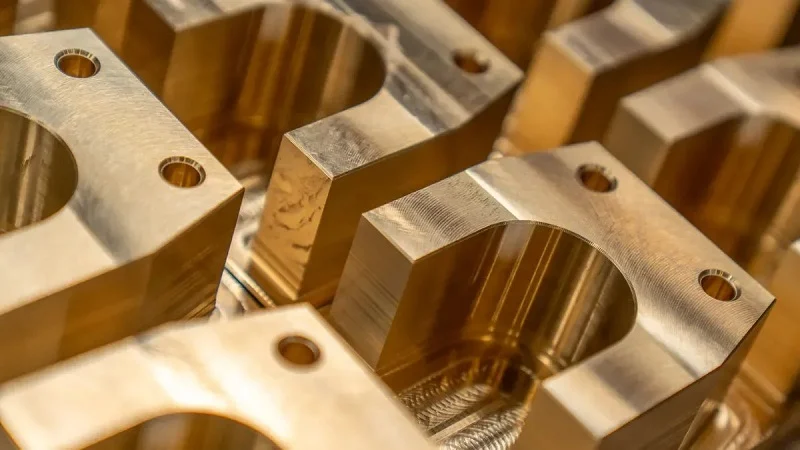
Aluminum Alloys
6061-T6 aluminum leads in structural parts for liquid handling equipment. Its elastic modulus reaches 68.9 GPa, which gives good stiffness at low weight. The alloy yields at 40 ksi and reaches 45 ksi ultimate tensile strength. You choose aluminum for chassis plates, brackets, and frames where lower inertia matters. Lighter moving parts need less motor torque and respond faster. Aluminum also machines well, which keeps fabrication costs down. The metal offers good general corrosion resistance, though you should anodize it for harsh environments. Anodized aluminum withstands common cleaning agents and provides a hard, wear-resistant surface. For structural robot parts where weight and cost outweigh chemical exposure, 6061 aluminum delivers the best balance.
Stainless Steel
316L stainless steel serves uses that demand outstanding corrosion resistance. Its elastic modulus reaches 193 GPa, about three times stiffer than aluminum. That stiffness ensures minimal bending for precision needle parts. The steel contains 2-3% molybdenum, which gives extra protection against chlorides, salts, and industrial chemicals. You need 316L for needles that touch bodily fluids or undergo sterilization. The material withstands sodium hypochlorite (bleach), peracetic acid, vaporized hydrogen peroxide, and other oxidizing disinfectants. Autoclave and chemical sterilization do not damage it. This grade earns the name “marine-grade” for its performance in chloride-rich environments. Pharmaceutical manufacturing and biotechnology research depend on 316L for surfaces facing demanding sanitation protocols.
| Property | 316L Stainless Steel | 6061-T6 Aluminum |
| Elastic Modulus | 193 GPa | 68.9 GPa |
| Corrosion Resistance | Exceptional (High Chloride) | High (General) |
| Sterilization Compatibility | Autoclave, VHP, Chemical | Anodized Only |
Your material choice for liquid handling robot parts depends on the specific job. Structural frames benefit from aluminum’s light weight. Fluid-contact parts demand stainless steel’s corrosion resistance. Seals and tips require PTFE’s inertness or PEEK’s strength. NOBLE, a leading manufacturing company in China, helps engineers match materials to uses across laboratory and industrial settings. Their expertise covers both metal and plastic processing, ensuring your parts perform reliably in every condition.
Manufacturing Processes for Liquid Handling Robot Parts
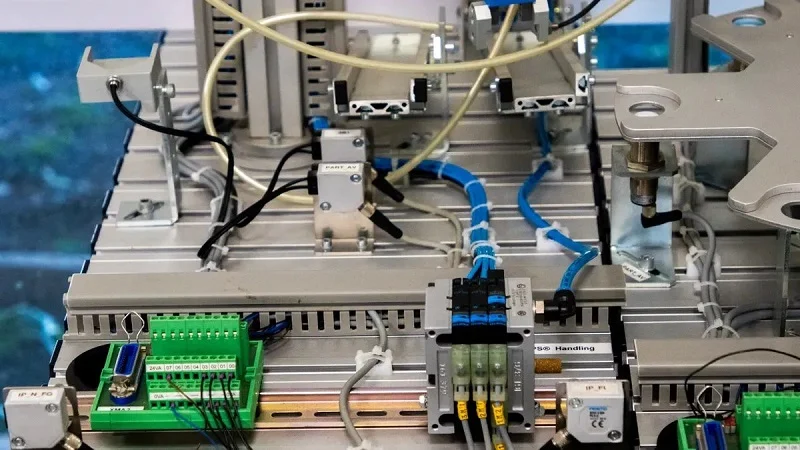
Laser Cutting and Bending for Chassis
Your robotic chassis starts as a flat metal sheet. Laser cutting shapes it quickly and accurately. The laser follows a CAD file to cut holes, slots, and outlines for your design. Position accuracy stays within ±0.005 inches (0.127 mm). Repeatability holds the same tight ±0.005 inches across every part. These values give you consistent components through each production run.
Thin sheet materials under 100 mm can be cut with position accuracy of ±0.005 inches (0.127 mm) under standard conditions. Thick plates require wider tolerances. You cannot achieve the same precision on thick material. Your chassis design should account for this difference. Use thin sheet for most panels and frames in your liquid handling equipment. This approach keeps costs low while meeting your structural needs.
After cutting, you bend the flat parts into their final shape. Brake presses fold metal along precise lines to create three-dimensional structures. You build enclosures, mounting brackets, and support frames this way. Bending adds stiffness without adding weight. A flat panel becomes rigid once you fold its edges. This process suits low to medium production volumes well. Many liquid handling technology products rely on this fabrication method. You can create complex shapes from simple flat patterns.
NOBLE, a leading manufacturing company in China, offers laser cutting and bending services. Their equipment handles both aluminum and stainless steel sheets. You receive parts ready for assembly with minimal secondary work. This reduces your lead time and simplifies your supply chain.
CNC Machining for High-Precision Components
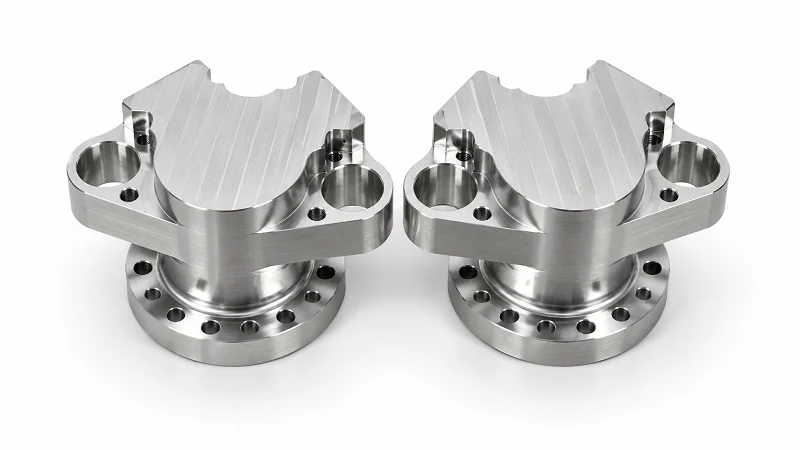
Complex parts like manifolds and valve bodies need CNC machining. This subtractive process removes material from a solid block to create your design. You get precise liquid handling robot parts with tight tolerances. The process works for both metal and plastic materials.
Surface finish matters for fluidic seals. O-ring sealing grooves require a surface roughness of 0.8 to 1.6 μm Ra. CNC milling reaches 1.6 to 3.2 μm Ra as-machined. A finish pass lowers that to 0.8 μm Ra. CNC turning produces even smoother surfaces at 0.4 to 1.6 μm Ra as-machined. These values meet the needs of most seals in your robotic system. You do not need additional post-processing for standard sealing applications.
Compare this to 3D printing. FDM builds parts with 12 to 25 μm Ra as-built. Post-processing like sanding or vapor smoothing brings this down to 1.6 to 3.2 μm Ra. SLS achieves 6 to 12 μm Ra as-built and 3.2 to 6.0 μm Ra after bead blasting. DMLS reaches 6 to 15 μm Ra as-built. None of these methods hit the 0.8 to 1.6 μm Ra range without a finish machining pass on critical faces. CNC achieves the requirement as-machined or with a simple finishing cut. For fluidic seals in your automation components, CNC delivers the surface finish you need from the start. This reliability matters when your system processes expensive reagents.
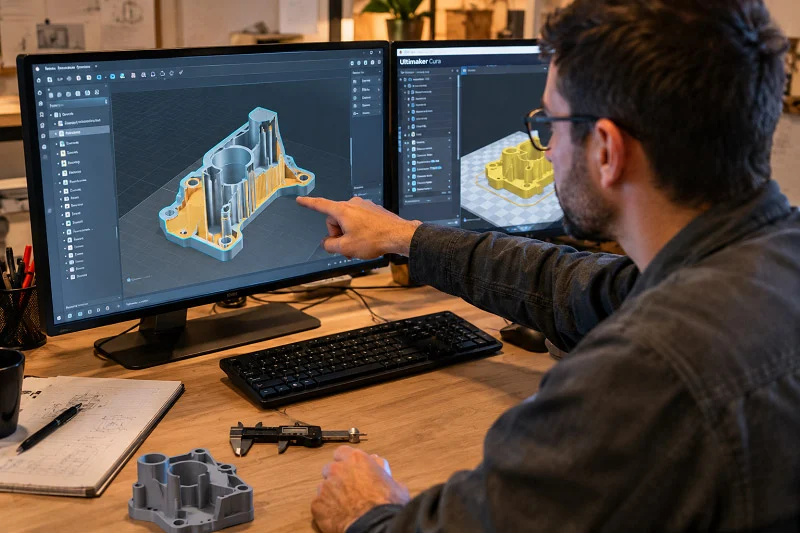
3D printing still has a role in prototyping. You test fit and function before committing to tooling. For production parts that need reliable seals, CNC machining remains the standard. Your laboratory instruments depend on these precision components working without leaks. The upfront cost of CNC is higher per part but you save on rejected assemblies.
Injection molding suits high-volume parts like pipette tips. The tooling cost is high but spreads across thousands or millions of units. Tight tolerances become possible once you validate the mold. This process works when you need tens of thousands of identical components.
NOBLE provides CNC machining for both prototyping and production runs. Their expertise covers aluminum, stainless steel, and engineering plastics. You get parts that meet your specifications for surface finish and dimensional accuracy. This support helps you move from concept to certified parts faster.
Design Considerations for Liquid-Handling Robot Parts
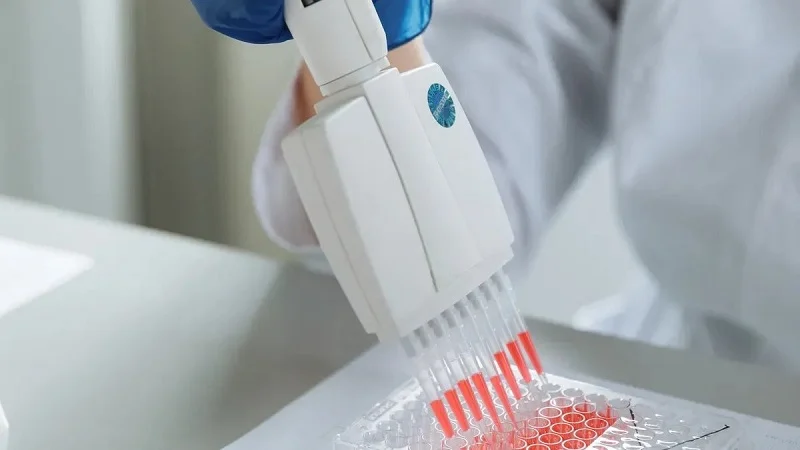
Designing for Manufacturability and Assembly
How you design your parts affects how easy they are to make. Start by taking out any undercuts you do not need. Side holes, screw threads, snaps, and locking tabs make the mold more complex. Each undercut needs extra parts in the mold, which raises cost and time. You can often move the mold’s split line to meet a side undercut instead. This simple fix works for many square or round standoffs.
For inside features, avoid making threads right in the part. Threads are undercuts that make the mold much harder to build. Use metal threaded inserts instead. They create stronger joints and make your mold design easier. If you need stripping undercuts, or bump-offs, pick flexible materials like polyethylene or TPE. Do not use bump-offs for stiff or fiber-filled plastics because they will crack when removed.
Your choice of material also affects how the parts handle cleaning. Standard polypropylene works for hand-held pipettes. It can be autoclaved under standard conditions and cleaned with common disinfectants. High-grade polypropylene is better for automated tips that get handled many times by robots. This material keeps its size through cleaning cycles, so it won’t bend and mess up your automation.
Balancing Cost, Lead Time, and Performance
How many parts you need should guide your process choice. For low-volume production, CNC machining provides accuracy for metal or plastic parts. Setup costs are a significant portion of the total cost, especially for very small batches. 3D printing gets rid of that setup hassle. You just load the file and start. The layer-by-layer method does not care if the inside is solid or a complicated honeycomb. CNC charges more for deep holes, while 3D printing keeps that cost the same.
For making test models, 3D printing is faster and cheaper to set up. For production parts that need tight sizes and smooth surfaces, CNC machining gives the reliability your fluid seals need.
Injection molding becomes cost-effective at high volumes, where the tooling cost is spread across many parts. Your lab tools benefit from this method when you need many identical parts.
NOBLE, a top manufacturer in China, helps you choose between these options. Their engineers check your design to see if it’s easy to build before production starts. You get parts that meet your needs without paying for extra complexity.
NOBLE: Manufacturing Partner for Liquid Handling Robot Parts
Full-Service Capabilities from Design to Assembly
NOBLE handles your whole production process in one place. You get help from the first design review all the way to final assembly. Their team works with both metal and plastic materials. This gives you one partner for all your liquid handling robot parts. CNC machining makes complex metal manifolds with tight tolerances. Sheet metal fabrication builds chassis and frames for your equipment. Injection molding produces high-volume plastic parts like pipette tips and valve bodies. You skip the trouble of dividing work among many suppliers.
Design support starts early in your project. NOBLE engineers check your CAD files to see if they are easy to make. They find possible issues before any metal gets cut. This saves you time and money. The team suggests material swaps or shape changes that boost reliability. Assembly services bring all parts together into finished sub-assemblies. You get tested parts ready to add into your system. Validation checks confirm that each part meets your specs for fit and function. This full-service approach cuts your development time a lot.
Quality Certifications: ISO 9001:2015 and ISO 13485:2016
Quality systems matter for your liquid handling robot parts. NOBLE operates under certified quality management systems that ensure consistent manufacturing standards. You get repeatable results batch after batch. Additional standards specific to medical devices further control manufacturing conditions for laboratory components.
These quality systems mean every process follows written procedures. NOBLE tracks materials, measurements, and checks at each step. You get full traceability for critical components. This matters when your automation system runs sensitive assays. A certified partner lowers your audit workload. You trust that your parts meet industry standards without extra checking. The quality system also helps faster scale-up from prototype to production. You move from concept to certified parts with confidence.
Plastics offer chemical inertness but lower rigidity. Metals provide strength yet may react with certain reagents. Your process choice depends on volume, tolerance, and budget. CNC machining delivers precision. Injection molding scales to high volumes. Laser cutting builds frames efficiently. Even DIY liquid handling robot parts benefit from thoughtful material selection. Reliable automation starts with the right components. Your laboratory equipment performs better when you match materials to tasks. Liquid handling machines face harsh chemicals daily. Smart choices prevent failures. Liquid handling technology advances through careful engineering. Robotic systems depend on every part working correctly. Partnering with a full-service manufacturer like NOBLE simplifies your journey from concept to certified, production-ready parts.
FAQ of Liquid Handling Robot Parts
What material resists harsh chemicals best for liquid handling robot parts?
PTFE resists almost all chemicals. No common lab reagent breaks it down. But PTFE is not very strong. PEEK is more rigid, but it costs more. For parts you throw away, medical-grade polypropylene works well. Your choice depends on whether chemical resistance or strength matters more for your parts.
When should I choose CNC machining over 3D printing?
CNC machining gives surface finishes of 0.8 to 1.6 μm Ra, which fluidic seals need. 3D printing makes rougher surfaces from 6 to 25 μm Ra. Use 3D printing only for prototypes. Pick CNC for production parts that must seal without leaks. NOBLE, a top maker in China, offers both for your automation needs.
How do I decide between PEEK and PTFE for seals?
PEEK has a tensile strength of 90-100 MPa and keeps tight sizes under load. PTFE resists chemicals better but bends under pressure. If your system handles strong acids or solvents, PTFE protects better. If mechanical stability matters more, PEEK is worth its higher cost.
Can aluminum work for parts touching biological samples?
6061 aluminum works for frames and brackets. For direct fluid contact with biological samples, choose 316L stainless steel instead. Steel resists chlorides and can go through autoclave sterilization. Aluminum needs anodizing for harsh environments. Match your material to the job in your lab equipment.
What process suits low-volume production of precision parts?
For low-volume production, CNC machining gives accuracy for metal or plastic parts. Setup costs are high for small runs. 3D printing removes setup but may not achieve the surface finish needed for seals. Injection molding becomes cost-effective at high volumes. Think about your volume before picking your process.