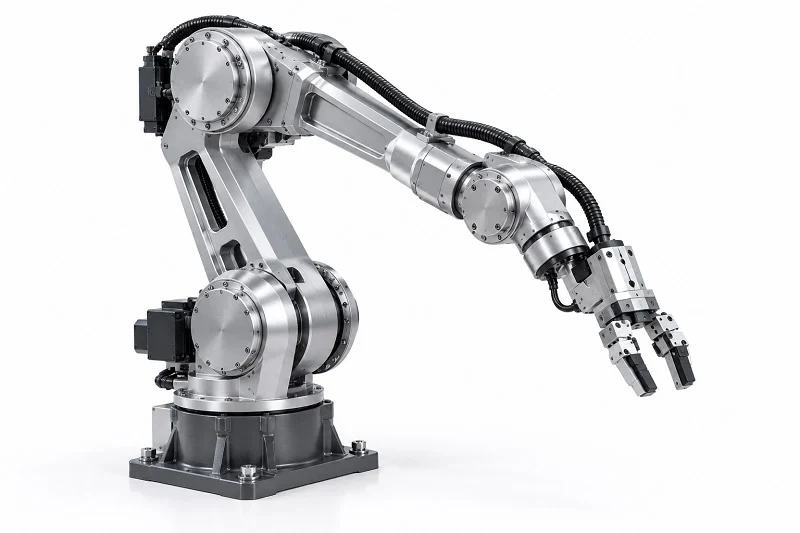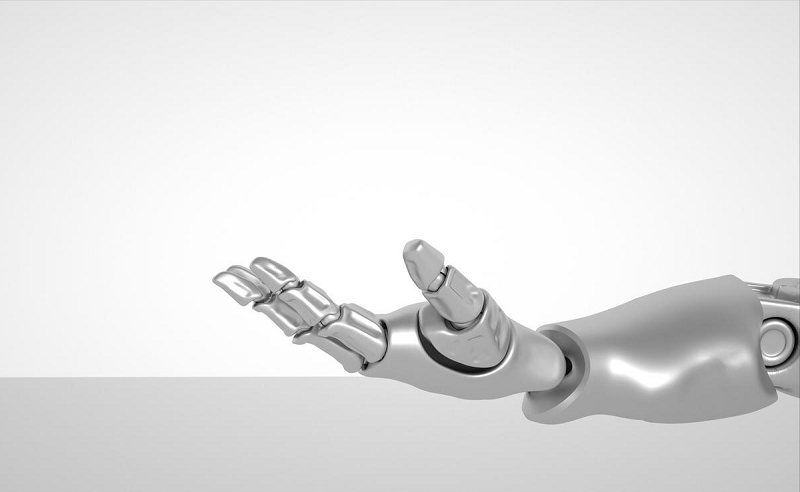
Healthcare robots work in hospitals, rehabilitation centers, and elderly care homes. Robot arms are one of the most important parts of healthcare robots. They control movements, perform precise work, and help robots interact safely with patients and medical devices.
A healthcare robot arm has many small and accurate parts. These parts include joints, rotating shafts, supports, housings, gears, and end-effectors. Different parts need different performance. Material choice directly changes the arm’s strength, weight, service life, and working stability.
Common materials are aluminum alloy, stainless steel, titanium alloy, and high-performance plastic PEEK. Factories widely use CNC precision machining, turning, grinding, and injection molding to make these parts.
This article talks about main part types, common materials, real-world uses, and making methods for healthcare robot arm parts. It also explains how to get high-quality and reliable robot parts through precision manufacturing.

1. What Are Healthcare Robots?
Healthcare robots combine robot technology, artificial intelligence, sensors, and automatic control. They work in medical treatment, rehabilitation, and elderly care. They can help complete tasks such as care, rehabilitation training, mobility assistance, health monitoring, and daily life support according to different usage scenarios.
Unlike traditional industrial robots, health care robots need to take into consideration human safety, usage comfort, and movement coordination. Robots usually need to sense human movements and environmental changes through sensors and adjust their movements based on the collected data.
Typical healthcare robots are rehabilitation robots, care robots, exoskeleton robots, patient transfer robots, and helper robots. They reduce work pressure for medical workers. They also give better support for old people, sick people, and people with limited mobility.
In structure, healthcare robots usually have robot arms, joint sets, drive systems, sensor supports, connecting parts, and end effectors. Part materials, machining accuracy, and assembly quality decide the robot’s total performance.

2. Main Kinds of Healthcare Robot Arms
Healthcare robots perform different care and support tasks. So robot arms have different structures and functions. We can divide them by use case, degree of freedom, and movement style.
2.1 General Purpose Robotic Arm
This is a common structure for healthcare robots. It is fixed on the robot’s main body or moving base. Multiple joints let it turn, stretch, and grip objects.
Key points: Multiple joint movement; large working range; can grip and carry items; fit for complex work
These arms deliver goods, pick up medicine, help users eat, and carry out simple care work.
2.2 Collaborative Robot Arm
Collaborative robotic arms are mainly used in scenarios where close contact with people is required. This places greater emphasis on safety and flexible control.
Robots can sense external forces through force sensors and position sensors. When the robotic arm comes into contact with the human body or encounters abnormal resistance, it can reduce its speed or stop moving.
Common applications include:
- Assist patients in moving
- Deliver daily necessities
Rehabilitation training
- Human-machine collaborative care
2.3 Rehabilitation assistance robotic arm
Rehabilitation assistance robotic arms are mainly used to help patients complete upper or lower limb movement training.
This type of robotic arm usually needs to be stably connected to the human body, and the assistance force should be adjusted according to the patient’s movement ability.
Main requirements
- Precise movement
- Stable power control
- Comfortable to wear
It operates reliably for a long time
It can be applied to stroke patients, people with reduced mobility, and postoperative rehabilitation training.
2.4 Exoskeleton Robotic arm
The exoskeleton mechanical arm is directly installed on the human arm or leg. It provides auxiliary power through the motor, reducer, and joint assembly.
Compared with ordinary robot arms, exoskeleton mechanical arms pay more attention to the matching between human joints and robot joints.
Common structures include:
- Shoulder joint module
Elbow joint module
- Wrist joint module
Support frame
- Strap connection piece
2.4 Exoskeleton Robot Arm
Exoskeleton robot arms are worn directly on human arms or legs. Motors, reducers, and joint parts give extra power.
Compared with ordinary robot arms, exoskeletons need good matching between robot joints and human body joints.
Common structures: Shoulder joint module , Elbow joint module , Wrist joint module , Support frames , Strap connecting parts
2.5 How to Choose Different Robot Arms
Different application scenarios require the selection of different robotic arm structures.
Therefore, the healthcare robot arm is not a single mechanical structure. Different types of robotic arms need to be designed based on care tasks, human contact methods, load requirements, range of motion, and safety standards.
From a manufacturing perspective, the joint housing, connecting parts, rotating shafts, support frames, and end effectors of the robotic arm are all key components. These parts usually need to be manufactured by processes such as CNC precision machining, injection molding, and metal 3D printing, and they must pass strict dimensional inspection and assembly verification to ensure the stable operation of the robotic arm.
3. Materials for Health Care Robot Arms
Healthcare robot arms need lightweight, high strength, long service life, safety, and good machining accuracy. Usually, more than one material is used. We pick materials based on each part’s function.
3.1 Aluminum Alloy
Aluminum alloy is one of the commonly used materials in healthcare robot arms.
It features lightweight, high strength, easy processing, and corrosion resistance, which can effectively reduce the overall weight of the robotic arm.
Common applications include:
- The main body of the robotic arm
- Joint shell
Support frame
- Motor mounting base
- Connecting piece
Among them, both 6061 and 7075 aluminum alloys are suitable for manufacturing precision parts through CNC machining.
3.2 Stainless Steel
Stainless steel has good strength, wear resistance, and corrosion resistance.
It is suitable for parts that bear large loads or require long-term stable operation.
Common applications include:
- Precision rotating shaft
- Threaded connection parts
- Bearing housing
- Internal parts of the joint
Stainless steel also has excellent cleaning and maintenance performance for medical and nursing equipment.
3.3 Titanium Alloy
Titanium alloys feature high strength, low density, and excellent corrosion resistance.
They can reduce the weight of the robotic arm while maintaining the structural strength.
Therefore, titanium alloys are suitable for application in components with high requirements for weight and strength, such as:
- High-strength connectors
- Joint structure
Precision support parts
However, the processing difficulty and material cost of titanium alloys are usually higher than those of aluminum alloys, so the choice should be made based on specific applications.
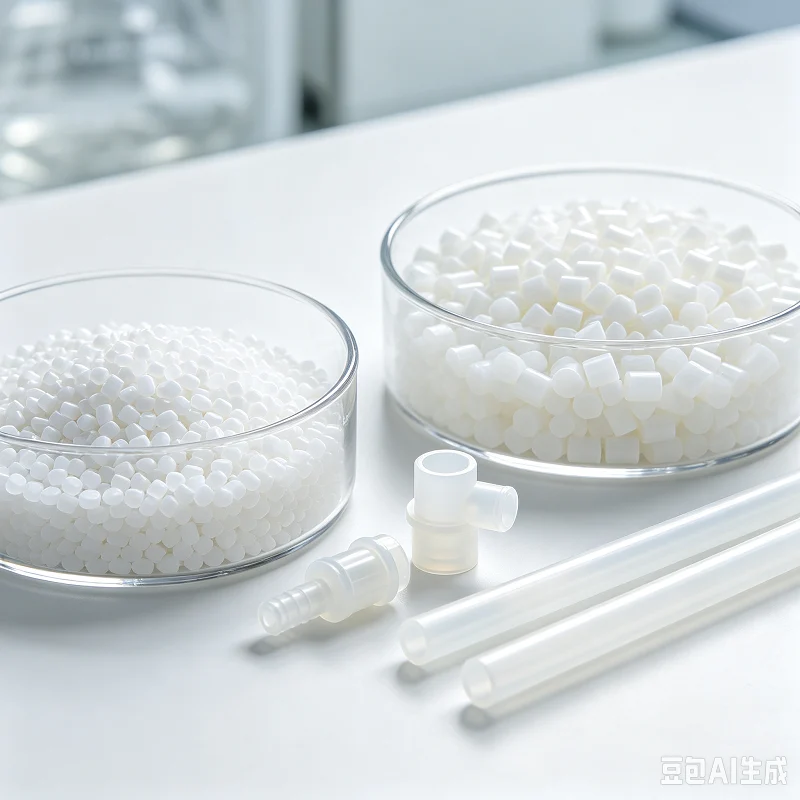
3.4 PEEK Engineering plastic
PEEK is a high-performance engineering plastic and has high application value in the field of medical equipment.
It has:
- High strength
- High-temperature resistant
- Resistant to chemical corrosion
- Good dimensional stability
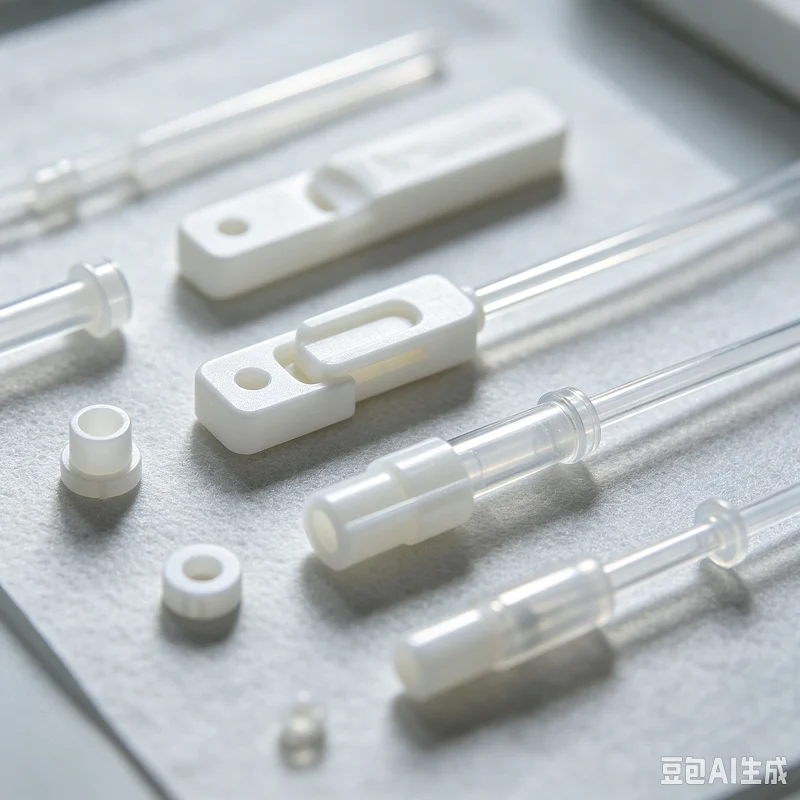
PEEK can be used to manufacture:
Insulating parts
- Bushing
Sensor bracket
Lightweight structural components
PEEK has obvious advantages for robot components that require weight reduction or electrical insulation.
3.5 Other Engineering Plastics
Besides PEEK, ABS, PC, POM, and PPS are also used for healthcare robots.
They are used for: Robot outer housings Protection covers Sensor casings Small connecting parts Inner structural parts
Plastic parts can be made by injection molding or CNC machining for mass production.
3.6 Carbon Fiber Composite Material
Carbon fiber material is light, strong, and rigid. It fits lightweight exoskeletons and robot arm structures.
Common uses: Exoskeleton support frames, robot arm bars, Lightweight main frames
Carbon fiber reduces the weight of moving robot parts and eases pressure on drive systems.
3.7 How to Pick Suitable Materials
| Material | Main Advantages | Typical Uses |
| Aluminum alloy | Lightweight, easy to machine | Housings, supports, connecting parts |
| Stainless steel | High strength, rust-proof | Rotating shafts, bearing seats |
| Titanium alloy | Strong and light | Joints, connecting parts |
| PEEK | Heat-resistant, chemical-resistant | Shaft sleeves, insulation parts |
| Other engineering plastics | Lightweight, good for mass production | Outer housings, protective covers |
| Carbon fiber composite | Strong and very light | Exoskeletons, robot arm structures |
Choose materials by part function, weight, strength, wear resistance, machining difficulty, and production cost. You can mix different materials to balance strength, weight, and cost.
4. Manufacturing Methods for Healthcare Robot Arms
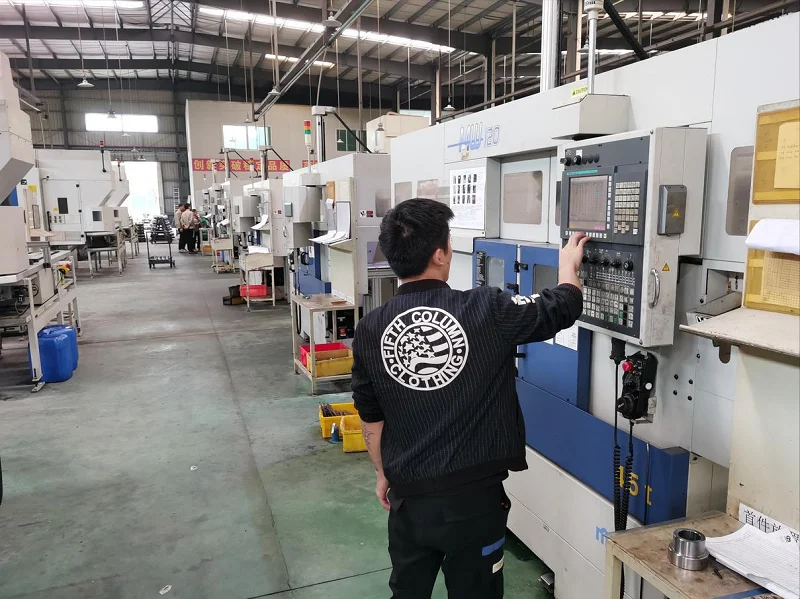
Robot arm products include joints, connecting pieces, supports, shaft parts, housings, and end-effectors. Different parts have different rules for accuracy, strength, and surface finish. We often use several manufacturing methods together. Good processing choices improve part accuracy and cut production costs.
4.1 CNC Precision Machining
CNC precision machining is widely used for healthcare robot arm parts.
It makes these items: Joint housings, robot arm connecting parts, motor mounting bases, support frames, precision bearing seats
CNC provides high dimensional accuracy for complex shapes. Factories select 3-axis, 4-axis, or 5-axis CNC machines by part design.
4.2 CNC Turning
Turning works for round and rotating parts.
Common parts: Rotating shafts Drive shafts Pin shafts Shaft sleeves Thread connecting parts
Shaft parts for robot joints need good concentricity and a smooth surface. Precision turning meets these needs.
4.3 CNC Grinding
Turning or milling alone sometimes cannot meet strict accuracy needs. Grinding further improves dimensional accuracy, Surface smoothness, Roundness, and concentricity
People use grinding for key parts such as precision shafts and bearing matching surfaces.
4.4 Metal 3D Printing
Metal 3D printing builds complex and lightweight parts. It cuts material waste from traditional machining. It can make shapes hard to produce by old style methods.
Common uses: Lightweight robot-arm structures; Complex connecting parts; Custom-made support frames
It fits research and development work and small batch orders.
4.5 Injection Molding
Healthcare robot arms have many plastic components. Injection molding produces: Outer housings, protection covers, sensor casings, wire guards, small structural parts
When products go into mass production, injection molding raises speed and lowers cost for every single piece.
4.6 Sheet Metal Machining
Some large robot structures use sheet metal machining. Main steps: Laser cutting, Bending, Welding, surface treatment
Sheet metal machining builds outer frames, protective structures, and device housings.
4.7 Surface Treatment
Many parts need surface treatment after machining. Common choices: Anodizing, Passivation, Sandblasting, Polishing, Electroplating
Surface treatment improves rust resistance, wear resistance, and surface appearance.
4.8 Precision Inspection
Finished key parts must pass quality checks. Common testing machines: Coordinate Measuring Machine (CMM), optical measuring instruments, roughness testers, laser measuring devices
Inspection confirms size, tolerance, hole position, and surface finish match drawing requirements.
4.9 How to Select Right Manufacturing Methods
| Part | Common Manufacturing Ways | Key Requirements |
| Joint housing | CNC machining | Accuracy, rigidity |
| Precision shaft | Turning + grinding | Concentricity, surface finish |
| Support frame | CNC machining/ 3D printing | Strength, lightweight |
| Robot outer housing | Injection molding/sheet metal machining | Appearance, cost control |
| Sensor support | CNC machining/ injection molding | Stable dimensions |
| Connecting part | CNC machining | Strength, fitting accuracy |
In short, making healthcare robot arm parts seldom depends on only one process. Select processes by part shape, material, accuracy needs, order quantity, and cost. For research and development stages, use CNC machining and 3D printing for fast samples. For mass production, combine injection molding, precision machining, and automatic inspection. This raises production speed and keeps consistent product quality.
5. Real World Uses of Health Care Robots
Health care robots are moving from hospitals into communities and homes, and their application scenarios are becoming increasingly diverse. They can mainly be classified into the following categories
5.1 Rehabilitation training category
- Lower limb exoskeleton robot: Assists patients with spinal cord injury and stroke in gait training
Upper limb rehabilitation robot: Helps stroke patients restore the functions of their arms and hands
- Hand rehabilitation robot: It assists in finger flexion and extension training through flexible drive or pneumatic methods
5.2 Life Assistance category
- Smart nursing bed: Automatic turning over, position adjustment, and prevention of pressure sores
- Transfer assistance robot: Helps patients safely transfer between the bed and the wheelchair
- Feeding assistance robot: Provides autonomous dining support for people with upper limb dysfunction
5.3 Monitoring and Companionship Category
- Health monitoring robot: Real-time collection of vital sign data such as heart rate, blood oxygen, and body temperature
- Fall detection robot: Identifies falls through vision or sensors and automatically alarms
- Emotional companionship robot: Offers voice interaction and cognitive training to alleviate the loneliness of the elderly
5.4 Job Support Class
- Logistics delivery robots: Transporting medicines, specimens, and meals within hospitals
- Disinfection robot: Uses ultraviolet light or hydrogen peroxide for environmental disinfection
6. What are the Machining requirements for health care robots
The parts processing requirements for health care robots are much higher than those for general industrial products, mainly reflected in the following aspects:
6.1 High precision and dimensional stability
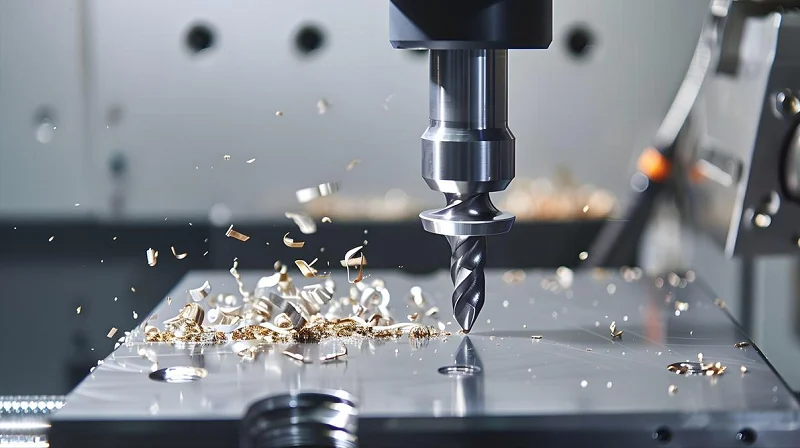
The tolerances of the joint transmission parts and sensor mounting seats should be controlled within ±0.005mm to ±0.025mm to ensure the motion accuracy and the accuracy of the sensor data
The coaxiality of keyhole positions should be < 0.01 mm; otherwise, it will lead to uneven resistance in joint movement or positioning deviation
The parts need to be processed under constant temperature conditions to avoid the influence of temperature changes on dimensional consistency
6.2 Material diversity and processability
For aluminum alloy (6061/7075), the problem of deformation during thin-walled processing needs to be addressed. Stress can be released through separate rough and fine processing and natural aging
Engineering plastics such as PEEK have poor thermal conductivity, so diamond-coated tools should be used, and the cutting speed should be controlled to prevent local melting
Titanium alloy processing requires high-pressure cooling and rigid fixtures to cope with its rapid work hardening characteristics
6.3 Surface quality and Post-treatment
The surface roughness of parts in contact with the skin should reach Ra≤0.8μm to avoid friction discomfort
Long-term used parts need to undergo anodizing or passivation treatment to enhance their corrosion resistance and wear resistance
All sharp edges must be rounded to ensure safe use
6.4 Cleanliness and biocompatibility
The parts must be produced and packaged in a clean environment, free of grease and particle residues
The material must pass the ISO 10993 biocompatibility test and not cause skin irritation or allergic reactions
6.5 Traceability and Quality System
Each part must be fully traceable from raw materials to finished products, meeting the requirements of the ISO 13485 quality management system
It is necessary to establish complete quality inspection records, including size reports, material certificates, and surface treatment test results
7. Why Choose Noble as the manufacturer of healthcare robot Arm Parts
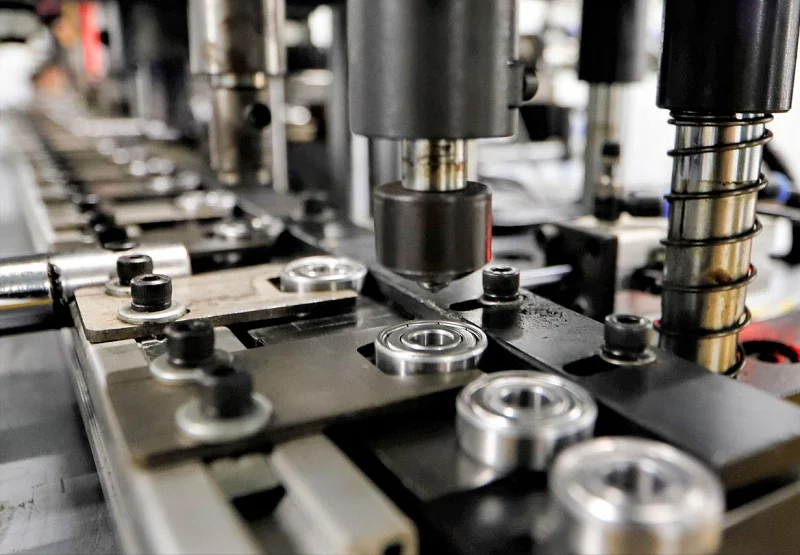
NOBLE is a certified metalworking company with over 12 years of experience in manufacturing high-quality metal components.
From our locations in Shenzhen, China, we provide sheet metal processing and precision mechanical components for the automotive, industrial, and medical sectors. Since 2012, we have acted as a trusted partner for manufacturers of components for industrial vehicles and agricultural machinery, offering a full production path from initial processing through to finished parts.
What makes us different is our focus on technological innovation and constant improvement. By pairing advanced automation with expert craftsmanship, we ensure every component satisfies rigorous quality standards. Our facilities are certified to ISO 9001 & ISO 13485, reinforcing our commitment to quality management, environmental responsibility, and workplace safety.
This gives companies like yours a reliable partner for consistent, high-precision components, complete traceability, and full compliance with international standards. From complex sheet metal fabrications to mechanical components for demanding uses, our team is equipped to meet your production goals.
FAQs of Medical Robot Arm Parts
1. How does CNC machining compare to Metal Injection Molding (MIM) for small robot parts?
CNC machining offers superior surface finish, tighter geometric tolerances, and faster design iteration for low-to-mid volumes. MIM can achieve net-shape complexity at very high volumes but often requires secondary machining for critical features and may introduce porosity risks that compromise sterilization or fatigue life.
2. What tolerances can CNC machining hold for medical robot arm parts?
Most critical surgical robot components require tolerances between ±0.005 mm and ±0.025 mm, depending on whether the feature is a bearing bore, gear seat, or instrument interface. Tighter tolerances demand temperature-controlled machining environments and in-process CMM verification.
3. Why is 5-axis machining preferred for medical arms?
It handles complex, ergonomic shapes in one setup. This reduces errors and ensures the high precision needed for surgery.
4. What tolerances can be achieved in medical machining?
Professional shops typically reach ±0.005 mm or better. This depends on the material and specific part geometry.
5. Which materials are best for healthcare robot arms?
Stainless steel 316L and Titanium Ti6Al4V are the standards. They offer the best balance of strength and biocompatibility.