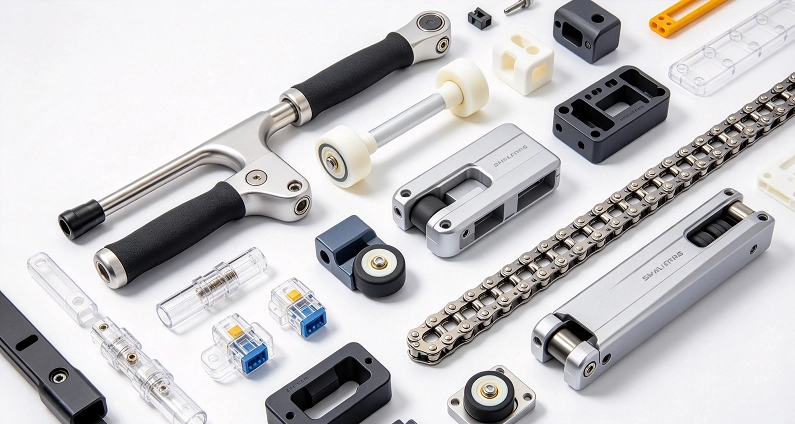
1. Overmolding Process Steps
1.1 Material Selection
Material selection is a crucial step. The selected materials must meet the requirements for the physical properties both inside and outside the product. Consider the intended use of the product, such as ergonomics, comfort, or shock absorption performance, and whether the product needs to be waterproof or heat-resistant. In addition, the coating molding material itself also needs to be firmly bonded to prevent separation after molding.
1.2 Mold Design and Building
The mold design must consider the properties and thickness of both materials. This is different from standard mold design. Wall thickness should be uniform (no more than 4mm). Gates should be placed at the thickest wall section. The flow ratio should stay below 150/liter.
Like other injection molds, overmolding molds are machined with CNC machines. They are made from durable metals like steel or aluminum. This helps them withstand the pressure and temperature during injection molding.
1.3 Injection Molding Equipment
The equipment is custom-designed based on the materials and their layering order. For two-material overmolding, the equipment may use multiple injection units. These units are set up with a rotating mold. This lets each injection machine precisely inject its own material.
First, the injection machine injects a base material layer. After cooling, it forms a rigid overmolded substrate. Then another injection machine adds material on top. In some cases, the substrate is made separately in one injection machine. Then the elastomer layer is injected.
1.4 Popping and Checking
After the forming is completed, remove the parts from the mold. Then a comprehensive inspection of the parts is carried out to detect defects such as incomplete bonding, bubbles, or surface defects.
1.5 Post-Processing
This process ultimately results in a solid component, which is a combination of all the injected materials. However, this component may require some post-processing. For instance, remove excess material, polish to improve surface finish, or further cure to enhance material performance. The objective is to achieve the desired aesthetic appeal and functional characteristics for the overmolded components.
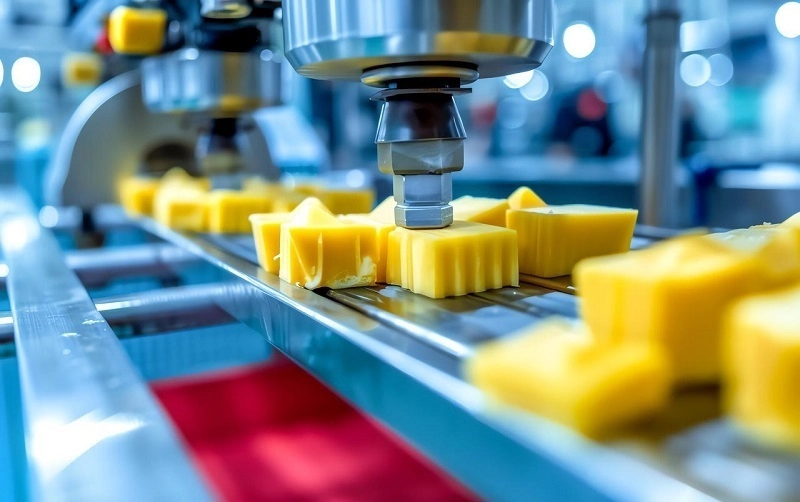
2. Overmolding Design Tips
2.1 Understand the material properties
The core concept of molding technology is to design plastic parts with the required characteristics. Therefore, the selection of materials should be based on this. However, the compatibility and physical properties of the material, such as the melting point and the coefficient of expansion, must also be taken into consideration.
Because the two materials are different, their melting points and coefficients of expansion may also be different. Some resins shrink during the sedimentation process, leading to warping. To avoid this situation, it is recommended to use a core material (base material) with a flexural modulus and melting point both higher than those of the auxiliary material.
Thickness is also very important. A thicker elastomer (TPE) layer can provide better shock absorption and flexibility. On the contrary, a thinner elastomer layer feels harder and is an ideal choice for making reinforcing rib structures.
2.2 Optimize the geometry of parts and molds
The mold design must be capable of multiple injection molding to ensure uniform wall thickness, ranging from 2 to 4 millimeters. Avoid using deep ribs and sharp corners to reduce stress concentration and facilitate the flow of molten material.
The maximum radius at the sharp corners should be less than 0.5 millimeters. Generally speaking, a draft Angle of 1 degree per inch depth should be adopted to facilitate the demolding of parts.
2.3 Enhance Connection
Ideally, materials should be mixed at the molecular level through chemical bonds. To achieve the best bonding effect, the contact temperature should be close to the melting point of the material.
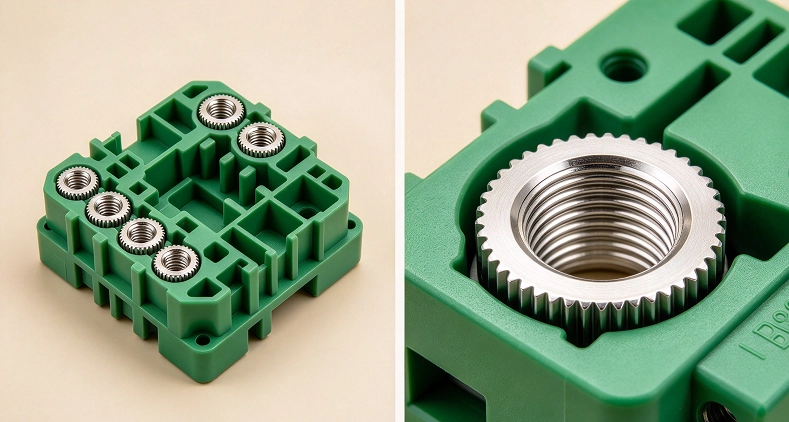
If chemical bonding is not feasible, interlocking mechanical methods can be adopted. Another method is to texture the base material, allowing the resin to fill the gaps to provide adhesion.
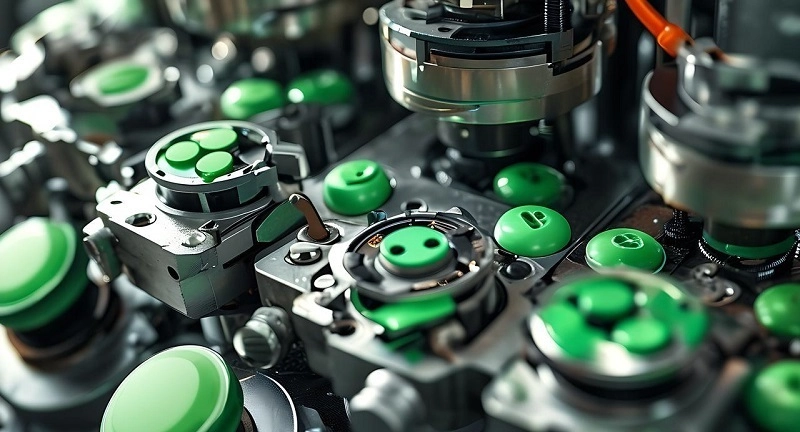
3. Types of Overmolding Materials
3.1 Thermoplastics
Thermoplastics are materials that become more plastic when heated and harden when cooled. These materials can be reused. They can be melted and reshaped many times without chemical change. Some common thermoplastics include:
3.2 Polycarbonate (PC)
PC has excellent impact resistance and optical clarity. Common applications include bulletproof glass and protective gear. Besides being strong and durable, it also resists fading. However, PC scratches easily. It also degrades under long UV exposure, such as turning yellow.
3.3 Polyethylene (PE)
Polyethylene (PE) has a very wide range of uses, from plastic bags to high-strength containers. In overmolding, its variants HDPE and LDPE offer many choices. They can be used for applications from rigid structures to flexible parts.
3.4 Polypropylene (PP)
Polypropylene (PP) has excellent chemical resistance and mechanical properties. Common applications include automotive parts, consumer goods, and living hinges that need repeated bending. Its chemical resistance makes it ideal for sanitary applications. However, PP has only average UV resistance. It needs stabilizers for outdoor use.
3.5 Acrylonitrile Butadiene Styrene (ABS)
ABS is a tough, durable thermoplastic with a wide range of uses across many industries. It has excellent impact resistance, good heat resistance, and a smooth surface. ABS is easy to mold and paint. It is ideal for appearance applications. However, it does not resist chemicals well.
3.6 Elastomers
The main feature of elastomers is their elasticity and soft texture. So they often form the outer layer of hard plastic products. The following three elastomers are commonly used in overmolding:
3.7 Thermoplastic Polyurethane (TPU)
TPU is a versatile material that combines the advantages of rubber and plastic. It is durable, flexible, and wear-resistant. It is ideal for applications needing a soft touch, such as phone cases, seals, and gaskets. It resists oil and bonds well with plastics like PC and ABS. However, it costs more.
3.8 Thermoplastic Elastomer (TPE)
TPE is a class of copolymers (usually a mix of plastic and rubber polymers). It combines the mechanical and thermal properties of thermoplastics with the elasticity of elastomers. They are suitable for overmolding applications needing a soft grip, such as toothbrush handles, tool handles, and personal care products.
3.9 Silicone Rubber
Silicone has excellent heat resistance, flexibility, and insulation. In overmolding, silicone is mainly used for waterproof seals, insulated
cables, and electronic protective housings. It bonds well with metal and some plastics. It is ideal for medical products and cookware that need high-temperature resistance and sterilization.
| Industry | Specific Application | Features Achieved |
| Consumer Electronics | Power outlet covers | Better durability and safety |
| Gaskets | Excellent sealing performance | |
| Overmolded phone cases | Better grip and shock absorption | |
| Electronic housings | Protection from environmental factors | |
| Automotive | Interior parts (dashboards, knobs) | Good looks, comfortable feel |
| Exterior parts (bumpers, trim) | Weather resistance | |
| Medical Devices | Handheld molding equipment (scanners, controllers) | Ergonomic design |
| Wearable medical devices | Comfortable, durable | |
| Syringes, patient monitors | Safety and function | |
| Lab consumables, needles, catheters, dilators | User comfort, safety | |
| Soft-touch buttons | Easier operation | |
| Industrial Equipment | Tool handles and grips | Better grip, less vibration |
| Protective covers | Mechanical and environmental protection | |
| Consumer Goods | Home appliances (handles, knobs) | Better usability and design |
| Sports goods (bike handles, fitness grips) | Comfortable grip, durable | |
| Telecommunications | Overmolded cables, overmolded connectors | Durability, insulation, stress relief |
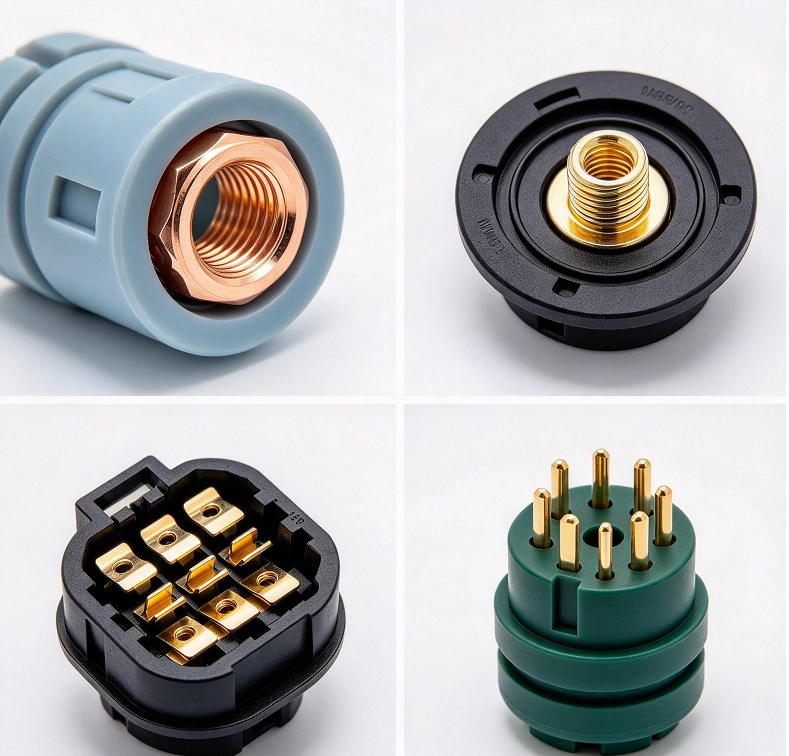
4. Applications of Overmolding
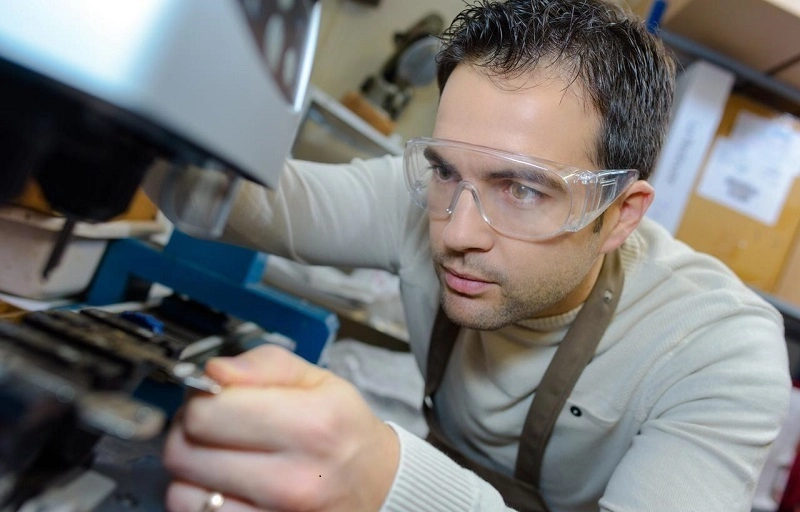
Overmolding is a popular injection molding process. TPE is a commonly used overmold material. The substrate can be any material, from plastic to metal. This makes overmolding an important industrial process. Its many applications are listed below.
5. Advantages of Overmolding
For manufacturers who care about design, grip, and appearance, overmolded products are very attractive. The process cost is not high. After years of improvement, customer satisfaction is also very high. Here are the main advantages of overmolding.
5.1 More Durable
Overmolding adds a layer of material to protect the main components and shield them from mechanical stress and environmental influences. For instance, the sealing parts on waterproof cameras can block dust and water, protecting the internal components.
5.2 It looks better and is also more user-friendly
It can create a contour that better fits the hand shape and a soft handle, making the product easier to operate. For instance, kitchen appliances like blenders use laminated handles, which are more comfortable to hold.
5.3 Save more materials
Two materials are fused in the same mold to form an integral part. If done separately, more materials will be used, and even more will be wasted in subsequent processing.
5.4 More integrated functions
The remote control is made with soft keys formed by lamination, which are sensitive and comfortable to press. The same goes for power tools. The grip area is made of hard plastic, which makes them more stable and easier to use when held.
5.5 has stronger performance
Overmolding can combine multiple materials to produce better composite parts than those made of a single material. For instance, the control components on a car’s dashboard, after being laminated with soft plastic, have a better touch and are more wear-resistant.
6. Limitations of Overmolding
6.1 Substantive probability issues
Not all materials bond well. If the interlayer adhesion is insufficient, it will lead to a weak bond. The final product may fail under force due to weak adhesion.
6.2 Increased manufacturing complexity
Overmolding involves multiple injection molding steps and may use different materials, thus requiring complex mold designs. This complexity leads to an extended production cycle and requires dedicated equipment.
6.3 Higher initial cost
Due to the need for multiple material inventories and dedicated cladding molding molds for each material, the initial cost of this process is relatively high. Therefore, the unit production cost is also relatively high.
6.4 Design Constraints
Overmolding has certain restrictions on the geometric shape and material selection of parts. Due to differences in melting points and mechanical properties, some complex shapes or material combinations may not be achievable.
7. Two-Shot Molding and Overmolding
Two-shot molding and overmolding are often confused. But they are not the same.
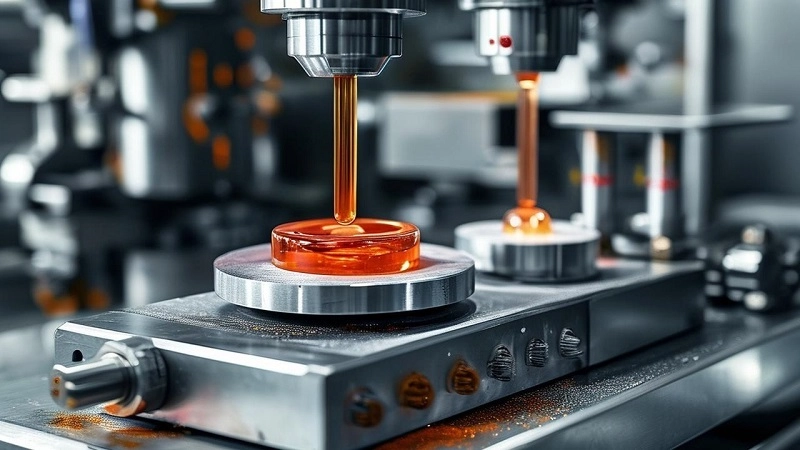
Overmolding is usually a two-step process. First, a hard substrate is molded. Then the substrate is placed into another mold. Soft plastic is injected to cover the surface. It needs two molds, or two injections.
Two-shot molding is a one-step process. It uses one two-shot injection machine and one rotating mold. The two materials are injected one after the other in the same machine. They form in one cycle. It does not need manual handling of the substrate. Efficiency is higher, and consistency is good.
Simply put, overmolding focuses on “soft over hard” functions, like grip and sealing. Two-shot molding focuses on “multi-color in one” efficiency. It suits large-batch production.
8. Co-Molding and Overmolding
Co-molding is actually a type of overmolding. It is a branch of it. Their features and uses are basically the same. The difference is that co-molding melts two materials together at the same time. So it has material requirements: melting points must be close, and bonding properties must match.
The most common combination is a hard plastic substrate with a rubber layer. However, two similar materials can also be co-molded together.
9. What Capabilities Should an Overmolding Supplier Have?
A reliable overmolding supplier must first have material matching capability. They must know which hard plastics and soft plastics can bond. They must know which ones need mechanical locks. This avoids delamination after production.
Second, they need mold design and manufacturing capability. Overmolding usually needs two molds, or one two-shot mold. It has high requirements for positioning accuracy and runner design. The supplier must evaluate gate position, plastic flow path, and cooling effect.
Third, they need processing equipment capability. They need a two-shot injection machine or matching injection equipment. They must stably control temperature and pressure. This ensures the substrate and overmold layer bond firmly.
Fourth, they need quality control capability. They need ISO system certification. They need inspection equipment like CMM and vision measuring machines. They must check bond strength, dimensional accuracy, and appearance defects. Batches must be traceable.
Finally, they need engineering support capability. They must provide DFM feedback during the design stage. They help customers optimize structure and material selection. They should not wait until the drawing is fixed to quote.
10. Why Choose NOBLE as Your Overmolding Manufacturer?
NOBLE offers full support for overmolding projects. We help with design review and material matching. We give DFM feedback to improve part design. We build precision molds for both substrate and overmold. We handle manual and two-shot overmolding. We also provide in-line inspection to check bond quality. Our team supports small batches and mass production. We trace every part from raw material to finished product. This meets ISO 13485 requirements for medical projects. From prototype to production, we support the whole process.
FAQs about Overmolding:
1. What is a mold casting and how does it work?
Mold casting is a two-step injection molding process. First of all, a basic part is molded from plastic. This part is called the substrate. Then, place the base material into another mold. Inject the second material onto it. This material is usually soft plastic or rubber. It wraps around the substrate, forming a thin outer layer. These two materials must be combined by chemical or mechanical means. Otherwise, the outer layer will peel off. The last part is hard inside but soft outside.
2. What materials can be used for covering molding?
Two materials are used for mold replication. The base material is usually hard plastic, such as ABS, PC, nylon, PBT, or PP. It can also be metal. The upper mold layer is usually a soft material, such as TPE, TPU, or silicone. These two materials must be compatible. They need similar melting points and good adhesive properties. Some combinations are bonded chemically, such as TPE and ABS. Others require mechanical locks, such as slotting or knurling, to bond the layers together.
3. What are the main advantages of compression molding?
Compression molding has several key advantages. It enhances grip and comfort, making it a great tool handle and medical device. It enhances sealing and waterproof functions, protecting the internal components from the influence of dust and moisture. It can also absorb shock and vibration. Lamination molding reduces the number of parts and assembly steps, saving labor costs. It allows for a two-color design and a soft-touch surface. The final part is more durable because the layer is firmly bonded and not easy to peel off.
4. What are the common design mistakes in overlay molding?
Common mistakes include sharp corners and uneven wall thickness. Sharp corners can cause stress concentration and cracking. Uneven walls can cause sinking marks or weak areas. Another mistake is the poor door layout. If the gate is directly facing the substrate, the melt can push it away from its position. In addition, ignoring material compatibility can lead to delamination. Finally, forgetting the Angle of the airflow will make the ejection difficult. Good design avoids sharp corners, keeps the wall thickness between 2 and 4mm, and uses an appropriate draft Angle.
5. How to choose a suitable mold replication supplier?
Search for four key abilities. First, material matching. Suppliers must know which hard plastic and soft plastic bond well. Second, mold design and manufacturing. They need to have experience in using dual-mode and precise positioning. The third is quality control. They should have ISO certification, CMM equipment, and complete traceability. Fourth, engineering support. A good supplier will provide DFM feedback as early as possible to help optimize your design, rather than just waiting for the final drawing quotation.