Exoskeleton CNC machining makes parts for wearable robotic systems. This process gives the precision and repeatability these human-augmentation systems need. Medical exoskeletons help with rehabilitation and mobility, while industrial versions lower injury. Getting a high strength-to-weight ratio is key. How does the process handle the special demands of these systems? The answer is in material selection and design strategies that balance performance with cost. Complex shapes cut weight while keeping structural integrity, and tight tolerances make sure motion is smooth.
What Is Exoskeleton CNC Machining?
Definition and Core Workflow
Subtractive Manufacturing for Wearable Robotics
Exoskeleton CNC machining takes material away from a solid block to make final shapes. This subtractive method lets engineers control every dimension and surface. The approach works well for wearable robotic systems because fit affects comfort and function. The process begins with a block of metal or plastic. The machine removes everything that does not match the 3D model. What is left is a precise component ready for assembly. Engineers pick subtractive methods because solid blocks have no internal defects or layer lines. The material structure stays the same throughout the part.
Automated Cutting, Drilling, and Grinding
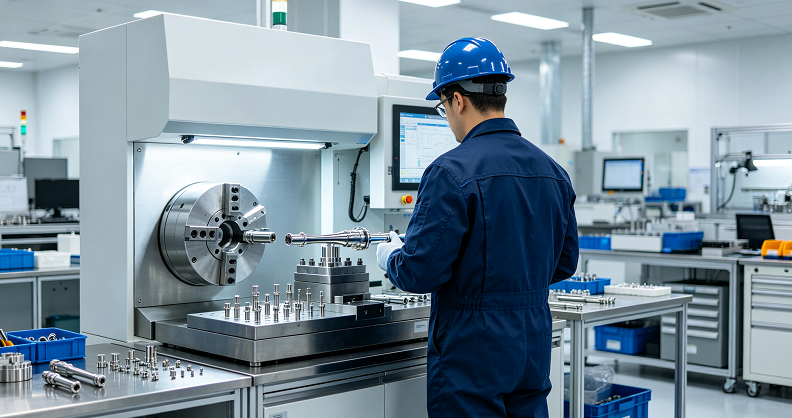
CNC equipment follows digital programs to cut, drill, and grind on its own. The machine reads tool paths and moves cutting tools along them. No manual changes happen during the cycle. This automation keeps things consistent from one component to the next. Operators load the material and start the program. The machine does the rest without human input. Each part matches the design exactly. The program controls spindle speed, feed rate, and cutting depth for every operation. Different tools handle rough work, finishing passes, and detail features.
The HEI Junia Engineering School project gives a real example. Their team built an aluminum motion exoskeleton using a CNC workflow. The automated process let them make reliable components with exact dimensions. The project showed how subtractive methods create lightweight structures for human augmentation.
CNC Machining for Robotic Exoskeletons
3-Axis Roughing and 5-Axis Finishing
Manufacturers split the work into two stages. First comes 3-axis roughing. This step removes bulk material fast. Larger tools cut thick passes to get near the final shape quickly. Shorter tool lengths make the setup more rigid afterward. Then 5-axis finishing refines every surface to meet the design spec.
The 5-axis stage brings clear benefits. The tool approaches from any angle. The component stays clamped in one position. This avoids errors from moving it between setups. Typical 5-axis work holds tolerances around ±0.01mm for joint components. Complex structures may need a range of ±0.005mm to ±0.05mm. These tight numbers keep the assembly moving smoothly during use.
5-Axis Capabilities for Anatomical Shapes
5-axis simultaneous machining creates shapes that match human anatomy. The tool moves along five axes at once. It produces curved skeletal structures, hollow internal channels, and asymmetric mechanical housings. These parts would be impossible with simpler setups. The machine can reach undercuts and complex contours in a single operation. The tool tilts and rotates to access hidden surfaces without colliding with the workpiece. This capability makes 5-axis the top choice for wearable robotics.
Machine Types and Configurations
Vertical and Horizontal Machining Centers
Vertical centers handle smaller workpieces. They are easy to load and operate. Horizontal centers suit larger frame sections. Gravity clears chips from deep pockets. Both types have their place depending on the component size and geometry.
| Machine Type | Role in Manufacturing Exoskeleton Components with Anatomical Geometries | Supporting Detail |
| 5-axis machining | Primary backbone for anatomical geometries | Enables tool approach from any angle, eliminates multiple setups, keeps part clamped so geometric relationships are locked in |
| 3-axis machine | Not recommended for anatomical geometries | Multiple setups introduce stacking errors that can push a critical bore out of its tolerance band; cannot reach undercuts |
| Lathes / Swiss-type machines | Secondary, for actuator components | Swiss-type precision turning essential for small, long, thin components like actuator shafts, pivot pins, and threaded inserts |
| Precision turning centers with live tooling | For harmonic drive components | Allows milling flats, drilling cross-holes, and cutting threads in the same setup |
Multi-Axis Systems and Swiss-Type Lathes
The 5-axis center is the main tool for anatomical work. It keeps features aligned because the component never moves to another setup. Standard 3-axis machines are a poor choice here. Multiple setups create stacking errors that can push a critical bore out of its tolerance band. The 5-axis system removes this risk entirely. The machine holds the part on a tilting rotary table. This lets the tool reach five sides of the part in one setup. No special fixtures are needed for complex angles.
Swiss-type lathes handle small rotary sections. They make motor housings, bearing races, and pivot pins. These need tight concentricity. The Swiss-type method supports material close to the cutting tool. This prevents deflection during the cut.
Turning centers with live tooling add flexibility. They mill flats, drill cross-holes, and cut threads in the same setup. This cuts cycle time and improves accuracy. The 5-axis method handles complex robotic shapes in a single setup. Combining these machine types gives manufacturers the full range needed for wearable robotics production.
Materials for Exoskeleton CNC Machining
Titanium Alloys
Grade 5 and Grade 23
Titanium is a great pick for exoskeleton parts that carry weight. Grade 5 is the most used type. It is strong and resists rust well. Grade 23 is softer and safer for the body. It is less likely to cause allergies when touching skin. Both types stay strong even after many uses.
Load-Bearing Joints and Frames
These alloys work great in joints and frames. They have an excellent strength-to-weight ratio. So parts are strong but not heavy. Titanium also resists damage from sweat and wetness. This makes it safe to wear. The downside is cost and how hard it is to cut. It is harder to cut than aluminum. Tools wear out faster, and cutting must be slower.
Aluminum Alloys
6061 and 7075 for Frames
Aluminum is a trusted material for exoskeleton frames. The HEI Junia Engineering School project used aluminum for its motion exoskeleton. Grade 6061 is easy to cut and weld. Grade 7075 is stronger but harder to shape. Both are light, which is important for wearables.
Anodizing and Surface Treatment
Anodizing puts a protective layer on aluminum. This boosts wear resistance and lets you add color. It also helps prevent rust. A smooth surface is important for comfort and cleanliness. Extra steps like bead blasting or polishing can make it feel better.
Carbon Fiber and Engineering Plastics
CFRP Machining Challenges
Carbon fiber composites are very strong and stiff. They are very light. These traits work well for limb supports and frames. But CFRP is hard to machine. The fibers fray and dull tools fast. Cutting dust must be handled with care. Delamination can happen when drilling.
PEEK, Delrin, and Nylon Interfaces
Engineering plastics do different jobs. PEEK is good for hot or sterile settings. Delrin keeps its shape and is easy to cut. Nylon soaks up shocks and vibrations. These materials often go between metal parts and the body. They reduce weight and add comfort. Picking the right material affects cost, how easy it is to cut, and what finishing it needs. Each type has its own tradeoffs.
Critical Exoskeleton Components Made with Exoskeleton CNC Machining
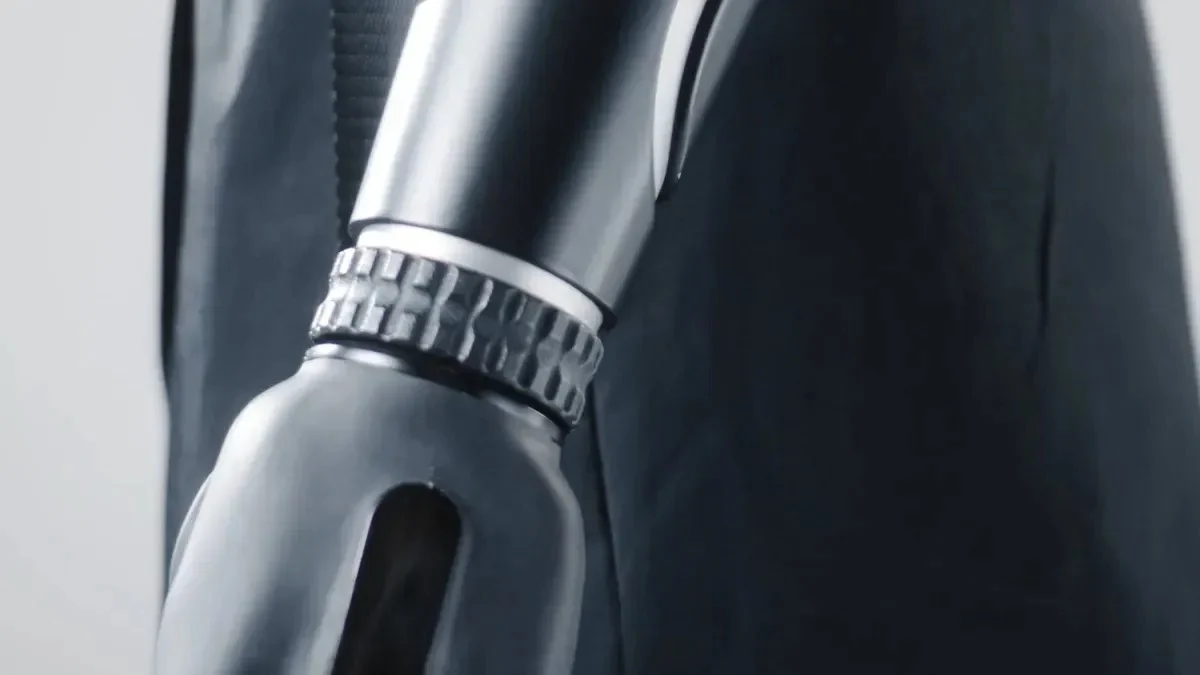
Exoskeleton CNC machining makes the main robot parts that let wearable systems work. Joints, brackets, housings, and structural parts all come from this process. Each piece must meet exact specifications. The Indego project shows this well. Engineers used Protolabs’ CNC machining and 3D printing during development. They used CNC services to machine fixtures that held components for ultrasonic welding. This step was key for building the robotic exoskeleton. The same precision goes into every part of a finished unit.
Joints and Articulation Mechanisms
Hinge Assemblies and Rotary Joints
Hinge assemblies and rotary joints form the moving core of any exoskeleton. These parts handle constant motion and load. A hip joint’s ball-and-socket interface must support flexion, extension, abduction, and adduction. It also bears body weight. This calls for high structural stability and very little play. CNC machining combined with CAD modeling lets engineers design and cut the socket for the best fit. The ball component can be made to tolerances as tight as a few micrometers. The socket is machined to match these tolerances. The resulting snug fit minimizes play in the joint. Smooth articulation follows. Reliable biomechanical performance comes next.
Tolerance Requirements for Smooth Movement
Tolerance control separates good joints from great ones. The table below shows what different components need.
| Component | Precision Requirement | Manufacturing Detail |
| Harmonic reducers | ≤0.005 mm ellipticity on cam surfaces | Control deformation of ultra-thin-walled flexsplines (0.2–0.8 mm wall thickness) via precision grinding |
| RV reducers | ≤±0.01 mm position accuracy | Tolerance complex cycloidal tooth profiles and pin housing bores; critical for heavy-load robot bases |
| Crossed roller bearings | ≤0.003 mm roundness; Ra ≤0.2 μm roughness | Maintain raceway precision even with thin-walled structures |
| Joint housings | ≤0.02 mm multi-hole positional accuracy | Balance lightweight 6061/7075 aluminum design with structural rigidity |
| Process controls | CPK > 1.33 for high-volume production | Specialized fixtures for thin-walled deformation control, in-machine measurement and wear compensation, SPC, and post-processing such as anodizing and precision grinding |
Precision CNC machining also makes accurate housings and complex paths for sensors and control wiring. This allows even spread of pressure sensors, like those under the feet. Small movements get picked up, and response gets better. Multi-axis precision machining creates protective layers from aluminum and polymer alloys. These layers are shaped to fit specific joint geometries. They shield sensitive sensors and control units from humidity and environmental damage. For ball and pin joints under load, finishing methods like Physical Vapor Deposition, Chemical Vapor Deposition, polishing, and precision machining cut down wear and friction. Mirror-finish polishing through precision machining and abrasive processes reduces surface flaws. This helps keep joint motion smooth over time.
Structural Frames and Linkages
Topology Optimization for Weight Reduction
Weight matters in wearable systems. Every gram affects how comfortable the user feels and how tired they get. Topology optimization removes material where it is not needed. The result is a frame that keeps its strength but drops extra mass. This optimization works together with machining. Engineers simulate load paths first. Then they cut away anything that does not carry stress. The final shape often looks organic. It follows force lines instead of simple geometric forms.
Thin-Walled and Complex Geometries
Thin-walled sections and complex geometries push machining to its limits. These features save weight without giving up rigidity. But they also flex during cutting. Specialized fixtures hold thin walls in place. In-machine measurement catches any deviation right away. Wear compensation keeps tools sharp and accurate. Single-piece CNC frames get rid of joints and fasteners. This cuts weight further and boosts overall stiffness. Wearable structural frames gain from this approach. The design feels lighter on the body. It also lasts longer under repeated stress.
Brackets, Housings, and Connectors
Custom Fit Interfaces for Human Anatomy
Brackets and connectors must fit the human body. Every user has a different shape. Custom fit interfaces solve this problem. CNC machining cuts each bracket to match the wearer. This improves ergonomics and lowers pressure points. Articulated joint housings follow the same logic. They wrap around joints and protect internal mechanisms. Hip/knee joint housings need a precise contour. A poor fit causes discomfort and limits motion. A good fit feels natural. The user forgets the device is there.
Threaded Inserts and Fastening Features
Threaded inserts and fastening features hold everything together. These small details decide whether a device stays tight or rattles loose. CNC machining cuts threads with exact pitch and depth. It also drills cross-holes and mills flats in the same setup. This keeps every feature aligned. Actuator mounts need this level of care. A misaligned thread can strip under load. A well-cut thread lasts for thousands of cycles. The actuator stays secure. The whole system stays reliable.
Advantages of Exoskeleton CNC Machining
Precision CNC Machining and Repeatability
Achieving Tight Tolerances
Tight tolerances decide if a wearable device moves smoothly or gets stuck. Precision CNC machining reaches numbers that other methods cannot match. Grinding gets to ±0.005 mm typical and ±0.001 mm best possible. CNC milling holds ±0.025 mm typical and ±0.005 mm best possible. Wire EDM goes even tighter at ±0.0001 inches (0.0025 mm) or better. These numbers matter for joint interfaces and actuator mounts. A sloppy bore ruins alignment. A precise one keeps everything running true.
Consistency Across Production Runs
Repeatability is what separates hobby builds from real products. Every unit must match the first one. CNC automation delivers this. The machine follows the same program every cycle. No human variation creeps in. This consistency helps exoskeleton cnc machining scale from one prototype to full production. Buyers get identical geometry and fit across every batch.
Complex Geometries and Design Freedom
Undercuts, Contours, and Organic Shapes
Full 5-axis simultaneous machining moves all five axes at once. This opens up undercuts and sculpted surfaces. An Italian engineer worked with Lewei Precision to build a full-body passive exoskeleton using this method. The tool approaches from many angles in one setup. Cumulative errors from repositioning disappear. Organic shapes that follow human anatomy become possible.
Rapid Prototyping and Iteration
CNC and 3D printing often work together. The Indego project used both during development. Engineers relied on CNC machining for fixtures and precise parts. Additive manufacturing handled complex geometries and customization. This combo speeds up iteration. Designers test real metal parts early. They catch problems before tooling gets cut.
Material Versatility and Surface Finish
Metals, Plastics, and Composites
CNC handles a wide range of materials. Aluminum, stainless steel, titanium, brass, copper, and hardened steels all machine well. Each brings different weight and strength tradeoffs. The table below shows how CNC stacks up against additive manufacturing.
| Category | CNC Machining | Additive Manufacturing |
| Mechanical Strength | Strong, dense parts from solid stock | Layer bonding creates weak points |
| Tolerances | Very tight and consistent | Moderate; varies by technology |
| Surface Finish | Smooth, often assembly-ready | Rougher; may need post-processing |
| Scalability | Scales smoothly to full production | Best for low-volume runs |
| Material Options | Wide range including titanium | Limited in some metals |
| Structural Integrity | Fully dense; no support structures | May need heat treatment |
| Part Size | Not limited by build chamber | Build chamber limits size |
| Heat Resistance | Stable at high temperatures | Thermal distortion risks |
As-Machined vs. Polished Finishes
Surface finish affects comfort and hygiene. As-machined surfaces work fine for internal brackets and housings. Polished finishes suit skin contact points. Mirror EDM reaches ±0.00005 inches (0.0013 mm) or better. That level of smoothness reduces friction and wear. It also makes cleaning easier for medical use.
Design Considerations for Exoskeleton CNC Machining
Balancing Precision and Cost
Tolerances affect how a wearable device fits and feels. A loose joint wobbles and causes discomfort. A tight one moves smoothly and feels natural. But tighter tolerances cost more because the machine runs slower, tools wear faster, and inspection takes longer. Engineers must find the sweet spot. Critical interfaces like joint bores need the tightest specs. Non-critical brackets can be looser. This balance keeps the device safe without blowing the budget.
GD&T Best Practices
GD&T tells the machinist what really matters. It defines datums, feature controls, and allowable variation. Good GD&T starts with clear datum references by picking stable surfaces. Use position tolerances for hole patterns and profile controls for curved surfaces. Avoid over-tolerancing features that do not affect function. This keeps inspection simple and reduces scrap. The goal is to communicate design intent without adding unnecessary cost.
Ra Values for Comfort and Hygiene
Surface finish affects how the device feels on skin. Rough surfaces irritate skin and trap bacteria, while smooth surfaces feel better and clean easier. Ra measures average surface roughness. Lower Ra means a smoother finish. The table below shows typical requirements.
| Application | Ra Range | Notes |
| Skin contact points | Low Ra | Smooth feel, easy to clean |
| Internal brackets | Moderate Ra | Functional, not touched |
| Joint interfaces | Low Ra | Reduces friction and wear |
Post-Processing for Medical and Industrial Use
Medical exoskeletons need extra care. Polishing removes tool marks and creates a hygienic surface. Anodizing adds a protective layer on aluminum. Bead blasting gives a uniform matte look. Industrial units may skip cosmetic steps and focus on wear resistance instead. The right post-processing depends on where the device will be used.
Setup Time and Tool Changes
Every setup adds cost because the machine stops, the operator repositions the part, and accuracy can drift. Five-axis machining reduces setups since the part stays clamped. Fewer tool changes also save time. A well-designed part needs fewer operations, cutting labor and machine hours. Design for manufacturability means thinking about this early.
Material Selection Impact on Cost
Material choice drives cost in two ways. Raw stock price varies widely. Titanium costs more than aluminum. Machinability also matters. Hard materials wear tools faster and cut slower. A cost estimation model for hand exoskeleton parts uses material type as an input. It sums material cost, labor, machine maintenance, depreciation, and processing time. Picking the right material balances strength, weight, and budget. The goal is durability without overspending.
Choosing NOBLE for Exoskeleton CNC Machining
Full-Service Design to Assembly
NOBLE works with metal and plastic. But we do more than just cut parts. We take care of design, prototyping, production, and assembly. One team handles everything from start to finish. This saves time and cuts down on mistakes. Communication stays clear from the first sketch to the final product.
A wearable system needs brackets, actuator mounts, and electronic housings that fit together. NOBLE makes all these pieces in our own shop. Tight tolerances carry through the whole system. The final device moves smoothly. Every component matches the original design. Assembly goes together on the first try.
ISO 9001:2015 and ISO 13485:2016
Certifications matter for parts worn on the body. NOBLE holds ISO 9001:2015 for general quality management. We also hold ISO 13485:2016 for medical devices. This standard is key for wearable robotic systems. It covers design control, production, and final inspection.
ISO 13485 is not a legal requirement for every supplier, but it is the global industry standard that medical robot makers expect. It shows that a partner runs a quality system with controlled, traceable, and validated manufacturing.
Different regions have different rules. The table below shows what partners need for medical work.
| Certification / Standard | Region | Required Standards |
| ISO 13485 | Global | Certified QMS, validated parameters, Device History Records |
| FDA 21 CFR Part 820 | United States | Design traceability, process validation (IQ/OQ/PQ), lot traceability |
| EU MDR 2017/745 | Europe | Technical docs, material certs, risk management (ISO 14971) |
| PMDA / MHLW | Japan | Manufacturer registration, JIS-compliant certs |
| TGA | Australia | Essential Principles, biocompatibility summaries |
NOBLE meets these standards. Your parts pass audits faster.
Industries We Serve
Medical Applications
Medical exoskeletons help patients regain mobility after injury or illness. These devices need precise joints and comfortable contact points. NOBLE machines components for both goals. Smooth surface finishes prevent skin irritation over long wear periods. Tight tolerances keep joint motion steady and natural. The result is a safe, reliable device that supports recovery.
Clinical exoskeletons face the same demands. They go through sterilization and repeated use. We rely on a certified partner with proven processes to ensure each unit meets the spec.
Industrial and Military Applications
Industrial exoskeletons cut injury risk in factories. Workers wear them to lift heavy loads without strain. Military versions help soldiers carry gear over long distances. Both need tough, lightweight parts that last through heavy use. NOBLE uses aluminum and titanium for these jobs. Complex geometries from design optimization are no problem. The result is a strong frame that does not weigh the user down.
Our End-to-End Approach
Design Support and Prototyping
Good design lowers cost later. NOBLE helps engineers choose materials and features for cutting. We look at tolerances, finish needs, and cost drivers early. Prototyping follows fast. You get real parts to test fit and function before full production. This catches problems when changes are cheap and fast.
Production, Assembly, and Quality Assurance
After design approval, we start production. Our machines run the same program every cycle. Each part matches the first one. We inspect every piece before assembly. Then we put everything together and check the final unit. Quality records stay with each order. This gives you full traceability from raw stock to finished product.
Exoskeleton CNC machining delivers the precise, durable, lightweight parts that medical and industrial exoskeletons demand. Material choice, design decisions, and process selection all shape performance and cost. No other method matches the precision, repeatability, and design freedom of CNC work. That is why picking a partner who understands both machining and robotic application needs matters so much. Looking ahead, hybrid manufacturing, AI-driven toolpath optimization, and advanced materials will push weight down and surface quality up. Ready to build your next exoskeleton? Talk to NOBLE about your CNC machining needs today.
FAQ of Exoskeleton CNC Machining
What is exoskeleton CNC machining used for?
It makes the exact parts that wearable robots need. Joints, frames, brackets, and housings all come from this process. Medical devices use it to help people recover and move. Industrial and military systems use it to carry loads and prevent injuries. The method gives tight tolerances and results that stay the same every time.
Which materials work best for exoskeleton parts?
It depends on the job. Titanium Grade 5 and Grade 23 work well for load-bearing joints. Aluminum 6061 and 7075 are good for frames. Carbon fiber saves weight but is hard to cut. Plastics like PEEK and Delrin handle interfaces and soak up shocks. Each choice affects cost, how easy it is to cut, and finishing needs.
Why is 5-axis machining better than 3-axis for exoskeletons?
Five-axis machines cut body-shaped parts in one setup. The part stays clamped, so errors from moving it disappear. Three-axis work needs many setups, and stacking errors can push a bore out of tolerance. Five-axis also reaches undercuts and hollow channels that simpler machines cannot touch.
How tight can tolerances get with exoskeleton CNC machining?
Grinding reaches ±0.005 mm typical and ±0.001 mm best possible. CNC milling holds ±0.025 mm typical and ±0.005 mm best possible. Wire EDM goes tighter at ±0.0001 inches or better. Joint interfaces and actuator mounts need these numbers to keep motion smooth and alignment true.
Can CNC machining and 3D printing work together?
Yes, and they often do. The Indego project used both during development. CNC made fixtures and exact metal parts. Additive manufacturing handled complex shapes and custom work. This combo speeds up testing and lets designers try real parts before full production begins.
What surface finish do medical exoskeletons need?
Skin contact points need a low Ra for comfort and easy cleaning. Internal brackets can use a moderate finish since nobody touches them. Joint interfaces also need low Ra to cut friction and wear. Polishing, anodizing, and bead blasting are common post-processing steps for medical units.
What certifications should a machining partner hold?
Look for ISO 9001:2015 for general quality management. ISO 13485:2016 matters most for medical devices. It covers design control, production, and inspection. Regional rules like FDA 21 CFR Part 820 and EU MDR 2017/745 may also apply. These standards show a partner runs a controlled, traceable shop.
How do I lower the cost of exoskeleton CNC machining?
Cut the number of setups and tool changes. Five-axis machining keeps the part clamped, which saves time and labor. Pick materials that balance strength, weight, and machinability. Loosen tolerances on non-critical brackets. Good design for manufacturability reduces cost without sacrificing precision where it counts.