Your care robot components—joints, cases, and frame—must meet strict standards, but which building method and material give the best balance? Choosing methods and materials for care robot components is a big decision. Safety, precision, and cost all matter here. This post compares CNC machining, injection molding, sheet metal, DMLS, and 3D printing. You’ll also see how stainless steel 17-4 PH and Ti-6Al-4V hold up. We’ll share design-for-manufacturing tips and a guide for custom versus off-the-shelf care robot components. That way, your robot goes from prototype to production with fewer surprises.
Key Care Robot Component Requirements

Safety and Compliance Standards
Medical Device Regulations and Biocompatibility
Care robot components must follow strict rules. The FDA says many robot systems are Class II or III devices. So you need a 510(k) or PMA before you can sell it. Europe has similar rules through the MDR, and ISO 13485 sets the quality standard. IEC 60601 covers electrical safety, and ISO 14971 helps manage risk over the product’s life. ISO 62304 controls software. These standards guide every design choice you make.
Biocompatibility is also important. Any part that touches a patient must not cause bad reactions. The material you pick decides this. Stainless steel 17-4 PH and Ti-6Al-4V both pass biocompatibility tests. They also handle repeated sterilization without getting weaker.
Cleanability and Chemical Resistance
Hospitals clean equipment all the time. Your robot must handle strong chemicals without cracking or rusting. Smooth surfaces help. So do materials like fluoroprene XP, which stands up to solvents, lubricants, and cleaners. EPDM stays flexible in cold temperatures and resists aging well. Seals made from these materials keep fluids out and maintain IP65 ratings when used in real settings.
Precision and Tolerances
Tolerance Requirements for Moving Joints
Joint precision controls robot accuracy. Typical joint tolerances are plus or minus 0.01 mm. That is IT5 or IT6 grade. Surface finish must be below Ra 0.8 micrometers. Five-axis machining holds plus or minus 0.005 to 0.01 mm. Bearing bores use H6 or H7 fits. These tight tolerances keep motion smooth and repeatable.
Impact on Function and Assembly Cost
Stack-up errors hurt performance. When single parts hold plus or minus 0.05 mm, total radial play can reach 0.2 mm. That lowers joint repeatability. GD&T controls concentricity, true position, and parallelism. A good stack-up stays under 0.05 mm. This method balances assembly cost. You avoid making every part too tight while still getting the accuracy your robot needs.
Durability and Material Longevity
Wear Resistance in High-Cycle Applications
High-cycle use wears parts quickly. Silicone elastomers fail after 10,000 to 50,000 impact cycles. TPU does better with tensile strength above 40 MPa and better abrasion resistance. OMRON TPU with reinforced fiber mesh handles forces over 100N and lasts up to 40% longer. ISO/TS 15066 needs steady performance over at least 100,000 impact cycles. Pick materials with high tear strength and fatigue resistance.
Environmental Resistance (Humidity, Temperature, UV)
Care robots work in many conditions. Humidity makes some materials swell and break down. UV light breaks down others. Protective coatings and encapsulation help. So do self-healing materials that fix small damage on their own.
Manufacturing Processes for Care Robot Components
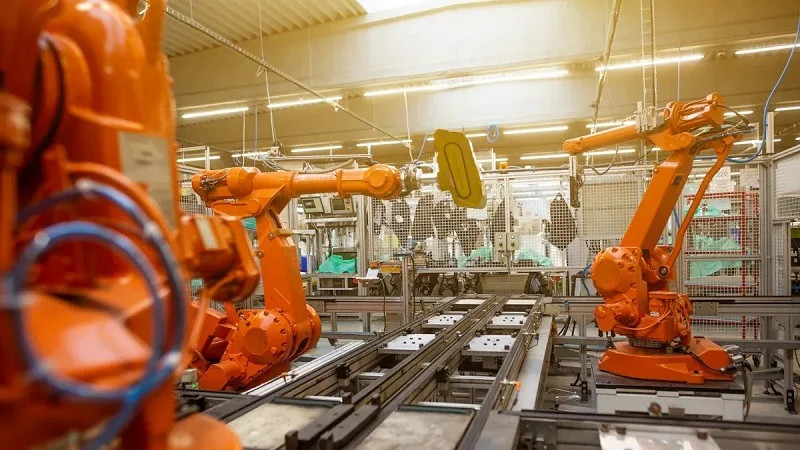
The way you build your robot’s parts affects cost, precision, and speed to market. Each manufacturing process has strengths for different jobs. Let’s walk through the main methods and where they fit best.
CNC Machining for Precision Metal Parts
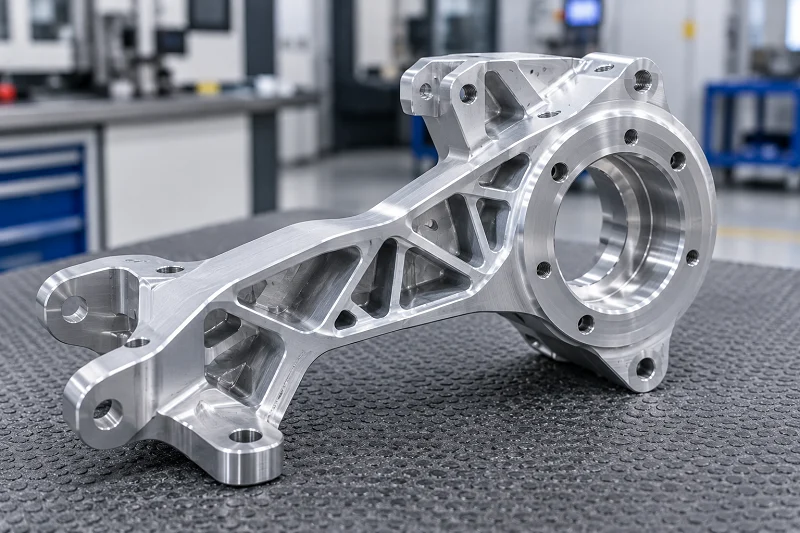
CNC machining stays the top choice for parts needing tight dimensions and strong materials. It works well for structural frames, joints, and mounts that handle repeated loads without shifting.
Applications: Structural Frames, Joints, and Mounts
Your robot’s frame carries the weight. Joints control movement. Mounts hold sensors and actuators in place. These parts need stiffness and stability. CNC machining delivers that. You can cut stainless steel 17-4 PH or Ti-6Al-4V with high repeatability. Five-axis machines create complex geometries in one setup. That cuts errors from multiple clampings. The process supports threaded holes, dowel pin locations, and bearing pockets that other methods can’t match.
Achievable Tolerances and Surface Finishes
Here’s a look at what CNC machining achieves for robotic parts:
| Machining Operation / Feature | Achievable Tolerance / Surface Finish |
| General milling | ±0.01 mm |
| Precision turning and five-axis work | ±0.005 mm or tighter |
| Bearing seats and seal faces | Ra 0.4–0.8 surface roughness |
| Critical robot features (with linear scales & in-machine probing) | ±0.002–0.005 mm |
| Servo motor and encoder housings (concentricity) | ≤0.01 mm TIR |
| Harmonic-drive flexspline thin-wall roundness | ≤0.005 mm |
| Reducer backlash | ≤1 arc-minute |
| GD&T cylindricity callout | ⌭0.004 mm |
| GD&T concentricity callout | ◎0.005 mm |
| Repeatable movement — surgical robots | ≤0.01 mm |
| Volume production critical dimensions | Cpk ≥ 1.33 with sampling to AQL 1.0 |
Standard surface roughness for flat surfaces sits at 63 microinches. Curved surfaces come out at 125 microinches or better. Light bead blasting improves cosmetic surfaces. Common GD&T controls like true position, flatness, and perpendicularity apply. The precision from CNC machining supports the accuracy that robotic systems demand.
For volume production, NOBLE (a leading manufacturer in China) combines CNC machining for high-precision components with other manufacturing processes to control costs. Their manufacturing expertise helps clients move from prototype to mass production quickly. This integrated approach is central to modern manufacturing for robotics.
Manufacturing Processes for Liquid Handling Robot Parts
Liquid handling robot parts need special care. These components contact fluids, must seal tight, and resist corrosion. Two key manufacturing processes handle these needs: laser cutting with welding, and overmolding for seals. Selecting the right manufacturing processes for liquid handling robot parts directly affects how well the final assembly performs in real-world use.
Laser Cutting and Welding for Fluid Paths
Fluid paths must be smooth and leak-free. Laser cutting and bending creates precise channels in sheet metal. The laser gives clean edges with no burrs. Welding joins sections without adding material that could trap residue. Stainless steel resists corrosion from reagents and cleaning solutions here. The assembly stays cleanable and chemically safe. That matters for liquid handling systems running diagnostic tests or drug preparation. These liquid handling machines need high reliability across thousands of cycles.
Overmolding and Insert Molding for Seals and Connectors
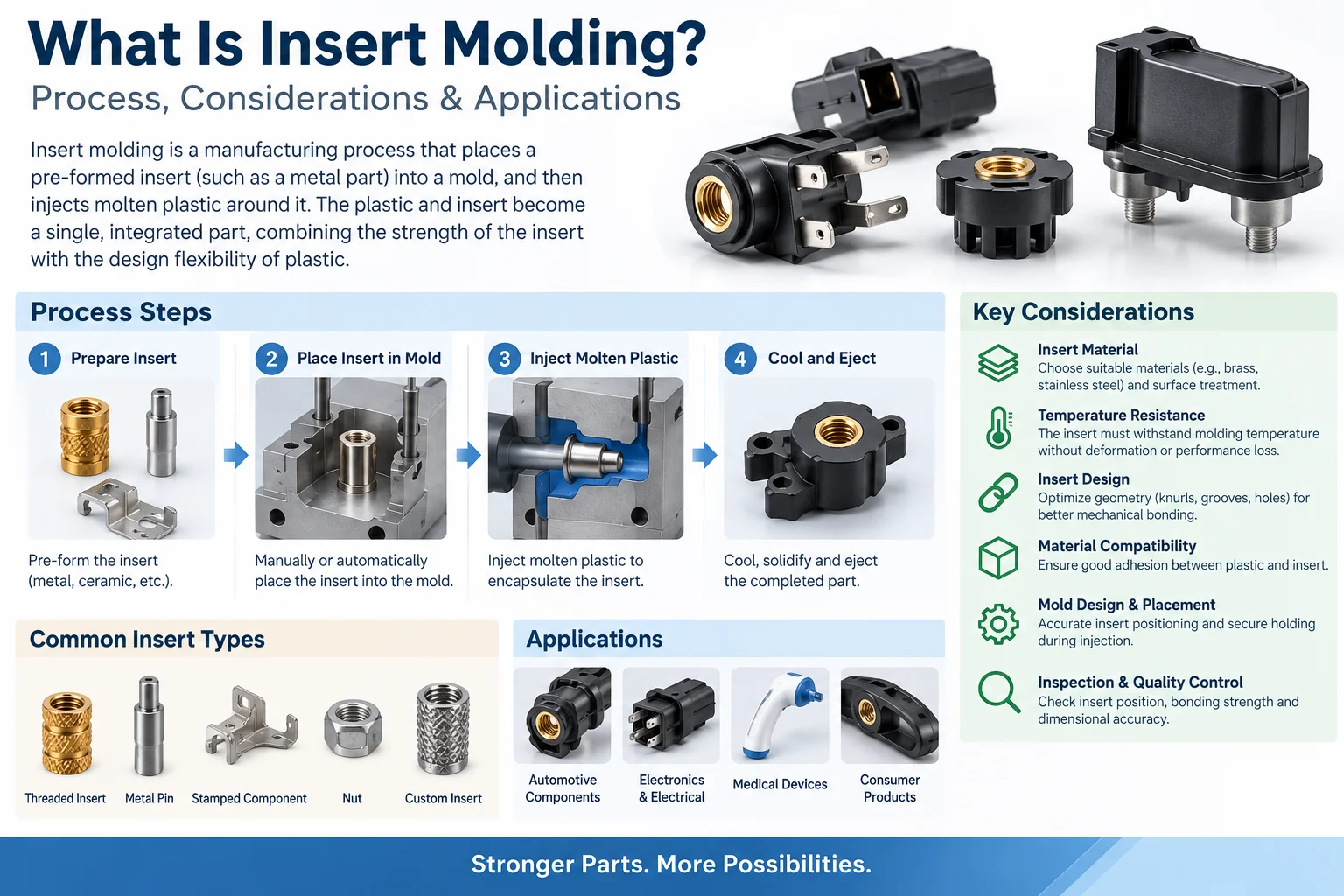
Seals and connectors often use two materials. Overmolding bonds a soft elastomer onto a rigid substrate. The soft layer creates the seal. The rigid part provides structure and mounting points. Insert molding places a preformed metal or plastic insert into the mold, then injects material around it. This gives you threaded inserts, electrical contacts, or sensor housings with integrated sealing. These manufacturing processes reduce assembly steps and improve reliability for liquid handling robot parts that stay contamination-free across many cycles. For automated liquid handling, seal integrity is critical. It maintains accuracy and prevents cross-contamination in high throughput workflows.
Key Manufacturing for Robotics: Injection, Sheet Metal, and Additive
Beyond CNC and liquid handling processes, three more methods round out manufacturing for robotics.
Injection Molding for High‑Volume Plastic Components
Injection molding shines when you need thousands of identical plastic parts. Enclosures, covers, and brackets all work well. The upfront tooling cost is high, but per-part cost drops fast at volume. You add snap fits, living hinges, and mounting bosses directly into the mold. That saves assembly time. Engineering plastics like ABS, polycarbonate, and nylon give good impact strength and cosmetic finish. Medical-grade variants add biocompatibility where needed. This process supports the volume needs of robotic automation parts.
Sheet Metal Fabrication for Chassis and Support Structures
Sheet metal forms the backbone of many robotic systems. Laser cutting, bending, and welding turn flat metal into rigid frames. The process is fast and cost-effective for low to medium volumes. You reinforce high-stress areas with gussets or formed ribs. Flat panels make it easy to mount electronics, cabling, and sensors. NOBLE’s sheet metal services include laser cutting and bending, then welding and finishing. This creates a strong, light chassis for your robot.
DMLS and 3D Printing for Complex Geometries and Prototypes
Direct Metal Laser Sintering (DMLS) and 3D printing offer design freedom that machining can’t match. You print complex internal channels, organic shapes, and lattice structures. These features support conformal cooling, light weighting, and part consolidation.
The key strength of metal 3D printing is its ability to create parts with complex & optimized geometries. This means that it is ideal for manufacturing high-performance parts.
For prototypes, 3D printing lets you iterate quickly without tooling delays. You test fit, function, and assembly before production tooling. For end-use parts, DMLS reduces the number of components in an assembly. Multiple machined parts combine into one printed piece that is stronger and lighter. This fits trends in modern manufacturing for robotics, where complexity doesn’t increase cost. The precision from DMLS supports the accuracy required by advanced robotic systems. These additive methods are essential tools in the manufacturing for robotics landscape.
Materials for Care Robot Components
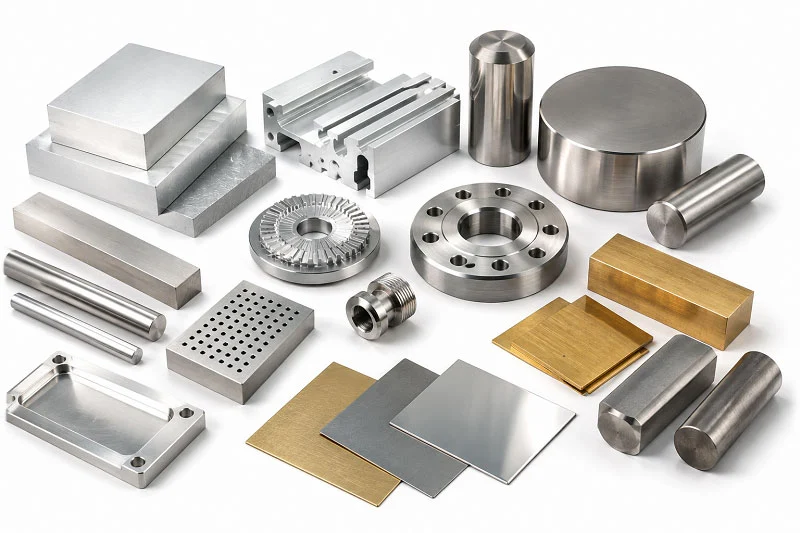
Choosing the right material for your care robot components affects everything that comes next. It changes how long parts last, how well they deal with chemicals, and how much you spend. Some parts need to be very strong. Others need low friction or to be safe for the body. Let’s look at the main material families and where each one works best.
Liquid Handling Robot Parts: Material Choices
Liquid handling robot parts have a hard set of demands. They touch reagents, solvents, and biological samples. They must resist corrosion. They must not leak chemicals into fluids. And they often need low friction so liquids flow smoothly. Three material families lead in this area: PTFE, PEEK, and 316L stainless steel. Each one brings different strengths.
Stainless Steel for Corrosion Resistance in Fluid Contact
316L stainless steel is known for its corrosion resistance. Its molybdenum content protects against chlorides, salts, and industrial chemicals. It can handle bleach, peracetic acid, and vaporized hydrogen peroxide without breaking down. That makes it a top choice for needles that touch bodily fluids. It also works well for parts that go through repeated sterilization. The elastic modulus is 193 GPa, about three times stiffer than aluminum. That stiffness keeps precision needle parts from bending during use. When sanitation rules are strict, 316L stainless steel gives reliable performance for liquid handling robot parts.
Engineering Plastics for Low‑Friction Fluid Paths
PTFE and PEEK offer different benefits for fluid contact. PTFE resists almost every chemical. No common lab reagent breaks it down. Its friction is very low, and it has non-stick properties. That makes it great for seals, tips, and static wetted parts. The downside? PTFE has low tensile strength, between 20 and 35 MPa. It deforms under pressure, so it cannot carry structural loads. PEEK fills that gap. It has high tensile strength, around 90 to 100 MPa. It holds its shape under steady pressure. PEEK resists most organic and water-based liquids, though strong sulfuric acid and some halogens can damage it. For moving parts that need tight tolerances, PEEK works well. For chemical delivery systems and seals exposed to harsh reagents, PTFE is the safer choice. These two plastics work together in liquid handling systems where chemical safety and mechanical strength both matter.
Here’s a quick comparison of these three materials for liquid handling robot parts:
| Material | Corrosion / Chemical Resistance | Friction & Non-Stick Properties | Mechanical Strength | Best Use in Liquid Handling Robots |
| PTFE | Resists almost all chemicals; no common lab reagent breaks it down | Very low friction and non-stick | Low tensile strength (20–35 MPa); deforms under pressure | Chemical delivery systems, seals, and tips exposed to aggressive reagents |
| PEEK | Resists most organic and water-based liquids; damaged by strong sulfuric acid and some halogens | Good for moving parts needing tight tolerances | High tensile strength (90–100 MPa); holds shape under steady pressure | Structural robotic arms, positioning fixtures, and high-load moving parts |
| 316L Stainless Steel | Outstanding corrosion resistance; molybdenum protects against chlorides, salts, and industrial chemicals | Not noted for low friction | Elastic modulus 193 GPa (about 3× stiffer than aluminum) | Needles touching bodily fluids, parts undergoing sterilization |
High‑Strength Metals: 17‑4 PH and Ti‑6Al‑4V
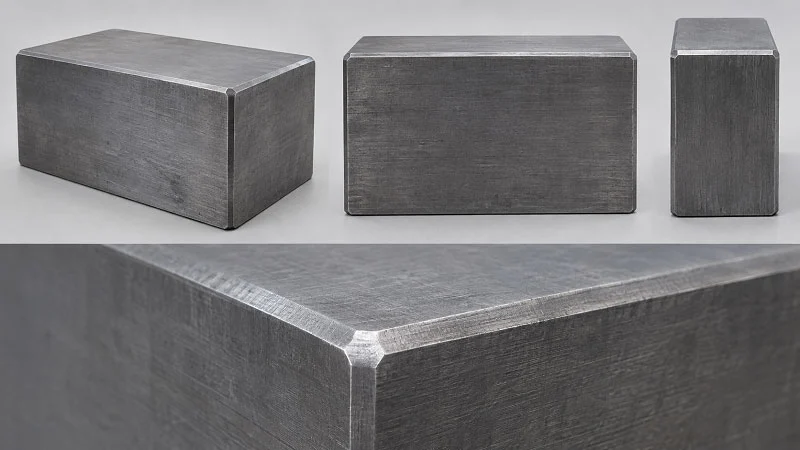
When your robot needs metal parts that carry heavy loads or resist wear, two alloys come to mind: stainless steel 17-4 PH and titanium Ti-6Al-4V. Both work well with CNC machining and DMLS. Both offer excellent corrosion resistance. But they differ in strength, hardness, and machinability.
Mechanical Properties and Machinability
Stainless steel 17-4 PH brings impressive numbers. In the H900 condition, its ultimate tensile strength reaches 1275 MPa. Yield strength hits 1060 MPa. Flexural strength climbs to 1380 MPa. The elastic modulus sits at 200 GPa. Hardness measures 38 HRC. Elongation at break is 10 percent. Density is 7.75 g/cm³. As machined, surface roughness comes out at Ra 1.0 µm. These properties make 17-4 PH a strong candidate for structural frames, joints, and mounts in care robot components.
Ti-6Al-4V offers a different profile. Its ultimate tensile strength ranges from 936 to 1014 MPa, depending on orientation and location. Ductility varies too. When tested perpendicular to deposition layers, ductility runs 14 to 21 percent. Parallel to layers, it drops to 6 to 11 percent. The elastic modulus is 110 GPa. Hardness falls between 302 and 340 HB in annealed bar form. Max service temperature reaches 315°C. The beta transus sits at about 999°C.
Machinability separates these two alloys. 17-4 PH machines well with the right approach. Use sharp, multilayer TiAlN or PVD-coated carbide tools with positive rake angles. This reduces cutting forces. Ceramic-coated inserts work well for turning, especially in the H900 condition. They dissipate heat and extend tool life. Maintain steady feeds and speeds to avoid work hardening. Adequate cooling preserves dimensional accuracy. The H900 peak-hardness condition makes machining harder. Tool wear speeds up if parameters slip.
Ti-6Al-4V is tougher to machine. Its thermal conductivity is only 6.7 W/m·K. That’s about 25 times lower than 6061 aluminum and six times lower than 4140 steel. Heat concentrates at the cutting edge. Built-up edge forms. Work hardening occurs. Roughing speeds should start at 80 to 120 SFM (24 to 37 m/min). Coolant pressure needs to exceed 500 psi (35 bar). Chip load should stay at or above 0.002 in./tooth (0.05 mm/tooth). These parameters prevent work hardening and keep the cut stable.
Surface Treatments for Wear and Corrosion
Surface treatments extend the life of metal parts. The right choice depends on the application. Here’s a guide:
| Requirement | Recommended Surface Treatment |
| High wear / fatigue | Shot peening combined with PVD or DLC coating |
| Outdoor / corrosion exposure | Powder coating plus anodizing or passivation |
| Cosmetic and lightweight needs | Anodizing |
| Food or pharmaceutical contact | Passivation or electropolishing |
| High-heat areas | Hard chrome or ceramic coating |
Passivation uses nitric or citric acid. It removes free iron and forms a passive chromium oxide layer. This delivers excellent corrosion resistance. It suits food-grade robots, medical cobots, outdoor units, and joints. Anodizing (Type II and III) works on aluminum extrusions and bent or stamped parts. It creates a hard, wear-resistant oxide layer. Benefits include corrosion resistance, electrical insulation, and aesthetic color options. It fits chassis rails, housings, brackets, sensor mounts, and arms. PVD and CVD coatings like TiN, TiAlN, and DLC apply to gears, shafts, and sliding surfaces. They are extremely hard (2,000–3,000 HV), have low friction, and resist wear. Gear teeth, bearing journals, sliding joints, and end-effectors benefit most.
In the medical device field, surface treatments meet strict biocompatibility and corrosion-resistance requirements. Anodizing implants forms an aluminum oxide film with good biocompatibility. This reduces adverse reactions with human tissue. Micro arc oxidation produces ceramic coating layers with excellent wear resistance and biocompatibility. It suits medical devices such as artificial joints.
Engineering Plastics for Enclosures and Structural Components
Not every part needs metal. Enclosures, covers, and brackets often work better in engineering plastics. These materials cut weight, resist impact, and offer cosmetic flexibility. They also cost less than machined metal at volume.
ABS, Polycarbonate, and Nylon: Impact Strength and Cosmetic Finish
ABS is the workhorse. It offers good impact strength and takes paint, texture, and color well. Polycarbonate brings superior impact resistance. It also handles higher temperatures. Nylon provides excellent wear resistance and chemical resistance. It works well for gears, bearings, and structural clips. Each plastic has a place in robot design. ABS suits cosmetic covers and housings. Polycarbonate fits parts that need clarity or high impact strength. Nylon handles moving parts that rub or slide.
Food‑Grade and Medical‑Grade Variants
Standard plastics may not meet safety rules. Food-grade and medical-grade variants fill that gap. These materials pass biocompatibility tests. They resist repeated cleaning. They do not leach harmful chemicals. Medical-grade ABS and polycarbonate are common in care robot components that touch patients or sit in sterile fields. Food-grade nylon works in liquid handling machines that prepare drugs or handle samples. Always check the material certificate. It should confirm compliance with ISO 10993 or FDA food-contact rules.
Design Considerations for Care Robot Components
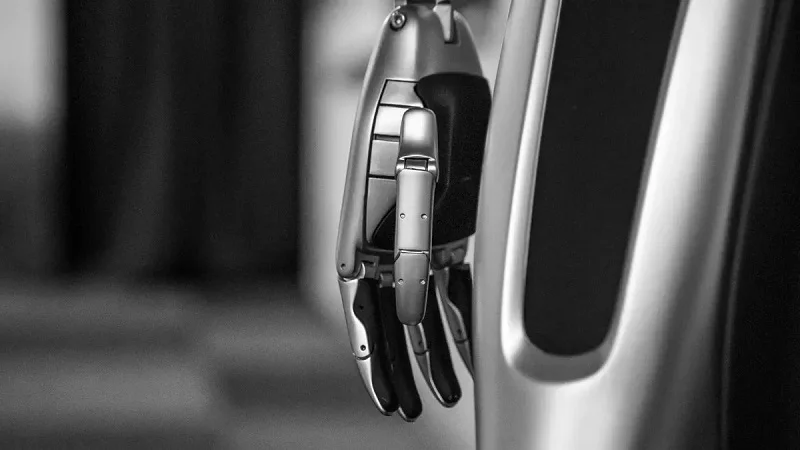
Manufacturing Constraints and Part Geometry
Draft Angles, Wall Thickness, and Undercuts
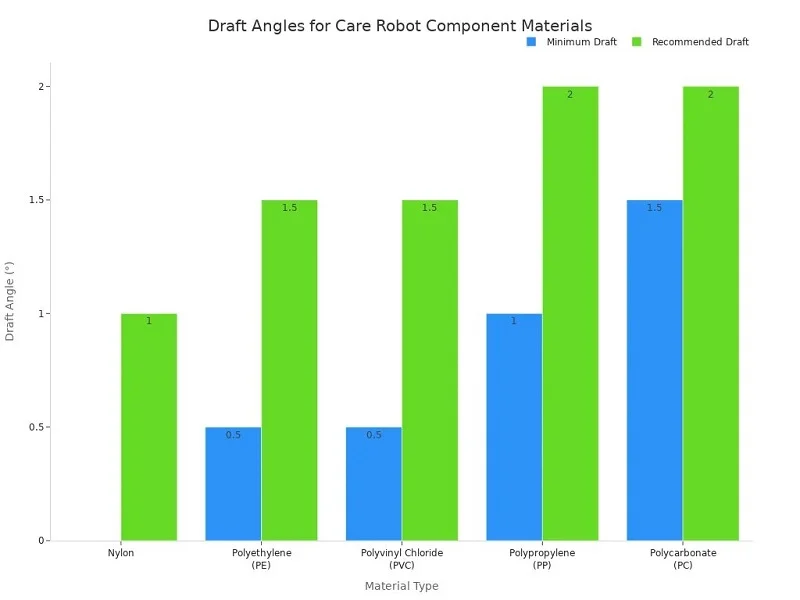
Draft angles are important for molded parts. They help parts come out of the mold without scrape marks. Nylon needs no minimum draft, but one degree works best. Polycarbonate needs at least 1.5 degrees, and two degrees is better. Textured surfaces need more draft because texture makes small undercuts. A good rule is to add 1.5 degrees of draft for every 0.001 inches of texture depth.
Wall thickness changes with how deep a feature is. A 0.25-inch deep feature needs 0.040 inches of wall and 0.5 degrees of draft. At two inches deep, you need over 0.100 inches of wall and two degrees. Round all edges with inside fillets at least 0.5 times the wall thickness. Outside fillets should reach 1.5 times the wall thickness.
Optimizing for CNC, Injection Molding, or Sheet Metal
Each process has its own rules. CNC handles tight tolerances without draft angles. Injection molding needs draft and even walls. Sheet metal works best with simple bends and steady radii. Pick your process early. That choice shapes your geometry and saves redesign time later.
Assembly and Joining Methods
Fasteners, Welding, and Adhesive Bonding
Fasteners make assembly easy to take apart. Welding creates permanent, strong joints. Adhesive bonding spreads stress over a wider area. Each method fits different care robot components. Use fasteners where you need to reach parts for service. Weld structural frames that never come apart.
Modular Design for Serviceability
Modular design keeps wear and contamination in one place. You can replace a motion element without touching the frame. Standard fasteners and connectors shorten repair time. Test points and fault codes guide service decisions without guesswork. If a low-cost wear part forces you to remove a high-value assembly, the design is not serviceable enough.
Cost Optimization and Material Selection
Balancing Material Cost with Performance Needs
Lightweight composites cut weight and energy use. High-strength alloys like titanium and aluminum handle load-bearing jobs. Advanced polymers work for housings and non-structural parts. Hybrid systems combine metals for high-stress areas with composites for weight-sensitive sections. Regional demand matters too. Asian markets put cost first, while North American markets focus on performance.
Minimizing Waste with Near‑Net Shape Processes
Near-net shape processes reduce scrap. DMLS and 3D printing build parts close to final form. That cuts material waste and machining time. Design for manufacturability principles guide these choices. They help you balance tight tolerances with production cost. Good design keeps tight tolerances where they matter and relaxes them elsewhere.
Custom vs. Off-the-Shelf Care Robot Components

For each care robot component, you have a choice to make. Do you design a custom part? Or do you choose an off-the-shelf option? Your timeline, budget, and final performance all depend on this answer.
When to Choose Custom Fabrication
Unique Geometries, Proprietary Designs, or Tight Tolerances
Some parts just aren’t in any catalog. Maybe your robot arm needs a special mounting bracket. Maybe your end effector has a shape no standard part can fit. Maybe you need tight tolerances for a key joint — plus or minus 0.005 mm that standard bearings can’t promise. Custom fabrication is your only option in these cases. Custom precision parts let you control every dimension and material. You get exactly what your design calls for. Custom fabrication also keeps your intellectual property safe. Off-the-shelf parts would show your design approach to rivals. Custom parts keep your ideas protected within your own company.
High‑Volume Production with Dedicated Tooling
Volume changes the math in a big way. For low volumes, CNC machining works well. Companies like NOBLE offer these services for prototyping runs. But once you need thousands of identical care robot components, injection molding changes the cost picture. Upfront tooling costs a lot. Per-part cost drops quickly at scale. Dedicated tooling pays for itself over time. Each part comes out the same. That consistency matters for safety-critical care robot components that must work the same way every cycle.
Leveraging Standard Components for Faster Development
Bearings, Fasteners, and Sensor Housings
Standard components save months of development time. Bearings, fasteners, and sensor housings come in thousands of sizes already. You pick one from a catalog. Sensor bearings today give real-time data on load and wear. A major automotive manufacturer saw a 25% drop in maintenance costs after adding sensor bearings. SKF and Schaeffler deployments cut downtime by up to 30%. That data helps you build smarter care robot components. Configurable off-the-shelf components cut engineering effort. Standard bearings and shafts remove tooling costs completely. They let you test and iterate fast during prototyping.
Reducing Lead Time and Initial Investment
Lead time matters when you race to market. An off-the-shelf bearing ships in days. A custom component takes weeks or months. You save design time, tooling wait, and testing cycles. Your upfront investment stays lower. You launch a minimum viable robot, test it in the field, and upgrade later. Off-the-shelf parts use proven designs that others have already validated. That lowers your technical risk by a lot.
Balancing Performance, Lead Time, and Budget
Decision Matrix for Hybrid Approaches
Most successful robots use a smart mix. Critical structural parts may be custom. Bearings and fasteners stay off-the-shelf. This hybrid approach gives you the best of both worlds. You get custom precision where accuracy matters most. You get off-the-shelf savings where standard parts work fine. A simple decision matrix helps you choose:
- If the part carries proprietary design or needs tight tolerances, go custom
- If the part is a standard size and function, go off-the-shelf
That balance keeps your budget under control. NOBLE’s services support this hybrid approach well. Their Smart Manufacturing division offers custom injection molding alongside standard sheet metal fabrication. You develop your custom-manufactured components and standard parts under one roof.
Validating Standard Parts for Load and Safety Requirements
An off-the-shelf bearing may look right on paper. You must validate it for your specific load conditions. Check the rated load, speed limit, and temperature range. Run a safety factor analysis for your application. Make sure the part meets ISO 13485 or IEC 60601 if it goes into a medical robot. Never assume a catalog part meets your needs just because it fits physically. Test it under real operating conditions. If it passes, you save time and money. If it fails, redesign and go custom. That balance — custom where it counts, off-the-shelf where it doesn’t — gives you the fastest path to a reliable care robot.
Working with NOBLE for Care Robot Components

Complete Metal and Plastic Processing
CNC, Injection Molding, and Sheet Metal Work
NOBLE takes care of both metal and plastic care robot components in one place. Their CNC machining gives you the tight tolerances your joints and mounts require. Injection molding handles your enclosure and cover needs when you make many parts. Sheet metal work builds strong chassis and support frames. You don’t have to manage three different suppliers or hunt for missing parts. One team runs the whole build.
Overmolding and DMLS for Complex Assemblies
Some parts need more than one method. Overmolding attaches soft seals to rigid connectors. DMLS prints complex metal shapes that machining can’t make. NOBLE runs these methods along with their main services. That means your multi-material assembly arrives as one finished unit. You avoid the coordination problems and the shipping delays.
Quality Certifications: ISO 9001:2015 and ISO 13485:2016
Strict Quality Management for Safe, Reliable Components
NOBLE has ISO 9001:2015 and ISO 13485:2016. The first one covers general quality management. The second one applies directly to medical devices. These quality certifications matter when your care robot touches patients. Every process follows written procedures. Every part meets the same standard, batch after batch.
Traceability and Documentation for Audits
Audits go more smoothly when your supplier keeps good records. NOBLE provides compliance and traceability documentation as part of their quality services. They also handle PPAP and APQP paperwork. You get the material certs, inspection reports, and process records you need. That paper trail protects you during regulatory reviews.
Full-Service Support from Design to Assembly
Engineering Review for DFM and DFA
Good design for manufacturability starts early. NOBLE’s engineering team checks your drawings before cutting metal. They point out features that raise cost or cause defects. Their CAE collaboration covers tolerance stack-ups and assembly checks. You find problems on screen, not on the production floor.
Prototyping, Production, and Final Integration Under One Roof
NOBLE helps you from first idea to final build. Their engineering services include product and systems design, 3D modeling, and digital twins. On the manufacturing side, they handle CNC programming, tooling, fixtures, and process planning. Quality services add CMM programming, scanning, and metrology. This full-service model keeps your robotics project moving. You get one partner for prototyping, production, and integration. That saves time and keeps your robotic systems consistent from start to finish.
Choosing methods and materials for care robot components means balancing safety, precision, durability, and cost. No single answer works for every part. A mix of both approaches usually works best. Go custom for critical joints and structural frames where tight tolerances matter. Pick off-the-shelf bearings, fasteners, and sensor housings to save time and money. This blend gives you precision where it counts and savings where it doesn’t. You also cut lead time and lower your upfront costs. Ready to move forward? Talk to NOBLE’s engineers for a design review. They’ll help you balance custom work with off-the-shelf options. Request a quote today, and get your care robot components built right.
FAQ of Care Robot Components
What tolerances do care robot components need for moving joints?
Joint precision controls how accurate the robot is. Most joints need tolerances of plus or minus 0.01 mm, which is IT5 or IT6 grade. Surface finish should be below Ra 0.8 micrometers. Five-axis machining can hold plus or minus 0.005 to 0.01 mm. Bearing bores use H6 or H7 fits. These numbers keep movement smooth and repeatable.
Which metals work best for structural care robot components?
Stainless steel 17-4 PH and Ti-6Al-4V are the best choices. In the H900 condition, 17-4 PH reaches 1275 MPa ultimate tensile strength and 38 HRC hardness. Ti-6Al-4V has a lower elastic modulus of 110 GPa and a max service temperature of 315°C. Both work well with CNC machining and DMLS.
Why does biocompatibility matter for care robot components?
Any part that touches a patient must not cause bad reactions. Stainless steel 17-4 PH and Ti-6Al-4V both pass biocompatibility tests. They also survive repeated sterilization without getting weaker. Medical-grade plastics like ABS and polycarbonate do the same job for enclosures and covers.
When should I pick injection molding over CNC machining?
Volume decides this. CNC machining works well for prototypes and low runs. Injection molding wins once you need thousands of identical plastic parts. Tooling costs a lot upfront, but per-part cost drops fast at scale. You also get snap fits and mounting bosses built right into the mold.
What makes liquid handling robot parts different from other components?
These parts touch fluids, so they must seal tight and resist corrosion. PTFE handles almost every chemical but has low tensile strength. PEEK holds its shape under pressure. Stainless steel 316L resists chlorides and salts. Laser welding and overmolding keep fluid paths clean and leak-free.
How do I know if an off-the-shelf part will work safely?
Never assume a catalog part meets your needs just because it fits. Check the rated load, speed limit, and temperature range. Run a safety factor analysis for your application. Confirm it meets ISO 13485 or IEC 60601 if it goes into a medical robot. Test it under real conditions.
What certifications should a care robot component supplier hold?
Look for ISO 9001:2015 and ISO 13485:2016. The first covers general quality management. The second applies directly to medical devices. Together they mean written procedures, batch-to-batch consistency, and the traceability documentation you need during regulatory audits.
Can one supplier handle both custom and standard care robot components?
Yes, and that saves time. A hybrid approach works best: custom fabrication for critical joints and frames, off-the-shelf bearings and fasteners everywhere else. NOBLE supports this under one roof with CNC, injection molding, sheet metal, overmolding, and DMLS. You avoid juggling multiple vendors.