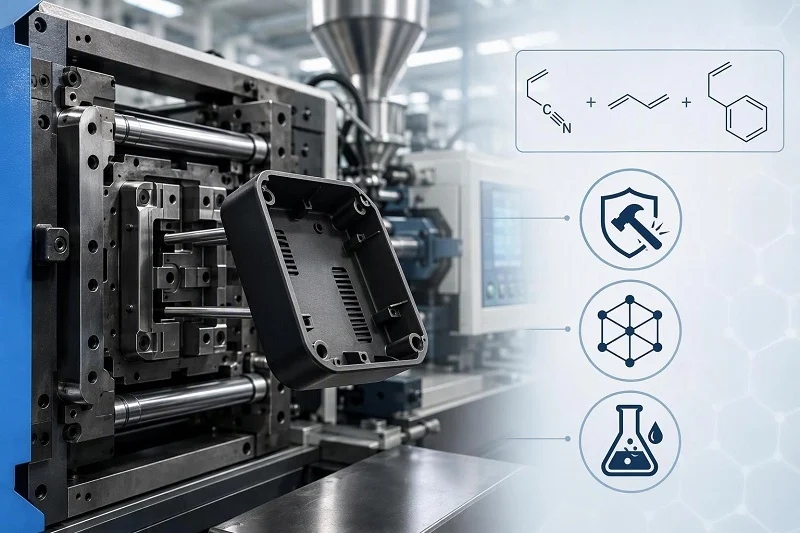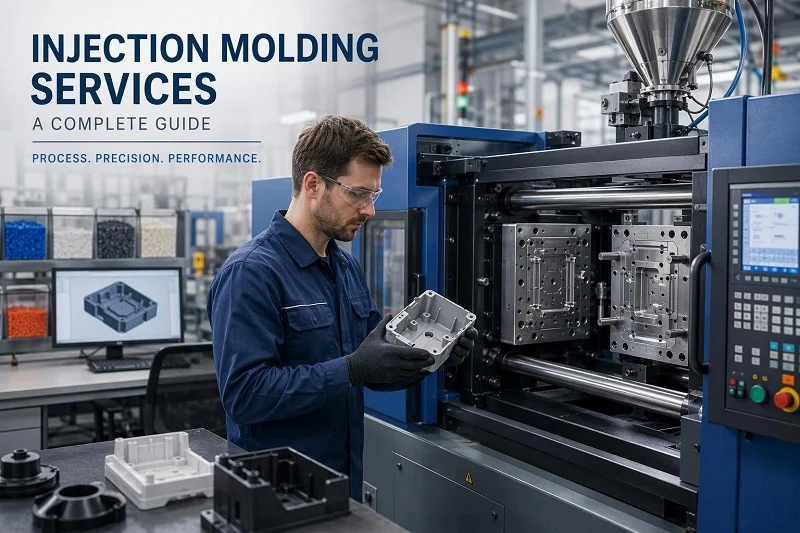
Injection molding services cover the engineering, tooling, molding and finishing work a manufacturer performs to turn a 3D design into repeatable plastic parts. The machine at the center of the process is only one part of that package: the service around it decides whether a part molds reliably, whether the tool survives the program, and whether the delivered parts match the drawing at the volume you actually need.
This guide is written for product developers and buyers deciding whether and how to use injection molding services. It walks through the full service workflow from RFQ to delivered parts, the design rules that drive moldability and cost, the industries and part families where molding fits, how to select a resin, and how injection molding compares with 3D printing, CNC machining, blow molding, thermoforming, compression molding and die casting. It closes with how NOBLE’s injection molding services support programs from prototyping through volume production.
What Are Injection Molding Services?
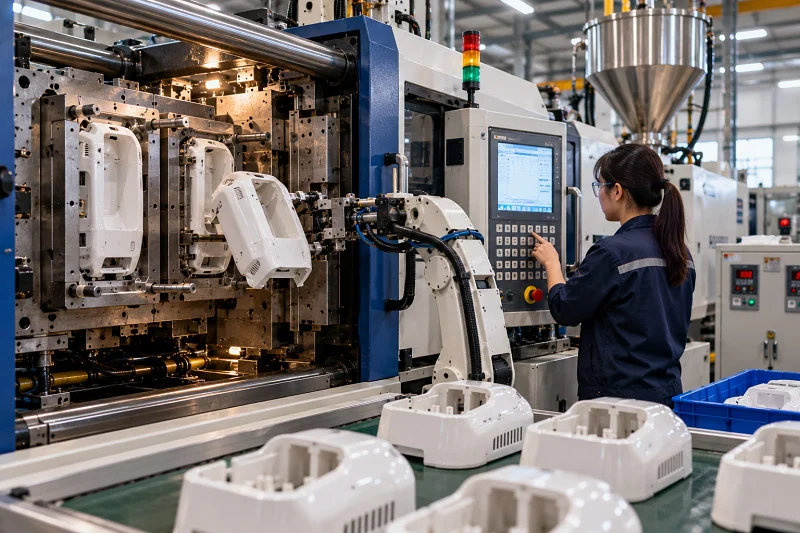
Injection molding services are the end-to-end package a manufacturer provides around the molding process: design for manufacturability (DFM) review, mold design and build, sampling and validation, production molding, secondary operations, and assembly and packaging.
The distinction that matters when you are buying is between the service and the machine. A molding press clamps a tool, injects melted resin and ejects a part. A service provider contributes the engineering that makes those steps repeatable — tooling design, process setup, quality planning, documentation and logistics — and takes responsibility for the part meeting its specification across the run, not just on the first shot.
That also defines what the service is not. It is not a design-only consultancy that hands you a report and leaves tooling to someone else, and it is not a pure machining shop that cuts a cavity but cannot validate a molded part. A full-scope provider carries the part from CAD review through delivered cartons.
The Core Service Scope
A complete injection molding service typically breaks into these component offerings:
- DFM review — analysis of the CAD model for wall thickness, draft, gate placement, undercuts, tolerance risk and cosmetic risk, returned as actionable feedback before quoting.
- Mold making — tool layout, cavity count, gating and cooling design, steel selection, machining, fitting and trial.
- Sampling and first-article inspection — trial shots, dimensional reports against the drawing, cosmetic evaluation and customer sign-off.
- Production molding — process parameter setting, cycle monitoring and in-process inspection during volume runs.
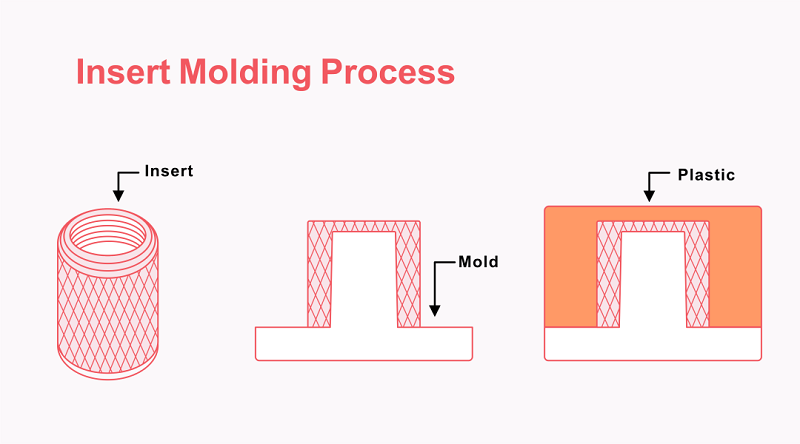
- Secondary operations — surface finishing, printing and decoration, ultrasonic welding, and insert placement.
- Assembly and packaging — sub-assembly, functional checks and packaging to the customer’s specification.
Which of these a provider handles in-house versus subcontracts is one of the most useful things to establish early. Every step sent outside adds handling, transit and a second quality system between you and the finished part.
Service Tiers: Prototype, Bridge and Production Tooling
The same part can be quoted three very different ways depending on the volume tier the tool is built for.
Prototype tooling exists to validate design and material choices. It is built quickly and economically, prioritizes speed of iteration over tool life, and is the right choice when the geometry is still moving.
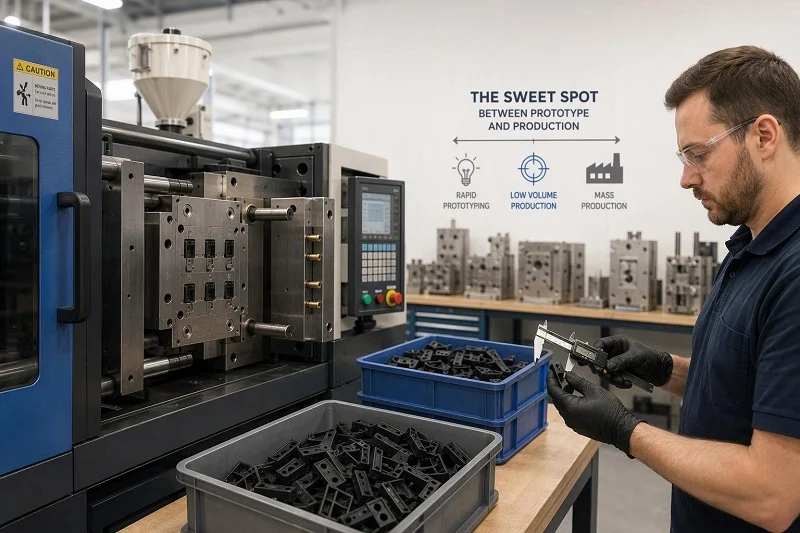
Bridge or rapid tooling covers market-entry quantities — enough parts to launch, run pilot builds or satisfy early orders while the design settles. It sits between prototype and production tooling on tool life, cycle time and part cost, and it is usually the tier where the bridge-versus-production decision gets made.
Production tooling is built for long-run programs, with harder steels, better cooling and gating designed for cycle time and consistency over a long tool life. It costs more up front and pays back through lower part cost and fewer interruptions at volume.
The trade-offs are qualitative but consistent: as you move up the tiers, tooling cost and lead time rise while per-part cost and cycle time fall. Choosing the wrong tier in either direction is expensive — a production tool cut for a design that then changes, or a prototype tool pushed far past the volume it was built for.
The Injection Molding Service Workflow, Step by Step
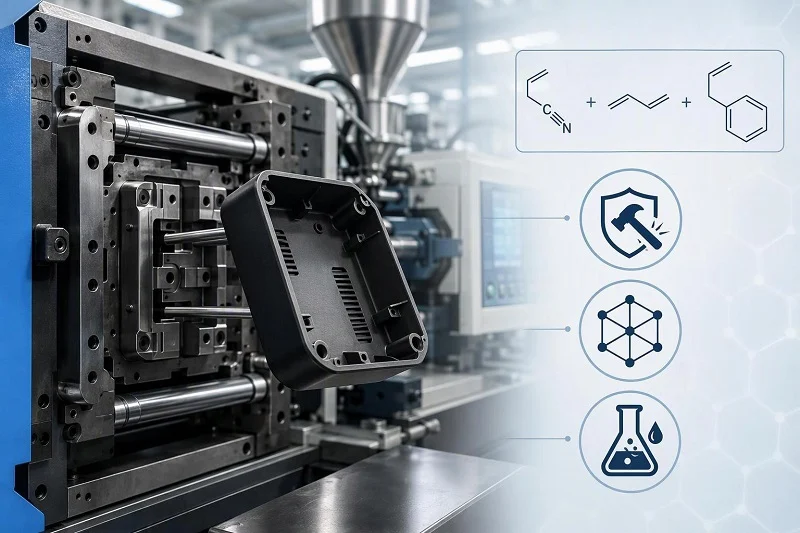
Understanding the engagement sequence helps buyers plan timelines, allocate review time and know where their approval is actually required. The five steps below describe a typical full-scope engagement from RFQ to delivered parts; the boundaries between them are where most schedule risk sits.
Step 1: RFQ, CAD Review and DFM Feedback
You submit a CAD package and requirements — 3D models, 2D drawings with critical dimensions, material and finish expectations, volumes and target dates. The provider reviews the geometry and returns DFM feedback that flags wall thickness, draft, gate placement, undercuts and tolerance risks before a firm quote is issued.
DFM is a dialogue, not a checklist. The useful output is not a list of violations but a set of proposed changes with their consequences: this wall can be thinned here, this undercut can be redesigned out to avoid a slider, this tolerance is tighter than the function requires. Each proposal has a cost and a design implication, and the customer decides.
Step 2: Mold Design and Tooling Fabrication
Once the design is agreed, the tool is laid out: cavity count, part orientation, gating, cooling channels, ejection, steel selection and the build sequence. These decisions lock in cycle time, part quality and tooling cost simultaneously. Cavity count is the clearest example — more cavities raise tooling cost and tool complexity but spread the cost of each cycle across more parts, so the right number follows from the volume forecast rather than from a default.
Step 3: Sampling, Validation and First-Article Inspection
Trial shots are molded, measured and evaluated. A dimensional report compares the parts to the drawing, cosmetic appearance is assessed against the agreed standard, and the customer signs off. The gate to production is validation against the drawing — not the impression that a sample looks good. A part that looks right but sits outside tolerance on a critical dimension will fail in assembly, and catching that at sampling is far cheaper than catching it in a production run.
Step 4: Production Molding and In-Process Quality Control
Production begins with process parameters set and documented from the validated sample. During the run, cycle parameters are monitored and inspection follows a defined routine — incoming material checks, in-process checks at set intervals, and final inspection before packing. Traceability is maintained through lot and material records so that a question about a delivered batch can be answered from documentation rather than memory.
Step 5: Secondary Operations, Assembly and Delivery
Finishing, decoration, insert placement, assembly and packaging complete the part. Consolidating these steps with the molder reduces handling, transit and the number of quality systems the part passes through, and it usually shortens total lead time compared with coordinating several suppliers. Delivery then follows the agreed packaging and documentation.
Design Rules That Drive Moldability and Cost

A small number of design decisions determine whether a part molds well and what it costs. They should be reviewed before tooling is cut, because changing a part after the tool exists means either reworking steel or living with a defect for the life of the program.
Wall Thickness and Uniformity
Consistent wall sections control shrinkage, warpage and sink marks. Where a wall is thick, the resin core cools more slowly than the surface, pulling the surface inward as it shrinks and leaving sink marks on cosmetic faces; where thickness changes abruptly, differential shrinkage warps the part and can create voids.
The principle is to keep walls as uniform as the design allows and to transition between thicknesses gradually rather than in steps. Acceptable wall ranges depend on the resin — a flow-limited engineering resin and a commodity resin do not share the same practical minimum — so the number belongs in the DFM conversation, not in a universal rule.
Draft Angles, Radii and Ribs
Draft is the taper that lets the part release from the tool. Without it, ejection drags against the cavity walls, scuffs the surface and can crack the part. Every vertical face that runs in the direction of mold opening needs draft, and textured surfaces need more of it than polished ones.
Fillets at internal corners reduce stress concentration and improve resin flow. Ribs are the standard way to add stiffness without thick walls: a rib thinner than the wall it reinforces stiffens the section while avoiding the sink that a thick wall would produce, and rib spacing needs to leave enough room for the resin to flow and the tool to be machined.
Gates, Runners and Undercuts
Gate location determines how the cavity fills, where weld lines form and whether cosmetic surfaces are marred by a gate vestige. A gate placed on a visible face saves tooling complexity and costs the product its finish; a gate placed well may require a more elaborate runner.
The runner system affects material waste. Hot runners keep resin molten in the runner and reduce scrap, at higher tool cost and complexity; cold runners are simpler and cheaper to build but generate scrap with every shot. Undercuts — features that would trap the part in the tool — require sliders or lifters, which add tooling cost, maintenance and cycle time, so an undercut that can be redesigned out is usually worth redesigning.
Tolerances and Shrinkage Allowance
Plastic shrinks as it cools, and the amount varies by material and by process conditions. Tool dimensions are cut oversize to compensate, which means the shrinkage allowance is a tooling decision made from the chosen resin and the expected processing window.
Specify tolerances only where the function requires them. A tolerance called out on every dimension drives inspection cost and tool adjustment without improving the part; a tolerance reserved for the features that mate, seal or locate keeps attention and money where they matter. Tolerance stack-up across an assembly then determines what the tool and the inspection plan must hold.
Industries and Part Families Suited to Injection Molding Services
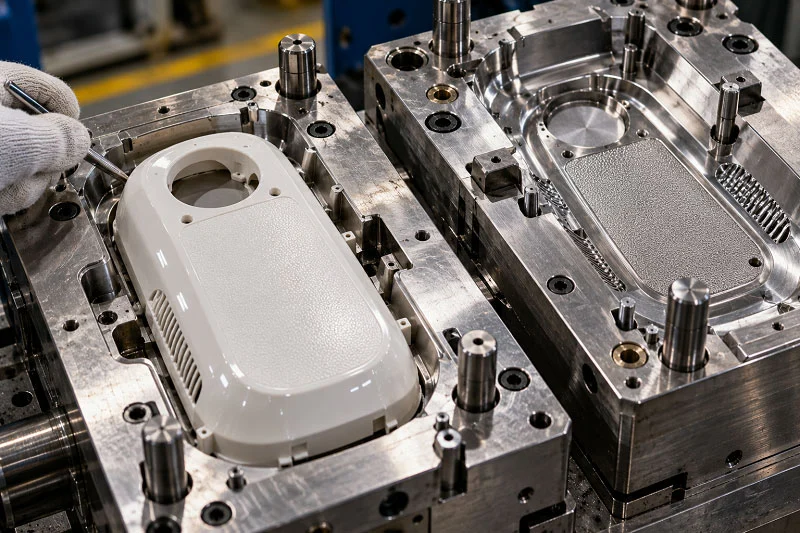
Injection molding fits high-volume, repeatable, dimensionally consistent plastic parts. Within that envelope, several industries and part families are natural users of injection molding services.
Automotive and Industrial Equipment
Interior trim, under-hood components, housings, brackets and connectors are classic molded parts. The drivers are repeatability across large volumes, material properties matched to heat and chemical exposure, and volume economics that reward tooling investment. Industrial equipment adds enclosures and structural components where the same logic applies.
Medical Devices and Diagnostics
Device housings, fluidic components and single-use parts are molded in large, consistent quantities. Medical work places extra weight on quality-system discipline, material traceability and clean processing, and it is a natural fit for a provider holding ISO 13485:2016 certification — NOBLE’s is described in the dedicated section below.
Consumer Products, Electronics and Robotics
Enclosures, cosmetic parts and structural components make up the bulk of consumer and electronics molding. Here surface finish and color consistency matter as much as dimensions, because the part is the product the customer sees. Robotics adds structural and precision components where repeatability across units supports assembly and calibration.
When Injection Molding Is a Poor Fit
Molding is the wrong choice in several recognizable situations:
- Very low quantities — the tooling investment cannot be spread across enough parts to beat tooling-free processes.
- Very large or very thick parts — press size, cooling time and shrinkage control become limiting.
- Parts under frequent design change — every geometry change risks the tool.
- One-off custom geometry — a single part rarely justifies a mold.
In these cases, the alternatives in the comparison section below are usually the better starting point.
Material Selection for Injection Molding Services
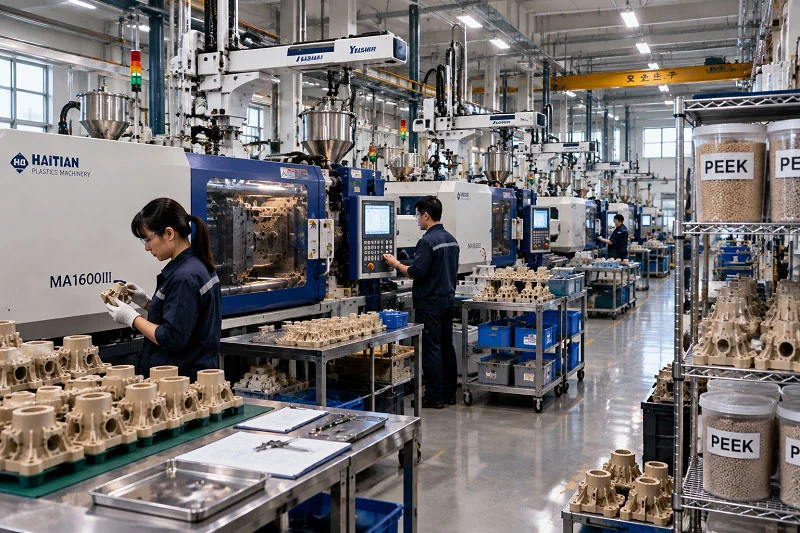
Resin choice is one of the biggest drivers of part performance, cost and moldability, and it interacts directly with the design rules above: shrinkage, flow behavior and stiffness all follow from the material.
Commodity, Engineering and High-Performance Thermoplastics
The three tiers differ qualitatively:
- Commodity resins serve cost-driven, general-purpose parts where moderate mechanical and thermal demands apply.
- Engineering resins are specified when mechanical or thermal demands exceed what commodity grades handle reliably.
- High-performance resins cover extreme temperature, chemical or strength requirements.
Moving up the tiers raises material cost and often processing difficulty — higher melt temperatures, tighter drying requirements, more demanding tooling — so the tier should be justified by a real requirement rather than chosen by default.
Selection Criteria Beyond Resin Data Sheets
The data sheet is a starting point. The practical criteria are the loads the part will actually see:
- Mechanical and thermal load in service, including peaks rather than averages.
- Chemical exposure, including cleaning agents and fuels.
- UV and aging, which decide whether the part needs a stabilized grade or a coating.
- Flame requirements, which may mandate a specific rated compound.
- Cosmetic and color needs, including whether color must match across lots.
- Food or medical contact considerations, which constrain the acceptable grades.
Then there is the interaction with part design: the resin’s shrinkage and flow behavior determine whether the wall sections and flow lengths in the design can actually be molded.
Filled, Reinforced and Specialty Compounds
Glass- and mineral-filled grades raise stiffness and improve dimensional stability, which makes them attractive for structural parts. They also affect the process: the filler abrades tooling and changes flow behavior, so gate design and steel selection need to account for it. Specialty compounds — flame-retardant or wear-resistant grades, for example — justify their cost when the requirement is real and cannot be met by a simpler grade.
Injection Molding Compared with Other Manufacturing Processes
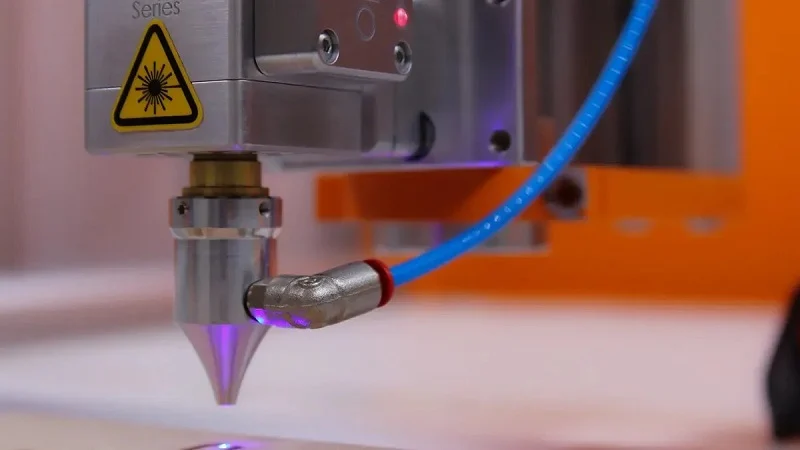
The right process depends on the part and the program stage, not on a universal ranking. The comparisons below are organized around the factors buyers weigh: volume, tooling cost, tolerance, finish and lead time.
Injection Molding vs. 3D Printing
3D printing produces parts without tooling, which makes it strong for prototypes and low volumes and weak on per-part economics at scale. Injection molding requires a tooling investment and rewards it with a low per-part cost at volume, a broader choice of production-grade materials, and mechanical consistency from part to part. Surface finish differs too: printed parts carry layer texture unless post-processed, while molded parts take the finish of the tool.
Injection Molding vs. CNC Machining
Machining is strong on tight-tolerance, low-volume and complex-geometry parts, and it needs no mold. Molding wins on repeatability and cost at volume. The two are often complementary rather than competing: machined prototypes validate fit and function before a tool is cut, and molded parts take over for production.
Injection Molding vs. Blow Molding and Thermoforming
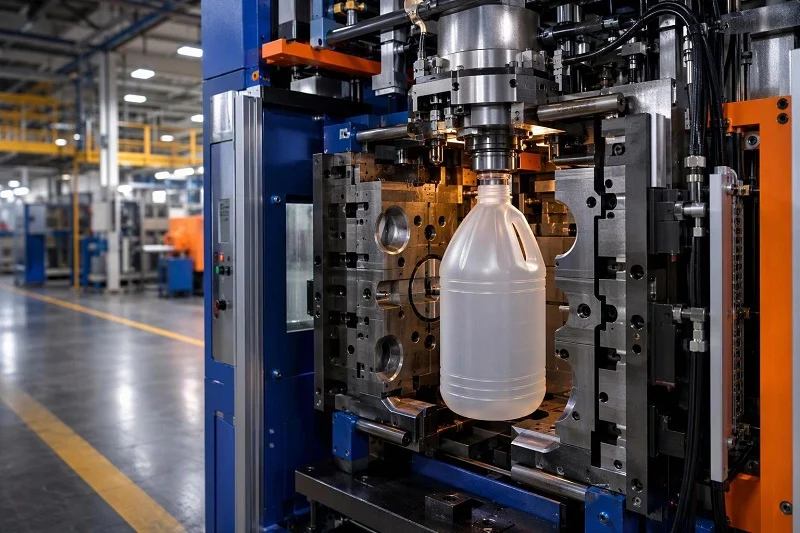
Blow molding suits hollow, thin-walled containers such as bottles. Thermoforming suits large, shallow parts formed from sheet. Injection molding suits more complex, tighter-tolerance solid parts where features, inserts and dimensional control matter.
Injection Molding vs. Compression Molding and Die Casting
Compression molding fits large, low-flow or composite parts. Die casting fits metal parts. Injection molding fits detailed plastic components, where its combination of feature detail, material range and repeatability is the reason it is chosen.
A Decision Framework by Volume, Geometry and Material
A practical sequence for placing your own part:
- Start from material. If the part must be metal, die casting or machining enters the picture. If it must be a thermoplastic, molding is a candidate.
- Then geometry. Hollow containers point to blow molding; large shallow shapes to thermoforming; complex detailed solids to injection molding.
- Then volume and tolerance. At low volume with tight tolerances, machining or printing may serve better. At volume with repeatability requirements, molding’s economics take over.
Run the sequence in that order and the process choice usually resolves itself.
Preparing an RFQ and CAD Package for Injection Molding Services

An accurate, fast quote depends on the package you send. Include:
- 3D CAD of the part as it will be molded, with the latest revision clearly identified.
- 2D drawings showing critical dimensions and tolerances, plus the datum scheme.
- Material and finish requirements, including cosmetic standards for visible surfaces.
- Expected volumes and annual forecasts, which drive the tooling tier and cavity count.
- Target timeline, including when you need samples versus production parts.
- Regulatory or documentation needs, such as inspection reports, material certificates or traceability records.
The bridge-versus-production tooling decision follows from the volume forecast and the program risk. A firm, high-volume forecast supports production tooling from the start. An uncertain forecast, or a design still settling, favors bridge tooling that gets parts to market while the program matures.
Choosing NOBLE’s Injection Molding Services
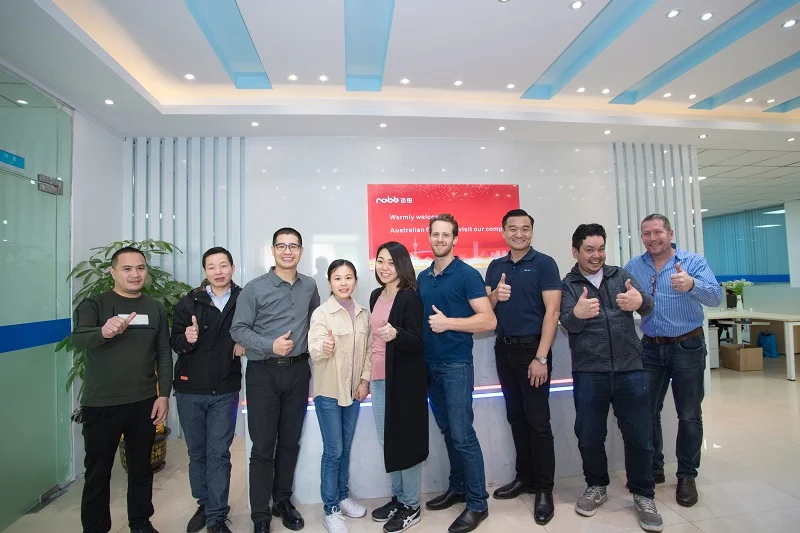
NOBLE is a Sino-British joint venture and a Chinese manufacturing partner recognized by the government as a “National High-tech Enterprise,” with more than 10 years of experience in custom manufacturing. Our injection molding services combine strong service capability with professional processing expertise to help you move efficiently from prototyping to volume production.
We hold ISO 9001:2015 and ISO 13485:2016 certification. Our quality system runs a complete IQC, IPQC and FQC/OQC inspection process in production, supported by in-house test and measurement equipment, so parts are checked against your specifications rather than against a visual impression.
Our offering is full-scope — from design to assembly, not production alone. In-house capabilities include mold making, rapid prototyping, surface finishing and low-volume manufacturing, which means the steps between your CAD file and your delivered parts stay under one quality system. Our engineering team supports DFM analysis and design questions, and our service team responds around the clock.
To start, upload your CAD files and submit an RFQ with the information listed above. You will receive design-for-manufacturability analysis and transparent pricing, and our team will support the project from prototype through production.
FAQs of Injection Molding Services
What does a full injection molding service engagement include?
DFM review, mold design and build, sampling and first-article inspection, production molding, secondary operations, and assembly and packaging — with the provider taking responsibility for the part meeting its specification across the run.
Which design features drive moldability and cost?
Wall thickness and uniformity, draft angles, radii and rib design, gate and runner layout, undercuts, and tolerance and shrinkage allowance. Reviewing them before tooling is cut avoids expensive steel changes later.
Which industries and part families fit injection molding, and which do not?
Automotive, industrial equipment, medical devices and diagnostics, consumer products, electronics and robotics fit well. Very low quantities, very large or thick parts, parts under frequent design change and one-off geometry generally do not.
How do commodity, engineering and high-performance thermoplastics differ?
Commodity resins serve cost-driven general-purpose parts; engineering resins handle higher mechanical or thermal demands; high-performance resins cover extreme temperature, chemical or strength requirements. Higher tiers raise material cost and processing difficulty.
How does injection molding compare with 3D printing, CNC machining, blow molding, thermoforming, compression molding and die casting?
3D printing wins without tooling at low volume; machining wins on tight tolerances and low volume; blow molding suits hollow containers; thermoforming suits large shallow sheet parts; compression molding suits large or composite parts; die casting suits metal. Injection molding wins on detailed plastic parts at volume.
What belongs in an RFQ and CAD package, and how do I decide bridge versus production tooling?
Send 3D CAD, 2D drawings with critical dimensions, material and finish requirements, volume forecasts, target timeline and documentation needs. A firm high-volume forecast supports production tooling; an uncertain forecast favors bridge tooling.
What should I check when evaluating a supplier’s quality system, in-house scope, traceability and inspection?
Confirm the certifications held, which operations are in-house versus subcontracted, how material and lot traceability is recorded, and what the inspection routine covers at incoming, in-process and final stages.