Plastic component manufacturing is not a single purchasing decision. It is a chain of three decisions that constrain one another: which process route fits the part, what the application actually demands of it, and whether a given supplier can demonstrate the capability to deliver both at the volume you need. Get the order wrong and the cost shows up later — in tooling that has to be reworked, in tolerances that cannot be held at volume, or in a supplier whose certificate turns out to cover a different site than the one making your parts.
This guide is written for engineers, product developers and sourcing teams who have to defend these choices internally. It covers the transition from small batch to mass production and the processes that suit each stage, the requirement profiles of major application sectors, and the capability differences that matter when comparing manufacturers in different regions. It is current as of November 2026. Each major section stands on its own, so you can move directly to the layer you are resolving.
What Plastic Component Manufacturing Actually Involves
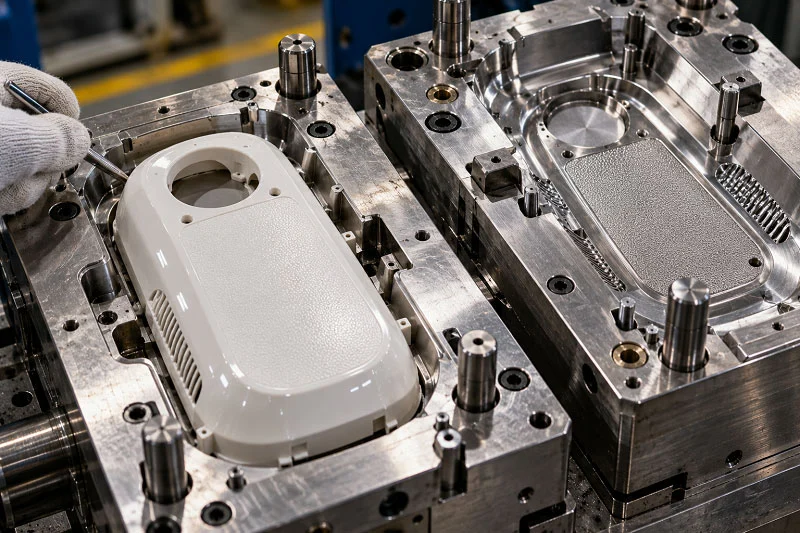
The term describes the conversion of plastic material into a finished, specified part — through machining, molding, additive processes or assembly — to a drawing that defines geometry, material grade, tolerance and finish. It is distinct from plastic material supply, which ends at the resin, and from the loose phrase “plastic parts,” which says nothing about specification or process control.
The Three Decision Layers in Plastic Component Manufacturing
Process, requirement and supplier form a sequence, not a menu. A process selected without reference to the application tends to produce one of two failures: over-specified cost, where a part is machined to a precision nothing in service requires, or under-specified risk, where a molded part is asked to survive a thermal or chemical load its material and wall sections cannot take. The supplier decision comes last because it is a question of depth in the process you have already chosen. A supplier with excellent molding capability cannot rescue a part that should have been machined, and a strong machine shop cannot amortize a tool it does not build.
Why Volume Boundaries Are Industry-Relative
“Low volume” and “high volume” have no fixed numeric meaning. Volume bands are fluid, and process, material and industry context all shift where the boundaries fall: a run of 500 units can be high volume in aerospace or medical devices, while 5,000 units may still sit in the low-volume category in consumer electronics. The practical consequence is that tooling amortization and process switching points must be calculated against your specific program — its tool cost, its expected lifetime volume and its revision risk — rather than read off a generic threshold table.
How Plastic Component Manufacturing Moves from Small Batch to Mass Production
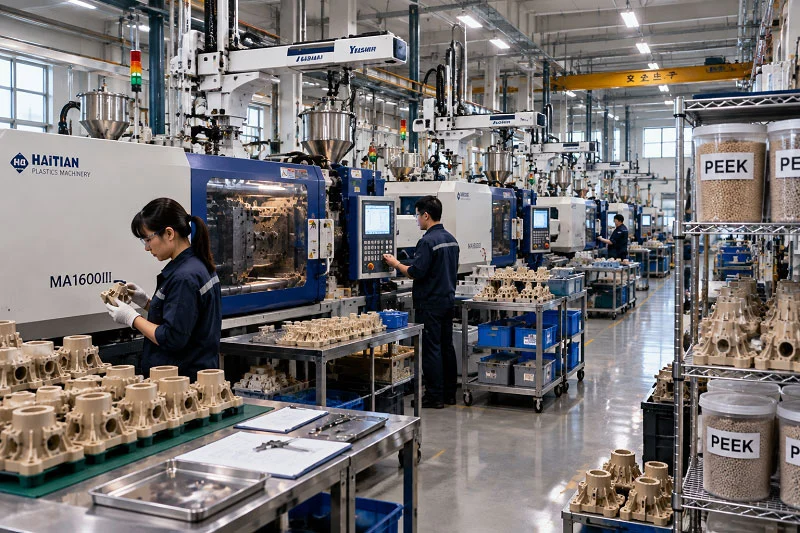
The progression from prototype to volume production is an economic and design-maturity decision. What changes at each stage is the fixed cost you are willing to commit and the certainty you have that the design will not move.
Matching Process to Stage: Prototype, Pilot and Volume
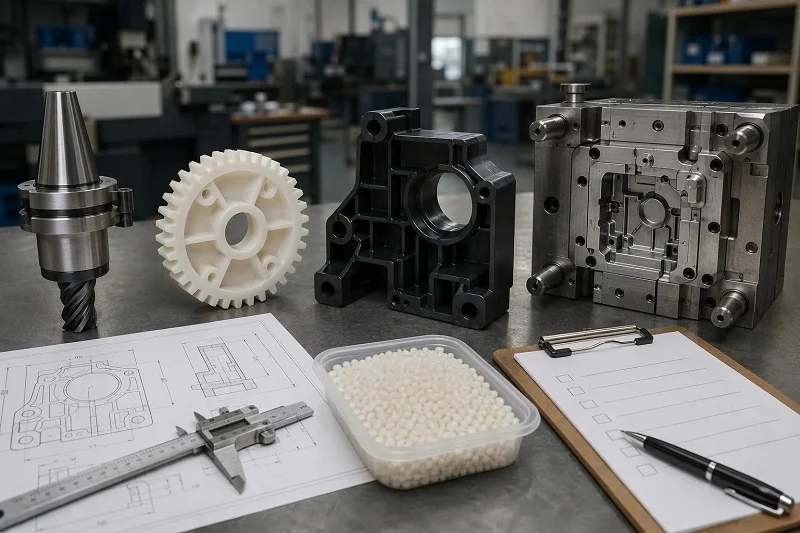
Additive processes suit concept geometry that is still changing, where no hard tooling should be committed. CNC machining fits functional validation where the part must bear load, hold tight fits or operate in thermal or chemical environments. Prototype injection molding with aluminum tooling carries a design-stabilizing run; bridge tooling in soft or pre-hardened steel extends validation; hardened steel production tooling follows once the design is locked. The line is blurred in practice, since modern hard-aluminum tooling can reach high part counts with proper maintenance.
The Tooling Amortization Calculation That Decides the Switch
Tool cost divided by expected volume sets a floor under unit price. A $10,000 tool spread across 1,000 parts implies more than $10 per part in amortization alone — often considered tolerable against a CNC equivalent that can exceed $30–$50 at moderate volume. Treat that as a worked illustration, not a price list. The comparison holds only if tool life covers the run, revision risk is low and the design is genuinely frozen.
Signals That a Design Is Ready for Production Tooling
Look for observable criteria rather than a calendar date: revision frequency falling to zero across consecutive builds, tolerance and material settled, assembly interfaces validated, and a demand forecast stable enough to justify a tool-life commitment. Switching too early invites tool rework or scrap; switching too late leaves per-part cost drag on every unit shipped.
Where CNC Machining Remains the Right Answer at Volume
Machining is not only a prototype tool. It stays competitive or necessary at low-to-moderate volumes, on large or thick parts where mold flow and tooling cost dominate, and on parts needing production-grade material properties at tight tolerances.
Cost Drivers That Persist Across Every Stage
Tolerance specified beyond functional need is the most common cost driver, because it directly drives cut depth, processing speed and inspection time; moderating precision to where it is functionally imperative reduces both machining time and inspection burden. Feature geometry that forces extra setups, material selection and surface finish requirements persist as levers at every stage. Tolerance discipline is the most portable cost control in plastic component manufacturing.
What Different Applications Demand from Plastic Parts

Application requirements are the binding constraint on every earlier decision. Each sector below imposes a different mix of thermal, chemical, mechanical, regulatory and aesthetic demands, and that mix determines both material and process.
Medical and Healthcare Components
Biocompatibility assessment, cleanroom and contamination control, sterilization compatibility and documentation depth all apply. ISO 10993 governs biological evaluation, while ISO 13485 addresses the quality management system for medical devices — it is not interchangeable with ISO 9001, the general quality standard. Material and process validation, not final inspection alone, carries the compliance burden.
Automotive Components
Under-hood parts face continuous heat in the 100–150°C band plus oil resistance and dimensional stability; structural and chassis parts need strength, impact resistance and long-term durability; interior parts prioritize low VOC, surface finish, UV stability and smoke toxicity; exterior parts need UV and impact resistance and paintability; electrical and electronic parts, including EV battery housings, add flame retardancy and high-voltage insulation. Program-level requirements include IATF 16949, PPAP documentation, IMDS registration and capacity commitment for ramp phases.
Industrial Equipment and Automation Components
Duty cycle, exposure to oils and coolants, and dimensional stability under load and vibration set the material and tolerance envelope. Maintainability adds a further constraint: parts must remain replaceable in the field years later, which makes material documentation and dimensional repeatability part of the design requirement rather than an afterthought.
Electronics and Communication Equipment
Flame retardancy, commonly referenced to UL 94 classification, electrical insulation and thermal management are the core requirements, and miniaturization pushes toward tight tolerances and thin walls. Flame-retardant additive packages can change mechanical and processing behavior, so material selection here is a trade-off rather than a checklist.
Consumer Products
Aesthetic consistency in color, texture and gloss, surface finish, and drop and impact performance all matter, but cost sensitivity makes unit economics decisive. Consumer volumes are where injection molding’s low unit cost advantage is strongest — and also where early tooling mistakes are most expensive to correct.
Cross-Application Requirements: Tolerance, Traceability and Documentation
Four requirements recur across sectors: dimensional tolerance discipline, material traceability from lot to finished part, inspection records, and change control. Each translates directly into a supplier evaluation criterion — whether the supplier can show calibrated measurement, documented sampling and a controlled revision process, not merely claim them.
How Plastic Component Manufacturing Capability Differs Across Manufacturing Origins
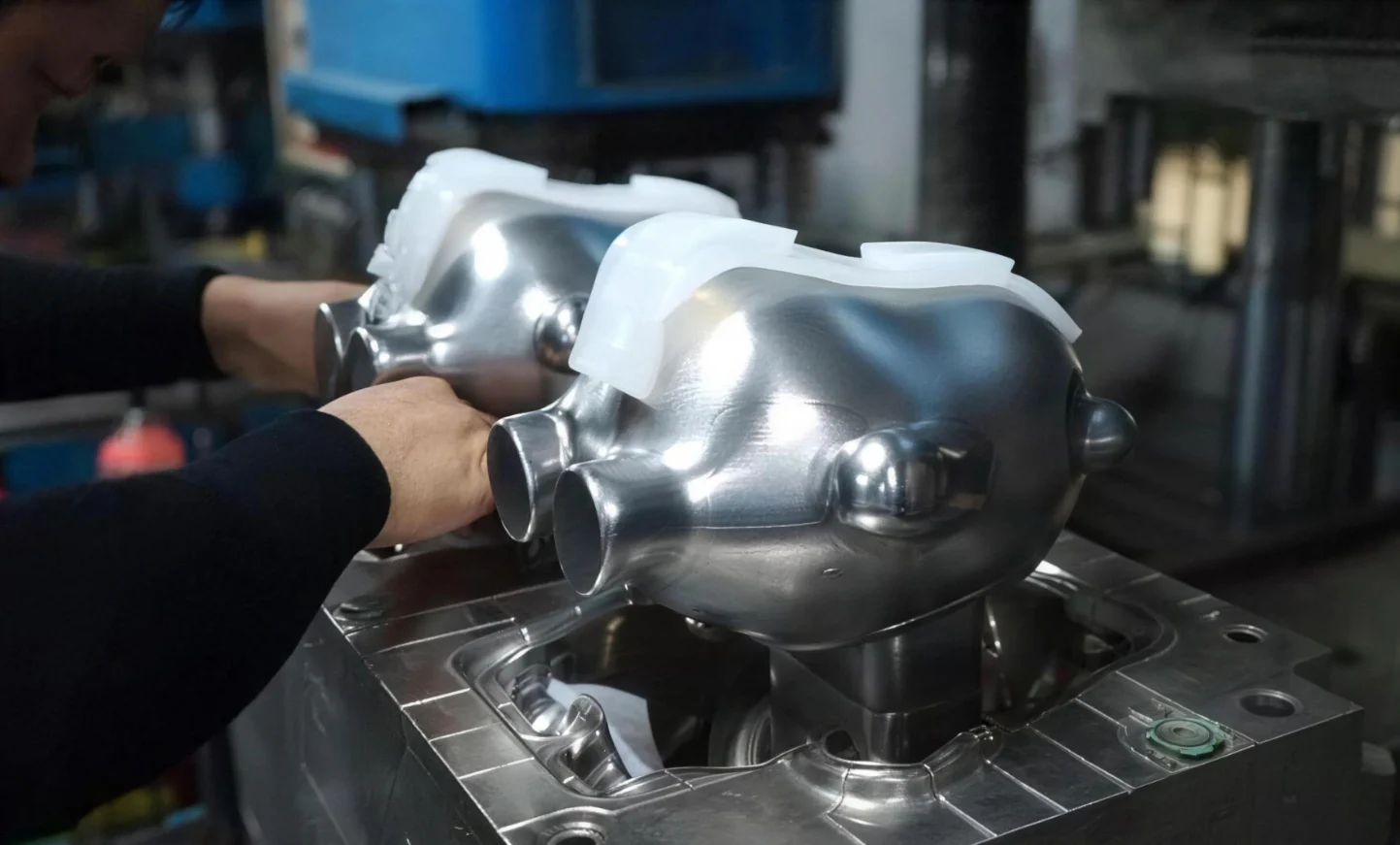
Origin labels tell you where a supplier is, not what it can do. The useful question for plastic component manufacturing is which capability dimensions a supplier can demonstrate with evidence, and how deep each one runs.
The Capability Dimensions That Actually Predict Performance
Six dimensions carry most of the predictive weight: certification scope (which standard, which site, which processes), tooling depth, metrology, traceability from material lot to finished part, DFM feedback quality, and production ramp capacity. Each is verifiable through documents, sample reports and audit rather than through a brochure claim.
Reading a Certificate Correctly
A certificate’s value sits in its scope statement: which standard, which legal entity, which site, which product categories. A general quality certificate does not establish medical device QMS conformity, and a certificate held by a trading entity does not automatically cover the factory that makes the part. Ask for the certificate number, the audited address and the exclusions, then check them against the entity that will invoice you.
Tooling Depth as a Differentiator
Suppliers that design, build and maintain tooling in-house tend to revise faster, diagnose drift at the root cause, and own the outcome when a tool underperforms. Suppliers that broker tool builds can still deliver good parts, but revision speed and accountability depend on a third party, so clarify who answers when the tool is late or out of specification.
Metrology and Traceability: The Quiet Differentiators
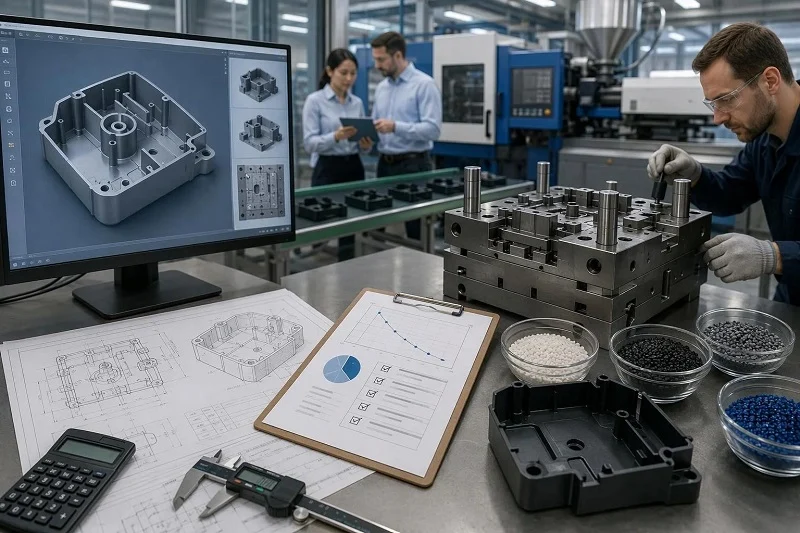
Credible metrology means calibrated equipment, documented sampling plans, first-article and in-process inspection, and CMM capability for GD&T callouts. Traceability means the resin lot on the certificate matches the parts in the box. These are what let a supplier hold tolerance at volume rather than only at first article.
How Regional Manufacturing Ecosystems Differ in Emphasis
Regions tend to build different strengths: some lean toward tooling depth and high-volume molding, others toward machining breadth and rapid response, others toward specialization in regulated sectors. These are tendencies, not guarantees. Variation within any origin exceeds variation between origins, and a well-run supplier anywhere can meet demanding requirements.
A Supplier Evaluation Sequence for Plastic Component Manufacturing
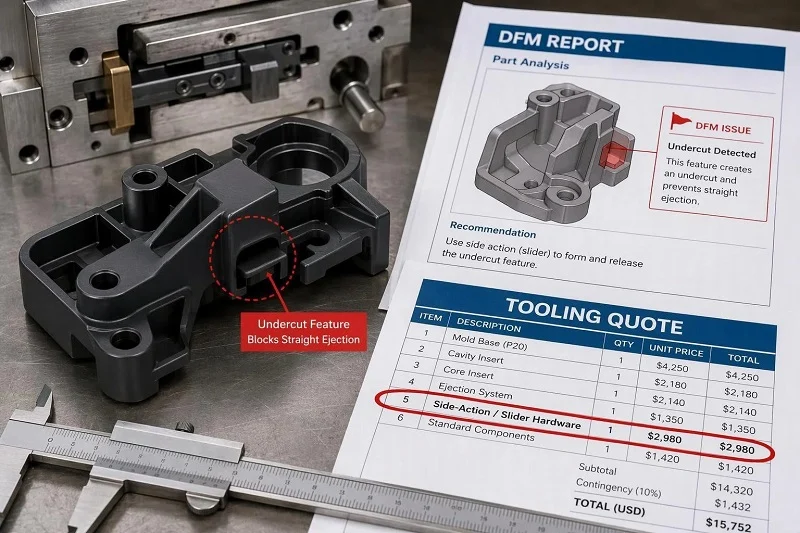
Define requirements first, then check certification scope, then judge DFM review quality, then request metrology and traceability evidence, then confirm ramp capacity and commercial terms. Evaluating DFM feedback early reveals more than any brochure: a specific, annotated response about wall thickness, gate location or undercuts shows an engineer read the drawing.
Conclusion: Making Plastic Component Manufacturing Decisions in the Right Order
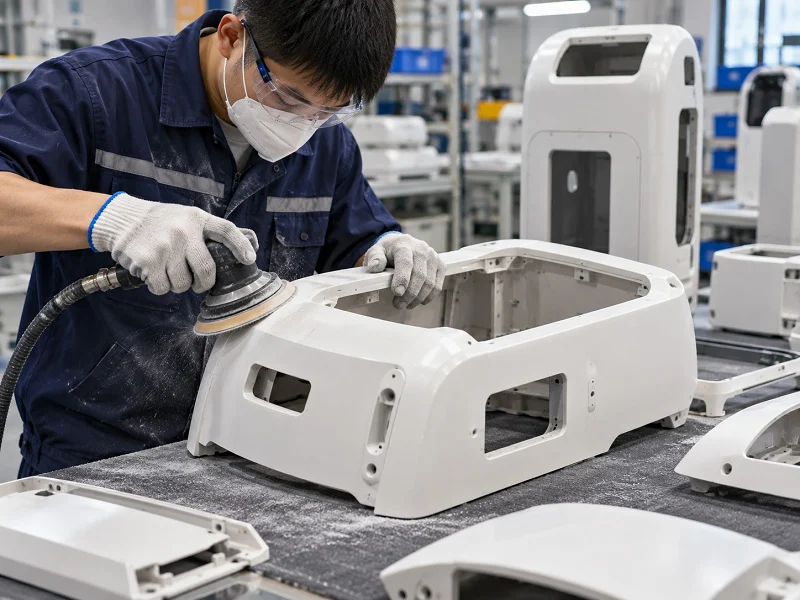
The argument of this guide can be reduced to a sequence. Application requirements define what the part must survive and what evidence must accompany it. Those requirements narrow the viable process route. The process route then determines what a supplier must be able to demonstrate — tooling depth, metrology, traceability, ramp capacity — before it is a credible partner for the program. Teams that reverse the order, choosing a supplier first or a process first, usually end up paying for the mismatch somewhere downstream: in tool rework, in over-specified tolerances, or in a certificate that turns out not to cover the site making the part.
The transition from small batch to mass production is not a volume threshold crossed on a chart. It is an economic and design-maturity decision. Tooling becomes worth its fixed cost when expected volume spreads that cost thin enough to beat the per-part price of the current route, and when the design has stopped moving enough that the tool will not have to be cut twice. Until both conditions hold, machining and other tooling-free routes remain the rational choice, even at counts that would look like production volume in another industry.
A short checklist to carry into the next program:
- Write down the application requirements first, including the regulatory and documentation ones, and keep them separate from preferences.
- Confirm the volume band against your own industry, not against a generic table, and calculate tooling amortization against your own forecast.
- Match the process to the stage, and revisit the match whenever the design revision rate changes.
- Verify supplier capability through certificate scope, DFM feedback quality, metrology evidence and traceability records rather than through claims or origin labels.
- Treat tolerance discipline as the one cost lever that travels with the part across every process and every stage.
Resolve those in order and the plastic component manufacturing decisions that follow — material, tooling, supplier, ramp plan — tend to fall into place with fewer surprises.
Choosing NOBLE to Support Your Plastic Component Manufacturing Projects
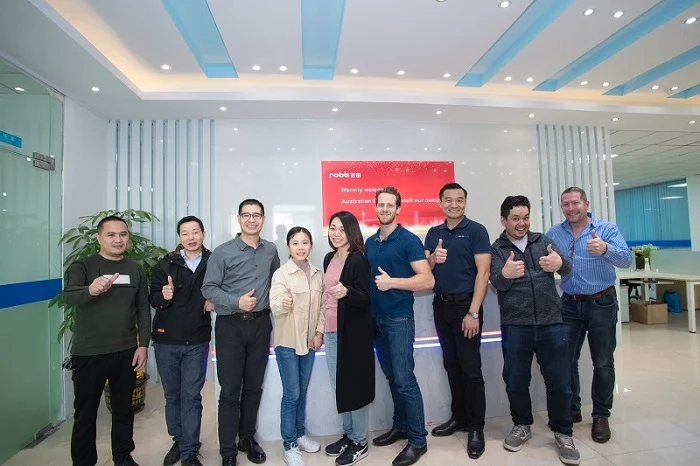
NOBLE is a China-based precision contract manufacturer and a Sino-British joint venture recognized as a National High-tech Enterprise. Our service capability and machining expertise help clients move efficiently from prototyping to batch production, and we provide a full scope of work from design through assembly rather than production alone. We hold ISO 9001:2015 and ISO 13485:2016 certification.
A Chinese Precision Manufacturing Partner with Design-to-Assembly Scope
NOBLE’s scope runs from design and prototyping through machining and assembly, so manufacturability feedback reaches the design while changes are still cheap. That continuity reduces handoffs between design intent and production reality, and keeps one accountable party across the prototype and volume stages of your plastic component manufacturing program.
Certified Quality Systems for Regulated and General Industrial Programs
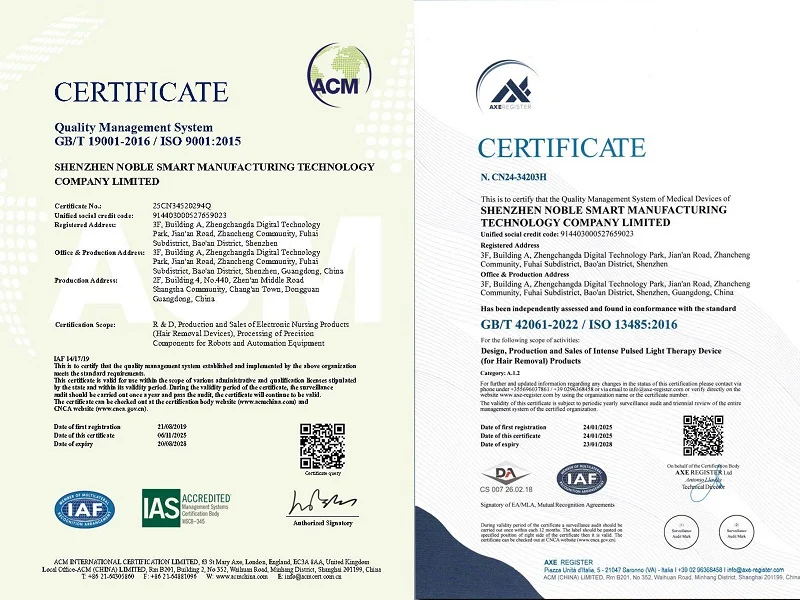
NOBLE holds ISO 9001:2015, a general quality management foundation, and ISO 13485:2016, the medical device quality management system standard. Both support a program; neither certifies a specific part. Part-level validation, material qualification and process validation remain program-specific, and we scope them with you rather than assuming them from the certificate.
From Prototype to Volume Production Under One Roof
NOBLE’s in-house capabilities cover prototyping, functional validation and the transition toward volume production, supported by inspection equipment and a quality control system aimed at dimensional accuracy at each stage. This is capability, not a guaranteed outcome for any given part; the right route still depends on your geometry, material, tolerance and volume.
FAQs About Plastic Component Manufacturing
These are the questions that recur most often when teams plan a plastic component manufacturing program, answered briefly and within the scope of the sections above.
Which process should be used at each stage of plastic component manufacturing?
Additive processes suit concept geometry that is still changing; CNC machining suits functional validation where load-bearing, tight fits or thermal and chemical exposure matter; prototype molding with aluminum tooling suits design-stabilizing runs; bridge tooling covers extended validation; hardened steel production tooling follows design lock. Volume bands are industry-relative, so confirm the crossover against your own program.
When does injection molding tooling become worth the investment?
When the tool cost divided across expected volume still leaves a unit price below the current process at the same volume, and the design is genuinely frozen. A tool that must be reworked after launch erodes the saving, so treat design maturity as a precondition rather than a detail.
How can a buyer compare manufacturers in different regions fairly?
Compare verifiable evidence, not origin labels: certification scope, tooling depth, metrology, traceability, DFM quality and ramp capacity. Follow the evaluation sequence above and ask each supplier the same questions, so the comparison rests on documents and sample reports rather than on impressions.
Does an ISO 9001 certificate cover medical device work?
No. ISO 9001 is a general quality management standard, while ISO 13485 addresses the quality management system for medical devices; they are not interchangeable. Even an ISO 13485 certificate should be read for its scope, site and product categories before it is applied to your specific part.
What information should be ready before requesting a quote for plastic component manufacturing?
Geometry as a 3D model plus a 2D drawing with tolerance and surface finish callouts, material by full grade designation, expected volumes and ramp profile, the application environment, and any documentation or regulatory requirements. Complete inputs let a supplier recommend a process route instead of guessing at one.