Introduction: Why ABS Rapid Prototyping Is Important for Product Development
ABS is everywhere. It is tough and durable, retains its shape well, is easy to process, and is cost-effective. For these reasons, it is widely used in a wide range of products. However, developing a new ABS part is not as simple as just selecting the material. It requires design testing, assembly inspections, and functional validation. All of these steps must be completed before the mold is manufactured.
ABS rapid prototyping is a critical link between CAD models and mass-produced parts. It allows physical parts to be created from digital files. Engineers can then test, assemble, conduct drop tests, and measure the dimensions of these parts. Issues are identified early on, and the cost of making modifications remains relatively low.
This guide outlines the process for manufacturing ABS prototype parts, covering their advantages and application scenarios, and details various production options ranging from single-unit printing to low-volume production. Its purpose is to help engineers select the appropriate method based on the development stage.
What Is ABS Rapid Prototyping?
Definition of ABS Rapid Prototyping
Rapid prototyping is very simple. CAD models can be quickly converted into physical parts.
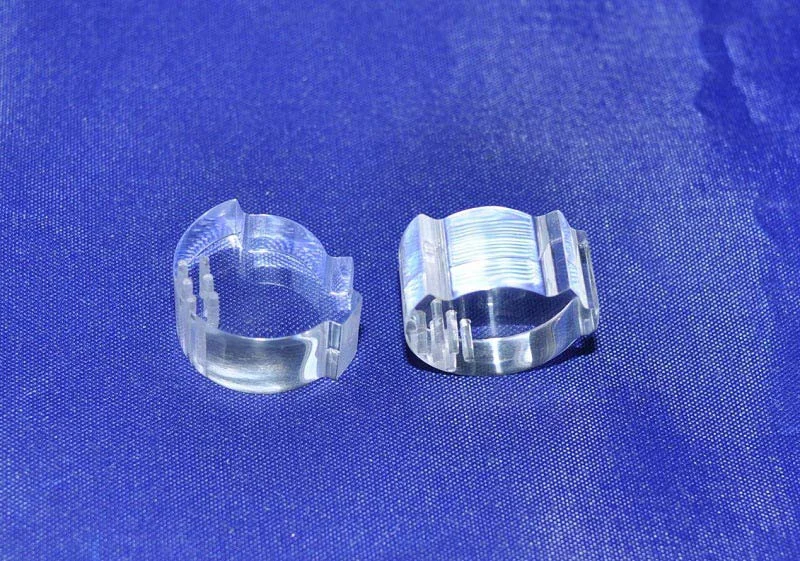
ABS rapid prototyping applies this concept to ABS material. Parts are made from ABS or ABS-like materials. There are various manufacturing methods—including printing, machining, or casting. The resulting parts have the same performance characteristics as mass-produced ABS parts and are fully functional.
Why Choose ABS for Prototypes?
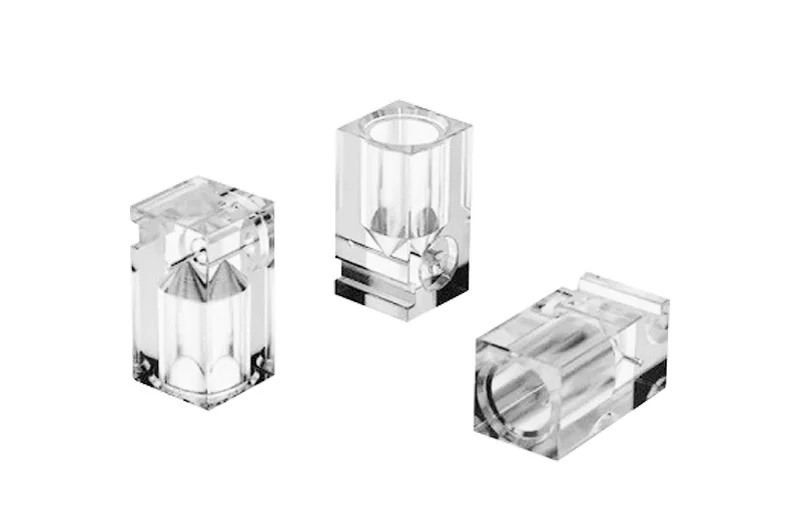
ABS possesses properties that make it the material of choice.
Mechanical Properties
High impact resistance; parts can withstand drop tests. Good toughness; parts bend before breaking. Suitable for functional testing, allowing engineers to simulate real-world loads without causing premature failure of the parts.
Manufacturing Advantages
Easy to machine, with ABS producing smooth machined surfaces. Tools have a long service life and require no special cooling. Easy to mold, with good flow properties in injection molds. Excellent surface finishing capabilities; sanding, painting, and bonding are all straightforward.
Application Advantages
Its performance is similar to that of many mass-production plastics. ABS prototypes behave consistently with the final parts. Assembly test results are accurate and reliable. Functional testing is meaningful, and development risks are low.
ABS plastic prototyping encompasses a variety of production options. The specific choice depends on production volume, timeline, and cost. Each method has its own advantages. The next section will explain this in detail.
Common ABS Rapid Prototyping Processes
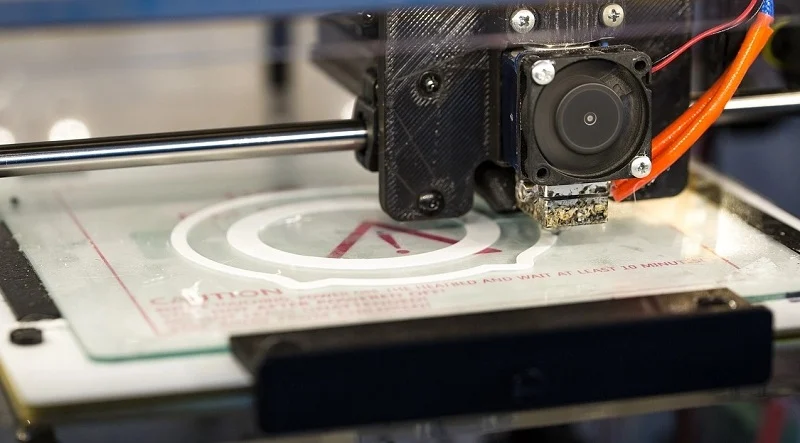
FDM 3D Printing for ABS Rapid Prototyping
How It Works
Thermoplastic ABS filament is fed into a heated nozzle, where it is melted. The machine deposits the molten material layer by layer, with each layer fusing to the one below. The part is thus gradually built up from the bottom up.
Advantages
Fast turnaround—parts can be completed within a few hours. Low cost, with affordable materials. Equipment is widely available, making it ideal for design iterations—multiple versions can be produced in a single day. Using genuine ABS material ensures that the finished product’s performance matches that of mass-produced ABS.
Limitations
Visible layer lines and a surface that is not sufficiently smooth. Strength depends on the print orientation; strength in the Z-axis is weaker than in the X-Y axes. Surface finishing requires sanding, filling, or coating. Due to accuracy limitations and surface roughness, the parts are not yet suitable for display.
Best Applications
Concept prototyping, assembly and fit testing, and early-stage product development. I would say that ABS 3D printing is the fastest way to obtain ABS prototypes.
SLA 3D Printing with ABS-Like Resin for ABS Rapid Prototyping
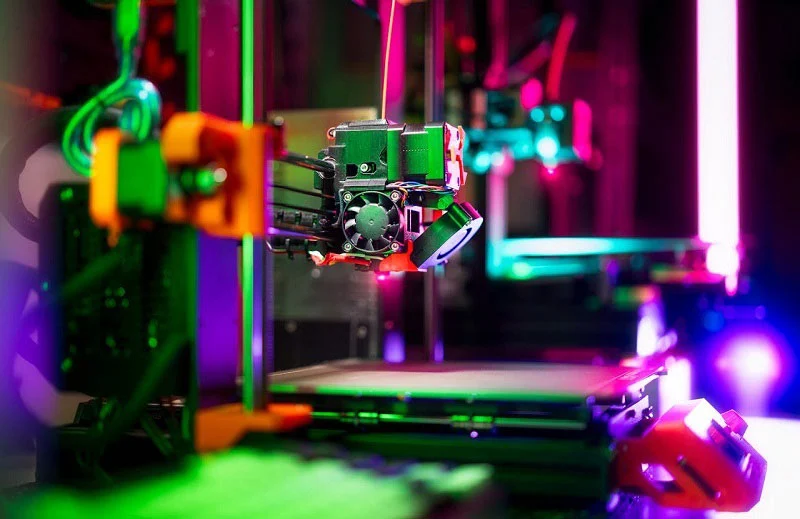
How It Works
The operator pours liquid resin into a tank. An ultraviolet laser cures the resin layer by layer. The part gradually takes shape within the resin tank.
Advantages
Excellent surface quality—smoother than FDM 3D printing results, with no visible layer lines. High dimensional accuracy and crisp, sharp details. Suitable for intricate parts—micro-features and fine textures.
Limitations
Not made from true ABS material. The resin only mimics the appearance of ABS, not its mechanical properties. Toughness and impact resistance differ. Although the parts look like ABS, their performance characteristics differ from those of ABS.
Best Applications
Appearance prototypes, consumer products, and detailed models. SLA technology offers advantages when the goal is presentation rather than functionality; when functionality is critical, FDM technology using genuine ABS material is more suitable—this is a fundamental trade-off in ABS rapid prototyping.
Vacuum Casting ABS-Like Parts for ABS Rapid Prototyping
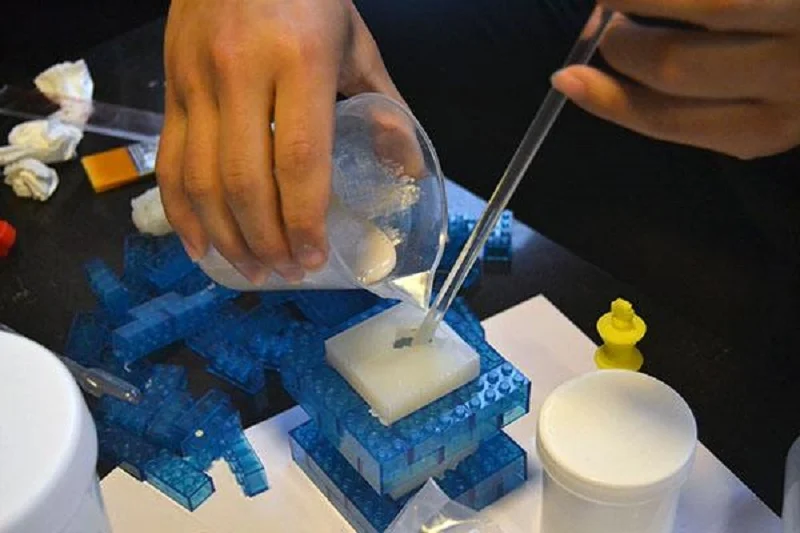
How It Works
First, the factory creates a master mold to serve as a reference. Workers pour silicone into the mold around the master mold. The silicone mold is then cut open, and the master mold is removed. A polyurethane resin formulated to mimic the properties of ABS is injected into the mold under vacuum conditions. Once the resin has cured, the finished product can be removed.
Advantages
The appearance is indistinguishable from mass-produced parts, with a smooth surface. A single mold can produce multiple replicas—typically 10 to 25 parts before the silicone mold degrades. This process is suitable for ABS rapid prototyping and low-volume production.
Limitations
The mold has a limited lifespan. The material used is typically an ABS-like resin, not genuine ABS. Its mechanical properties are similar but not identical. These parts are suitable for testing, but final validation still requires the use of genuine ABS.
Best Applications
10 to 100 prototype parts. For functional testing where ABS-like performance is sufficient to meet requirements. Marketing samples that require a mass-production appearance. ABS vacuum casting bridges the gap between single-unit 3D-printed parts and low-volume ABS production.
CNC Machining for ABS Rapid Prototyping
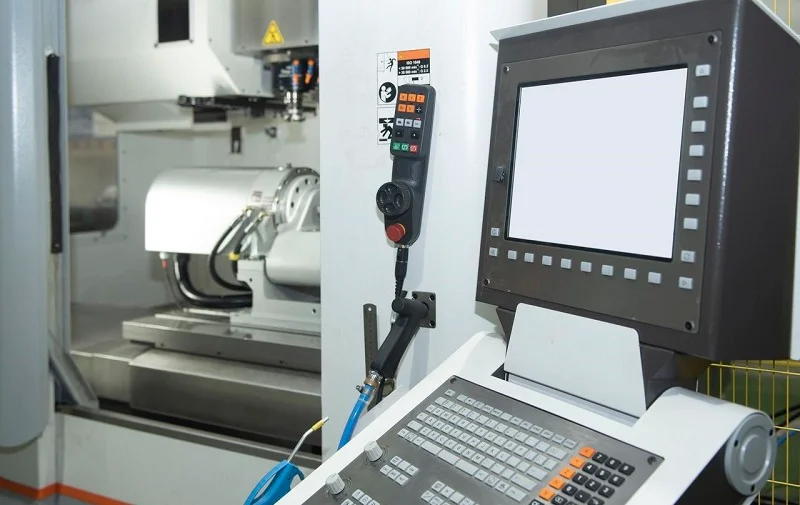
How It Works
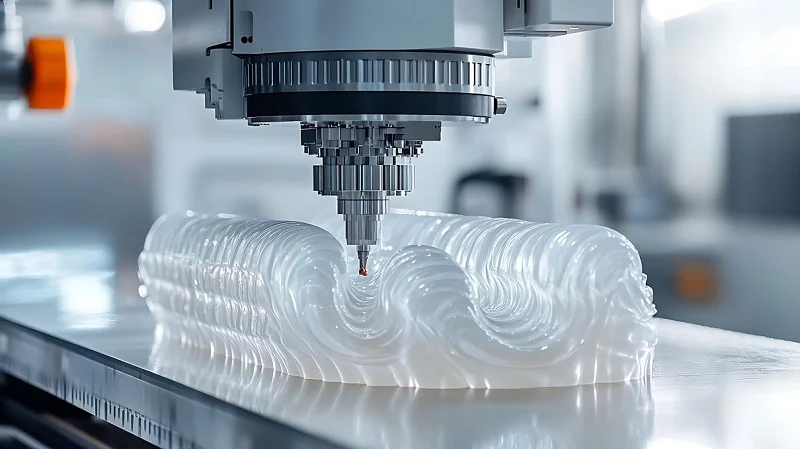
A solid block or sheet of ABS is clamped to the machine tool’s worktable. An operator uses a rotating cutting tool to remove material. ABS rapid prototyping parts are thus machined from the blank.
Advantages
Uses genuine ABS material with mechanical properties identical to those of mass-produced parts. High precision, with tolerances typically as tight as ±0.05 mm. Excellent dimensional control ensures the finished product matches the CAD file perfectly.
Limitations
Significant material waste. Parts are machined from large blocks, and the removed material becomes scrap. Not well-suited for highly complex geometries; deep internal cavities are difficult to machine. Thin walls are prone to warping.
Best Applications
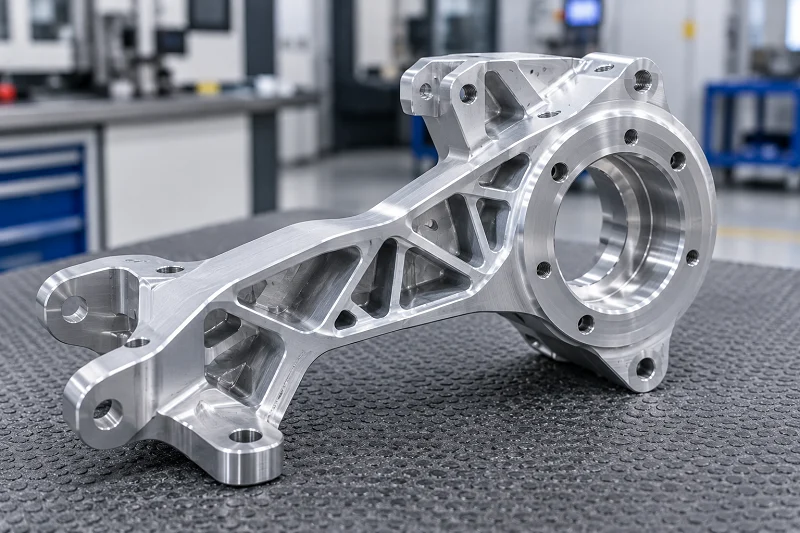
Engineering prototypes requiring the true performance of ABS. Mechanical testing where material properties are critical. Precision parts requiring tight tolerances. When the budget allows, CNC machining of ABS plastic is the gold standard for functional prototypes.
Rapid Injection Molding for ABS Rapid Prototyping
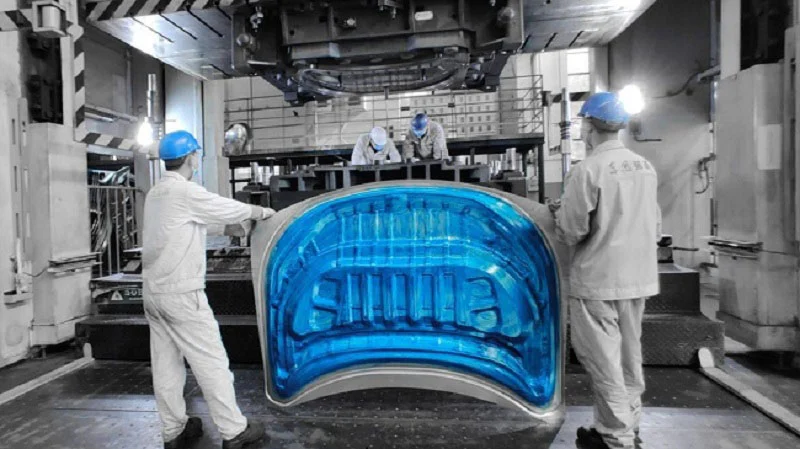
How It Works
The factory first manufactures the mold. The mold is made of aluminum or mild steel—not hardened tool steel. Workers load the mold into a standard injection molding machine, then melt and inject ABS resin. The finished part is immediately formed. This is a mass-produced part, manufactured using mass-production equipment and materials.
Advantages
Uses production-grade ABS resin. The material is identical to that of the final part. Replicates final manufacturing conditions. The part is subjected to the same pressure, temperature, and cooling rates as in full-scale mass production. Provides authentic strength, appearance, and dimensional characteristics.
Limitations
Customers must pay for the mold. Even aluminum molds are more expensive than 3D printing or vacuum casting. Best suited for use after ABS rapid prototyping has been validated.
Best Applications
Pre-production. Low volume ABS production for market testing. For pre-production testing where parts must perform exactly like the final product. ABS rapid injection molding is not ABS prototyping in the traditional sense, but rather early-stage production. The parts are real, and the molds are real. The only differences are the mold material and the lower production volume. This makes it the final step before full-scale mass production.
About NOBLE: From ABS Rapid Prototyping to Production Manufacturing
NOBLE specializes in metal and plastic manufacturing solutions. Our services begin at the product design stage and extend through prototype development and low-volume production to final assembly and shipping.
Our capabilities
- ABS rapid prototyping—offering FDM, CNC machining, and vacuum casting options
- Vacuum casting for ABS-type materials and production-grade materials
- CNC machining of metals and plastics
- Mass-production injection molding
- Metal Fabrication—casting, machining, and finishing
- Surface Treatment—painting, electroplating, and shot blasting
- Assembly Services—from subassemblies to finished products
Quality Certifications
- ISO 9001:2015 for general quality management
- ISO 13485:2016 for medical device manufacturing
These standards define how we operate, ensuring documented processes, traceable inspections, and consistent results.
NOBLE’s ABS rapid prototyping encompasses a variety of technologies. FDM technology is suitable for early-stage proof-of-concept; CNC machining is suitable for functional parts; vacuum casting is suitable for low-volume production; and rapid injection molding is suitable for low-volume ABS production. The specific method chosen depends on the development stage and the required material properties.
NOBLE offers more than just manufacturing services. With our integrated engineering and production capabilities, we help our customers turn their ideas into reliable finished products. This means fewer handoffs, lower risk, and faster time to market.
FAQs: ABS Rapid Prototyping
Is ABS good for rapid prototyping?
It is very suitable. It offers high strength, high dimensional accuracy, and is easy to machine and print. ABS prototypes perform just like mass-produced parts, which makes testing meaningful.
Can 3D printers produce real ABS parts?
Absolutely. FDM printers use genuine ABS filament, so the printed parts are made of ABS. While there are trade-offs such as layer lines and directional strength limitations, the material itself is authentic.
What is the difference between ABS 3D printing and injection molding?
ABS 3D printing builds parts layer by layer using filament, without the need for molds. Injection molding, on the other hand, involves injecting molten ABS into a mold cavity. Although molds incur costs, injection-molded parts offer higher strength and faster production speeds. The former is suitable for prototyping, while the latter is suitable for mass production.
How long does ABS rapid prototyping take?
A single printed part takes only a few hours. CNC machining takes several days. Vacuum casting takes one to two weeks. Rapid ABS injection molding takes two to four weeks. The exact time depends on the process method and the complexity of the part.
What is the cheapest ABS prototyping method?
If you’re looking for the most cost-effective option, I recommend FDM 3D printing. Material costs are low, processing time is short, and no molds are required. But you’ll need to weigh trade-offs regarding surface finish and strength.
When should I move from prototyping to injection molding?
When the design is stable. When the required quantity exceeds 100 to 500 parts. When the part must be made from production-grade ABS under actual molding conditions. That is when rapid injection molding of ABS becomes the logical next step.