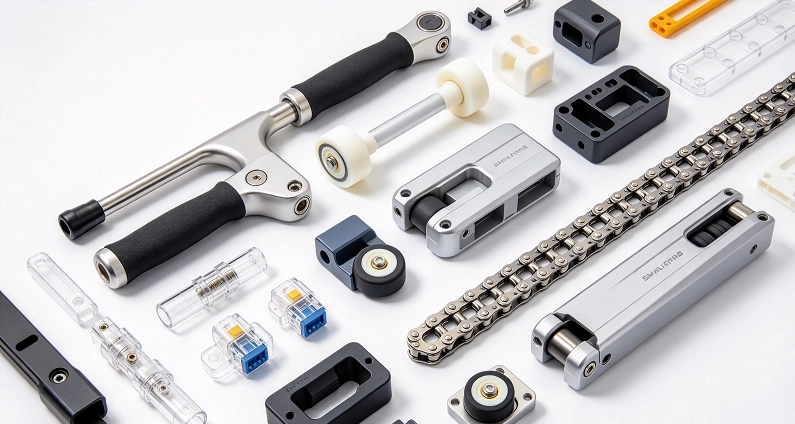
In manufacturing, precision, efficiency, and flexibility have become core elements. Among numerous cutting technologies, laser cutting has become a key process, indispensable in the manufacture of various products, from micro-medical devices to large aerospace components.
What is laser cutting?
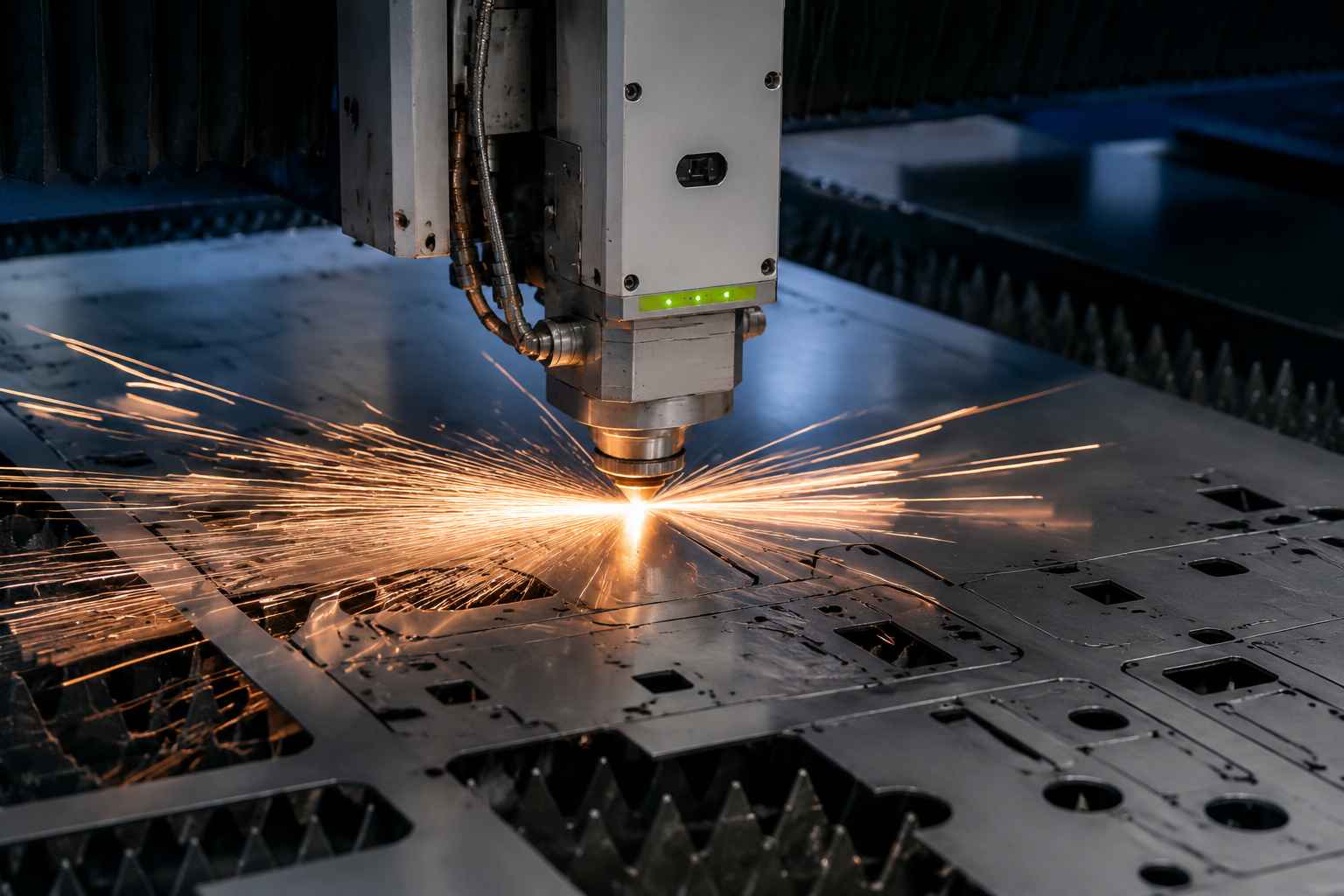
Laser cutting is a thermal cutting method that uses a high-power-density laser beam to irradiate the workpiece, causing the material to melt, vaporize, or reach its ignition point rapidly. Simultaneously, a high-speed gas stream coaxial with the laser beam blows away the molten material, thus cutting the workpiece. In short, it achieves precise cutting by converting light energy into heat energy.
Core steps:
- Energy generation: Lasers (such as CO2 lasers, fiber lasers, or crystal lasers) generate laser light of a specific wavelength by exciting a gain medium (such as a gas, fiber, or crystal).
- Beam focusing: The generated laser beam is transmitted and focused through a series of mirrors and a special lens system to form a small spot with extremely high energy density.
- Material interaction: This high-energy light spot impacts the material surface, rapidly heating the local area to melting or even vaporization temperature.
- Slag Removal: A nozzle following the laser head sprays high-pressure auxiliary gas (such as oxygen, nitrogen, or air) to remove molten metal slag, thereby forming a clean and smooth cut.
- Motion control: The entire laser head is precisely controlled by a computer numerical control (CNC) system, moving along a predefined path defined by the CAD drawing, thereby cutting out any complex shape on the material.
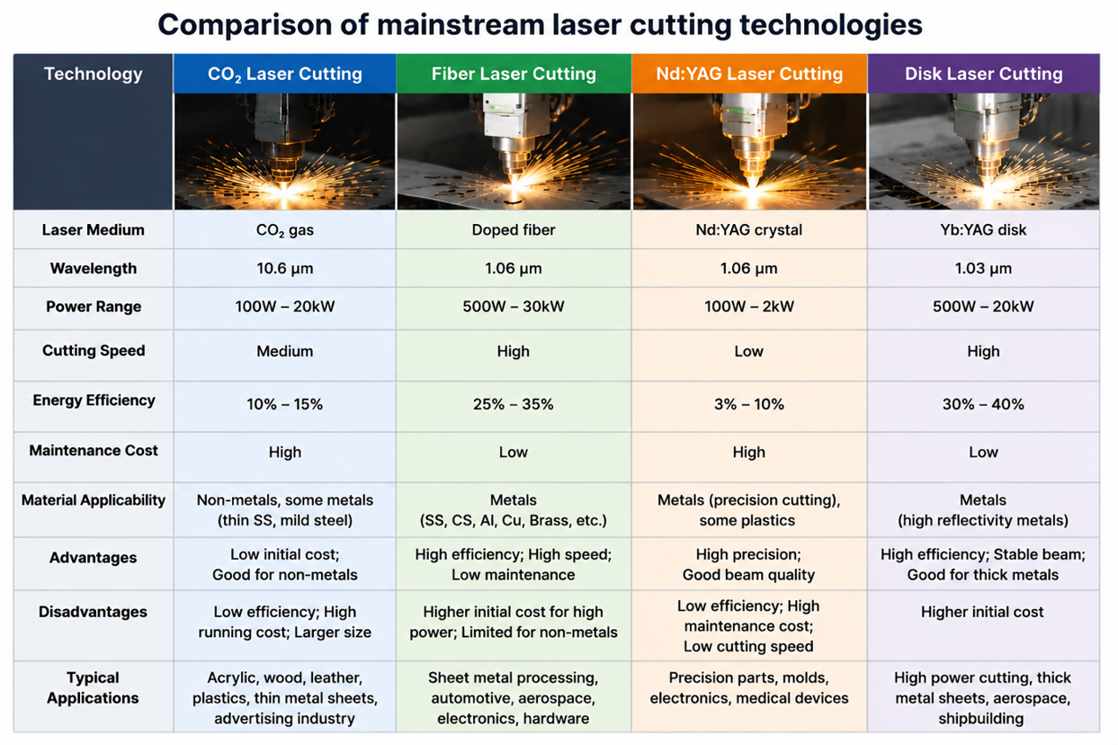
Comparison of mainstream laser cutting technologies
Not all laser cutting technologies are the same. Their main differences lie in the type of laser and the materials used. The three most common types are:
-
Fiber laser cutting
Principle: Laser generation utilizes optical fibers doped with rare earth elements such as ytterbium as the gain medium. The laser beam is transmitted through flexible optical fibers, thus achieving extremely low energy loss.
Advantages: Currently, the mainstream technology in the metal cutting industry. It boasts high photoelectric conversion efficiency (over 30%), energy saving, and extremely fast cutting speed, making it particularly suitable for thin plate cutting. Furthermore, it offers advantages such as low maintenance costs, stable operation, and the ability to perfectly cut high-reflectivity materials like copper and aluminum.
Applicable materials: All metals (carbon steel, stainless steel, aluminum alloy, copper alloy, titanium alloy, etc.).
-
Carbon dioxide laser cutting
Principle: Lasers are generated by stimulating a mixture of carbon dioxide in a high-pressure container.
Advantages: Mature technology, smooth cutting surface, with certain advantages in cutting non-metals and thicker non-ferrous metals. Applicable materials: Metals, acrylic, wood, leather, glass, plastics, fabrics, and other non-metallic materials.
-
Crystal laser cutting
Features: Its performance falls between that of fiber lasers and CO2 lasers. While capable of cutting both metals and non-metals, it has a limited crystal lifespan and is relatively expensive. Its market share is gradually being replaced by more efficient and durable fiber laser technology.
How to choose?
For the vast majority of metalworking applications, fiber laser cutting machines are currently the best and most economical choice. If you frequently process non-metallic materials, you may consider using a CO2 laser cutting machine or a combination of both.
Advantages of laser cutting
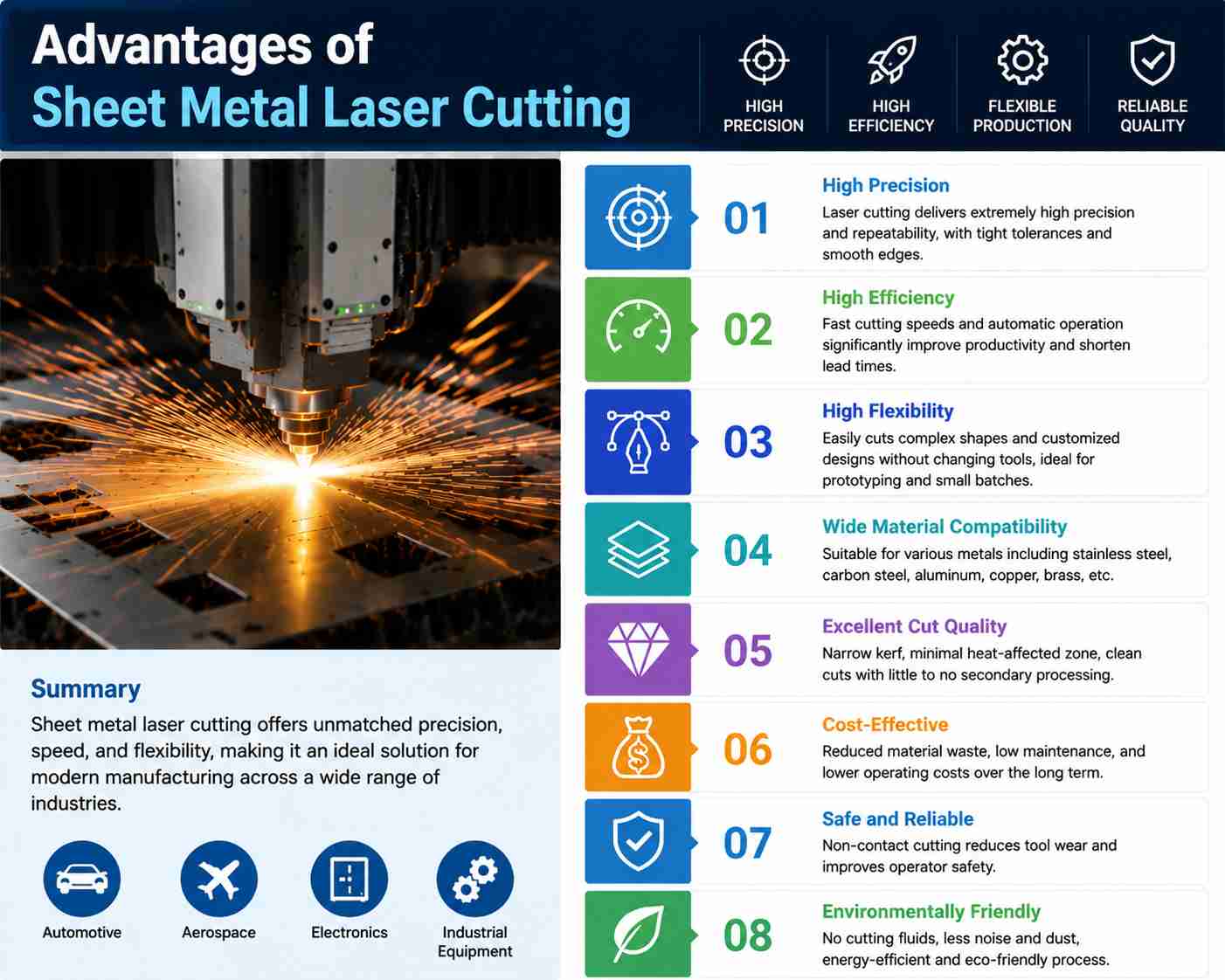
- Extremely high precision and quality: The small laser spot size and high energy density result in excellent cutting quality. Laser cutting creates a narrow kerf, with minimal cutting precision error between the upper and lower sections, resulting in a beautiful and clean cross-section. Surface roughness can be accurate to the micrometer level. The thermally sensitive zone of laser cutting is extremely small, minimizing material deformation. Laser-cut materials can be used directly without grinding or polishing.
- Excellent flexibility: The CNC control system can instantly switch cutting patterns simply by changing the design drawings, without changing the molds. This makes it ideal for prototyping and small-batch custom production.
- Non-contact machining: Laser cutting eliminates the need for contact with the workpiece, avoiding wear and tear on the saw blade and other molds. When processing various workpieces, there’s no need to change fixtures; only the cutting parameters need adjustment. The entire system operates without physical contact, resulting in extremely low noise. The residue produced during cutting is in the form of dust particles, which are easy to clean, minimizing environmental pollution.
- High Speed and Efficiency: Laser cutting boasts exceptional scalability. The equipment operates through programmable control and can be equipped with automatic loading and unloading devices, eliminating the need for manual intervention. The efficiency of a single laser cutting machine far surpasses that of traditional cutting equipment. Laser cutting requires no clamps, thus eliminating the need to change tools when cutting certain mold-shaped materials. The equipment can perform continuous cutting operations for extended periods, and a water-cooling system ensures the equipment maintains a constant temperature.
- Wide material compatibility: One machine can process a variety of materials, from metals to non-metals, significantly improving equipment utilization and return on investment.
- Automation and Integration: It can be easily integrated into automated production lines and used in conjunction with loading and unloading robots.
Laser cutting applications
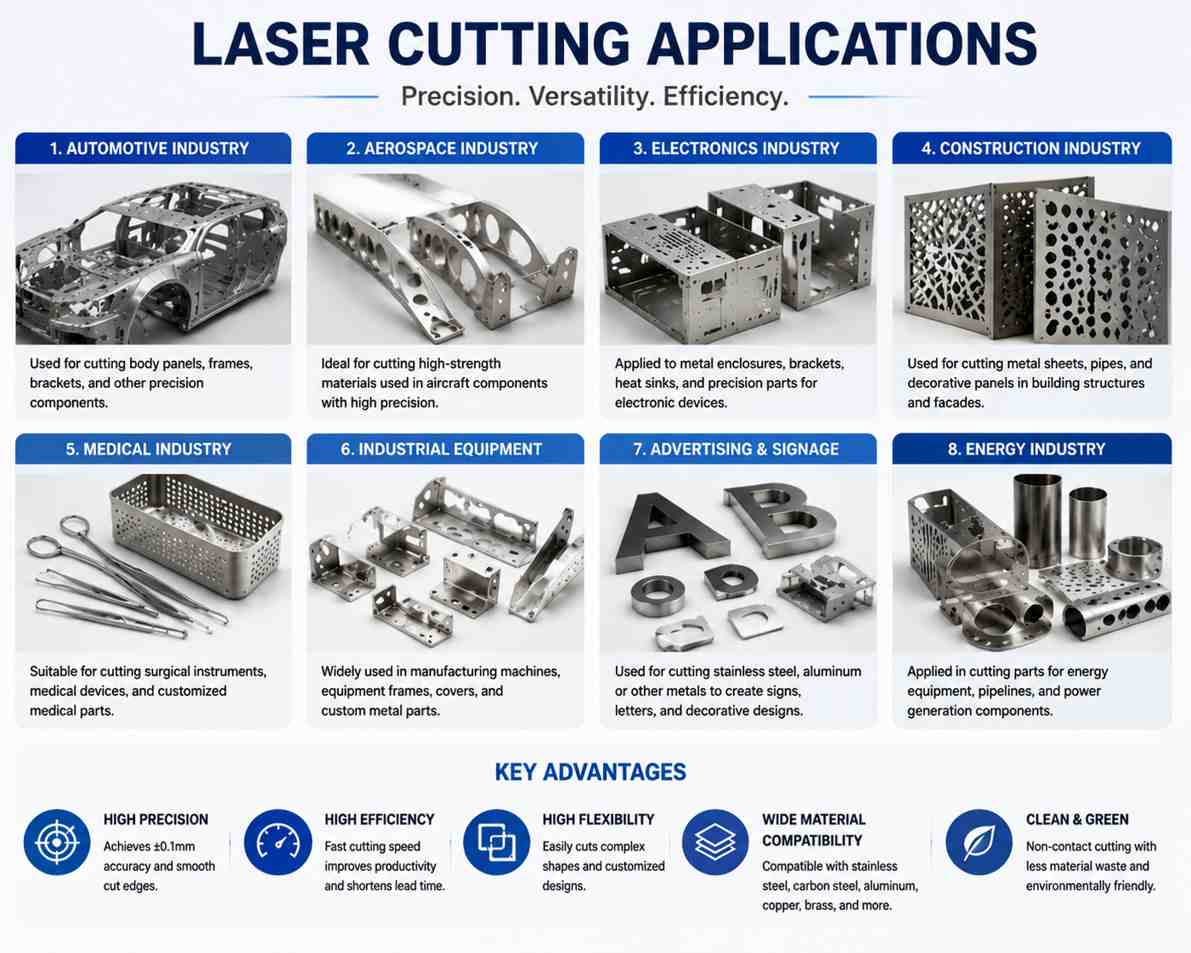
Laser cutting is used in almost all industrial sectors, and its greatest appeal lies in its extreme flexibility—it can cut anything you can imagine.
Sheet metal machining and machinery manufacturing:
This is the most traditional application area. It is used to produce chassis and cabinets, mechanical parts, kitchenware, elevator panels, metal furniture, etc. It has the advantages of high speed, high precision, and the ability to achieve mass production.
Automotive Manufacturing:
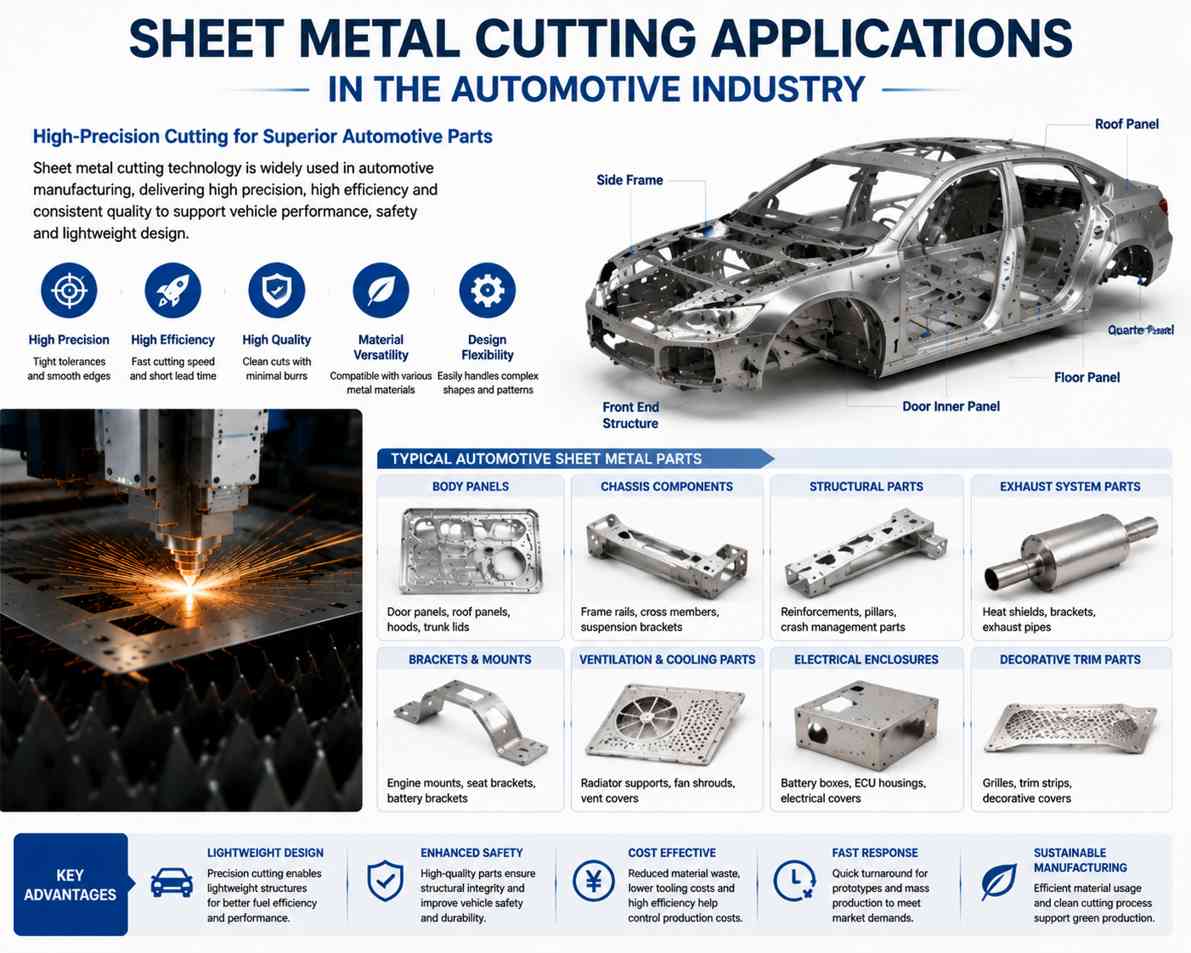
Laser cutting is widely used in the automotive manufacturing industry, including the blanking and cutting of body-in-white panels, thermoformed panels, reinforcing ribs, and custom welded blanks. Automated loading and unloading systems enable high-speed, flexible production, meeting the requirements of high quality and lightweight design.
Aerospace:
Used for cutting high-strength steel plates, aluminum alloy body parts, airbag fabrics, aircraft skin, engine blades, and other components with extremely high safety and precision requirements.
Electronics and Precision Instruments:
Precision lasers can cut internal structural components of smartphones, printed circuit boards (FPCs), semiconductor components, and miniature sensor housings, meeting the trend of miniaturization in electronic products.
Architecture and Decoration:
In bridges, factories, and prefabricated buildings, laser cutting is used to cut structural components such as H-beams, channel steel, angle steel, and sheet metal. Its advantages lie in high cutting quality and minimal thermal deformation, thereby improving the assembly efficiency of prefabricated components. Laser cutting can also be used to create complex metal art screens, interior and exterior decorative panels, stair railings, brand logos, and sculptures, perfectly integrating artistic design with industrial production.
Medical devices:
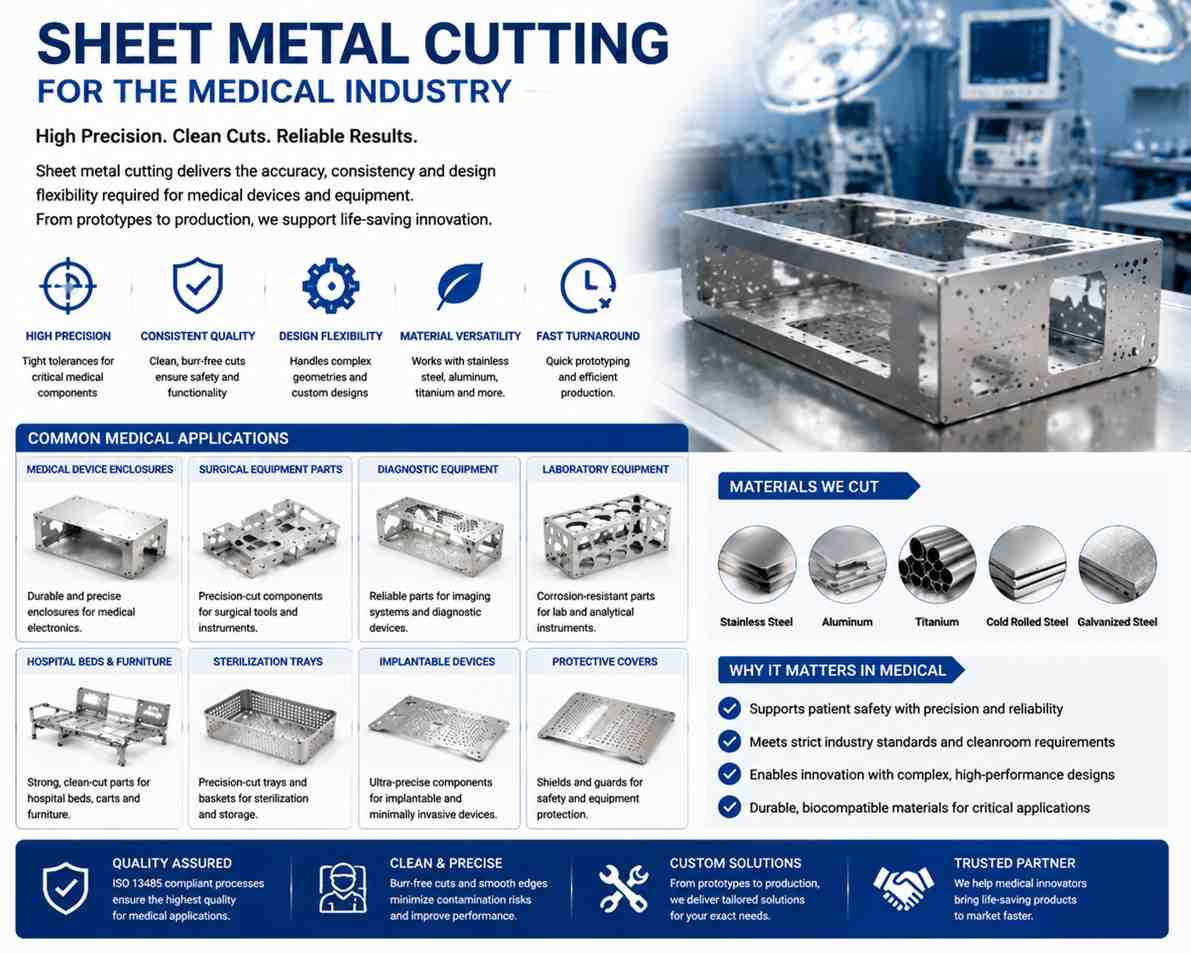
The production of surgical instruments, stents, and orthopedic implants requires an extremely clean and stress-free environment, making laser cutting an irreplaceable process.
Electronics and Semiconductors:
has unique advantages such as non-contact, burr-free, and minimal heat-affected zone in processes such as PCB depaneling, chip scribing and flexible circuit drilling, and is widely used in the field of precision microelectronics manufacturing.
Advertising and Creative Industries:
Laser cutting is an invaluable tool for advertising production and creative designers to cut acrylic letters, POP display stands, wooden models, leather patterns, and textile fabrics.
New energy industry:
Laser cutting technology is used to cut silicon wafers and lithium battery tabs required for solar photovoltaic panels and is a key link in the clean energy industry chain. Laser technology has the characteristics of being non-contact, highly consistent, and having low material loss.
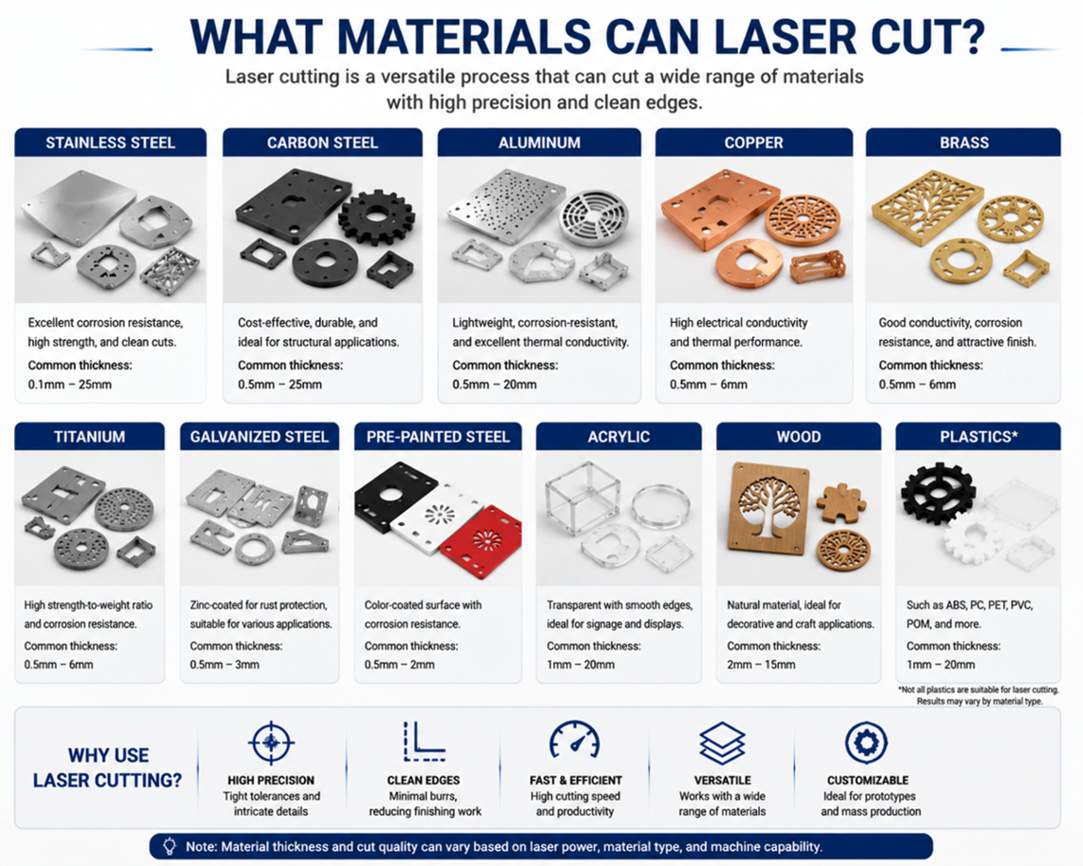
What materials can laser cutting cut?
A laser cutting machine is a machine that uses a laser beam to process various materials. It has advantages such as high precision, high speed, and non-contact operation. It can cut a variety of materials, including but not limited to:
- Metals: Including stainless steel, carbon steel, alloy steel, silicon steel, spring steel, aluminum, aluminum alloys, galvanized sheet, pickled sheet, titanium and titanium alloys, and nickel alloys. Laser cutting machines typically use oxidants to assist metal processing to improve cutting speed and quality. However, for materials such as high-carbon steel, the heat-affected zone can be large. Copper is not suitable for laser cutting because it can damage the protective lens.
- Non-metallic materials: While laser cutting machines are primarily used for cutting metals, they can also cut and engrave some non-metallic materials, such as wood, acrylic, glass, ceramics, rubber, and paper. These applications mostly require specialized equipment, such as CO2 laser cutting machines or fiber laser cutting machines.
However, laser cutting machines are not a panacea. Some materials cannot be effectively cut, such as stone, leather, and dense materials composed of plant fibers, wood fibers, etc. These materials cannot absorb the wavelength of laser cutting machines, or will cause problems such as scorching during the cutting process, and therefore cannot be effectively processed by laser cutting machines.
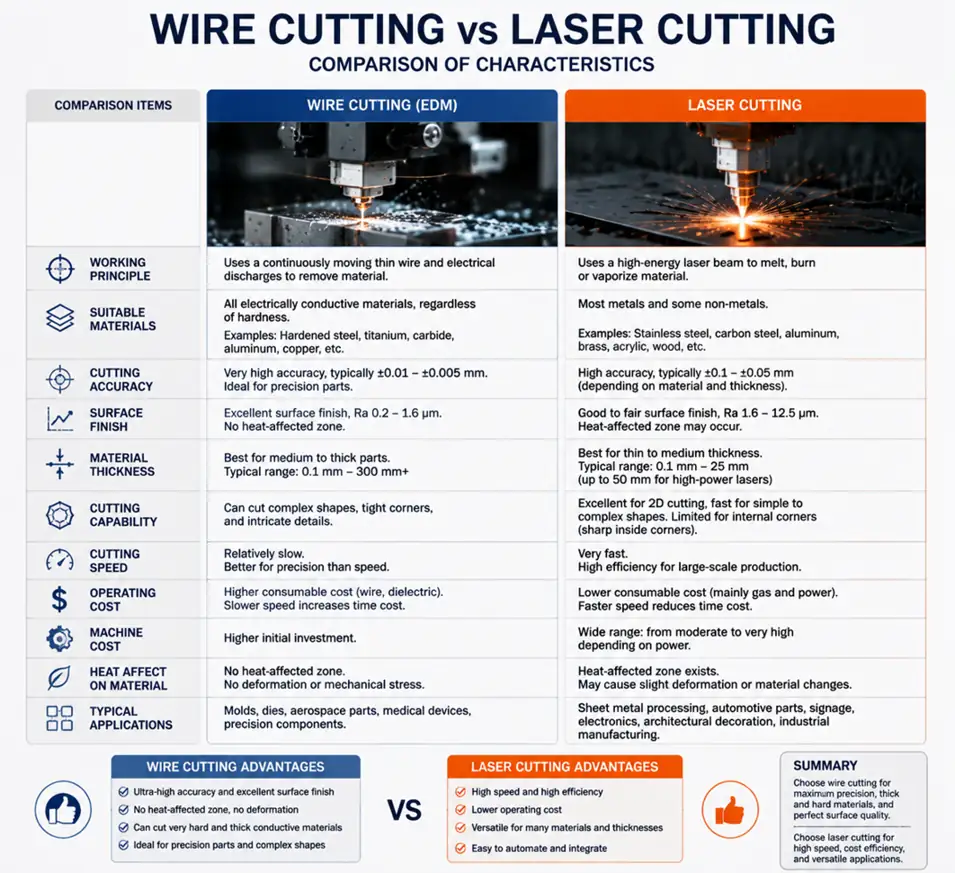
Compared to wire cutting and laser cutting, what are their respective characteristics?
Wire EDM
- High speed and efficiency: Wire EDM is fast and suitable for mass production. It is highly efficient and can complete complex cutting tasks.
- Large cutting thickness: Wire EDM has a relatively large cutting thickness, and it is more effective for cutting materials with a thickness of more than 3mm.
- Rough cut: Wire EDM blades are relatively rough and require subsequent grinding and polishing; otherwise, it will affect subsequent processing.
Laser Cutting
- High precision and excellent cutting quality: Laser cutting can achieve high-precision and high-quality cuts, with clean and smooth edges, eliminating the need for secondary processing. It is suitable for high-precision and high-end machining.
- Wide range of applications: Laser cutting is suitable for cutting most materials, including metals, non-metals, plastics, ceramics, etc.
- Limited cutting thickness: Laser cutting has a relatively limited cutting thickness and is not suitable for cutting thicker materials.
Generally, wire cutting is suitable for mass production applications where the cutting thickness is greater than 3mm, while laser cutting is suitable for applications requiring high precision, small cutting thickness, and a wide variety of materials. In practical applications, it is necessary to select the appropriate cutting method based on specific cutting requirements to achieve the best processing results.
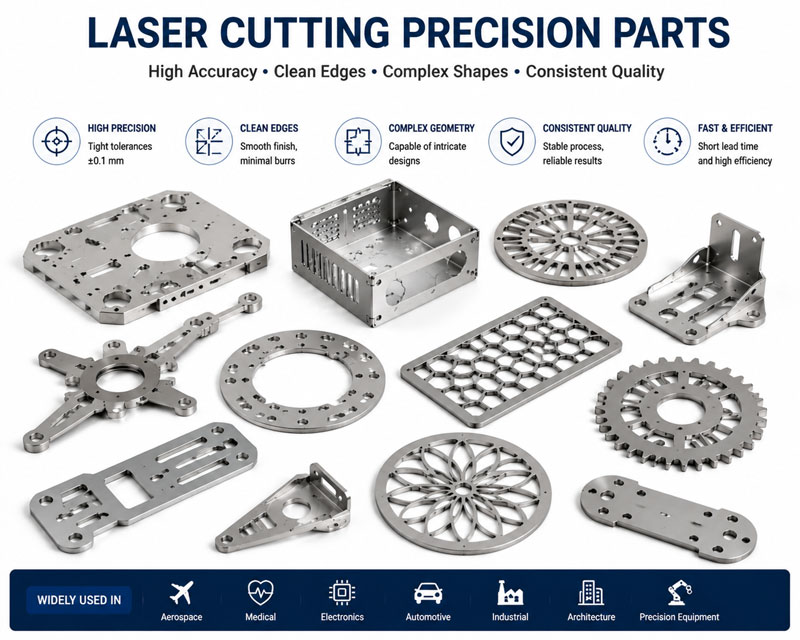
Conclusion:
Laser cutting technology has evolved from a cutting-edge technology into a cornerstone of modern manufacturing. Its unparalleled precision, speed, and flexibility continue to drive innovation across various fields, from industry to art. With the continuous advancement of fiber laser technology and ongoing cost optimization, laser cutting is becoming increasingly widespread, benefiting everyone from large heavy industrial enterprises to small creative studios.
Laser Cutting FAQs
1. What is laser cutting?
Laser cutting is a precision manufacturing process that uses a focused laser beam to cut, engrave, or shape materials with exceptional accuracy and clean edges.
2. What materials can be laser cut?
Laser cutting is suitable for stainless steel, carbon steel, aluminum, brass, copper, titanium, acrylic, wood, plastics, paper, fabric, and many other materials, depending on the laser type.
3. How accurate is laser cutting?
Modern laser cutting machines typically achieve tolerances of ±0.05 mm to ±0.20 mm, depending on the material, thickness, machine quality, and cutting parameters.
4. What are the advantages of laser cutting?
Laser cutting offers high precision, fast production speeds, smooth edges, minimal material waste, excellent repeatability, and the ability to produce complex shapes without additional tooling.
5. What is the maximum thickness laser cutting can handle?
The maximum cutting thickness depends on the laser power and material. High-power fiber lasers can cut carbon steel over 30 mm thick, while thinner materials generally provide the best cutting quality and speed.
6. Does laser cutting require post-processing?
In most cases, laser-cut parts require little or no finishing. However, deburring, polishing, bending, welding, or surface treatments may be needed depending on the application’s requirements.
7. Which industries commonly use laser cutting?
Laser cutting is widely used in the automotive, aerospace, electronics, medical devices, construction, consumer products, industrial equipment, and metal fabrication industries.
8. How do I choose a reliable laser cutting manufacturer?
Look for a manufacturer with advanced equipment, experienced engineers, strict quality control, material traceability, fast delivery, competitive pricing, and certifications such as ISO 9001.
9. Is laser cutting suitable for prototyping?
Yes. Laser cutting is an excellent choice for rapid prototyping because it requires no dedicated tooling, offers quick turnaround times, and is cost-effective for low-volume production.
10. Can laser cutting be combined with other manufacturing processes?
Yes. Laser cutting is often combined with CNC machining, sheet metal bending, welding, powder coating, anodizing, and other finishing processes to produce complete custom parts.