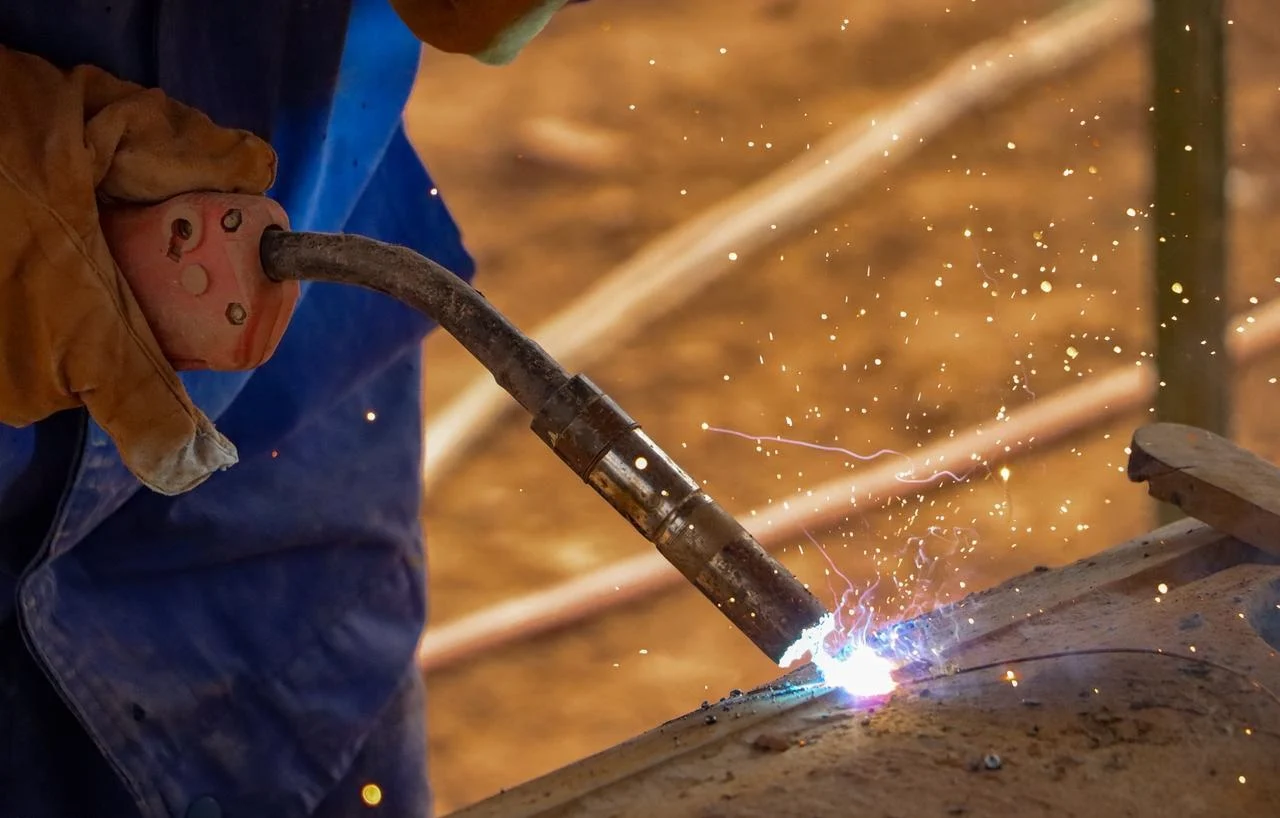
People use metal welding everywhere. It is how factories join metal parts together permanently. The idea is simple. Apply heat or mechanical force. Push the atoms close enough for them to bond. The two pieces become one.
Industrial technology keeps moving forward. Welding methods have multiplied. They are more refined now than they were twenty years ago. Different techniques exist for different jobs. That is why people need to understand the differences before walking onto the shop floor.
What is Sheet Metal Welding?
People talk about sheet metal welding. But what is it really? At the core, it is a bonding process. And it happens at the atomic level. That is different from just gluing two pieces together.
External energy comes into play. Heat. Mechanical force. Often a mix of both. This energy disrupts the original atomic arrangement right at the joint of the metal pieces. The structure breaks down in a controlled way. Then the area cools. It solidifies. The two separate components become one single unit. Strong. Cohesive. Permanent.
Bolting or riveting holds pieces together mechanically. There is still a gap—still a fastener. Welding does something else entirely. It achieves fusion at the atomic level. There is no seam in the traditional sense. The result is that a welded joint can match the strength of the base metal. Sometimes it even exceeds it. That is not true for most mechanical fasteners.
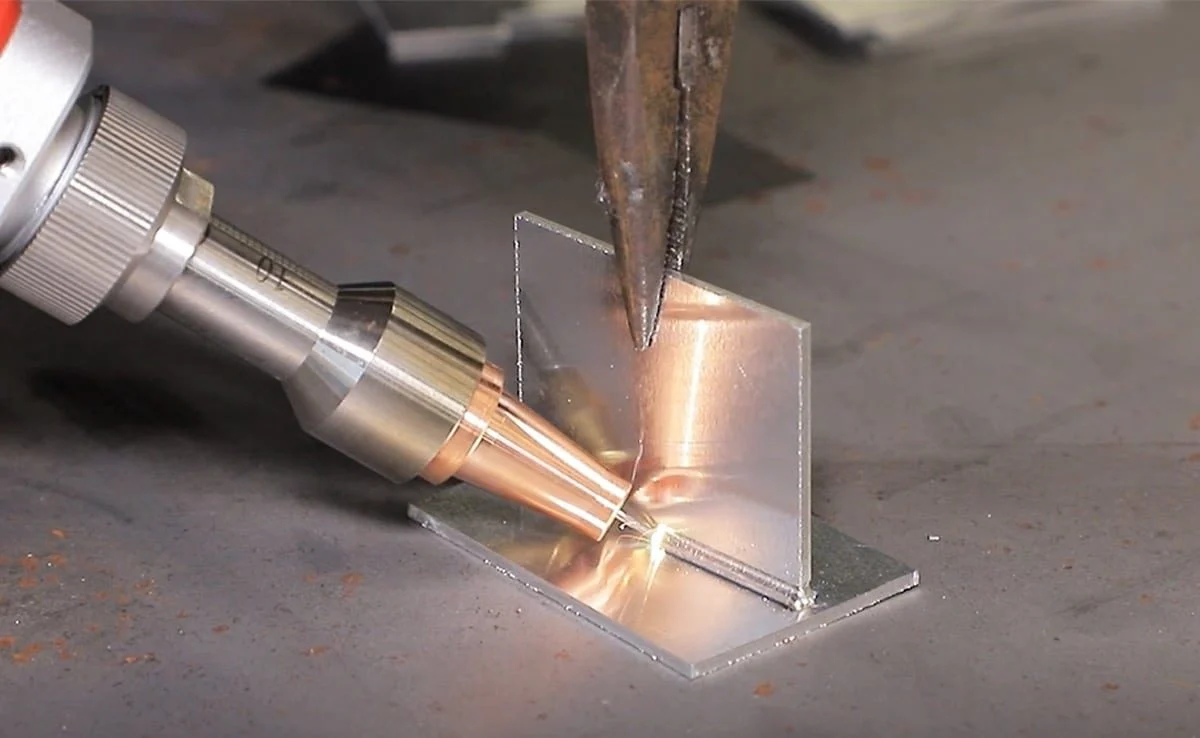
What Are the Different Types of Sheet Metal Welding?
Engineers classify metal welding in different ways. The energy source matters. The welding principle matters. Three main categories cover most of what happens on shop floors. Each type has its own character. Each one fits different jobs.
Fusion Welding
This is the most common type. People use it everywhere. The core principle is straightforward. Heat the edges of the base metal until they turn molten. A weld pool forms. Let it solidify. The joint is complete. Filler material sometimes gets added. That helps with weld shape and strength. Not always necessary. But often helpful.
Shielded Metal Arc Welding (SMAW)
People also call this stick welding. An electric arc provides the heat. A flux-coated electrode does the work. The equipment is simple. No complex electronics. This flexibility means people can weld in many positions. Overhead. Vertical. Horizontal. It all works.
Gas Tungsten Arc Welding (GTAW/TIG)
This one goes by TIG welding. Argon gas acts as a shielding medium. It protects the molten weld pool from the surrounding air. No contamination. No oxidation. The result is a high-quality weld with a clean, attractive appearance. People who care about looks use TIG.
The method works well for non-ferrous metals. Stainless steel. Aluminum alloys. Copper alloys. Two main variants exist. Gas Tungsten Arc Welding, which is the standard TIG. And Gas Metal Arc Welding, also called MIG. Different guns. Different filler delivery. Same shielding gas principle.
Submerged Arc Welding (SAW)
This process looks strange to people who have not seen it. The arc burns beneath a layer of flux. That granular flux shields the weld zone completely. No gas cylinder needed. No visible arc flash.
The advantages are clear. High welding efficiency. Consistent weld quality. Less labor intensity because the process is often automated. The limitation is position. SAW works best for flat-position welding. Medium to thick plates. Batch production. Large structures like ships and bridges. People do not use it for small repair jobs.
Oxy-Fuel Welding (OFW)
This method uses a flame. Not an arc. A fuel gas mixes with oxygen. The combustion creates a hot flame directed at the metal. The equipment is portable. Easy to operate. No electricity required.
Working in locations without electrical outlets. It is old technology. But it still has a place on the floor. Sometimes the simplest tool is the right one.
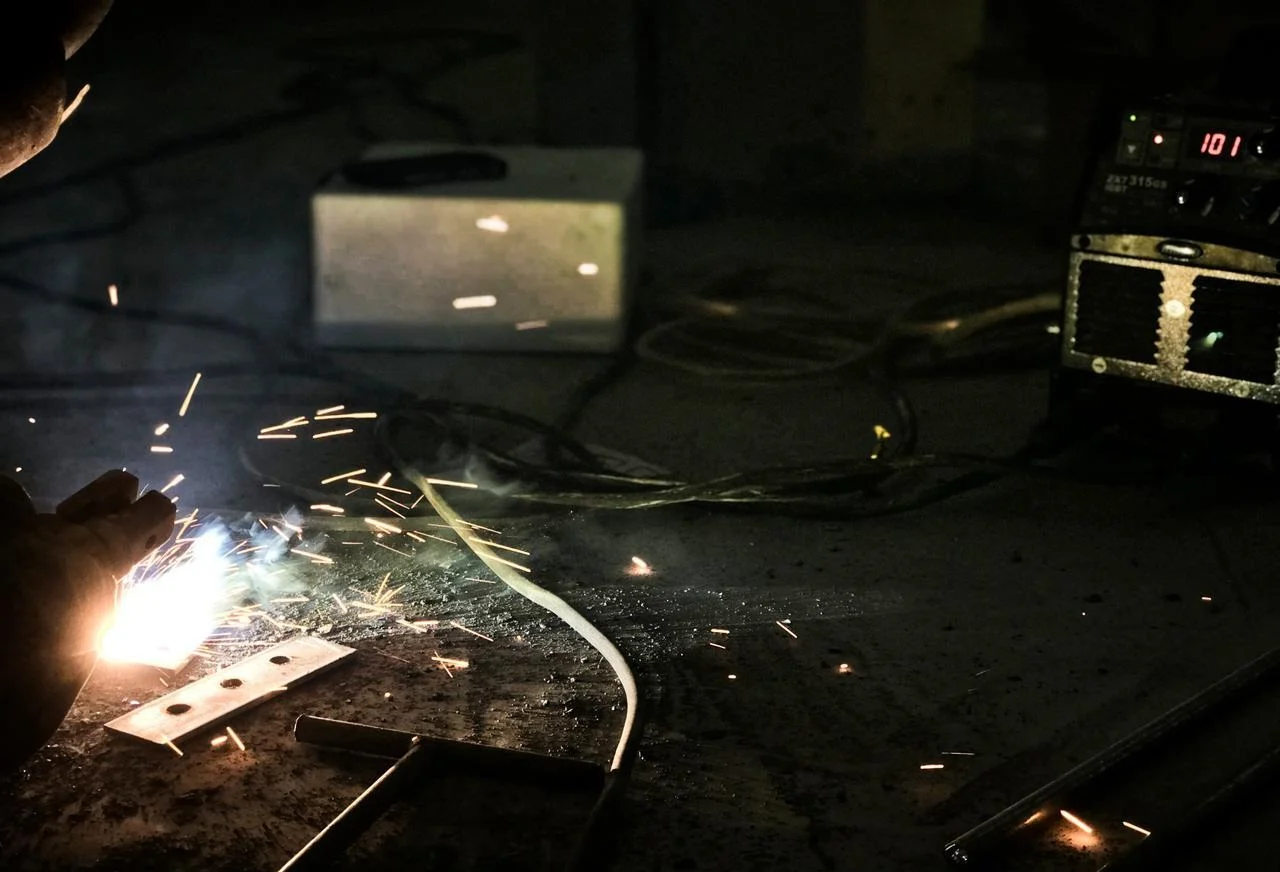
Pressure Welding
The process applies mechanical force to the base metals. Sometimes moderate heat gets added. The goal is to push the materials into a plastic state—soft enough to deform, not liquid enough to flow.
Filler material is generally not required. The joint comes from the metals themselves fusing under pressure.
Resistance Welding
This method uses electrical resistance. Current passes through the base metals. The resistance at the contact surfaces generates heat. At the same time, mechanical pressure is applied to complete the weld.
Two advantages stand out. Fast welding speeds. Minimal deformation of the surrounding material.
Three common types exist. Spot welding for individual points. Seam welding for continuous lines. Butt welding for joining ends. People use resistance welding extensively for thin sheet components. Automobile bodies are a classic example. Appliance casings also go through this process on high-volume production lines.
Friction Welding
Here is how friction welding works. Two workpieces move relative to each other. Either rotation or linear motion. The friction generates heat. The contact surfaces reach a plastic state. Then an axial forging force gets applied. The pieces bond permanently.
The weld quality is consistent. Joint strength is high. People use this method for butt welding components with circular cross sections. Shafts. Axles. Pipes. Any round part that needs a strong, clean joint without filler material. No flux. No shielding gas. Just motion and pressure.
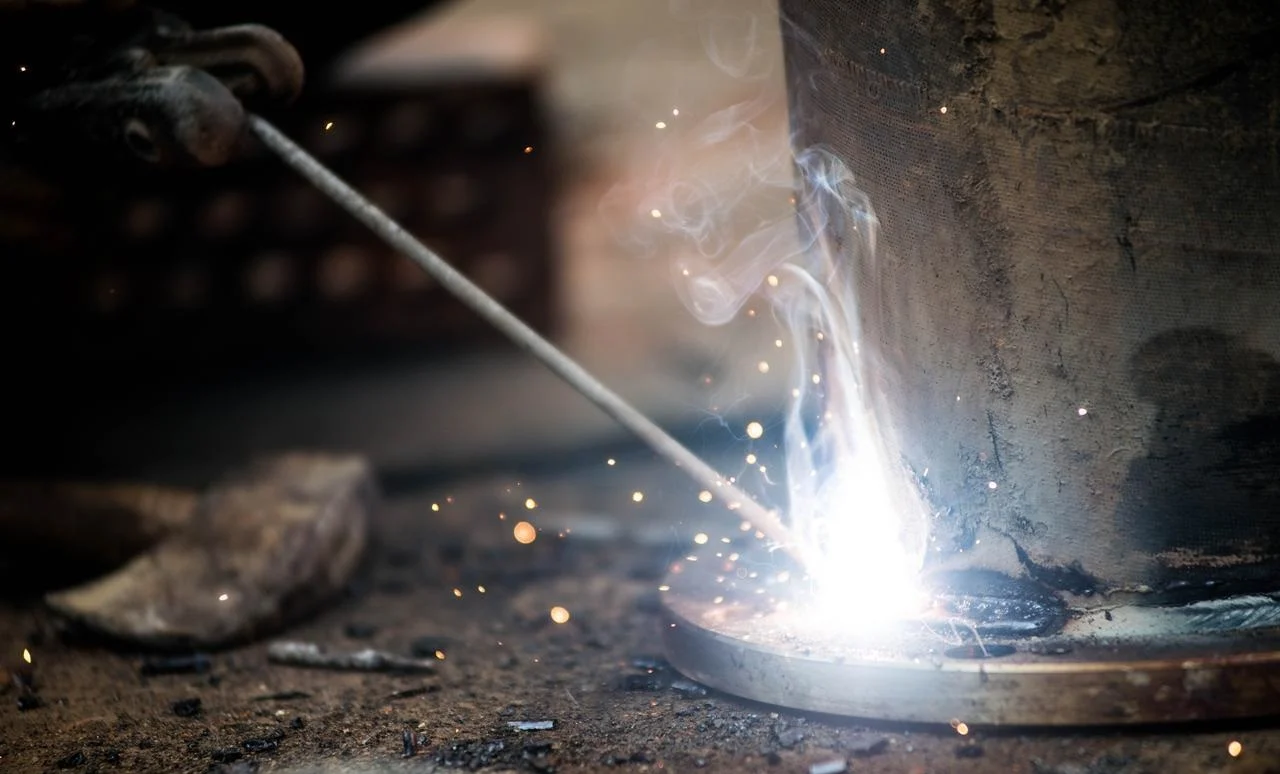
Brazing and Soldering
These two processes work differently from fusion welding. The base metals do not melt. Only the filler metal melts. That filler has a lower melting point than the materials being joined.
The operator heats the assembly. The filler metal melts. Capillary action pulls the molten filler into the gap between the base metal surfaces. The filler then diffuses into the base metal slightly. A joint forms. No melting of the workpieces themselves.
Soldering (Soft Brazing)
Soldering uses filler metal with a melting point below 450°C (842°F). Common solders include tin-lead alloys. Some newer alloys replace lead for environmental reasons.
We use this process for precision components. Electronic parts are the biggest example. Instruments and small assemblies also get soldered. The joint strength is lower than that of other welding methods. That is fine for electronics. Not fine for structural steel.
Brazing (Hard Brazing)
Brazing uses filler metal with a melting point above 450 degrees Celsius. Common fillers include copper-based alloys and silver-based alloys. These joints have relatively high strength. Much stronger than soldered joints. Approaching the strength of fusion welds in some cases.
We use brazing for cutting tools. Also for molds and pipe joints. Anywhere two metals need to join without melting the base material. The process works well for dissimilar metals. A copper pipe to a brass fitting. A carbide tip to a steel tool body. Brazing handles those combinations. Fusion welding often fails.
How Welding Processes Influence Metal Selection
There is a close compatibility relationship between welding processes and metal materials. Different welding processes impose specific requirements on the properties and chemical composition of metals, which directly affect the selection of appropriate base materials.
Heat Input Characteristics of the Process Limit Metal Types
Welding processes vary significantly in terms of heat input and heating rate, and these differences directly impact which metals can be selected for a given application.
High-Heat-Input Processes
Processes such as submerged arc welding (SAW) and oxy-fuel welding (OFW) deliver large amounts of heat to the workpiece, resulting in a wide heat-affected zone (HAZ) and slow cooling rates. This can lead to grain coarsening and a reduction in the mechanical properties of the material. These high-heat-input processes are better suited for materials that are less sensitive to thermal effects, such as mild steel and low-alloy steel. They are generally not recommended for materials like high-strength steel or heat-resistant steel, which tend to suffer performance degradation due to overheating.
Low-Heat-Input Processes
Processes such as gas tungsten arc welding (GTAW/TIG) and resistance welding apply heat rapidly and confine it to a smaller area, minimizing microstructural changes and property degradation in the metal. These low-heat-input processes are more suitable for temperature-sensitive materials such as stainless steel, aluminum alloys, and high-strength steel, as they help maintain the integrity and performance of the welded joint.
The Shielding Method Determines Material Suitability
The shielding method used in a welding process directly affects whether the metal will be oxidized during welding, making it a critical factor in material selection.
Processes with Inert Gas or Flux Shielding
Processes such as gas tungsten arc welding (GTAW/TIG) and submerged arc welding (SAW) provide excellent shielding by effectively blocking atmospheric exposure. These methods are well-suited for welding non-ferrous metals that are prone to oxidation, such as aluminum alloys, copper alloys, and titanium alloys. If these materials are welded using unprotected processes, oxide films can form rapidly, leading to defects such as porosity and slag inclusions in the weld.
Processes with Little or No Shielding
Processes such as shielded metal arc welding (SMAW)—which relies only on the electrode coating for basic protection—and oxy-fuel welding (OFW) offer limited shielding. These methods are not suitable for easily oxidized non-ferrous metals. Instead, they are better matched with ferrous metals that have higher oxidation resistance, such as mild steel and low-alloy steel.
The Degree of Welding Distortion Influences Material Thickness Selection
Different welding processes produce varying levels of distortion, which in turn affects the choice of material thickness.
Processes with High Distortion
Processes such as oxy-fuel welding (OFW) and shielded metal arc welding (SMAW) tend to cause significant warping and distortion when used on thin sheets. As a result, these methods are better suited for joining medium- to heavy-thickness components.
Processes with Low Distortion
Processes such as resistance spot welding and gas tungsten arc welding (GTAW/TIG) feature concentrated heating and a small heat-affected zone, allowing for effective distortion control. These methods are ideal for welding thin sheet components such as automobile bodies and appliance casings.
Surface Condition Considerations When Selecting Sheet Metal Welding Methods
Sheet metal welding typically involves thin-gauge components, and weld quality is highly sensitive to the condition of the material surface. Therefore, when selecting an appropriate welding method, the surface condition of the base metal must be carefully evaluated to ensure reliable weld joints.
Surface Cleanliness
Surfaces Containing Oil, Rust, or Mill Scale
When sheet metal surfaces are contaminated with oil, rust, mill scale, or other impurities, atomic bonding during welding can be compromised. This often results in weld defects such as porosity, slag inclusions, and lack of fusion. For such surface conditions, shielded metal arc welding (SMAW) or submerged arc welding (SAW) is a viable option. The flux coating on SMAW electrodes has some deoxidizing and impurity-tolerant capabilities, which can help compensate for inadequate surface cleanliness to a certain extent. Similarly, the flux layer in SAW provides a cleansing effect on the weld pool. In contrast, processes with high sensitivity to surface cleanliness—such as gas tungsten arc welding (GTAW/TIG)—require thorough surface preparation. If TIG welding is to be used, the surface must first be ground and cleaned to remove contaminants.
Surfaces with High Cleanliness
When sheet metal surfaces have been ground, cleaned, and are free of contaminants, processes such as gas tungsten arc welding (GTAW/TIG) or resistance spot welding become highly suitable. TIG welding offers excellent shielding and produces clean, aesthetically pleasing welds, making it ideal for sheet metal components with high cosmetic requirements. Resistance spot welding, on the other hand, delivers fast welding speeds and minimal distortion, making it well-suited for high-volume production of sheet metal assemblies.
Surface Flatness
Flat Surfaces
When sheet metal components have flat surfaces, the contact between workpieces is tight and uniform during welding. In this case, resistance spot welding or seam welding are excellent choices. These methods offer high efficiency and minimal distortion while ensuring consistent joint quality, making them well-suited for high-volume production. Alternatively, gas tungsten arc welding (GTAW/TIG) can also be used to achieve a smooth and aesthetically pleasing weld appearance.
Uneven Surfaces or Gaps
When sheet metal surfaces are irregular or assembly gaps exist, the weld quality of resistance spot welding and seam welding can be compromised, often resulting in defects such as incomplete fusion or lack of penetration. In such situations, shielded metal arc welding (SMAW) or oxy-fuel welding (OFW) is more appropriate. SMAW allows the operator to adjust electrode angle and travel speed to help fill gaps effectively. Oxy-fuel welding, with its broader flame coverage, enables better melting of the base metal across the joint area, also helping to bridge gaps and compensate for poor fit-up.
Surface Coatings
Some sheet metal components are coated with layers such as zinc, tin, or chromium to enhance corrosion resistance. When selecting a welding method, the influence of these coatings on weld quality must be taken into consideration.
Zinc-Coated (Galvanized) Sheet Metal
When welding galvanized sheet metal, the zinc coating vaporizes under high temperatures, producing zinc fumes that can easily lead to porosity in the weld. Shielded metal arc welding (SMAW) is a viable option, as the electrode coating can help absorb some of the zinc vapor. Gas tungsten arc welding (GTAW/TIG) is also suitable, as the inert gas shielding helps reduce the impact of zinc fumes. Resistance spot welding should be avoided, however, because the zinc layer interferes with electrical current conduction, resulting in reduced weld strength.
Tin-Coated Sheet Metal
When welding tin-coated sheet metal, the tin layer has a low melting point and tends to melt and flow away easily. Soldering (soft brazing) is an appropriate choice in this case. Using tin-based filler metals, this process provides adequate joint strength without damaging the surface coating on the sheet metal.
About NOBLE – Your Partner for Precision Manufacturing
Who We Are
NOBLE is ISO-certified. We’re a CNC machining shop. People come to us for high-precision machining and advanced joining technologies. Our main business started with subtractive manufacturing: We offer CNC milling, turning, and drilling. We’ve also added laser welding capabilities.
We’re on a mission to provide customers with all the manufacturing services they need, right from start to finish. No outsourcing. There’s no need to ship parts to another company’s welding shop. It’s all handled by the same company. This saves time and avoids any problems with quality handover.
Our Core Capabilities
CNC machining is the foundation. Milling, turning, five-axis work, and EDM for complex metal and plastic components. Tight tolerances. Complex geometries. The usual NOBLE standard that clients expect.
Traditional welding stays in the toolbox. TIG and MIG for thicker sections. For repair work. For applications where joint fit-up is less than perfect. Not every job needs a laser. We understand the difference. People choose the method that fits the print.
Our Certifications (Trust & Quality)
ISO 9001:2015 is a comprehensive quality management system. It covers our CNC machining and welding processes. Consistent quality. Repeatability. Traceability. Industrial clients expect this baseline.
ISO 13485:2016 is the gold standard for medical device manufacturing. Not every shop holds this certification. We do. It demonstrates our ability to deliver precision components and welded assemblies for surgical tools, implants, and diagnostic equipment.
Why Partner With Us?
One-stop shop is not a marketing phrase. Clients machine parts on our CNCs. Then we weld them in-house. No shipping to a separate welder. No logistics delays. No quality handoff problems.
Process expertise matters. We know when to recommend laser welding. High speed. Low heat-affected zone. We know when to recommend TIG welding. Thicker sections. Gap tolerance. We do not push one technology. We chose the right one for the print.
Quality comes first. Every weld gets documented. Every machined feature gets traced. Our ISO systems require it. Clients receive the paperwork they need for their own audits and regulatory submissions. No chasing down certificates. No missing batch records. The system works.
FAQ
How do I choose between TIG welding and SMAW for sheet metal?
TIG welding (GTAW) produces high-quality, clean welds. The appearance is good. The process requires clean, well-prepared surfaces. We use it for thin materials, stainless steel, aluminum, and any application where appearance matters.
SMAW (stick welding) is more tolerant of surface contamination. Rust or oil on the metal does not stop the process. The flux-coated electrode handles the impurities. We choose SMAW for maintenance work, small-batch production, and welding in positions that are hard to reach. It is less pretty but more forgiving.
What welding method is best for components with poor fit-up or uneven surfaces?
When surfaces are irregular or gaps exist, SMAW or oxy-fuel welding is a better choice. SMAW allows the operator to adjust the electrode angle and travel speed to fill gaps, while oxy-fuel welding offers broad flame coverage that helps melt the base metal and bridge gaps. Resistance spot welding and seam welding are not recommended for poor fit-up, as they are prone to a lack of penetration.
How do I request a quote for a part that requires both machining and welding?
Clients send us their print or CAD model. Also, any specifications for material, tolerances, and weld requirements. Our team reviews the design. We recommend the appropriate machining and welding processes. Then we provide a single quote for the complete assembly. No back-and-forth between multiple shops.
How do you handle welding on thin sheet metal without causing distortion?
Thin sheet metal warps easily. Excessive heat is the enemy. That is why engineers use processes with concentrated heating and low heat input. Laser welding works well. Resistance spot welding works for appropriate applications. Our team also controls clamping, fixturing, and welding sequences to minimize distortion. When a job requires TIG welding on thin material, we use low amperage and a precise technique. The heat stays where it belongs. The part stays flat.