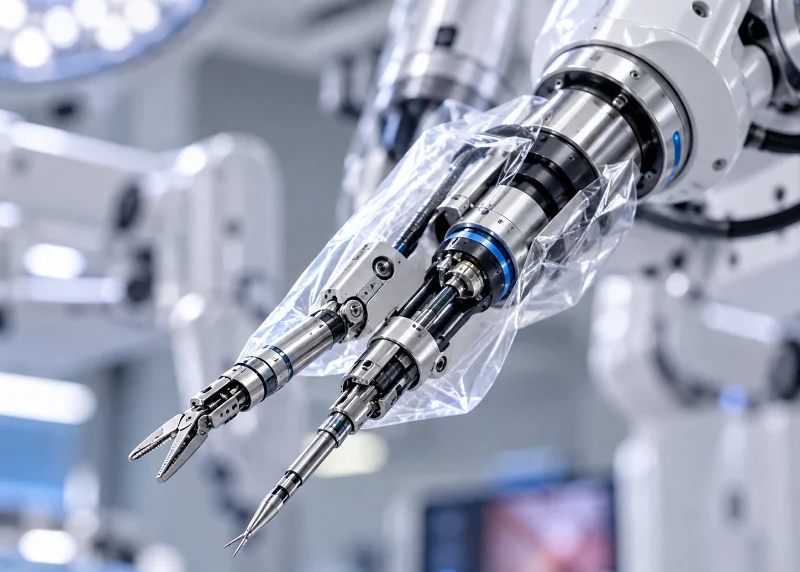
Recently, a paper was published in the journal Nature. The research team from the University of California, San Diego, used a humanoid robot developed by Unitree Robotics to perform two cholecystectomies on live pigs. This marks the first time a humanoid robot has carried out real surgical operations on living organisms.
Elon Musk previously made a bold claim that robots would outperform skilled human surgeons within a few years, and surpass the very best top surgeons in roughly five years. The release of this latest study has sent shockwaves through the industry.
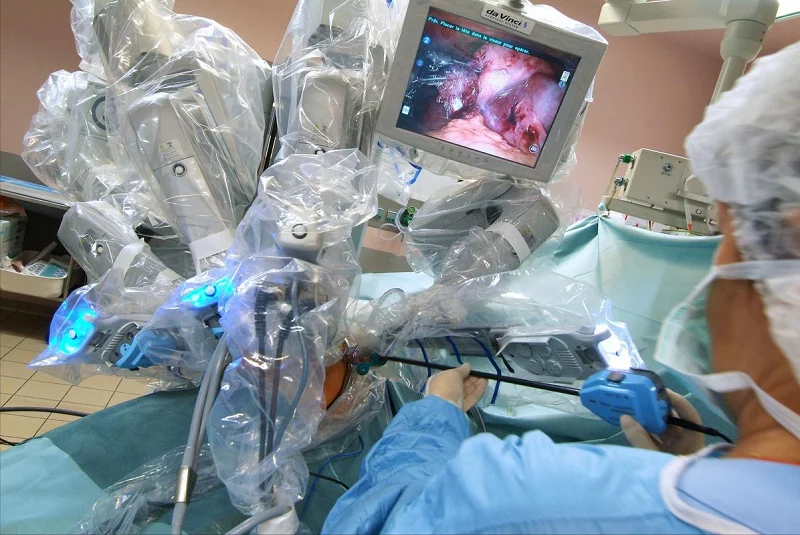
Why are surgical robots developing at such a rapid pace? How do they differ from ordinary robots? And how can manufacturers control dimensional errors during processing and production? Today, we will dive deep into these topics for an in-depth discussion.
Surgical robots are a new type of medical tool that combines machine learning and precision mechanical systems to perform surgical operations. Doctors can precisely operate robotic arms and robotic hands on the control console to perform surgeries. This technology not only enhances the accuracy and efficiency of surgeries but also reduces the need for direct contact between patients and medical staff, introducing safer and more advanced treatment methods to the medical field.

What Are the Types of Surgical Robots?
There are many kinds of surgical robots. Common types include Da Vinci robots, orthopedic surgical robots, laparoscopic surgical robots, cardiac surgical robots, urological surgical robots, and single-port surgical robots.
Among them, orthopedic surgical robots and endoscopic surgical robots are two common types of surgical robots. Orthopedic surgical robots are mainly used for orthopedic procedures. They are used in joint and spinal replacement surgery. Laparoscopic surgical robots are also called endoscopic surgical robots. They are mainly used for minimally invasive surgery
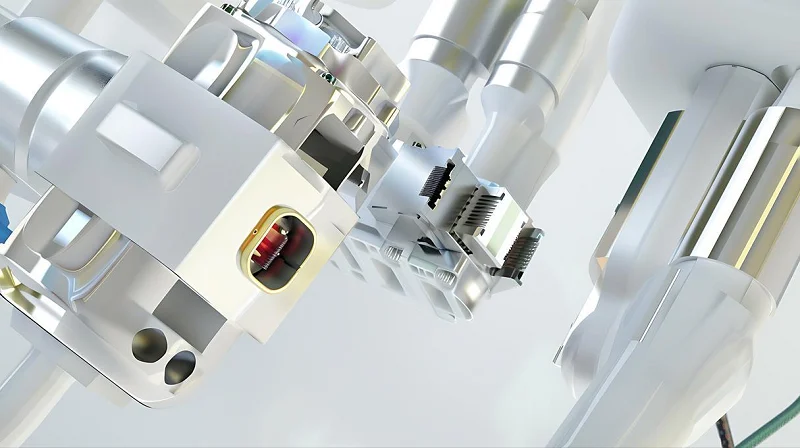
What are the important parts of medical surgical robots, and what are their processing methods?
Core Key Components of Medical Surgical Robots
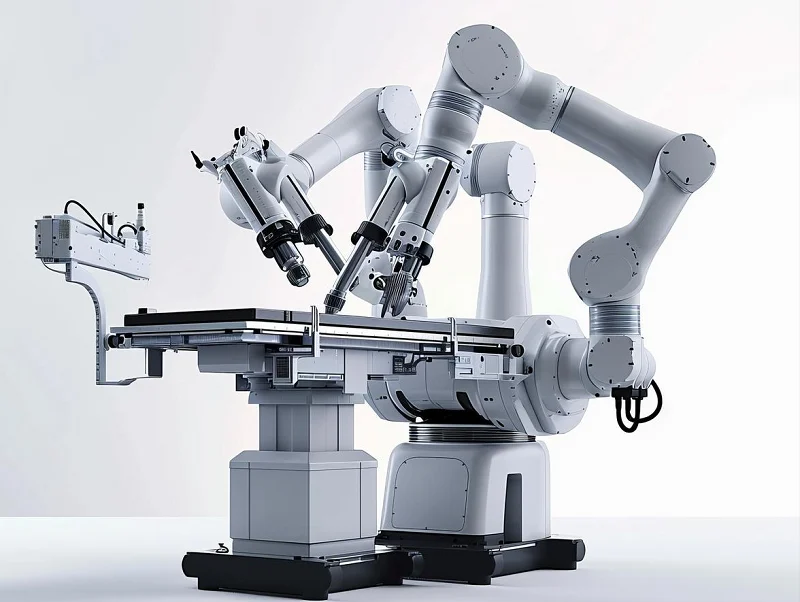
Surgical robots rely on many important parts. They include robot arms, surgical manipulators, surgical tools, remote-control systems, vision system components, and navigation system components.
The robotic arm is responsible for carrying and operating surgical tools. Remote control systems let doctors operate robots from a distance. Vision systems show clear real-time surgical images. Navigation systems guarantee precise operation. Surgical tools help robots complete complex surgical steps and deliver clear tactile feedback. All these parts work together. They make surgical robots precise and reliable for clinical use.
Machining Methods for Surgical Robot Parts
Computer Numerical Control Machining (CNC)
It uses computer-controlled machine tools. Pre-programmed software drives the movement of cutting tools. CNC machining can produce parts with high precision and complex geometries. It works for both metal and plastic materials.
3D Printing (Additive Manufacturing)
It builds parts by stacking material layer by layer. It directly turns digital models into finished components. 3D printing can rapidly make customized parts. It fits small-batch production and parts with intricate geometric shapes.
Laser Cutting & Laser Welding
It uses high-energy laser beams to precisely cut and weld metallic and non-metallic materials. Laser cutting delivers high-precision, clean-cut edges. Laser welding is used to join separate components together.
Injection Molding
Molten plastic is injected into molds and cooled to form finished parts. Injection molding is suitable for mass production of plastic components. It ensures high precision and consistent part quality.
Electrical Discharge Machining (EDM)
It erodes metal materials via electric sparks. It applies to hard materials that are hard to process by regular machining. EDM achieves high precision and complex profiles. It is widely used for molds and intricate components.
Sheet Metal Fabrication
It covers cutting, bending, and forming processes to make sheet metal parts. Sheet metal processing is commonly used to manufacture enclosures, brackets and other structural components.
How Are Medical Surgical Robot Parts Assembled?
The components of medical robots need to go through multiple key steps. First, teams finish detailed assembly planning. Second, they run full quality checks on every single part. Third, workers put all mechanical structures together. Fourth, they install all electronic modules. Fifth, staff do full machine debugging and performance tests. Sixth, they set up human-machine operation interfaces. Last, the whole robot goes through final acceptance checks.
These steps ensure the accuracy of robotic arms, joints, sensors, and other components. After assembly, the robot must pass final acceptance tests. The robot also needs surgical simulation tests. These tests verify performance and reliability. They ensure that the robot can perform surgical tasks safely and accurately
Why Are Surgical Robots More Difficult to Manufacture?
When surgical robots enter clinical validation and small-batch production, every component must be carefully controlled. The machining quality of each part becomes extremely important.
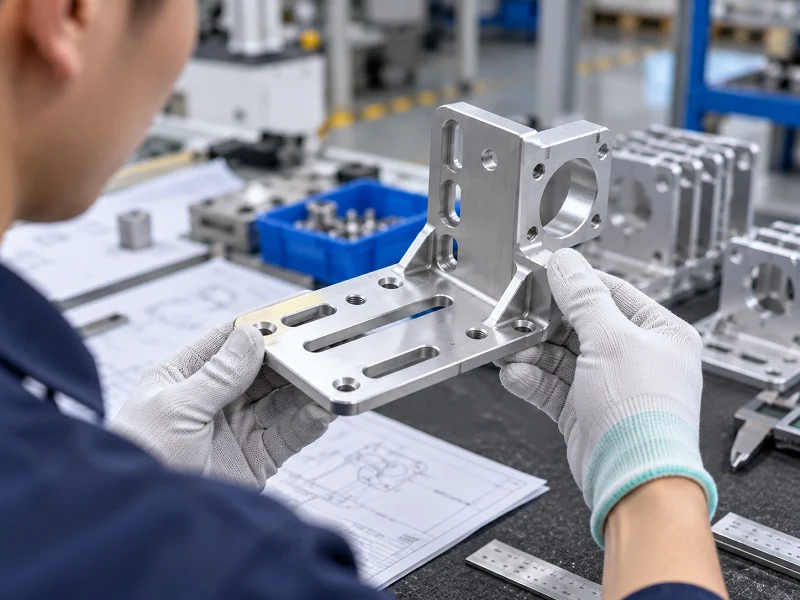
Single parts like joint housings, manipulator connectors, and sensor brackets may pass size tests separately. However, problems may appear after the parts are assembled into the complete robot. Examples include unstable force feedback and shaking surgical tools. Sealing surfaces also fail to lock tightly.
The market for humanoid robots and surgical robots grows fast. High-precision part processing becomes a hard pain point for research teams.
Ordinary industrial robots only focus on structural strength and repeated positioning accuracy. Medical robots add three extra strict rules. They need stable long-term performance, clean surfaces, and full production traceability. A minimally invasive instrument connection seat may have a hole position deviation of only 0.01mm, but when it reaches the end of the instrument, it will result in changes in the clamping posture and force feedback curve.
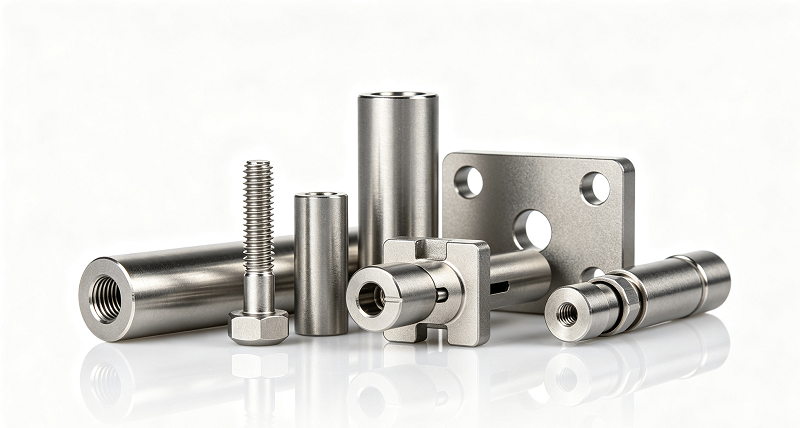
The materials are also more sensitive. Al7075 is suitable for making high-strength lightweight structural components, but the thin-walled shell will release stress after rough machining. PEEK is often used in insulating pads, heat insulation blocks, and wear-resistant limit parts. When the cutting heat reaches high temperatures, burrs and dimensional rebound are prone to occur. Stainless steel small shafts and titanium alloy adapter parts will also involve surface roughness and cleanliness. Ultimately, for medical robot parts, it’s not just about writing small tolerances; the key is to use the same language for processing, inspection, and assembly standards.
Process Plans to Control Micron Risks of Surgical Robots: Lock the Whole Reference Chain
5.1 Use 5-axis linkage CNC machines
Joint housings often have tilted holes, circular cavities, and side-avoiding grooves. Repeated re-clamping piles up positioning errors. 5-axis machines process all key holes and mounting surfaces under one unified reference. This cuts most unclear assembly deviations.
5.2 Match vacuum chucks and soft jaws
Vacuum fixtures and soft jaws should be used together. Thin-wall aluminum parts should not be clamped too tightly. Excessive clamping force can cause deformation after removing the fixture.
For large thin-wall surfaces: Vacuum fixtures can distribute the clamping force evenly. For irregular connecting parts: Soft jaws and locating pins can provide more stable positioning. This process may look simple. However, it can greatly reduce rework during production.
5.3 Split machining steps to release stress
7075 aluminum parts follow a fixed flow: rough machining → short stress relief pause → semi-finishing → size recheck → final precise cutting. Workers recheck main reference positions before the last cutting pass.
For PEEK plastic parts, factories control spindle speed and tool sharpness. Low cutting heat avoids hole size shifting.
5.4 Set layered process tolerance standards
Workers separate two types of feature control standards. Key parts include bearing holes, encoder bases, and tool connecting holes. Their target tolerance stays within ±0.005 mm. Ordinary weight-reduction grooves and avoiding areas use loose tolerance rules.
CMM coordinate measuring machines test hole distance, coaxiality, verticality, and flatness. Teams record first sample assembly data for all assembly-sensitive positions. Complete records lower long-term rework costs.
6. Full Assembly Process of Surgical Robot Parts
All medical robot parts follow standard assembly steps. Teams make detailed assembly plans first. Then they carry out a full quality inspection for each component. Next, workers finish mechanical assembly and electronic part installation.
Finally, staff complete machine debugging and multi-round performance tests. They set the human-machine control panels last. The whole machine passes strict final acceptance.
All steps guarantee tight coordination of arms, joints, and sensors. After assembly, the robot runs real surgery simulation tests. The test confirms its safety and operational precision.
Assembling the components of medical surgical robots requires going through a complete set of standardized procedures. The first step is making a detailed assembly plan. Staff members sort out all the parts and determine the assembly sequence to prevent installation errors. Subsequently, a full-process quality inspection is carried out. Every component, such as the robotic arm, sensor, and casing, must be checked for any defects in size and appearance.
After passing the inspection, workers first complete the assembly of mechanical structures such as the robotic arm and joints, and then install internal circuit boards, drive modules, and other electronic components. Technicians repeatedly debugged the equipment, corrected problems such as jitter and positioning deviation, and then debugged the touch operation screen and other human-machine interaction interfaces.
After the entire machine was assembled, it entered the final acceptance stage. Engineers conducted multiple simulated surgical tests to comprehensively verify the accuracy, stability, and safety of the equipment. Only when all tests are passed can the equipment be released from the factory, ensuring the safe and precise completion of various minimally invasive operations during clinical surgeries.
7. Key Questions for R&D and Procurement Teams for Surgical Robot Parts
The key requirements should be clearly discussed during the quotation stage.
First, mark all the key feature dimensions respectively.
Inform the supplier which components can be used as assembly references, which ones match the motor or sensor, and which ones are just empty avoidance areas. Too many tiny general tolerances waste processing costs.
Second, confirm the complete testing standards.
Medical robot parts require formal first sample inspection reports, complete keyhole test records, complete material batch files, and surface treatment files. Small batches of 5 or 10 pieces also need to be strictly inspected. The team must make the correct components on the first attempt.
8. Advice for Teams That Purchase Surgical Robot Parts
If you are looking for a high-precision machining supplier for surgical robot parts, do not only focus on price and delivery time. You should also evaluate the supplier’s manufacturing capability. Important questions include:
- Does the factory have 5-axis linkage processing equipment?
- What clamping methods do they use for thin-walled parts?
- Do they have stable, mature processing parameters for 7075 aluminum and PEEK?
- Can they control key feature tolerance within ±0.005 mm during mass production?
- Can they provide full CMM coordinate measurement reports with first samples?
9. Why Choose NOBLE
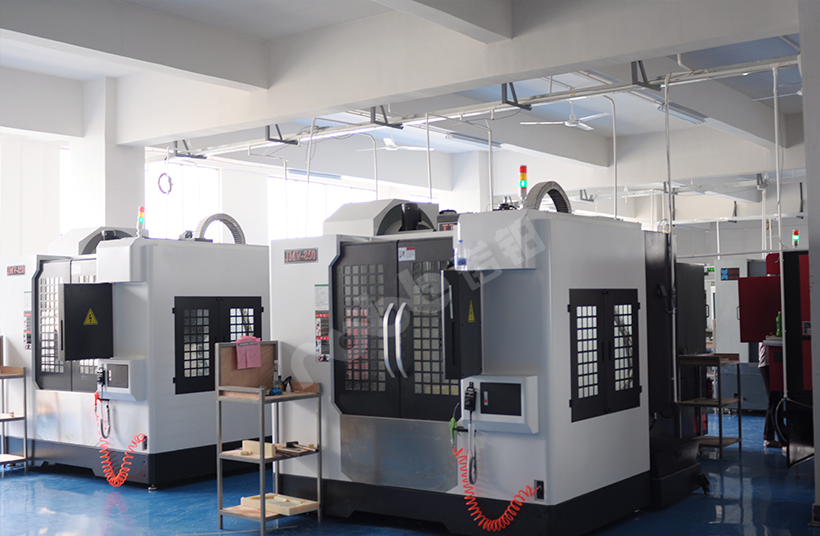
Noble turns product ideas into finished prototypes and mass-production parts. Most suppliers only offer prototype services. Noble provides one-stop full manufacturing support. Our service covers design optimization, processing, surface finishing, and final assembly.
NOBLE’s Silicone Rapid Prototyping Ability
Silicone prototype production connects with our other manufacturing lines. Engineers provide design support throughout the whole production flow. CNC machines make precision master molds. Injection molding supports large-volume mass production. Our team completes surface treatment and final assembly in-house. Clients only work with one supplier for all links.
Formal Quality Certifications
Our quality management system holds official certification with complete documentation.
- ISO 9001:2015: It controls general manufacturing quality. Standard processing rules guarantee stable production results. Complete inspection steps check part size and surface quality.
- ISO 13485:2016: It adds strict medical device production rules. It requires full part traceability and full process validation.
FAQs Of Surgical Robot Parts
1: What is the difference between 304 stainless steel and 316L stainless steel for medical use?
304 stainless steel has weak corrosion resistance. Factories rarely use it for medical parts.316L low-carbon stainless steel contains molybdenum. It resists chloride liquid inside human body fluids. Factories make surgical tools and temporary implant parts with 316L stainless steel.
2: Can you provide full material traceability files for my parts?
Yes. We supply complete official documents. They include raw material test reports (MTR) and finished part certificates of conformity (CoC). The full chain of production information stays traceable.
3. What is passivation? Why is passivation critical for medical stainless steel?
Passivation is a chemical treatment. It removes tiny iron grains left by cutting tools on steel surfaces. These tiny grains cause rust without passivation. Passivation improves the natural anti-corrosion ability of steel. This feature matters a lot for parts that go through steam sterilization. Passivation is a fixed step in our production flow.
4. What is the standard lead time for medical device prototypes?
Medical prototype lead time is 2 to 4 weeks. The exact time depends on part complexity and raw material supply. We maintain clear communication at all times. We match all work to our clients’ research and production schedules.
5. How do I confirm NOBLE fits my project?
Please contact our engineering team. We hold confidential discussions about all your project demands. We share our full quality system, past medical industry cases, and complete customized processing plans. All our production steps follow strict medical industry standards.