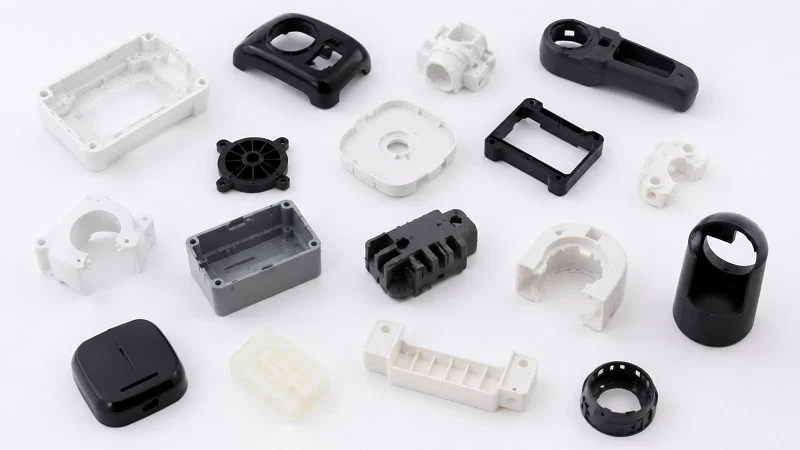
Custom prototypes are not off-the-shelf products. They are specifically designed for a particular product and serve a specific purpose. Companies use these prototypes to test a product’s form, fit, function, and manufacturability before deciding to move into production.
Custom rapid prototyping services provide the bridge between design and production. The service provider handles design review, material selection, prototyping, testing, and iteration. The company receives a validated part ready for production.
Custom rapid prototyping services are tailored to the product’s design, material, performance, and production requirements. The service provider adapts the process to the need, not the other way around.
Common Methods Used in Custom Rapid Prototyping Services
3D Printing
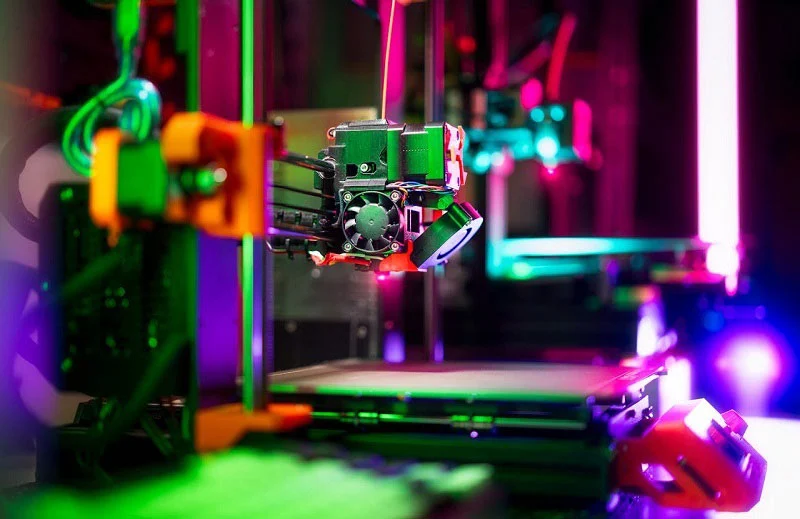
Additive manufacturing builds parts layer by layer. No tooling is required. Complex geometries are straightforward. The design can be changed between builds without penalty.
FDM (Fused Deposition Modeling) is the workhorse for cost-effective functional prototypes. The material is thermoplastics like ABS, PLA, or nylon. Parts are durable enough for fit testing and low-load functional testing.
SLA and DLP use liquid resin cured by light. The resolution is high. The surface finish is smooth. These are used for high-detail prototypes—visual models, investment casting patterns, and anatomical models.
SLS (Selective Laser Sintering) uses a laser to fuse powder particles. No supports are needed. Complex geometries with internal channels and undercuts are possible. Nylon and glass-filled materials produce durable plastic parts.
Metal 3D printing uses laser powder bed fusion or binder jetting. Functional metal prototypes are produced. The material properties approach wrought or cast metals. Aerospace and medical applications are common.
CNC Machining
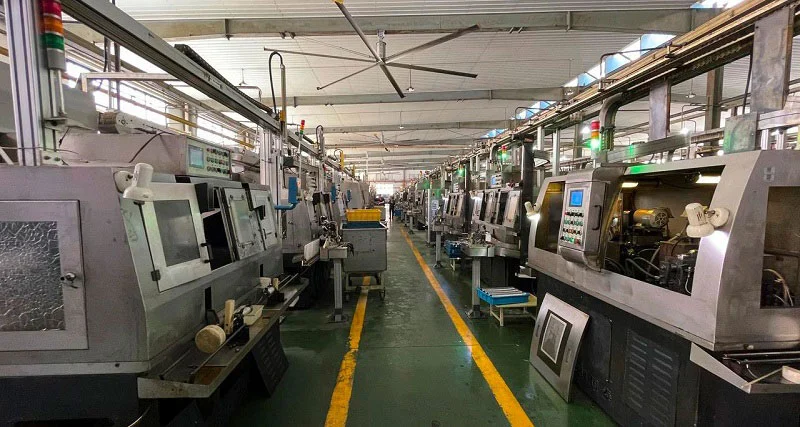
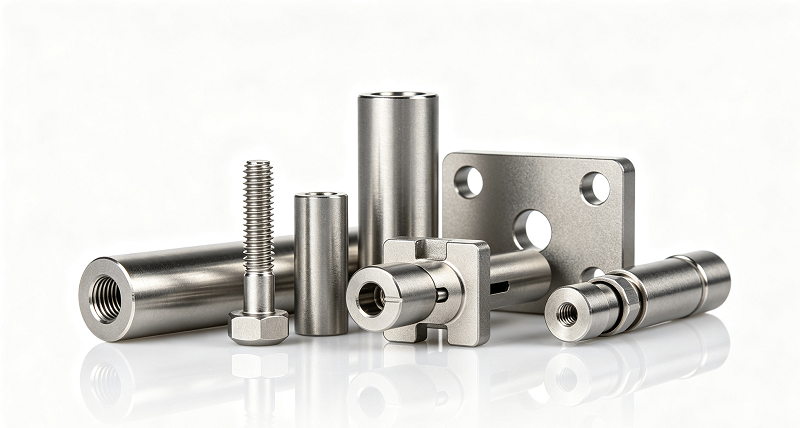
CNC machining is subtractive. Material is removed from a solid block. The process produces prototypes with high accuracy, tight tolerances, and excellent surface finish.
Common materials include aluminum, steel, titanium, brass, ABS, polycarbonate, PEEK, and Delrin. The material properties match production parts because the material is solid—not layered or cured.
CNC machining is preferable to 3D printing when accuracy is critical, when surface finish matters, or when the prototype must use the exact production material. It is also preferred when the part geometry is simple enough that machining is faster.
Vacuum Casting
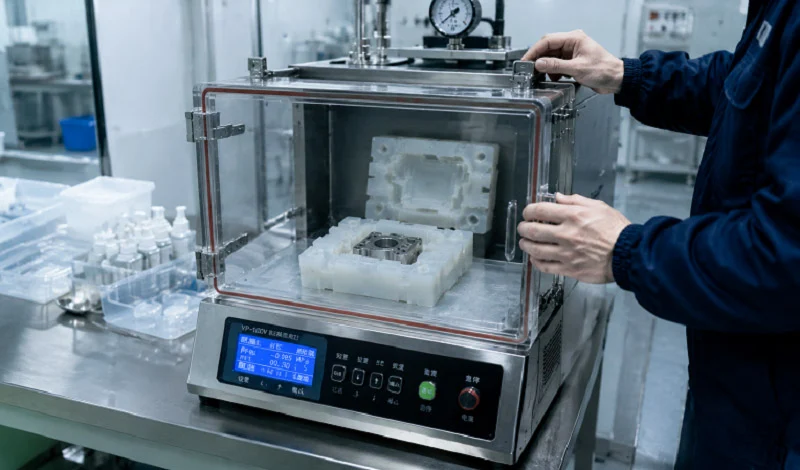
A silicone mold is created from a master pattern. Liquid resin is cast into the mold under vacuum. The part cures. The mold is peeled off. The process produces up to 20 copies from one mold.
Multiple identical prototypes are produced. Surface finish is excellent—close to injection molding. Materials include polyurethane resins that mimic engineering plastics—ABS-like, PP-like, transparent, and flexible grades.
Vacuum casting is used for small batches of production-like prototypes, customer samples, and pre-production validation. It bridges the gap between a single printed part and injection molding.
Sheet Metal Prototyping
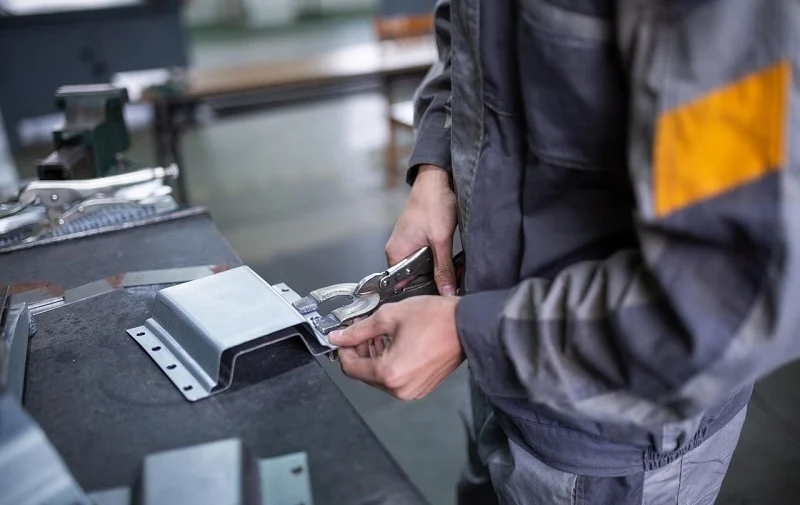
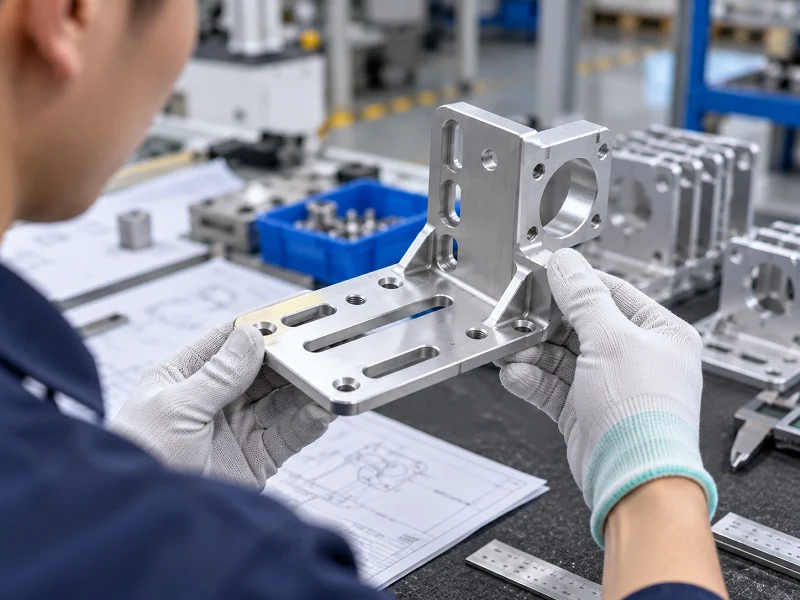
Sheet metal prototypes are produced by laser cutting, CNC punching, bending, and welding. The processes use actual sheet metal—aluminum, steel, stainless steel, copper. The prototype behaves like the production part.
Common applications are brackets, housings, enclosures, chassis, and panels. The advantage is functional testing. The prototype experiences the same loads, vibration, and thermal conditions as the production part.
Prototype Injection Molding and Rapid Tooling
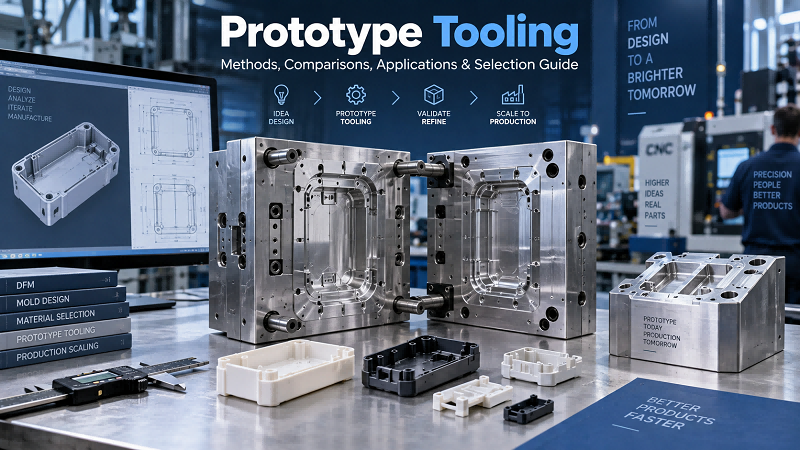
Injection molding for prototypes is appropriate when the prototype must use production materials and the geometry is complex enough to justify mold costs. Rapid tooling reduces the time and cost of traditional steel molds. Aluminum or pre-hardened steel molds are used.
The benefits are production-like materials and processes. The prototype behaves like the production part because it is made by the same method. Rapid tooling supports low-volume production—hundreds to thousands of parts—before committing to high-volume steel tooling.
Custom rapid prototyping services select the rapid prototyping method based on the application. Speed favors 3D printing. Accuracy favors CNC machining. Multiple copies favor vacuum casting. Sheet metal is required for sheet metal parts. Production-like prototypes favor rapid injection molding. The right method delivers the right result at the right cost.
Materials for Custom Rapid Prototyping
Plastic Materials
| Material | Key Properties | Common Applications |
| ABS | Strong, impact-resistant, easy to process | Housings, enclosures, functional prototypes |
| Polycarbonate (PC) | High impact strength, heat resistance, transparency options | Automotive parts, protective covers, functional prototypes |
| Nylon | Strong, wear-resistant, lightweight | Gears, brackets, mechanical components |
| POM | Low friction, good dimensional stability, wear resistance | Gears, bushings, precision components |
| TPU | Flexible, elastic, abrasion-resistant | Seals, grips, flexible components |
| PEEK | Excellent strength, chemical and heat resistance | High-performance industrial and medical components |
Metal Materials
| Material | Key Properties | Common Applications |
| Aluminum | Lightweight, corrosion-resistant, easy to machine | Automotive parts, housings, brackets |
| Stainless Steel | Strong, corrosion-resistant, durable | Medical parts, industrial components, mechanical prototypes |
| Mild Steel | Strong, economical, easy to fabricate | Brackets, structural components, industrial prototypes |
| Brass | Good machinability, corrosion resistance, attractive appearance | Fittings, electrical components, decorative parts |
| Titanium | Lightweight, strong, corrosion-resistant | Aerospace, medical, high-performance components |
Resin and Polyurethane Materials
| Material | Key Properties | Common Applications |
| Polyurethane (PU) | Available in rigid and flexible grades, production-like properties | Functional prototypes, housings, small-batch parts |
| Stereolithography Resin | High detail and smooth surface finish | Appearance prototypes, models, detailed components |
| ABS-like Resin | Similar appearance and properties to ABS | Product housings, consumer products, functional prototypes |
| Flexible Resin | Elastic and rubber-like properties | Seals, grips, flexible components |
| High-Temperature Resin | Improved heat resistance | Heat-resistant prototypes, testing fixtures |
Custom Rapid Prototyping Process: From CAD Design to Final Prototype
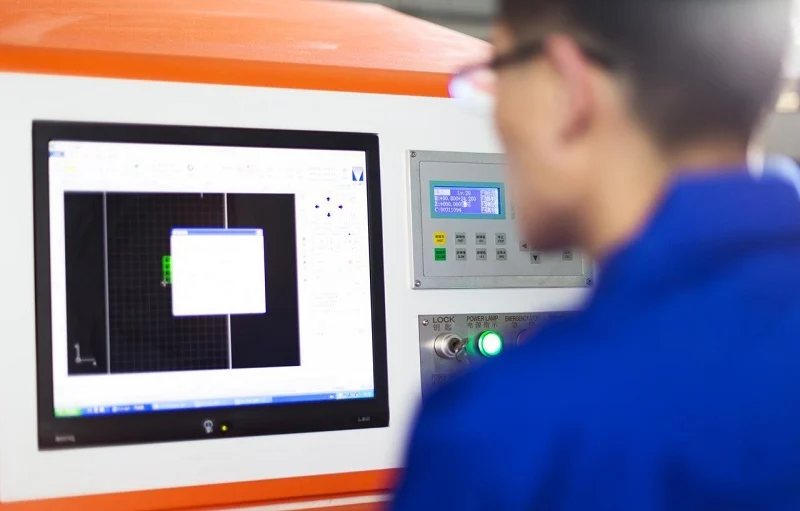
Step 1: Submit CAD Files and Project Requirements
Custom rapid prototyping process starts with files. 3D models in STEP, IGES, or native CAD formats. Technical drawings with dimensions, tolerances, and surface finish requirements. Material, quantity, and lead time are specified.
Step 2: Design and Manufacturability Review
The design has been reviewed. The issues it contains have been identified, including thin-walled structures prone to deformation, sharp corners prone to stress concentration, and components that cannot be produced via machining or 3D printing. Corresponding solutions have been proposed to address these issues. Additionally, suitable materials and manufacturing methods have been selected. The design has now been optimized and is ready for prototyping.
Step 3: Select the Prototyping Method and Material
The rapid prototyping method is selected based on requirements. 3D printing for complex geometries and speed. CNC machining for accuracy and material properties. Vacuum casting for multiple copies. Sheet metal fabrication for metal enclosures. The material is matched to the method and the application. Cost, lead time, accuracy, appearance, and functionality are all considered.
Step 4: Prototype Manufacturing
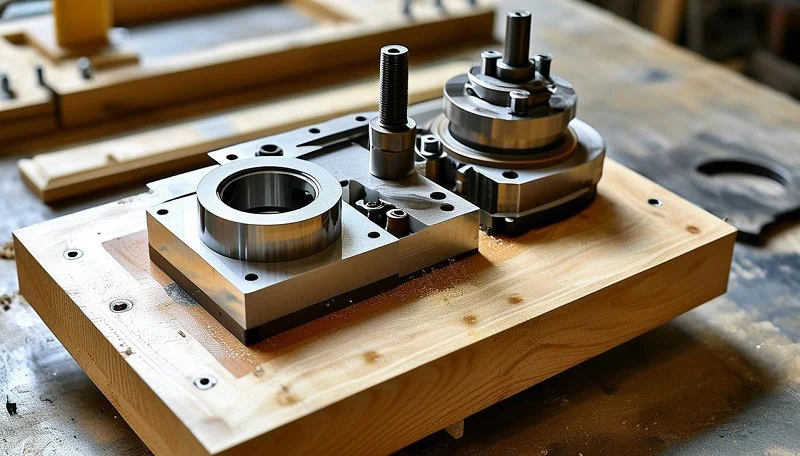
The selected technology was used in production. Strict quality control was implemented throughout the entire production process—product dimensions were inspected, and surface quality was monitored. Any defects were detected early on and addressed.
Step 5: Surface Finishing and Secondary Processing
Next, the parts are sanded and polished to create a smooth surface. Painting and coating add color and provide protection. Metal parts undergo anodizing and electroplating. Assembly involves combining multiple parts.
Step 6: Inspection and Delivery
Dimensional inspection verifies critical features. Functional inspection tests fit and performance. Visual inspection checks surface quality. The prototype is packaged and shipped.
Custom rapid prototyping services cover the entire workflow. The process is tailored to the project. The result is a prototype that meets the requirements. The timeline is predictable. The quality is documented.
Benefits of Custom Rapid Prototyping Services
Faster Product Development
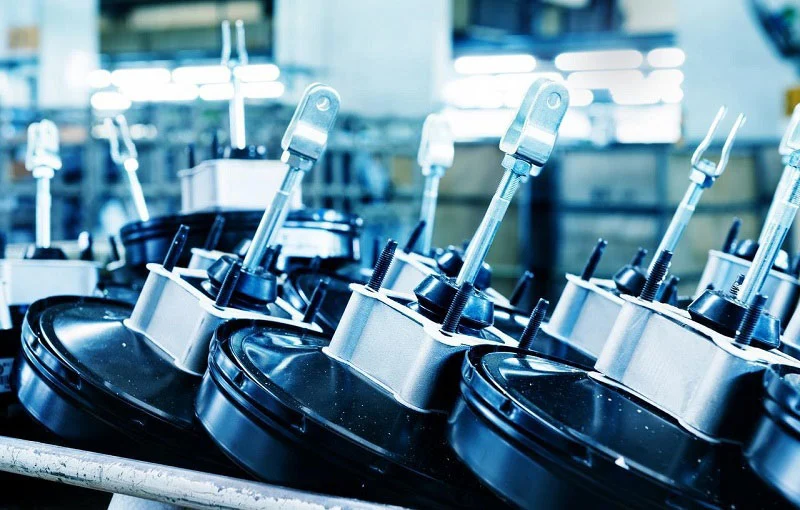
Custom rapid prototyping services help accelerate the development process. The design is validated before tooling begins. Design modifications can be made at a lower cost. This helps avoid various issues during production and also shortens the overall development time.
Reduced Development Costs
There is no need to use expensive production tools when creating prototypes. Errors can be detected early on, thereby reducing the need for rework. As a result, the development budget can be utilized more effectively.
Early Design Validation
During the early design phase, the product’s shape, dimensions, and functionality are verified to ensure they meet requirements. Prototypes are tested in real-world usage environments. At the same time, the user experience is evaluated. Any issues discovered are corrected immediately.
Improved Product Functionality And Usability
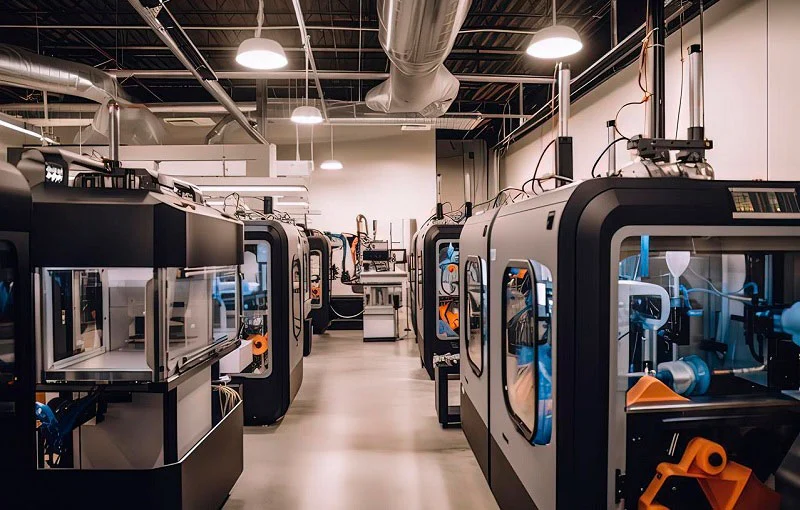
The product’s functionality and usability have been enhanced. Issues that were not apparent on screen were identified during testing. Based on actual user feedback, the product design has been further optimized.
Access To Production-Grade Materials
Materials that meet production standards can be used. The performance of this prototype is consistent with that of the mass-produced product. The test results are also highly reliable. The transition from the prototyping phase to mass production went very smoothly.
Greater Design Flexibility
Different rapid prototyping methods can be selected based on actual needs. Even complex geometries can be successfully printed. Precision components can be manufactured through machining. Design is no longer limited to a single manufacturing process.
Easier Design Modifications And Iterations
Simply updating the CAD model allows the next prototype to be produced. This process is repeated until the design reaches its ideal state.
Reduced Risk Before Mass Production
The design has been thoroughly tested prior to mass production. The molds were manufactured successfully on the first attempt. No unexpected issues will arise during the production process.
Custom Rapid Prototyping Services at NOBLE
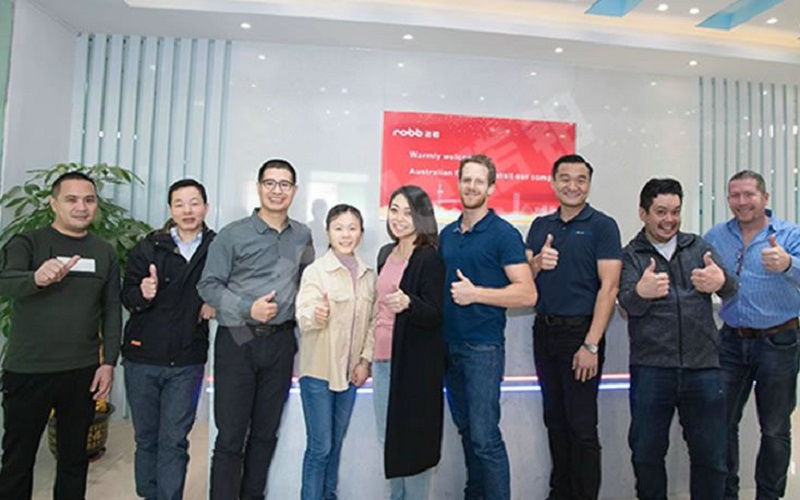
NOBLE provides custom rapid prototyping services across plastic and metal manufacturing. The capabilities cover design review, prototyping, finishing, and production transition.
Our Custom Rapid Prototyping Services Capabilities
Available prototyping technologies include 3D printing, CNC machining, vacuum casting, sheet metal fabrication, and rapid injection molding. The rapid prototyping method is selected based on the application. Speed, accuracy, material, and quantity all drive the choice.
Our Commitment
Quality inspection is applied throughout. Dimensions are checked. Surface quality is verified. Functional testing is performed where required. Production support ensures the prototype is ready for the next stage.
FAQs About Custom Rapid Prototyping Services
What is the fastest method for custom rapid prototyping?
You might want to consider 3D printing. FDM and SLA parts are produced in hours. CNC machining takes one to three days. The rapid prototyping method selection depends on accuracy and material requirements.
How much do custom rapid prototyping services cost?
Cost depends on part size, complexity, material, quantity, and finishing requirements. 3D printing is lower cost for simple parts. CNC machining costs more but delivers higher accuracy.
How long does custom rapid prototyping take?
Simple printed parts ship in one to three days. CNC-machined parts take three to five days. Complex assemblies with finishing take one to two weeks. The timeline depends on the rapid prototyping method and requirements.
What materials can be used for custom prototypes?
Plastics include ABS, PC, nylon, POM, TPU, and PEEK. Metals include aluminum, stainless steel, steel, brass, and titanium. Resins and polyurethanes mimic engineering plastics. The material is selected based on the application.
Can custom rapid prototypes be made from production-grade materials?
Of course. CNC machining uses the same materials as production. Injection molding prototypes use production-grade thermoplastics. Metal 3D printing uses production alloys. The prototype behaves like the production part.
What files are needed to order a custom prototype?
We accept 3D CAD files in STEP, IGES, or native formats. Please provide technical drawings that include dimensions, tolerances, and surface roughness requirements, as well as material and quantity specifications. The more detailed the information, the faster and more accurately we can evaluate your request.
Can rapid prototypes be used for functional testing?
Yes! CNC-machined and injection-molded prototypes are suitable for functional testing. 3D-printed prototypes may be limited by material properties and surface finish. The rapid prototyping method must be selected for function, not just appearance.
What is the difference between rapid prototyping and rapid tooling?
Rapid prototyping produces parts directly. Rapid tooling produces molds or dies that then produce parts. Prototyping validates the design. Tooling enables production. Both are used in product development.
Can custom prototypes be produced in small batches?
Yes. Vacuum casting produces 10 to 50 copies. CNC machining produces hundreds. Rapid injection molding produces thousands. Custom rapid prototyping services support small-batch production before committing to high-volume tooling.