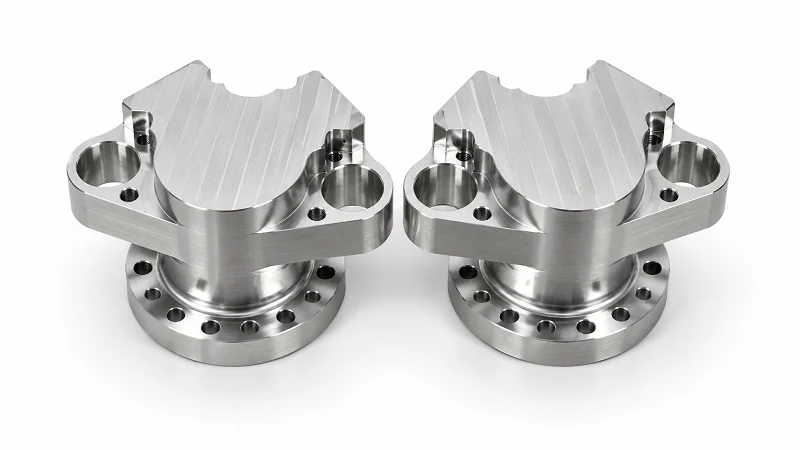
Sample disk CNC machining often uses aluminum, stainless steel, and plastics like POM and acrylic. These materials give you different strengths for your disk needs. CNC Turning, milling, and drilling are the main CNC processes that shape disk geometry. Each process forms the disk in its own way. You need the right match between material and method for your project. This guide explains each material and process. That way, you can quickly match them to your application. You will learn how precision fits into your choices. The right combination makes your final part better. Knowing these options helps you avoid costly mistakes. Your disk project gets better results from informed decisions.
Materials for Sample Disk CNC Machining

The material you pick decides if your disk works well. Strength, weight, cost, and machinability all come from this choice. Every material has its own traits. You need to match these traits to what your project needs. The right material helps you get the results you want for custom parts. Manufacturing steps change based on the material you pick.
Metals: Aluminum, Stainless Steel, and Brass
Aluminum is still the top pick for sample disk CNC machining. It has a high strength-to-weight ratio. You can cut it fast with CNC equipment. This cuts down cycle time and tool wear. Aluminum resists corrosion well. You can hit tight tolerances with standard tools. Manufacturing costs stay low compared to harder metals. You will see aluminum in many prototypes and working items.
Stainless steel gives you better strength and durability. The 304 grade is the one used most. It gives great general corrosion resistance. Its tensile strength runs from 515 MPa to 700 MPa. The material holds up under heavy tension before it breaks. Its yield strength falls between 205 MPa and 215 MPa. You cannot harden 304 with heat treatment. This shapes your machining plan. For high-temperature jobs, think about titanium. For extreme corrosion resistance, nickel alloys do the job well.
| Property | 304 Stainless Steel | Impact on Manufacturing |
| Tensile Strength | 515 MPa to 700 MPa | Maximum stress before breaking |
| Yield Strength | 205 MPa to 215 MPa | Stress where plastic deformation starts |
| Hardening | Not heat treatable | Strength increases via cold work |
| Corrosion Resistance | Excellent | Good for harsh environments |
Brass cuts with great ease. It leaves fine surface finishes. You pick brass for decorative disks or electrical parts. It fights corrosion well. Fast machining can make up for its higher material cost. Brass gives a special look for custom parts.
Titanium works for high-temperature CNC jobs. It keeps its strength when hot. Nickel alloys fight corrosion in harsh places. Both materials cost more. They need slower machining speeds. But they stay reliable where others break down.
Plastics: POM, Nylon, and Acrylic
Plastics are lighter and resist chemicals in different ways. They cost less as raw material. You can get good accuracy with the plastic CNC process.
POM, also called Delrin, holds its shape very well. It has low friction and resists wear. You can machine POM to tight tolerances. It soaks up very little moisture. This keeps its performance steady. POM works great for precision-machined parts like gears and bushings.
Nylon has high impact strength and resists abrasion. It works for disks that face repeated stress. Nylon soaks up more moisture than POM. This changes its dimensional stability. You have to plan for this in your design.
Acrylic gives you optical clarity. You can polish it to a clear finish. It cuts cleanly with sharp tools. You must stop cracking during machining. Acrylic works for display disks and light-related parts.
For tough settings, think about PEEK. It gives chemical resistance and high-temperature stability. ABS gives impact strength at a low cost.
Your material choice affects tolerance, surface finish, and cost. Metals can hit tighter tolerances. Plastics give lower cost and lighter weight. Think about your working environment, the accuracy you want, and your budget. The right CNC machining approach brings your design to life.
Processes for Sample Disk CNC Machining

You use turning and milling as the main ways to make sample disk CNC machining. The manufacturing processes you choose depend on the features your disk needs. Each process has a specific job in your project.
CNC Turning and Facing
CNC turning shapes the outer diameter of your sample disk in CNC machining. The workpiece spins on a lathe while a cutting tool moves along its surface. This computer numerical control method works well for round parts. You get a smooth round shape on every pass. Facing makes the flat top and bottom surfaces of your disk. The tool moves across the spinning face to remove material. These two operations together create the basic disk shape. You get tight tolerances with this approach. Standard lathes hold dimensions within ±0.005 inches. For harder work, high-precision CNC machining brings tolerances down to ±0.002 inches. The turning process removes material fast. You make less heat compared to other methods. This protects the material properties of your disk. High-precision CNC machining makes sure your turning operations give consistent results across every batch. The process gives you great surface finish right from the tool. You reduce or remove secondary finishing steps. Accuracy in turning comes from machine rigidity and tool geometry. You control both factors through proper setup. The result is a disk that meets your design requirements on the first run. You pick tool inserts based on material type. Carbide tools work best for metals. High-speed steel tools handle plastics well.
CNC Milling, Drilling, and Finishing
CNC milling adds features to your disk surface. You program the machine to cut slots, pockets, and complex shapes. The tool moves in three or more axes to create these shapes. Milling works with turning by adding detail where needed. High-precision CNC machining lets you create complex features with confidence. Drilling makes holes for fasteners or alignment pins. You drill through holes or blind holes to your specified depth. The machine places each hole with repeatable accuracy. These common processes used in precision CNC machining give your disk full functionality. You combine multiple operations in a single setup. This reduces errors from part repositioning.
Finishing steps complete your sample disk. For aluminum disks, bead blasting creates a uniform satin finish. This process prepares the surface for anodizing. Bead blasting removes less than 5 µm per side of material. It gives you an ideal gloss level of 10-15 GU. Nearly all aluminum parts destined for anodizing receive bead blasting first. This ensures consistent color and strong coating adhesion. You get a durable surface that looks professional. Other finishing options include polishing for optical clarity in acrylic disks. You choose the finish based on your application needs.
High-precision CNC machining gives you the control needed for every operation. You use it when your design requires tight dimensional control. The machine holds position with high repeatability. Cutting tools stay sharp and maintain their geometry. Coolant flow removes chips and controls temperature. All these factors contribute to precision-machined parts that function correctly. You combine turning for the round shape, milling for the features, drilling for the holes, and finishing for the surface quality. This complete manufacturing chain delivers your sample disk ready for use. Precision matters most when your disk must fit into an assembly. Understanding each process helps you make better decisions for your project.
Design Tips for Sample Disk CNC Machining

Tolerances, Flatness, and Surface Roughness
Tight dimensional tolerances are a big reason you pick this process for sample disk CNC machining. A standard lathe keeps dimensions within ±0.005 inches. High-precision CNC machining brings that down to ±0.002 inches. You pay for that accuracy with more cycle time and inspection hours. In a practical sense, you should focus precision only where your disk really needs it. In one real project, a stainless steel locating plate called for ±0.005 mm on over twenty dimensions. After engineering analysis, only four locating features needed tight tolerances. The rest eased to ±0.03 mm. That one change cut CNC cycle time by 25% and lowered CMM inspection time by 40%. Tools lasted longer, and batch consistency got better. The final assembly worked just as planned. Your lesson here is simple: put precision on critical features, not everywhere.
Flatness and surface roughness follow the same idea. A disk that mounts against a flat surface needs a controlled face. An optical disk needs much more. The table below shows typical Ra values for sample disks used in optical applications.
| Ra (µm) | Description |
| 0.05 | Optical / mirror finish |
| 0.025 | #8 buffed mirror, lapped |
| 0.4 | Fine optical mounts (honed, lapped, potential light electropolish) |
Feature Placement and Tool Access
Wall thickness and hole depth affect how easily your disk machines. Thin walls shake during cutting. That shaking hurts dimensional accuracy and shortens tool life. Deep holes trap chips and build up heat. You should keep hole depth within a reasonable multiple of the drill diameter. This lowers the need for peck drilling and specialty tooling. In a practical sense, design choices like these directly affect lead time and cost. A feature that needs an extra setup adds hours to your manufacturing schedule. A feature you can reach in one pass keeps your process lean. High-precision CNC machining gives you the accuracy you need, but good design gives you the efficiency you want. Think about tool access before you finalize your drawing. Every unnecessary feature adds cost without adding function.
Choosing Materials and Processes for Sample Disk CNC Machining

Matching Material Properties to Application Needs
The material you pick decides if your disk works well in the place it will be used. For aerospace jobs, a high strength-to-weight ratio is the most important thing. The table below shows key traits of Ti-6Al-4V titanium alloy, a common pick for tough settings.
| Property | Value |
| Density | 4420 kg/m³ (45% lighter than steel) |
| Tensile Strength | Up to 1000 MPa |
| Operating Temperature | Up to 204°C (400°F) |
| Corrosion Resistance | Excellent in aerospace environments |
Titanium alloys work well in high-temperature settings. For low-cost prototyping, aluminum or POM gives you better value. When your sample disk CNC machining needs tight tolerances, you count on high-precision CNC machining. This method gives you the accuracy you expect. Stainless steel fits high-temperature uses at a fair price. Custom projects do better when you match material to the right process. Machining handles tough applications well.
Balancing Process Capability with Cost and Lead Time
Batch size has a direct effect on what you pay for each part. A batch of 10 complex stainless steel parts costs $80–$300 each. If you move to 50 simple turned aluminum parts, that drops to $8–$25 per part. Going from 10 to 50 units cuts costs by 10–20%. Scaling to 250 units saves another 15–25%. Below 500 units, turning is faster for simple disk profiles. Milling fits disks with slots or complex features. These common processes used in precision CNC machining each serve different needs. For medical or aerospace work, high-precision CNC machining matters most. The manufacturing processes you select affect lead time and total cost. Manufacturing efficiency comes from matching the right process to your batch size. Knowing these applications of high-precision CNC machining helps you control costs while keeping accuracy. NOBLE, a leading manufacturing company in China, gives you outstanding service capabilities and professional expertise. They help you finish both prototyping and mass production with ease.
NOBLE: High-Quality Services for Sample Disk CNC Machining
Metal and Plastic Processing Expertise
NOBLE works with both metal and plastic for sample disk CNC machining. You get a partner who knows both material groups. Aluminum, stainless steel, brass, titanium, and nickel alloys all go through the shop. The same is true for POM, nylon, acrylic, PEEK, and ABS. That range helps when your disk needs one material for strength and another for chemical resistance. You do not have to split the job between vendors.
The company has certifications that support tough work. These include ISO 9001:2015 and ISO 13485:2016, plus ROHS and REACH compliance. For medical and aerospace sample disks, that paperwork often decides if a supplier qualifies. You also get traceability across every batch. High-precision CNC machining keeps tolerances tight on each run. The team gives the same care to prototype amounts and full production.
Full-Service Support from Design to Assembly
NOBLE helps you from design through assembly. That covers more than cutting metal. Engineers check your drawing before machining starts. They point out features that raise cost or slow the schedule. You get feedback on tolerances, wall thickness, and tool access while changes are still cheap. In a real way, this early review saves you rework later.
The service keeps going after production. You can ask for finishing, inspection, and assembly under one roof. This matters for precision machined parts that must fit into a larger system. High-precision CNC machining gives you the accuracy your design needs. The team also handles custom parts in small batches and large orders. You get one point of contact for the whole project. That setup shortens lead time and cuts handoff errors. For custom work, you get a supplier who manages the full chain. The applications of high-precision CNC machining range from simple disks to complex assemblies. NOBLE covers both ends.
Aluminum, stainless steel, and POM are still the best choices for sample disk CNC machining. Turning makes the round shape, milling cuts slots and holes, and drilling adds openings for fasteners. Each CNC step builds the disk one part at a time.
Your choice depends on tolerance, cost, and lead time. Tight accuracy calls for high-precision CNC machining. Simple disks work best with fast turning. Complex features need CNC milling. For solutions made just for you, ask NOBLE. Their high-precision CNC machining and full-service manufacturing help your parts from design to assembly. This keeps your project on track and your results reliable. You get the right fit for your application every time.
FAQ about Sample Disk CNC Machining
What material works best for a low-cost sample disk prototype?
Aluminum or POM gives you the best value for making prototypes. Aluminum machines quickly and keeps tight tolerances. POM has low friction and stays the same size. Both materials keep your CNC machining costs low. You get good results without spending too much on raw material.
When should you choose stainless steel over aluminum for your disk?
Stainless steel fits tough places and high-stress jobs. Grade 304 resists rust well and carries heavy loads. Aluminum works for lighter jobs at a lower cost. Your choice depends on the conditions your disk will face. Pick stainless steel when strength matters most.
How does high-precision CNC machining improve your sample disk?
High-precision CNC machining holds tolerances down to ±0.002 inches. Regular lathes only reach ±0.005 inches. This extra accuracy matters for disks that fit into assemblies. You get the same results across every batch. Tight tolerances reduce fit problems during final setup.
Can you combine turning and milling in one sample disk project?
Yes, you can put both processes together. Turning shapes the round outer part and flat faces. Milling adds slots, pockets, and holes. Drilling makes openings for fasteners. This full CNC workflow gives you a finished disk. You cut setup errors by keeping work in one shop.
What factors drive the cost of sample disk CNC machining?
The number of parts, material, and part difficulty drive your cost. A batch of 10 complex stainless steel parts costs $80–$300 each. Moving to 50 simple turned aluminum parts drops that to $8–$25 per part. Tight tolerances add machining time. Simple designs with fewer features keep costs low.