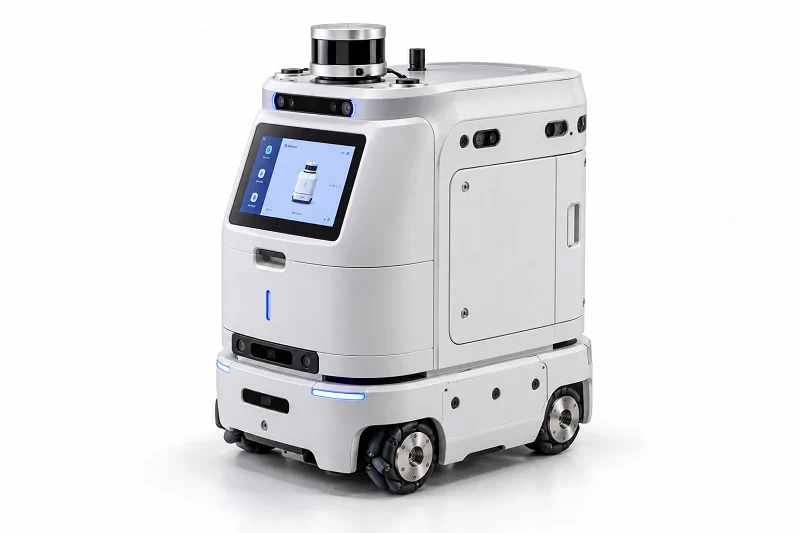
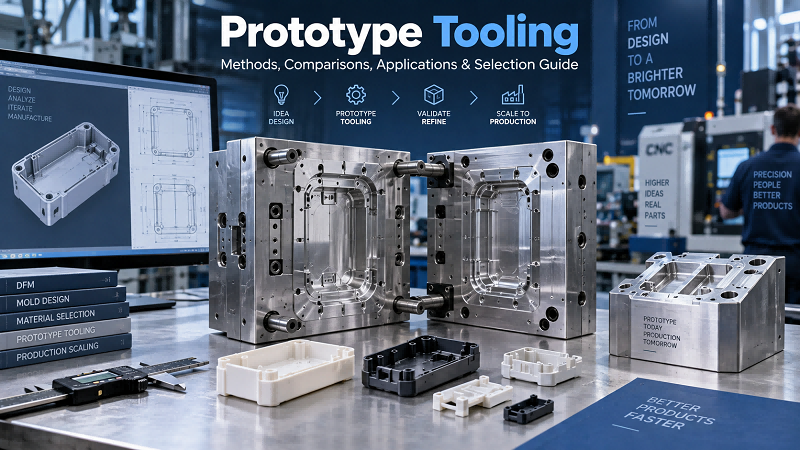
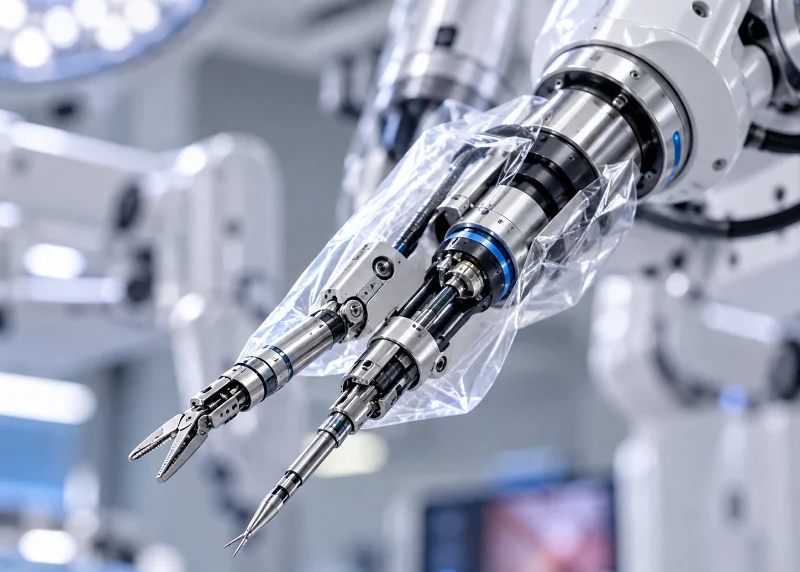
With the rapid development of precision medicine and smart healthcare industries, medical robots have been widely applied in core medical scenarios such as minimally invasive surgery, limb rehabilitation and correction, oral diagnosis and treatment, and clinical positioning and puncture, becoming key intelligent equipment for the upgrading of modern medical care.
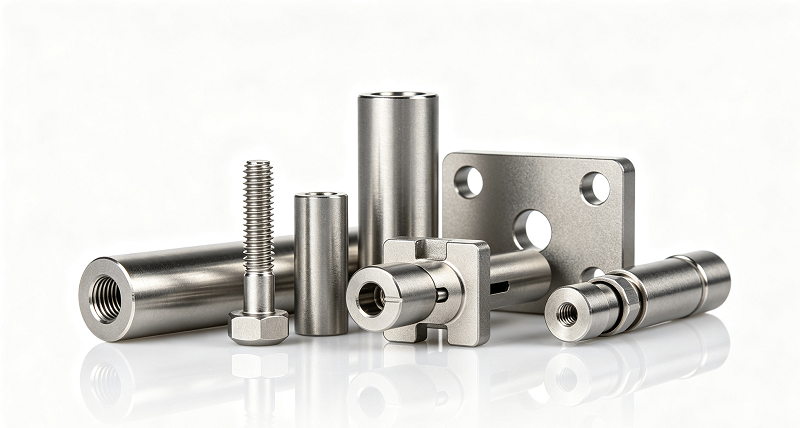
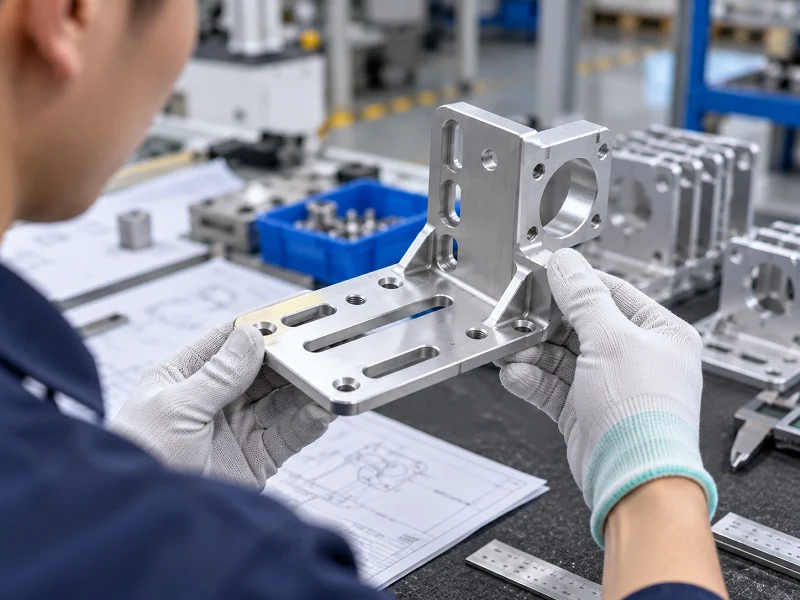
CNC precision machining, with its advantages such as high-precision cutting, stable process, wide material adaptability, and the ability to process complex and irregular structures, has become the mainstream manufacturing method for core parts of medical robots at present.
Background and Application Value of CNC Machined Medical Robot Components
Under the development trend of medical intelligence and minimally invasive techniques, traditional manual diagnosis and treatment have problems such as large operational errors, high fatigue, and limited accuracy. However, medical robots can effectively make up for the shortcomings of manual labor, achieving standardized, refined, and low-trauma medical services. This also sets new industry standards for the manufacturing process of components.
CNC machining, as a high-end precision manufacturing process, can perfectly meet the core medical demands of medical robots, such as micron-level accuracy, sterile cleanliness, and safety and stability. It is a key manufacturing technology that connects the design and development of medical robots with their clinical application. It not only significantly enhances the accuracy of surgical and rehabilitation treatments but also reduces medical risks.
It can also achieve standardized mass production of medical robot components, promote the localization and standardized development of high-end medical equipment, and is an indispensable core process in the current manufacturing of smart medical equipment, with extremely high clinical application value and industrial promotion value.
Technical advantages of CNC machining for medical robots
Compared with traditional processing techniques, CNC machining has multiple unique core advantages that are suitable for the manufacturing of medical robots, fully meeting the production requirements of medical precision, safety, and stability. Specifically, it can be divided into the following three points:
Ultra-high precision machining capability:
CNC three-axis and 5-axis linkage machining can achieve an ultra-high dimensional tolerance of ±0.005mm, and the surface roughness can be controlled within Ra0.8, which can meet the micron-level precision assembly requirements of micro-joints and positioning sensor components of surgical robots. For example, the end-effector parts of Da Vinci surgical robots achieve sub-millimeter operation accuracy through CNC precision machining, effectively avoiding surgical positioning deviations.
Excellent medical compatibility performance:
The CNC-machined products are free of burrs, pores, and cracks, with a smooth and dense surface that is not prone to dust accumulation or bacterial growth. They can withstand high temperatures, high pressures, and repeated disinfection with disinfectants, fully meeting the medical sterile and clean standards. Meanwhile, the parts formed through processing have strong structural stability and are not prone to deformation or jamming during long-term operation, making them suitable for the long-term and high-frequency usage conditions of medical equipment.
Strong compatibility between structure and materials:
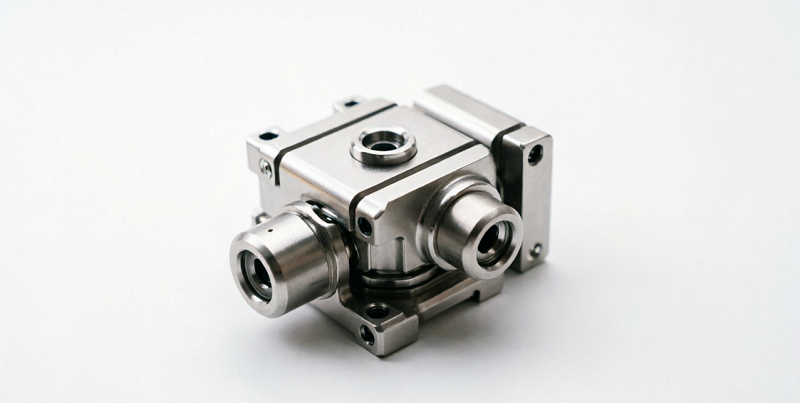
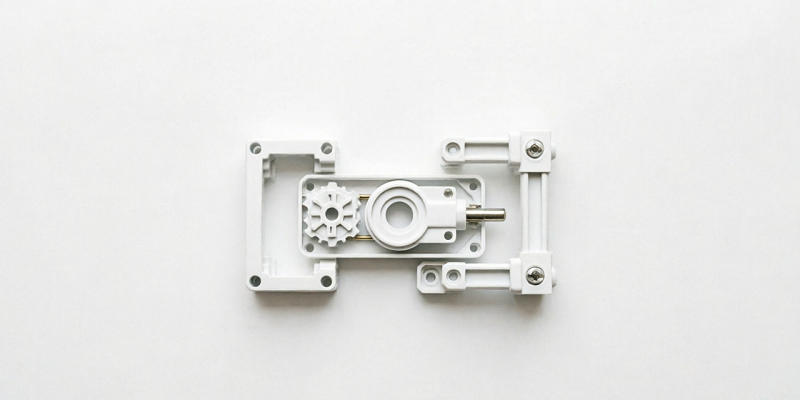
CNC technology can process complex structures such as irregular curved surfaces, micro-cavities, and hollowed-out integrations, which is in line with the design trend of miniaturization and integration of medical robots. At the same time, it is compatible with all medical-compliant materials such as medical stainless steel, titanium alloy, and PEEK medical plastic, and can flexibly adapt processing solutions according to the functional requirements of different parts.
Types of Core Medical Robot Parts Adapted for CNC Machining
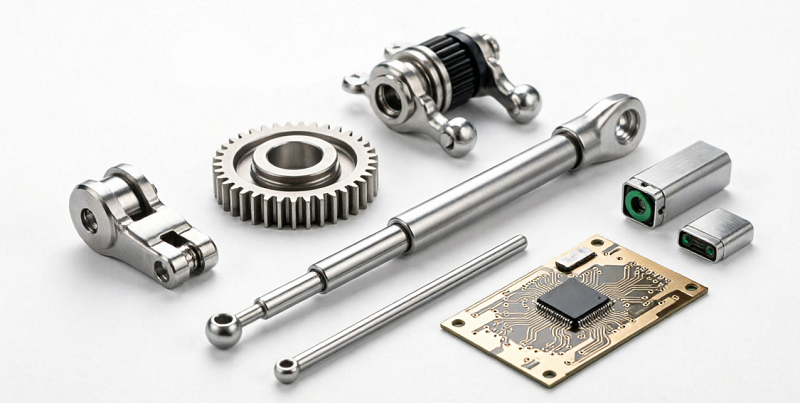
CNC precision machining can comprehensively cover the core functional components of the entire medical robot, including all types of components such as structural support, motion transmission, surgical execution, and sensor positioning, which is the fundamental guarantee for the stable operation of the entire medical robot.
Among them, the structural parts mainly include the equipment body frame, support bracket, fixed base, and protective shell, which are mostly processed with lightweight aluminum alloy, taking into account both structural strength and equipment portability.
Transmission motion parts include micro lead screws, precision gears, linkage connecting rods, rotating shafts, etc. They are core components that ensure the flexible movement and precise displacement of robots and are widely used in the joints of rehabilitation robots and surgical robotic arms.
Medical execution parts mainly consist of minimally invasive puncture heads, surgical clamping components, and cutting and suturing accessories, which come into direct contact with human tissues and have extremely high requirements for processing accuracy and surface quality.
The sensor positioning parts include sensor fixing seats, calibration positioning blocks, etc. They rely on high-precision CNC processing to ensure the assembly fit, guaranteeing the accuracy of the robot’s positioning and distance measurement.

Selection standards for medical materials in CNC machining of medical robots
The materials of medical robot parts must comply with the ISO10993 biocompatibility standard. They need to be precisely selected based on the usage scenarios of the parts, whether they come into contact with the human body, and the force conditions. The processing adaptation scenarios and medical values of different materials vary significantly. The core material selection classification is as follows:
Medical metal materials:
316L medical stainless steel is corrosion-resistant, easy to disinfect, and highly stable, making it suitable for surgical execution parts that come into direct contact with the human body.
TC4 titanium alloy is lightweight, high-strength, and has excellent biocompatibility, and is widely used in micro-precision components of minimally invasive surgical robots.
6061 aluminum alloy is lightweight and easy to machine, and is only used for machine body structural components that do not come into contact with the human body.
Medical polymer materials:
Centered on PEEK and POM medical plastics, it is formed through CNC precision engraving processing. It features non-toxicity, high-temperature resistance, disinfection resistance, and good insulation. It is mainly used for robot insulation protective parts and soft support structures to avoid the risks of circuit leakage and hard compression damage.
General Criteria for material selection:
All processing materials must be free of toxic emissions, resistant to repeated medical disinfection, and have no risk of corrosion or aging. At the same time, they should be compatible with CNC precision cutting processes to ensure the processing accuracy and long-term stability of parts, fully meeting the GMP production standards for medical devices.
| Core dimension | Parameters and Types | Medical application value |
| Machining accuracy standard | Tolerance: ±0.005mm to ±0.02mm, surface roughness: ≤Ra0.8 | Ensure the robot operates precisely, with no positioning deviation and no running jitter |
| Mainstream medical materials | 316L stainless steel, TC4 titanium alloy, 6061 aluminum alloy, medical PEEK | Meets the medical requirements of biocompatibility, corrosion resistance, and repeated sterilization |
| Core processing equipment | 3/4/5 CNC machining centers | Suitable for processing micro, irregular, and complex integrated-structure parts |
| Industry compliance standards | ISO10993 biosafety standard, GMP regulations for medical devices | Eliminate the risk of medical infection and ensure the compliance of equipment for clinical use |
Key Points of CNC Machining Process Control and precision control for medical robots
The medical particularity of medical robot parts makes the CNC machining technology control standards for them much higher than those for ordinary industrial components. The entire process needs to be strictly controlled in all dimensions, including processing flow, precision control, production environment, and finished product handling, to eliminate any medical safety hazards.
In actual production, it is necessary to strictly follow the standardized process of rough machining, semi-finishing, finishing, deburring and polishing, ultrasonic cleaning, and aseptic packaging. For difficult-to-machine materials such as titanium alloys and stainless steel, it is necessary to specially optimize the cutting speed, feed rate, and tool parameters to reduce processing thermal deformation and part defects.
At the same time, core precision parts must be processed in a dust-free workshop, with full control over dimensional and positional tolerances to ensure precise micro-gap fit of mating parts. The finished products undergo multiple cleaning and dust removal procedures. All production and inspection data are traceable throughout the process, strictly adhering to medical device production standards to guarantee stable precision, cleanliness, and safety of the parts.

Difficulties and future development trends in the industry
Although the current CNC machining technology for medical robots has been maturely implemented, there are still many pain points and difficulties in the industrialization process of precision manufacturing. At the same time, with the upgrading of intelligent manufacturing technology, the industry also shows a clear trend of optimized development.
At present, the industry generally faces problems such as low processing yield of micro and complex parts, high cutting costs of medical special materials, large tool wear, low production efficiency of customized small-batch parts, and cumbersome medical compliance testing processes. To some extent, these issues have restricted the popularization and implementation of high-end medical robots.
In the future, with the continuous upgrading of 5-axis CNC intelligent simulation processing, automated flexible production, and precision inspection integrated technologies, the industry will gradually achieve an increase in the yield of complex parts, a reduction in production costs, and an optimization of customized production efficiency. At the same time, it will continuously improve the medical standardized processing system.
Promote the continuous upgrading of CNC machining for medical robot parts towards high precision, low cost, compliance, and intelligence.
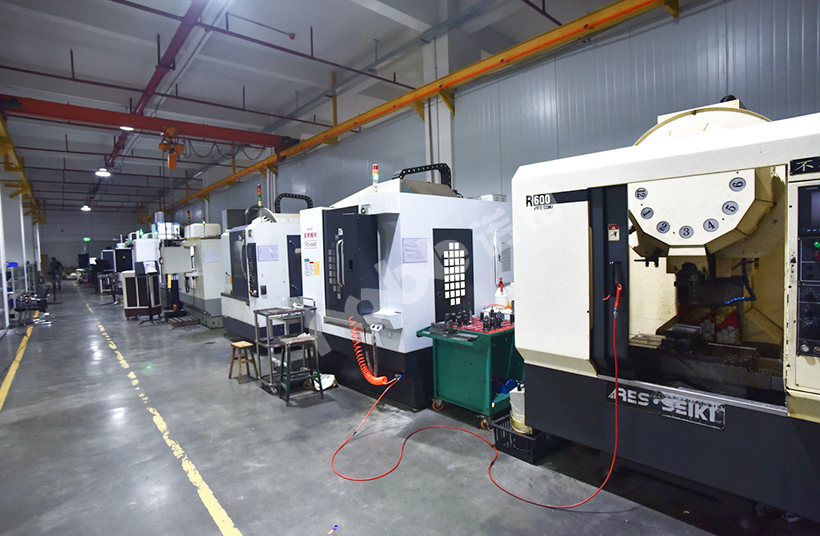
Why choose Noble as your medical parts manufacturer
NOBLE is a Sino-British joint venture awarded by the government as a “National High-tech Enterprise”. We have two major business directions: “Smart Manufacturing” and “Care Products”. The “Smart Manufacturing” business specializes in providing customers with project-supporting services, including parts machining and manufacturing.
More than 10 years of professional manufacturing and rapid prototyping experience. Our efficient team provides strong support for your new projects to 100% realize your requirements; Standardized management brings strict quality control of parts & products; a reasonable workflow achieves lower cost with the same quality.

After years of hard work and development, NOBLE has gradually transformed from a precision parts machining and manufacturing enterprise with a complete industrial chain supporting service capabilities to a service-oriented enterprise that provides full support for customers’ entire projects.
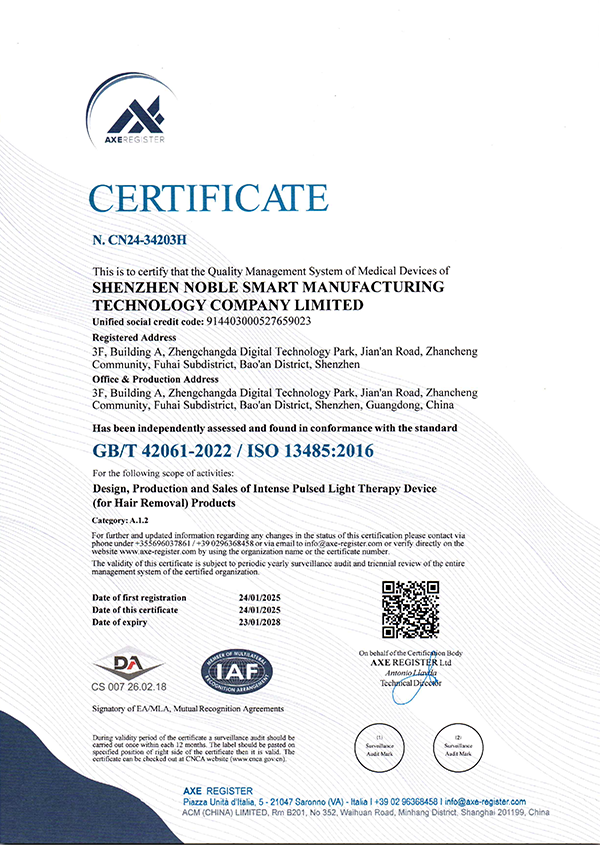
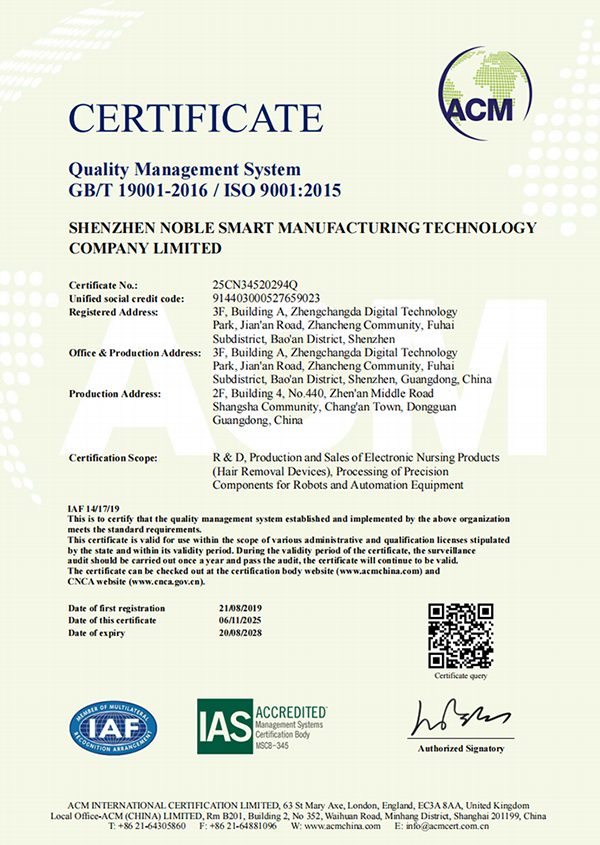
NOBLE is your trusted one-stop custom manufacturing solution, from prototype design to manufacturing, through huge manufacturing resources, suitable technology, streamlined process, expert guidance, and a perfect quality inspection process to turn your ideas into reality.
NOBLE has the following qualification certificates:
ISO 9001: 2015 – Robust quality management for general manufacturing. Consistent processes. Documented control. Traceable inspection.
ISO 13485: 2016 – Stricter quality standards for medical device parts—rigorous process validation. Full traceability. Required for implantable and surgical parts.
Conclusion
CNC precision machining is the core process for manufacturing core components of medical robots and an important manufacturing foundation supporting the development of precision medicine and intelligent medicine. With ultra-high processing accuracy, excellent surface quality, wide material compatibility, and complex structure processing capabilities, it perfectly meets the strict medical safety and performance standards of medical robots.
Whether it is the precision execution components of surgical robots or the transmission structure and positioning components of rehabilitation robots, they all rely on CNC machining to achieve high-precision and high-compliance mass production, effectively ensuring the diagnostic and therapeutic accuracy and operational stability of medical equipment.
Although the current CNC machining industry for medical robots is confronted with problems such as the great difficulty in processing micro-parts, the high cost of special materials, and insufficient efficiency in customized production, with the continuous iteration and optimization of intelligent manufacturing technology and medical processing techniques, the related technical bottlenecks will gradually be broken through.
In the future, CNC machining technology will continue to empower the domestic upgrading of high-end medical robots, further promote the popularization and application of smart medical equipment, and provide solid support for the innovative development of the modern precision medicine industry.
FAQs of Medical Robot Parts Machining
1、 What special surface treatments are required for CNC-machined medical parts?
Electropolishing, passivation, dust-free ultrasonic cleaning, biocompatible coating
2、What is the minimum micro-hole size achievable for CNC medical components?
Normally 0.1mm; special micro-cutting reaches 0.05mm.
3、Q: Do we need special cutters for CNC machining medical PEEK?
Yes. Uncoated carbide tools are used to avoid material contamination.
4、Why is emulsion cutting fluid forbidden for titanium surgical robot parts?
It leaves chemical residues and fails medical sterility standards.
5. Can CNC-machined medical metal parts withstand EO sterilization?
Passivated, qualified parts can withstand repeated EO sterilization.