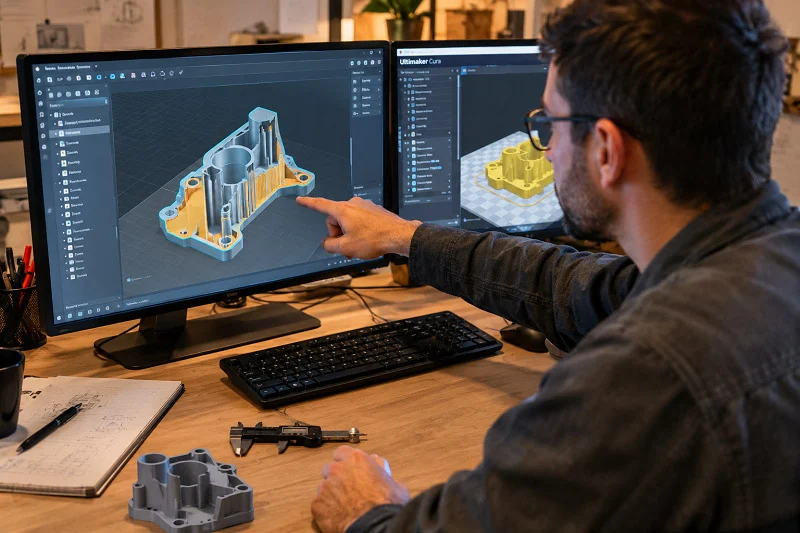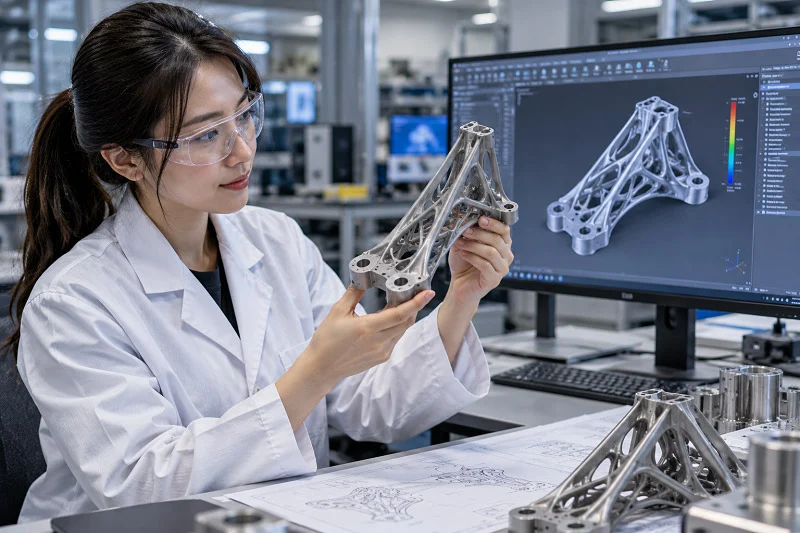
Aerospace components must meet strict safety and performance requirements. Aircraft parts, UAV components, and aerospace equipment must perform reliably under demanding conditions. Aerospace rapid prototyping helps engineers develop and validate these components before investing in expensive tooling or full production. Teams can evaluate designs, identify potential problems, and improve components early, reducing development time and the risk of costly changes.
This article covers the main technologies, materials, and applications used in aerospace rapid prototyping. It is not a single manufacturing process, but a set of methods for different needs. The right choice depends on component design, material requirements, testing needs, and intended use.
What Is Aerospace Rapid Prototyping
Definition of Aerospace Rapid Prototyping
Aerospace rapid prototyping uses digital designs and manufacturing processes to create physical models or functional components for evaluation, testing, and validation. Engineers can inspect geometry, check assembly fit, and test performance when the material and process allow it. These physical parts help teams assess designs before moving to the next development stage.
Why Rapid Prototyping Matters in Aerospace Engineering
Physical prototypes help engineers evaluate geometry, check assembly, and test functionality before a design moves further into development. They can reveal problems such as component interference or features that are difficult to manufacture. Aerospace rapid prototyping helps teams find these issues before major tooling investments, when design changes are often faster and less expensive.
Aerospace Rapid Prototyping vs. Traditional Manufacturing
Traditional manufacturing often relies on dedicated tooling, such as steel molds and production dies. Preparing these tools can take weeks, and design changes may add cost and delay. Aerospace rapid prototyping reduces tooling needs for many applications and supports small production runs. Traditional tooling may still be more economical for large volumes, so the best method depends on the project stage and quantity.
NOBLE helps clients evaluate these options throughout product development and manufacturing. Our team supports metal and plastic processing through CNC machining, 3D printing, vacuum casting, surface treatment, and assembly, helping customers select suitable methods for prototype development and production.
Key Technologies Used in Aerospace Rapid Prototyping
CNC Machining
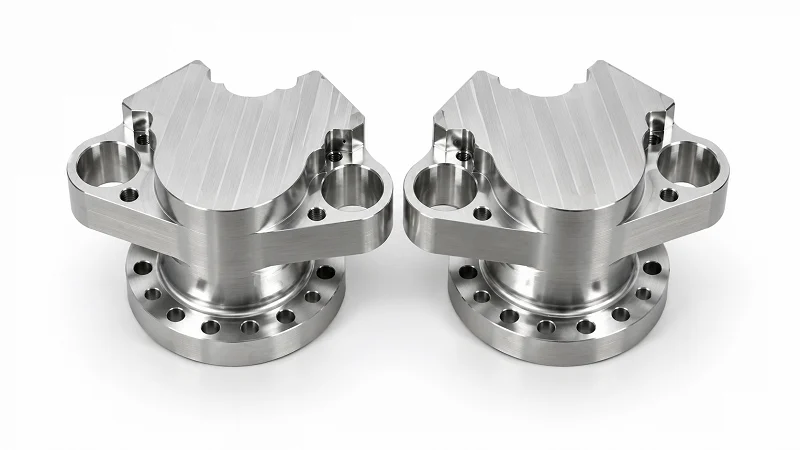
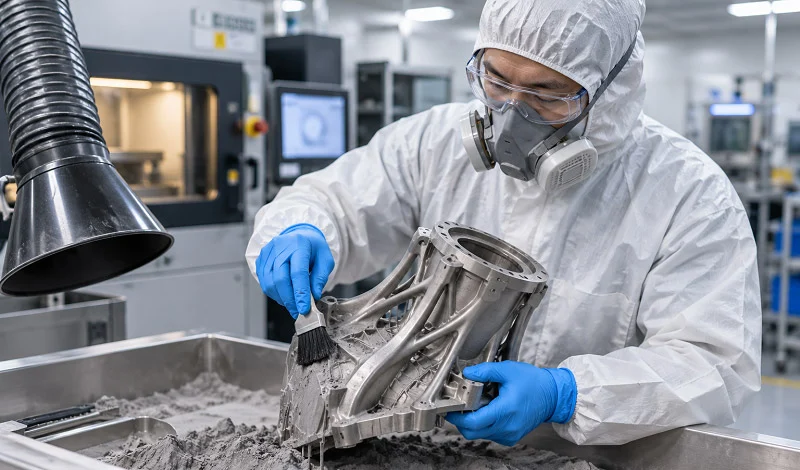
CNC machining removes material from metal or plastic stock to produce precise aerospace prototypes. It offers good dimensional accuracy and surface finish, making it suitable for brackets, shafts, and housings with tight tolerances. Aerospace rapid prototyping often uses CNC machining when parts must closely match the dimensions and material properties required for functional testing.
Metal 3D Printing
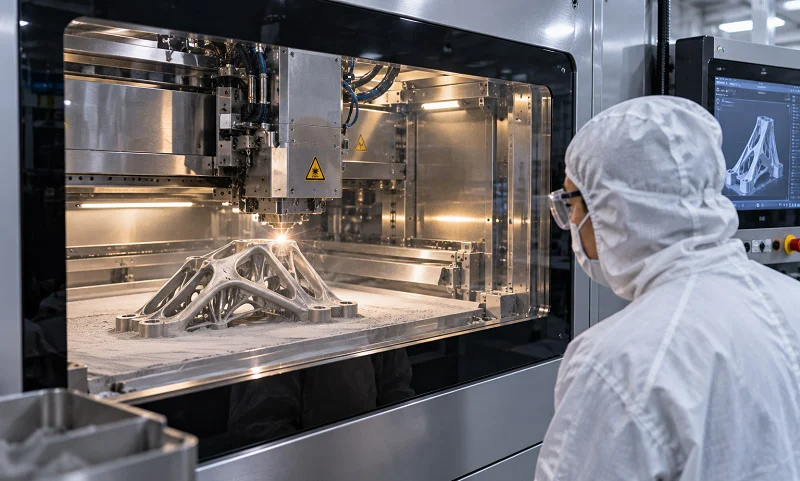
Metal 3D printing builds parts layer by layer, often using laser powder bed fusion. It can produce complex geometries, internal cooling channels, and lattice structures that are difficult to machine. Aerospace rapid prototyping uses this technology for lightweight components and designs that benefit from greater geometric freedom, especially when reducing weight or improving thermal performance matters.
Polymer 3D Printing
FDM, SLA, and SLS produce concept models, housings, ducts, fixtures, and selected functional prototypes. Material choice affects strength, heat resistance, and surface finish. Aerospace rapid prototyping uses polymer printing for early design checks, fit testing, and selected functional evaluations when the printed material meets the test requirements.
Sheet Metal Fabrication
Laser cutting shapes sheet metal, while bending forms the required angles. Additional operations complete the part. Aerospace rapid prototyping uses these methods to produce brackets, panels, enclosures, and other components with relatively uniform wall thickness. For simple geometries, sheet metal fabrication can offer fast turnaround without the cost of dedicated production tooling.
Vacuum Casting and Other Supporting Processes
Vacuum casting produces small batches of polymer parts using silicone molds. These parts can support design evaluation, fit checks, and selected functional tests, depending on the resin. Surface finishing and assembly can then prepare the components for presentation or further evaluation. These supporting processes extend aerospace rapid prototyping beyond making individual parts to creating more complete prototypes.
Materials Used in Aerospace Rapid Prototyping
Aluminum Alloys
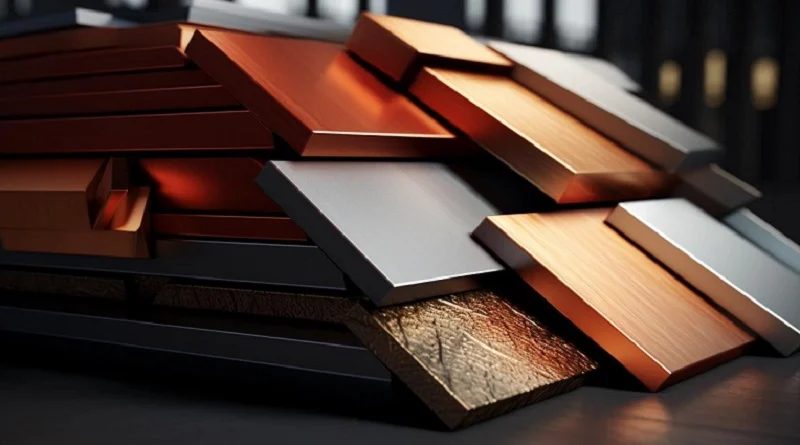
Aluminum alloys offer low density, good machinability, and a useful strength-to-weight ratio. Aerospace rapid prototyping commonly uses grades such as 6061 and 7075 for brackets, housings, and panels. Both can be machined accurately, but their strength and corrosion behavior differ, so the grade should match the component’s load and operating environment.
Titanium Alloys
Titanium alloys combine high strength-to-weight ratios with strong corrosion resistance, but material and processing costs are higher than those of many aluminum alloys. Aerospace rapid prototyping uses titanium for demanding components, including structural brackets and selected engine parts. Ti-6Al-4V is widely used, although its machining requires careful control because cutting speeds are lower and tool wear can be significant.
Engineering Plastics
ABS is useful for general prototypes, polycarbonate offers good impact resistance, nylon suits many functional parts, and PEEK can withstand high temperatures and demanding environments. Aerospace rapid prototyping uses these plastics for housings, ducts, fixtures, and selected functional components. The best choice depends on strength, temperature, chemical exposure, weight, and cost requirements.
Composites and Fiber-Reinforced Materials
Carbon-fiber-reinforced polymers offer high stiffness at low weight, but their properties depend on fiber direction and layup. Aerospace rapid prototyping uses composites for structural panels, control surfaces, and components where weight reduction is important. The process may require careful fiber placement, curing, and inspection, but it can deliver designs with performance that conventional materials may not match at the same weight.
How to Choose the Right Aerospace Prototype Material
Material selection depends on weight, strength, temperature resistance, dimensional stability, cost, and manufacturability. The intended testing conditions matter too. Aerospace rapid prototyping requires materials that suit the part’s function and the purpose of each test. No single material is best for every application, so engineers must balance performance requirements with practical manufacturing limits.
Applications of Aerospace Rapid Prototyping
Aircraft Interior Components
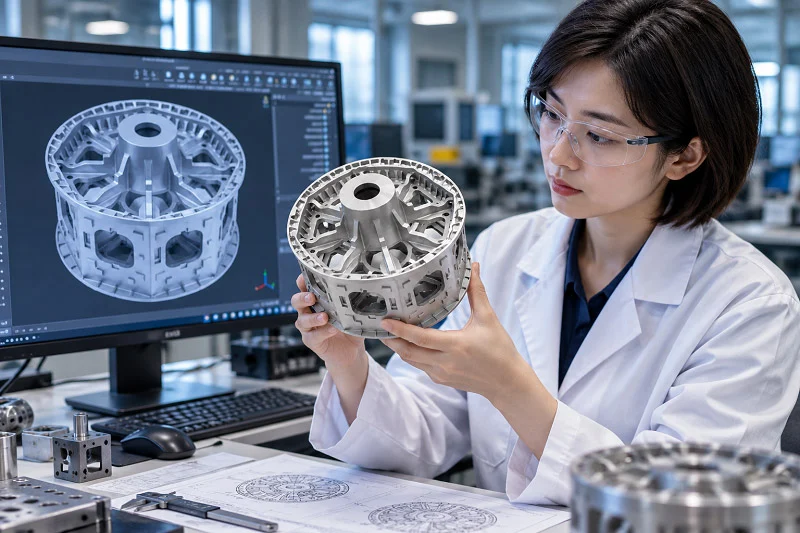
Cabin panels must fit, air vents must function, and seat components must meet appearance and weight requirements. Aerospace rapid prototyping helps engineers check these details before investing in production tooling. Prototypes allow teams to evaluate appearance, fit, and function and make design changes before manufacturing begins.
UAV and Drone Components
Lightweight frames, mounting brackets, sensor housings, aerodynamic parts, and payload enclosures can all benefit from rapid prototyping. Aerospace rapid prototyping helps UAV developers test component fit, reduce weight, and refine aerodynamic designs through repeated iterations. This allows teams to evaluate design changes faster before moving to larger production runs.
Structural Components and Mounting Brackets
Prototype brackets, connectors, and support structures help engineers check assembly fit, clearances, and load paths. Aerospace rapid prototyping allows these components to be evaluated early, so design issues can be corrected before production. When parts must carry loads, the prototype material and manufacturing method must suit the intended test.
Aerospace Electronics Housings and Ducts
Electronic enclosures protect sensitive equipment, cable-routing features organize wiring, and ducts guide airflow. Aerospace rapid prototyping helps engineers verify dimensions and integration with surrounding systems. Prototypes can reveal fit problems, routing conflicts, or airflow design issues before the parts move into production.
Engine-Related and High-Temperature Components
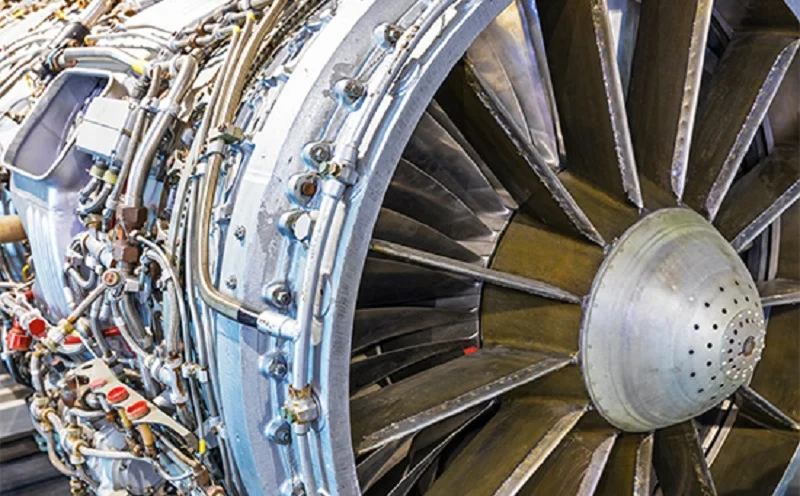
Selected engine-related components and thermal-management features can be prototyped to evaluate geometry and support testing. Aerospace rapid prototyping for high-temperature applications requires careful material selection. The prototype must withstand the intended test conditions, and its material properties must be suitable for the performance being evaluated.
Ground-Support Equipment and Testing Fixtures
Rapid prototyping also supports inspection fixtures, assembly aids, maintenance tools, and other ground-support equipment. Aerospace rapid prototyping is not limited to flight hardware. It can help teams produce useful equipment faster, improve workshop workflows, and adapt tools to specific assembly or testing requirements.
How to Choose the Right Aerospace Rapid Prototyping Technology
Define the Prototype’s Purpose
Visual models show shape and appearance, while fit-and-assembly prototypes check integration. Functional prototypes evaluate performance, and qualification parts may need to meet formal testing requirements. Aerospace rapid prototyping starts by defining this purpose. A visual model may need less precision, but a functional prototype requires suitable material properties and manufacturing quality.
Evaluate Material and Performance Requirements
Mechanical properties, operating temperatures, environmental exposure, and test conditions all affect material selection. Aerospace rapid prototyping requires engineers to define these requirements early. Strength, stiffness, corrosion resistance, and thermal stability must match the intended application, while the manufacturing process must produce parts that meet the required performance specifications.
Compare Accuracy, Surface Finish, and Geometry
Tolerance requirements, complex features, internal channels, and surface quality all affect process selection. CNC machining suits parts that need tight dimensional control, while 3D printing can produce complex internal geometries. Vacuum casting is useful for small batches of polymer parts with detailed features. The best aerospace rapid prototyping method depends on which requirements matter most for the component.
Consider Lead Time, Cost, and Production Volume
Setup time, finishing operations, material costs, and required quantities all affect the best manufacturing choice. Aerospace rapid prototyping involves balancing these factors rather than comparing unit prices alone. One prototype may suit 3D printing, while a small batch of polymer parts may favor vacuum casting. CNC machining can be a better option when material properties and tight tolerances are priorities.
Work With a Capable Aerospace Prototyping Supplier
Technical communication, design-for-manufacturing support, inspection, documentation, and material traceability can all affect project outcomes. A capable supplier helps align these requirements before production starts. NOBLEprovides CNC machining, 3D printing, vacuum casting, surface treatment, and assembly services. Our team supports aerospace rapid prototyping projects by helping clients assess manufacturing options and move efficiently from prototype development toward low-volume production.
Quality Control and Testing in Aerospace Rapid Prototyping
Dimensional Inspection and Tolerance Verification
Coordinate measuring machines (CMMs) and other inspection tools check prototype dimensions against engineering drawings and specifications. Aerospace rapid prototyping relies on these checks to identify out-of-tolerance features before parts move to the next stage. Components that meet the required dimensions can proceed to further evaluation.
Functional and Environmental Testing
Mechanical tests assess how parts respond to loads, while thermal, vibration, and environmental tests examine performance under specific conditions. Aerospace rapid prototyping helps engineers select and evaluate prototypes through tests suited to their intended applications. The test plan and acceptance criteria depend on the component, operating environment, and applicable requirements.
Material Traceability and Documentation
Material identification, process records, inspection reports, and documented acceptance criteria help establish how a prototype was made and evaluated. Aerospace rapid prototyping projects may require these records to support design reviews, repeatability, and further testing. Clear documentation also helps teams trace materials and manufacturing steps when problems arise.
Prototype Validation vs. Aerospace Certification
Passing prototype tests does not automatically qualify a component for flight. Flight-critical applications may require additional material and process qualification, verification, and formal approval. Aerospace rapid prototyping helps engineers evaluate designs and identify problems, but certification follows separate requirements. Understanding this distinction is essential when planning aerospace development projects.
Aerospace Rapid Prototyping Services at NOBLE

NOBLE supports product development from design review to finished components. Our aerospace rapid prototyping capabilities include metal and plastic CNC machining, plastic 3D printing, vacuum casting, surface finishing, and assembly, depending on project requirements. These services help clients develop prototypes for design evaluation, fit checks, and selected functional tests.
NOBLE’ s Services
Design support helps clients choose suitable manufacturing processes, while dimensional inspection and coordination across production steps help keep projects on track. Aerospace rapid prototyping works best when design, manufacturing, and finishing requirements are considered together. NOBLE brings these capabilities together to help customers prepare components for evaluation and testing.
NOBLE’s Certification
NOBLE holds ISO 9001:2015 and ISO 13485:2016 certifications, which support quality management across our manufacturing operations. These certifications do not establish aerospace-specific approval or flight qualification. Aerospace rapid prototyping for regulated or flight-critical applications may require additional standards, testing, traceability, and formal approval. Our team can discuss the applicable requirements and clarify how our capabilities fit the project’s needs.
Share your CAD files, target quantities, material requirements, critical tolerances, surface finish expectations, and testing objectives. Our team can review the details and discuss a suitable manufacturing approach. At NOBLE, aerospace rapid prototyping starts with clear technical requirements, helping align process selection and production planning with the intended use of each component.
FAQs About Aerospace Rapid Prototyping
What is aerospace rapid prototyping used for?
Aerospace rapid prototyping supports design evaluation, fit checks, functional testing, and early-stage component development. It helps engineers identify design problems before investing in expensive tooling or moving to full production, reducing the risk of costly changes later.
Which manufacturing technology is best for aerospace prototypes?
The best method depends on geometry, material, dimensional accuracy, performance requirements, budget, and intended testing. Aerospace rapid prototyping may involve CNC machining, metal or polymer 3D printing, sheet metal fabrication, or vacuum casting. Each process has strengths, so selection should match the part’s requirements.
What materials are commonly used in aerospace rapid prototyping?
Common materials include aluminum alloys, titanium alloys, engineering plastics such as ABS, polycarbonate, and PEEK, and carbon-fiber-reinforced composites. Aerospace rapid prototyping requires material selection based on weight, strength, temperature resistance, corrosion resistance, and the component’s intended use.
How much does aerospace rapid prototyping cost?
Costs depend on material, part size, design complexity, tolerances, manufacturing method, finishing, inspection, and order quantity. A simple machined bracket generally costs less than a complex component with demanding tolerances or extensive post-processing. A detailed drawing and clear requirements help suppliers estimate aerospace rapid prototyping costs more accurately.
How long does aerospace rapid prototyping take?
Lead time depends on design readiness, material availability, part complexity, manufacturing process, post-processing, and inspection requirements. Aerospace rapid prototyping projects may move faster when CAD files, specifications, and testing requirements are complete at the start. Complex parts or additional validation can extend the schedule.
Can 3D-printed aerospace prototypes be used in flight?
Some additively manufactured parts can be approved for flight, but approval depends on the specific component, material, manufacturing process, inspection, and applicable qualification requirements. Aerospace rapid prototyping alone does not establish flight readiness.
What should I provide when requesting an aerospace prototype quote?
Provide CAD files or engineering drawings, material specifications, target quantities, critical tolerances, surface finish requirements, intended use, and relevant testing conditions. Complete information helps suppliers assess process options, cost, and lead time. For aerospace rapid prototyping, clear requirements also help identify inspection and documentation needs before manufacturing begins.