Introduction
Vacuum casting can meet specific needs: small-batch part production, rapid prototyping, and transitional production prior to the completion of steel molds. This process uses silicone molds and polyurethane resin to produce parts of a quality comparable to mass-produced parts at a cost lower than that of mass production.
The selection of a vacuum casting company matters more than most people think. The quality of the master mold, the skill of the mold maker, and the rigor of process control all influence the quality of the final part.
This article profiles eight leading vacuum casting companies worldwide. Each one has strengths. Some specialize in speed. Some focus on complex geometries. Others offer full-service support from design to finishing. The profiles cover capabilities, industries served, and differentiators. I will help you select the best fit for your vacuum casting project.
What Is Vacuum Casting?
Definition of Vacuum Casting
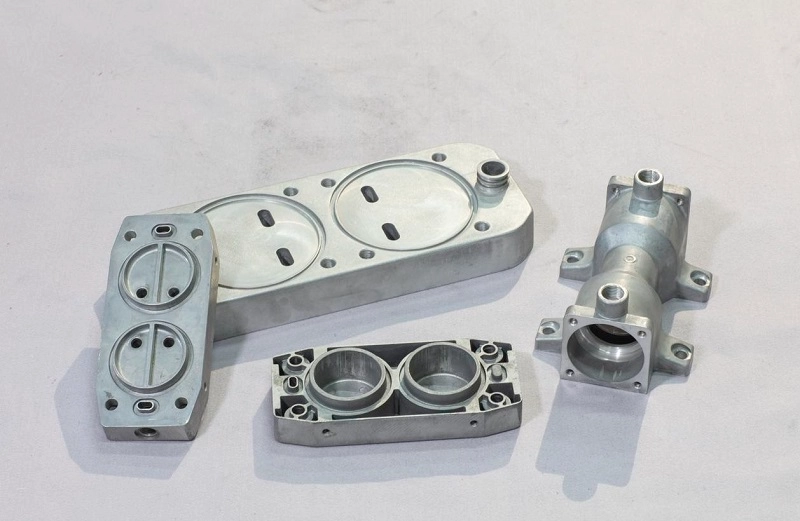
A master model sits in a box. Liquid silicone pours around it. The silicone cures. The master comes out. A cavity remains. Resin goes into that cavity under vacuum. The resin cures. A part comes out. That is vacuum casting.
How Does Vacuum Casting Work?
Step 1: Create the master model
The master is the original part. The surface finish must be excellent, because the silicone mold will replicate every detail—including scratches and imperfections.
Step 2: Build the silicone mold
The master gets suspended in a mold box. Liquid silicone pours over it. The silicone cures. The master is cut out. The cavity remains. The mold is flexible. It can release undercuts that rigid molds cannot.
Step 3: Mix the polyurethane resin
The two components—resin and hardener—are mixed in precise proportions. Pigments and additives may be added. The mixture must be uniform; uneven mixing will result in inconsistent performance.
Step 4: Vacuum degassing and casting
The mixed resin is fed into a vacuum chamber. Air bubbles are removed, and the degassed resin is injected into a silicone mold. A vacuum is maintained throughout the injection process to ensure that each cavity is filled.
Step 5: Resin curing
The mold filled with resin is placed in the oven. The heat accelerates the chemical reaction, causing the resin to cure. The curing time depends on the type of resin and the thickness of the part.
Step 6: Demolding and finishing
The silicone mold is removed, and workers take out the parts and trim off the flash. The surface can then be sanded, painted, or textured.
Leading vacuum casting companies follow this sequence with strict process control. The result is a part that looks and performs like a production component. The cost is a fraction of injection molding tooling. The lead time is a fraction of steel tool production. That is the value proposition of a skilled vacuum casting company.
Detailed Review of the Top 8 Vacuum Casting Companies
1. Protolabs
Company Overview
Founded in 1999, Protolabs is a leading digital manufacturing company specializing in rapid prototyping and low-volume production. Its automated quoting platform and in-house manufacturing facilities enable exceptionally fast turnaround times.
Vacuum Casting Services
Offers silicone tooling and polyurethane vacuum casting for functional prototypes and short production runs with production-like finishes.
Key Capabilities
- Automated DFM analysis
- Fast online quoting
- High-quality polyurethane materials
- Cosmetic and functional prototypes
Strengths
- Industry-leading speed
- Excellent quality control
- Strong engineering support
Limitations
- Premium pricing
- Less economical for higher production volumes
Best For
Companies requiring rapid prototypes with predictable quality and short lead times.
Typical Industries
Medical devices, aerospace, robotics, industrial equipment, and consumer electronics.
2. Xometry
Company Overview
Xometry is a digital manufacturing marketplace that connects customers with a global network of manufacturing partners, offering a wide range of manufacturing processes.
Vacuum Casting Services
Provides silicone mold vacuum casting, bridge production, and polyurethane parts through its supplier network.
Key Capabilities
- Extensive manufacturing network
- Broad material selection
- Multiple finishing options
- Instant online quoting
Strengths
- Flexible sourcing
- Competitive pricing
- Excellent scalability
Limitations
- Quality and lead times may vary between manufacturing partners.
Best For
Businesses seeking flexible manufacturing options and scalable production capacity.
Typical Industries
Automotive, industrial equipment, aerospace, defense, and consumer products.
3. NOBLE
Company Overview
NOBLE is a China-based vacuum casting company providing factory-direct rapid manufacturing services, including vacuum casting, CNC machining, injection molding, and sheet metal fabrication.
Vacuum Casting Services
Offers silicone tooling, polyurethane casting, engineering prototypes, and bridge production with quick turnaround.
Key Capabilities
- Factory-direct manufacturing
- Dedicated engineering support
- Fast production
- Wide range of manufacturing processes
Strengths
- Competitive pricing
- Strong engineering assistance
- Excellent value for low-volume production
Limitations
- Longer international shipping times
- Limited suitability for projects requiring region-specific manufacturing compliance
Best For
Startups and manufacturers seeking affordable, high-quality prototypes and bridge production.
Typical Industries
Consumer electronics, robotics, automation, industrial machinery, and smart devices.
4. ARRK Corporation
Company Overview
ARRK Corporation is a global product development and prototyping company with decades of experience serving automotive, industrial, and consumer product manufacturers.
Vacuum Casting Services
Provides high-precision silicone molds, engineering-grade polyurethane parts, cosmetic prototypes, and functional testing components.
Key Capabilities
- End-to-end product development
- Premium surface finishing
- High dimensional accuracy
- Large-format prototype production
Strengths
- Automotive-grade quality
- Extensive engineering expertise
- Global technical support
Limitations
- Higher costs than many competitors
- Longer lead times for highly customized projects
Best For
Automotive and industrial companies requiring premium engineering support and prototype quality.
Typical Industries
Automotive, medical equipment, aerospace, industrial machinery, and consumer products.
5. Jabil
Company Overview
Jabil is one of the world’s largest manufacturing services providers, offering engineering, prototyping, manufacturing, and supply chain solutions across multiple industries.
Vacuum Casting Services
Supports rapid prototyping with silicone tooling, polyurethane casting, and bridge manufacturing as part of its broader product development services.
Key Capabilities
- Global manufacturing network
- Product lifecycle management
- Advanced plastics manufacturing
- Regulatory compliance expertise
Strengths
- Enterprise-scale manufacturing
- Strong quality systems
- Excellent transition from prototype to production
Limitations
- Better suited for larger manufacturing programs than small prototype projects.
Best For
Large OEMs and regulated industries requiring comprehensive manufacturing support.
Typical Industries
Healthcare, automotive, telecommunications, industrial equipment, and consumer electronics.
6. Materialise
Company Overview
Materialise is a Belgian company recognized for its expertise in industrial 3D printing and additive manufacturing software, combining these capabilities with vacuum casting services.
Vacuum Casting Services
Uses high-resolution 3D-printed master models to produce silicone molds and high-quality polyurethane cast parts.
Key Capabilities
- Advanced additive manufacturing
- High-quality master models
- Functional and cosmetic prototypes
- Hybrid manufacturing workflows
Strengths
- Exceptional dimensional accuracy
- Medical manufacturing expertise
- Complex geometry capabilities
Limitations
- Higher pricing
- Less suitable for higher-volume manufacturing
Best For
Companies developing highly detailed, complex, or medical-grade prototypes.
Typical Industries
Medical devices, aerospace, research, industrial design, and automotive development.
7. HLH Rapid
Company Overview
HLH Rapid is an in-house rapid manufacturing company specializing in prototyping and low-volume production, supported by a broad portfolio of manufacturing technologies.
Vacuum Casting Services
Produces polyurethane prototypes using silicone tooling for functional testing, appearance models, and bridge production.
Key Capabilities
- In-house manufacturing
- Multiple finishing options
- Fast turnaround
- Integrated manufacturing services
Strengths
- Competitive pricing
- Good quality control
- Flexible manufacturing capabilities
Limitations
- Shipping times may be longer for overseas customers.
Best For
Startups and product development teams seeking cost-effective low-volume manufacturing.
Typical Industries
Consumer electronics, robotics, industrial equipment, hardware startups, and product design.
8. Star Rapid
Company Overview
Star Rapid is a global rapid manufacturing company specializing in prototype development, bridge production, and low-volume manufacturing.
Vacuum Casting Services
Offers silicone mold tooling, polyurethane vacuum casting, cosmetic prototypes, and functional production parts.
Key Capabilities
- Rapid prototyping
- Low-volume manufacturing
- Engineering support
- Wide range of secondary finishing services
Strengths
- Reliable quality
- Responsive customer service
- Smooth transition from prototype to production
Limitations
- Fewer global facilities than some larger competitors.
Best For
Companies requiring dependable prototype manufacturing with scalable production support.
Typical Industries
Industrial equipment, consumer products, automotive, electronics, and medical devices.
How to Choose the Right Vacuum Casting Company
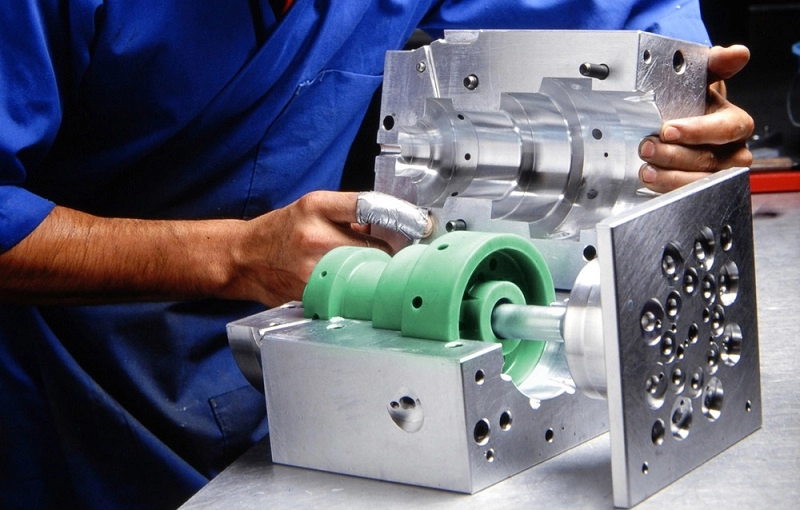
Not every shop does the same work. Capabilities vary. Quality varies. Selecting the wrong vacuum casting company costs time and money. The right one delivers parts that work.
Consider Your Project Volume
Prototype production means one to ten parts. Function matters more than cost. Speed matters more than tooling optimization.
Bridge manufacturing means twenty to a hundred parts. The goal is to supply functional units while steel tooling is being built. Consistency matters.
Low-volume production means a hundred to five hundred parts. The process must be repeatable. The quality must be stable. These are not prototypes anymore.
A good vacuum casting company will be honest about what volume fits their process and their pricing model.
Evaluate Engineering Support
A top-tier vacuum casting company offers services that go far beyond injection molding. DFM analysis can identify design issues before the master mold is created. Guidance on material selection helps choose the right resin for specific applications. Troubleshooting support resolves issues that arise during production.
Compare Material Availability
Polyurethane resins are not universal. Different vacuum casting companies have different portfolios. Clear resins, flexible resins, flame-retardant resins, heat-resistant grades. The right material must be available. Better yet, the supplier should be able to recommend the right resin for the application.
Review Lead Times
It takes one to three days to make the master mold. It takes one to two days to make the silicone mold. Casting and curing take one to two days. The total lead time is typically five to ten business days.
An efficient vacuum casting company can deliver products within four to six days, while less efficient companies take longer. This difference affects the product’s time to market.
Consider Geographic Location and Logistics
Distance affects shipping costs and delivery times. Domestic vacuum casting companies can help minimize customs clearance delays. The differences between local and overseas suppliers extend beyond shipping costs to include communication, time zones, and response times.
Evaluate Scalability for Future Production
The best vacuum casting companies offer both low-volume and high-volume pathways. They help customers move from prototype to production without changing partners. That continuity simplifies the entire product development process.
Why Choose NOBLE for Vacuum Casting?
Our Core Capabilities

Metal processing covers precision machining, vacuum casting, and finishing. Plastic processing covers injection molding, CNC machining, and custom fabrication. These are not separate departments. They are integrated capabilities. One part can be cast and machined. Another can be molded and assembled. The transition is seamless.
Full-Service Offering
The entire process begins much earlier: design reviews, design for manufacturability (DFM), and prototyping. After machining, the process continues with assembly, finishing, and packaging. NOBLE offers end-to-end solutions. This makes us a full-service manufacturing partner—not just a manufacturer.
Quality You Can Rely On
ISO 9001:2015 covers quality management systems for general manufacturing. Processes are consistent. Controls are documented. Inspections are traceable.
ISO 13485:2016 adds the stringent requirements necessary for medical devices. Stricter traceability. More rigorous process validation. Documentation is complete and thorough. This certification establishes NOBLE as an ISO 13485-certified manufacturer, qualifying it to serve the highly regulated medical device industry.
Partner with NOBLE
Whether you have a vacuum-cast turbine component that requires ultra-precise 5-axis finishing, a medical implant housing that needs a flawless surface finish, or a complex assembly that combines sheet metal and machined parts, NOBLE is your single-source solution.
FAQ
What is vacuum casting used for?
Functional prototyping, bridge production, and low-volume manufacturing. The process produces parts that look and behave like injection-molded components without the cost of steel tooling.
How many parts can a silicone mold produce?
Typically 20 to 30 parts. High-performance silicones and simple geometries can extend that to 50 or more. Beyond that, the mold degrades and part quality drops.
What materials are available for vacuum casting?
Polyurethane resins in a wide range. Clear grades, flexible grades, flame-retardant grades, heat-resistant grades, and ABS-like or PP-like formulations. A skilled vacuum casting company will recommend the right material for the application.
How long does vacuum casting take?
Five to ten working days from master model approval. Fast-track suppliers can deliver in three to five days.
Is vacuum casting cheaper than injection molding?
For low volumes, yes. No steel tooling cost. Low mold cost. For high volumes, no. Per-part cost is higher than injection molding.
What industries use vacuum casting?
Medical devices, automotive, consumer electronics, aerospace, and industrial equipment. Any industry that needs functional prototypes or small batches of production-like parts.
Which company is best for rapid prototyping?
The answer depends on the specific requirements—lead time, material, surface finish, and part complexity. The profiles in this article help narrow the selection. The best vacuum casting company for rapid prototyping is one that offers engineering support, fast turnaround, and a proven track record.
Which vacuum casting company is best for low-volume production?
A supplier with consistent quality, stable lead times, and full-service capabilities. Material availability and post-processing services matter. The best vacuum casting companies for low-volume production are those that treat small batches with the same rigor as large ones.