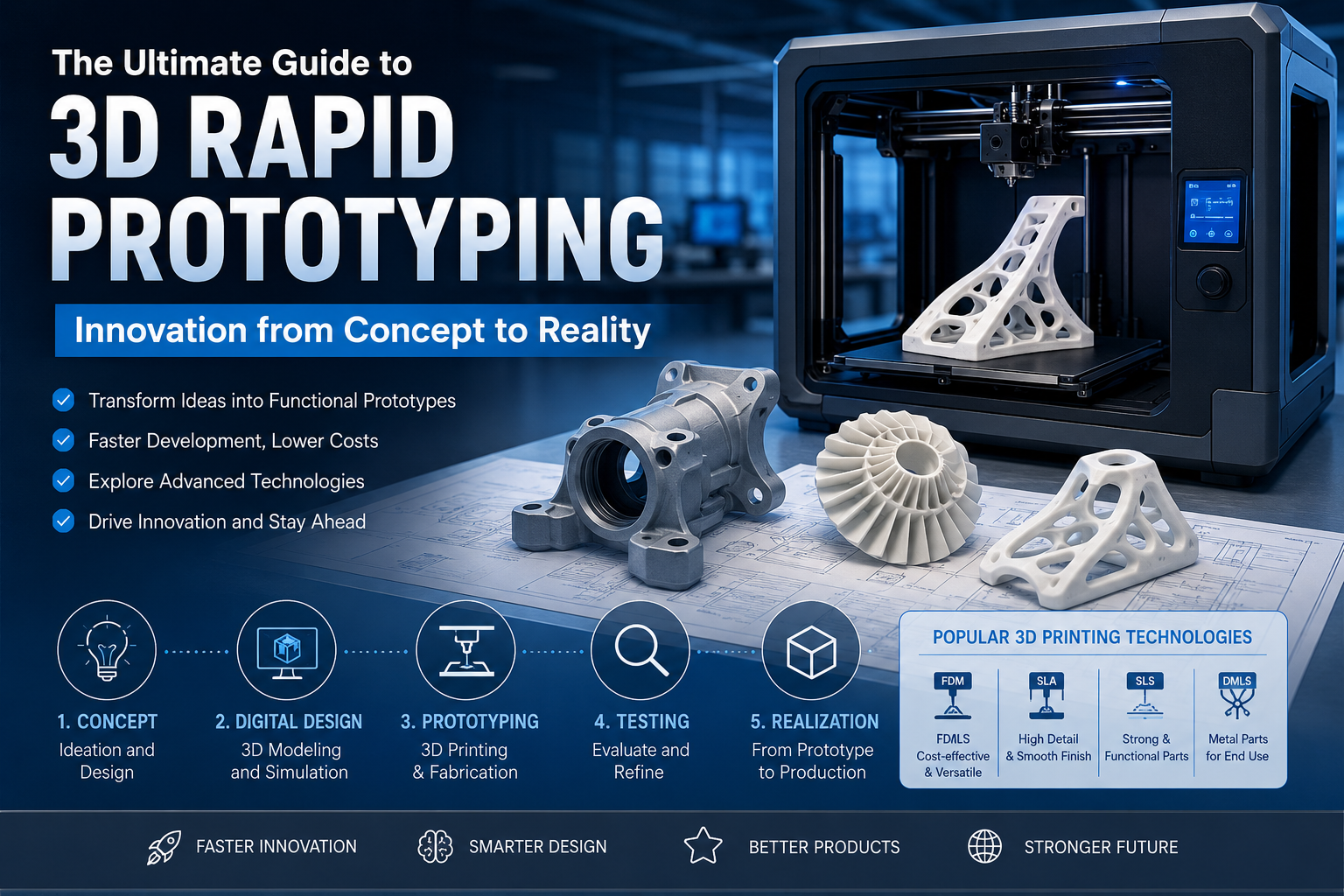
Introduction: Say Goodbye to “Impossible,” Embrace “Instant Ownership”
In the past, turning an idea into a tangible object was a long and expensive process. It required tedious blueprint drawing, expensive mold making, and long waiting times. Any minor modification could mean the loss of all previous efforts, causing countless innovative ideas to be stifled in their infancy by cost and time.
Today, all of this has been completely transformed. 3D rapid prototyping technology acts as a powerful “innovation engine,” transforming digital ideas into physical reality at an unprecedented speed. It’s not only a secret weapon for engineers and designers, but also a bridge for all innovators to turn the “impossible” into “instant possession.” If you also have needs in this area, you can confidently entrust them to us.
This article will provide you with a comprehensive understanding of 3D rapid prototyping technology. We will explore its working principles, mainstream technologies, powerful advantages, and wide applications in an easy-to-understand manner and explain why choosing a professional rapid prototyping service is key to your project’s success.
Part 1: What is 3D rapid prototyping? Why is it a manufacturing revolution?
1.1 Core Concept: A Leap in Thinking from “Subtraction” to “Addition”
To understand the revolutionary nature of 3D rapid prototyping, one must first understand the fundamental difference between it and traditional manufacturing:
- Traditional manufacturing (subtractive manufacturing), such as CNC machining, begins with a single piece of material (such as a block of metal or plastic) and removes unwanted parts through cutting, drilling, milling, etc., ultimately obtaining the part. This is similar to a sculptor carving a statue from a single block of marble.
- 3D rapid prototyping (additive manufacturing/3D printing): It is based on a completely different concept— layer-by-layer stacking. The software “slices” a 3D digital model into thousands of thin layers, and the 3D printer, like a diligent “glue dispenser,” precisely deposits material according to the contour of each layer, stacking layer upon layer until the entire part is manufactured.
This “from scratch, layer by layer” processing method breaks many limitations of traditional manufacturing processes and greatly reduces processing time.
1.2 The core value and advantages of 3D rapid prototyping
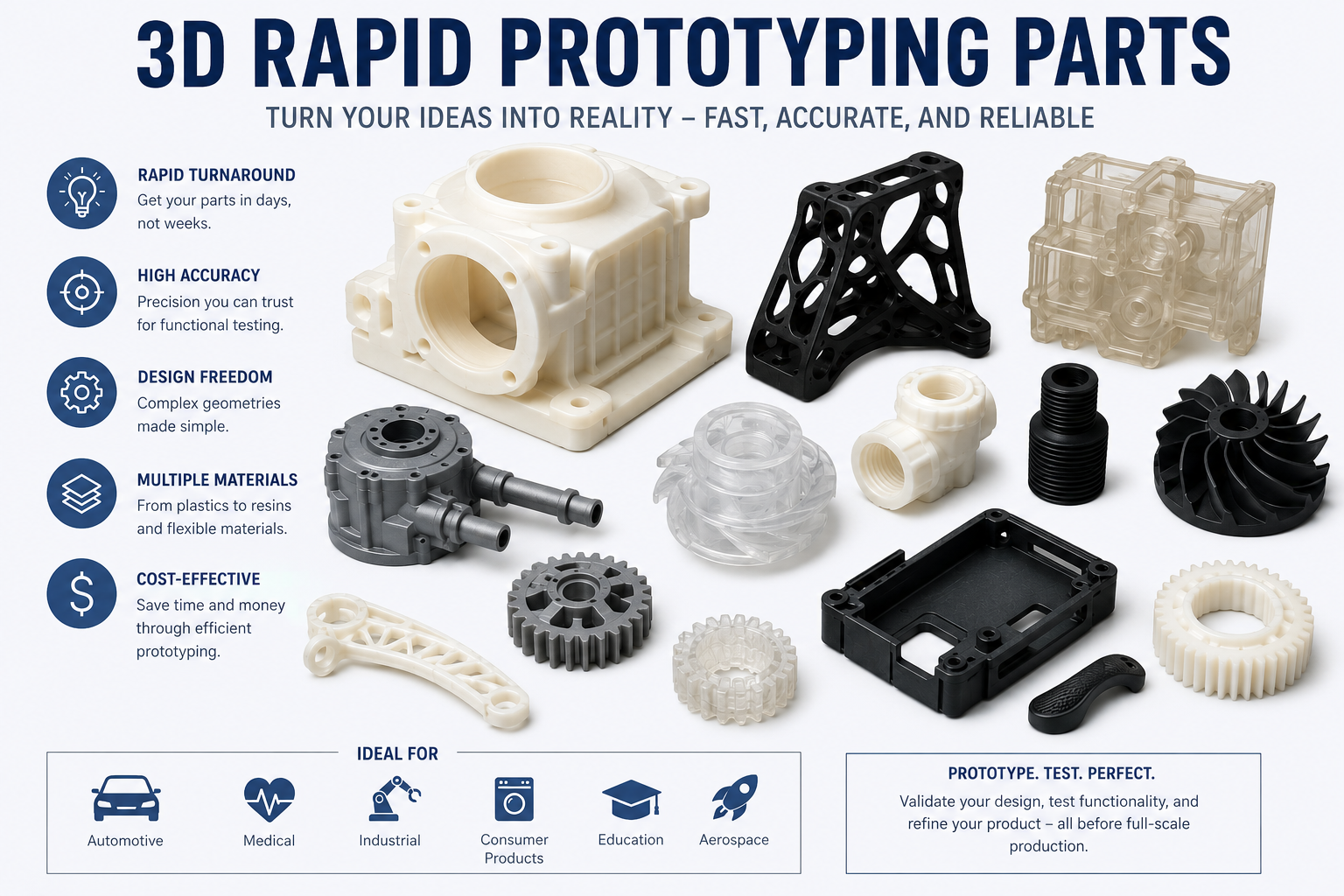
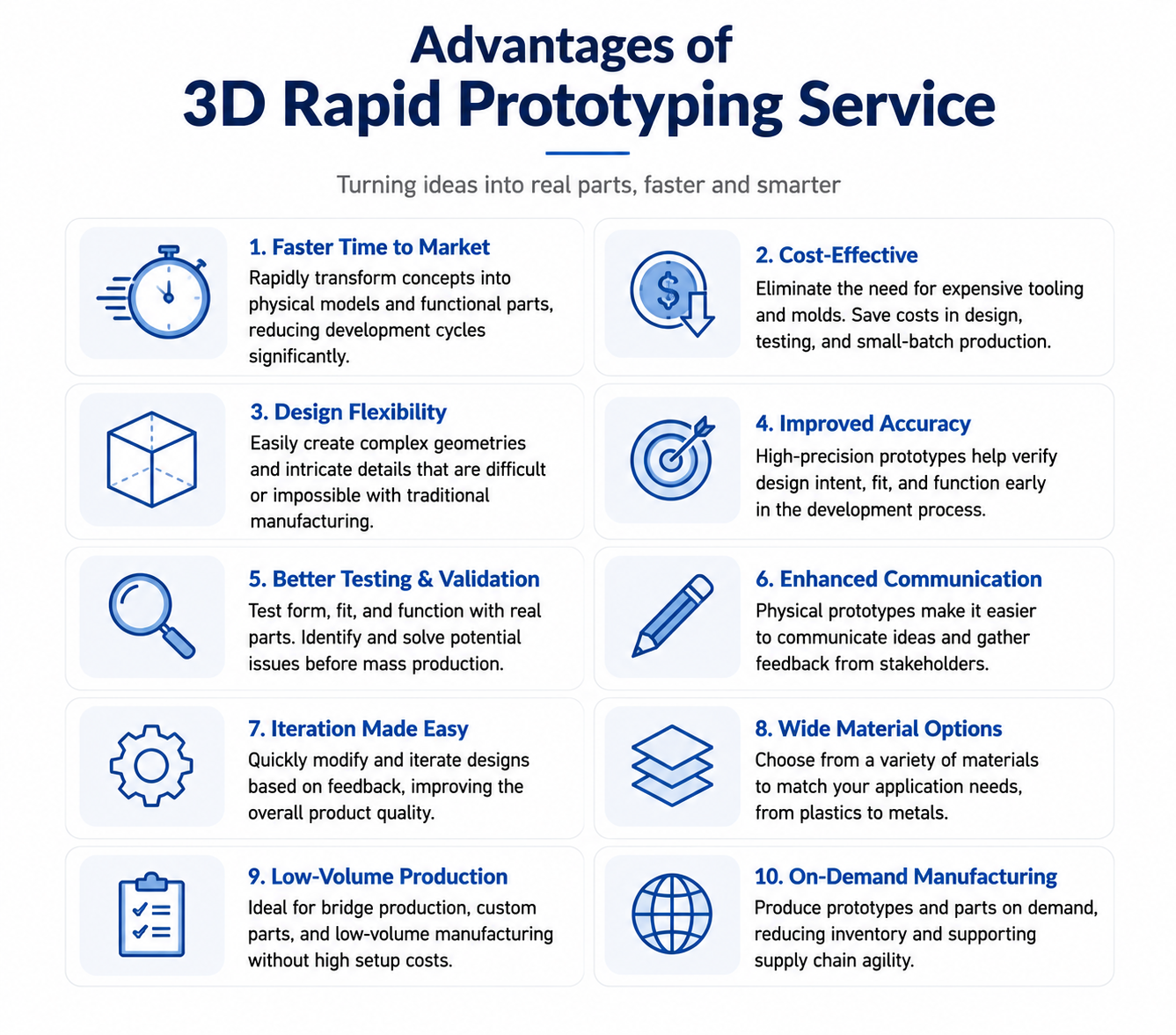
- Unparalleled speed: “Fast” is part of its name. From digital files to physical parts, it typically takes only hours or days, whereas traditional methods might take weeks. This drastically shortens product development cycles, meeting requirements that demand extremely short delivery times.
- Embracing complexity, designing with limitless freedom: this is the most disruptive advantage of 3D printing. Whether it’s an extremely complex internal structure, an integrated moving hinge, or a topology optimization form that traditional processes cannot achieve, for a 3D printer, the cost and time difference between manufacturing a complex part and manufacturing a simple cube is negligible. This is why 3D printing is being chosen by more and more people.
- It is extremely cost-effective, especially for complex parts and small batches: it requires no molds. In traditional manufacturing, mold making is a huge upfront investment. However, the cost per 3D-printed piece is independent of complexity, making it ideal for prototyping, small-batch production, and personalized customization.
- Efficient iteration and verification: Designers can print out multiple design versions within a day for physical comparison, assembly testing, and functional verification, thereby quickly identifying and correcting design defects and significantly improving the quality of the final product. This greatly enhances the compatibility of parts.
- Integrated manufacturing reduces assembly: complex components that were originally assembled from multiple parts can be directly printed into a complete unit, reducing assembly steps and improving product reliability and strength. It also saves on material waste.
Part Two: In-depth Exploration: Mainstream 3D Rapid Prototyping Technologies
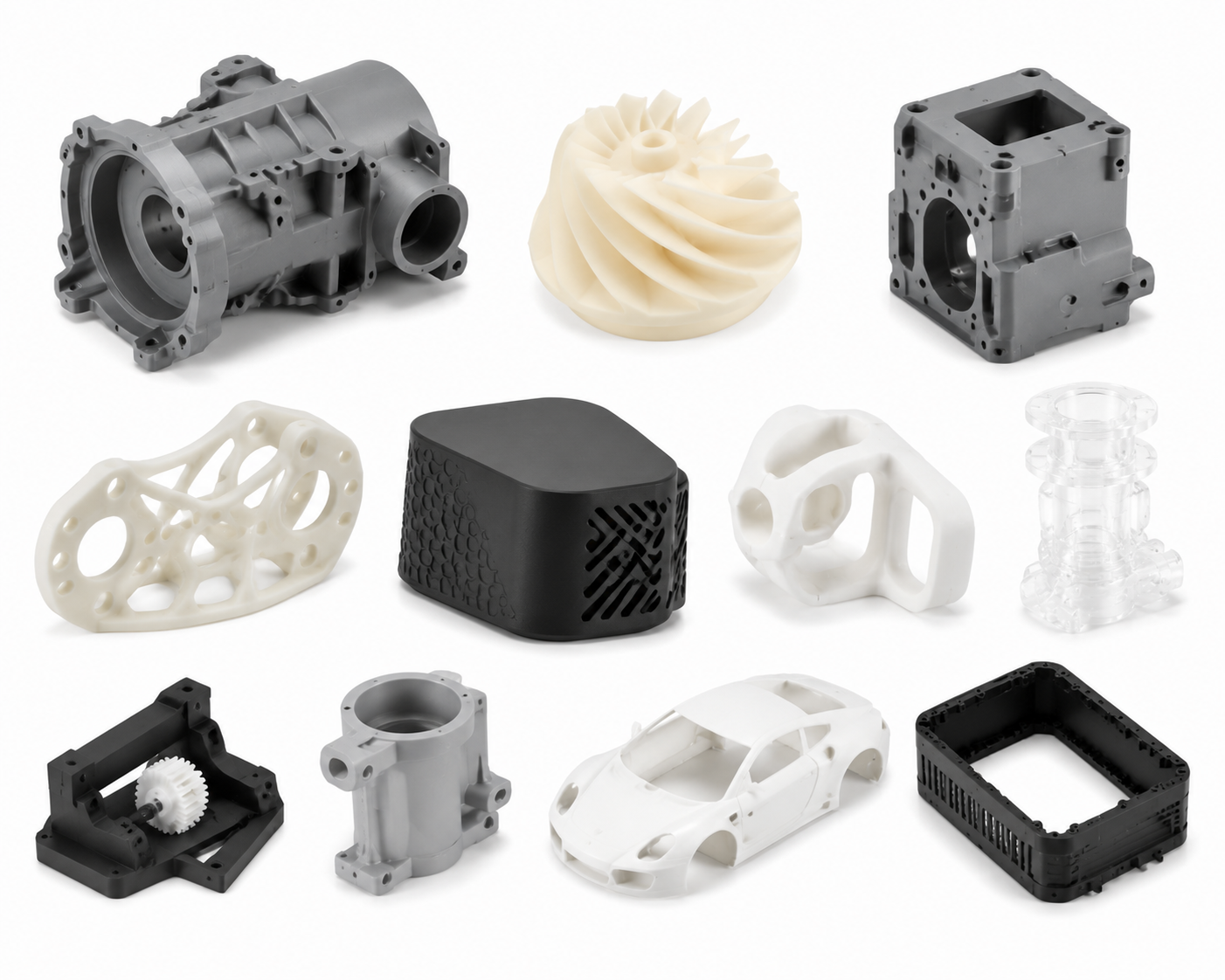
3D printing is not a single technology, but a family of technologies. Understanding the characteristics of different members can help you choose the solution that best suits your project.
Technology 1: SLA (Stereolithography) – A representative of high-precision surface quality
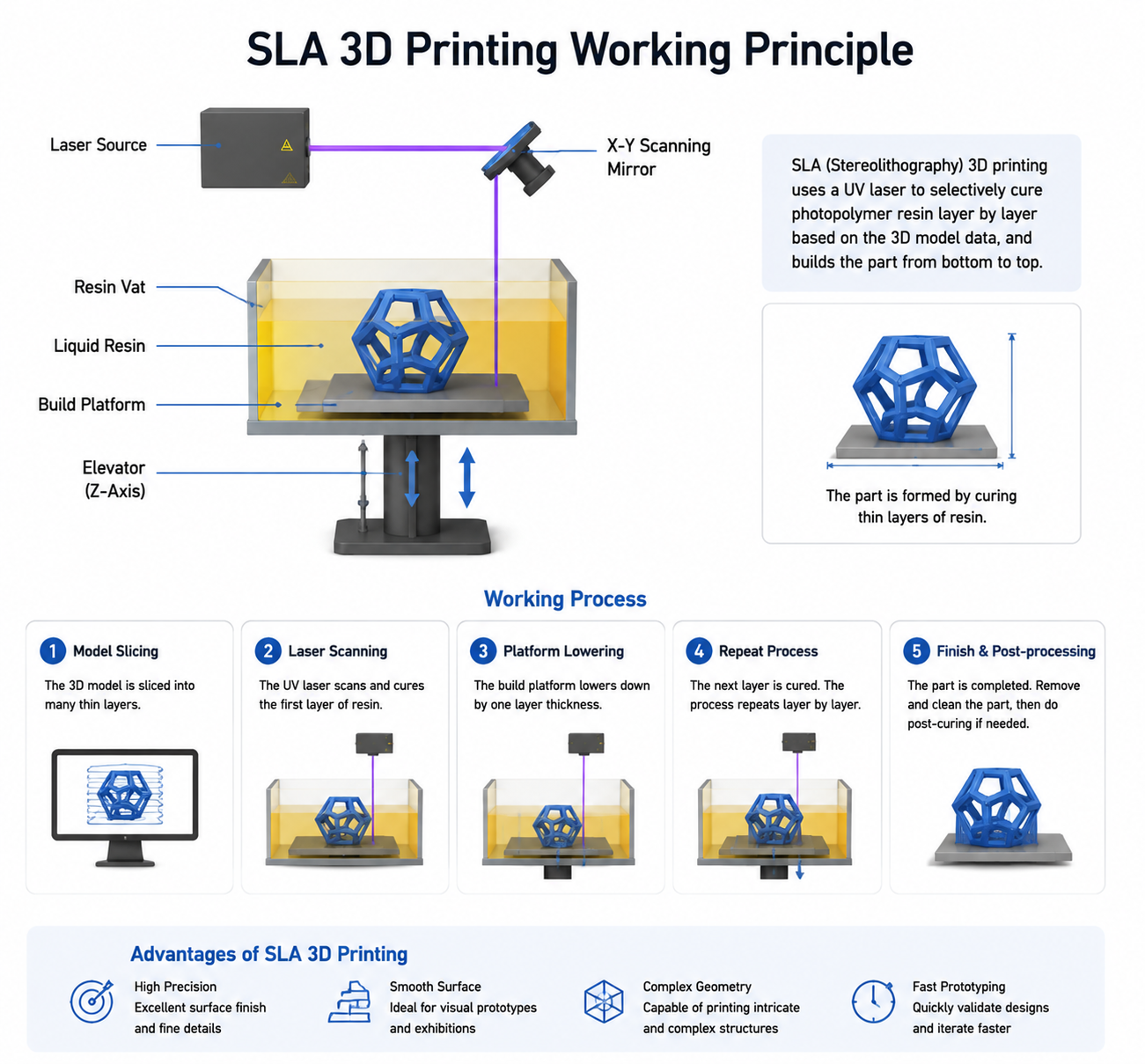
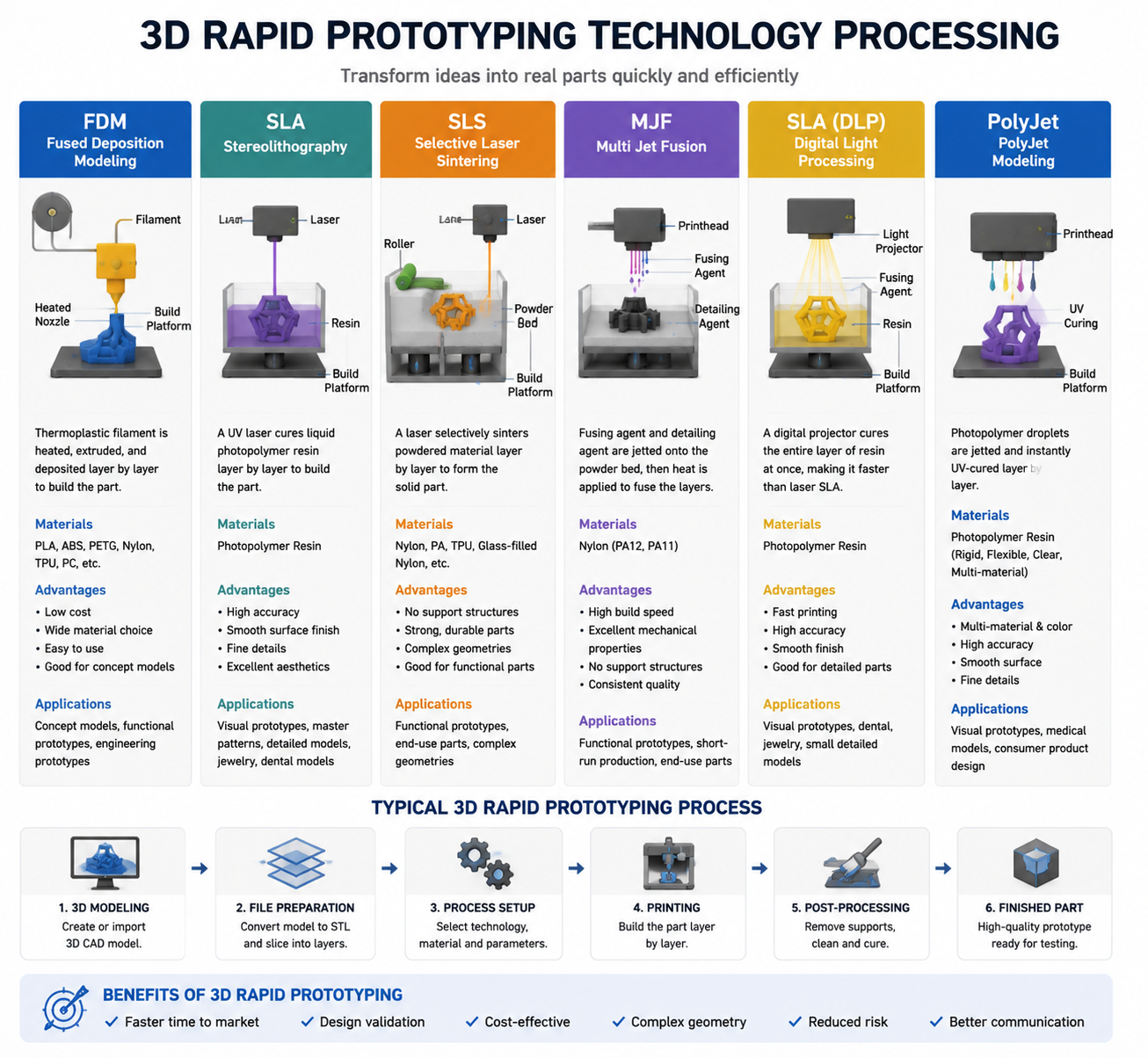
- Working Principle: Using an ultraviolet laser beam, the cross-sectional contour of the part is precisely scanned and irradiated in a tank containing liquid photosensitive resin. The irradiated resin instantly solidifies, forming a thin film. Then, a lifting platform descends one layer thickness, a scraper applies a new layer of resin, and the laser continues scanning and solidifying the next layer, repeating this cycle until the part is complete. The part is built layer by layer directly from CAD data into prototypes, investment casting models, tooling, and end-use components. Once the SLA printing process is complete, the SLA part is cleaned in a solution to remove any uncured resin residue from the surface. The cleaned part is then cured in an ultraviolet curing oven.
-
advantage :
- SLA prioritizes precision and accuracy, making it ideal for processes demanding high precision in shape, fit, and assembly. SLA parts typically have tolerances of less than 0.05 mm and offer the smoothest surface finish of any additive manufacturing process. Given its superior quality, SLA is particularly suitable for creating high-precision molds (such as injection molding, casting, and vacuum casting), functional prototypes, demonstration models, and for performing shape and fit checks. SLA is a very comprehensive technology applicable to any field where precision is paramount, capable of delivering exceptional detail.
- SLA also offers a speed advantage, especially when you need to create various functional prototypes or quickly manufacture molds. SLA perfectly combines speed and precision, making it an excellent choice for evaluating prototypes. Due to SLA’s precision advantage, the printed product is faithful to the final design, meaning you can identify and correct design flaws, conflicts, and potential large-scale production obstacles before starting production. For parts typically produced in small to medium batches using polypropylene or ABS, SLA offers comparable characteristics without the need for expensive and inefficient mold changeovers for customization or necessary tooling changes. SLA also enables lower material costs because unused resin remains in the barrel for later use in subsequent projects.
-
shortcoming:
- The materials are usually brittle and have poor weather resistance.
- Post-processing (such as cleaning and secondary curing) is required.
- Ideal applications: conceptual models, display models, high-precision jewelry prototypes, dental models.
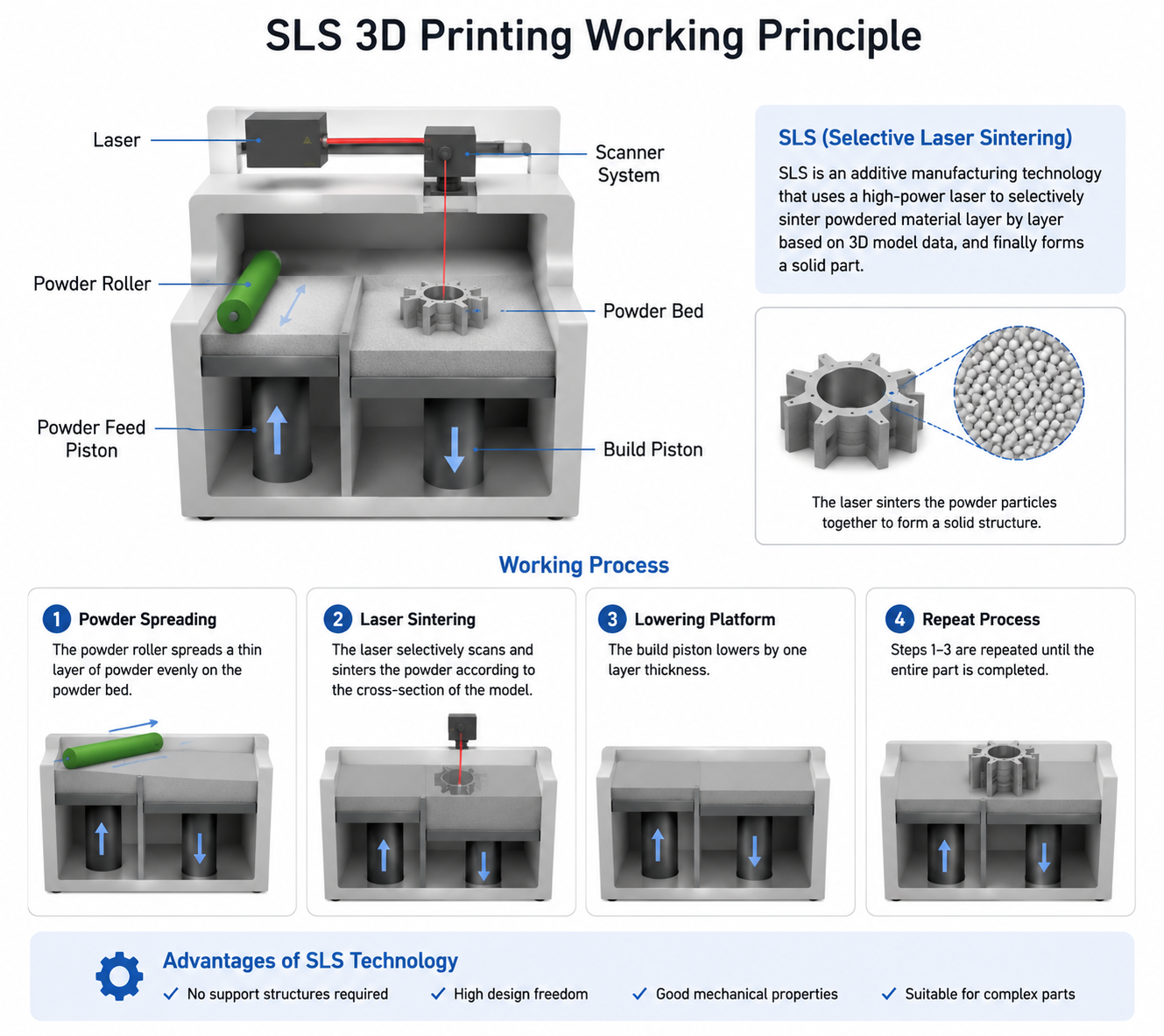
Technology 2: SLS (Selective Laser Sintering) – The King of Functionality and Complex Structures
- Working principle: A high-power laser beam is used to selectively sinter powder particles on a platform covered with thermoplastic powder such as nylon, causing them to fuse together to form a solid cross-section. After one layer is completed, the platform descends, powder is re-laid, and a new layer is sintered by the laser. The unsintered powder naturally becomes the support.
- advantage :
- It can create extremely complex geometries (such as interlocking and nested structures) without the need for a supporting structure.
- The finished product has good mechanical properties, similar to those of injection-molded parts.
- A variety of materials are available.
- shortcoming :
- The surface is relatively rough (with a grainy texture).
- The printing speed is relatively slow.
- Ideal applications: functional prototypes, piping components, durable housings, and small-batch end-use parts.
Technology 3: FDM (Fused Deposition Modeling) – The most popular and economical desktop option
- How it works: This is the most common desktop 3D printing technology. It melts thermoplastic filaments (such as PLA and ABS) through a heated nozzle, and then, like squeezing toothpaste, extrudes and deposits them onto a build platform along a pre-set path, layer by layer, to form an object.
- advantage :
- Machinery and materials are low.
- It is relatively simple to operate and has a wide variety of materials.
- shortcoming :
- The texture is obvious, and the surface quality is poor.
- The strength is anisotropic (weak in the Z-axis direction).
- A supporting structure is usually required.
- Ideal applications: basic proof of concept, education, simple functional testing, DIY projects.
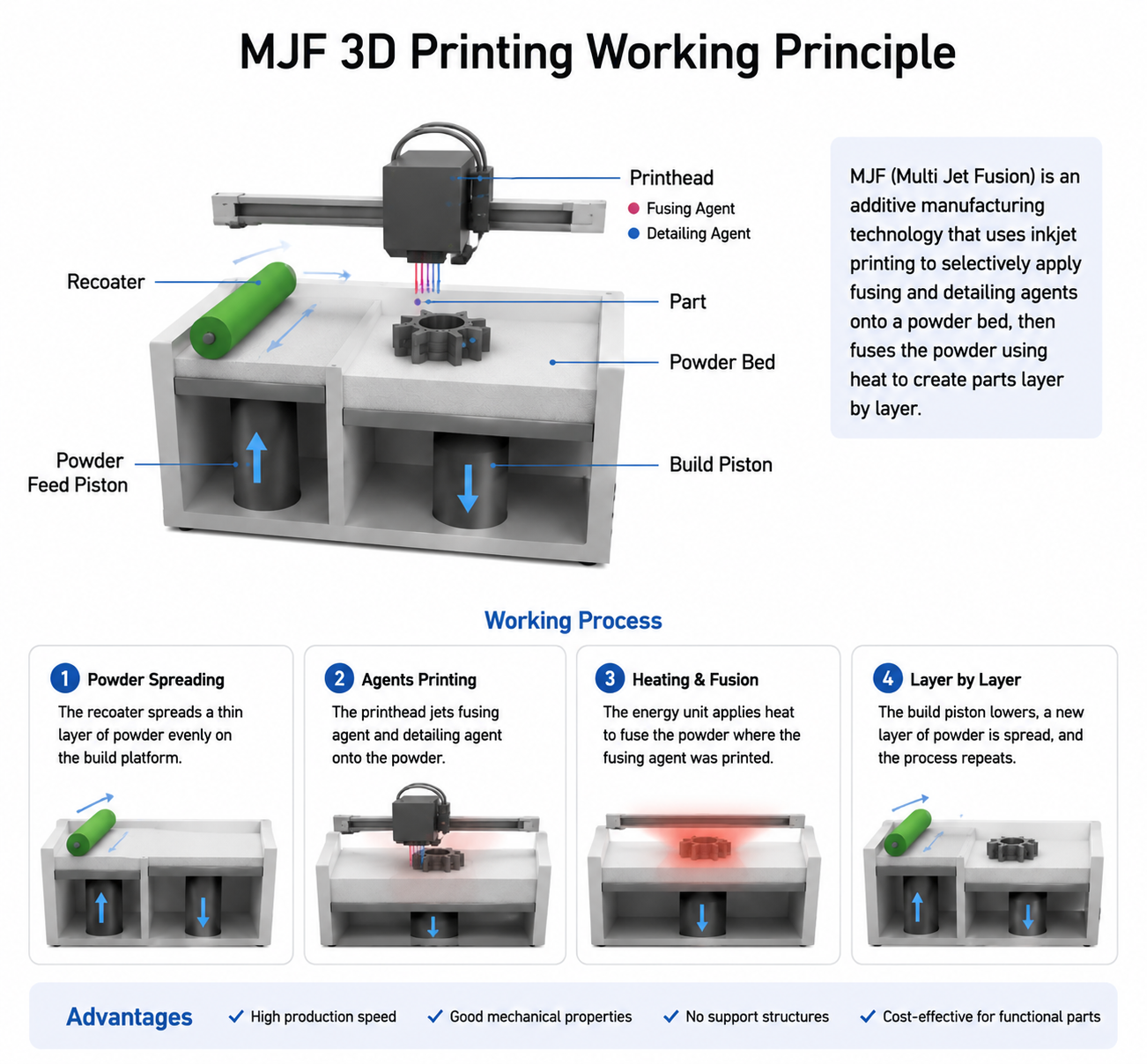
Technology 4: MJF (Multi-Jet Fusion) – A Rising Star in High-Efficiency Industrial Applications
- Working principle: Similar to SLS, it also uses nylon powder. However, unlike SLS, MJF uses an inkjet array to spray two agents onto a powder bed: a flux (at the location where shaping is needed) and a detailing agent (to improve surface detail and resolution). Then, an infrared energy source sweeps across the entire platform, causing the areas sprayed with the flux to fuse and solidify.
- advantage :
- It prints extremely fast because it uses surface printing, rather than point scanning like SLS.
- have isotropic mechanical properties and consistent strength.
- Surface quality and precision are superior to SLS.
- Ideal applications: small-batch production of functional parts, high-strength prototypes, and complex assemblies.
Technology 5: Metal 3D Printing (SLM/DMLS) – The Crown Jewel of High-End Manufacturing
- Working principle: Very similar to SLS, but using metal powder (such as titanium alloy, stainless steel, aluminum alloy). A high-energy laser beam completely melts (SLM) or sinters (DMLS) the metal powder to form a dense metal entity. The entire process must be carried out under an inert gas atmosphere.
- advantage :
- To manufacture completely dense metal parts with excellent mechanical properties.
- It can manufacture complex internal cooling channels and lightweight structures that are impossible to achieve with traditional machining methods (such as casting and CNC).
- shortcoming :
- The equipment and materials costs are extremely high.
- The post-processing is complex (requiring the removal of supports, hot isostatic pressing, etc.).
- Ideal applications: aerospace components, medical implants (such as artificial joints), high-performance automotive parts, and complex mold inserts (conformal cooling water channels).
Part Three: Powerful Application Scenarios of 3D Rapid Prototyping: Throughout the Entire Product Lifecycle
The value of 3D printing goes far beyond creating a beautiful model; it has permeated the entire product lifecycle, from concept to disposal.
-
Design and development phase :
- Conceptual model: Quickly transform CAD sketches into physical objects for initial discussions, form evaluation, and decision-making.
- Appearance Prototype: High-precision, smooth-surface models are created using technologies such as SLA for market research, photography, and trade show displays.
- Functional prototypes: Using SLS, MJF, or even metal printing, manufacture parts that can withstand real-world tests (such as heat, force, and fluid) to verify the feasibility of the design.
-
Manufacturing and production stages :
- Tooling and fixtures: Customized assembly fixtures and testing tooling for production lines to improve production efficiency and quality.
- Small-batch production: For products with low production volume, rapid iteration, or personalization, the final product can be directly manufactured using 3D printing, avoiding high mold costs.
- Customized tools: Providing fully personalized products (such as orthodontics, dentures, custom insoles, etc. ) for fields such as medical, dental, and sporting goods.
- Marketing and Sales Stages :
- Marketing Samples: Providing customers with readily available product samples enhances their confidence in purchasing.
- After-sales service and spare parts: Produce discontinued spare parts on demand to achieve “zero inventory” management, which is especially suitable for aerospace, antique car repair, and other fields.
Part 4: Why choose a professional 3D rapid prototyping service instead of buying your own printer?
While desktop 3D printers are already widespread, for enterprise applications, choosing a professional rapid prototyping service provider (like us) offers significant advantages:
- In terms of the breadth of technology and materials, we have a full range of industrial-grade equipment from SLA, SLS, and MJF to metal printing, and can provide hundreds of engineering materials (from high-toughness nylon to biocompatible resins, from high-temperature materials to metals) to match you with the optimal “technology-materials” combination.
- Unparalleled quality and precision: Industrial-grade equipment far surpasses desktop equipment in stability, repeatability, and component strength. Our rigorous quality control processes ensure that every part you receive meets your expectations, and we are willing to provide you with free samples so you can see the quality of our products before making a purchase.
- Extensive experience and professional consultation: Our team of engineers safeguards your design process. We offer professional Design for 3D Printing (DFAM) consultation to optimize your models to fully leverage the advantages of 3D printing, avoid potential design pitfalls, and save you time and costs.
- Economies of scale and efficiency: For large-scale prototyping needs, our centralized print farms can complete the task efficiently, with unit cost and delivery speed far exceeding those of small-scale internal printing.
- One-stop post-processing service: We provide a full range of post-processing services, including support removal, sanding, painting, dyeing, electroplating, and penetration, delivering ready-to-use finished products to you.
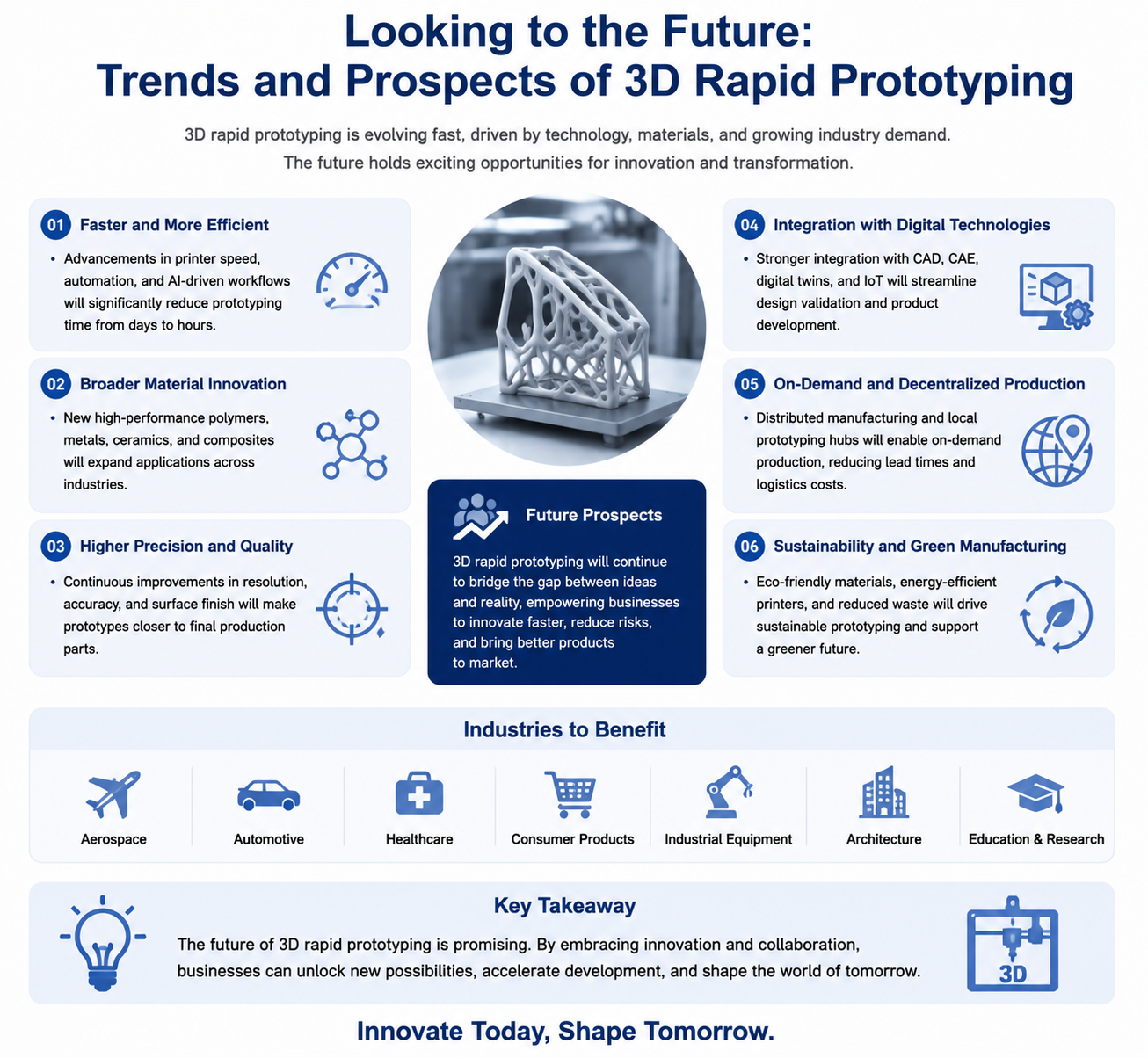
Part 5: Looking to the Future: Trends and Prospects of 3D Rapid Prototyping
3D printing technology is still evolving rapidly, and its future possibilities are beyond imagination:
- Mass customization: From medical implants to fashion items, tailoring to each individual will become the norm.
- Breakthroughs in new materials: More high-performance composite materials, self-healing materials, and conductive materials will be developed, expanding the boundaries of applications.
- The combination of AI and generative design: Artificial intelligence will automatically generate optimal lightweight structures, which will be manufactured directly by 3D printers.
- Hybrid manufacturing combines traditional technologies such as 3D printing and CNC machining on the same equipment, taking advantage of each other’s strengths.
- Sustainable manufacturing: The “on-demand production” characteristic of 3D printing greatly reduces material waste and inventory waste, which is in line with the concept of green manufacturing.
Conclusion: Let innovation no longer wait.
3D rapid prototyping technology has evolved from a novel concept into a core driving force for innovation in modern industry. It has democratized manufacturing capabilities, enabling businesses and individuals of all sizes to turn ideas into reality at an affordable cost and unprecedented speed.
In an increasingly competitive market, speed is life, and innovation is oxygen. Choosing a strong, reliable, and experienced rapid prototyping partner means gaining a sharp weapon to gain the upper hand at every critical stage of product development.
We are not just a provider of 3D printing services, but also an accelerator for your innovation journey. From the moment you upload your CAD files, all our expertise and advanced equipment will serve you, ensuring your ideas are presented to you with the fastest speed and the highest quality.
Contact us now for a free expert design analysis and instant quote. Let’s break the boundaries of imagination and create the next miracle together.