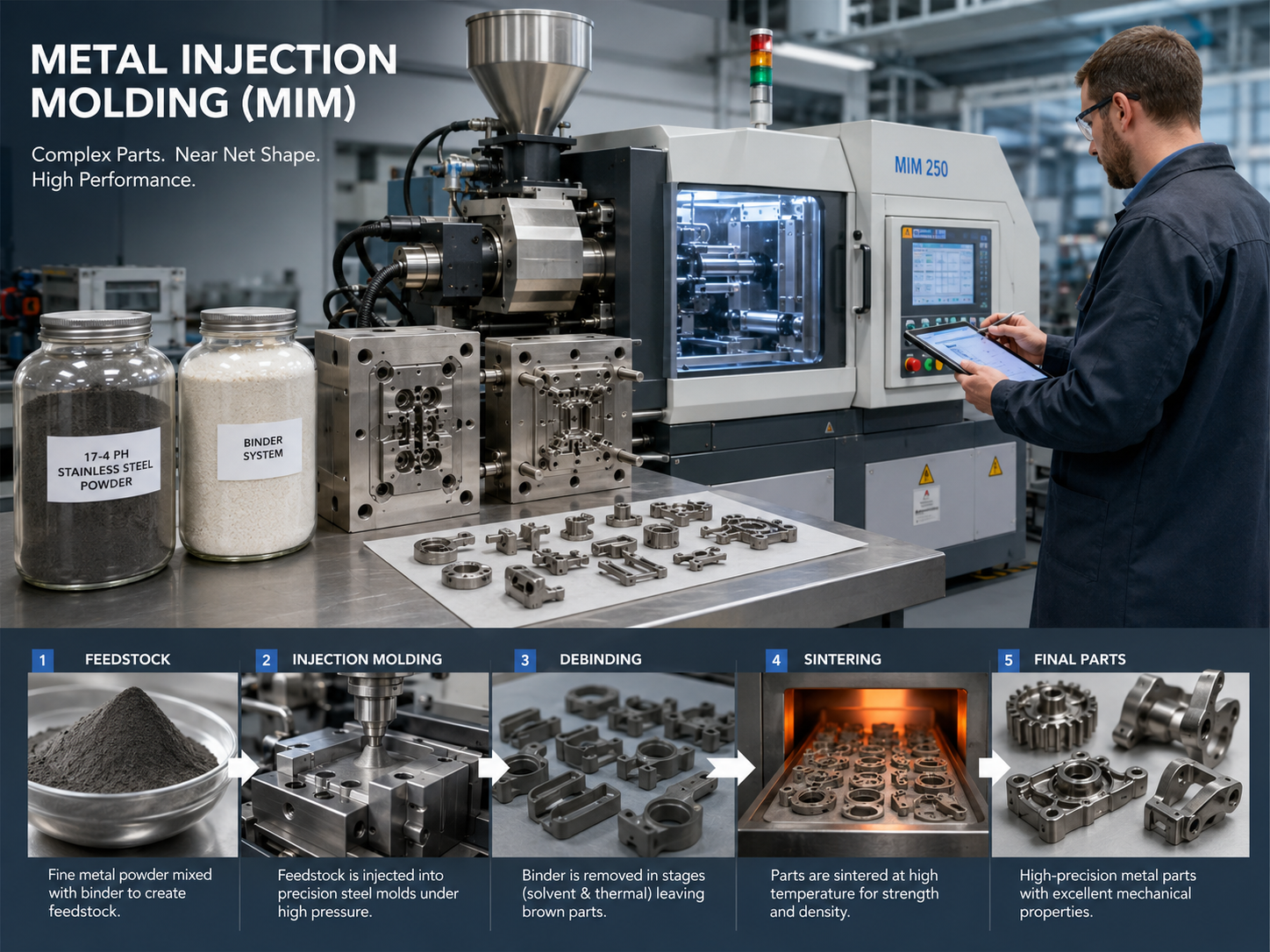
Metal Injection Molding (MIM) is an advanced near-net-shape manufacturing technology that deeply integrates powder metallurgy and plastic injection molding. With its core advantage of being able to achieve large-scale and high-precision production of complex metal parts, it has become an important choice to replace traditional cutting, casting, and forging processes in modern manufacturing.
This technology directly forms metal products with high dimensional accuracy and complex structures by mixing metal powder with binders to make feed, and then through injection molding, deglazing, sintering, and other processes.
What is Metal Injection Molding
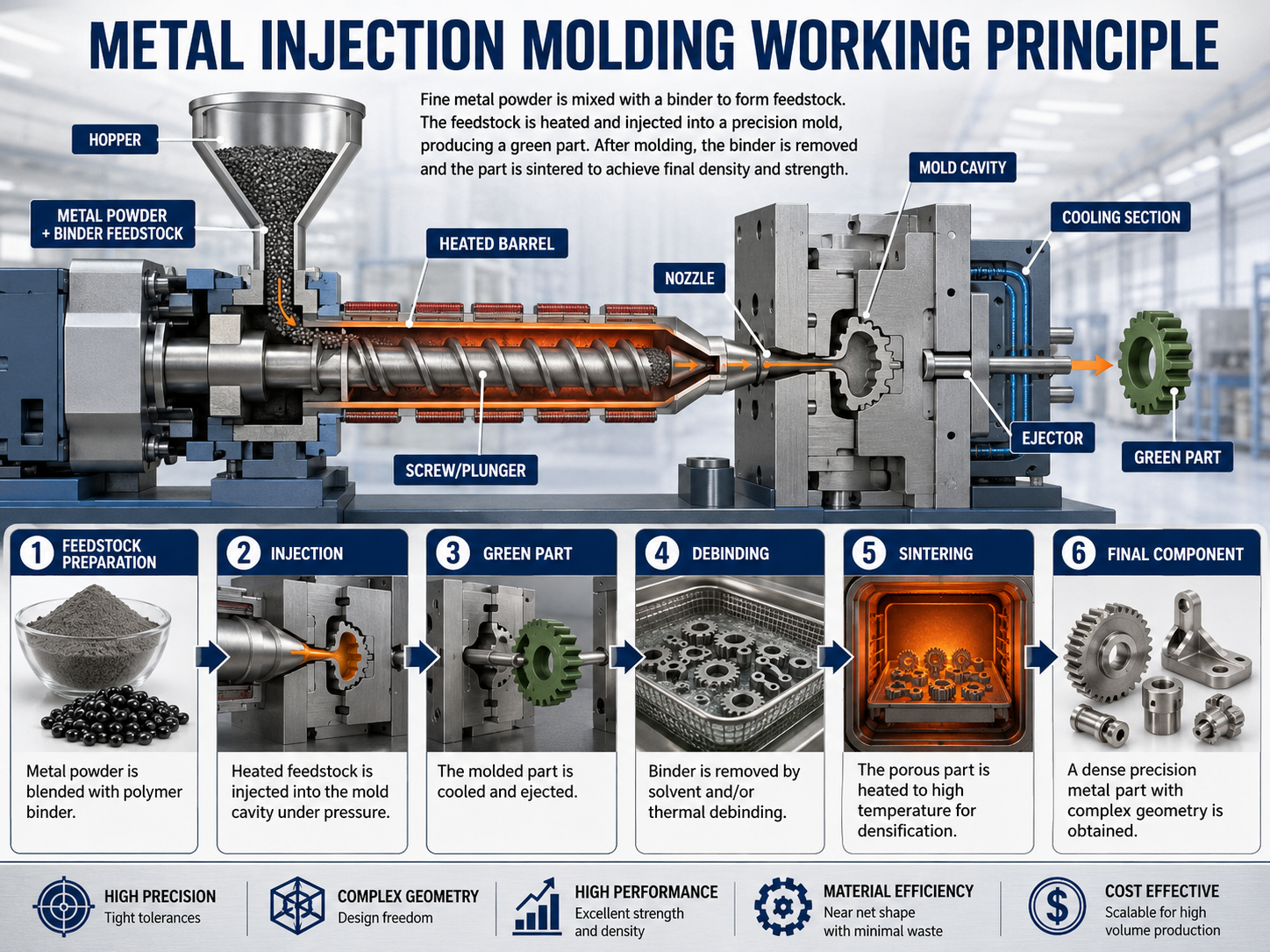
The core of Metal Injection Molding (MIM) is to mix ultrafine metal powder with a thermoplastic binder in a specific proportion, and then, through mixing and granulation, produce a feed with good fluidity and plasticity. The feed is injected into the cavity of a precision mold under high pressure to form a green body by simulating the plastic injection molding process, and then the binder in the green body is removed through a deglazing process.
Finally, through high-temperature sintering, the metal powder particles undergo metallurgical bonding and densification, ultimately obtaining metal components with high precision and complex shapes close to the theoretical density.
The essence of the MIM process is to achieve mass production of metal products through plastic molding technology, combining the metal material properties of powder metallurgy with the process flexibility of plastic injection molding. Its core features are reflected in three aspects:
- High forming freedom: It can form complex three-dimensional structures with side holes, internal threads, cross holes, and thin walls (> 0.3 mm), and can achieve multi-component integrated forming, reducing subsequent assembly processes.
- High dimensional accuracy: The dimensional tolerance of the finished product can be controlled within ±0.3%, and the surface roughness Ra is ≤1.6μm. It belongs to the near-net-shape forming process, significantly reducing the cost of fine processing.
- Strong material compatibility: In response to the demands of industrial mass production, basic metal materials such as stainless steel, carbon steel, copper, and copper alloys can all achieve mature MIM process compatibility, and the mechanical properties of the finished products can be comparable to those of forgings.
Working principle of the MIM process
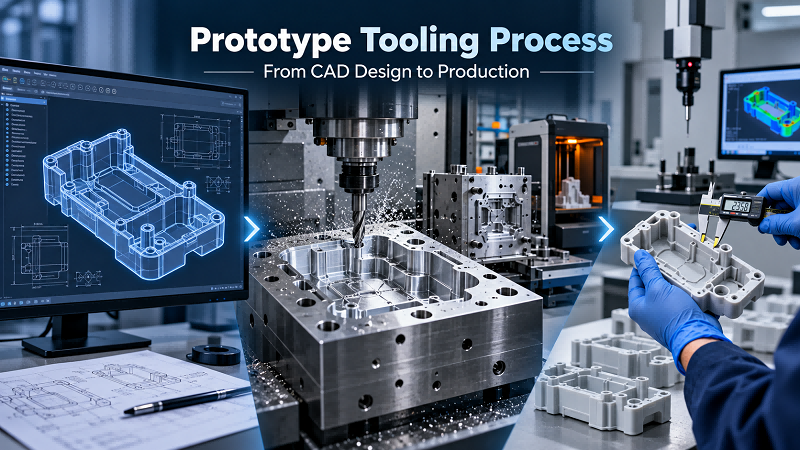
The whole production process of MIM includes five key steps: material preparation, injection molding, degreasing, sintering, and post-treatment. Good control of process settings decides the size, quality, and surface finish of the final product.
The core logic of the entire process is “forming metal powder through binder, and then densifying the metal powder through deglazing and sintering”. For commonly used materials such as stainless steel, carbon steel, and copper, the process parameters of each step have been standardized. The specific working principle and key operations are as follows:
(1) Feeding preparation
Feed preparation mainly mixes very small metal powders (stainless steel, carbon steel, copper) and binders together. We make them into small grains. These grains are stable, easy to shape, and even. They provide qualified materials for injection molding.
1. Raw material percentage:
Metal powder is 75%-85% by volume. Binder is 15%-25%.
The binder is usually composed of base materials such as polyethylene (PE) and polypropylene (PP), phthalate plasticizers, and stearic acid lubricants. The ratio is adjusted according to the characteristics of the metal powder.
2. Heating and mixing:
Put the metal powder and binder into a mixer. Heat and mix them at 150-200℃. The binder melts fully and covers the powder evenly. This forms a uniform mixture and stops powder from clumping.
3. Granulation and screening:
Cool the mixed molten material. Then crush and screen it. Make granular feeds of 2- 5 mm. This makes sure the injection machine works well.
(2) Injection molding
The core of injection molding is to plasticize the feed through high temperature and high pressure and fill the mold cavity. After cooling and solidification, the mold is removed to obtain the green body, which is suitable for materials such as stainless steel, carbon steel, and copper.
1. Feeding plasticization:
Add the granular feed to the injection machine. Heat it between 160℃ and 220℃. It will melt and flow easily.
2. High-pressure injection:
The liquid material is injected into the mold under a high pressure of 50-200 MPa. The mold needs to be designed in advance based on the sintering shrinkage rate of the metal material, with a reserved shrinkage allowance.
3. Cooling and demolding:
The melt cools to room temperature. The binder hardens and forms the shape. Cooling takes at least 3 minutes. Quick cooling may cause cracks.
(3) Degreasing
Degreasing is the process of removing the binder from the green body to obtain a porous, degreased green body with certain strength, preparing for subsequent sintering.
The core difficulty of deglazing lies in controlling the evaporation rate of the binder. If it disappears too fast, pressure will form inside the green body. This leads to cracks and bubbles. So we need to take it away slowly. In industry, stainless steel, carbon steel, and copper are usually used with a mix of solvent degreasing and thermal degreasing.
1. Solvent degreasing:
Soak the green body in ethanol or acetone. This takes away the soluble parts of the binder. It makes small pores. These pores work as channels for hot degreasing. The remaining binder must be under 10%.
2. Hot degreasing:
Place the pre-treated green body in a furnace. Heat it slowly to 200-400℃. The heating speed must be 5℃ per minute or lower. The remaining binder will turn into gas and disappear. The whole process uses a nitrogen atmosphere. This protects carbon steel and copper from oxidation.
3. Post-degreasing inspection:
Test the amount of remaining binder. It must not be over 0.5%. Check if the part is in good shape. Get rid of unqualified products. They will hurt the sintering result.
(4) Sintering
The core of sintering is to place the degreased blank in a high-temperature sintering furnace and heat it to 85%-90% of the melting point of the metal material, causing the metal powder particles to undergo atomic diffusion, metallurgical bonding, and recrystallization, gradually closing the pores to achieve densification, and ultimately obtaining a metal product with a density close to the theoretical level.
For the three commonly used materials of stainless steel, carbon steel, and copper, clear standards for sintering process parameters have been formed. The specific key operations are as follows:
1. Sintering atmosphere:
For stainless steel, a hydrogen or decomposed ammonia atmosphere (anti-oxidation) is used; for carbon steel, a mixed atmosphere of nitrogen and hydrogen is adopted; for copper, a pure nitrogen atmosphere is used to prevent material oxidation or the formation of brittle compounds at high temperatures.
2. Core parameters:
Sintering temperature for stainless steel: 1300-1350℃, holding for 2-3 hours; sintering temperature for carbon steel: 1250-1300℃, holding for 1.5-2.5 hours; sintering temperature for copper: 850-950℃, holding for 1-2 hours. The heating rate is controlled at 2-5℃/min.
3. Densification effect:
After sintering, the density of stainless steel, carbon steel, and copper products can reach 95%-98% (close to the theoretical density), with uniform microstructure and mechanical properties comparable to those of forgings.
(5) Post-processing
The core of post-treatment is to make precision corrections and performance improvements to the sintered finished products based on the application requirements of the products, to meet the final usage requirements. For stainless steel, carbon steel, and copper products, the post-treatment methods mainly include heat treatment, surface treatment, and precision machining, and the process adaptability is strong.
1. Heat treatment:
We heat and process carbon steel with quenching and tempering. This increases its hardness and wear resistance. We treat stainless steel with solution aging. This boosts its corrosion resistance and strength. We anneal copper to make it more plastic and improve its electrical conductivity.
2. Surface treatment:
We do different surface treatments according to needs. These include polishing (Ra≤0.8μm), sandblasting, and plating zinc or nickel to resist corrosion. We use oxidation treatment to protect copper products.
3. Precision machining:
We do a little cutting on high-precision parts like threaded holes and positioning holes. We control the size tolerance within ±0.01mm. This meets the assembly needs.
4. Shaping:
We use cold shaping on products that change shape a little after sintering. This brings back their correct size.
The core material for MIM
- Metal Injection Molding uses these materials:
- Stainless Steel (SS): It has great corrosion resistance and mechanical strength. It is widely used in automotive, medical, and aerospace industries. These industries need products that are durable and work well in harsh environments.
- Carbon Steel (CS): It is used for parts that need high strength and hardness. It is low-cost and useful. It is used in many industries, like gears, fasteners, and automotive parts.
- Cobalt-Chromium (Co-Cr): It is strong, wear-resistant, and corrosion-resistant. It is widely used in medical implants and surgical tools. These areas need products with very high reliability.
- M2 Tool Steel: M2 tool steel works well in MIM for making strong tools and molds. It has high hardness, good toughness, and great wear resistance. It is widely used for cutting tools and industrial parts under high stress.
- Titanium (Ti): Titanium is popular in MIM for its light weight, high strength, and corrosion resistance. Debinding and sintering must be controlled carefully to protect their properties. It is widely used in aerospace, medical, and sporting goods industries.
- Copper: Copper can be processed with MIM technology. But it needs very precise control of the sintering atmosphere. So its application is more limited than steel and nickel alloys.
- Nickel Alloys (Inconel): Nickel alloys are good at high temperatures and high strength. They are widely used in aerospace, power, and chemical fields. These industries often work under extreme conditions.
- 6061 Aluminum Alloy: 6061 aluminum can be used with MIM with special technology. But this method is not common. Aluminum needs special sintering conditions.
- 7075 Aluminum Alloy: 7075 aluminum can be produced by MIM under special conditions. But it is not widely applied. It needs non-standard sintering settings.
- Iron-Carbon Alloys: Iron-carbon alloys produce parts with high strength and good machinability. They are used in automotive and general industries. They make parts like valves and gears.
The advantages and disadvantages of MIM
The MIM process, with its advantages of mature technology, wide adaptability, and high mass production efficiency, has become the mainstream technology for the production of small and complex metal parts. However, due to the limitations of raw material characteristics, process links, and equipment requirements, it still has certain limitations.
Both its advantages and disadvantages are highly correlated with the production scenarios of large quantities, small sizes, and complex structures. In such scenarios, its advantages are significant, while its limitations can be gradually overcome through process optimization and standardized control, as follows:
(1) Advantages
-
It has a high degree of molding freedom and can achieve integrated mass production of complex structures
This is the core advantage of the MIM process. It can form complex structures that are difficult to process by traditional cutting, casting, and forging, including small metal parts with side holes, internal threads, cross holes, and thin walls (> 0.3 mm), and can achieve multi-component integrated forming, reducing subsequent assembly processes.
For instance, the complex snap-on structure of stainless steel electronic connectors is formed in one go through the MIM process, which increases production efficiency by more than 50% compared with the traditional assembly process.
-
It has a high material utilization rate and a significant cost advantage in mass production
The material utilization rate of the MIM process can reach over 98%, which is much higher than that of traditional cutting processing (30%-50%). Especially for mass-produced materials such as carbon steel, stainless steel, and copper, it significantly reduces raw material waste.
Meanwhile, this process can achieve automated mass production. The application of multi-cavity molds significantly reduces the cost per piece as the output increases. For products with an annual output of over 100,000 pieces, the cost is 30% to 50% lower than that of precision cutting processing.
-
The core material technology is mature, and the performance of the finished product is stable and adjustable
The MIM process for the three core materials of stainless steel, carbon steel, and copper has been fully standardized. The parameters of each link, such as powder preparation, feeding and mixing, deglazing, and sintering, are clear, and the yield of finished products can reach over 95%.
Moreover, the performance of the finished products can be regulated through heat treatment. For instance, the hardness of carbon steel is significantly enhanced after quenching and tempering, the corrosion resistance of stainless steel is improved after solution aging, and the plasticity and electrical conductivity of copper are optimized after annealing, meeting the performance requirements of different fields.
-
High-dimensional accuracy and near-net forming reduce fine machining
The dimensional tolerance of the finished product can be controlled within ±0.3%, and the surface roughness Ra is < 1.6 μm. For stainless steel, carbon steel, and copper products, only a small amount of fine processing is required for high-precision parts, or even no processing is needed at all, significantly reducing the cost of fine processing.
In contrast, the tolerance of traditional metal die-casting is ±1%-2%, which requires a large number of fine processing procedures.
-
The equipment and process have strong adaptability and are easy to achieve production line upgrades
MIM production equipment can be slightly modified based on plastic injection molding equipment, and the process parameters for stainless steel, carbon steel, and copper do not need to be significantly adjusted. Traditional hardware processing enterprises can quickly upgrade their production lines with low investment costs and quick returns.
(2) Disadvantages
There are limitations on the product size and wall thickness.
-
Due to the limitations of injection molding equipment and sintering furnaces, the MIM process is suitable for manufacturing small, thin-walled metal parts. Generally, the maximum size of the product is < 100 mm, the weight is < 50 g, and the wall thickness is> 0.3 mm.
For large-sized (> 200mm) and thick-walled (> 10mm) stainless steel, carbon steel, and copper products, defects such as uneven sintering, low density, and deformation are prone to occur, making it difficult to ensure consistent performance.
-
The deglazing and sintering cycle is long, and the overall production efficiency is lower than that of plastic injection molding
The deglazing cycle of the MIM process is usually 8 to 24 hours, and the sintering cycle is 1 to 3 hours, which is much longer than that of plastic injection molding (several seconds to several minutes).
Even for copper products with relatively low sintering temperatures, the overall process cycle is still longer than that of traditional die-casting, which, to some extent, affects production efficiency.
-
The sintering shrinkage rate is large, and it is difficult to control the size
The sintering shrinkage rate of MIM products made of stainless steel, carbon steel, and copper is 14%-20%, which is much higher than that of metal die-casting (< 5%). Even the slightest fluctuation in the sintering shrinkage rate can lead to dimensional deviations in the finished products.
Therefore, it is necessary to precisely control multiple links such as powder characteristics, feeding uniformity, and sintering temperature, which places high demands on process control.
-
The mold cost is high, making it suitable for mass production
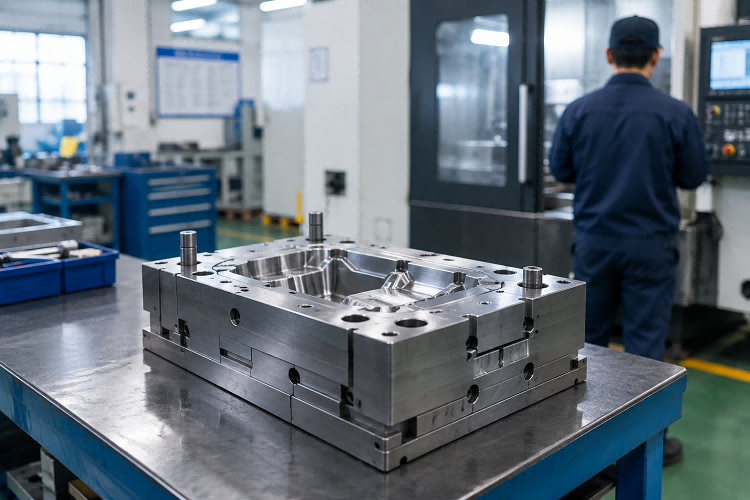
The molds for the MIM process are precision molds that need to be designed separately based on the sintering shrinkage rate of different materials. The mold materials are usually high-quality mold steel, with high processing accuracy requirements. The mold development cost is high, and the cycle is long (1-2 months).
For small-batch production with an annual output of less than 10,000 pieces, the cost of molds is allocated to each individual product, which will lead to a relatively high total cost.
Factors affecting the performance of MIM
The product performance of MIM is comprehensively influenced by four dimensions of factors: raw material characteristics, process parameters, equipment precision, and process control. The specific core influencing factors and action mechanisms of the four dimensions are as follows:
(1) Raw material characteristics
The characteristics of raw materials include those of metal powders and binders. Among them, the characteristics of metal powders are the most crucial influencing factors, while the characteristics of binders affect the stability of the forming process.
1. Metal powder has several key features:
particle size, shape, oxygen content, and carbon content for carbon steel.
If particles are too big, the feed will not flow well, and the sintered product will not be dense.
Too much oxygen will create hard impurities during sintering. It makes the product less strong and tough.
If the carbon content in carbon steel is wrong, the hardness after heat treatment will not be stable.
2. Binder characteristics:
The formula, flowability, and removability of the binder affect the feed, the green body, and the deglazing result.
If there is too little plasticizer, the feed becomes hard. It can easily block the mold during injection. Too much lubricant makes the green body weak. It breaks easily when we take it out of the mold. Leftover binder causes holes and bubbles after sintering.
(2) Process parameters
The main process settings of MIM are injection, deglazing, and sintering. Different materials have their own control ranges. We must keep the error within ±5%.
1. Injection molding parameters:
Temperature, pressure, and holding time affect the density and quality of the green body. Low temperature makes the material fill the mold poorly. Low pressure causes holes and dents in the green body. Short holding time creates inner stress. The part will easily change shape after sintering.
2. Degreasing parameters:
Degreasing rate, degreasing temperature, and degreasing atmosphere are the key. If the temperature rises too much, the binder evaporates fast. This makes the green body crack and bubble. Degreasing in air can oxidize stainless steel, carbon steel, and copper powder. This will affect the sintering result.
3. Sintering parameters:
Sintering temperature, holding time, and atmosphere are the key factors. They decide the density and strength of the final product.
Low temperature leads to insufficient atomic diffusion and low density. Excessively high temperatures lead to grain growth and a decrease in toughness. If the sintering atmosphere is wrong, the metal may oxidize or form brittle materials.
(3) Equipment accuracy
The MIM process needs high‑accuracy and stable equipment. Errors in the equipment will change the process parameters. This will influence the quality of the products. Key equipment includes injection machines, degreasing furnaces, and sintering furnaces.
1. Injection molding machine:
The pressure control accuracy and temperature control accuracy of the screw directly affect the uniformity of plasticization of the feeding.
2. Sintering furnace:
Even temperature and accurate atmosphere control are very important.
3. Testing equipment:
Precise testing machines affect the correctness of material and product tests. They give useful data for improving the production process.
The applications of MIM technology
The MIM process, with its advantages of mature technology, controllable cost, and high mass production efficiency, has been widely applied in multiple industrial fields such as consumer electronics, automotive manufacturing, hardware tools, electronic and electrical appliances, general machinery, and medical devices.
(1) Consumer electronics
Consumer electronics is the most mature application field of MIM technology. The core demands are precision, miniaturization, corrosion resistance, and good appearance. The products are mainly micro complex parts with dimensions ranging from 1 to 10mm. Typical products include SIM card holders, camera brackets, Type-C interface components, etc.
(2) Automotive manufacturing
Automobile manufacturing is an important application field of MIM technology. The core requirements are high strength, wear resistance, high temperature resistance, electrical conductivity, and stable batch production. The products cover small precision parts for automotive power systems, electronic systems, and safety systems, such as ABS valve bodies, battery connectors, and precision gears for electronic control systems.
(3) Hardware tools
The field of hardware tools is the core application scenario of the carbon steel MIM process. The core demands are low cost, high strength, and wear resistance. The products are mainly small tool accessories, such as scissors rotating shafts, wrench clips, utility knife blade fasteners, etc. There are no special requirements for corrosion resistance.
(4) Electronics and electrical engineering
The core demands in the field of electronics and electrical engineering are high electrical conductivity, high thermal conductivity, and precision. Applications include connector terminals, transformer cores, heat sinks, etc.
(5) Medical device
The medical device field has extremely high requirements for corrosion resistance, biocompatibility, and precision of products. It is the core application scenario of the 316L stainless steel MIM process, such as minimally invasive surgical instrument forceps, hemostatic clips, dental instrument accessories, etc.
Comparison between MIM and other types of injection molding
| Comparison dimension | MIM | Plastic injection molding | Metal die-casting forming |
| Forming material | Stainless steel/carbon steel/copper ultrafine powder + binder | Thermoplastic/thermosetting plastics | Mainly molten aluminum alloy/zinc alloy/magnesium alloy |
| Forming accuracy | High, with a tolerance within ±0.3%, and a smooth surface | High, tolerance ±0.1%-0.5%, easy to create fine textures | Medium, tolerance ±1%-2%, requires subsequent finishing |
| Forming complexity | It can be used to make complex and small structures such as thin-walled, micro-perforated, and internally threaded ones | It can be used for complex structures, and the draft Angle needs to be considered | Suitable for simple structures and difficult to form fine and complex features |
| Product performance | Metal properties: high strength, heat resistance, corrosion resistance/electrical conductivity | It is lightweight and insulating, but has poor strength and temperature resistance | Metallic properties: Medium strength, with a few micro-pore defects |
| Material utilization rate | Over 98%, nearly net formed, with very little waste | More than 95% of the scraps can be directly recycled | 80% to 90%, with a lot of flash on the gate, requiring remelting and recycling |
From the comparison, we can clearly understand them. Plastic injection is used for mass-produced plastic products. Metal die-casting is used for medium and large simple parts. MIM is the most suitable for small and complex metal parts. It is an advanced manufacturing technology.
Conclusion
The core value of the MIM process lies in solving the problem of mass production of small, complex, and precise metal parts that are difficult to achieve with traditional manufacturing processes, and filling the technical gap of traditional cutting, casting, and die-casting processes.
This process, with its core advantages of high forming freedom, high dimensional accuracy, high material utilization rate, and excellent mechanical properties of the finished product, combines the characteristics of mature processes, controllable costs, and wide adaptability to different materials.
It has become the main mass production technology in multiple fields such as consumer electronics, automotive manufacturing, hardware tools, and electronic and electrical appliances. It is an advanced manufacturing technology that combines technological innovation, process maturity, and market practicality.
Why choose Noble as your MIM manufacturer
NOBLE is your trusted one-stop custom manufacturing solution. From prototype design to manufacturing, through huge manufacturing resources, suitable technology, streamlined process, expert guidance, and a perfect quality inspection process, we can turn your ideas into reality.
You can get instant online quotes for metal injection-molded parts from rapid prototyping to production. Your metal injection molding projects can be optimized for lead times and costs by our manufacturing solutions. NOBLE can help you manufacture your metal injection-molded parts on demand to the highest quality.
NOBLE’s custom metal injection molding services are ideal for making competitively priced and high-quality molded parts in fast lead times, from metal prototyping to production molding. Significant manufacturing facilities with powerful, precision machines ensure that the same mold tools are used to create compatible parts. Even better, we provide free expert consultation with every metal injection molding order, including mold design advice, material and finish selection for end-use applications, and shipping methods.
FAQ
-
What key requirements do MIM metal powders need to meet?
Particle size 10-45μm, sphericity ≥0.9, low oxygen content, and reasonable particle size distribution to ensure feedstock uniformity and sintering densification.
-
Why is the debinding process in MIM strictly controlled?
Prevent internal pressure from rapid binder volatilization, avoiding cracking, bubbling, and deformation of green parts.
-
What is the typical sintering shrinkage rate of MIM parts?
15%-20% overall; shrinkage allowance must be reserved in mold design to ensure dimensional accuracy.