Surgical robot CNC machining works in six steps: design, programming, setup, machining, inspection, and finishing. Each step helps reach the tight tolerances and precision that surgical robots need for complex surgical tasks.
A 0.01 mm error is not just a defect but a safety risk that can affect lives. Getting a ±0.005 mm tolerance on a 5-axis titanium joint requires strict thermal drift management; even a 2°C change in spindle temperature can cause part rejection. Real-time thermal compensation and environmental climate control keep robotic joints, linkages, and sensor housings fitting consistently.
This level of machining precision matters for surgical robot manufacturing. The CNC machining process makes sure every component meets strict quality standards for surgical applications. These surgical robots need accurate fits for safe operation.
Overview of Surgical Robot CNC Machining
What Is Surgical Robot CNC Machining
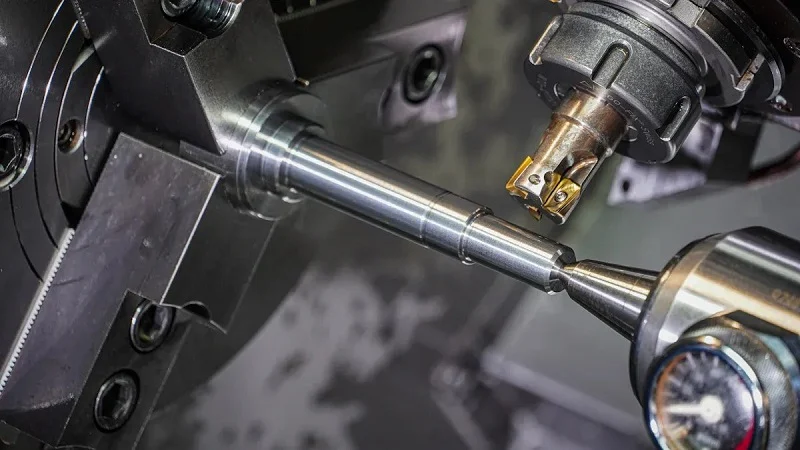
Surgical robot CNC machining uses computer-controlled tools to cut, shape, and finish materials for surgical robots. A CNC machine follows a digital blueprint to create parts with extreme accuracy. The system works with metals like titanium and stainless steel. It processes polymers such as PEEK and PTFE. It handles composites like carbon fiber too. This material flexibility stands as one of the key advantages of CNC machining technology for surgical robot manufacturing. Designers pick the best material for each task without worrying about manufacturing limits.
Repeatability sets this method apart. Surgical robot CNC machining guarantees identical parts across every production run. Each component matches the next within microns. That level of precision and consistency matters when you make parts for the human body. This machining method delivers consistent results. Surgical robot CNC machining provides the reliability that medical teams depend on. The process ensures every piece fits and works as intended.
Why Precision Matters in Surgical Robotics
Different surgical applications need different levels of accuracy. Some parts require extremely tight tolerances. Others allow more room. Here is a breakdown of typical tolerances for various components:
| Component / Process | Typical Dimensional Tolerance | Application Context |
| Multi-axis CNC milling for surgical navigation housings | ±0.002 mm | Orthopedic navigation systems |
| Navigation-grade components (critical interfaces, alignment features) | ±0.02–0.05 mm | Orthopedic navigation systems |
| Precision components for robotic surgical instrumentation (3D visualization systems) | 0.2 mm | Robotic surgical instrumentation |
A tolerance of 0.2 mm works well for visualization housings. But navigation parts demand much tighter control. The ±0.002 mm tolerance on multi-axis milled housings shows how demanding robot manufacturing for surgery can be. A tiny error could cause a misaligned instrument during a procedure.
From a practical perspective, surgical robot CNC machining achieves these tolerances consistently. The machining process monitors every variable from tool speed to coolant temperature. This precision manufacturing technology helps manufacturers meet strict medical standards. It protects patients during complex procedures. The surgical robot CNC machining must meet these exacting requirements every single time.
Key Components Produced
CNC machining creates many critical parts for surgical robots. Surgical instruments form one major category. These include tools that grasp, cut, and stitch during procedures. They need sharp edges and smooth surfaces. Fixtures and structural elements provide the robot’s frame. They must be strong yet lightweight.
Fluid-handling parts manage the flow of air and medicine during surgery. Housings protect sensitive electronics inside the robot. Connectors link different sections of the system. Each of these surgical robot components requires careful machining.
Medical device manufacturing benefits greatly from this process. It handles complex geometries that would be impossible with manual methods. Medical devices need components that fit precisely. Robotic surgical components often have intricate shapes with tight curves and fine details. The process delivers precision components that fit together perfectly. Surgical robot CNC machining is the top choice for surgical robot parts manufacturing. It provides the accuracy that surgical robot part manufacturing demands. Every piece must work reliably.
Step-by-Step Surgical Robot CNC Machining Process

Every step in the process needs careful planning. The goal is always precision machining. Surgical robot CNC machining turns digital designs into very complex and precise parts.
Step 1: Design and CAD Modeling
Creating Detailed CAD Models
Every part starts as a 3D model in CAD software. Engineers define every feature. This includes holes, curves, and threads. The model must be exact. Any mistake leads to a wrong part. For surgical robots, models often have complex shapes. These might be narrow channels or sharp edges. The CAD file becomes the main blueprint. It captures every angle and dimension.
Design for Manufacturability
A perfect CAD model does not mean the part can be machined. DFM checks for problems. Sharp internal corners might need a bigger tool radius. Deep pockets could need special tooling. DFM saves time and stops redesigns. This is one of the key advantages of surgical robot CNC machining.
Tolerance and Material Selection
Tolerances define allowed variation. Some features need tight tolerances. Others are less critical. Material choice also matters. Titanium is strong but hard on tools. PEEK is softer but can warp under heat. Surface finish is just as important. General surfaces need Ra 0.4–0.8 µm. Functional surfaces like cutting edges require Ra < 0.2 µm.
Most manufacturers choose electropolishing over mechanical polishing alone — it cuts surface roughness by about 50% while building a passive oxide layer that resists corrosion through repeated autoclave cycles.
This combination defines surgical robot components.
Step 2: CAM Programming and Toolpaths
Converting CAD to CAM
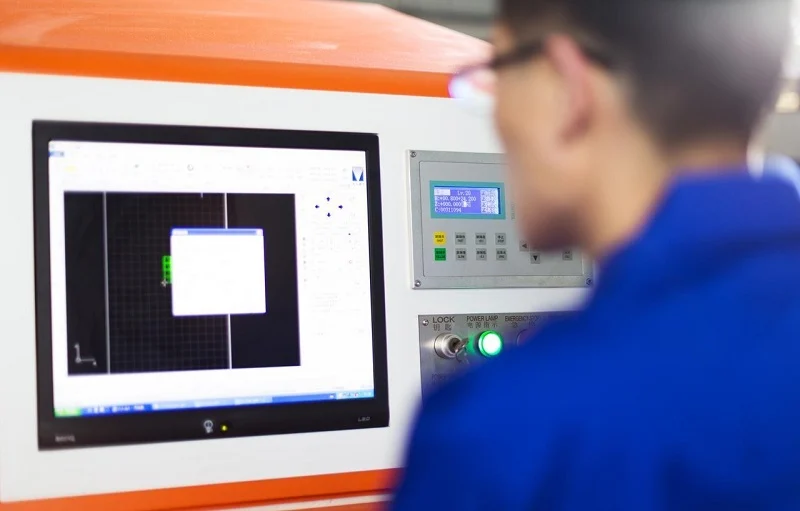
Once the design is ready, it moves to CAM software. CAM stands for Computer-Aided Manufacturing. It reads the 3D model and makes toolpaths. For surgical robot CNC machining, this step is complex. The geometry is often intricate. The software decides the best cutting order. It also picks the right tools for each operation.
Simulating Toolpaths
Before any cutting happens, the CAM system simulates the toolpaths. It shows the exact tool movement. It checks for crashes with the part or fixture. Simulation catches problems early. A single crash can ruin a part or damage the machine. This is critical for surgical robot parts manufacturing. Simulation also predicts cycle times. It helps find bottlenecks.
Optimizing Cutting Parameters
Optimization means adjusting feed rates, spindle speeds, and stepovers. For surgical robot CNC machining, both cycle time and surface finish matter. Adaptive feed rate control helps. It adjusts speeds based on tool wear or cutting forces. Multi-axis simultaneous machining cuts down the number of setups. This can improve accuracy a lot.
- Regulatory and quality standards: ISO 13485 requires process validation.
- Adaptive feed rate control: Real-time adjustments allow aggressive cutting.
- Multi-axis simultaneous machining: Reduces repositioning errors.
- Collision avoidance: Shortest safe paths for repositioning.
- Material waste minimization: Savings of 5-12% through nesting.
- Integrated CAM optimization: Simulations predict bottlenecks.
- Machine learning and AI: Analyzes data to optimize parameters.
This combination ensures both precision and consistency.
Step 3: Setup and Workholding
Selecting the Right CNC Machine
Multi-axis CNC machining is common for surgical robots. A 5-axis machine can reach the part from any angle. This cuts down on manual repositioning. It also improves accuracy. For delicate parts, machine rigidity and thermal control are key. Even a 2°C change in spindle temperature can cause rejection. Real-time compensation keeps tolerances steady.
Fixture Design for Complex Geometries
Workholding is critical for small, delicate parts. If the part shifts, tight tolerances cannot be held. Different methods work for different shapes.
| Workholding method | Key characteristic | Relevance to parts |
| Precision vises | Good for rectangular parts | Can distort thin-walled components |
| Custom fixtures | Excellent repeatability | High upfront cost but reliable |
| Vacuum tables | Uniform clamping force | Ideal for thin-walled parts |
| Collet-based systems | High repeatability for round parts | Limited to specific geometries |
Zero-point clamping systems achieve repeatability as low as 0.003 mm. Single-setup 5-axis machining improves geometric accuracy by up to 33.98%.
Tool Selection and Calibration
Tool choice depends on material and feature size. Micro tools may be needed for fine details. Calibration makes sure the tool is at the exact position. Tool wear must be watched closely. Dull tools affect surface finish and tolerances. This is especially important for surgical instruments. Automated tool changers and probes help keep things consistent.
This process shows the challenges of surgical robot CNC machining. Each stage demands micron-level machining accuracy and strict process oversight. Toolpath optimization supports micron-level precision control.
Materials and Surface Finishing in Surgical Robot CNC Machining
Common Materials for Surgical Robots
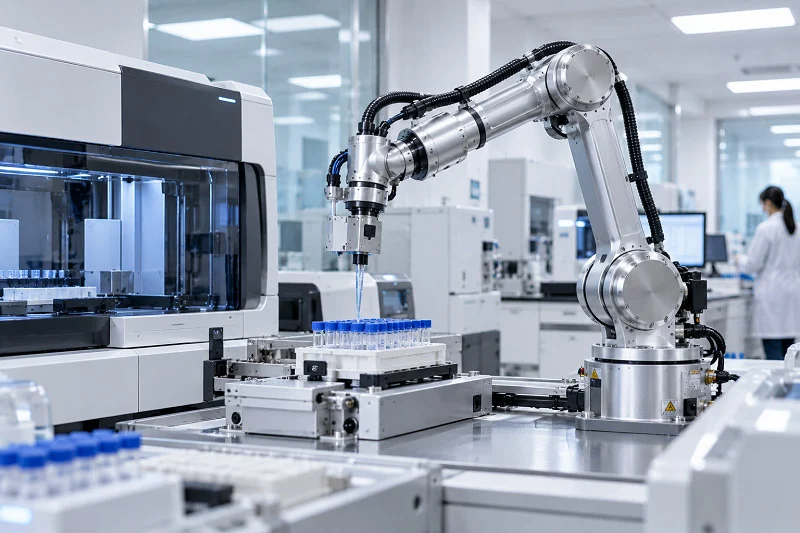
Surgical robots use metals, plastics, and composites. Each material has its own benefits. The choice affects how the part works during a procedure. It also decides how well the part handles sterilization.
Titanium alloys show up often in surgical robot parts. They are lightweight and safe for the body. Stainless steel also appears in many tools. These metals give strength and reliability through repeated sterilization cycles.
Plastics play a big role too. PEEK and carbon fiber composites let X-rays pass through. They also resist high temperatures and chemicals. Other medical-grade polymers handle repeated sterilization while keeping their shape. Some biocompatible plastics can hold tight tolerances. Other plastics may need somewhat looser tolerances but work well for many uses.
| Material | Key Properties | Machining Notes |
| PEEK | Radiolucent, sterilizable | Tight tolerances; high thermal expansion needs rough machining plus relaxation |
| Other medical-grade polymers | Radiolucent, withstands sterilization | Good for sensor housings and navigation tools |
| Stainless Steel | Corrosion-resistant, strong | Widely used in surgical tools and temporary implants |
| Titanium Alloys | Lightweight, biocompatible | Ideal for implants and precision instruments |
| Other biocompatible plastics | Biocompatible plastic | Maintains tight tolerances |
| Other medical-grade plastics | Medical-grade plastic | Tight tolerances |
This variety shows why surgical robot parts manufacturing needs broad material expertise.
Impact of Material on Machining Parameters
Material properties directly shape how you cut a part. Hardness is a major factor. Titanium alloys are relatively hard. That hardness speeds up tool wear. You need coated carbide or ceramic tools to cut them effectively.
Thermal conductivity matters just as much. Titanium’s thermal conductivity is very low. Heat cannot escape the cutting zone. It builds up and damages the tool. Therefore, appropriate cutting speeds and coolant strategies are applied. High-pressure coolant helps control the temperature.
PEEK presents a different challenge. Its high thermal expansion means you rough machine the part first. Then let it relax. Then finish it. This two-step process keeps tolerances tight. The material produces continuous chips when ductile. Chip breakers help manage that.
For stainless steel, cutting forces run high. The machine setup needs rigidity. Vibrations cause chatter marks on the surface. Those marks ruin the surface finish. You must control feed rates carefully.
Each material demands different cutting speeds, tool choices, and coolant strategies. That is why surgical robot CNC machining materials requires deep material knowledge. Getting it wrong means scrapped parts.
Surface Finishing for Infection Control
Surface finish directly affects patient safety. Bacterial cells range from 0.5 to 2 micrometers in size. If the surface has features in that same range, bacteria find shelter there. Those tiny crevices shield organisms from shear forces during cleaning. They also slow antimicrobial rinses.
Research shows that Ra of 0.2 µm is a meaningful threshold. Below that value, further roughness reduction does not significantly reduce bacterial accumulation. Targeting Ra less than 0.2 µm minimizes bacterial adhesion. That is the standard for surgical robot parts that contact tissue.
Rougher surfaces provide more crevices where bacteria hide. Lower Ra values reduce these hiding spots. They support more reliable sterilization across repeated cycles.
That is why surface finishing matters in medical device manufacturing. Electropolishing cuts surface roughness by about 50% compared to mechanical polishing alone. It also builds a passive oxide layer on the metal. That layer resists corrosion through repeated autoclave cycles.
For surgical robots, every component that enters the sterile field needs this level of finish. The production process must account for final surface requirements from the start. Tool selection, cutting parameters, and finishing all affect the result.
This attention to detail separates quality surgical components from ordinary machined parts. Precision in every step ensures the part performs safely in the operating room.
Quality Control in Surgical Robot CNC Machining
In-Process Inspection Techniques
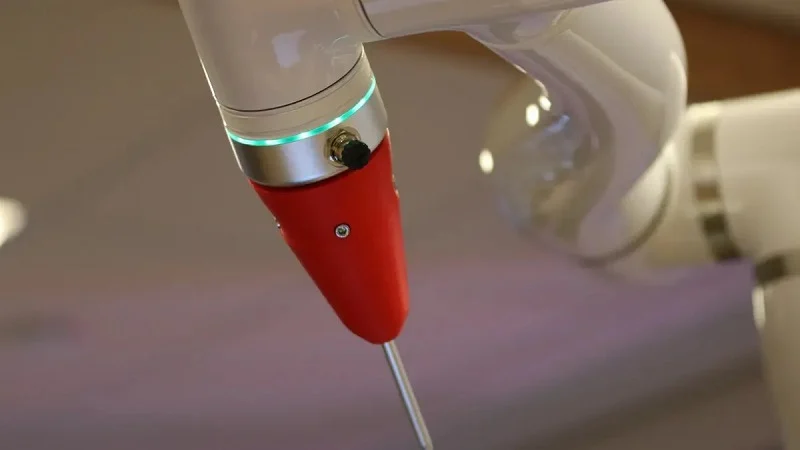
Catching problems after the part is finished costs time and money. Smart shops monitor the cut while it happens. Real-time tool condition monitoring uses acoustic emission, cutting forces, vibrations, and temperature to track the process. These signals reveal tool wear before it ruins the surface. An operator can then adjust parameters on the fly. This cuts scrap rates and keeps surface roughness within limits.
Different sensing methods catch different problems. Vibration analysis detects chatter and imbalance, which protects the surface finish and prevents micro-cracks. Thermal monitoring tracks workpiece and spindle temperature, which stops warping and maintains dimensional stability. Acoustic sensing listens for tool wear or breakage, so a worn tool gets swapped before it damages the part. Every cut generates data on spindle speed, tool wear, and axis positioning. AI algorithms flag subtle patterns, like a small rise in vibration, long before the flaw shows up in the part.
Final Dimensional and Surface Inspection
Once machining ends, the part faces a full inspection. Coordinate measuring machines check every critical dimension against the CAD model. Surface finish gets verified too. For surgical robots, the target is often Ra less than 0.2 µm. That threshold matters because bacteria range from 0.5 to 2 micrometers. A smoother surface leaves fewer hiding spots and supports reliable sterilization.
Inspectors also check for burrs, cracks, and tool marks. These defects can trap debris or create stress points. A single flaw can reject the whole part. That is one of the challenges of surgical robot CNC machining. The inspection step confirms that every component meets the design intent before it moves to assembly.
Standards and Certifications
ISO 13485:2016 forms the backbone of quality control here. ISO 13485 is built for medical devices. It adds risk management across the product lifecycle, prescriptive documentation like Device Master Records, and contamination controls that general manufacturing does not require. Clause 7.5.9 demands traceability from raw material to final customer. Clause 7.1 ties risk management to ISO 14971. Clause 7.5.6 requires process validation where inspection cannot confirm conformance, such as surface finish.
Certification proves a shop’s quality management system is effectively implemented and maintained. Accredited third-party bodies audit the system before granting certification. For surgical robot CNC machining, this means documented change control, statistical process control, and full material traceability. It gives customers confidence that precision and consistency hold across every batch.
Applications and Components in Surgical Robot CNC Machining

Minimally Invasive Surgical Instruments
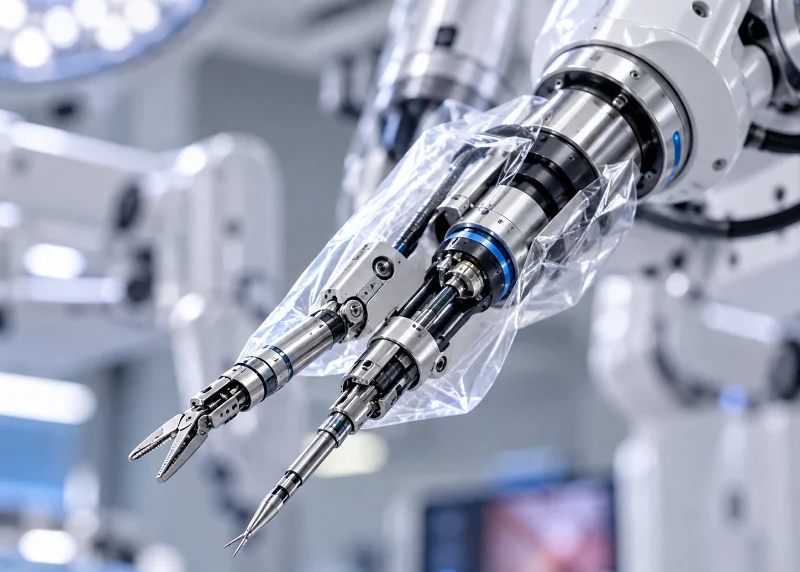
Laparoscopy, endoscopy, and robotic‑assisted surgeries rely on carefully made surgical instruments. These tools must grip, cut, and stitch through small openings. CNC machining makes this possible. The process creates sharp edges and smooth surfaces. It holds tolerances that manual methods cannot reach.
A typical laparoscopic tool is used hundreds of times, and each use includes sterilization. The instrument must keep its shape and sharpness. Machining from a solid block gives uniform properties and removes weak spots found in welded parts. For robotic surgeries, the tools connect directly to the robot arm. Each joint must fit exactly, because a loose connection affects control during surgery. Tight machining keeps performance consistent.
Picking the right material is important. Stainless steel can be sterilized many times in autoclaves. Titanium is lighter, so it works well for moving parts. Each material needs its own cutting settings. Surgical robot CNC machining adjusts to these needs. The result is reliable tools that surgeons can trust.
Housings and Connectors
Housings protect the sensitive electronics inside surgical robots. Connectors join different parts together. Both must be made carefully. A housing with a bad seal lets moisture get to the internal circuits. That can cause the robot to fail during surgery.
Tight tolerances ensure proper fit for seals and connectors. This precision is critical for waterproofing and EMI shielding. Without it, the robot risks signal interference or fluid ingress. Seal design must account for the chosen sterilization method. Different methods place different demands on materials.
| Sterilization Method | Temperature Range | Key Advantage | Compatible Materials |
| Autoclave (Steam) | High temperature | Effective and economical | Stainless steel, titanium, certain polymers |
| Ethylene Oxide (EtO) | Low temperature | Low-temperature process | Most metals, heat-sensitive polymers |
| Gamma Radiation | Ambient | No heat required, highly effective | Metals, most polymers |
| Electron Beam | Ambient | Rapid processing | Materials similar to gamma-compatible set |
The sterilization method affects what materials can be used. It also affects how seals are designed. The surface finish must be smooth with rounded corners. This stops germs from building up. Surgical robot parts must meet these requirements.
Making surgical robot parts also involves cleanroom assembly. This keeps dirt away before internal parts are put in. To follow rules, companies need ISO 13485:2016 certification. Detailed records and process checks are very important. Biocompatibility documentation proves the material is safe for the body. These steps make housings and connectors into reliable medical devices.
Custom Implants and Devices
Surgical robot CNC machining makes it possible to create custom implants and devices for each patient. These can work with surgical robots. A patient‑specific implant begins with a CT scan. Engineers turn the scan into a CAD model. The machine cuts the implant from solid titanium or PEEK.
This method gives surgeons very accurate tools for hard cases. A custom skull plate can include spots for robotic markers. The robot lines itself up using these markers during surgery. The plate must fit the patient’s skull perfectly. The machining process creates that fit.
The same method is used for custom guides. These guides attach to bone and guide the robot’s tools. They make sure the right amount of material is removed. This accuracy cuts down recovery time. Modern technology changes how hospitals handle hard procedures. They can order custom tools that match the patient’s body. Surgical robots follow the plan with steady accuracy.
Why Choose NOBLE for Surgical Robot CNC Machining
Choosing a manufacturing partner for surgical robot parts is a big deal. You need a shop that gets how much is on the line. NOBLE specializes in metal and plastic machining for surgical robot manufacturing. The team works with titanium, stainless steel, PEEK, and other medical-grade materials every day. That daily practice builds real skill.
Metal and Plastic Machining Expertise
NOBLE machines both metals and plastics for surgical robots. Titanium and stainless steel need coated tools and high-pressure coolant. PEEK and ULTEM need careful heat control to stop warping. NOBLE’s machinists know these differences well. They change speeds, feeds, and toolpaths for each material.
This dual skill matters for surgical robot parts. One robot may mix metal joints with plastic housings. One shop that does both keeps tolerances steady across the whole assembly. You avoid the blame game that happens when two vendors point fingers at each other for a fit problem.
ISO 13485:2016 Certified
Certification is not just a plaque on the wall. It proves a quality system really works. NOBLE holds ISO 13485:2016. The standard is made for medical devices. It requires risk management, full traceability, and strict contamination control.
| Evidence Category | Details |
| Quality system registration | NOBLE’s quality system is registered to ISO 13485:2016. |
| Process validation support | The Process Validation Department provides IQ/OQ, MSV, PQ/PPQ, TMV, DOE, and risk analysis. |
| Validation experience | More than 1,700 process validations performed for Class II and III medical implants and devices. |
| OEM experience | Experience with 18 of the top medical device OEMs. |
That track record gives you confidence. It is worth noting that 1,700 validations are not a small number. It shows the team has seen many process challenges before.
Full-Service from Design to Assembly
NOBLE does more than cut metal. The company helps you from design through assembly. That early involvement pays off. Robert Austring of Lighthouse Imaging points out that bringing in an experienced partner from the start, not just when the product is “deemed ready,” can significantly reduce the commercial viability timeline.
Our teams can review stackups, materials, via structures, fine-feature requirements, controlled impedance, fabrication drawings, and manufacturing data before fabrication begins. That early teamwork helps engineering teams spot possible manufacturing concerns while there is still time to fix them efficiently.
In practice, this means fewer redesign loops. Vadlamudi notes that prototyping and 3D printing let a product be made much faster than traditional methods. Mason adds that cross-industry technology access significantly reduced sterilization verification time. NOBLE brings that same full-service mindset to every surgical robot CNC machining project. You get one team for design, machining, finishing, and assembly. That saves time and keeps precision steady from the first sketch to the final component.
Surgical robot CNC machining goes through six steps: design, programming, setup, machining, inspection, and finishing. Each step helps build precision into the final part. Materials like titanium and PEEK change how the cutting is done. Surface finishing below Ra 0.2 µm stops bacteria from hiding. Quality control under ISO 13485:2016 makes sure every component meets its design intent. So when you choose a partner for surgical robots, look at the whole process, not just the cutting. A shop that handles design through assembly keeps surgical tools safe and reliable. That full view is what separates good machining from great results.
FAQs of Surgical Robot CNC Machining
What tolerances can surgical robot CNC machining really hold?
It depends on the part. Multi-axis milling for navigation housings can hit ±0.002 mm. Navigation-grade interfaces usually run ±0.02–0.05 mm. Visualization housings allow about 0.2 mm. The right tolerance should match the job. Making every feature too tight raises cost without making it safer.
Why is titanium so hard to machine for surgical robots?
Titanium alloys are relatively hard, so they wear out tools fast. Their thermal conductivity is very low, which traps heat in the cut. Coated carbide tooling and high-pressure coolant keep temperatures under control. Cutting speeds are generally reduced to manage heat.
How smooth does a surgical instrument surface need to be?
Aim for Ra below 0.2 µm on parts that touch tissue. Bacteria range from 0.5 to 2 micrometers, so features in that size range give them shelter. Below Ra 0.2 µm, extra polishing does not really cut bacterial buildup. Electropolishing gets you there and adds a passive oxide layer.
Which sterilization methods work with machined surgical robot parts?
Autoclave steam works well for stainless steel, titanium, and some polymers. Ethylene oxide is suitable for heat-sensitive plastics. Gamma and electron beam sterilization happen at room temperature. Material choice must match the sterilization plan.
What quality standards should a machine shop hold?
Look for ISO 13485:2016. The standard is built for medical devices. It requires risk management, full material traceability, and contamination control. Clause 7.5.9 demands traceability from raw stock to the final customer. Certification proves the system actually runs, not just exists on paper.
Can CNC machining handle both metal and plastic robot components?
Yes, and that flexibility matters. One robot may pair titanium joints with PEEK housings. A shop that machines both keeps tolerances consistent across the whole assembly. PEEK needs rough machining, then relaxation, then finishing because of its high thermal expansion. Metals need different speeds, feeds, and coolant strategies.
How does in-process inspection catch problems early?
Real-time monitoring tracks acoustic emission, cutting forces, vibration, and temperature. These signals reveal tool wear before it ruins the surface. Vibration analysis catches chatter. Thermal monitoring stops warping. AI flags subtle patterns, like a small rise in vibration, long before the flaw shows up in the part.
What makes custom implants different from standard machined parts?
A custom implant starts with a CT scan, not a generic drawing. Engineers turn that scan into a CAD model, then cut the part from solid titanium or PEEK. The result fits one patient’s anatomy. Robotic markers can be built right into the design, so the robot lines itself up during surgery.