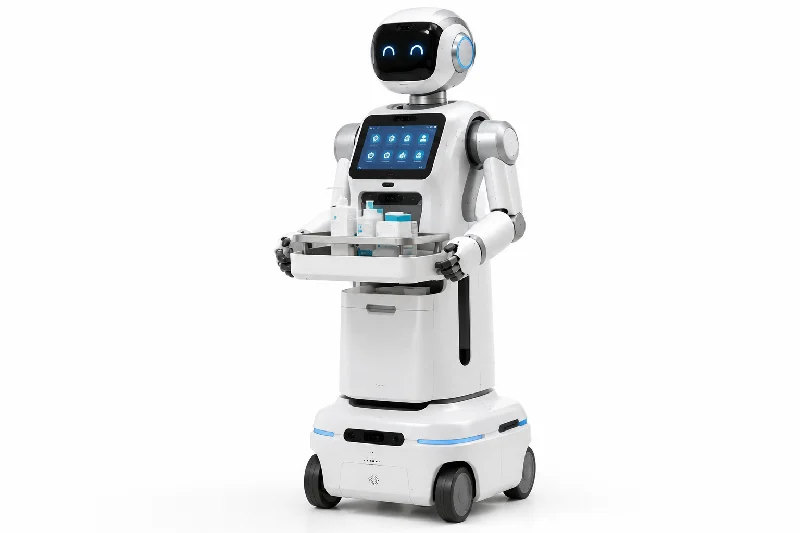
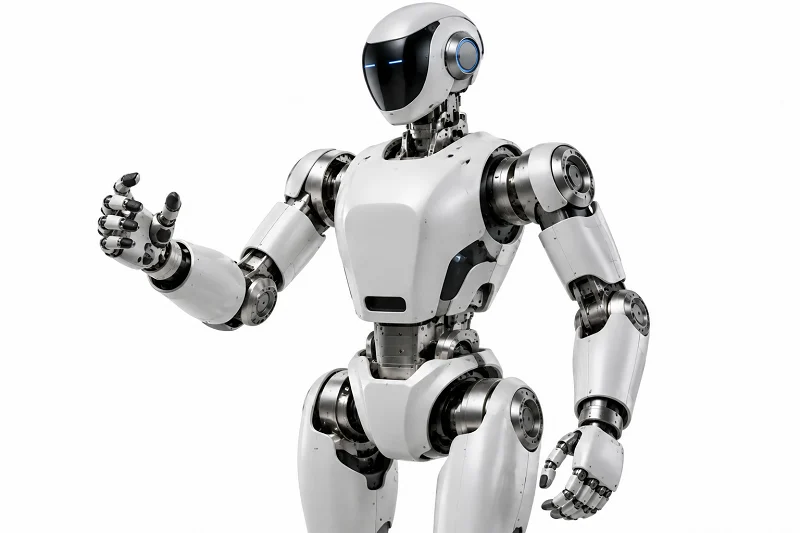
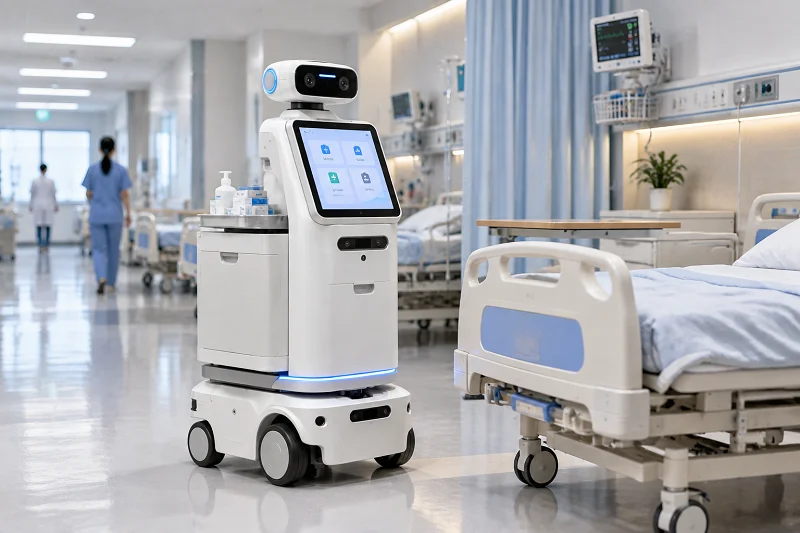
The 2026 RoboCup@Home World Cup just wrapped up in South Korea. The event brought together 24 top research teams from 45 countries around the world. Many elderly care robots were demonstrated.
Exoskeletons and walking robots help seniors with walking and climbing stairs. Elderly care robots can help users get up and massage their bodies. Companion robots talk to seniors to alleviate loneliness.
After seeing these elderly care robots, many people asked the same question:
Will we soon be able to buy a robot to help care for our parents or even ourselves?
This article explains the current state of elderly care robots. It also discusses their cost, technical challenges, and how close they are to becoming part of everyday life
The fast development of elderly care robots
Artificial intelligence did not appear overnight. It has developed through many years of research and technical advances. Today, AI combines algorithms and daily applications. It is not just one technology. It continues to learn and adapt to real-world needs. Many governments are now supporting the elderly care robot industry. More than 34 countries have adopted policies and regulations for elderly care robots.
For example:
- Japan has included elderly care robots in the national strategy of Society 5.0. The government plans to invest over 500 billion yen over ten years. This funding supports the development of robots, hoping they can lift patients, help them bathe, turn them in bed, feed them, and perform other related tasks.
- The United States provides research funds through institutions such as NSF and NIH. These projects support research in areas such as sensor technology and human-computer interaction.
- China has launched a three-year pilot program for intelligent elderly care robots. The program covers home communities and nursing homes.
These policies send a clear message. Elderly care is changing. Caregivers are still important. Robots and AI help with daily care tasks. Together, they provide better care.
The Market Is Growing Rapidly of elderly care robot
The global elderly care robot market is continuing to expand. Industry forecasts show that the market will grow from US$4.41 billion in 2026 to US$11.89 billion by 2034.
The industry now has a complete supply chain. It includes: Component suppliers, robot manufacturers, and Healthcare and elderly care providers
The industry has already moved beyond the experimental stage. Many companies are now focusing on large-scale production and commercial growth.
Real-world operation cases
1. Panasonic Resyone transfer robot
Every day, more than 3,000 old people’s homes and care facilities in Japan use this robot.
The robot combines a bed and a wheelchair. It supports users weighing up to 100 kilograms and helps bedridden seniors stand up. It also helps them move safely from the bed to the wheelchair.
The machine runs quietly with low-resistance transmission parts. Its rounded plastic shell resists bacteria and avoids bumps. The system also reduces heavy lifting for caregivers and helps prevent back injuries.
2. Fudan University AI care robot
Researchers from Fudan University have developed an AI-powered care robot.
The robot can perform many daily care tasks. These include:
Delivering daily supplies
Monitoring health conditions
Raising a patient’s back
Turning patients in bed
Assisting with transfers
Supporting toileting
Providing rehabilitation exercises
One of its biggest advantages is nighttime care. The robot can work continuously for six hours. But it only needs 30 minutes to recharge. Multiple robots can work in shifts to provide 24-hour care.
The robot is already being used in a rehabilitation hospital in Shanghai. It assists with reception, patient guidance, companionship, and routine inspections. The system is now commercially available.
What tasks can today’s elderly care robots complete?
Robots for senior care have diverse shapes and functions. They fall into four main categories.
1. Walking-assist robots
These robots help older adults move more easily. They support people who have difficulty walking. Some robots also help users climb stairs safely.
Exoskeleton robots are one example.
In Japan, an elderly woman in her eighties used a robotic exoskeleton to walk up a flight of stairs with ease. The device reduced the physical effort and improved her balance. These robots help older adults stay active and maintain their independence.
2. Physical care robots
This type handles tough, awkward care work.
A smart nursing robot in Shenzhen can connect to care beds. It automatically sprays warm water and blows warm air once it detects urine. However, the whole process needs no human help.
3. Companion robots
Companion robots are one of the fastest-growing categories in the elderly care market.
The Hyodol companion robot from South Korea is a good example.It provides 24-hour home monitoring for older adults who live alone. The robot can:
- Remind users to take medication
- Detect falls
- Send emergency alerts
- Talk with elderly users
- Connect family members through video calls
The robot also understands Korean dialects. Many users describe it as another member of the family.
4. Rehabilitation & entertainment robots
Some robots focus on rehabilitation and social activities.
A good example is the Paul humanoid robot from Germany. Paul includes a large library of poems, jokes, songs, and classic stories.It organizes daily group activities in nursing homes. It encourages older adults to:
- Answer quiz questions
- Read poems
- Join conversations
- Participate in games
These activities help reduce loneliness and support cognitive health. Many elderly residents even call Paul “our companion in the nursing home.”
How Much Do Elderly Care Robots Cost?
The technology is impressive. However, the prices are still a major challenge.
Today, most elderly care robots cost tens of thousands of US dollars.
Typical prices include:
- Mobility assistance robots: US$10,000–40,000
- Bathing assistance robots: US$10,000–40,000
- Advanced medical service robots: Hundreds of thousands of US dollars
- Home care robots: Usually start above US$10,000
- High-end humanoid robots: More than US$200,000
For most families, these prices are still too high.
The good news is that costs are declining. As production increases and technology improves, robot prices are expected to decline quickly. Many experts believe the next three years will be the key period for price reductions. Within five years, elderly care robots may become affordable for many more families. Some industry forecasts even suggest that future consumer humanoid robots could cost less than RMB 10,000, although this remains a long-term expectation rather than a current market reality.
Why Are Elderly Care Robots So Expensive?
We will explain each of the upstream core components one by one
The price of an elderly care robot is not decided by one part. It depends on every component inside the machine.
An elderly care robot mainly contains four types of components.
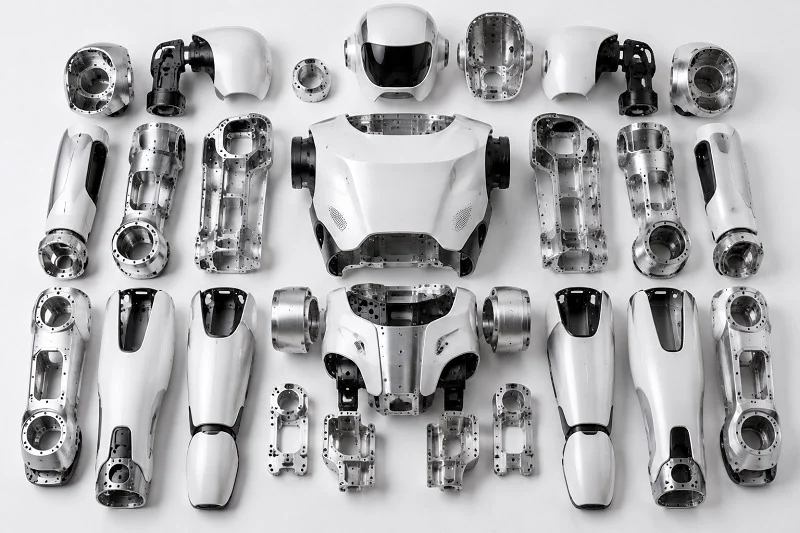
1. Structural Components
These parts include the robot frame, robotic arms, support brackets, and mobile chassis. These components must be lightweight, but they must also support the weight of an adult. Most structural parts are made from precision-machined metal and injection-molded plastic. Every outside corner is rounded to reduce the risk of injury. The surface is coated with antibacterial materials. This helps prevent scratches and improves hygiene.
2. Motion Transmission Components
These components include motors, gears, shafts, and other drive parts. They control every movement of the robot. They help the robot lift a person, assist with walking, and perform daily care tasks. These parts must meet several important requirements. The robot must lock immediately if the power fails. The movement must be quiet. The system must provide enough force to support the human body. The robot must prevent accidental falls during operation.
Because of these requirements, motion transmission systems are one of the most expensive parts of an elderly care robot.
3. Sensor Support Components
These parts include radar brackets, sensor housings, and waterproof covers. All sensor components must be sealed with silicone; this protects the electronics from water, cleaning chemicals, and humid environments. Reliable protection can help the robot work safely for many years.
4. External Covers
These parts include handrails, control panel housings, and the outer shell. They are made from low-odor antibacterial plastic using one-piece injection molding.
The surface must be smooth. There should be no sharp edges or burrs. This makes the robot safer and more comfortable for elderly users.
Why Choose NOBLE as Your elderly care robot Manufacturing Partner?
Most robot manufacturers cannot design and produce every component by themselves. Developing molds for custom parts is expensive. Small production runs also have very high unit costs. It is difficult to produce safe structures, antibacterial housings, and quiet transmission systems on the first attempt. Many technical problems appear between the prototype stage and mass production. However, NOBLE can provide a complete component manufacturing solution. We help customers reduce production costs and solve manufacturing challenges, and provide one-stop services for robot manufacturers, research teams, and robotics competition teams.
Our services include:
Product design
Prototype development
Mold manufacturing
CNC machining
Quality inspection
Mass production
This allows our customers to save both time and money.
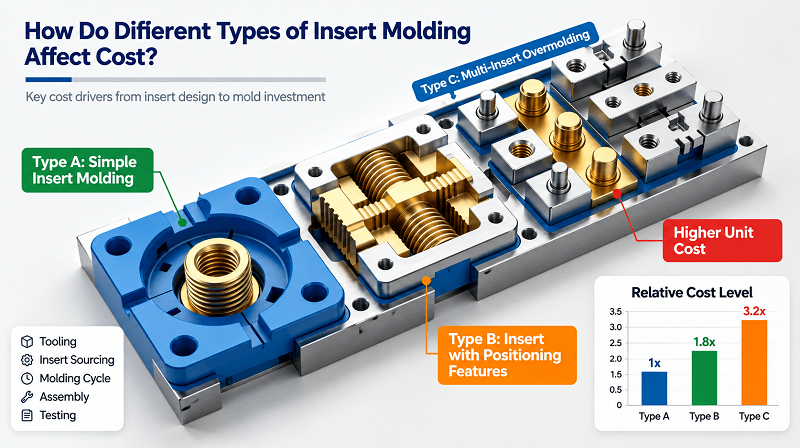
1. Modular Design Reduces Mold Costs
We have developed a large library of standard components. These include mobile chassis, support brackets, and sensor housings. Customers can use these existing designs instead of building every component from the beginning. This can reduce mold costs by as much as 60%. The same components can also be used in different products, such as companion robots, rehabilitation robots, and patient transfer robots. This lowers the manufacturing cost of each unit.
2. Complete In-House Manufacturing
We can complete all major production processes. Such as:
Precision metal machining
Plastic injection molding
Antibacterial surface coating
Silicone sealing
We do not rely on multiple subcontractors.
This reduces extra costs and improves quality control. Large-scale production also lowers labor costs and improves manufacturing efficiency.
3. Design Simulation and Product Testing
We help customers test their products before production begins.
Our engineering team performs simulations for:
Load capacity
Impact resistance
Corrosion resistance
Daily operating conditions
These tests identify design problems early. This reduces repeated prototype revisions and material waste. We also operate our own testing laboratory. Customers can complete safety testing without hiring third-party testing companies. This shortens the time from prototype development to mass production.
4. Flexible Pricing for Different Customers
We offer different pricing plans for different order volumes and provide discounted prices for prototype and small-batch orders.
We offer tiered pricing for large-volume orders. This helps customers launch affordable nursing care robots. It also helps them enter the nursing home and home care markets.
For nursing care robot manufacturers, a one-stop supplier is the most efficient choice. A one-stop supplier can handle part design, machining, and mass production.
This reduces production costs. It shortens product development time. It also speeds up product launch.
A mature and reliable component supply chain supports this process. It makes nursing care robots safer, easier to use, and more affordable. These robots can enter nursing homes and ordinary households more quickly. They can also reach the target market faster.
Will Elderly Care Robots Replace Family Members and Caregivers?
The short answer is no. They will not replace people in the near future. They are unlikely to replace people completely even in the long term.
The next 3 to 5 years: AI will reshape the whole industry
Industry leaders view artificial intelligence as the biggest changing factor in this period. Currently, large language models work well in virtual logic but fail in physical real-world environments. The industry needs deep integration between large models and robot hardware to achieve major progress.
Short-term market focus: nursing institutions, not private homes
Nursing homes will remain the main user group in the near future. These sites have fixed care scenes, professional staff, and bulk purchase advantages. Robots can be tested and upgraded easily here. Private family markets hold long-term growth potential but need more time to mature.
Long-term positioning: Robots only offer assistance
Experts agree robots play supporting roles instead of replacing human emotional care. A feeding robot was put into service at a Shanghai nursing home. It raised care efficiency greatly. One elderly user shared his true feeling. “The mechanical arm feeds me well, but nothing beats my daughter’s clumsy care.” This comment points out the core truth. Warm emotional communication during care cannot be copied by machines.
Closing words
Returning to the question in the title: How far are elderly care robots from us?
The answer is: It is already on the way, but we have not reached it daily.
It has already started to “take up its post” in elderly care robot about washing hair, massaging, chatting with others, and rehabilitation. But it will still take time for it to become a standard feature in every household like refrigerators and washing machines.
We need to wait until the technology becomes more mature, the price is more affordable, and the elderly can use it better.
It won’t completely replace family and caregivers, but it can be that “companion” for helping you call the police when you fall in the middle of the night, chatting with you when you live alone, and giving you a hand when you have difficulty walking. Technology with warmth is good technology. And elderly care robots are gradually moving in this direction.
FAQS
1. What are the 5 main parts of a robot?
In this blog, we’ll explore the five main parts of a robot—end effector, robot arm, sensors, and controller.
2. Is a robot actually a CNC machine?
No, a CNC machine is not a robot. Although they share some similarities, CNC machines and industrial robots serve fundamentally different purposes.
3. What is the difference between a CNC machine and a robot?
We can generalize the difference between robots and CNC machines like this: A single CNC machine gives high performance for a specific machining task. A single robot can achieve many tasks with different performance for each.
4. What are the 5 common types of CNC machines?
In this blog, we’ll explore the most common types of CNC machines and highlight their unique applications across industries.
5. How is AI used in elderly care?
AI-powered systems enable personalized assistance, allowing older adults to live autonomously for extended periods.