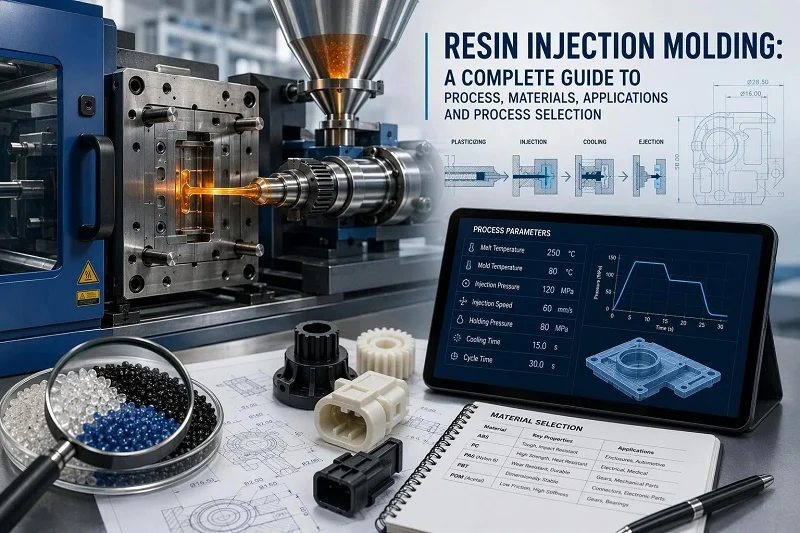
ABS plastic injection molding sits at the intersection of a forgiving material and a demanding process. Acrylonitrile butadiene styrene is an amorphous thermoplastic whose two-phase structure — a rigid styrene-acrylonitrile matrix holding dispersed polybutadiene rubber particles — gives molded parts a combination that few commodity resins match: impact toughness, a glossy surface straight from the tool, and dimensional stability under load. That balance is why ABS has been a default housing and structural-part resin since the 1950s, and why so many product programs begin with the question of how to mold it well rather than whether to use it at all.
This guide follows a part from concept to production. It covers the material itself and what each monomer contributes, the full process chain from design-for-manufacturability review through post-molding operations, the industries where ABS molded parts dominate, the design rules that ABS’s specific behavior demands, the defects that appear on the floor and how to trace them to a cause, the grade families that share the ABS name, and how ABS plastic injection molding compares with CNC machining, 3D printing, and other molding routes. Each section is written to be used on its own, so a reader troubleshooting splay marks and a reader choosing between a high-heat and a high-impact grade can both start where their decision actually is.
What Is ABS Plastic Injection Molding?
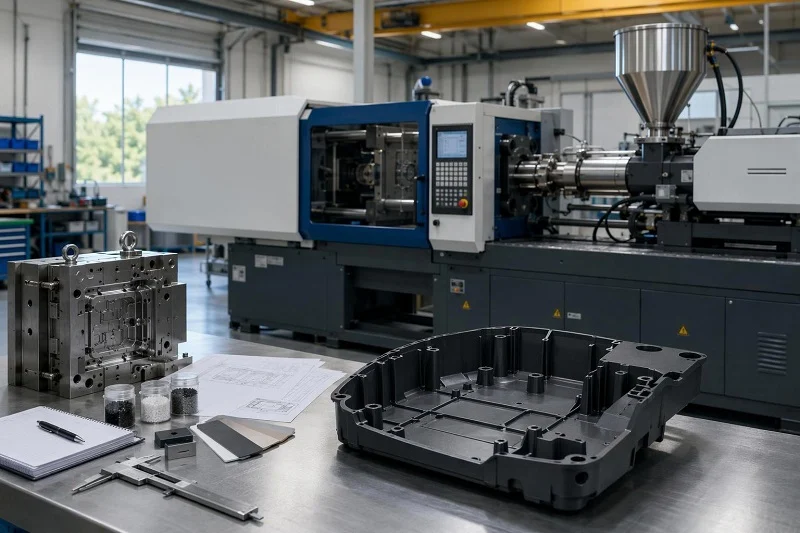
ABS plastic injection molding is the pairing of a specific terpolymer with a specific forming process: ABS pellets are dried, melted, forced into a steel or aluminum cavity under pressure, packed while the part solidifies, and ejected as a finished or near-finished component. The material side of that pairing matters as much as the machine side. ABS is amorphous, so it has no sharp melting point — its glass transition temperature is approximately 105 °C — and it can be used for most applications between roughly −20 and 80 °C, with mechanical properties varying across that window. Representative values for the base resin include a tensile strength of about 43 MPa, a flexural modulus of 2.48 GPa, and a heat deflection temperature of 81 °C measured at 1.81 MPa. These are typical figures for the family, not a specification for any one grade; commercial ABS products differ substantially in flow, impact, heat resistance, and surface gloss.
The Three Monomers and What Each Contributes
Each monomer carries a distinct job. Acrylonitrile contributes hardness plus chemical and heat resistance. Styrene contributes processibility, gloss, and strength — it is the reason ABS takes a polish so well. Butadiene contributes toughness and ductility at low temperatures, but it does so at the cost of heat resistance and rigidity, because the rubbery phase softens earlier than the rigid matrix. The properties come from rubber toughening: fine elastomer particles distributed throughout a rigid matrix absorb and dissipate impact energy. Because the monomer ratios and the molecular structure of both phases can be varied, hundreds of commercial grades exist, spanning medium to high impact, low to high surface gloss, and high heat distortion.
Why ABS Became a Default Molding Resin
The practical case is straightforward. An amorphous structure with no sharp melting point gives a wide, forgiving processing window, so a molder is not chasing a narrow melt band. ABS shows low creep and excellent dimensional stability, which suits precision housings and assemblies that must hold fit over time. It reproduces a polished cavity as a glossy surface with little or no secondary finishing. Those traits explain its adoption since the 1950s across toys, appliances, and electronics housings — and why designers reach for it first when a part needs to look good, take a knock, and stay in tolerance.
The ABS Plastic Injection Molding Process, Step by Step
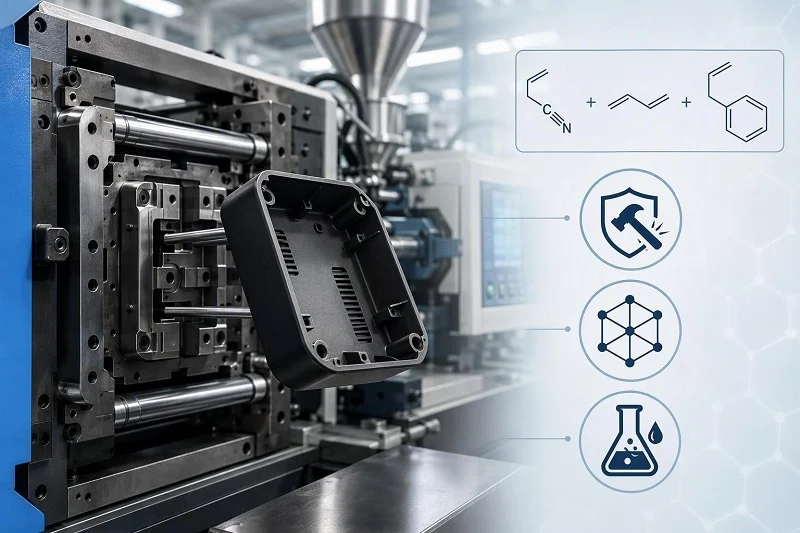
The production chain runs from design review to finished part, and each stage constrains the next. Treat the stages below as decision points rather than a checklist.
Design and DFM Review
Before any steel is cut, the part geometry is reviewed for wall thickness, draft, gate location, and tolerance feasibility against expected ABS shrinkage of 0.4–0.7% under ISO 294-4. A DFM review at this stage is the cheapest correction available: a wall change costs a CAD edit now and a mold modification later.
Tooling and Mold Construction
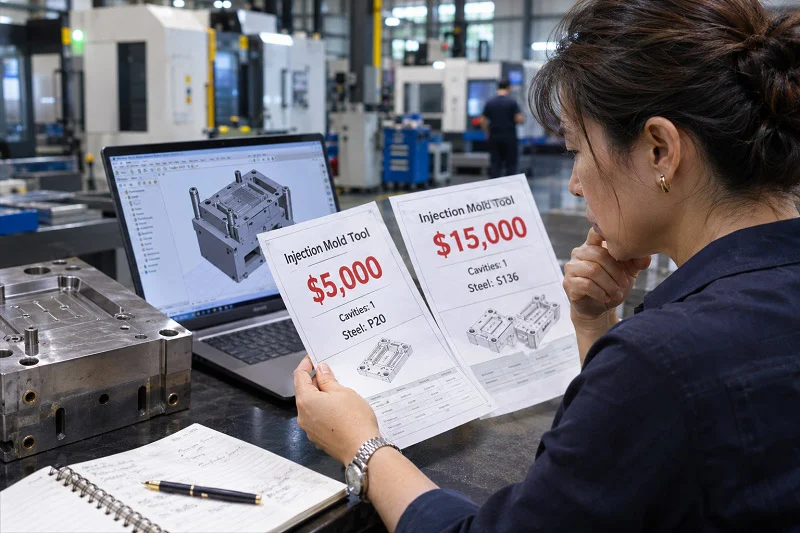
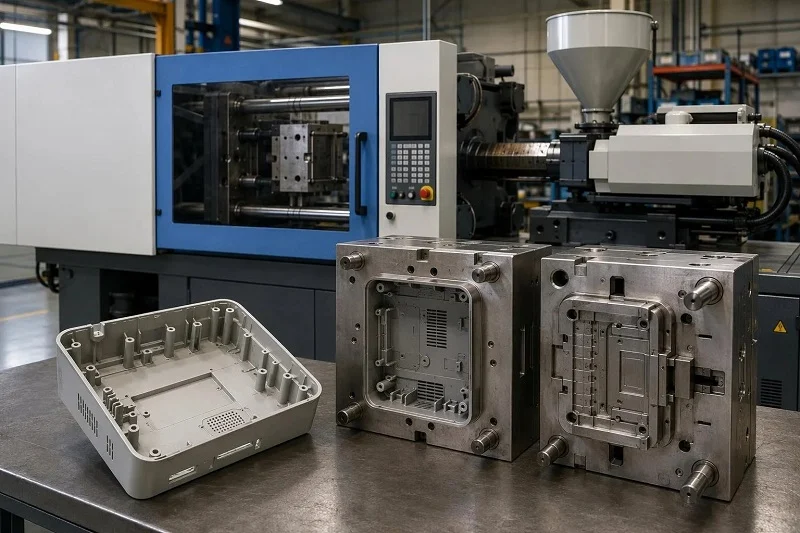
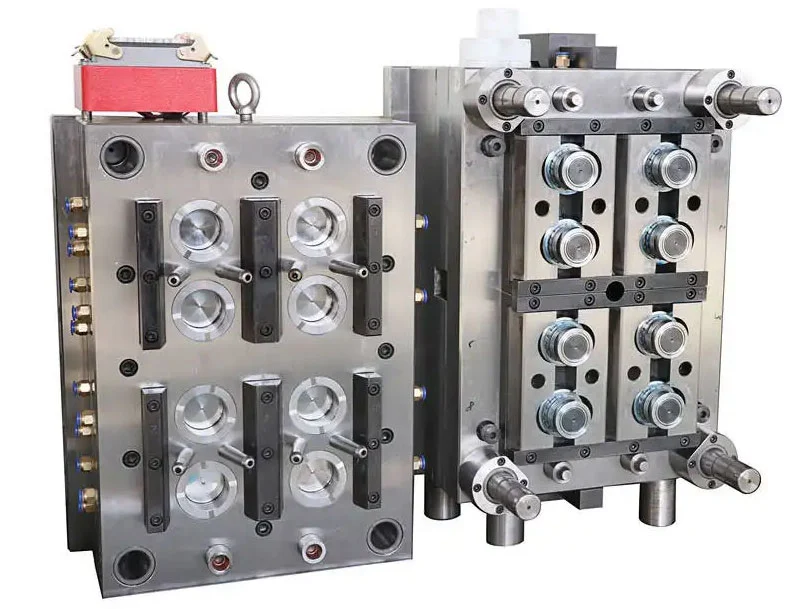
Mold design fixes cavity layout, gating, cooling channels, ejection, and parting-line placement, and fabrication turns that design into tooling. Tooling is the dominant upfront cost in any molding program, and its complexity scales with part geometry — undercuts, side actions, and fine textures all add work. Simple molds sit at the low end of the cost range; complex tools can cost far more.
Material Drying Before Processing
ABS is hygroscopic and must be dried before molding. The commonly cited window is 80–90 °C for a minimum of two hours, with residual moisture below 0.1%. Drying rate depends on temperature and dew point: ABS starting at about 0.35% moisture in air at a 0 °F dew point reaches roughly 0.1% in about 45 minutes at 98 °C, about two hours at 82 °C, or about five hours at 71 °C. Supplier datasheets govern the final settings.
Melting, Injection, and Packing
Melt temperature typically runs 200–280 °C with a target near 230 °C, and mold temperature 25–80 °C — lower mold temperatures produce lower gloss. Injection pressure commonly falls in the 50–100 MPa range at moderate-to-high injection speed. Packing pressure and time then determine how much shrinkage the part absorbs, so they are the primary levers against sink marks and voids.
Cooling and Ejection
The part must cool below its glass transition before ejection, or it will distort as it leaves the tool. Cooling time is often the largest share of the cycle, which makes it the natural target for cycle optimization — but only within the limits of dimensional consistency. Uniform mold temperature across the cavity is what keeps shrinkage even and dimensions repeatable from shot to shot.
Post-Molding Operations
Trimming, gate vestige removal, annealing where residual stress matters, assembly, and decoration complete the part. These steps belong in the process plan from the start: a gate placed where it can be trimmed cleanly, or a part designed for the assembly sequence, avoids rework that no amount of press tuning can fix.
Where ABS Molded Parts Are Used
ABS molded parts appear across consumer, automotive, industrial, and medical equipment, usually as housings, covers, panels, and structural trim. The sectors below reflect typical applications rather than requirements, and each one leans on a different part of the ABS property set.
Consumer Electronics and Appliances
Telephone and router housings, network switch front panels, and small appliance housings for vacuum cleaners, blenders, and coffee makers are classic ABS applications. Surface finish and dimensional stability drive the choice: the housing is often the product’s most visible surface, and internal features must align with boards and subassemblies.
Automotive Interior and Functional Parts
Instrument panels, interior trim panels, glove compartment doors, wheel covers, and mirror housings are typical automotive uses. Interior placement matters because it largely avoids the sustained UV exposure that degrades standard ABS outdoors — a limitation covered in the grade-selection section.
Industrial, Electrical, and Power Tools
DIN rail enclosures, benchtop instrument cases, battery charger shells, and power tool housings for hair dryers, food processors, and lawnmowers rely on ABS toughness and moldability. Where a part sits near power circuitry, the flammability rating becomes a specification item rather than an afterthought, and flame-retardant grades enter the picture.
Medical, Robotics, and Consumer Products
Equipment housings and covers for robotics and medical devices use ABS where clean molding, repeatability, and assembly integration matter. ABS is a housing material in these settings, not an implant material, and sterilization requirements should be checked against the specific grade. Toys remain the classic high-tolerance example: bricks molded in ABS have achieved tolerances down to about 10 micrometers.
Design Guidelines for ABS Plastic Injection Molding
ABS is forgiving, but not indifferent. The rules below translate its behavior — amorphous solidification, notch sensitivity, and a defined shrinkage range — into design decisions, with the failure mode that appears when each is ignored.
Wall Thickness and Transitions
Keep walls uniform and transitions gradual. Short-shot guidance puts the practical minimum above about 0.8 mm, while thin-wall ABS work references sections down to 1.5 mm with careful gating. Thick-to-thin steps cool at different rates and produce sinks, voids, and warpage, so step changes should be tapered rather than abrupt.
Draft Angles, Radii, and Parting Lines
Draft lets the part release without drag marks or scraping against the cavity walls. Fillets reduce stress concentration and improve flow around corners. Parting lines belong on natural edges and away from visible or functional surfaces, because a parting line placed across a cosmetic face or a snap-fit creates flash and fit problems that are expensive to correct after tooling.
Ribs, Bosses, and Fastening Features
A commonly cited rib-to-wall ratio is 60% or less, which keeps the rib from becoming a thick section that sinks the opposite face. Bosses serve as screw and insert attachment points and should be sized for the fastener and the load; coring thick zones prevents the vacuum voids that form when a heavy section shrinks around a still-molten core.
Gates, Text, and Living Hinges
Gate into the thickest nearby section so the melt front advances into thinner walls rather than stalling; fan and overlap gates help avoid jetting where a small gate would otherwise fire a snake-like stream into the cavity. Embossed lettering is generally cheaper to cut than engraved lettering because it leaves the steel standing proud and can be polished more easily. Living hinges are compatible with ABS when the hinge geometry, gate orientation and grade are chosen together, since the flexing section must fill with well-oriented melt.
Designing for Shrinkage and Tolerance
ABS mold shrinkage is commonly mapped at 0.4–0.7% under ISO 294-4, and that spread is wide enough to consume a tolerance budget on its own. On PCB mounting bosses, mating features and snap-fits, the tolerance map should be built from the actual grade’s shrinkage data rather than a generic ABS figure, and the flow and transverse directions should be treated separately. Where a dimension is critical, agree the measurement condition and the allowance before the tool is cut.
Common Processing Difficulties and How to Prevent Them
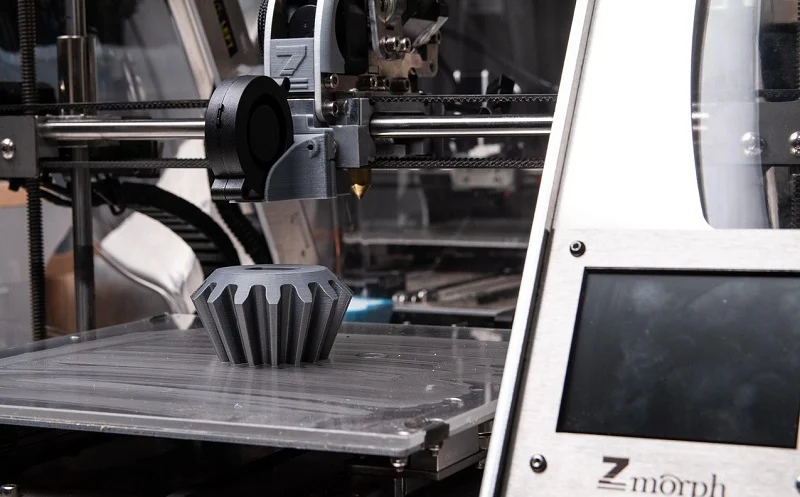
Most ABS defects trace back to one of four cause families: moisture in the resin, thermal history, flow behaviour in the cavity, or uneven cooling and shrinkage. Reading a defect by family narrows the search quickly, because the countermeasure usually sits in a different place from the symptom — a surface streak may be a drying problem, and a dimensional drift may be a cooling problem.
Moisture-Related Defects: Splay and Silver Streaks
Splay and silver streaks appear as silvery trails radiating from the gate. Undried resin is the usual cause, with high shear at sharp gate corners amplifying the effect. The fix is drying discipline — the 80–90 °C, minimum two-hour regime with residual moisture below 0.1% — plus gate geometry that avoids abrupt constrictions. If streaks persist after verified drying, suspect contamination or a worn screw before changing temperatures.
Flow Defects: Short Shots, Flow Lines, Weld Lines, and Jetting
Short shots leave sections unfilled, typically where walls thin below roughly 0.8 mm or where a sharp transition stalls the front. Flow lines are wavy surface streaks near gates and corners; weld lines are visible seams where opposing melt fronts meet, and in black-pigmented ABS they can also be weaker than the base resin. Jetting produces snake-like traces from a small gate. Countermeasures overlap: smooth transitions, adequate wall thickness, gate placement into thicker sections, and tuning injection speed and melt temperature together.
Thermal Defects: Burn Marks and Discoloration
Burn marks are dark or yellowish blemishes near flow ends, caused by trapped gas igniting under compression or by resin degradation. Discoloration without a burn pattern usually points to excessive melt temperature, long residence time or contamination. Venting at the last-filled areas, reducing injection speed, avoiding dead-end flow paths and specifying heat-stable pigments address most cases; melt temperatures above roughly 280 °C raise degradation risk in ABS.
Shrinkage Defects: Sink Marks, Voids, and Warpage
Sink marks, internal voids and warpage are the largest defect family for ABS. Sinks and voids form where thick sections cool last and packing pressure cannot reach them; coring thick zones, keeping walls uniform and extending packing time help. Warpage follows shrinkage gradients: a part bending toward its thicker section points to uneven cooling, corner lift suggests asymmetric geometry or gate location, and one-directional bowing indicates a mold-temperature gradient. Uniform cooling below the glass transition before ejection, balanced cooling channels and annealing where residual stress matters are the main levers.
Flash, Gate Vestige, and Surface Delamination
Flash is thin seepage along the parting line or ejector marks, and it usually signals excessive pressure, tool wear or a parting line placed across a high-stress area. Gate vestige is cosmetic residue left where the gate was trimmed; tunnel and sub-gates on hidden surfaces reduce it. Surface delamination — peeling of the top layer — points to contamination or incompatible materials, so single-material parts and confirmed overmold compatibility are the practical safeguards.
Choosing the Right ABS Grade
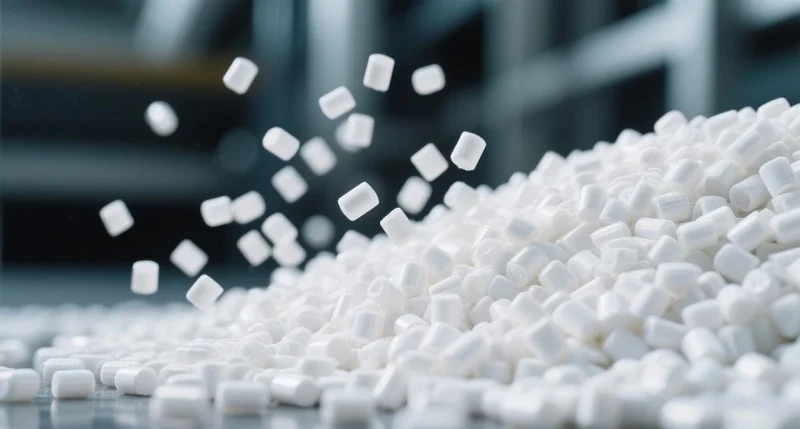
“ABS” names a family, not a specification. Commercial grades vary in impact strength, heat distortion, gloss, flow length, flame rating and plating suitability, and the monomer ratios and rubber content behind those differences are what a datasheet actually describes. Selection should start from the end-use requirement — drop exposure, service temperature, flame rating, outdoor exposure, cosmetic class — and then narrow to a grade whose published data covers the intended wall thickness and test conditions.
Standard, High-Impact, and High-Heat Grades
General-purpose grades balance cost, flow and finish for housings and covers. High-impact grades raise rubber content for parts exposed to drops, at some cost to heat resistance and stiffness. High-heat grades modify the acrylonitrile or styrene content or add stabilizers to resist deformation in warmer service, such as automotive interior parts or electronics that generate heat. Compare candidate grades at the intended temperature and wall thickness rather than ranking datasheet impact values alone.
Flame-Retardant ABS and UL 94 Ratings
Standard ABS is typically rated HB, the lowest UL 94 classification; it burns slowly but does not reliably self-extinguish and can drip under the vertical test. Flame-retardant ABS grades reach V-0 at 1.6 mm typically. The rating is a material-thickness combination, not a material property, so it must be verified at the production wall thickness on the grade’s UL Yellow Card. The rating you need comes from the device safety standard governing the product, not from preference.
Weathering Limits and When to Consider ASA
Standard ABS degrades outdoors: the polybutadiene phase contains unsaturated double bonds that react with UV radiation and oxygen, producing yellowing, chalking and impact loss within months of exposure. Interior applications avoid this, which is why automotive interior trim is a comfortable fit. ASA replaces polybutadiene with an acrylate rubber whose saturated backbone resists photooxidation, and it processes on ABS tooling at similar temperatures and shrinkage, making it the practical outdoor alternative when colour and gloss must hold.
Recycled Content and Sustainability Considerations
ABS can be recycled, although it is not accepted by all recycling facilities, and contamination and sorting remain practical obstacles. In molding, regrind from runners and sprues is the common route; it should be clean, single-source and dried with virgin material. Where recycled content is specified, verify impact and colour on the actual blend rather than assuming virgin-equivalent properties, and confirm the ratio with the customer before production.
ABS Plastic Injection Molding Compared with Other Processes
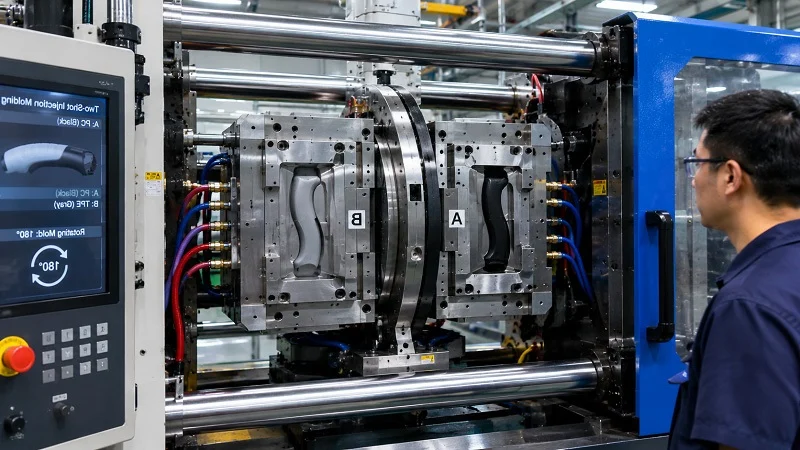
The alternatives a product developer actually weighs are CNC machining, 3D printing and other molding routes. Each comparison turns on a different decision: volume economics, prototyping speed, part capability or material performance. Treating them as one ranking obscures the point — the right process depends on which constraint binds first.
CNC Machining
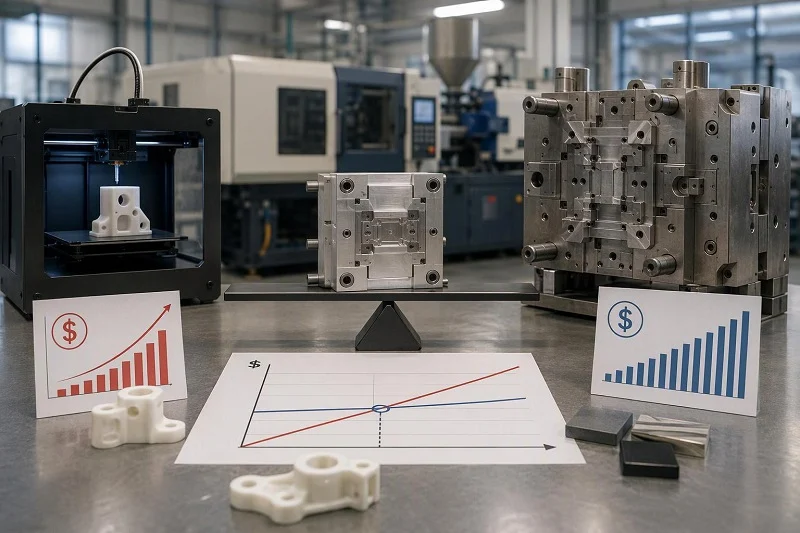
CNC machining suits low volumes, large simple parts and rapid iteration, because no tool is required and the first part can be cut from stock. Injection molding carries a significant upfront tooling cost but delivers a very low cost per part at volume, with repeatability and surface finish that come straight from the tool. Geometry freedom differs too: molding handles ribs, bosses and complex housings that would be slow or impossible to machine.
3D Printing
Desktop 3D printing can deliver a part overnight, and industrial systems typically take a few days — faster than tooling. Printed ABS also warps during cooling, which is why heated build surfaces and enclosures are used. Printed parts serve pre-tooling validation of form, fit and assembly, but they do not reproduce molded material properties or the surface of a polished cavity. Printing validates the design; molding produces the part.
Other Molding Processes
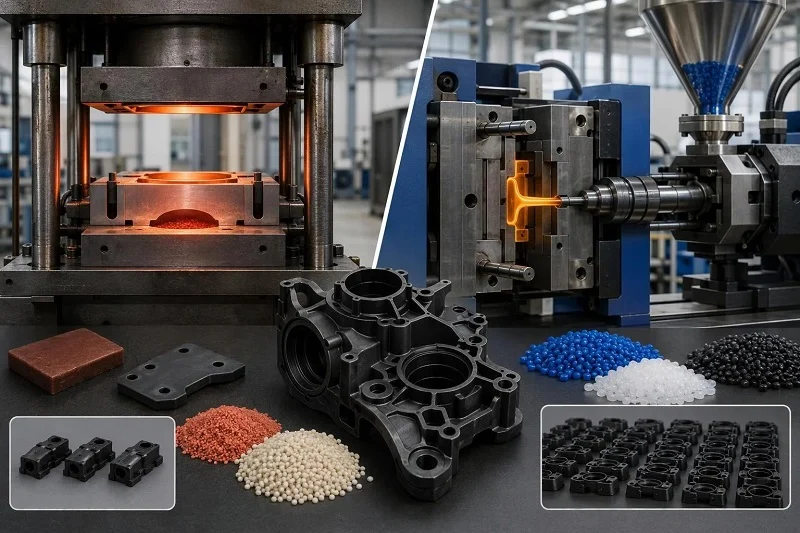
Within injection molding, resin choice changes the answer: PC offers higher impact and heat resistance, PC/ABS blends trade some of that for processibility, and PP is cheaper and chemically resistant but less stiff and glossy. Blow molding suits hollow containers rather than detailed housings, thermoforming suits large shallow panels at lower tooling cost, and compression molding suits bulk shapes. The comparison is about part capability and process economics, not a single winner.
A Decision Framework: Volume, Geometry, and Tolerance
Work through the constraints in order. Annual volume first, because it determines whether tooling can be amortized. Then tooling budget and time to market. Then geometry: undercuts, ribs and fine detail favour molding, while large simple shapes may not. Then tolerance and surface finish, since molding holds both consistently once the tool is right. Finally material performance — heat, impact, flame rating, UV — which may push the decision toward another resin or another process entirely.
Selecting NOBLE to Support Your ABS Plastic Injection Molding Project

NOBLE is a Chinese contract manufacturer with strong service capability and professional machining expertise that helps customers complete prototyping and mass production efficiently. We are certified to ISO 9001:2015 and ISO 13485:2016, and we provide a complete service scope from design through assembly — not production alone. For an ABS plastic injection molding program, that means one partner can carry the project from concept and prototype validation into volume manufacturing.
From Prototype to Production Under One Roof
NOBLE is a Chinese contract manufacturer whose service and professional machining capability are built to carry a customer from prototype through mass production efficiently. Keeping design support, prototyping, tooling coordination, molding and assembly with one partner removes the handoffs where specifications, tolerances and material approvals most often drift.
Quality Systems That Support Regulated Industries
NOBLE holds ISO 9001:2015 and ISO 13485:2016 certification. For industrial buyers, the first standard signals a documented quality management system; for medical device supply chains, the second adds the framework that regulated programs expect from a manufacturing partner. Both are process certifications, and the applicable product requirements still come from the device standard governing your part.
A Complete Service Scope: Design Through Assembly
NOBLE provides a full service chain from design to assembly, not production alone. On an ABS plastic injection molding program that means design and DFM input, prototyping, manufacturing, inspection and assembly handled as one sequence, so the drying discipline, shrinkage allowances and cosmetic requirements agreed at design stage are the same ones verified at final inspection.
FAQs of ABS Plastic Injection Molding
Short answers to the questions buyers and engineers raise most often after reviewing the sections above.
What is ABS plastic injection molding and why is ABS so widely used?
It is the molding of acrylonitrile butadiene styrene — an amorphous, two-phase thermoplastic — by melting pellets and injecting them into a tool. ABS is widely used because it combines easy processing, impact strength, good gloss and dimensional stability at a moderate cost.
How does the ABS injection molding process flow from design to finished part?
Design and DFM review, tooling, drying to below 0.1% moisture, melting and injection, packing, cooling below the glass transition, ejection, then trimming, annealing where needed and assembly.
Which industries commonly use ABS molded parts?
Consumer electronics and appliances, automotive interiors, industrial and electrical enclosures, power tools, medical and robotics housings, and toys — typically where surface finish, dimensional stability and toughness matter together.
How should I design a part specifically for ABS plastic injection molding?
Use uniform walls with gradual transitions, add draft and fillets, keep ribs at or below about 60% of wall thickness, gate into thicker sections, and build tolerances around the grade’s 0.4–0.7% shrinkage rather than a nominal figure.
What processing difficulties are common with ABS, and how are they prevented?
Splay from wet resin, short shots and weld lines from flow restrictions, burn marks from poor venting, and sinks or warpage from packing and cooling imbalance. Drying discipline, gate placement, venting and balanced cooling address most of them.
Which ABS grade should I choose for my application?
Start from impact, heat and flame requirements, then weathering. Standard grades suit general housings; high-impact, high-heat and flame-retardant grades cover tougher duties, and ASA is the outdoor alternative where UV exposure is continuous.
How does ABS plastic injection molding compare with CNC machining, 3D printing, and other molding processes?
CNC suits low volumes and large simple parts without tooling; 3D printing suits fast prototypes with weaker production properties; molding wins once volume amortizes tooling. Blow molding and thermoforming serve hollow or large shallow parts rather than detailed enclosures.