Imagine a delivery robot moving through a hospital hallway at 2 a.m., carrying blood samples. Its dependability depends on the precision, materials, and processes behind its parts. These parts—actuators, joints, chassis, housings, gearboxes, and end-effectors—must meet strict safety and hygiene standards. The global market for these robots reached US$ 2.8 Billion in 2025, led by autonomous mobile robots (AMRs). What makes hospital delivery robot parts different from those in warehouse robots? The answer is in precision engineering, material science, and manufacturing process selection. Without them, a robot cannot safely dock or transfer items.
Common Hospital Delivery Robot Parts
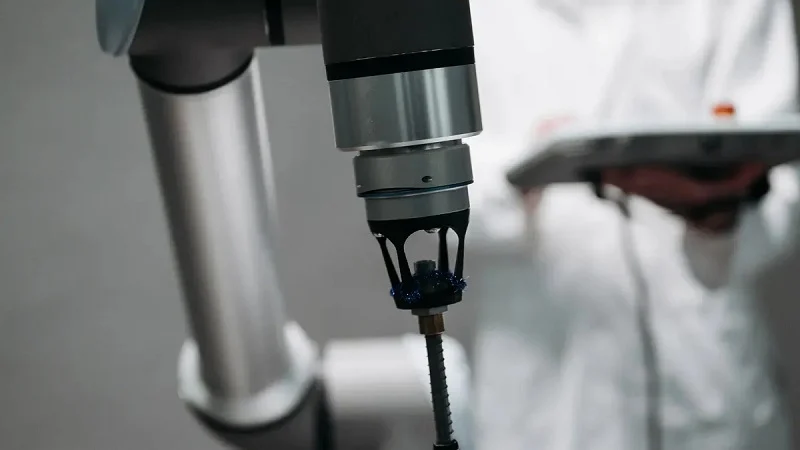
Hospital delivery robots use a lot of the same parts as warehouse and service robots. But the rules for cleanliness and safety are much stricter. A warehouse robot can handle a dusty gearbox. A hospital robot cannot. Every part used in a hospital robot must be able to survive many cleanings, keep patients safe, and still work after thousands of uses.
It helps to group these parts into two types. Structural parts carry weight and hold everything in place. Functional parts let the robot move, sense, and grab things. Both types are important, and both need careful design.
Hospital Robot Structural Parts Components Overview
Hospital robot structural parts make up the skeleton. They include frames, housings, brackets, and guards. These parts must be stiff, light, and easy to clean. A frame that bends will mess up docking. A heavy frame uses up more battery and makes the robot slow.
Frames, housings, and brackets
Structural frames and base chassis usually use aluminum alloys, titanium for extra strength, or carbon fiber composites. Aluminum gives a good strength-to-weight ratio. Titanium adds strength where weight matters most. Carbon fiber is stiffer than steel but lighter. That stiffness lets engineers use smaller motors and get faster response.
Housings and end-effectors often use ABS or polycarbonate, both made by injection molding. PEEK and medical-grade stainless steel appear on surfaces that touch patients. These materials must meet biocompatibility rules. Gaskets seal the inside parts, and IP ratings tell how well they resist fluids and dust. ABS is cheap. Polycarbonate is tougher and clearer. Neither can handle autoclave heat well, so designers plan around that limit.
Brackets and guards use aluminum and stainless steel sheet metal, modular aluminum extrusions, or carbon-fiber PEEK for the highest strength. Sheet metal fabrication — bending, punching, cutting — stays cost-effective for low-to-medium volumes. Modular extrusions speed up assembly and keep the structure light. These are the load-bearing hospital robot structural parts that quietly hold the whole system together.
Joints, actuators, and gearboxes
Joints, actuators, and gearboxes turn structure into motion. A hospital robot arm joint needs smooth rotation, low backlash, and tight sealing. Actuators and joints work together. The actuator supplies force. The joint passes it on. The gearbox increases torque while reducing speed.
Custom actuators, joints, and arm parts often need CNC machining to get the right fit. High-precision gears and bearings reduce play and keep motion repeatable. That repeatability matters when a robotic arm must place a medication tray in the same spot every time.
Drive Systems and Transmission Elements
Drive systems change electrical energy into controlled movement. They include motors, drives, gearboxes, belts, pulleys, and flexible shafts. Each part adds its own error, so engineers check the whole chain.
Motors, drives, and gearboxes
Motors and drives control the robot’s speed and torque. Gearboxes sit between the motor and the wheel or joint. A well-matched gearbox boosts torque and improves positioning. Poor matching wastes energy and adds heat. For hospital robot structural parts, the gearbox housing must also seal against cleaning fluids.
Belts, pulleys, and flexible shafts
Belts and pulleys move power quietly and absorb shock. Flexible shafts route power around tight corners. These parts are simple, but they still need precise alignment. A loose belt slips. A misaligned pulley wears out fast. Both failures stop a delivery partway down a hallway.
End-Effectors, Sensors, and Controllers
End-effectors handle the payload. Sensors and controllers decide what happens next. This group turns a moving platform into a useful tool.
Grippers and payload compartments
Grippers and payload compartments hold medications, samples, or supplies. Grippers need gentle force control. Payload compartments need smooth, crevice-free insides. Both benefit from rapid prototyping during development. A 3D-printed gripper lets engineers test fit before they commit to making the mold.
Sensors, controllers, and software
Sensors track position, obstacles, and payload status. Controllers run the motion logic. Software ties everything together. These elements are critical, but they sit outside this manufacturing-focused post. Here, the focus stays on the physical parts — the hospital robot structural parts components that make reliable motion possible.
From a practical perspective, manufacturing hospital delivery robot parts means balancing precision, materials, and process. A PCR machine housing has similar needs: tight tolerances, cleanable surfaces, and repeatable production. Many teams turn to CNC suppliers in China or local custom manufacturing partners for that mix of speed and quality. The same rule applies to every hospital robot structural part, from frame to gripper.
Precision in Hospital Delivery Robot Parts
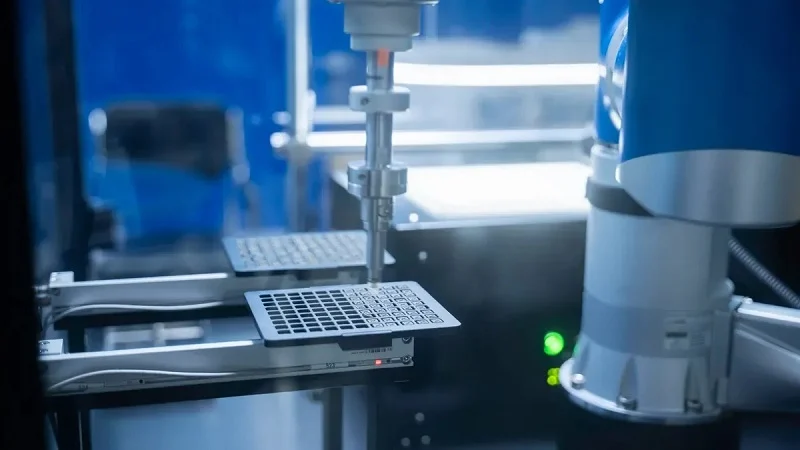
Precision is what makes a hospital delivery robot different from a warehouse cart. A robot that docks within a millimeter can move items safely. One that misses by five millimeters drops what it carries. That small gap decides whether nurses trust the machine. Precision-machined hospital robot structural parts build that trust. They also keep the robot working for years.
Repeatability and Positioning Accuracy
Repeatability means the robot comes back to the same spot every time. Positioning accuracy means it gets to the right spot in the first place. Both depend on hospital robot structural parts that keep their shape under load.
Tolerances for docking and item transfer
Docking stations need very tight tolerances. A charging contact must line up within a fraction of a millimeter. Item transfer trays need the same kind of control. Loose robot structural parts cause drift. Drift leads to failed docks and dropped samples. Good hospital robot structural parts stop that drift.
Cumulative error in multi-axis systems
Each joint adds a tiny error. Six joints multiply that error. The result is cumulative error. Engineers fight it with stiff robot structural parts and matched fits. A flexible bracket ruins the math. A rigid one keeps it correct. This is why hospital robot structural parts get so much design attention.
Repeatability and positioning accuracy in hospital logistics robots are talked about in general terms across the industry, but published number-based standards for individual parts are still hard to find.
Safety and Reliability in Clinical Environments
A hospital robot shares space with patients, nurses, and fragile equipment. Safety starts with mechanical precision, not just software.
Preventing collisions and pinch points
Tight fits cut down on play. Less play means motion you can predict. Predictable motion means fewer collisions. Pinch points get smaller when hospital robot structural parts fit together cleanly. Gaps invite fingers. Precision closes them.
Ensuring sterile barrier integrity
Sterile barriers fail at seams and joints. Rough surfaces trap bacteria. Precise robot structural parts create smooth, crevice-free interfaces. That keeps cleaning agents working and keeps patients safe.
Measuring and Specifying Precision
You cannot control what you cannot measure. Precision machining depends on drawings, tolerances, and inspection reports.
Geometric dimensioning and tolerancing (GD&T)
GD&T tells the machinist what matters. It controls flatness, concentricity, and perpendicularity. These callouts guide precision cnc machining for hospital robot structural parts. Without them, a supplier has to guess. With them, every robot structural part matches the next one.
Surface finish and fit requirements
Surface finish decides how parts wear and how clean they stay. Bearing journals need specific fits. The table below shows typical requirements for critical hospital robot structural parts.
| Tolerance Type | Specification | Purpose |
| Bearing journal diameter | h5 or h6 fit, ±0.004–0.008 mm | Controls bearing preload and joint stiffness |
| Concentricity between bearing journals | ±0.003 mm | Keeps positional repeatability |
| Roundness of bearing journals | ±0.002 mm | Maintains bearing fit integrity |
| Shaft straightness | 0.01 mm per 100 mm | Stops misalignment |
| Surface finish on bearing journals | Ra 0.4 μm | Controls oil film formation and bearing fatigue life |
General medical robotic components often hold ±0.002 mm to ±0.005 mm. Surgical joints hold ±0.005 mm to prevent backlash. These micron-level tolerances require precision machining and careful inspection.

A PCR machine housing follows the same logic. It needs tight tolerances, cleanable surfaces, and repeatable production. Teams often use rapid prototyping first, then move to cnc machining for precision components. Many work with CNC suppliers in China or local custom manufacturing partners. The same approach applies to every hospital delivery robot parts program. Precision components make reliable automation possible.
Materials for Hospital Delivery Robot Parts
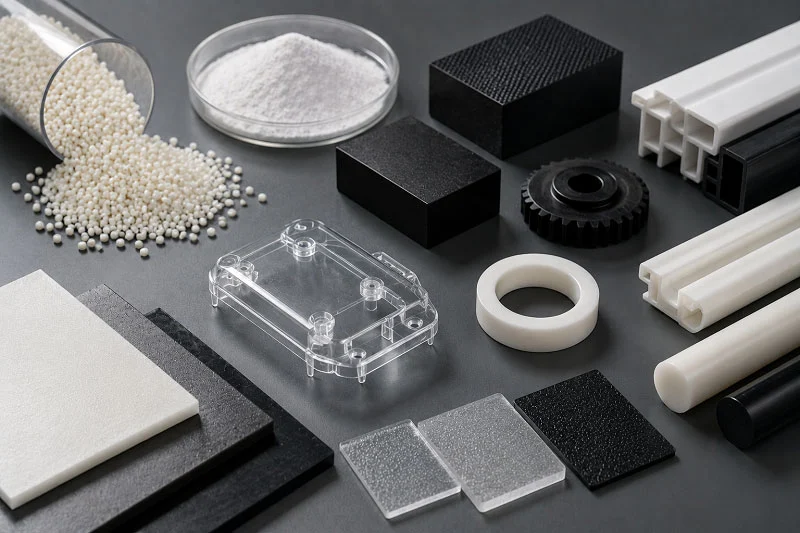
Medical robots need good materials to work safely and last long. Pick the wrong one, and a joint may crack or a housing may trap germs. The choice also decides which process to use. A metal that cuts well works for CNC machining. A polymer that shapes easily suits molding. So materials and processes go hand in hand.
Metals: Stainless Steel, Titanium, and Aluminum
Metals carry loads, hold shape, and resist heat. Each one has a different mix of strength, weight, and cost.
| Material | Key Advantages | Typical Applications |
| Stainless Steel | Strong, low cost, durable, good for heavy-duty use | Heavy-duty frames, joints needing strength |
| Titanium | High strength-to-weight ratio, corrosion resistance, biocompatible | Medical robots, moving parts under repeated stress |
| Aluminum | Lightweight, good thermal conductivity, easy to machine | Frames, arms, covers, mobile robots |
Stainless steel for structural and sterile components
Stainless steel is strong, common, and easy to machine, shape, weld, and polish. Medical grades like 304, 304L, and 316L resist rust and clean well. That top layer makes sanitizing easy. You find medical-grade stainless steel in trays, clamps, and cutting edges. It also works for hospital delivery robot parts that get cleaned often.
Titanium for high-strength, lightweight joints
Titanium beats steel on weight. Ti-6Al-4V has a density near 4.43 g/cm³, about 45% lighter than steel, with yield strength around 880 MPa. A stable oxide layer fights rust, and the metal stays safe in body fluids. Those traits suit joints and moving parts under repeated stress. Titanium costs more, though, and it is harder to cut than stainless steel.
Aluminum for chassis and heat dissipation
Aluminum is light, cuts easily, and pulls heat away from motors. Alloys like 6061, 6063, and 3003 show up in frames, arms, and covers. It costs less than titanium and resists rust. For hospital delivery robot parts that must stay light, aluminum is often the top pick.
Polymers: PEEK, ABS, Polycarbonate, and Delrin
Polymers cut weight, quiet noise, and cover electronics. They also let designers build shapes that metal cannot match at the same price.
PEEK for wear-resistant, sterilizable parts
PEEK handles high heat and strong chemicals. It is safe with body tissues, so it fits surgical tools and device covers. Implant-grade grades ship with ISO 10993 data and USP Class VI status. Its density is about 1.32 g/cm³, with tensile strength of 90–110 MPa. That makes PEEK a strong option for hospital delivery robot parts near sterilizers.
ABS and polycarbonate for housings and covers
ABS gives good looks and impact strength. Polycarbonate adds high impact resistance and clear view, and it bends with heat into shields or covers. Both work for housings, and both suit quick testing before molding. A PCR machine housing often uses the same logic: cleanable, tough, and repeatable.
Delrin for low-friction gears and bushings
Delrin, or POM, brings low friction and high accuracy. It keeps its shape well and resists chemicals. Gears, bushings, and sliding parts benefit most. These are small hospital delivery robot parts that quietly reduce wear.
Material Selection Criteria
Material selection balances strength, safety, and cost. Get it right, and the robot runs for years.
Strength-to-weight ratio
Titanium leads here, with aluminum close behind. Stainless steel is strong but heavy. PEEK is light but weaker than metals. Every hospital robot part trades these traits against its job.
Biocompatibility and sterilization resistance
Parts near patients must not release ions or trap germs. Titanium, medical-grade stainless steel, and PEEK all pass that test. Hydrogen peroxide and UV cycles also matter. A material that yellows or cracks under UV will fail.
Cost and manufacturability
Titanium costs 3–5 times more than 316L stainless steel, and it is harder to cut. PEEK costs less to make than titanium. Stainless steel stays cost-effective with good machinability. Many teams use rapid prototyping first, then move to CNC machining. Some work with CNC suppliers in China or local custom manufacturing partners to balance speed and price. The same thinking applies to every hospital delivery robot parts program, from frame to gripper.
CNC Machining for Hospital Delivery Robot Parts
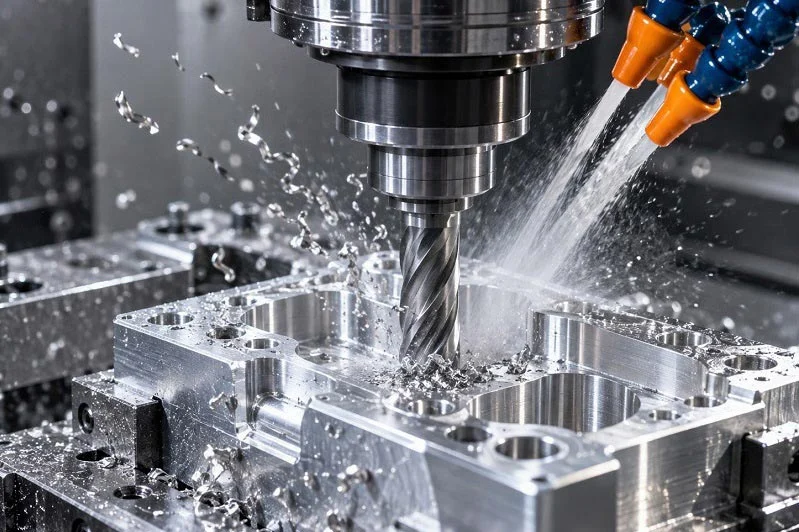
Making hospital delivery robot parts starts with choosing the right process. Machining, molding, and assembly each work best for different parts. The choice depends on shape, volume, and material. Standard parts like off-the-shelf bearings work fine in some spots. But custom robot structural parts are better when fit, hygiene, or strength really matter. Precision engineering is what makes reliable automation possible. Without it, even a great design fails in the field.
CNC Milling and Turning
CNC milling and turning shape metal and plastic into precise hospital robot structural parts. These processes cut away material to reach exact sizes. For hospital delivery robot parts manufacturing, that means tight fits and smooth, repeatable motion across thousands of cycles.
Actuators, joints, and gearbox housings
Actuators and joints need accurate bores and flat mating surfaces. Gearbox housings need concentric bearing seats. CNC turning handles round parts like shafts and bearing housings. CNC milling makes flats, pockets, and mounting holes. For custom manufacturing of robot structural parts, 5-axis cnc milling cuts complex shapes in one setup. That cuts down error from re-clamping. High-precision 5-axis cnc milling is common for parts with curved surfaces or angled features. A single setup holds tight tolerances across multiple faces. That matters for actuators and joints where every surface lines up.
Achieving tolerances down to ±0.01 mm
CNC machining for precision components hits tolerances from ±0.005 mm to ±0.025 mm on critical features. Bearing bores, gear centers, and docking interfaces all need this range. Geometric tolerances like true position and concentricity are standard callouts on drawings. Surface finish on general mating surfaces runs Ra 0.4–0.8 μm. For sliding, sealing, or drug-contact surfaces, it drops to Ra ≤ 0.2 μm.
| Specification Category | Typical Value | Application Notes |
| Dimensional tolerances | ±0.005 mm to ±0.025 mm | Bearing bores, gear centers, docking interfaces |
| Geometric tolerances | True position, concentricity, perpendicularity | Multi-axis assemblies |
| Surface finish (general) | Ra 0.4–0.8 μm | Mating surfaces |
| Surface finish (critical) | Ra ≤ 0.2 μm | Sliding, sealing, drug-contact surfaces |
| Burr control | Stringent deburring required | Prevents sterilization issues, patient hazards |
| Verification | CMM, FAI, SPC | Traceable to heat lot and machining logs |
Burr control is a must on every part. Any sharp edge can trap bacteria or damage packaging. For precision cnc machining for precision components, deburring is built right into the process plan. Verification uses CMM, first article inspection, and statistical process control. Each measurement traces back to material heat lots and machining logs. These micron-level tolerances separate reliable hospital robot structural parts from ones that drift over time.
Precision cnc machining of robot structural parts requires careful process planning. Tool selection, speeds, and coolant all affect the final tolerance. For high-volume runs, CNC turning centers run lights-out with automated tool changers. For prototypes, a skilled machinist adjusts feeds and speeds by hand. Both approaches work for hospital robot structural parts manufacturing. Teams often start with rapid prototyping to validate fit, then move to production CNC runs.
Injection Molding for Polymer Parts
Injection molding pushes melted polymer into a steel mold under pressure. The process is fast and repeatable once the mold is made. It works best for high volumes of complex shapes.
High-volume production of complex geometries
Injection molding makes complex shapes in seconds. Ribs, bosses, and snap fits are no problem at all. For robot structural parts like housings and covers, molding beats machining on cost at volume. The mold costs more upfront. But the per-part price drops fast after a few thousand units. A PCR machine housing uses the same logic: complex geometry at scale with repeatable quality.
Material selection is key. Molding works with ABS, polycarbonate, PEEK, and Delrin. Each flows differently in the mold. ABS fills easily and gives a good surface finish. PEEK needs higher temperatures and slower injection speeds. Designers must plan for material selection early in the process.
Material selection for sterilization compatibility
Not every plastic survives hospital cleaning. Hydrogen peroxide vapor and UV light break down some polymers. ABS yellows under UV. Polycarbonate keeps its strength longer. PEEK handles steam autoclave temperatures over 250 °C. For robot structural parts that face daily cleaning, PEEK or medical-grade polycarbonate are smart picks. Medical-grade stainless steel also appears in areas that see heavy wear or direct contact.
Molds for medical parts need polished cavities. A rough mold leaves marks that trap dirt and bacteria. For precision components, mold makers cut steel cavities with cnc, then polish them to a mirror finish. That finish transfers to every molded part. From a practical perspective, rapid prototyping of molded parts starts with 3D-printed samples. Engineers test fit and function before cutting steel. Many teams use CNC suppliers in China for prototype machining, then move to molding for production.
3D Printing, Casting, and Forging
Not all robot structural parts come from CNC or molding alone. Three other processes fill specific needs in the manufacturing mix.
3D printing for prototypes and custom end-effectors
3D printing builds parts layer by layer. No mold or fixture is needed. That makes it fast for prototypes and one-off parts. For custom manufacturing of grippers or payload compartments, 3D printing creates complex internal channels that machining cannot reach. Material options include medical-grade resins and PEEK filaments. The surface finish is rougher than molding, but that is fine for early testing. Rapid prototyping with 3D printing lets engineers iterate quickly. A PCR machine housing might start as a 3D-printed prototype to check fit, airflow, and assembly sequence.
Casting for chassis and large structural parts
Casting pours molten metal into a sand or investment mold. It makes large robot structural parts in one piece. A cast aluminum chassis carries the robot’s weight without welds or fasteners. That saves assembly time and adds stiffness. Cores create internal cavities for wiring or cooling channels. For medium volumes, casting beats machining on cost. The trade-off is longer lead times for pattern making and tooling.
Forging for high-strength joints and load-bearing components
Forging hammers or presses hot metal into shape. The grain structure follows the part contour, adding strength where it is needed most. For high-strength joints and load-bearing components, forging beats machining on fatigue life. A forged titanium joint is stronger than a machined one from bar stock. The process costs more for tooling but saves weight and improves long-term reliability. These robot structural parts see the highest stresses during operation.
Manufacturing hospital delivery robot parts requires matching each part to its best process. CNC makes precision components. Molding makes complex polymer parts at scale. 3D printing, casting, and forging each fill a specific gap. NOBLE serves as a leading manufacturing company in China, offering cnc machining, injection molding, and 3D printing for hospital delivery robot parts. Their ISO 13485 certification and precision manufacturing capabilities help clients move from prototype to production efficiently.
Designing Hospital Delivery Robot Parts

Good design balances precision, cleanability, and safety. Miss one, and the robot fails. A part that fits perfectly but traps bacteria is useless in a hospital. A part that cleans well but drifts out of alignment drops samples. Designers must think about all three from day one.
Tolerance Stack-Up and Assembly Fit
Every part has a tolerance. Stack them together, and errors add up. A bracket off by 0.1 mm, a joint off by 0.05 mm, and a housing off by 0.08 mm create a total error of 0.23 mm. That is enough to break a docking sequence.
Minimizing cumulative error in multi-part assemblies
Smart designers use tight tolerances on critical features only. They let non-critical dimensions float. This keeps costs down and quality up. A PCR machine housing follows the same rule. The seal groove gets tight tolerances. The mounting holes do not. For hospital robot structural parts quality, this selective approach works best. Rapid prototyping helps here. Engineers build a test assembly, measure the stack-up, and adjust before cutting steel.
Designing for easy maintenance and replacement
Parts wear out. Bearings fail. Motors burn out. Designers should make swaps easy. Use captive fasteners. Label connectors. Build alignment features into the frame. A joint that takes two hours to replace costs the hospital money. One that takes ten minutes keeps the robot running.
Cleanability and Sterilization Compatibility
Hospitals clean everything. Robots face hydrogen peroxide vapor, UV light, and harsh wipes. Design must survive that routine for years.
Avoiding crevices and rough surfaces
Germs hide in gaps. A 0.5 mm crevice is a safe harbor for bacteria. Designers should specify smooth radii and flush joints. Surface finish matters too. A rough surface traps dirt. A polished one sheds it. For custom manufacturing, this means clear callouts on drawings. CNC machining can hit those finishes. Rapid prototyping shows where crevices form before production.
Material compatibility with hydrogen peroxide and UV
Not every plastic survives hospital cleaning. ABS yellows under UV. Polycarbonate holds up longer. PEEK handles both. Stainless steel resists everything. Designers must match materials to the cleaning cycle. A PCR machine housing often uses polycarbonate for this reason. The same logic applies to robot covers and trays.
Safety and Regulatory Compliance
Rules govern medical robots. Designers must know them before they cut metal.
ISO 13485:2016 and medical device standards
ISO 13485:2016 sets quality rules for medical device manufacturing. It covers design controls, traceability, and risk management. A robot that carries medication may fall under this standard. CNC suppliers in China with this certification can help. They understand the documentation and inspection needs.
Risk management for patient-facing components
Any part near a patient needs a risk review. What happens if it breaks? Can it pinch? Does it shed particles? Designers should use failure mode analysis. They should test worst-case scenarios. Robotic systems with precision assembly capabilities are used in medical device manufacturing for intricate assembly processes. That same precision belongs in hospital delivery robot parts.
Selecting Processes for Hospital Delivery Robot Parts Manufacturing
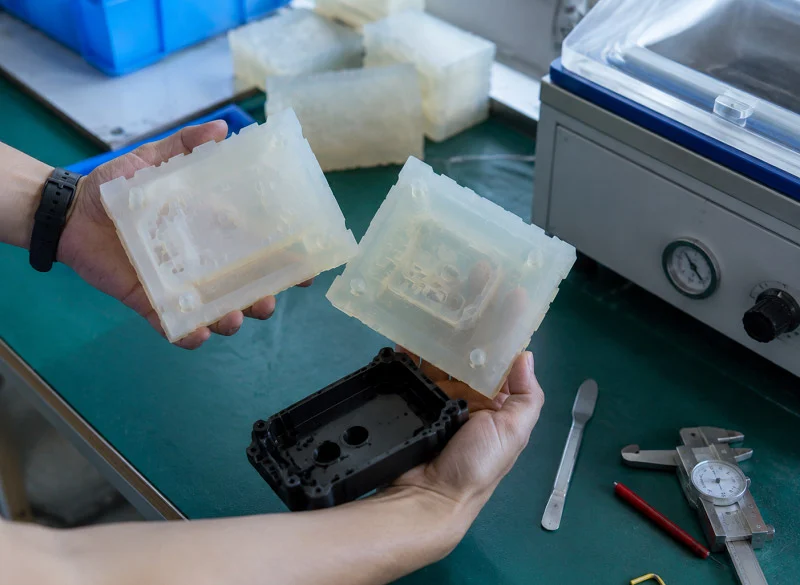
Choosing a process is not a random guess. It depends on the shape, the number of parts, and how tight the tolerances must be. When you match these well, making hospital delivery robot parts stays fast and cheap. When you get it wrong, you pay for tools you did not need.
Matching Process to Part Geometry and Volume
Shapes with undercuts often mean molding is the answer. Simple parts that need high precision usually mean cutting. The number of parts you need decides the rest.
When to choose CNC machining over injection molding
Pick cnc when you need tight tolerances, small batches, or quick results. A gearbox housing with bearing bores at ±0.01 mm works well with precision cnc machining. Molding requires a steel tool, so it only saves money at high volumes. For a few hundred units, cnc wins on both cost and speed.
Hybrid approaches for complex assemblies
Some assemblies use both methods. A molded cover can snap onto a machined frame. This mixed path keeps cost low and precision high. It is worth noting that high-precision 5-axis cnc milling handles the important metal features, while molding handles the outer shell.
Balancing Cost, Lead Time, and Performance
Every project trades off these three things. The key is knowing which one matters most right now.
Tooling investment vs. per-part cost
Molds cost more at the start. The price for each part drops quickly after that. Machining is the opposite: low setup cost, but a higher price for each part. For a PCR machine housing, molding makes sense at large scale. For ten prototypes, cnc does.
Prototyping to production transition
Begin with rapid prototyping to prove the fit works. Then switch to production tooling once the design is final. This step-by-step path lowers risk. Many teams use CNC suppliers in China to bridge the gap between the two.
Case Example: A Delivery Robot’s Gripper Assembly
Imagine a gripper that picks up medication vials. It needs grip, cleanliness, and the same placement every time.
Material choice: PEEK and stainless steel
The jaws use PEEK for wear resistance and sterilization. The pivot pins use medical-grade stainless steel for strength. This material selection balances weight, cost, and cleanability.
Process choice: CNC machining and 3D printing
The pins and jaw mounts come from cnc machining for precision components. The custom jaw shape starts as a 3D print. This mix lets engineers test grip force before committing to hard tooling.
Precision requirements and validation
The pivot bore holds a ±0.01 mm fit. Validation uses CMM inspection and first article reports. From a practical perspective, this is where 5-axis cnc milling and custom manufacturing meet real clinical needs. NOBLE, a leading manufacturing company in China, helps clients move from prototype to mass production with exactly this kind of machining expertise.
Future Trends in Hospital Delivery Robot Parts

The next set of hospital delivery robot parts will depend on better materials, tighter digital control, and designs that can change easily. Every trend connects back to the same three pillars: precision, materials, and processes. When you get these right, the robot works for many years. When you get them wrong, it breaks down in a hallway at 2 a.m.
Advanced Materials and Coatings
New materials promise longer life and less upkeep. They also lower the chance of germs catching a ride on a robot.
Self-lubricating composites
Self-lubricating composites mix solid lubricants into the base material. Bearings and bushings made from these composites run without grease. That is important in a clean hospital. No grease means no drips and no trapped dirt. These composites also handle repeated cleaning cycles better than standard plastics. A PCR machine housing faces similar demands, so the same material logic often carries over.
Antimicrobial surface treatments
Antimicrobial coatings kill or slow bacterial growth on contact. Silver-ion and copper-based treatments are common. They work best on surfaces people touch often, like handles, trays, and gripper jaws. The coating must survive hydrogen peroxide and UV without peeling. That is a materials problem first and a process problem second.
Digital Manufacturing and Smart Factories
Factories are getting smarter. That shift changes how hospital delivery robot parts get made and tracked.
Industry 4.0 for traceability
Industry 4.0 links machines, sensors, and data systems. Every cut, measurement, and inspection gets logged. If a joint fails in the field, the maker can trace it back to the exact batch and machine. That level of traceability matters for medical device rules. It also builds trust with hospital buyers.
AI-driven process optimization
AI tools watch machining data in real time. They adjust feeds, speeds, and tool paths to hold tolerances tighter. For cnc work on critical features, that means fewer scrap parts and more consistent output. Rapid prototyping benefits too. AI can suggest design tweaks before the first cut.
Modular and Scalable Designs
Modularity lets hospitals swap parts fast. It also lets makers scale production without redesigning everything.
Standardized interfaces for quick swaps
Standard mounting patterns and connectors let a technician replace a gripper or wheel in minutes. No special tools. No long downtime. This approach works well with custom manufacturing, where each module can be built to the same interface spec.
Design for additive manufacturing
Additive processes let designers build internal channels and lattice structures that machining cannot reach. A custom gripper with conformal cooling or lightweight ribs is a good example. Rapid prototyping already uses this path. As printers get faster, more production parts will follow. Many teams still rely on CNC suppliers in China for the metal components that need tight fits.
NOBLE: Hospital Delivery Robot Parts Manufacturing

Metal and Plastic Machining Expertise
NOBLE works on metal and plastic machining for hospital delivery robot parts. The company deals with both kinds of materials. That is important because one robot uses aluminum frames, stainless steel joints, and PEEK grippers. Having one supplier for all of them saves time and keeps tolerances the same.
CNC machining, injection molding, and 3D printing
The shop runs cnc machining, injection molding, and 3D printing all in one place. CNC turning and 5-axis milling handle bearing bores, gearbox housings, and docking interfaces. Molding takes care of housings and covers when making many parts. 3D printing fills the gap for prototypes and custom end-effectors. A PCR machine housing follows the same path: rapid prototyping first, then the right production process. Teams that need metal parts fast often go to CNC suppliers in China, and NOBLE competes on that same speed and quality.
From prototype to production
Every program starts small. A rapid prototyping run proves the fit works before money is spent on tooling. Then the team moves to production using the same drawings and inspection plan. That continuity lowers risk. Custom manufacturing works best when the prototype shop and the production line share one quality system.
Certifications and Quality Assurance
Certifications show a buyer what a shop can be trusted to do. NOBLE holds ISO 9001:2015 and ISO 13485:2016. The first covers general quality management. The second applies to medical devices. Together they cover hospital delivery robot parts manufacturing for clinical use.
ISO 9001:2015 and ISO 13485:2016
ISO 13485:2016 requires design controls, risk files, and documented traceability. That fits medical robot manufacturing, where a failed joint can affect patient safety. The standard also pushes suppliers to control their own sub-tier vendors. So the steel mill and the polymer resin both stay inside the quality net.
Full traceability and inspection
Each batch carries a heat lot number and a machining log. CMM reports and first article inspections back up the dimensional callouts. If a part drifts, the shop can trace it to the exact machine and tool. That level of record-keeping matters when hospitals audit their suppliers.
End-to-End Services from Design to Assembly
NOBLE does more than cut metal. The team supports the full arc from concept to shipped unit. That range helps clients who lack in-house machining or assembly capacity.
Design for manufacturability support
Engineers review drawings before the first chip flies. They flag tight tolerances that add cost without adding function. They suggest draft angles for molded covers and radii that cnc tools can actually reach. This early feedback shortens the path from idea to production.
Assembly, testing, and fulfillment
The shop assembles sub-systems, tests them, and packs them for shipment. A gripper module leaves the door already validated. From a practical perspective, that saves the client a second supplier and a second set of quality checks. One partner, one paper trail, one point of contact.
Precision, materials, and processes lock together. A gripper’s job decides its alloy or polymer. Safety and repeatability needs set the tolerances. So function flows down to every drawing callout. Check your own design against that framework. Ask one question at each step: does this choice serve the part’s job? Then find a partner who knows medical device standards and advanced machining. Look for ISO 13485:2016 and real inspection data. Materials will keep improving. Digital manufacturing will keep tightening the loop. The next generation of hospital delivery robot parts will be cleaner, lighter, and more reliable.
FAQs of Hospital Delivery Robot Parts
What tolerance can CNC machining achieve for hospital delivery robot parts?
Precision CNC machining can reach ±0.005 mm to ±0.025 mm on important features. Bearing bores and docking interfaces often use this range to keep motion repeatable.
Which materials resist daily sterilization best?
PEEK can handle steam autoclave cycles over 250°C. Medical-grade stainless steel also stands up to hydrogen peroxide and UV cleaning without breaking down.
What certifications should a manufacturer hold?
ISO 13485:2016 makes sure of medical device quality. ISO 9001:2015 covers general quality management. Many CNC suppliers in China hold both certifications.
How does rapid prototyping speed up development?
3D printing makes test parts in hours. Engineers check fit and function before spending money on production tooling. This lowers risk and shortens timelines.
When does custom manufacturing make more sense than standard parts?
Custom manufacturing fits when off-the-shelf parts cannot meet hygiene, strength, or precision needs. A gripper’s material and tolerance requirements are often unique.
How does material choice for a PCR machine housing compare to robot covers?
A PCR machine housing also needs tight tolerances and surfaces that are easy to clean. Like robot trays and enclosures, it often uses PEEK or polycarbonate for similar reasons.
What is cumulative error and how do you control it?
Tolerances stack up across multiple joints. Engineers cut total error by using tight callouts on critical features and stiff structural parts in the assembly.