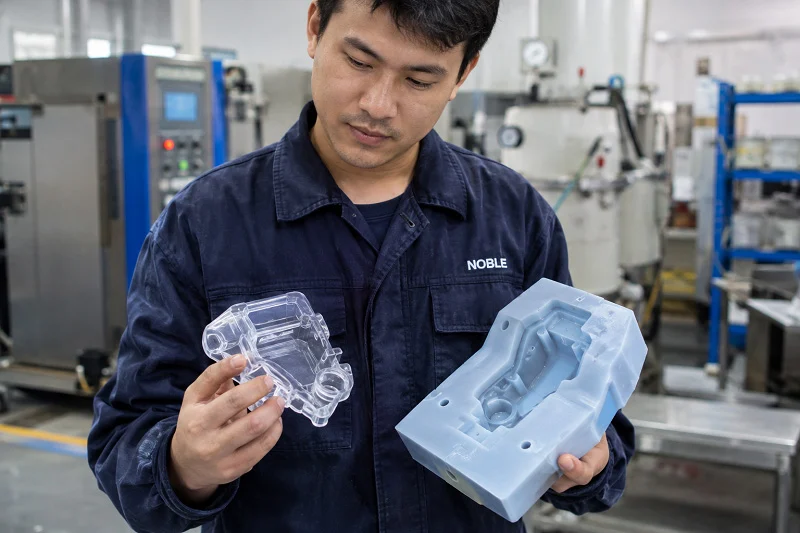
Vacuum casting rapid prototyping uses a master pattern, a silicone mold, and liquid casting resin to produce detailed plastic prototype parts. The process supports product development and small-batch manufacturing. Vacuum helps remove trapped air and reduce bubbles, which improves surface quality and helps produce parts with consistent details.
How Vacuum Casting Differs from Traditional Manufacturing
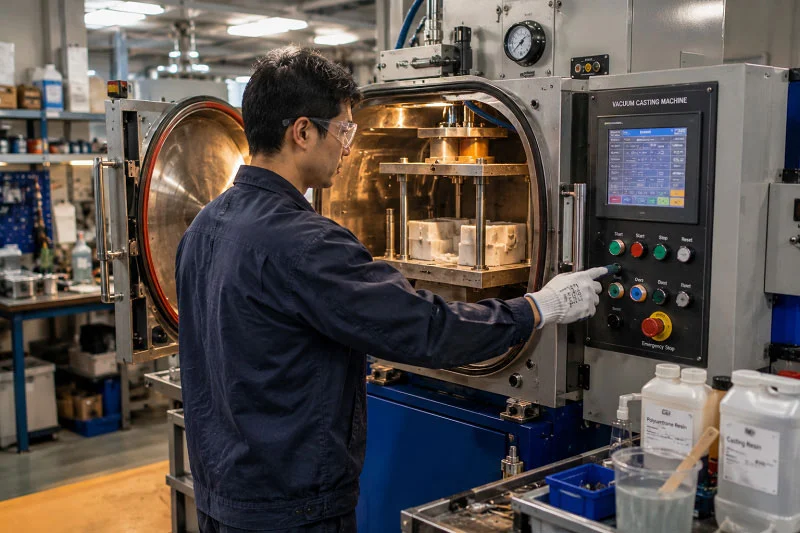
Traditional manufacturing methods like injection molding require hard tooling, which can cost thousands of dollars and take weeks to prepare. Vacuum casting rapid prototyping uses silicone molds that are faster and cheaper to make. This allows companies to test small quantities of parts and refine designs before investing in mass production.
How Does the Vacuum Casting Rapid Prototyping Process Work?
Step 1: Create the Master Pattern
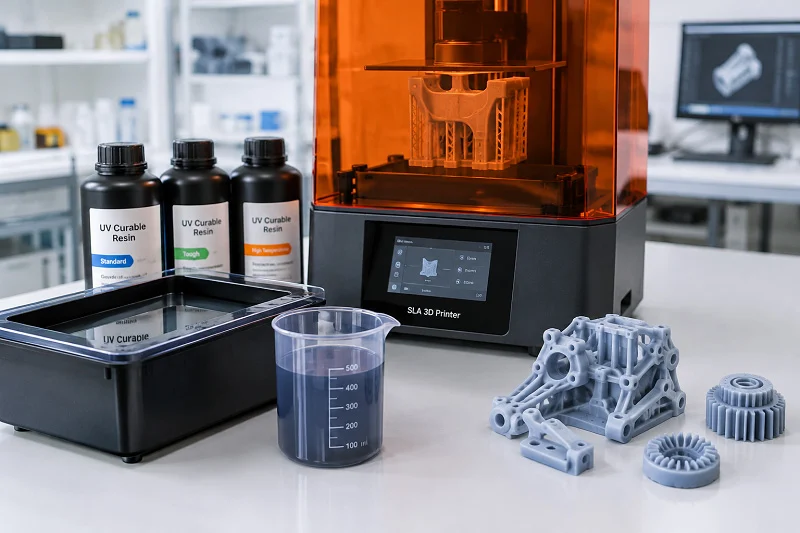
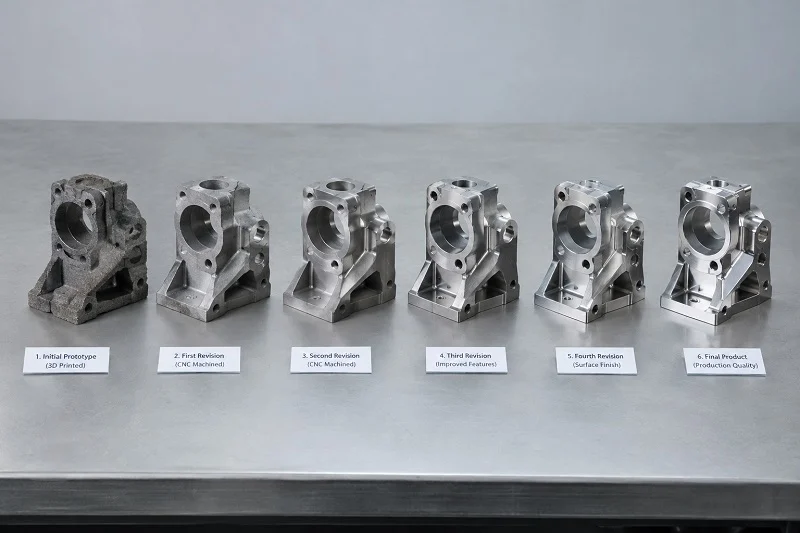
The master pattern is usually produced through SLA 3D printing or CNC machining. It must meet the required shape, dimensional accuracy, and surface finish. Since the silicone mold copies its features, any flaws may transfer to the final parts. A high-quality master is essential for reliable vacuum casting rapid prototyping.
Step 2: Create the Silicone Mold
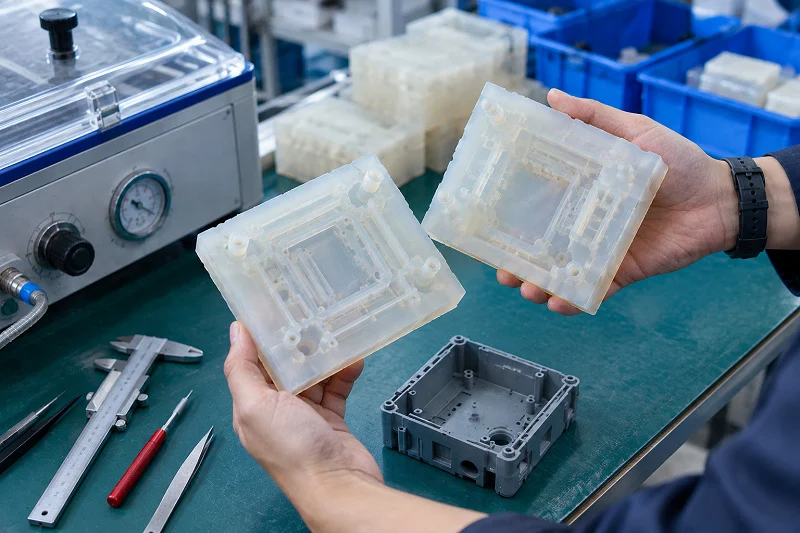
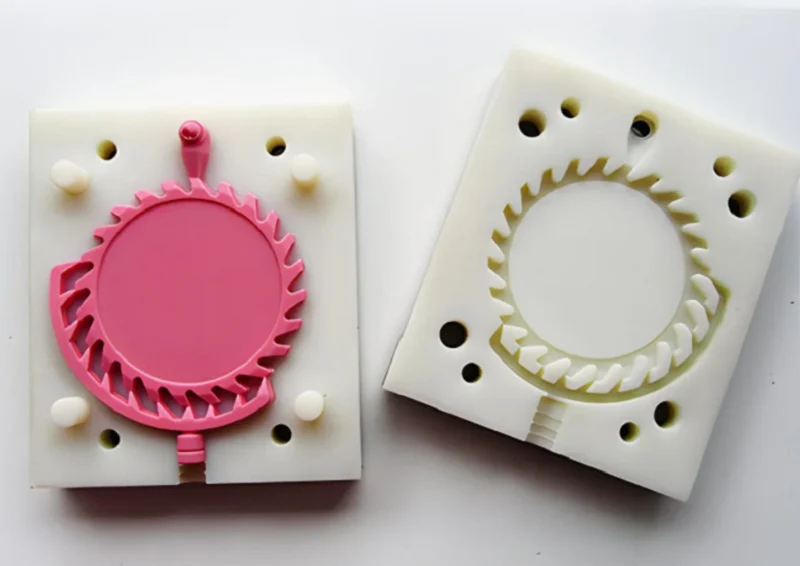
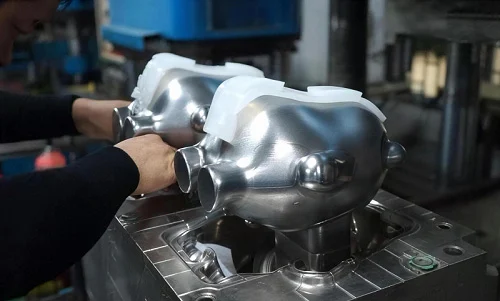
Liquid silicone is poured around the master pattern and left to cure, forming a flexible mold. The mold is then cut open carefully so the master can be removed. Clean parting lines and proper mold sealing help prevent flash and preserve fine details during casting.
Step 3: Prepare and Pour the Casting Resin
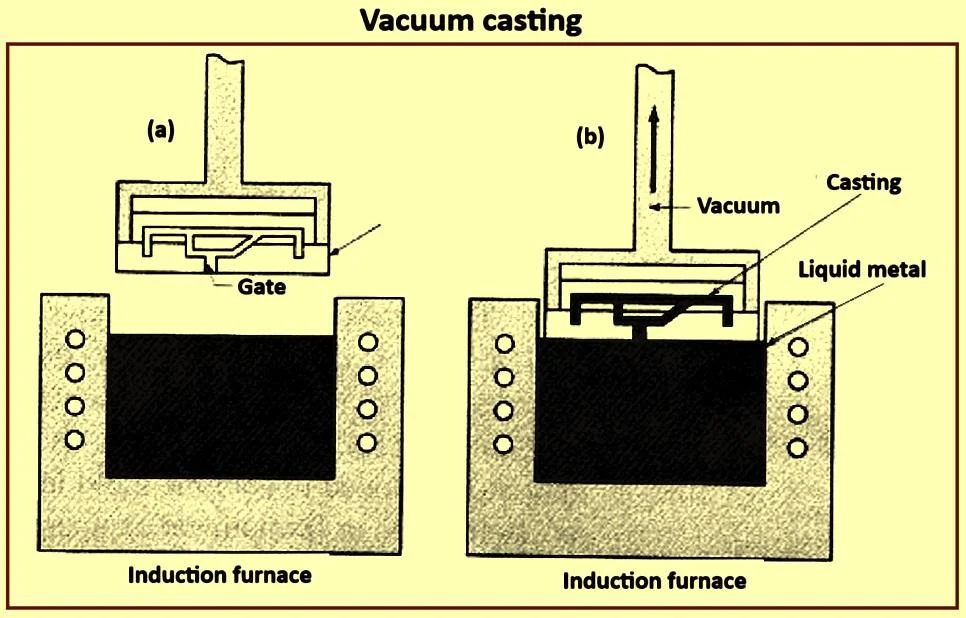
The resin components are mixed according to the manufacturer’s instructions and poured into the mold. Vacuum removes trapped air and reduces bubbles that could affect appearance or structural quality. Proper degassing is an important part of vacuum casting rapid prototyping, especially for parts with fine details or thin walls.
Step 4: Cure and Demold the Parts
The resin cures under specified conditions. Depending on the material and equipment, heat or pressure may be used to control curing. Once the resin has hardened, the part is carefully removed from the silicone mold and checked for voids, deformation, and other defects.
Step 5: Finish and Inspect the Prototype
Post-processing may include trimming, sanding, painting, polishing, and other surface treatments. Dimensional checks and visual inspections confirm whether the part meets design requirements.
NOBLE, a leading manufacturing company in China, offers vacuum casting rapid prototyping alongside professional machining and finishing services, helping clients move efficiently from prototype development to small-batch and mass production.
What Are the Benefits of Vacuum Casting Rapid Prototyping?
Lower Tooling Costs for Small Batches
Silicone molds generally cost less to produce than metal injection molds, making vacuum casting attractive for limited quantities. It allows teams to evaluate designs without investing in expensive production tooling.
High-Quality Surface Finish and Fine Details
Vacuum casting can reproduce fine surface details from a well-made master pattern. It is suitable for appearance models, product demonstrations, and prototypes that need a refined finish.
Flexible Material and Color Options
Polyurethane casting resins are available in different hardness levels, colors, and performance characteristics. Depending on the resin, manufacturers can produce parts that resemble rigid plastics, flexible elastomers, or transparent materials.
Faster Product Development and Design Validation
Vacuum casting can provide multiple prototype parts for assembly checks, user evaluations, and design reviews. It helps teams identify design issues before investing in large-scale tooling.
Suitable for Low-Volume Production
One silicone mold can typically produce multiple parts, although its service life depends on the mold, resin, geometry, and process conditions. This makes vacuum casting useful for pilot runs, limited production, and pre-production testing.
What Are the Limitations of Vacuum Casting Rapid Prototyping?
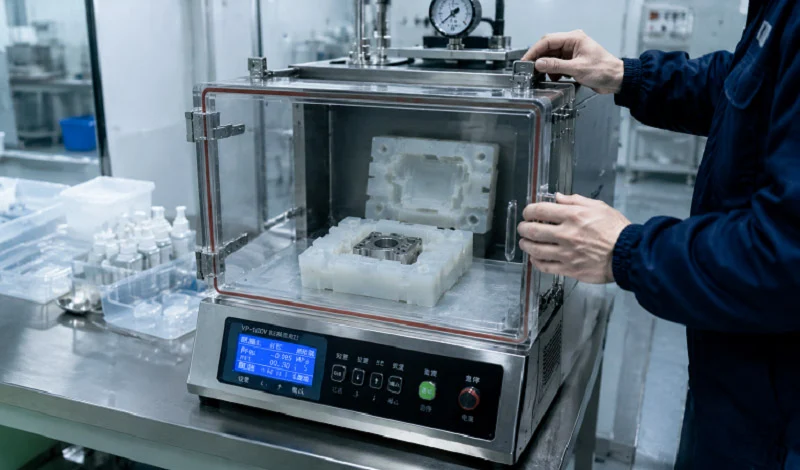
Limited Silicone Mold Life
Silicone molds wear out over repeated casting cycles and may lose dimensional accuracy or surface quality. New molds may be needed when demand exceeds the practical life of the original mold.
Material Properties May Differ from Production Plastics
Casting resins can simulate some properties of engineering plastics, but they do not automatically match the performance of injection-molded materials. Engineers should verify strength, heat resistance, chemical resistance, and other critical properties before testing.
Not Ideal for High-Volume Manufacturing
The need to create molds and cast parts individually makes vacuum casting less suitable for large production runs. Injection molding or other production processes may offer better unit economics when volumes increase.
Design and Size Constraints
Part geometry, wall thickness, undercuts, and mold separation lines can affect manufacturability. Large or complex parts may require multiple mold sections and additional finishing work.
Which Materials Are Used in Vacuum Casting Rapid Prototyping?
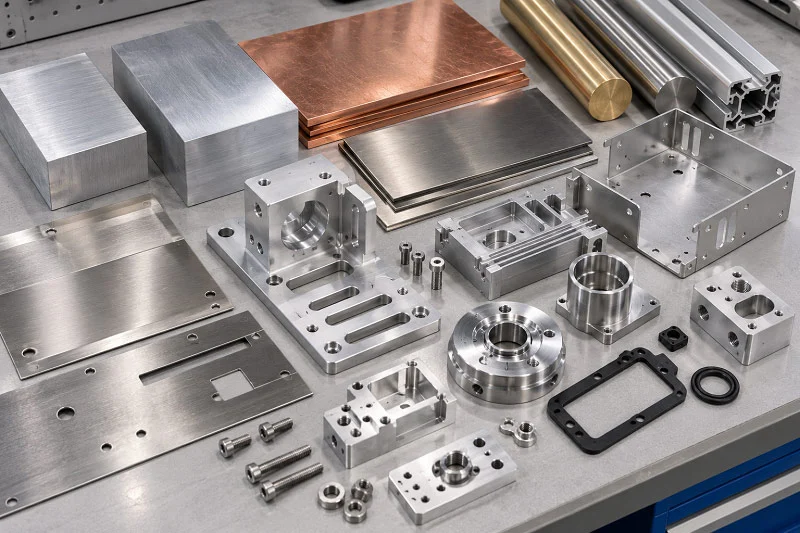
Polyurethane Resins
Polyurethane is widely used in vacuum casting rapid prototyping because it comes in many formulations. These resins vary in hardness, flexibility, and appearance. Choosing the right type helps ensure that the prototype matches its intended use and provides reliable test results.
Rigid and Engineering-Like Resins
Rigid casting resins can mimic ABS and other engineering plastics. They are often used for housings, covers, brackets, and product models that need stiffness and dimensional stability. However, resin properties vary by formulation, so check the technical data sheet before selecting a material.
Flexible and Rubber-Like Resins
Flexible resins can reproduce soft-touch parts, seals, gaskets, and rubber-like components. Hardness, elasticity, and tear resistance all matter when selecting a resin. For vacuum casting rapid prototyping, the material should match the part’s working conditions and mechanical requirements.
Transparent and Colored Resins
Clear resins are used for transparent covers, lenses, and visual models, while pigments create colored parts. Optical clarity and UV stability vary by resin. Careful finishing, including polishing, can improve transparency and help achieve the required appearance.
What Are the Applications of Vacuum Casting Rapid Prototyping?
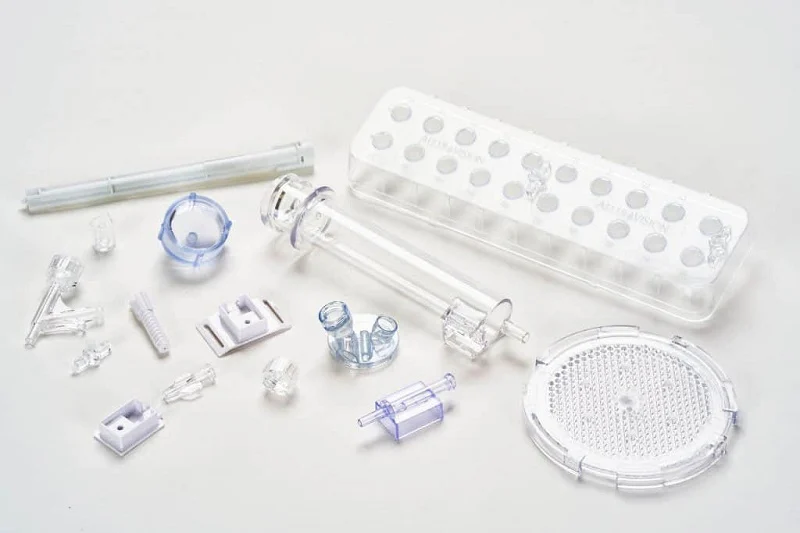
Consumer Electronics and Product Enclosures
Vacuum casting can produce plastic housings, control panels, covers, and other appearance-critical components. Teams use these parts to evaluate styling, check fit, and test assembly before investing in production tooling. NOBLE, a leading manufacturing company in China, helps clients validate designs through prototyping and professional manufacturing services.
Automotive and Robotics Components
Automotive and robotics teams use vacuum casting rapid prototyping to assess component fit, packaging, and selected functional characteristics. Material choice is important because heat, impact, vibration, and chemical exposure can affect performance. Resin properties should match the intended test conditions.
Medical Device Prototypes
Vacuum casting can produce medical device housings, ergonomic models, and other early-stage development parts. Applications involving patient contact or sterilization need additional material validation and compliance checks. Suitable materials and processes must be confirmed before prototypes are used in regulated applications.
Industrial Equipment and Functional Models
Custom covers, knobs, handles, and low-volume components can be produced through vacuum casting rapid prototyping. These parts help teams evaluate assembly and selected mechanical functions. The chosen resin must meet the project’s strength, dimensional, and environmental requirements.
Product Presentation and Market Testing
Vacuum casting produces polished prototypes for stakeholder reviews, product demonstrations, photography, and early market testing. Their production-like appearance helps teams assess design details and collect feedback before mass manufacturing. Suitable resin selection and surface finishing are important for achieving a professional result.
Vacuum Casting Rapid Prototyping vs. CNC Machining vs. 3D Printing
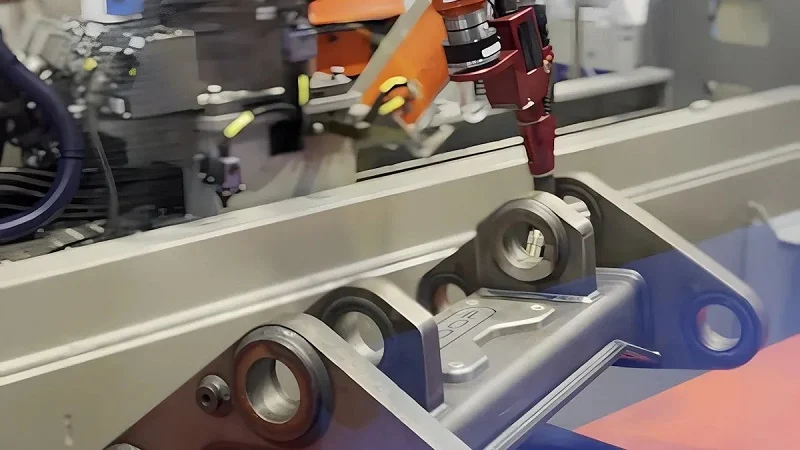
The right process depends on part quantity, geometry, material requirements, surface finish, tolerances, lead time, and total project cost. Unit price alone does not tell the whole story. Compare tooling costs, finishing needs, and production time to find the best fit for your project.
| Factor | Vacuum Casting | CNC Machining | 3D Printing |
| Initial tooling | Silicone mold required | No dedicated mold | No dedicated mold |
| Best-fit quantities | Prototypes and small batches | One-offs to production batches, depending on cost | One-offs and small batches |
| Surface finish | Often smooth | Depends on machining and finishing | Depends on process and orientation |
| Design changes | Mold may need replacement | Update the toolpath | Update the digital model |
| Material selection | Primarily casting resins | Broad range of machinable materials | Depends on printing technology |
| Complex geometry | Limited by mold design | Limited by tool access | Often well suited |
NOBLE, a leading manufacturing company in China, offers vacuum casting, CNC machining, and 3D printing. Its team helps clients compare process capabilities, costs, and lead times to select a suitable manufacturing method. Vacuum casting rapid prototyping is often a good choice for small batches that need smooth surfaces and consistent appearance.
When Should You Choose Vacuum Casting Rapid Prototyping?
When You Need Several Identical Plastic Prototypes
When you need multiple copies of one design for assembly checks, demonstrations, or evaluation, vacuum casting rapid prototyping is a practical choice. One master pattern creates a silicone mold, which can produce repeated parts with consistent appearance and fit. It works well for small batches of around 10–20 parts, depending on part size and mold life.
When Appearance and Surface Quality Matter
Vacuum casting rapid prototyping suits parts that need smooth surfaces, fine details, and a presentation-ready appearance. The master pattern determines much of the final quality, while finishing improves the result. A well-made master helps produce professional-looking prototypes for design reviews and customer demonstrations.
When You Need Parts Before Injection Molding
Injection molding requires upfront tooling investment and can take weeks to prepare. Vacuum casting rapid prototyping offers a way to produce functional-looking parts while the design is still being reviewed. Teams can collect feedback, test assembly, and refine the product before committing to mass production tooling.
When Another Manufacturing Process Is More Suitable
CNC machining is often better for metal parts, specific engineering materials, and tight tolerances. 3D printing suits complex one-off geometries, while injection molding is often more cost-effective for high-volume production. NOBLE, a leading manufacturing company in China, offers these processes to help clients select the right method based on part requirements, quantity, and budget.
How to Choose a Vacuum Casting Rapid Prototyping Service Provider
Evaluate Technical Capabilities and Material Options
Choose a supplier that can advise on resin selection, mold design, part geometry, and surface finishing. Experience with similar components helps reduce production risks. Strong technical support is important because vacuum casting rapid prototyping requires careful control of both mold quality and material properties.
Confirm Quality Control and Dimensional Inspection
Ask how the supplier checks dimensions, surface appearance, and consistency between parts. Share critical tolerances and inspection requirements before production begins. Clear quality standards help ensure that vacuum casting rapid prototyping parts meet design specifications and are suitable for their intended use.
Review Lead Time, Batch Size, and Total Cost
Request a detailed quotation covering master pattern production, silicone mold making, casting, and post-processing. Confirm delivery dates and expected mold life, as repeat orders may require a replacement mold. The total cost of vacuum casting rapid prototyping includes more than the resin and casting operation.
Look for Support Beyond Part Production
A capable manufacturing partner can provide design feedback, CNC machining, 3D printing, surface finishing, and assembly. These services simplify the move from prototype validation to later production stages. NOBLE combines multiple manufacturing capabilities to help clients coordinate their vacuum casting rapid prototyping projects and prepare for small-batch or mass production.
Vacuum Casting Rapid Prototyping Services at NOBLE
From Master Pattern to Finished Prototype
Introduce NOBLE’s plastic and metal prototyping capabilities and its support throughout prototype development. Explain how coordinated manufacturing and finishing services can help customers receive parts ready for evaluation.
Custom Solutions for Different Industries
Highlight relevant applications such as electronic enclosures, industrial components, automotive parts, and product development models. Emphasize that process and material recommendations should match each project’s technical requirements.
Request a Vacuum Casting Quote
Encourage readers to share their CAD files, target quantity, resin requirements, finish, and tolerances to receive a more accurate assessment. A clear call to action can turn relevant search traffic into qualified manufacturing inquiries.
FAQs About Vacuum Casting Rapid Prototyping
How many parts can one silicone mold produce?
Mold life depends on part geometry, resin chemistry, and handling. Some molds produce around 20 parts, while others last for 50 or more. Ask your supplier to estimate mold life for your specific vacuum casting rapid prototyping project and plan for replacement when needed.
How long does vacuum casting take?
Lead time depends on master pattern preparation, silicone curing, resin curing, finishing, and order quantity. Simple projects may finish within days, while complex parts take longer. A supplier can provide a more accurate schedule after reviewing the design and specifications for your vacuum casting rapid prototyping project.
Is vacuum casting better than 3D printing?
Neither process is always better. 3D printing suits one-off parts and frequent design changes because no mold is needed. Vacuum casting rapid prototyping is often a better fit for multiple similar parts that need a smooth finish and consistent appearance. The right choice depends on quantity, geometry, and surface requirements.
Is vacuum casting suitable for functional prototypes?
Yes, provided the selected resin meets the prototype’s mechanical and environmental requirements. Engineers should check strength, temperature limits, and chemical compatibility before testing. Vacuum casting rapid prototyping can support functional evaluation, but cast resin properties may differ from those of the final production material.
Is vacuum casting suitable for mass production?
Vacuum casting is best suited to prototypes, pilot runs, and small batches. Injection molding is often more economical for high-volume production because tooling costs are spread across more parts. NOBLE, a leading manufacturing company in China, helps clients assess when to move from vacuum casting rapid prototyping to injection molding as demand grows.
What files are needed for a vacuum casting quote?
Provide a 3D CAD file, target quantity, material requirements, surface finish, and critical dimensions. Technical drawings, reference photos, and details about the intended use are also helpful. Complete information allows suppliers to assess feasibility and prepare a more accurate vacuum casting rapid prototyping quotation.