Introduction to Brass Vacuum Casting
Brass is a common alloy composed of copper and zinc. It is easy to machine, offers good corrosion resistance, and has decorative appeal. However, casting it to achieve a flawless finish is much more difficult than it appears. Air can become trapped within the material, leading to the formation of oxides and the appearance of porosity. Parts produced this way have poor surface quality and may even exhibit structural defects.
Brass vacuum casting technology solves these problems. This process removes air from the mold before pouring, allowing the metal to completely fill the cavity—leaving no residual gas or surface defects—and resulting in dense, smooth-surfaced parts. This is equally important for both functional prototypes and decorative components.
Vacuum casting of brass is also used for brass prototype casting—the production of single pieces or small batches that require dimensional accuracy and surface quality before a decision is made to invest in a production mold. Vacuum technology eliminates uncertainties during the casting process.
What Is Brass Vacuum Casting?
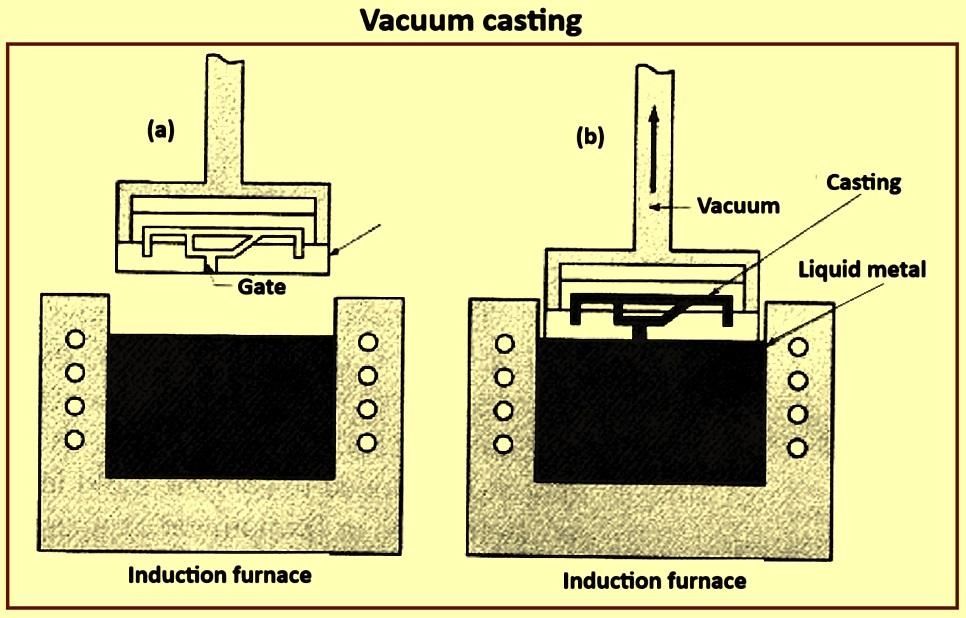
The operator places the mold into a sealed chamber, evacuates the air from it, and then injects molten brass. The vacuum draws the metal into every corner of the mold cavity, leaving no residual gas that could cause bubbles to form.
Traditional casting relies on gravity and the metal’s own pressure to expel air through vent holes. This method is not foolproof: vent holes can become blocked, creating air pockets that result in porosity in the casting. In contrast, vacuum brass casting completely removes air, allowing the metal to fill the mold cavity cleanly and completely.
How Vacuum Improves Brass Casting Quality
- Reduces air entrapment. No air means no bubbles. Higher metal density.
- Improves mold filling. Vacuum draws metal into thin-walled sections. Details that cannot be filled in gravity casting can be fully reproduced.
- Reduces porosity. Gas porosity is eliminated. Shrinkage porosity still exists but can be controlled through the gate and riser.
- Better reproduction of fine details. Sharp edges, surface textures, and complex patterns can all be accurately reproduced. The metal fills every corner of the mold cavity.
- More consistent casting results. All variables are controlled. Vacuum level, mold temperature, and metal temperature are maintained at constant levels. Casting quality is repeatable.
Why Use Brass for Vacuum Casting?
Brass is a material that fits the brass casting process well. Its properties match the benefits of vacuum processing.
- Good corrosion resistance. Brass does not rust. Although an oxide layer may form, the corrosion rate is low. It can withstand erosion in outdoor and marine environments.
- Attractive appearance. Its golden luster is highly decorative. When polished, it achieves a high gloss, giving it a premium look.
- Excellent machinability. Brass is easy to machine. Machining threads, holes, and precision surfaces is straightforward. Brass prototype castings can meet tight tolerance requirements with minimal tool wear.
- Good strength-to-weight ratio. While brass is not the lightest material, its strength is sufficient to meet the demands of pipe fittings, valves, and decorative hardware.
- Premium look and feel. Its weight and appearance convey a sense of quality. Brass is often used for visible components in consumer products.
Brass vacuum casting combines the material’s advantages with a process that eliminates defects. Parts feature sound structure and smooth surfaces, and the cost remains within an acceptable range for small- to medium-volume production. This is where its value lies.
How Does Brass Vacuum Casting Work?
Step 1: Creating the Master Pattern
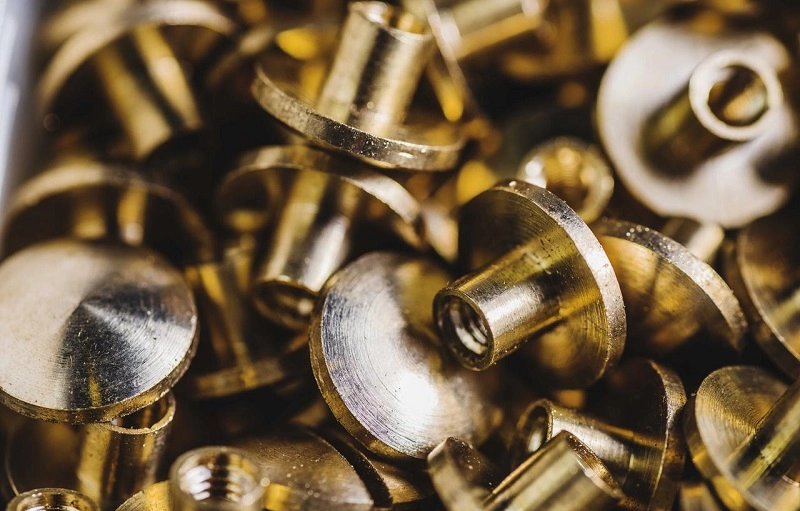
The master mold defines the shape of the part. There are four methods for creating a master mold. CNC machining cuts the master mold from solid material. It offers high precision and good surface finish. SLA 3D printing uses liquid resin. It produces smooth surfaces and fine details, and allows for rapid prototyping. SLS printing uses powdered materials. It offers higher strength than SLA and is suitable for functional test specimens.
Existing production parts can serve as master molds. If a ready-made part is available, it can be used directly as a master mold. The precision of the master mold is critical. Any surface defects will be transferred to the casting. A rough master mold will produce a rough casting, while a polished master mold will produce a smooth casting.
Step 2: Mold Manufacturing
There are three common types of molds used in the brass casting process.
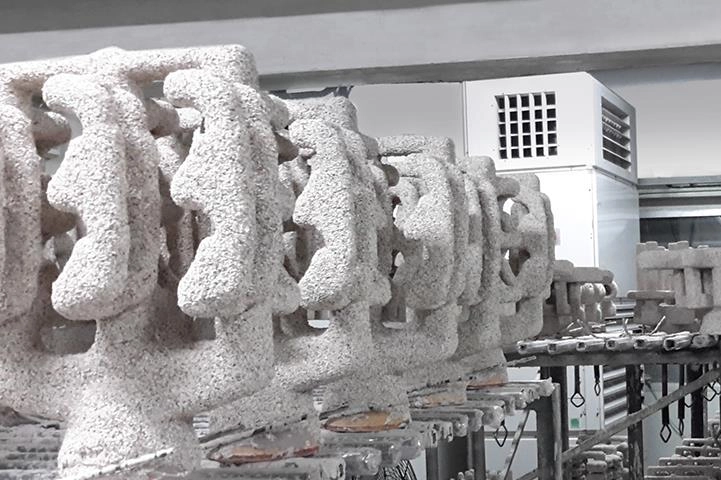
- Ceramic lost-wax casting molds. These can withstand high temperatures and reproduce fine details. Complex brass parts are typically cast using ceramic molds.
- Graphite molds. These offer good thermal stability, are suitable for specific applications, and are less expensive than ceramic molds.
- Metal molds. These are suitable for mass production; although the initial mold investment is higher, the cost per unit is lower.
The specific choice depends on production volume, complexity, and cost.
Step 3: Brass Alloy Selection and Melting

The alloy determines the properties.
| Brass Alloy | Characteristics | Typical Uses |
| C260 Brass | High ductility | Decorative parts, formed components |
| C360 Brass | Excellent machinability | Precision components |
| C464 Naval Brass | Corrosion resistance | Marine applications |
Controlling the melting temperature is critical. The melting point of brass is approximately 900°C to 950°C. Zinc volatilizes at lower temperatures. The loss of zinc from the melt causes changes in the alloy composition, which in turn affects its performance. Therefore, the melt must be covered or processed under a controlled atmosphere.
Alloy consistency is critical. The same raw materials should be used, the melt temperature should be monitored, and adjustments should be made based on zinc loss. This ensures castings with predictable performance.
Step 4: Vacuum-Assisted Casting
The operator places the mold in the vacuum chamber, evacuates the air, and pours or injects molten brass into it. At this point, the vacuum draws the metal into the mold, filling the thin-walled sections. Complex geometries are thus reproduced.
Step 5: Cooling, Mold Removal, and Finishing
After the parts have cooled, the operator removes the mold and cuts off the sprue and runner.
The sprue stubs are removed by grinding, and the surface is polished to achieve the required surface roughness. Sandblasting is used to remove residual mold material. CNC machining is used to create precision features. Surface treatment provides corrosion protection or a decorative finish. Quality inspection verifies dimensions and surface quality.
This is the complete process for brass vacuum casting. Each step influences subsequent processes. Vacuum technology is the core driving force, enabling the production of parts that traditional casting methods cannot match.
Brass Vacuum Casting vs Other Brass Manufacturing Processes
Brass Vacuum Casting vs CNC Machining
| Factor | Vacuum Casting | CNC Machining |
| Material waste | Lower | Higher |
| Complex shapes | Excellent | Limited |
| Surface finish | Excellent | Excellent |
| Setup cost | Medium | Low |
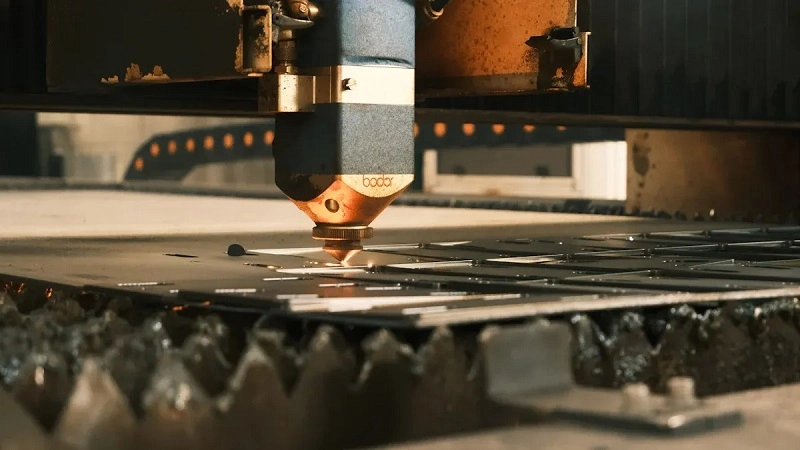
CNC machining starts with a solid blank. The cutting tool removes all material that is not part of the workpiece, resulting in significant material waste. Complex internal structures are difficult to machine. Clamping costs are low. The cost per unit increases with complexity.
Brass vacuum casting uses metal only where it is needed, resulting in less material waste. Machining complex shapes is relatively simple. Mold costs are moderate. For complex parts, casting is more cost-effective than machining from a solid blank.
Brass Vacuum Casting vs Investment Casting
These two processes are similar. Both use the lost-wax or lost-mold method. Both can produce parts with rich detail. Both are suitable for small-batch production.
The difference lies in the vacuum treatment. Investment casting relies on gravity and degassing. As the metal flows, it pushes air forward, whereas in brass vacuum casting, air is removed before pouring. As a result, filling is more thorough, thin-walled sections are filled more effectively, and porosity is lower.
Mold preparation methods also differ. In investment casting, a ceramic shell is built up layer by layer; in vacuum casting, ceramic, graphite, or metal molds can be used. The choice of mold type depends on production volume and the specific application.
Brass Vacuum Casting vs Die Casting
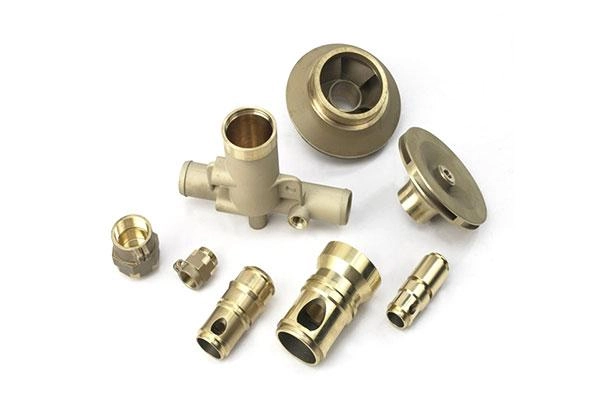
Die casting is suitable for mass production. Mold costs are high—steel molds can withstand hundreds of thousands of cycles. The unit cost is low, but the initial mold cost is high.
Brass vacuum casting requires a lower mold investment, and ceramic molds are less expensive than steel molds. This process is well-suited for prototyping and small-batch production. Castings with complex geometries are easier to produce. Although the cost per unit is higher than that of die casting, the total cost for small batches is lower.
Die casting is the ideal choice for high-volume production. Brass vacuum casting serves as a transitional solution for prototyping, testing, and small-batch production. The specific choice depends on production volume and the complexity of the parts.
NOBLE: Your Partner for Brass Vacuum Casting and Integrated Manufacturing Solutions

NOBLE is a manufacturing partner. Its business focuses on metalworking and plastics processing. Prototyping and small-batch production are its areas of expertise. Final assembly services round out the full range of offerings.
Its capabilities span a wide range of areas. Brass vacuum casting produces structurally complex, flawless components. CNC machining enables the production of precision features to final tolerance requirements. Injection molding handles high-volume production of plastic parts. Surface treatments serve both protective and aesthetic functions. Assembly services integrate components into finished products.
A single supplier manages the entire process, ensuring seamless coordination without the need for handoffs.
Quality Assurance and Certifications
Our quality system has been certified. ISO 9001:2015 covers a general quality management system, while ISO 13485:2016 adds the necessary stringent requirements specific to the manufacture of medical devices.
Our commitment is unambiguous. Process control ensures repeatable results. Product consistency means that every component meets specification requirements. Traceability allows us to track raw materials throughout the entire process, from receipt to shipment. We meet all of our customers’ specific requirements without exception.
Why Choose NOBLE?
One-stop manufacturing solution. Engineering support from design to production. Flexible small-batch manufacturing. Quality-focused production processes.
Brass vacuum casting is part of a larger capability. The process fits into the full manufacturing workflow. Design support, prototyping, production, finishing, assembly—all under one roof. The customer manages one supplier. The supplier manages the rest.
FAQ About Brass Vacuum Casting
What is brass vacuum casting?
A metal casting process that uses vacuum pressure to draw molten brass into a mold cavity. The vacuum improves mold filling, reduces air entrapment, and enhances surface quality compared to conventional gravity casting.
What types of molds are used for brass vacuum casting?
Three common options exist. Ceramic investment molds offer excellent detail reproduction and high-temperature resistance for complex parts. Graphite molds provide good thermal stability for specialized applications. Metal molds have longer service life and suit repeated production runs. Mold selection depends on part geometry, production volume, surface requirements, and budget.
What brass alloys can be used in vacuum casting?
C260 brass has good ductility for decorative and formed components. C360 brass offers excellent machinability for precision parts. C464 naval brass provides strong corrosion resistance for marine applications. The choice depends on mechanical requirements, corrosion resistance, machining needs, and appearance requirements.
What parts can be made using brass vacuum casting?
Industrial components like valves, connectors, mechanical housings, and fittings. Automotive prototype components and decorative parts. Consumer products like handles, hardware, and decorative components. Medical and laboratory precision instrument parts. The process suits parts that require detail and surface quality.
Is brass vacuum casting suitable for prototypes?
Yes. It produces real metal parts instead of plastic models. Functional testing is possible. Appearance and weight match production parts. Expensive production tooling is avoided. Applications include product validation, engineering testing, and customer demonstrations. This is a core use of brass prototype casting.
What surface finishes are available for brass vacuum cast parts?
Polishing creates a bright, reflective surface. Brushing provides a satin or matte finish. Bead blasting and sand blasting produce uniform textures. Plating adds a different metal layer. Patination creates controlled tarnish for decorative effect. Protective coatings prevent tarnishing. The finish affects appearance, corrosion resistance, and texture. Brass casting surface finish options cover decorative and functional requirements.
What is the difference between brass vacuum casting and CNC machining?
| Factor | Brass Vacuum Casting | CNC Machining |
| Material usage | Lower waste | More material removal |
| Geometry | Complex shapes | Limited by tooling access |
| Surface detail | Excellent | Excellent |
| Best volume | Small-medium batches | Low-medium quantities |
Hybrid manufacturing is common: cast the near-net shape, then machine critical dimensions. This combines the strengths of both processes.
How do I choose a brass vacuum casting manufacturer?
Evaluate casting experience, material expertise, engineering support, quality inspection capability, surface finishing options, and certifications. Integrated suppliers offering design assistance, casting, CNC machining, and assembly provide one-stop service. The right partner reduces handoffs and simplifies project management.