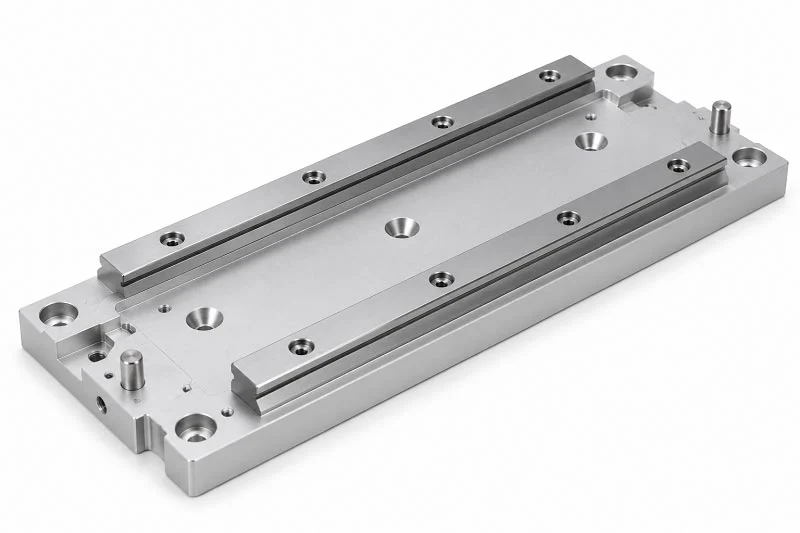
Picking the right linear guide mounting plate can feel confusing. For most uses in 2026, 6061-T6 aluminum with CNC machining gives the best mix of cost, accuracy, and weight.
Market prices from May 2026 show 6061-T651 plate costing between USD 7.70 and USD 14.30 per kilogram. That price range keeps aluminum affordable for most linear motion systems.
Your specific needs still matter. Heavy loads might need steel linear guides mounting plate. Corrosive areas might push you toward stainless rails. Cleanroom settings might favor plastic guides. Different guides handle different stresses. Your design choices matter too.
Whether you need precise linear motion for a medical device or controlled linear motion for factory automation, knowing these trade-offs leads to success. Proper selection also affects overall accuracy.
Materials for Linear Guide Mounting Plates
Your material choice shapes everything downstream. Load, environment, and required precision all point to different alloys. A useful rule of thumb: match the plate material to the guide rail material. Steel rails on steel plates expand at similar rates. Aluminum rails on aluminum plates behave the same way. Mismatched pairs can introduce thermal stress that distorts alignment.
Aluminum Alloys: The 2026 Default Standard
Aluminum dominates most mounting plate applications. It machines quickly, resists corrosion naturally, and weighs roughly one-third as much as steel. For linear motion systems that cycle rapidly, that weight reduction cuts inertia and lets motors run smaller.
Why 6061-T6 Dominates for Precision and Cost
6061-T6 offers the best all-around balance for most builds. Its minimum yield strength sits at 240 MPa (35 ksi), with typical values reaching 276 MPa (40,000 psi). That strength handles moderate loads without excessive thickness. The alloy also holds tight tolerances during machining, which matters when your linear guide mounting plate demands flatness across its entire face.
Cost works in its favor too. A raw billet of 6061 aluminum runs about USD 5.37 per kilogram. Compare that to AISI 1018 steel at USD 1.62 per kilogram, and aluminum looks expensive at first glance. But here’s the catch: aluminum’s lower density means you need far less material by weight for the same part volume. When you factor in machining time and tool wear, the aluminum part often delivers a 40.5% lower total piece cost despite the pricier raw stock. For prototypes and mid-volume production, 6061-T6 remains the default choice.
When to Consider 7075-T6 for Higher Strength
Sometimes 6061-T6 simply isn’t strong enough. Applications with heavy cantilevered loads or extreme shock forces need more. That’s where 7075-T6 enters the picture. This alloy delivers roughly double the yield strength of 6061-T6, approaching steel-like performance at aluminum weight. Aerospace and racing industries use it extensively.
The trade-offs matter. 7075-T6 costs more per kilogram and machines with greater difficulty. It also lacks 6061’s corrosion resistance, often requiring protective coating. Use it when your linear guide rails demand a stiffer foundation and weight reduction remains critical. For most factory automation, 6061-T6 suffices.
Steel and Stainless Steel
Steel brings stiffness and damping that aluminum cannot match. When loads get heavy or vibrations threaten accuracy, steel plates earn their weight penalty.
Low-Carbon Steel for Cost-Effective, High-Load Applications
Plain low-carbon steel like AISI 1018 offers the cheapest path to a rigid mounting surface. At USD 1.62 per kilogram, material costs stay minimal. Steel’s higher modulus of elasticity means less deflection under identical loads. Heavy-duty machine tools and stamping presses frequently use steel plates beneath their linear guide mounting plate.
The downsides include weight and corrosion susceptibility. Steel plates require protective finishes like black oxide or zinc plating. For stationary machines where weight matters little, low-carbon steel delivers unbeatable value.
Stainless Steel (e.g., 304, 316) for Corrosive Environments
Washdown environments and chemical processing demand stainless steel. Grades 304 and 316 resist rust and withstand harsh cleaning agents. Food processing lines and pharmaceutical equipment commonly spec stainless plates under their linear guide rails. Expect higher material costs and slower machining speeds. The corrosion resistance justifies the premium where hygiene regulations apply.
Alternative Materials
Beyond metals, specialized materials solve niche problems. Each brings unique properties worth considering.
Using Filled Plastics (e.g., PEEK, Acetal) for Light-Duty or Cleanroom Use
Plastics shine in cleanrooms and light-duty applications. PEEK stands out with a maximum continuous operating temperature of 250°C (482°F). That rating means PEEK retains its mechanical properties even during sustained high-temperature exposure. Acetal offers lower cost with good wear characteristics. Both materials eliminate lubrication concerns and run quietly. Their limited load-bearing capacity restricts them to light carriages and low-force systems.
The Role of Carbon Fiber Composites in High-Speed, Low-Mass Systems
Carbon fiber composites deliver exceptional stiffness-to-weight ratios. High-speed pick-and-place machines benefit from reduced moving mass. The material dampens vibrations effectively. However, carbon fiber costs substantially more than aluminum and requires specialized machining techniques. Its use remains limited to performance-critical linear guiding systems where every gram counts.
Granite and Cast Iron for Ultimate Vibration Damping and Stability
Metrology equipment and precision measuring machines demand exceptional stability. Granite provides natural damping and thermal stability unmatched by metals. Cast iron offers similar benefits with better machinability. Both materials excel in coordinate measuring machines and optical inspection systems. Their weight makes them impractical for moving applications but ideal for stationary bases. When your linear guide mounting plate support sub-micron positioning, these materials provide the rock-solid foundation your design requires.
Manufacturing Processes for Mounting Plates
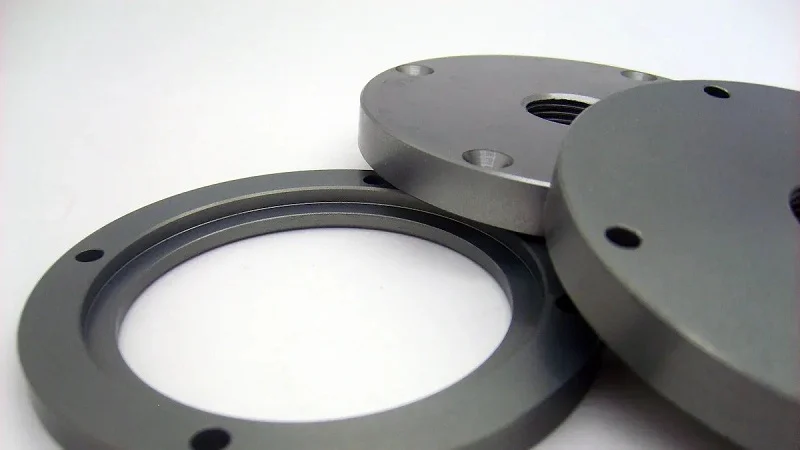
The process you pick affects cost, time, and accuracy. Each method has different strengths. CNC machining gives the most precise measurements. Additive manufacturing makes complex shapes. Cutting processes handle simple flat plates fast. Casting works for high-volume production. Your needs for volume and precision should guide the choice.
CNC Machining: The Best for Precision
CNC machining is still the top choice for linear guide mounting plates. Machining centers use rotating tools to cut material from a solid block. This process gives great flatness and accuracy. For most linear motion systems, machined plates give the surface quality guides need to work well.
Getting Critical Flatness and Hole Tolerances
Flatness is more important than any other size on a mounting plate. A warped surface makes rails twist and bearings wear out early. CNC machining can keep flatness within 0.01 mm over 100 mm. That level of accuracy keeps carriage movement smooth and even.
Hole placement also needs care. Linear guide mounting plate bolt to the plate through holes in exact spots. If those holes shift from their planned positions, the rail bends when installed. That bending causes binding and uneven load. CNC machines hold hole positions within ±0.05 mm or better. This precision makes sure your guides sit exactly where you designed them.
Surface finish also gets better with CNC machining. Machined faces usually have roughness around Ra 1.6 µm. For high-precision work, a second grinding step can improve that to Ra 0.4 µm or smoother. The smoother the surface, the better the contact between plate and rail.
Cost and Lead Time for Machined Plates
CNC machining costs more per part than most other methods. Setup time, tooling, and machine hours add up. A single prototype plate might take several hours to program and machine. Production runs spread those costs across many parts, lowering each unit’s price.
Lead times vary with complexity. Simple plates with a few holes may ship within days. Complex designs with tight tolerances and many features need more machine time. Most machine shops quote one to three weeks for typical mounting plates. Rush orders exist but cost more.
For quantities under a few hundred pieces, CNC machining usually wins on total cost. The process needs no expensive molds or dies. Each part costs the same no matter the batch size. That helps with budgeting and scheduling.
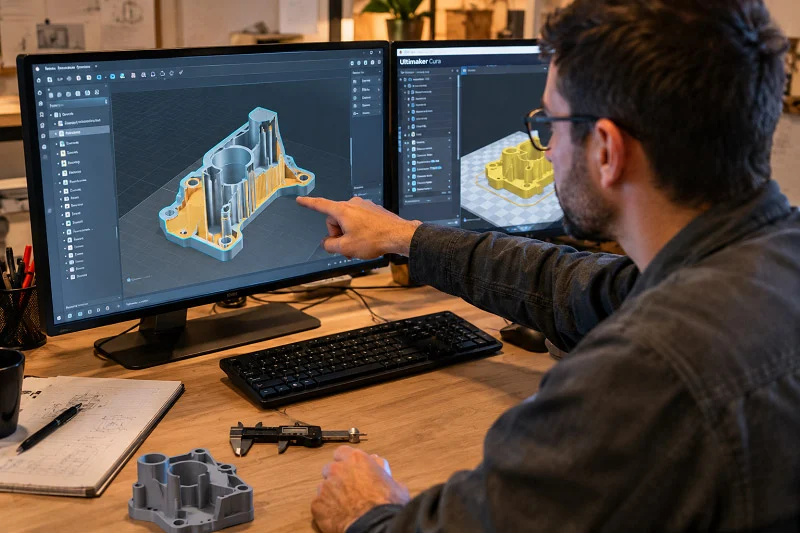
Additive Manufacturing (3D Printing): Prototyping and Complexity
Additive manufacturing builds parts layer by layer from digital models. The technology has improved a lot for metal parts. Linear guide mounting plates can benefit from design freedom that machining cannot match.
When 3D Printing Is Not the Right Choice for Production
Despite its benefits, 3D printing has trouble with production costs. Material costs are several times higher than wrought billet. Build times stretch into hours or days for a single plate. Surface finish needs extra work to match machined quality. Dimensional accuracy is not as good as CNC.
The technology works best for prototypes and low-volume special parts. Engineers can test designs quickly without spending on tooling. Once production volumes pass a few pieces, machining becomes cheaper. For most linear guide mounting plates, 3D printing is a development tool, not a production method.
Metal 3D Printing (DMLS/SLM) for Lightweight, Optimized Designs
Direct Metal Laser Sintering (DMLS) and Selective Laser Melting (SLM) both use lasers to melt metal powder. These processes build parts with great geometric freedom. Internal cooling channels, lattice structures, and optimized ribbing become possible. Designers can remove material exactly where stress allows, cutting weight a lot.
Layer thickness in these processes is usually 20 to 60 microns. That fine detail gives small features and smooth surfaces. The powder method also wastes no material. Unused powder gets recycled for future builds.
For high-speed linear bearing systems, less weight means faster acceleration. A 3D-printed aluminum plate could weigh 30% less than a machined one while staying stiff. That matters in pick-and-place machines and semiconductor gear.
Alternative Processes
Beyond machining and printing, other processes make mounting plates. Each fits specific needs.
Extrusion for Simple, Long Profiles with Constant Cross-Sections
Extrusion pushes heated aluminum through a shaped die. The process creates long profiles with identical cross-sections. Linear guide rails often mount to extruded profiles in gantry systems and automation frames. The process works for plates with constant thickness and simple hole patterns added later.
Extrusion costs little per meter and ships fast. Standard profiles come from stock. Custom dies cost several thousand dollars but spread out over large volumes. The trade-off: extrusion only works for straight, uniform shapes. Complex features need secondary machining.
Laser and Waterjet Cutting for Simple, Flat Profiles
Cutting processes do well at making flat plates from sheet stock. Both laser and waterjet systems follow digital patterns to cut 2D shapes. The methods differ in how they cut through the material.
Waterjet cutting uses high-pressure water mixed with abrasive particles. The cold process avoids heat-affected zones. A 10 mm thick steel plate cuts with dimensional tolerance of ±0.25 mm. That accuracy works for most mounting jobs, where flatness gets fixed later by grinding.
Laser cutting offers similar speed with thinner materials. Thermal effects can change edges on thicker stock. Both processes make parts fast and cheap. For simple rectangular plates with bolt holes, cutting followed by drilling often beats full CNC machining on cost.
| Material Thickness Range | Dimensional Tolerance (Length & Width) |
| Up to 1.0 mm | ±0.25 mm |
| Over 1.0 mm to 3.0 mm | ±0.25 mm |
| Over 3.0 mm to 6.0 mm | ±0.25 mm |
| Over 6.0 mm to 25 mm | ±0.25 mm |
| Over 25 mm to 50 mm | ±0.25 mm |
Casting for High-Volume Production of Complex Shapes
Casting pours molten metal into molds. The process repeats complex shapes at high volumes. Die casting makes aluminum plates with steady dimensions. Sand casting handles larger parts with lower tooling costs.
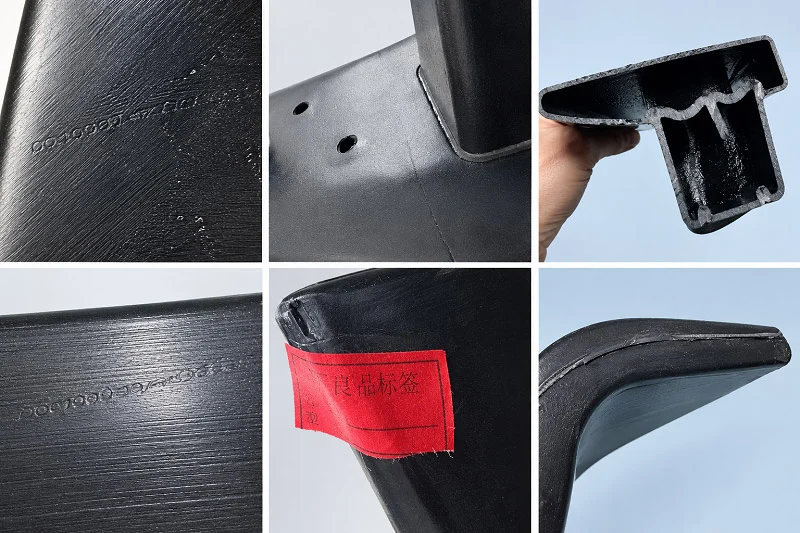
Casting shines when production passes thousands of units per year. The cost per part drops a lot once tooling is paid for. Surface finish and internal pores need careful control. Secondary machining often fixes critical surfaces.
Companies like NOBLE, a top manufacturing company in China, offer know-how across these processes. Their professional machining supports both prototyping and mass production. Working with an experienced partner helps you match the right process to your volume and precision needs.
No matter the main process, high-precision plates often need final surface grinding. This step gives the flatness and finish linear guide mounting plate require. Plan for grinding when your application needs flatness better than 0.01 mm across the mounting surface.
Materials and Processes of Linear Guide Mounting Plate
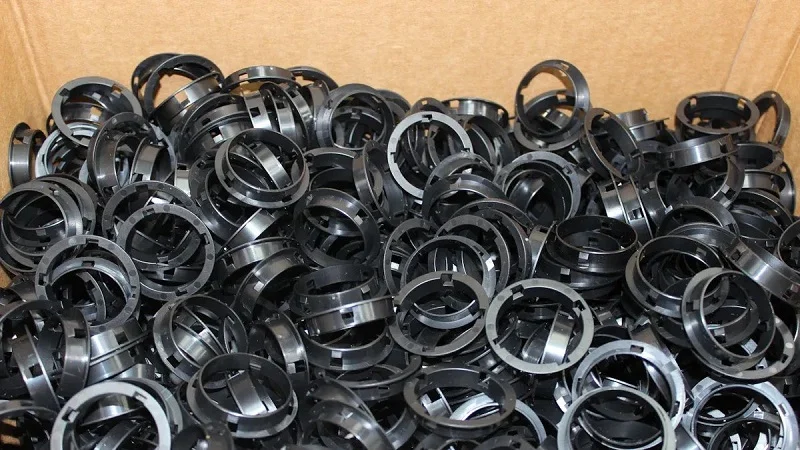
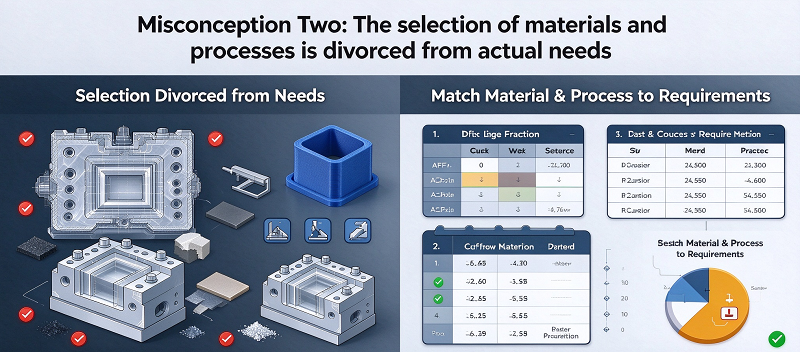
Now we get to the practical part. You have a machine to build, and you need a mounting surface for your rails. Three combinations cover most real-world scenarios. Each pairing of material and process serves a different priority.
The High-Precision Standard: CNC Machined Aluminum
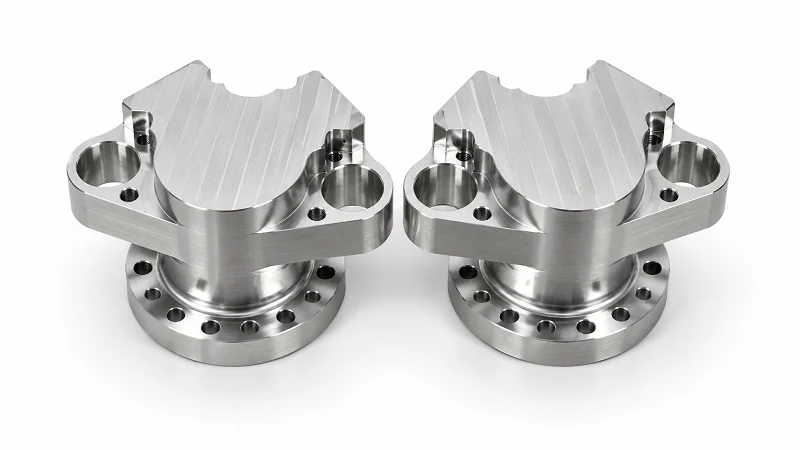
CNC machined 6061-T6 aluminum remains the top choice for demanding linear motion systems. This pairing gives flatness within 0.01 mm over 100 mm, which keeps carriage movement smooth and bearing loads even. The material cuts cleanly, holds tight tolerances, and resists corrosion without extra coating.
Most automation builders pick this route when accuracy matters more than raw cost. A machined plate costs more per piece than a cut one, but the surface quality arrives ready for mounting. You skip extra steps. The holes land exactly where your design specifies, and the face needs no grinding before installation.
For prototypes and mid-volume production runs, this approach balances speed with quality. Machine shops can program and cut simple plates within days. Complex shapes take longer but still avoid the tooling costs of casting. If your linear guidance system demands repeatable positioning, CNC machined aluminum gives you the base you need.
The Cost-Effective Heavy-Duty Option: Waterjet-Cut Steel
Steel plates handle heavy loads that would bend aluminum. Waterjet cutting offers the cheapest path to a rigid steel mounting surface. The process uses high-pressure water mixed with abrasive particles to cut through material without heat damage.
Cost differences between cutting methods are big. A fiber laser cuts a 10 mm carbon steel plate in about 10 seconds, costing roughly $0.06 per part. Waterjet takes about 2 minutes and costs around $1.10 per part. Laser wins on speed and price for thin plates. But waterjet handles thicker stock without the heat-affected zones that laser leaves behind.
For a 25 mm thick steel plate meant to support heavy linear guide mounting plates, waterjet makes sense. The dimensional tolerance of ±0.25 mm works fine for mounting holes. You will likely add a surface grinding step afterward to get the flatness your rails need. That extra step still costs less than full CNC machining of the whole plate.
The High-Volume Solution: Casting for Linear Guide Mounting Plates
Production runs of thousands of units change the math entirely. Casting pours molten aluminum into molds, repeating complex shapes at high speed. Once the tooling is paid for, each part costs a fraction of a machined one.
Die casting holds steady dimensions across large batches. Sand casting handles bigger parts with lower upfront tooling costs. Both methods produce plates with built-in ribs, bosses, and mounting features that would need lots of machining time otherwise.
The trade-off involves surface finish and internal porosity. Cast surfaces rarely meet the flatness specs that precision linear guides demand. Most manufacturers machine critical faces after casting. This hybrid approach combines casting efficiency with machined accuracy.
| Material-Process Pair | Typical Application | Relative Cost | Achievable Flatness |
| CNC 6061-T6 Aluminum | General automation, medical devices | Medium | 0.01 mm/100 mm |
| Waterjet Steel + Grinding | Heavy machine tools, presses | Low-Medium | 0.02 mm/100 mm after grinding |
| Die-Cast Aluminum + Machining | High-volume consumer products | Low per unit | 0.05 mm/100 mm |
Partners like NOBLE bring experience across all these manufacturing routes. Their full-service approach helps you match the right combination to your volume, budget, and accuracy targets. A quick talk about your linear guidance system often saves months of trial and error.
Design Considerations for Linear Guide Mounting Plate
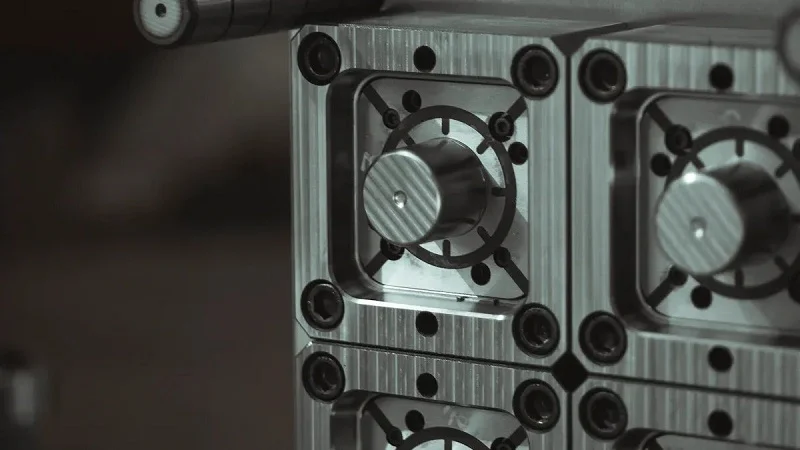
Defining Flatness and Surface Finish Requirements
Flatness is the most important measurement on your plate. If the surface is uneven, the rail twists when you bolt it down. That twist creates uneven pressure and wears out bearings faster. The guides need a flat surface to work properly. For most precision systems, the standard goal is 0.01 mm per 100 mm. Without this, the whole linear system loses accuracy.
Understanding the Impact of Flatness on Bearing Life and Accuracy
Flatness problems greatly shorten bearing life. A 0.02 mm error could cut bearing life in half. The rolling parts face higher contact stress where the rail bends. Good flatness keeps your linear bearings moving smoothly. A bent rail means the carriage does not travel in a straight line. In multi-axis setups, flatness errors add up quickly. A small error on one axis grows across the others. The final position at the tool tip drifts further from where you want it.
Specifying the Correct Surface Roughness (Ra) for the Mounting Surface
Surface roughness affects how firmly parts press together. The guides transfer load through contact points. A rough surface only touches at the high spots. That lowers the effective contact area. Most machined plates reach Ra 1.6 µm. Smoother surfaces help the whole linear assembly. For high stiffness, aim for Ra 0.8 µm or better. A grinding step after machining can achieve this roughness. The smoother surface lets the rail sit fully against the plate.
Designing Holes and Mounting Patterns
Hole placement determines how well installation goes. Poor hole positions cause alignment issues. The guides depend on accurate hole patterns to work correctly. Spend time on hole layout during the planning phase.
Tapped Holes vs. Through Holes for Different Rail Sizes
Smaller guides often use tapped holes. Bolts thread directly into the plate. Thread depth should be at least 1.5 times the bolt diameter. For M4 bolts in aluminum, that means 6 mm minimum depth. Larger rails need through holes with nuts. This prevents thread stripping in softer plate materials. Through holes also make alignment easier during assembly.
The Importance of Hole Positional Tolerances
Hole positions matter more than most people realize. Linear guide rails have precisely spaced holes. If your plate holes do not match, the rail will not sit flat. A good positional tolerance is ±0.05 mm. This keeps everything aligned properly. CNC machining holds this easily. Waterjet cutting cannot match this level of accuracy.
Accounting for Thermal Expansion and Material Stability
Temperature changes alter plate shape. The guides move as material expands. Understanding thermal behavior prevents drift. Design for accurate linear motion across changing conditions. A linear machine needs careful material matching.
Matching the Plate Material to the Machine’s Thermal Environment
Aluminum expands twice as much as steel for each degree Celsius. An aluminum plate under steel rails creates a mismatch. For stable room temperature, this works fine. For machines that heat up, mismatch causes binding. The load-bearing capacity depends on proper alignment. Matching materials solves this problem. Steel rails on a steel plate expand together. The system keeps alignment across temperatures. For precision machines, material matching is essential.
The Effect of Residual Stress on Long-Term Dimensional Accuracy
Plates hold internal stress from manufacturing. Over time, that stress releases itself. The plate warps. Guide surfaces lose their flatness. This affects your linear guideways over time. The linear system stays aligned with proper stress control. For steel plates, stress-relieving heat treatment prevents warping. The process heats the plate to about 600°C, then cools it slowly. Good design accounts for these factors.
A Decision Framework for Your Linear Guide Mounting Plate

You now have all the details. Materials, processes, design rules. Time to combine them into a clear plan. This framework guides you through five questions. Answer them in sequence, and the best option becomes clear.
Evaluating Load Capacity and Stiffness Requirements
Begin with the physical needs. How much weight will your carriage hold? What forces push against the guides during use? These answers set the minimum stiffness your plate must provide.
First, calculate the static load. Add the carriage weight, the payload, and any tools mounted above. Then estimate dynamic forces. Fast acceleration increases effective loads. A 10 kg payload moving at 2 m/s² pushes about 20 kg against the bearings. Shock loads from stops or impacts can rise even higher.
Once you know the forces, compare them to material strength. Aluminum 6061-T6 yields at 240 MPa minimum. Steel 1018 yields around 370 MPa. If your calculated stress nears half the yield strength, choose a stronger material or thicker plate.
Stiffness matters just as much as strength. A plate that bends under load passes that movement to the guides. The carriage then rides on a curved path instead of a straight one. For precision linear motion systems, deflection should stay below 0.01 mm under full load. That usually means keeping the plate thick enough that bending stays minimal.
The load-bearing capacity of your linear guide rails also plays a role. Each rail size has a rated dynamic load. Your plate must spread that load evenly across the mounting surface. A stiff plate distributes the force. A flexible one focuses it at certain points, reducing bearing life.
Assessing the Operating Environment (Corrosion, Temperature, Cleanliness)
Your workshop conditions shape material choice more than any other factor. A clean, climate-controlled lab tolerates materials that fail in harsh factories.
Corrosion leads the list of environmental threats. Humidity, salt spray, chemical fumes — all attack unprotected steel. Plain carbon steel needs coating in any damp setting. Stainless steel grades 304 and 316 resist rust without extra finishes. Aluminum forms its own protective oxide layer naturally.
Temperature brings its own challenges. Every material expands when heated. Aluminum grows about twice as much as steel per degree Celsius. If your machine runs warm, match the plate material to the rail material. Steel rails on steel plates expand together. Mixed pairs create internal stress that distorts alignment.
High-temperature environments demand special attention. Consider a stainless steel guide system built for corrosive, hot conditions. The rail and block use corrosion-resistant stainless steel. High-temperature rubber seals keep contaminants out. This combination handles sustained heat up to 150°C while maintaining superb dimensional stability. The minor expansion at high temperatures stays predictable and manageable.
Cleanliness requirements also guide your choice. Cleanrooms and food processing lines often ban lubricants that could contaminate products. Plastic guides eliminate lubrication needs entirely. Their limited load capacity restricts them to light-duty applications, but they excel where hygiene rules dominate.
Balancing Budget, Lead Time, and Performance
The final trade-off comes down to money and time. Every performance gain carries a price tag. Your job is finding the sweet spot where cost meets requirements without overspending.
Start with your precision target. A flatness spec of 0.01 mm per 100 mm demands CNC machining. That process costs more per part than cutting or casting. If your application tolerates 0.05 mm flatness, waterjet cutting followed by light grinding saves significant money.
Production volume changes the math completely. A single prototype plate costs the same whether you make one or ten. CNC machining handles low volumes efficiently. Once you pass a few thousand units per year, casting tooling pays for itself. Each cast part then costs a fraction of a machined equivalent.
Lead time often overrides cost considerations. Machine breakdowns demand replacement parts immediately. Standard aluminum stock machines within days. Custom castings take weeks for tooling alone. Keep spare plates on hand for critical machinery. Proper installation planning also shortens downtime. Pre-drilled alignment holes and dowel pin locations speed up the mounting process.
Here is a practical way to think about the decision. For most automation projects, CNC machined 6061-T6 aluminum delivers the best balance. It offers good strength, natural corrosion resistance, and machined accuracy. The cost premium over steel disappears when you factor in faster machining and lighter weight.
Heavy machine tools with massive loads justify steel plates. The material cost stays low, and the stiffness handles forces that would bend aluminum. Add surface grinding after cutting to achieve the flatness your guides require.
High-volume consumer products benefit from die casting. The upfront tooling investment spreads across thousands of units. Secondary machining on critical faces brings accuracy where it matters.
Your design should also plan for future adjustments. Extra tapped holes for sensors or brackets cost little during machining. Adding them later requires a second setup and additional cost. Think ahead about what your machine might need next year.
The best approach combines all these considerations into one evaluation. Define your loads precisely. Document your environment honestly. Set a realistic budget and timeline. Then match those requirements against the material-process pairs from earlier sections. The table showing CNC aluminum, waterjet steel, and die-cast options gives you a starting point.
Remember that accurate linear motion depends on the whole system working together. The plate, the rails, the bearings, the frame — each component affects the others. A perfect plate on a flimsy frame still produces poor results. Consider the complete assembly, not just one part.
Controlled linear motion comes from thoughtful engineering. The mounting plate provides the foundation. Get that foundation right, and everything above it performs better. Skip the analysis, and you risk binding, premature wear, and scrapped parts.
Talk with your manufacturing partner early. Shops like NOBLE see hundreds of mounting plate designs each year. Their engineers know which material-process combinations work reliably. A thirty-minute conversation often prevents costly mistakes discovered after production starts.
Partnering with NOBLE for Your Linear Guide Mounting Plate Needs
Our Full-Service Approach: From Design to Assembly
Most machine shops just cut metal. NOBLE works differently. The team stays with you from the first sketch to the final assembled unit. That full-service model removes the gaps where mistakes hide.
Your linear guide mounting plate starts with a conversation. NOBLE engineers review your design and question your assumptions. They catch tolerance problems before they become scrap parts. This early input saves weeks of rework.
The manufacturing floor handles everything in-house. CNC machining centers cut your plates with precision. Surface grinding brings flatness to spec. Quality inspectors verify every dimension. Nothing gets outsourced to unknown suppliers.
Assembly completes the picture. NOBLE mounts your linear guide mounting plates, aligns the rails, and torques every bolt. You receive a ready-to-install component. That saves time on your production floor and simplifies installation.
Certifications and Quality Assurance (ISO 9001:2015 & ISO 13485:2016)
Certifications tell you a shop follows disciplined processes. NOBLE holds both ISO 9001:2015 and ISO 13485:2016. These standards matter for different reasons.
ISO 9001:2015 covers quality management across the entire facility. The standard demands documented procedures for every step. Process documentation ensures repeatability. Material traceability tracks every raw billet from stock to shipment. Inspection tools get calibrated on a defined schedule. Nonconforming parts get identified, segregated, and corrected at the root cause.
The standard also requires measurable quality objectives. NOBLE tracks geometric accuracy, dimensional inspection pass rates, and rework levels. Customer feedback drives continuous improvement. Supplier performance gets reviewed periodically to maintain consistent quality.
ISO 13485:2016 extends those controls to medical devices. This certification matters when your linear motion system supports diagnostic equipment or surgical tools. The standard demands stricter documentation and risk management. NOBLE meets those higher bars.
Why Choose NOBLE for Your Metal and Plastic Machining Projects
Most shops specialize in one material. NOBLE masters both metal and plastic processing. That dual expertise enables hybrid solutions you cannot get elsewhere.
Consider a linear guide mounting plate that needs electrical isolation. NOBLE machines the aluminum base, then adds precision plastic inserts. The metal provides stiffness. The plastic breaks electrical paths. One supplier delivers the complete assembly.
Plastic expertise also helps with guide selection. Some applications work better with plastic guides instead of steel rails. NOBLE engineers recommend the right combination based on your load and environment. Their experience spans both worlds.
The company’s location in China offers cost advantages without sacrificing quality. You get competitive pricing plus the certifications that global customers demand. NOBLE ships worldwide with documentation that satisfies customs and quality audits.
Working with one partner simplifies your supply chain. You avoid coordinating multiple vendors. You skip the headaches of mismatched tolerances between suppliers. One phone call handles everything from material certification to final inspection reports.
For your next linear guide mounting plate project, talk with NOBLE early. Share your load calculations and environmental conditions. Their engineers will recommend the optimal material-process pairing. That conversation costs nothing but could save your project months of trial and error.
No single linear guide mounting plate works for every machine. Your best pick depends on load, environment, and budget. For general automation, CNC-machined 6061-T6 aluminum gives the best mix of precision and value. Heavy-duty systems with tight budgets often use waterjet-cut steel plus surface grinding.
Think about the whole picture. Designing for easy manufacturing cuts costs. Good surface finishing makes guides last longer. Looking ahead, 3D printing becomes more useful for custom lightweight plates. Advanced composites keep improving in high-speed linear motion systems.
Before you finalize your design, talk with a manufacturing partner. NOBLE’s engineers help you match materials and processes to your specific guides. Their advice makes installation easier and avoids expensive errors. A quick chat now saves months of rework later.
FAQ of Linear Guide Mounting Plate
What flatness does my mounting plate really need?
Most precision machines do fine with 0.01 mm flatness for every 100 mm. That keeps the carriage moving smoothly and bearings wearing evenly. If your machine does heavy cutting or runs fast, you might need a tighter spec. Surface grinding after machining gives a smoother finish.
Should I match my plate material to the rail material?
Yes. Matching materials stops thermal expansion issues. Aluminum rails on aluminum plates grow at the same rate. Steel rails on steel plates do the same. Mixed pairs cause internal stress when temperature changes. That stress bends alignment and makes bearings wear out faster. For machines that stay at room temperature, mismatched pairs still work okay.
How do I choose between tapped holes and through holes?
Smaller guide rails often use tapped holes. The thread depth should be at least 1.5 times the bolt width. Larger rails need through holes with nuts below. Through holes make alignment easier during install. They also stop threads from stripping in soft materials like aluminum. Check your rail maker’s catalog for the best way to mount.
Can I use a waterjet-cut plate for precision work?
Waterjet cutting keeps ±0.25 mm tolerance. That is fine for mounting holes but not for key surfaces. You will need surface grinding after to get the flatness that precision guides need. That extra step still costs less than full CNC machining for simple flat plates. For complex shapes with tight tolerances, CNC is still better.
What causes a mounting plate to warp over time?
Residual stress from making the plate releases over time and bends it. Steel plates need stress-relieving heat treatment after rough machining. The process heats the plate to about 600°C and then cools it slowly. Aluminum plates usually do not need this step. Picking the right material and heat treatment keeps your linear system aligned for years.
When does 3D printing make sense for mounting plates?
Use 3D printing for prototypes and small custom parts. It makes lightweight designs with internal shapes that machining cannot create. Material costs are several times higher than solid metal. Build times take hours or days. Once you make more than a few parts, CNC machining becomes cheaper and more accurate.
How do I know if my plate needs to be steel instead of aluminum?
First calculate your static load and dynamic forces. If the stress gets close to half the yield strength of 6061‑T6 aluminum (240 MPa minimum), use steel instead. Heavy machine tools and stamping presses usually need steel’s stiffness. Aluminum works for most automation where saving weight is more important than strength.
What should I discuss with my manufacturing partner before ordering?
Share your load numbers, work conditions, and precision goals. Tell them about corrosion risks, temperature ranges, and cleanliness needs. Ask about lead times and if surface grinding is included. A short talk stops costly errors. Partners like NOBLE offer design check and assembly services that find issues before making starts.