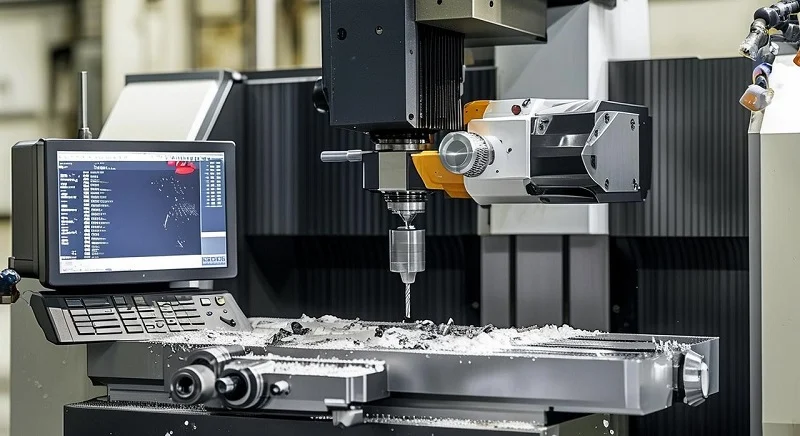
In the past, there was a significant gap between CAD files and physical parts, but today that gap has narrowed. Prototyping is helping to bridge that gap.
Rapid prototyping companies exist precisely to bridge this gap. They transform digital designs into physical objects. Testing, validation, and iteration can be completed in a matter of days rather than months. Parts leap from the screen into your hands, and the feedback loop is extremely short.
Demand is growing. Automotive, medical devices, robotics, aerospace, and consumer electronics all need faster development. A rapid prototyping company that serves one specific industry can often serve all of these sectors as well.
In this guide, we’ll explore with you how to choose the right rapid prototyping company partner.
Why Rapid Prototyping Is Needed
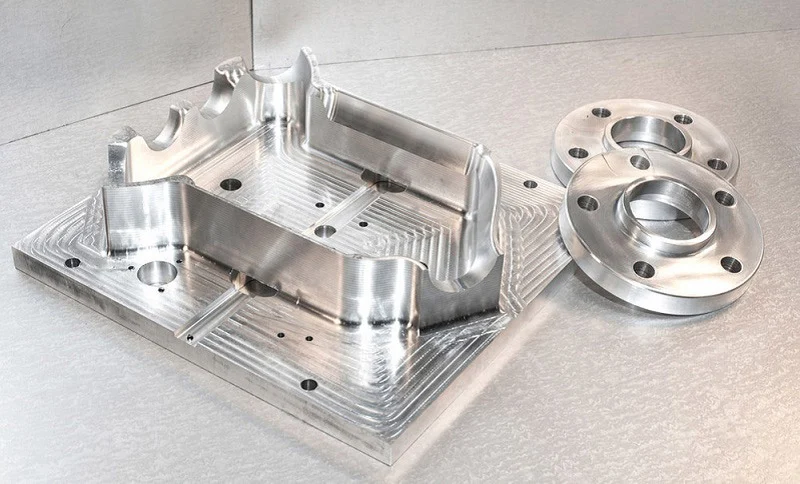
Accelerating Product Development Cycles
Rapid prototyping can significantly reduce the time spent on trial and error in product development. Physical parts can be produced quickly. Engineers can begin testing earlier. Design flaws are identified before production begins. Iterations occur more rapidly. The final product can reach the market sooner.
Reducing Product Development Risks
The later a problem is discovered, the higher the cost; the earlier a problem is discovered, the lower the cost.
Early validation can avoid costly mold modifications and prevent production failures. Since the design is validated through prototyping before mold production begins, risks are reduced.
Improving Product Design and Performance
Testing optimizes the product.
Ergonomic evaluations validate the user experience. Functional testing verifies mechanical performance. User feedback identifies pain points. This data drives design improvements.
Prototyping enables teams to optimize the product before moving to mass production. After testing, the final product will be more refined.
Supporting Low-Volume Production and Market Testing
Many rapid prototyping companies now do more than prototypes.
Small-batch manufacturing is common. Bridge manufacturing supplies parts while production tooling is built. Market testing with real products is possible before mass production investment.
A rapid prototyping company is often a low-volume production partner. The same technology that creates prototypes also creates initial production parts. The transition is seamless.
Leading Rapid Prototyping Companies to Know
Protolabs
Protolabs is a digital manufacturing company. Fast turnaround is the model. Online ordering and automated quoting define the experience. The system quotes automatically. Production starts quickly.
Main Services
CNC machining, injection molding, 3D printing, and sheet metal fabrication. The range covers most prototyping needs. One platform handles multiple technologies.
Key Advantages
Speed is the advantage. Quotation is fast. Production is fast. The digital workflow is strong. Iterations happen quickly. Supports both prototypes and low-volume production. This is the benchmark for many rapid prototyping companies.
Typical Applications
Medical devices, automotive components, consumer electronics, and industrial equipment. The customer base is broad. The applications are varied.
Market Position
Often considered a benchmark for digital rapid manufacturing platforms. The model is copied. The reputation is established. Protolabs is a reference point in the industry.
NOBLE
NOBLE is a China-based manufacturer. The focus is rapid prototyping and low-volume production. Global customers use the service. The model combines advanced capabilities with competitive pricing. Engineers in North America and Europe use it to access manufacturing capacity at different cost levels.
Main Services
CNC machining, 3D printing, injection molding, vacuum casting, and sheet metal fabrication. The range covers most prototype and production needs. Metal and plastic parts are both supported.
Key Advantages
Strong metal and plastic capabilities. Wide material selection. Competitive pricing. The workflow supports prototype-to-production transitions. A part designed as a prototype can move to production without changing the manufacturing partner. This is the value proposition for many rapid prototyping companies.
Typical Applications
Medical device components, automotive parts, industrial equipment, and consumer products. The applications overlap with global competitors. The pricing and turnaround differentiate the service.
Market Position
The model combines rapid prototyping with production services. Not just a prototyping shop. A production partner that supports the full lifecycle. This positions it among rapid prototyping companies that offer more than just fast parts.
Xometry
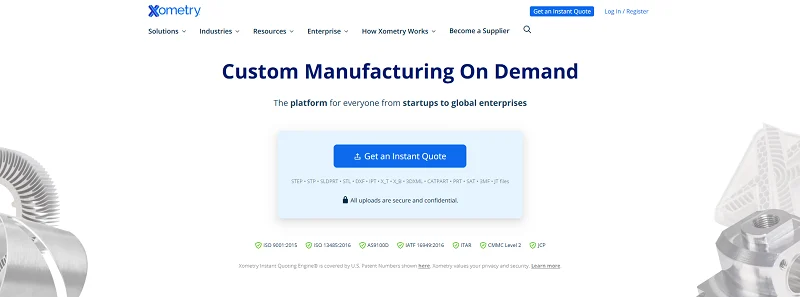
Xometry is an online marketplace. A large one. It connects customers with a network of manufacturing suppliers. One platform. Many shops. The customer gets access to multiple production technologies through a single quote.
Main Services
CNC machining, 3D printing, injection molding, sheet metal fabrication, and urethane casting. The range is wide. The material selection is large. The quoting system is convenient.
Key Advantages
A wide range of processes is an advantage. Large material selection. Suitable for companies comparing different production options before choosing a dedicated rapid prototyping company. The marketplace model gives customers options.
Typical Applications
Engineering prototypes, industrial components, and custom manufacturing projects. The applications are as varied as the supplier network. The platform handles what the network can produce.
Market Position
Represents the marketplace-based model. Not a single manufacturer. A platform that connects buyers with suppliers. The model is modern. It gives access to many rapid prototyping companies through one interface.
Fictiv
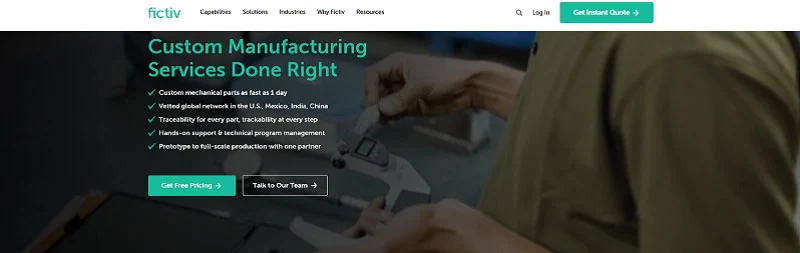
Fictiv helps hardware companies move forward. From prototype to production. Digital tools meet supply chain management. The approach is collaborative.
Main Services
CNC machining, injection molding, 3D printing, and sheet metal fabrication. The service list is standard. The execution is different.
Key Advantages
Engineering collaboration is the differentiator. Production planning support is included. Complex hardware products are the focus. The company works with the customer, not just processes orders. This is a partnership model among rapid prototyping companies.
Typical Applications
Robotics, consumer electronics, industrial products, and medical devices. Hardware development teams are the primary customers. The parts are often complex.
Market Position
Known as a manufacturing partner. Not just a supplier. The reputation is built on support and collaboration. This distinguishes Fictiv from transaction-focused rapid prototyping companies.
3ERP
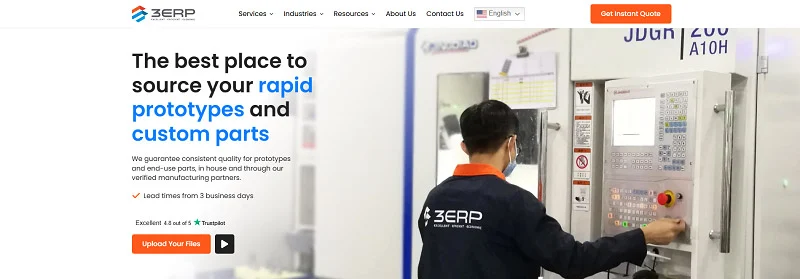
3ERP is a specialist. Custom prototype manufacturing and low-volume production are the focus. Engineering-oriented solutions define the approach. The company does not just make parts. It solves manufacturing problems.
Main Services
CNC machining, vacuum casting, injection molding, sheet metal fabrication, and surface finishing. The service range covers most prototype needs. Finishing options are extensive. The part comes off the machine ready for testing or presentation.
Key Advantages
Strong customization capability is the advantage. Complex prototype requirements are supported. Material options are wide. Finishing options are varied. The engineering team works with the customer to achieve the required geometry, surface, and function. This is the value of a specialized rapid prototyping company.
Typical Applications
Product development, medical devices, automotive prototypes, and industrial components. The applications are diverse. The common thread is complexity. Simple parts go to faster providers. Complex parts go to 3ERP.
Market Position
Represents specialized manufacturers that provide direct engineering support. Not just a production house. A partner that solves engineering problems. The reputation is built on capability, not just speed. This distinguishes it from larger, volume-focused rapid prototyping companies.
HLH Rapid
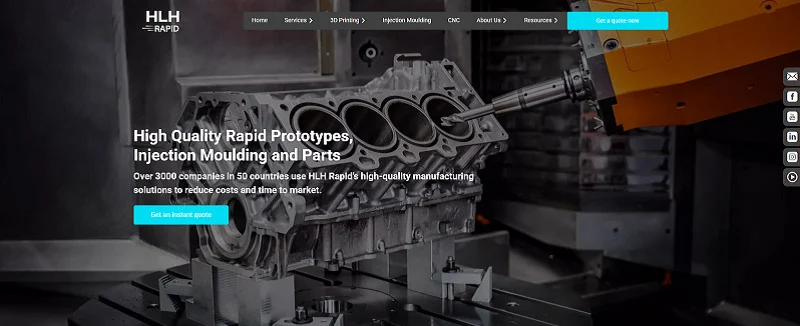
HLH Rapid is a prototyping and manufacturing service provider. The focus is on plastic parts and product development. The company supports projects from early concept through to production.
Main Services
SLA and SLS 3D printing, CNC machining, vacuum casting, rapid injection molding, and sheet metal fabrication. The range of plastic prototyping capabilities is broad. Metal parts are available, but plastic is the core strength.
Key Advantages
Broad plastic prototype capabilities are the main advantage. Appearance models are supported. Functional prototypes are supported. The same service provider can handle both. The workflow from prototype to production is integrated. This is a common offering among rapid prototyping companies that serve product developers.
Typical Applications
Consumer products, electronics, medical devices, and industrial products. The applications are diverse. The common thread is plastic. Parts that require plastic materials and processes are the primary focus.
Market Position
A representative example of a rapid prototyping company that emphasizes plastic parts and product development. The approach is comprehensive. The service supports the full development lifecycle.
Materialise
Materialise is a global company. Additive manufacturing is the core. Medical and industrial applications define the focus. The company does not just print parts. It provides solutions built on 3D printing technology.
Main Services:
Industrial 3D printing, medical 3D printing, additive manufacturing software, and engineering solutions. The software division is significant. It supports the printing hardware and the workflow.
Key Advantages:
Strong expertise in advanced 3D printing. Medical application experience is substantial. Complex geometry manufacturing capability is standard. The company is known for patient-specific solutions and custom medical components. This distinguishes it from general-purpose rapid prototyping companies.
Typical Applications:
Healthcare products, aerospace components, and customized medical solutions. The medical focus is the differentiator. Surgical guides, implants, and anatomical models are common outputs. Aerospace components benefit from the complex geometry capability.
Market Position:
Represents a specialized segment. Not a general prototyping shop. A deep-technology company. The focus on medical and industrial applications sets it apart from volume-focused rapid prototyping companies.
How to Choose the Right Rapid Prototyping Company
Evaluate Manufacturing Capabilities
First, consider the manufacturing facility’s actual capabilities.
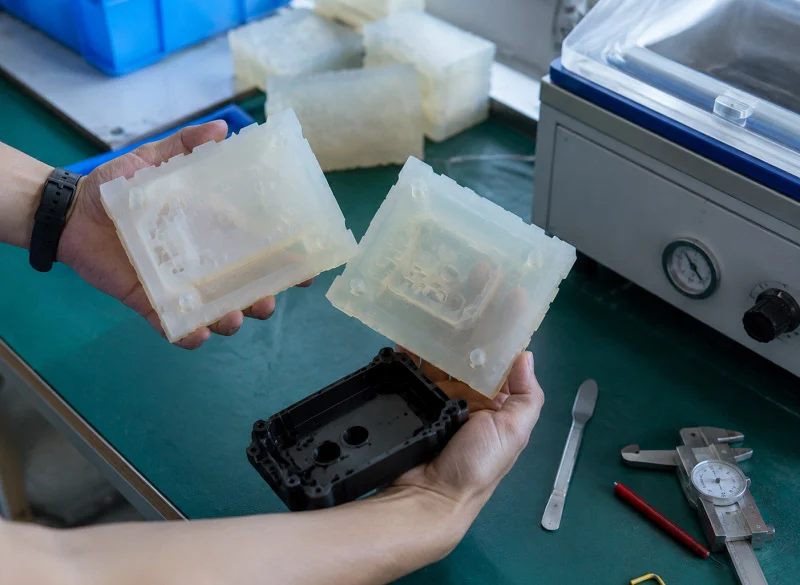
The available manufacturing processes determine which parts can be produced. CNC machining, 3D printing, injection molding, vacuum casting, and sheet metal fabrication are common processes.
Material options matter. Plastics, metals, composites, and elastomers. A rapid prototyping company with a broad material library supports more applications.
Production capacity determines scalability. Can the shop handle one part or one hundred? Surface finishing services complete the part. Painting, plating, anodizing, and texturing are common.
Check Quality Certifications
Certification reflects the maturity of the system.
If your project falls under certain regulatory frameworks, choosing a rapid prototyping company with the appropriate certifications will save you a lot of trouble.
Consider Engineering Support
Manufacturing capabilities alone are not enough. It is engineering support that creates added value.
Design-for-manufacturing feedback catches issues before production. Material recommendations match the grade to the application. Cost optimization suggestions reduce spend without sacrificing quality. Production transition support moves the project from prototype to volume.
A rapid prototyping company that provides engineering support is a partner; a company that merely processes orders is just a supplier. The difference between the two is significant.
Rapid Prototyping Companies vs Traditional Manufacturers
| Rapid Prototyping Companies | Traditional Manufacturers |
| Faster development cycles | Longer preparation time |
| Lower initial investment | Higher tooling requirements |
| Suitable for prototypes and small batches | Optimized for mass production |
| Flexible design changes | Less flexible after production begins |
A rapid prototyping company is built for speed and iteration. Traditional manufacturers are built for volume and efficiency.
The choice depends on the project stage. Early development favors prototyping. Mature products favor traditional manufacturing. Many projects use both. Prototype with a rapid prototyping company. Transfer to a traditional manufacturer for volume. The transition is managed.
Rapid Prototyping Services at NOBLE
Full-Service Prototype Manufacturing Solutions
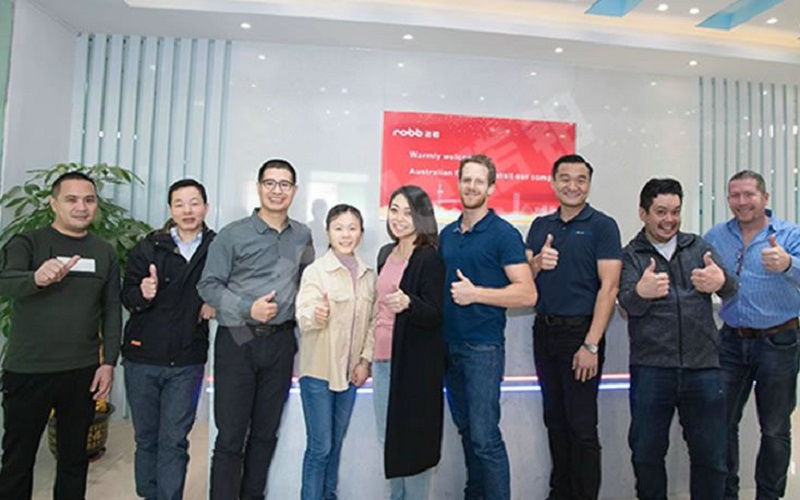
NOBLE is a full-service provider. CNC machining, plastic and metal prototyping, vacuum casting, injection molding, surface finishing, and assembly services are all available. The range covers most prototype needs.
The support starts before production. Design review catches issues early. Prototype production follows. Testing validates the design. Low-volume manufacturing bridges the gap to production.
This is the value proposition. One supplier handles the entire workflow. The customer manages one relationship. The rapid prototyping company manages the rest.
Quality Management and Industry Experience
Certifications are documented. ISO 9001:2015 covers general quality management. ISO 13485:2016 applies to medical devices.
Manufacturing expertise covers metal and plastic parts. End-to-end product development support is standard. The experience is broad. The systems are mature.
FAQs About Rapid Prototyping Companies
What services do rapid prototyping companies provide?
CNC machining, 3D printing, injection molding, vacuum casting, sheet metal fabrication, and surface finishing. Most rapid prototyping companies offer a combination of these services. The range varies by provider.
How do I choose the right rapid prototyping company?
Evaluate manufacturing capabilities, material options, quality certifications, engineering support, and scalability. A rapid prototyping company with ISO 13485 certification is required for medical work. One with strong engineering support adds value beyond production.
What industries use rapid prototyping services?
Automotive, medical devices, robotics, aerospace, consumer electronics, and industrial equipment. Any industry that develops physical products uses rapid prototyping companies to accelerate development and reduce risk.
How much does a rapid prototyping company charge?
Pricing varies by process, material, geometry, quantity, and finish. A single CNC-machined part may cost a few hundred dollars. A complex injection-molded prototype may cost several thousand. Online quoting systems provide fast estimates.
How long does rapid prototyping take?
FDM 3D printing takes hours to days. CNC machining takes days to a week. Vacuum casting takes one to two weeks. Injection molding prototypes take two to four weeks. The timeline depends on the process and the part complexity.
Can rapid prototyping companies produce low-volume parts?
Of course. Many rapid prototyping companies support low-volume production. Vacuum casting, CNC machining, and rapid injection molding are common methods for small batches. Bridge production and pilot runs are standard services.
What materials can rapid prototyping companies work with?
Plastics: ABS, PC, nylon, PEEK, UHMW, and acrylic. Metals: aluminum, steel, titanium, copper alloys, and magnesium. Elastomers and composites are also available. The material library varies by provider.
What is the difference between a rapid prototyping company and a 3D printing service?
A 3D printing service focuses on additive manufacturing only. A rapid prototyping company offers multiple processes—CNC machining, injection molding, vacuum casting, and sheet metal fabrication—in addition to 3D printing. The range is broader. The support is deeper.