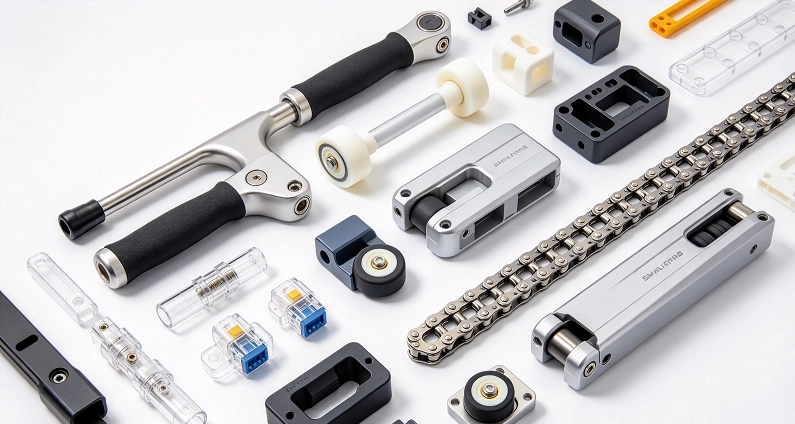
What is acrylic?
Acrylic is an excellent transparent polymer material with extremely high light transmittance, far exceeding that of ordinary glass. Even at considerable thicknesses, it remains clearly visible and is widely used in the manufacture of optical instruments. It is not only easy to color, print, and spray, exhibiting excellent color development, but it also possesses good thermoforming and machining properties. In terms of mechanical properties, Acrylic has strong tensile and impact resistance, and its characteristics are essentially those of a hard, brittle plastic. In terms of thermoplastic properties, its excellent stability allows acrylic materials to maintain their original shape without loss or damage during repeated heating and shaping within a certain temperature range. In terms of thermal decomposition properties, it has a wide melting and processing temperature range, allowing for thermal decomposition and recycling through various methods such as steam heating, lava heating, thermal oil heating, and electric heating, making it environmentally friendly and enabling resource recycling.
Types of Acrylic (PMMA) Materials
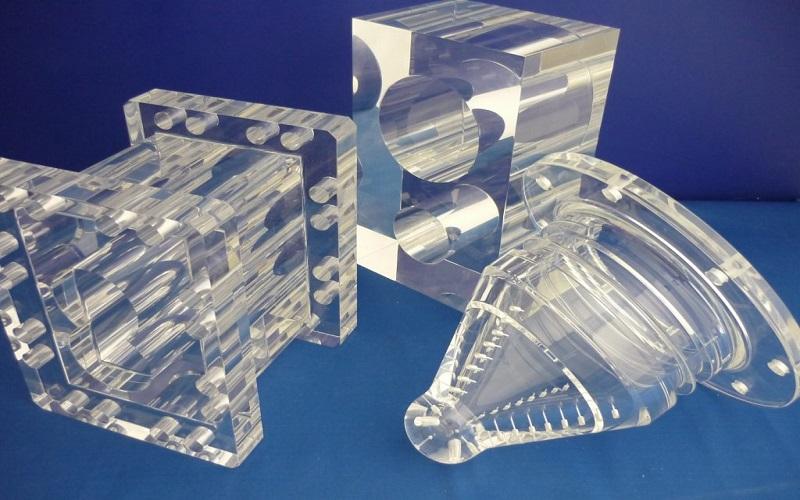
Acrylic, also known as PMMA (Polymethyl Methacrylate), is a transparent thermoplastic widely used as an alternative to glass due to its excellent optical clarity, lightweight properties, weather resistance, and machinability. Different acrylic grades are developed for specific applications such as CNC machining, optical components, medical devices, automotive parts, and industrial covers.
1. Cast Acrylic (GS Acrylic)
Cast acrylic is produced by pouring liquid MMA monomer into molds and polymerizing it.
Characteristics:
- Excellent optical clarity
- High surface hardness
- Better chemical resistance
- Lower internal stress
- Easier for CNC machining and laser cutting
Advantages:
- Superior transparency
- Better dimensional stability
- Less likely to crack during machining
Applications:
- Medical equipment covers
- Optical components
- Display panels
- Machine protection windows
- High-end product housings
2. Extruded Acrylic (XT Acrylic)
Extruded acrylic is produced by continuously pressing melted acrylic material through a die.
Characteristics:
- More uniform thickness
- Lower manufacturing cost
- Higher production efficiency
- Slightly higher internal stress than cast acrylic
Advantages:
- Cost-effective
- Suitable for high-volume production
- Good impact resistance
Applications:
- Sign boards
- Lighting covers
- Advertising displays
- Industrial panels
3. Clear Acrylic
Clear acrylic is the most common type of PMMA.
Features:
- Light transmission up to approximately 92%
- Glass-like appearance
- Lightweight
- UV resistant
Applications:
- Transparent covers
- Lenses
- Windows
- Display cases
- Electronic product housings
4. Colored Acrylic
Colored acrylic is manufactured by adding pigments during production.
Common Colors:
- Black acrylic
- White acrylic
- Red acrylic
- Blue acrylic
- Green acrylic
- Frosted acrylic
Applications:
- Decorative panels
- Automotive interior parts
- Consumer products
- Signage
- Industrial design components
5. Frosted / Matte Acrylic
Frosted acrylic has a textured surface that diffuses light.
Characteristics:
- Reduced glare
- Semi-transparent appearance
- Improved privacy
Applications:
- Lighting diffusers
- Office partitions
- Medical equipment panels
- Architectural decoration
6. Impact-Modified Acrylic
Impact-resistant acrylic is modified with rubber or polymer additives to improve toughness.
Advantages:
- Higher impact strength
- Reduced cracking risk
- Better durability
Applications:
- Safety shields
- Automotive components
- Protective covers
- Outdoor equipment
7. Optical Grade Acrylic
Optical acrylic is manufactured with extremely high purity and surface quality.
Characteristics:
- Very high transparency
- Low optical distortion
- Excellent light transmission
Applications:
- Optical lenses
- LED light guides
- Imaging equipment
- Medical optical devices
8. UV-Resistant Acrylic
UV-resistant acrylic contains additives that protect against sunlight degradation.
Advantages:
- Long outdoor service life
- Excellent weather resistance
- Maintains transparency over time
Applications:
- Outdoor signs
- Architectural glazing
- Solar equipment covers
9. Anti-Static Acrylic
Anti-static acrylic reduces static electricity buildup.
Features:
- Prevents dust attraction
- Protects sensitive electronic components
Applications:
- Semiconductor equipment covers
- Cleanroom windows
- Electronics manufacturing equipment
10. Heat-Resistant Acrylic
Heat-resistant PMMA is modified to withstand higher operating temperatures.
Applications:
- Lighting components
- Automotive parts
- Industrial equipment covers
Acrylic Material Comparison
| Acrylic Type | Main Advantage | Typical Applications |
|---|---|---|
| Cast Acrylic | Best machining quality | CNC parts, optical components |
| Extruded Acrylic | Lower cost | Panels, displays |
| Clear Acrylic | Maximum transparency | Covers, windows |
| Colored Acrylic | Decorative appearance | Product housings |
| Frosted Acrylic | Light diffusion | Lighting |
| Impact Acrylic | Higher toughness | Safety products |
| Optical Acrylic | High precision | Lenses, medical devices |
| UV Acrylic | Outdoor durability | Outdoor panels |
| Anti-static Acrylic | Dust control | Electronics equipment |
| Heat-resistant Acrylic | Higher temperature resistance | Industrial parts |
Best Acrylic Material for CNC Machining
For CNC machining acrylic parts, the most recommended materials are:
- Cast acrylic (PMMA GS) – best overall choice
- Lower stress
- Better machining stability
- Excellent surface finish
- Optical-grade acrylic – for precision optical applications
- Impact-modified acrylic – for parts requiring higher durability
For high-precision CNC acrylic components, cast PMMA is usually preferred because it produces cleaner edges, fewer cracks, and better transparency after machining.
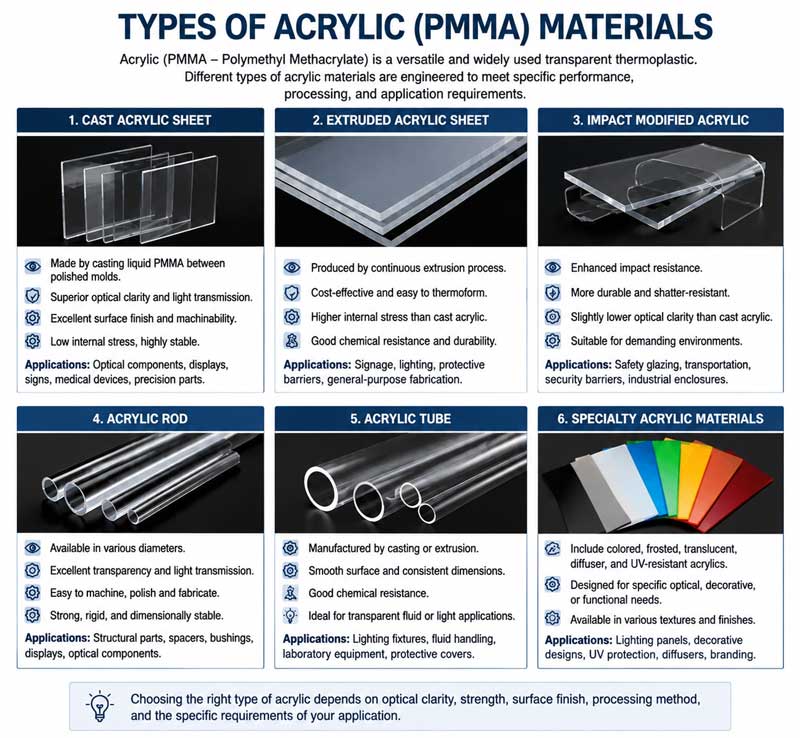
What Machines and Tools Are Needed for CNC Acrylic (PMMA) Machining?
CNC machining acrylic (PMMA) requires suitable machines, cutting tools, and inspection equipment to achieve accurate dimensions, smooth surfaces, and high-quality finishes.
1. CNC Milling Machine
- Used for precision cutting, drilling, pocketing, and complex 3D acrylic parts.
- 3-axis, 4-axis, and 5-axis CNC machines are suitable depending on part complexity.
2. CNC Router Machine
- Ideal for large acrylic sheets, engraving, signage, and flat-panel cutting.
- Provides fast processing and efficient material removal.
3. Carbide Cutting Tools
- Single-flute and two-flute carbide end mills are commonly used.
- Sharp cutting edges help reduce heat buildup and prevent melting.
4. Diamond Tools
- Used for optical-grade acrylic components requiring excellent transparency and surface finish.
5. Cooling and Chip Removal Equipment
- Compressed air and chip extraction systems help control heat and prevent surface defects.
6. Inspection Equipment
- Calipers, micrometers, CMMs, and optical inspection tools ensure dimensional accuracy and quality control.
High-speed CNC machines, sharp carbide or diamond tools, effective cooling systems, and precision inspection equipment are essential for producing high-quality CNC machined PMMA parts.
Acrylic CNC Machining Design Techniques (Concise Introduction)
Designing acrylic (PMMA) parts for CNC machining requires consideration of material properties, tool accessibility, and machining forces to achieve high precision, smooth surfaces, and reliable performance.
Key Design Techniques:
- Maintain Appropriate Wall Thickness:
Avoid overly thin walls to reduce vibration, cracking, and deformation during machining. - Use Rounded Internal Corners:
CNC tools cannot create sharp internal corners; adding suitable radii improves tool movement and part strength. - Avoid Deep Narrow Features:
Minimize deep pockets and small slots to reduce tool deflection and machining difficulties. - Consider Clamping and Fixturing Areas:
Include sufficient flat surfaces or support structures to ensure stable workholding. - Optimize Tolerances:
Apply tight tolerances only where necessary to control machining costs and prevent unnecessary processing. - Design for Surface Finish:
Avoid sharp edges and complex tool paths when optical clarity or transparency is required.
Effective acrylic CNC machining design focuses on manufacturability, stress reduction, tool accessibility, and proper tolerance control to produce accurate, durable, and high-quality PMMA components.
CNC Parameters and Specifications for Acrylic (PMMA) Machining
Acrylic (PMMA) CNC machining requires optimized cutting parameters to prevent melting, cracking, and surface defects while achieving smooth, transparent edges.
Recommended CNC Parameters:
| Parameter | Typical Range |
|---|---|
| Spindle Speed | 12,000–24,000 RPM |
| Cutting Speed | 200–600 m/min |
| Feed Rate | 800–3000 mm/min |
| Depth of Cut (Roughing) | 1–5 mm/pass |
| Depth of Cut (Finishing) | 0.1–0.5 mm/pass |
| Tool Diameter | 3–12 mm |
| Cooling Method | Air cooling / compressed air |
Key Machining Specifications:
- Tool Type: Single-flute or two-flute carbide end mills are recommended.
- Cutting Strategy: Climb milling helps reduce chipping and improves edge quality.
- Tolerance: CNC acrylic parts can typically achieve ±0.05 mm, with tighter tolerances possible under optimized conditions.
- Surface Finish: Additional polishing processes can achieve optical-grade clarity.
- Workholding: Use vacuum fixtures or soft clamps to prevent cracking and deformation.
High spindle speed, sharp cutting tools, sufficient feed rate, and effective chip removal are the key factors for producing high-quality CNC machined acrylic parts.
Maintaining GD&T Flatness of Acrylic Manifolds
Maintaining GD&T (Geometric Dimensioning and Tolerancing) flatness of acrylic (PMMA) manifolds is critical for ensuring proper sealing, fluid flow performance, and assembly accuracy in applications such as medical devices, laboratory equipment, and microfluidic systems.
Key Methods:
- Material Selection: Use high-quality cast acrylic with low internal stress to minimize warping.
- Stress Relief: Apply proper conditioning or annealing processes before precision machining.
- CNC Machining Strategy: Use sharp tools, light cutting passes, and controlled cutting forces to prevent deformation.
- Fixture Design: Use uniform clamping pressure or vacuum fixtures to avoid bending thin acrylic parts.
- Finishing Process: Perform final skim cuts after rough machining to achieve required flatness.
Typical Flatness Control:
- CNC machined acrylic manifolds can typically achieve 0.02–0.10 mm flatness, depending on part size, thickness, material condition, and machining requirements.
Achieving tight flatness on acrylic manifolds requires low-stress materials, stable fixturing, optimized CNC parameters, and precision finishing operations to ensure reliable sealing and performance.
Properly Controlling Feed, Speed, Heat, and Deflection in Acrylic CNC Machining
Proper control of feed rate, spindle speed, cutting heat, and tool deflection is essential for producing high-quality acrylic (PMMA) parts. These factors directly affect surface finish, dimensional accuracy, and edge quality.
1. Feed and Speed Control
- Use high spindle speeds (12,000–24,000 RPM) with sufficient feed rates to reduce friction and prevent melting.
- Avoid very low feed rates, which can cause the tool to rub instead of cut.
- Adjust cutting parameters based on:
- Tool diameter
- Acrylic thickness
- Part geometry
2. Heat Management
Excessive heat can cause:
- Melted edges
- Cloudy surfaces
- Dimensional changes
Recommended methods:
- Use sharp carbide tools
- Maintain proper chip removal
- Apply compressed air cooling
- Avoid excessive cutting depth
3. Controlling Tool Deflection
Tool deflection can reduce accuracy and create uneven surfaces.
Control methods:
- Use short tool stick-out lengths
- Select larger tool diameters when possible
- Reduce cutting forces with lighter passes
- Maintain rigid workholding
- Use finishing passes to achieve final dimensions
4. Machining Strategy
- Use roughing passes to remove material gradually.
- Apply finishing passes with lower depth of cut for better surface quality.
- Use climb milling to reduce chipping and improve edge appearance.
In brief: Successful acrylic machining depends on balancing feed, speed, heat, and cutting forces. Optimized parameters and stable tooling help achieve precise dimensions, smooth surfaces, and crack-free PMMA components.
Advantages of Acrylic CNC Machining
-
High Transparency and Gloss
High Transparency: Acrylic boasts extremely high transparency, with a light transmittance exceeding 90%, and some high-quality products even reach 92% or 93%. This makes it appear crystal clear, with soft and natural light.
Gloss: Acrylic colored with dyes emits excellent gloss and color, enhancing the product’s aesthetics.
-
Excellent Physical Properties
Strong Weather Resistance: Acrylic material has excellent weather resistance, resisting ultraviolet radiation and oxidation. It is not prone to fading or aging even after prolonged use.
High Strength: Its strength is 7-18 times that of ordinary glass. It has strong impact resistance, is not easily broken, and even if it breaks, it will not shatter into sharp fragments, thus reducing safety risks.
High Temperature Resistance: Acrylic material has high-temperature resistance, maintaining stable performance under certain high-temperature environments.
-
Good Machining Performance
Easy to Machine: Acrylic material is easy to cut, bend, drill, and heat-bend, meeting the requirements of various shapes and sizes. This gives it a significant advantage when manufacturing complex-shaped products.
Printability and Sprayability: Acrylic materials possess excellent printability and sprayability, allowing for various decorative effects to be achieved on the surface through printing processes, increasing product diversity and aesthetics.
-
Lightweight and Durable:
Compared to glass, acrylic has a lower density and is lighter, facilitating transportation and installation.
Wear and Corrosion Resistance: Acrylic materials exhibit wear resistance and stability, resisting corrosion from various chemicals and extending product lifespan.
-
Environmental Protection and Sustainability:
Acrylic materials are relatively environmentally friendly in their production and use, and some products can be recycled, aligning with the principles of sustainable development.
In conclusion, with its high transparency, excellent physical properties, good processing performance, lightweight durability, and wide range of applications, acrylic materials are playing an increasingly important role in modern society.
How to Cut PMMA (Acrylic) Using a CNC Machine Tool
PMMA (acrylic) can be CNC machined by using sharp cutting tools, optimized cutting parameters, and proper cooling methods to achieve smooth surfaces and precise dimensions.
- Use suitable tools: Carbide single-flute or two-flute end mills are recommended for clean cutting and efficient chip removal.
- Optimize cutting parameters: High spindle speed, proper feed rate, and shallow cutting depth help prevent melting and cracking.
- Control heat generation: Use compressed air cooling and remove chips continuously to avoid overheating.
- Ensure stable fixturing: Use vacuum fixtures or soft clamps to prevent deformation and vibration.
- Apply finishing processes: Polishing or flame finishing can improve transparency and edge quality.
Successful PMMA CNC machining requires sharp tools, correct parameters, effective heat control, and proper workholding to produce accurate and high-quality acrylic parts.
Surface Treatment of Acrylic CNC Machining
Acrylic (PMMA) CNC machining produces transparent, lightweight, and precision plastic parts widely used in optical components, medical devices, electronics, automotive displays, and industrial equipment. After CNC machining, surface treatment processes can improve optical clarity, appearance, durability, and functional performance.
1. Flame Polishing
Process:
A controlled flame is applied to the machined acrylic surface to melt and smooth microscopic machining marks.
Advantages:
- Creates a high-gloss transparent finish
- Improves optical clarity
- Fast processing for edges
Applications:
- Acrylic light guides
- Transparent covers
- Display windows
- Optical components
Notes:
Suitable for edges and simple surfaces, but excessive heat may cause deformation or stress cracks.
2. Diamond Polishing
Process:
A diamond cutting tool or polishing system removes fine machining marks and creates a mirror-like surface.
Advantages:
- Excellent transparency
- High dimensional accuracy
- Better than flame polishing for precision optical parts
Applications:
- Medical device windows
- Optical lenses
- Sensor covers
- Laboratory equipment components
3. Vapor Polishing
Process:
Chemical vapor is used to soften and reflow the acrylic surface, eliminating fine scratches.
Advantages:
- Restores optical transparency
- Smooths complex geometries
- Produces uniform finishes
Applications:
- Microfluidic components
- Transparent housings
- Prototype optical parts
4. Sanding and Abrasive Finishing
Process:
Acrylic surfaces are polished using progressively finer abrasive materials.
Common Grades:
- 400–800 grit: Remove machining marks
- 1000–2000 grit: Fine finishing
- 3000+ grit: Pre-polishing
Advantages:
- Cost-effective
- Suitable for large surfaces
- Allows matte finishes
Applications:
- Machine covers
- Decorative panels
- Industrial enclosures
5. Buff Polishing
Process:
A polishing wheel with compounds is used to achieve a smooth, glossy surface.
Advantages:
- High transparency
- Removes fine scratches
- Enhances visual appearance
Applications:
- Consumer electronics covers
- Automotive display panels
- Product prototypes
6. Anti-Scratch Coating
Process:
A protective hard coating is applied to acrylic surfaces.
Advantages:
- Improves scratch resistance
- Extends service life
- Maintains transparency
Applications:
- Medical equipment covers
- Automotive displays
- Outdoor equipment
7. UV Coating
Process:
UV-resistant coatings are applied to protect acrylic from sunlight degradation.
Advantages:
- Prevents yellowing
- Improves weather resistance
- Enhances durability
Applications:
- Outdoor signage
- Lighting covers
- Architectural components
8. Sandblasting / Frosted Finish
Process:
Abrasive particles create a textured matte surface.
Advantages:
- Reduces reflections
- Improves appearance
- Provides privacy effects
Applications:
- LED diffusers
- Medical equipment panels
- Electronic housings
Comparison of Acrylic CNC Machining Surface Treatments
| Surface Treatment | Transparency | Surface Appearance | Main Advantage |
|---|---|---|---|
| Flame polishing | ★★★★★ | Glossy | Fast edge polishing |
| Diamond polishing | ★★★★★ | Optical mirror finish | Highest precision |
| Vapor polishing | ★★★★★ | Smooth transparent | Complex parts |
| Sanding | ★★★ | Matte/Satin | Low cost |
| Buff polishing | ★★★★ | Glossy | Scratch removal |
| Hard coating | ★★★★★ | Protective | Scratch resistance |
| Sandblasting | ★★ | Frosted | Anti-glare |
Recommended Surface Finish by Application
| Application | Recommended Finish |
|---|---|
| Medical device acrylic housing | Diamond polishing + hard coating |
| Optical components | Diamond polishing/vapor polishing |
| LED light guide | Flame polishing / vapor polishing |
| Electronic display cover | Buff polishing + anti-scratch coating |
| Industrial acrylic enclosure | Sanding + polishing |
| Prototype models | Sanding + buff polishing |
For high-precision acrylic CNC machining parts, diamond polishing and vapor polishing provide the best optical quality. For general acrylic housings and prototypes, sanding combined with buff polishing offers a good balance between appearance, cost, and production efficiency. Protective coatings such as anti-scratch and UV coatings are recommended for products requiring long-term durability.
Acrylic Processing: CNC Engraving Machine vs. Laser Cutting Machine
Both CNC engraving machines and laser cutting machines are widely used for acrylic (PMMA) processing, but they are suitable for different applications.
CNC Engraving Machine
Advantages:
- Produces precise 3D machining and complex structures
- Suitable for drilling, milling, engraving, and edge machining
- Works well with thicker acrylic sheets
- Provides stronger mechanical edges
Best for:
- Acrylic housings
- Mechanical parts
- Precision components
- Custom prototypes
Laser Cutting Machine
Advantages:
- Fast cutting speed
- Excellent for 2D shapes and thin sheets
- Produces smooth, polished cutting edges
- Requires no physical tool contact
Best for:
- Acrylic signs
- Display panels
- Decorative parts
- Flat sheet cutting
CNC machining is better for precision parts, 3D features, and thicker acrylic components, while laser cutting is ideal for fast 2D cutting and decorative applications. The best choice depends on part design, thickness, tolerance requirements, and surface finish needs.
Cast Acrylic vs. Extruded Acrylic: How to Choose?
Cast acrylic and extruded acrylic are two common PMMA materials with different properties and applications.
Cast Acrylic
Advantages:
- Higher optical clarity
- Better dimensional stability
- Lower internal stress
- Easier CNC machining and polishing
Best for:
- Precision CNC parts
- Optical components
- Medical device covers
- High-quality transparent products
Extruded Acrylic
Advantages:
- More uniform thickness
- Lower cost
- Better for high-volume production
- Easier for thermoforming
Best for:
- Signage
- Lighting panels
- Large acrylic sheets
- General-purpose applications
Choose cast acrylic for precision machining, optical performance, and high-quality finishes; choose extruded acrylic for cost-effective production, large panels, and standard applications. For CNC machining, cast acrylic is usually the preferred choice due to its lower stress and better processing stability.
Considerations for CNC Machining Acrylic (PMMA)
CNC machining acrylic (PMMA) requires careful control of tooling, cutting parameters, heat, and fixturing to achieve accurate dimensions and high-quality surface finishes.
Key Considerations:
- Choose the Right Material:
Cast acrylic is generally preferred for CNC machining because of its lower internal stress and better dimensional stability. - Use Sharp Cutting Tools:
Carbide single-flute or two-flute end mills help reduce heat buildup and produce clean edges. - Control Cutting Parameters:
Optimize spindle speed, feed rate, and cutting depth to prevent melting, cracking, and poor surface quality. - Manage Heat Generation:
Use compressed air cooling and efficient chip removal to avoid overheating and stress marks. - Ensure Proper Fixturing:
Apply uniform clamping pressure or vacuum fixtures to prevent deformation and vibration. - Consider Tool Path Design:
Use smooth tool paths, avoid excessive cutting forces, and apply finishing passes for better accuracy. - Control Tolerances and Surface Finish:
Design with realistic tolerances and consider polishing methods when optical clarity is required.
Successful CNC machining of acrylic depends on selecting suitable materials, sharp tools, optimized parameters, effective heat control, and stable workholding to produce precise, crack-free PMMA components.
Applications of Acrylic CNC Machining
1. Chemical and Chemical Engineering Applications:
In the chemical and chemical engineering fields, acrylic is mainly used in the following areas:
Chemical Laboratory Equipment:
Due to its transparency and good chemical stability, acrylic is often used to make containers, beakers, test tube racks, reactors, and other experimental equipment in chemical laboratories. Compared to glass, acrylic is lightweight and not easily broken, making it suitable for frequent use in laboratories. Reaction Vessels and Storage Tanks: In some low- and medium-temperature environments, acrylic can replace glass as a chemical reaction vessel, facilitating observation of the reaction process.
Chemical Piping and Containers:
In some chemical processes requiring transparency or corrosion resistance, acrylic can be used as a piping material. Because acrylic has good resistance to most chemicals, it can be used as a piping material for low-concentration acids, alkalis, and other chemical substances. Chemical Storage Tanks: Acrylic can be used to store chemicals that do not contain strong acids or alkalis.
Ion Exchangers and Membrane Materials:
In water treatment and other chemical separation processes, acrylic, due to its good mechanical properties and chemical stability, is often used in ion exchangers, membrane materials, and other equipment. Its transparency facilitates real-time monitoring of filtration effectiveness and exchange processes.
Reaction and Distribution Devices:
Acrylic can be used to manufacture distribution devices, such as liquid distributors and gas distributors. Its transparency allows operators to observe the distribution status of liquids or gases, facilitating the adjustment of process conditions.
Gas Adsorption and Separation:
Acrylic materials are also used in chemical gas adsorption and separation. It is used in adsorption towers, gas purification equipment, and other devices, especially in applications where high temperatures are not required.
Visualization of Chemical Reactions:
Due to its high transparency, acrylic materials are used as transparent windows in many reactors and gas transfer devices, allowing real-time observation of reaction processes and fluid movement, facilitating operator monitoring and adjustments.
Cultivation and Storage of Laboratory Biological Agents:
In the biological fields of chemistry and chemical engineering, acrylic is commonly used in transparent containers for culture media and in bioreactors. Its transparency makes monitoring biological reaction processes more convenient.
2. Other Applications of Acrylic
Construction: Acrylic can replace glass as a building material, such as for shop windows, soundproof doors and windows, skylights, telephone booths, bathroom fixtures, integrated ceilings, partitions, and screens. It has good transparency, anti-aging properties, and impact resistance, offering high safety performance.
Advertising and Decoration: With its smooth surface and rich colors, acrylic can be used to make light boxes, signs, directional signs, display stands, etc., effectively showcasing commercial advertisements or decorative designs.
Transportation: Acrylic products can be used to make aircraft cockpit canopies, windshields, and windows of various cars, and large building skylights.
Home Furnishings: Acrylic can be used to make various furniture and household items such as tables, TV cabinets, and beds, reducing the use of wood and contributing to the protection of forest resources and the ecological environment.
Toys and Lighting Fixtures: Acrylic candle lights have a decorative effect, a romantic and beautiful appearance, and are very popular.
Medical Devices: Acrylic can be used to make infant incubators, various surgical instruments, etc. Industrial equipment: Acrylic materials can be used for components of industrial equipment, such as instrument panels and covers.
Differences between Acrylic, PVC, and PC:
Acrylic sheets are renowned for their high transparency and excellent optical properties, typically boasting a light transmittance of over 92%, approaching the texture of glass, but lighter and more impact-resistant. Acrylic sheets also offer good processing capabilities, allowing for customization through hot bending, cutting, and engraving, making them ideal for advertising displays, home décor, and lightbox manufacturing. However, acrylic sheets have relatively limited heat resistance, generally deforming around 80°C, so caution is advised when using them in high-temperature environments.
PC sheets, or polycarbonate sheets, are known for their extremely high impact resistance and good heat resistance. PC sheets have an impact strength 250 times that of ordinary glass and approximately 30 times that of acrylic sheets, making them ideal for applications requiring high impact resistance, such as safety shields, sports equipment, and skylights. PC sheets also possess good weather resistance and UV resistance, allowing for long-term outdoor use without significant aging. However, PC sheets have slightly lower light transmittance than acrylic sheets and are relatively more expensive.
PVC sheets are favored for their excellent chemical resistance and relatively low cost. PVC sheets have good waterproof and moisture-proof properties, are easy to process and install, and are commonly used in interior decoration, piping systems, and billboards. However, PVC sheets have lower transparency and gloss than acrylic sheets, and may release harmful substances at high temperatures, making them unsuitable for food packaging or high-temperature environments.
Basic Differences Between Acrylic and PVC
Acrylic and PVC are both common plastic materials, but they differ significantly in several aspects. First, in terms of physical properties, acrylic has better transparency, weather resistance, and abrasion resistance, with a light transmittance of over 92%, and is hard and not easily deformed. PVC, on the other hand, has poor transparency, usually appearing translucent or opaque, and has lower hardness, making it easily deformed by external forces.
Secondly, acrylic and PVC also differ significantly in their applications. Due to its high transparency and good weather resistance, acrylic is often used to make high-end display racks, light boxes, billboards, and other products requiring high transparency and durability. PVC, due to its excellent plasticity and corrosion resistance, is widely used in building materials, wires and cables, and artificial leather.
Finally, in terms of environmental friendliness, acrylic is superior to PVC. The chemical components used in the production of acrylic are relatively stable and do not release harmful substances, and the waste can be recycled. PVC, on the other hand, may generate harmful substances during production and use, posing potential hazards to human health and the environment.
Differences between Acrylic and PC
Besides the differences with PVC, acrylic and PC also have certain differences. First, from a physical property perspective, although both acrylic and PC have high transparency and impact resistance, PC has superior impact resistance, and its strength even exceeds that of some metal materials. This gives PC a unique advantage in manufacturing protective equipment and automotive parts.
Second, PC also exhibits superior heat resistance. It can remain stable at high temperatures, while acrylic may deform or fade at high temperatures. Therefore, PC is a more suitable choice for applications requiring high-temperature resistance.
Finally, in terms of price, acrylic is generally more economical than PC. This makes acrylic more competitive in some cost-sensitive fields.
Differences between PVC and PC
PVC (polyvinyl chloride) and PC (polycarbonate) are two common plastic materials with significant differences in composition, properties, and applications. Here is a detailed comparison:
-
Chemical Composition
PVC (Polyvinyl Chloride): PVC is a vinyl polymer formed by the polymerization of vinyl chloride monomers. It is a thermoplastic, and plasticizers are typically added to increase its flexibility.
PC (Polycarbonate): PC is a thermoplastic polymer formed by the polymerization of bisphenol A (BPA) and carbonate monomers. It possesses excellent mechanical properties and transparency.
-
Physical Properties
PVC Hardness: PVC comes in two types: rigid and flexible. Rigid PVC is more brittle and suitable for pipes and sheets, while flexible PVC has better flexibility and is commonly used for cable sheathing and hoses.
Weather Resistance: PVC is easily affected by ultraviolet radiation and temperature when used outdoors. Long-term exposure to sunlight may cause it to yellow and become brittle.
Transparency: PVC generally has low transparency. Transparent PVC is often used for certain packaging and decorative materials, but its transparency is not as good as PC.
Chemical Resistance: PVC has good acid and alkali resistance and can resist the corrosion of many chemicals.
PC Hardness: PC is a very strong and impact-resistant material with higher impact resistance than PVC. It is often used in applications requiring high strength, such as bulletproof glass and helmets.
Weather Resistance: PC has better weather resistance than PVC and maintains good performance even after long-term exposure to ultraviolet light, making it suitable for outdoor use.
Transparency: PC has extremely high transparency, approaching that of glass, and is therefore often used in optical lenses, transparent covers, and other products requiring high transparency.
Chemical Resistance: PC has poorer chemical resistance than PVC, especially its resistance to certain organic solvents.
-
Temperature Resistance
PVC: PVC has poor heat resistance and a low softening temperature, generally only able to withstand temperatures around 60°C. Therefore, PVC is not suitable for high-temperature applications.
PC: PC has excellent heat resistance and can remain stable at high temperatures (above 120°C), without easily deforming, making it suitable for components in high-temperature environments.
-
Environmental Friendliness
PVC: PVC production requires the use of plasticizers and stabilizers, which may have environmental and health impacts. Burning PVC produces harmful chlorine gas and dioxins, which can pollute the environment if not handled properly.
PC: Although PC production involves bisphenol A (BPA), its environmental impact is relatively small. When PC burns at high temperatures, it mainly produces carbon dioxide and water, resulting in less pollution.
-
Common Uses
PVC: Low cost, suitable for applications requiring economy and chemical resistance, such as building materials and pipes, but its heat resistance, transparency, and environmental friendliness are relatively weak.
PC: High strength, excellent transparency, and good heat resistance make it suitable for applications requiring high performance and durability, such as optical materials and high-strength structural components, but it is also more expensive.
The choice of material depends on the specific application requirements. If cost-effectiveness is a priority and performance requirements are not high, PVC is a good choice; if high strength, high transparency, and weather resistance are needed, PC is the better option.
How to Find a Reliable, High-Quality Acrylic CNC Machining Manufacturer (Brief Introduction)
Choosing the right acrylic CNC machining manufacturer requires evaluating technical capability, quality control, experience, and cost competitiveness.
Key Factors to Consider:
- Check Manufacturing Experience:
Select suppliers with proven experience in CNC machining PMMA/acrylic parts and similar applications. - Evaluate Equipment and Capabilities:
Look for advanced CNC machines, precision inspection equipment, and capabilities for complex acrylic components. - Review Quality Systems:
Verify quality certifications, inspection processes, and the ability to meet required tolerances and surface finishes. - Assess Material and Process Knowledge:
A reliable manufacturer should understand acrylic properties, tool selection, heat control, and polishing requirements. - Compare Pricing Transparently:
Request detailed quotations and compare machining processes, material costs, lead times, and quality standards—not only the lowest price. - Check Communication and Support:
Choose a supplier that provides fast responses, DFM suggestions, prototypes, and engineering support.
In brief: A reliable acrylic CNC machining manufacturer should combine technical expertise, stable quality control, competitive pricing, and strong project support to deliver consistent, high-quality PMMA parts.
Conclusion
If high transparency and an elegant appearance are desired, and the ambient temperature is not high, acrylic sheets are the ideal choice; if high impact resistance or outdoor use is required, PC sheets are more suitable; and if cost-effectiveness and chemical resistance are prioritized, PVC sheets are a good option.
Acrylic CNC Machining FAQs
1. Can acrylic (PMMA) be CNC machined?
Yes. Acrylic is suitable for CNC milling, drilling, engraving, and turning. With proper tools and parameters, it can achieve precise dimensions and smooth surfaces.
2. What tools are used for CNC machining acrylic?
Single-flute and two-flute carbide end mills are commonly used. Diamond-coated tools are recommended for optical-grade acrylic parts requiring superior surface quality.
3. What is the recommended CNC speed for acrylic?
Acrylic is typically machined at high spindle speeds (around 12,000–24,000 RPM) with appropriate feed rates to reduce heat buildup and prevent melting.
4. Does CNC machining make acrylic cloudy?
Cloudiness can occur due to excessive heat, dull tools, or improper cutting parameters. Using sharp tools, proper speeds, and finishing passes helps maintain clarity.
5. What tolerance can acrylic CNC machining achieve?
Standard CNC acrylic machining can typically achieve tolerances around ±0.05 mm, with tighter tolerances possible through optimized processes.
6. Can CNC-machined acrylic parts be polished?
Yes. Flame polishing, vapor polishing, and mechanical polishing can improve transparency and create smooth, optical-quality surfaces.
7. What type of acrylic is best for CNC machining?
Cast acrylic (PMMA) is generally preferred because it has lower internal stress, better stability, and improved machining performance.
8. What industries use CNC machined acrylic parts?
Common applications include:
- Medical devices
- Optical equipment
- Laboratory instruments
- Electronics housings
- LED lighting components
- Industrial protective covers