Introduction
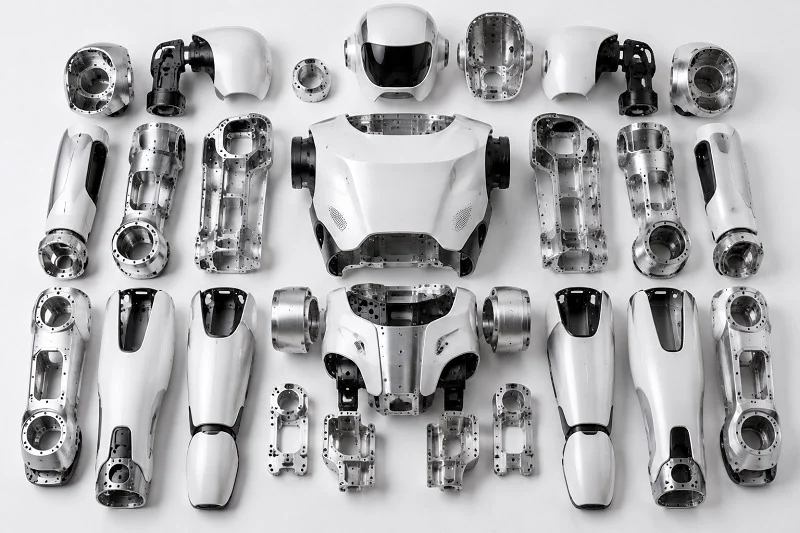
Assembly is the bottleneck nobody talks about. Parts sit on the bench. Operators fiddle with alignment. Fasteners get dropped. Time bleeds away. That is where DFA—Design for Assembly—changes the game.
The numbers are clear. Multi-part assembly eats up a huge chunk of manufacturing cost and schedule. It is not just production. It is a rework. It is service calls. It is field repairs that take twice as long as expected.
Applying DFA principles early avoids all that. The product gets simpler. Assembly steps shrink. Operators need fewer tools. Field technicians finish faster. Production and service both improve.
DFM and DFA work together. One makes the part easy to manufacture. The other makes the product easy to put together and take apart. Ignore either, and the factory floor—or the service van—pays the price.
Chapter 1 – Assembly Independence
Avoid Forced Disassembly Sequences
When installing a part, it should not be necessary to remove all other parts. The same principle should apply during disassembly. Maintenance work should not require disassembling the product down to its frame.
Forced sequences create extra work. Assembly time climbs. Assembly time is consequently extended. Technicians get frustrated. Parts are susceptible to damage during unnecessary disassembly. A good DFA should take future maintenance needs into account from the very beginning.
Don’t Engage Two Mating Surfaces at Once
A part enters the assembly process. If it must be aligned with two surfaces simultaneously, this becomes extremely difficult. The assembly force increases significantly. The operator has no choice but to push hard and wiggle the part from side to side.
The solution is sequential engagement. First, one feature positions the part, and only then does the second feature engage. Clearances and lead angles help facilitate this process. This is a basic principle of DFA. It can save several seconds per assembly. When production volumes reach the thousands, these time savings add up to significant benefits.
Provide Adequate Tool Clearance
The wrench needs room to turn. The torque driver needs a straight approach. The screwdriver needs a clear path.
Insufficient clearance leads to real problems. Fasteners get cross-threaded because the tool came in at an angle. Bolts get under-torqued because the socket could not seat fully. Assembly slows down. Rework goes up.
DFM and DFA together address this. The mold or machined part must have access features—pockets, cutouts, or enough space around fasteners. Parts should be designed with the mold in mind, rather than the other way around.
Simplify Kinematic Motions
Straight-line motion is fast. Push the part in. Done.
Linear motion is fast. Push the part in. Done.
Multi-directional paths are slower. The operator must first tilt, rotate, and align the part before pushing it in. Each additional movement adds a few seconds to the process. Each additional movement increases the risk of misalignment.
Simple motions are better suited for automation. A robot can easily push vertically downward, but it struggles to move along a winding insertion path. Effective automation is simple automation. This is a core consideration for high-volume production lines during DFA design.
Chapter 2 – Error-Proofing in Design
Ensure Functionality Despite Installation Order
Operators do not always follow the book. They may skip certain steps, reverse the order of steps, or make mistakes.
Good DFA tolerates that. Even if the installation sequence changes, the final assembly will still function properly. Self-aligning features help, generous clearances help, and error-proofing interfaces also help.
If the design only works when assembled in one exact sequence, it is bound to fail on the production line. Human error is inevitable, and the design must be able to accommodate these errors.
Use Asymmetry for Mistake-Proofing (Poka-Yoke)
Square tenons fit into square holes, and round tenons fit into round holes. Connectors with keyways can only be inserted one way.
This is an asymmetric design used for error-proofing. It physically prevents incorrect assembly. Operators cannot force the wrong parts into place.
This method is inexpensive and effective, requiring no training or inspection. Design for Manufacturing (DFM) must preserve this asymmetry. Injection-molded parts with keyway features must be able to be demolded cleanly and easily; machined parts with asymmetrical contours must be able to be securely clamped by fixtures. The manufacturing process must never round off the features that prevent errors.
Leverage Symmetry to Simplify Orientation
Asymmetry prevents incorrect insertion. Symmetry, on the other hand, eliminates the need to choose an orientation.
A circular part with mounting holes arranged circumferentially? The operator doesn’t need to worry about which hole aligns first. A square part with all sides identical? Any rotation works. Orientation becomes irrelevant.
This reduces cognitive load. Operators do not need to think. Robots do not need vision systems. Since there is no need to select the correct orientation, errors are eliminated.
There is a trade-off here. While symmetry aids assembly, it can increase the complexity of design for manufacturability (DFM) if it results in core tension or restricts feature layout. Both factors must be evaluated comprehensively to select a solution that strikes a balance between assembly speed and manufacturing costs.
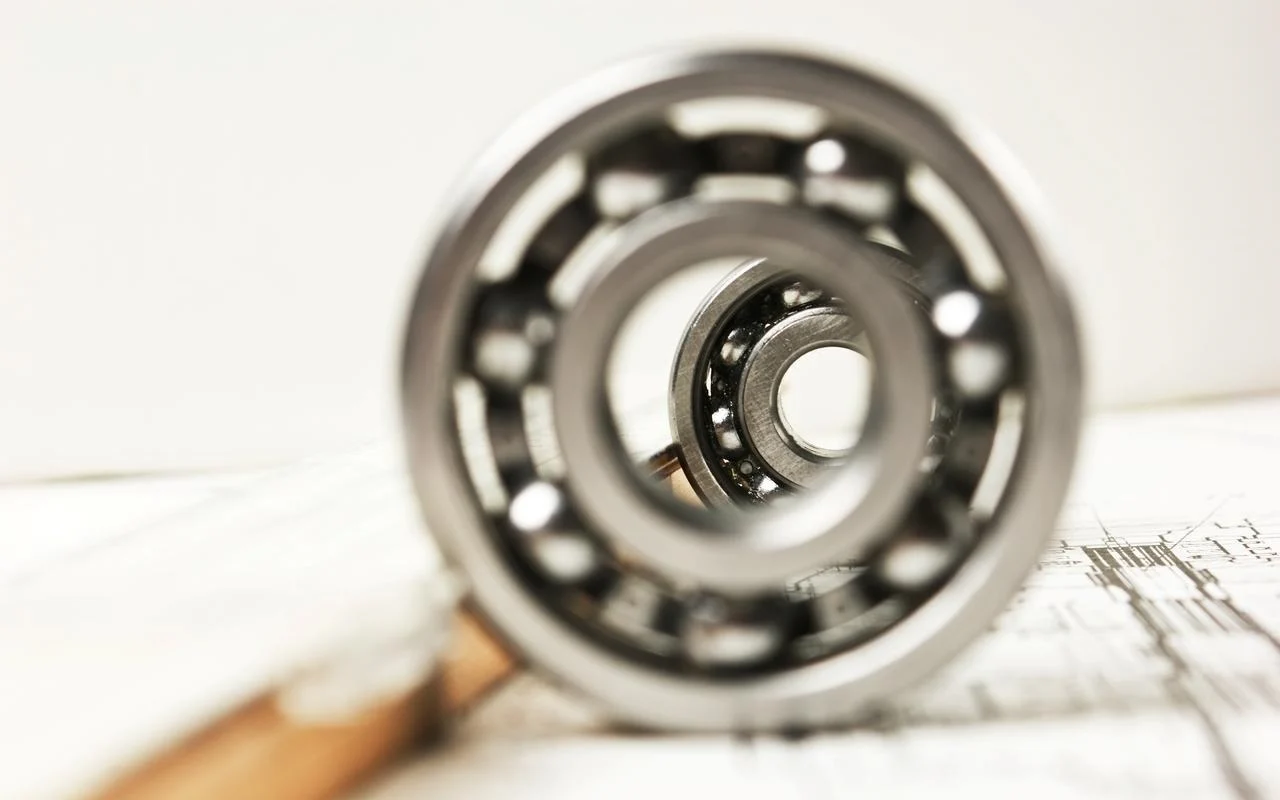
Add Self-Aligning Features and Chamfers
The two components fit together. Operators are sometimes unable to see the interface, which is known as a blind fit. Alignment relies primarily on tactile feedback and, at times, on luck.
Chamfers can solve this problem. A tapered lead-in surface guides the mating surfaces to fit together. Minor positioning errors are automatically corrected by the tapered surface. As a result, the insertion force is reduced. The parts slide smoothly into place rather than getting stuck.
Tapered and rounded lead-in surfaces serve the same purpose. They are inexpensive to implement, save several seconds per assembly, and reduce operator fatigue. This is basic DFA practice.
Recognize the Hidden Value of Chamfers
The alignment benefit is obvious. The hidden benefits are just as valuable.
Sharp edges get damaged. Chamfers protect them. Handling, shipping, and automated feeders—all of them impact edges. A chamfered edge survives better.
Stress concentrations at corners? Chamfers reduce them. The part lasts longer in service.
Automated feeders prefer chamfered parts. They slide past each other without catching. They orient more reliably. The feeder jams less often.
DFM supports this. Chamfers are easy to mold. Easy to machine. They add no cost at the tool design stage. The benefit comes for free.
Chapter 3 – Automation-Ready Design
Design for Robotic Gripping and Latching
Robots lack flexibility. They require stable and repeatable operating conditions; otherwise, they will malfunction.
Gripping points must be predictable. The fixture cannot “feel its way” around the workpiece; it must accurately locate the workpiece’s exact position every time. Flat, parallel gripping surfaces help achieve this by providing a stable contact surface for parallel-jaw fixtures. Positive-locking geometries ensure that the fixture holds the workpiece securely during transfer.
DFA for automation means designing parts that a robot can handle without custom tooling or complex vision systems. Simple gripping features can shorten cycle times. Predictable positioning reduces programming effort. DFM must maintain these features throughout the production process. Draft angles must not interfere with the gripping surfaces. Mold parting lines must not create sharp edges that could interfere with the end-effector.
Keep Fastener Heads Smooth and Snag-Free
Fasteners are conveyed through a feeder and a slide chute, glide along the guide rails, and eventually drop into the positioning head.
Protruding nuts get stuck, and sharp edges catch on things. The feeder jams, and the production line shuts down.
Clearly, nuts with smooth surfaces and straight edges flow better. Pan-head and truss-head nuts are suitable, as are countersunk nuts. What about hex heads? They get stuck everywhere and roll unpredictably. Avoid them.
The same logic applies to injection-molded and machined parts. Surfaces free of snags ensure the smooth operation of material handling systems. This is a DFA and DFM intersection. The part must be easy to make and easy to feed. A shape that jams a bowl feeder is a production disaster, regardless of how cheap it was to machine.
Prevent Tangling in Bulk Handling
Vibrating hoppers and feed hoppers convey parts to the assembly line. They require that parts be able to move freely.
Hooks can block the flow of parts. Ring-shaped structures can become entangled with one another. Interlocking geometries can form chains. As a result, the feeder becomes jammed. Operators are forced to reach inside to untangle the parts.
Parts that are prone to tangling slow down the production line, which defeats the purpose of automation. Designers should avoid these features as much as possible. DFA for bulk handling means designing shapes that nest loosely, not lock together.
Chapter 4 – Modularity and Standardization
Define Clear Module Boundaries
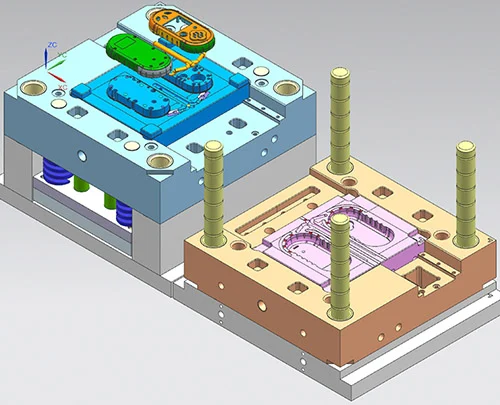
A module is a functional unit. It does one thing, and it does it well. Its boundaries are clear and well-defined: inputs and outputs, power and signals, mounting and sealing.
Clear boundaries simplify everything. Testing is faster, and troubleshooting is easier. A faulty module can simply be replaced without spending hours on diagnostics. The rest of the system remains intact.
DFA benefits from modularity. The fewer the interaction points, the simpler the assembly process. DFM benefits as well. Modules can be manufactured on different production lines and then assembled later.
Reduce On-Site Assembly Work
Field assembly is costly. With poor lighting, limited tools, and technicians having to work while standing on ladders, mistakes are inevitable.
Move the work to a factory workshop. The environment is controlled, lighting is ample, and all necessary tools are available, resulting in faster assembly, a lower error rate, and reduced labor costs.
This is one of the core principles of DFA. Product design should minimize on-site installation work. Unavoidable installation steps should be kept as simple as possible—plug-and-play, rather than wiring and soldering. DFM supports this principle by producing subassemblies that are shipped as complete units, thereby reducing the number of loose parts shipped to the site.
Prioritize Standard Off-the-Shelf Parts
Custom parts cost more, have longer lead times, and come with less detailed documentation.
Standard fasteners, connectors, and subassemblies are less expensive, readily available in stock, and backed by publicly available specifications and well-established supply chains, making replacement parts easy to find.
DFM and DFA both favor standards. Standard fasteners drive standard tools. Standard connectors fit standard cables. Standard subassemblies slot into standard interfaces. A design that relies heavily on standard parts is faster to develop, easier to build, and simpler to support in the field. Custom is not always better. Sometimes, standard is the smartest choice.
Chapter 5 – Design for Disassembly and Recycling
Enable Easy Material Separation
When a product reaches the end of its useful life, it is disassembled. Different materials must enter different waste streams: plastics go into the plastic recycling process, metals into the metal recycling process, and electronic components are sent for specialized treatment.
If materials are permanently bonded together, separation becomes difficult. Recyclers have no choice but to discard them, and the product ultimately ends up in a landfill.
Design for disassembly means making separation simple. Snap-fits can be undone. Fasteners can be removed. Materials can be sorted by hand or by machine. This is a sustainability-driven extension of DFA—the same principles that make assembly easy also make disassembly possible. DFM supports this by avoiding permanent joining methods that cannot be reversed.
Replace Adhesives with Snap-Fits and Quick-Release
Adhesives are permanent. Once cured, they are difficult to separate. Disassembly causes damage: parts break, materials mix, and recyclability is compromised.
Snap-fit connections solve this problem. During use, they can be disassembled with a tool or by simply snapping them apart. Quick-release fasteners work the same way. Breakaway snap-fits provide a one-time separation path.
These are all solutions that align with DFA principles. Assembly is faster than adhesive curing—no waiting, no fixtures, and no harmful fumes. Disassembly is easier, making repairs possible and recycling a practical option. DFM must ensure that the snap-fit geometry remains robust throughout the entire production process. If the snap-fit force is too weak, the connection will break during use; if it is too strong, disassembly becomes difficult. Balance is crucial.

About NOBLE – Precision CNC Machining & Full-Service Manufacturing
Who We Are
NOBLE runs a precision CNC machining factory. The focus is on medical, automotive, and industrial markets. High-mix production. Low-to-medium volumes. That is the sweet spot. Complex parts. Small batches. Tight tolerances.
Certified Quality Systems (ISO 9001 & ISO 13485)
Certifications are not decorations. ISO 9001:2015 covers quality management across all processes. ISO 13485:2016 adds medical-grade rigor—traceability, documentation, and process control.
These certifications mean consistency. Every part gets the same treatment. The system is audited. The records exist. Regulated industries require that level of proof.
One-Stop Solution: From Design to Assembly
Machining is just the start. Surface finishing adds protection. Inspection verifies compliance. Sub-assembly and final assembly complete the product.
One supplier handles all of it. No shipping parts between vendors. No coordination headaches. The supply chain shrinks. Overhead drops.
Why Partner with NOBLE
One point of contact from raw material to assembled part. That is the value.
Faster turnaround because handoffs are eliminated. Fewer coordination issues because nothing gets lost in translation. Proven quality because the systems are certified and the people are experienced.
Regulated industries trust that approach. Medical devices. Automotive safety components. Industrial controls. The same standards apply across all of them.
FAQ
What is Design for Assembly (DFA) and why is it important?
DFA is a method that simplifies product structures and assembly steps. It cuts part count, eases handling and insertion, and avoids complex tooling or awkward motions. The result? Faster assembly, less rework, and easier service. It is a core part of any modern DFM / DFA strategy.
Why is tool clearance often overlooked, and how does it affect assembly?
Without clearance for wrenches or torque drivers, operators struggle—cross-threading, under-torquing, or damaged parts follow. A small clearance check in the CAD model prevents costly line issues later.
What are the most common design mistakes that hurt assembly efficiency?
The most frequent pitfalls include:
- Designing parts that require the disassembly of one part before another can be accessed
- Forcing two mating surfaces to engage at the same time makes insertion difficult
- Neglecting tool clearance, leaving no room for wrenches or screwdrivers
- Overlooking chamfers and self-aligning features for blind assembly
- Using adhesives instead of snap-fits or quick-release mechanisms, which complicates both assembly and future repairs
These issues are preventable through the disciplined application of DFA principles during the early design phase.