Technological advancements and the rise and maturation of advanced manufacturing technologies worldwide have placed higher demands on CNC machining technology. In the field of advanced manufacturing, Computer Numerical Control (CNC) turning is a cornerstone technology driving precision, efficiency, and innovation in the production of complex parts. This guide delves into the complexities of CNC turning and milling, providing a detailed analysis of its methods, advantages, applications, and transformative impact on modern manufacturing processes.
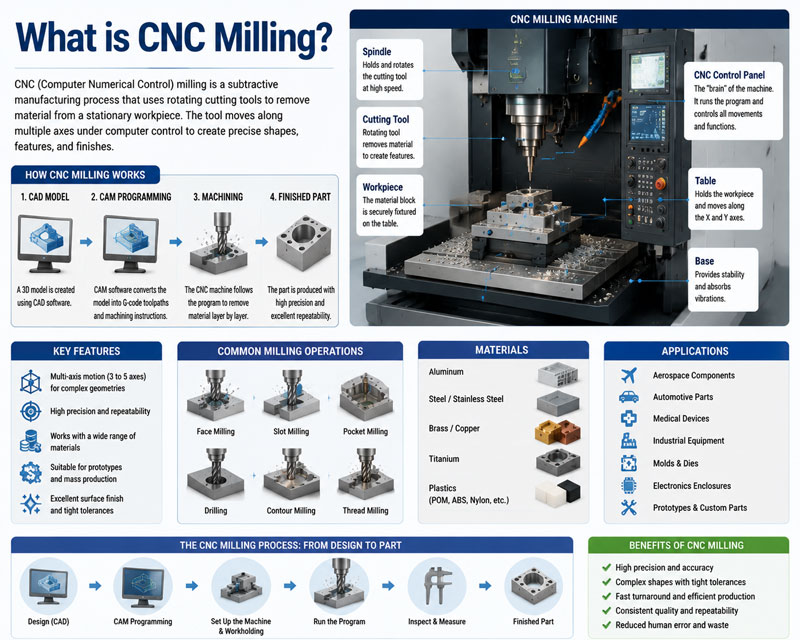
What is CNC Milling?
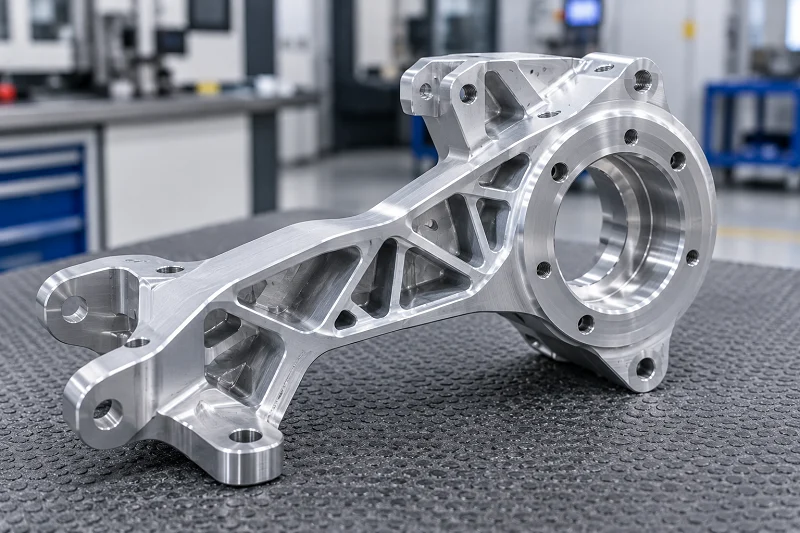
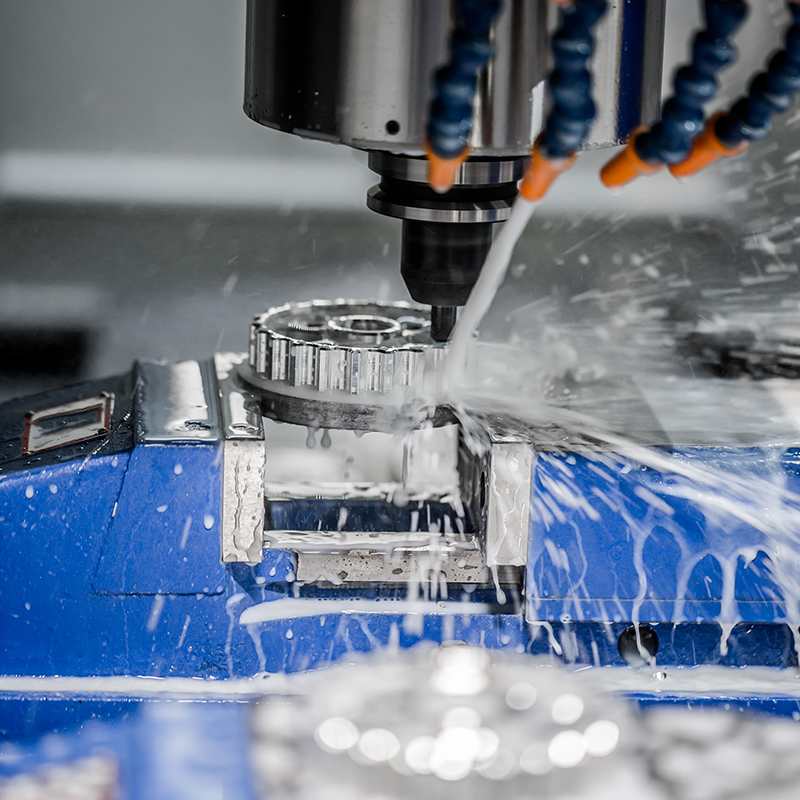
CNC milling is a precision machining process that uses computer-controlled cutting tools to remove material from a workpiece, producing parts with complex shapes, clear features, and precise dimensions. CNC machine tools control the movement of rotating cutting tools along multiple axes, enabling the production of high-quality parts from materials such as aluminum, steel, stainless steel, plastics, and titanium. Due to its advantages such as high precision, high repeatability, and the ability to manufacture complex parts with extremely small tolerances, it is widely used in industries such as aerospace, automotive, medical devices, electronics, and industrial equipment.
The Mechanics of CNC Milling
-
Workpiece Preparation:
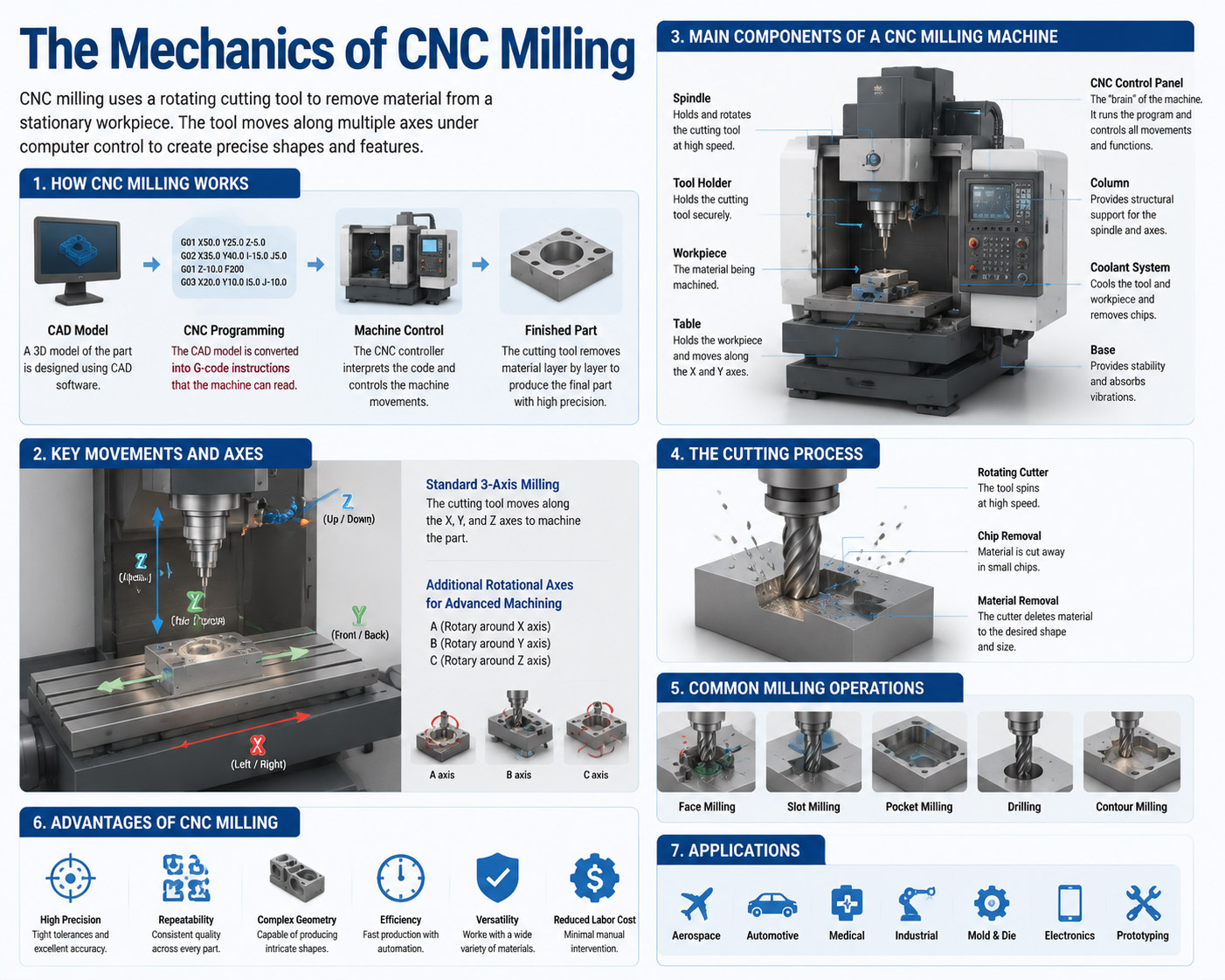
The CNC milling process begins with the workpiece secured to the machine bed or vise. The workpiece is then placed beneath a cutting tool that moves along multiple axes (X, Y, and Z) to remove material according to the programmed design.
-
Tools and Cutting Operations:
CNC milling machines use a variety of cutting tools such as end mills, drills, and routers to shape the workpiece. These tools are controlled by the CNC program to perform operations such as drilling, contouring, slotting, and profiling.
-
Multi-Axis Machining:
Advanced CNC milling machines have multi-axis capabilities that can accurately machine more complex and precise geometries. 3-, 4-, and 5-axis milling machines can produce parts of varying degrees of complexity.
Advantages of CNC Milling
-
Precision and Accuracy:
CNC milling offers exceptional precision, accuracy, and repeatability with the help of computer-controlled motion and advanced positioning systems, ensuring that every part produced consistently meets stringent tolerances and quality standards.
-
Versatility and Flexibility:
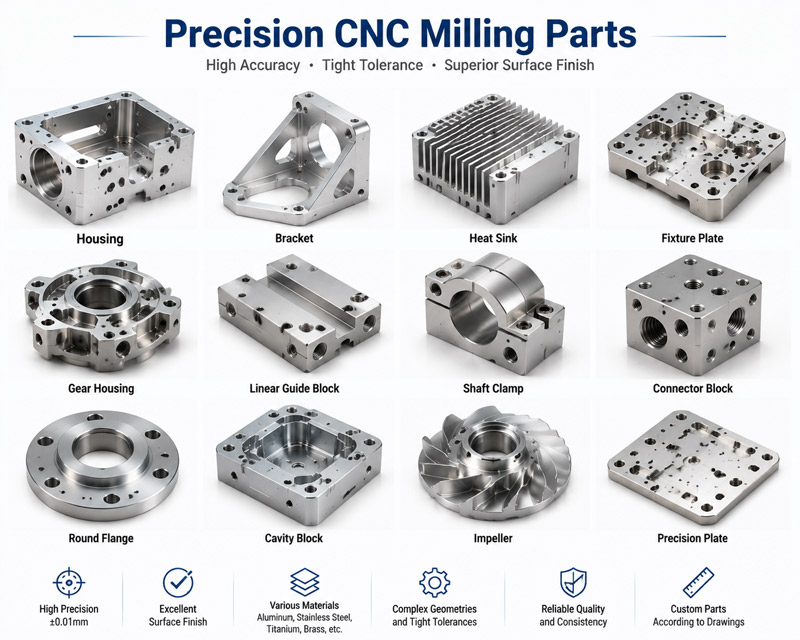
CNC milling is able to process a wide range of materials, from metals to plastics and composites. They can create complex shapes, grooves, slots, and profiles. They can provide design flexibility and adaptability to meet different manufacturing requirements and parts for different industries, including aerospace, automotive, medical, and electronics.
-
Efficiency and Productivity:
CNC milling machines operate continuously, reducing downtime between operations and optimizing workflow. They can automatically change tools and perform multiple operations in a single setup. They can run unattended, maximizing productivity. Efficiency and cost-effectiveness can be improved by shortening production cycles, reducing setup times, and optimizing material utilization.
-
Scalability and Repeatability:
CNC milling allows for large quantities of identical parts with minimal variation, making it ideal for mass production and batch manufacturing. The multi-axis capabilities of CNC milling machines can create complex parts. It features intricate details that are difficult or impossible to achieve using traditional methods. This opens up possibilities for innovative design and engineering solutions
Applications of CNC Milling
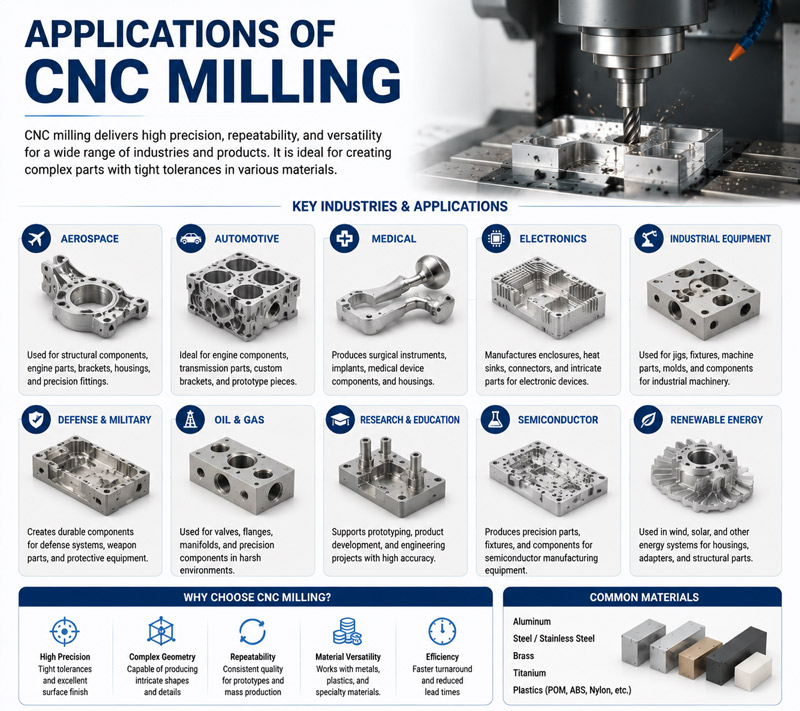
CNC milling has revolutionized the manufacturing industry, increasing productivity, quality, and design possibilities. It reduces manual labor, improves machining accuracy, and speeds up time to market for new products. CNC milling machines have become an essential tool in advanced manufacturing facilities. Enabling companies to meet the demands of a dynamic and competitive market.
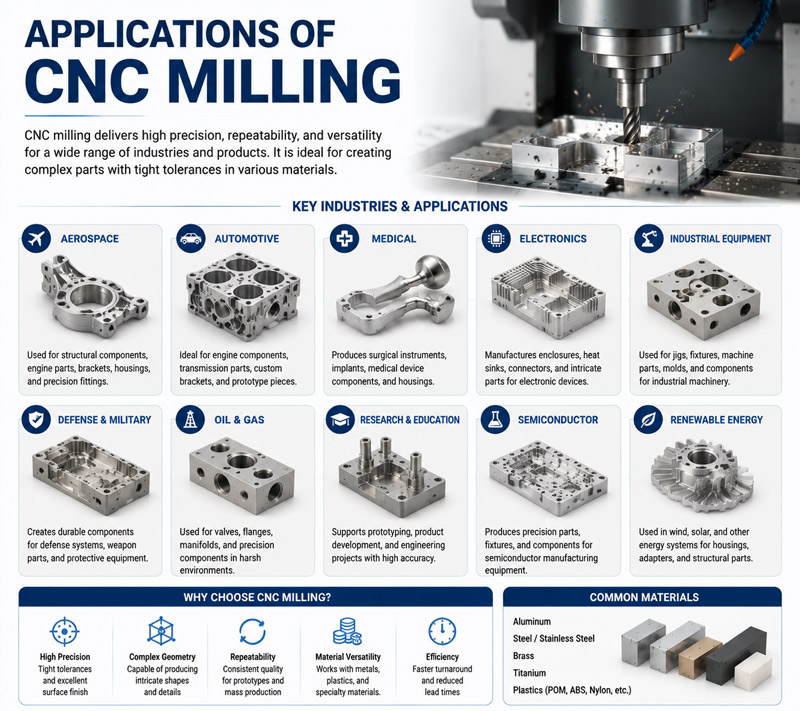
CNC milling is extensively used in the aerospace and defense sectors for manufacturing aircraft components, missile parts, and military hardware that require high precision and reliability.
In the automotive industry, CNC milling is employed to produce engine components, chassis parts, transmission elements, and other critical components with intricate geometries and tight tolerances.
CNC milling plays a crucial role in medical device manufacturing by producing implants, surgical instruments, prosthetics, and other medical components with precise dimensions and biocompatible materials.
-
Electronics and Technology Sector:
In the electronics industry, CNC milling is utilized for manufacturing circuit boards, housings, connectors, and other components essential for electronic devices, telecommunications, and semiconductor applications.
Best Practices in CNC Milling
-
Tool Selection and Optimization:
Choosing the right cutting tools, tool paths, speeds, and feeds is essential for achieving optimal machining results and prolonging tool life.
-
Workholding and Fixturing:
Proper workpiece clamping, alignment, and fixturing are critical for ensuring stability, accuracy, and surface finish quality during CNC milling operations.
-
Program Optimization and Simulation:
Optimizing CNC programs, simulating machining processes, and conducting virtual testing can help identify potential issues, reduce cycle times, and improve overall productivity.
-
Quality Control and Inspection:
Implementing robust quality control measures, performing in-process inspections, and conducting post-machining checks are vital for maintaining part quality and meeting customer specifications.
The Future of CNC Milling
As technology continues to advance, the future of CNC milling is filled with exciting possibilities. Innovations in machine design, cutting tool technology, automation, and data analytics promise to further enhance the capabilities of CNC milling, enabling manufacturers to push the boundaries of precision machining and product innovation.
What is CNC turning?
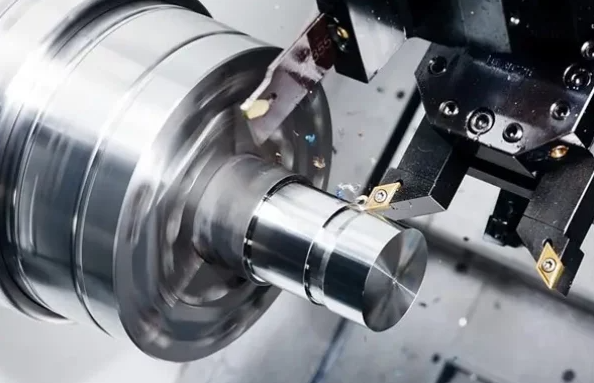
CNC turning is a subtractive manufacturing process that uses computer-controlled machines to machine cylindrical workpieces into precision components with intricate details. By rotating the part relative to the cutting tool according to programmed instructions, it is able to manufacture a variety of parts, from simple shafts to complex geometries, with unparalleled accuracy and repeatability. The cutting tool can move in different directions on the CNC system, making the entire process very precise and automated.
Advantages of CNC Turning
-
Precision and Accuracy:
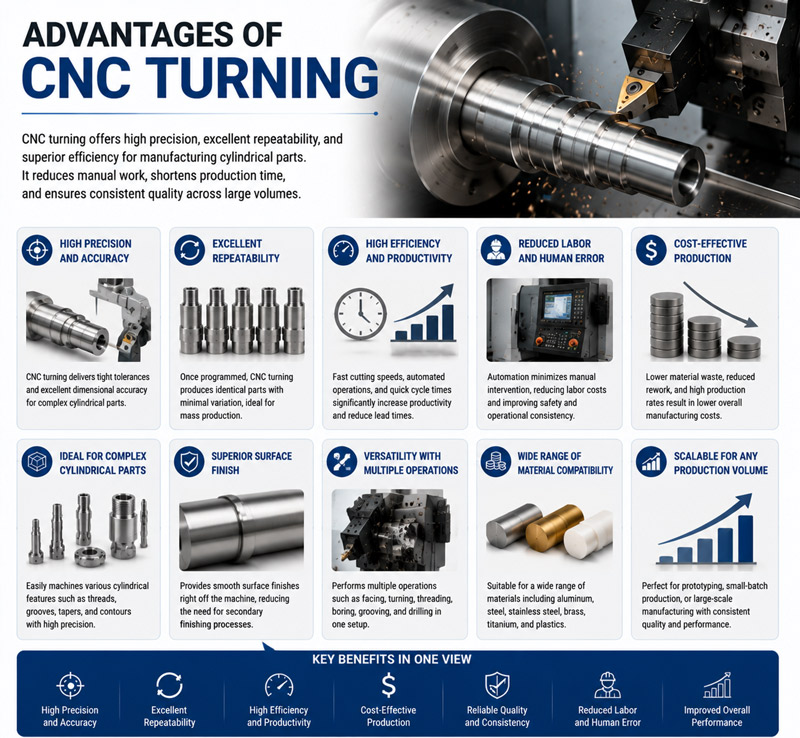
CNC turning offers exceptional precision and accuracy, enabling consistency and reliability in tight tolerances and complex geometries. CNC turning is repeatable. The machine follows pre-programmed instructions, minimizing human error. This produces consistent, precise parts with tight tolerances.
-
Efficiency and Productivity:
By automating the machining process, CNC turning increases productivity, reduces cycle times, and enables simultaneous machining of multiple features on a workpiece. CNC turning significantly reduces machining time and increases productivity. It enables unattended machining, which optimizes resource use.
-
Versatility and Flexibility:
CNC turning can be used to produce a wide range of components in various materials, from metals such as steel and aluminum to plastics and composites, making it a versatile solution for a wide range of manufacturing needs. CNC turning can handle workpieces of all shapes and sizes. From simple cylindrical components to complex geometries, everything is no problem. It supports a variety of operations such as turning, facing, grooving, threading, and more. It provides versatility for manufacturing.
-
Cost-effectiveness:
CNC turning reduces setup time, material waste, and labor costs, providing a cost-effective manufacturing solution for producing low-volume to high-volume, high-quality components.
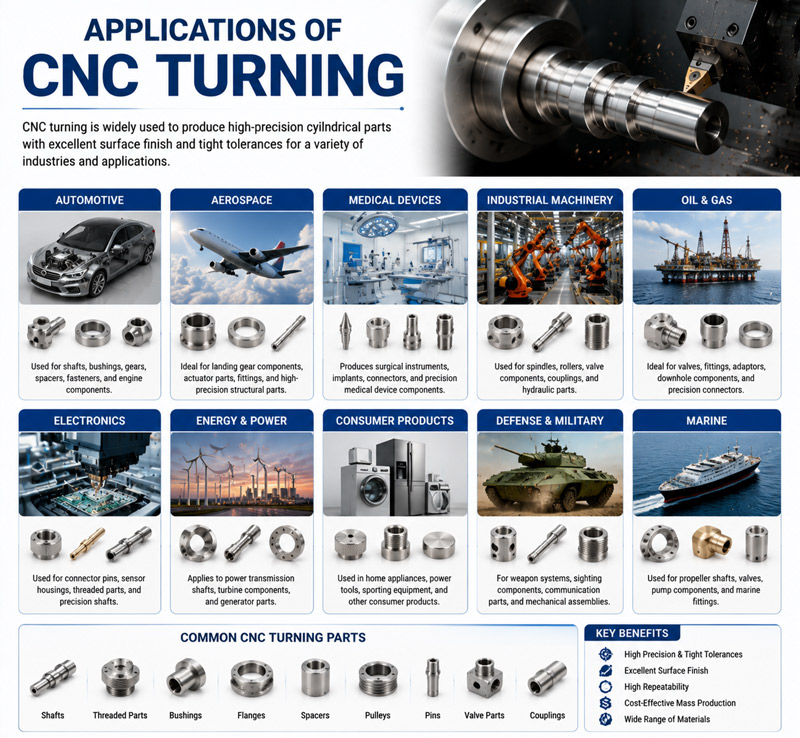
Applications of CNC Turning
-
Aerospace and Defense:
In the aerospace and defense industry, CNC turning is used to manufacture critical components with stringent quality and performance requirements, such as turbine shafts, landing gear components, and aircraft accessories.
-
Automotive Engineering:
CNC turning plays a vital role in automotive engineering, producing engine components, transmission components, steering system components, and other precision parts that require high precision and durability.
-
Medical Device Manufacturing:
The medical device industry relies on CNC turning to produce surgical instruments, implants, prostheses, and other medical components with complex geometries and biocompatible materials.
-
Electronics and Semiconductors:
In the electronics and semiconductor fields, CNC turning is used to manufacture connectors, pins, housings, and other parts that require precise tolerances and excellent surface finish.
-
General Engineering:
In general engineering, CNC turning is commonly used to process a variety of parts used in machinery, tools, and equipment.
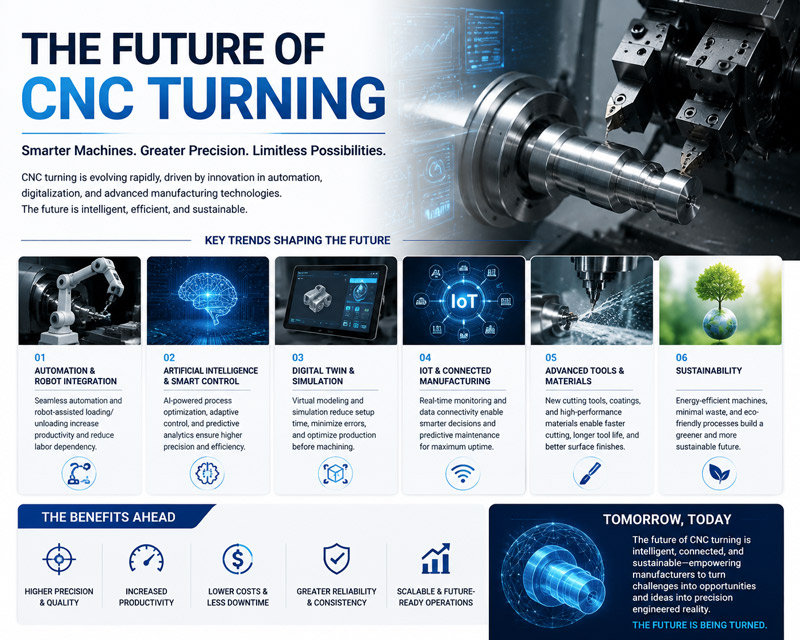
The Future of CNC Turning
The future of CNC turning will focus on intelligent automation, higher precision, and greater manufacturing efficiency. With the integration of AI, IoT, robotics, and advanced CNC control technologies, turning machines will become smarter and capable of real-time monitoring, automatic adjustment, and predictive maintenance.
Emerging technologies such as multi-axis CNC turning, hybrid machining, and digital manufacturing will enable the production of more complex and precise components. CNC turning will continue to support industries including aerospace, automotive, medical, and robotics by improving productivity, reducing costs, and achieving more sustainable manufacturing processes.
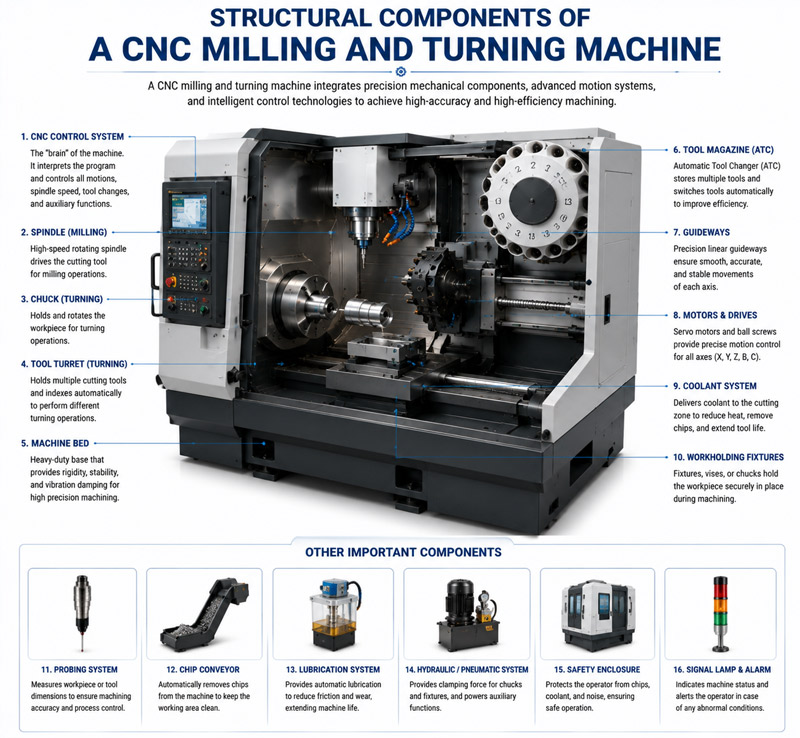
Structural Components of a CNC Milling and Turning Machine
A CNC milling and turning machine consists of several essential components, including the CNC control system, machine bed, spindle, motors, guideways, workholding fixtures, cutting tools, and tool holders. CNC milling machines mainly rely on a rotating spindle and moving axes to cut stationary workpieces, while CNC turning machines use a rotating workpiece held by a chuck and cutting tools mounted on a turret.
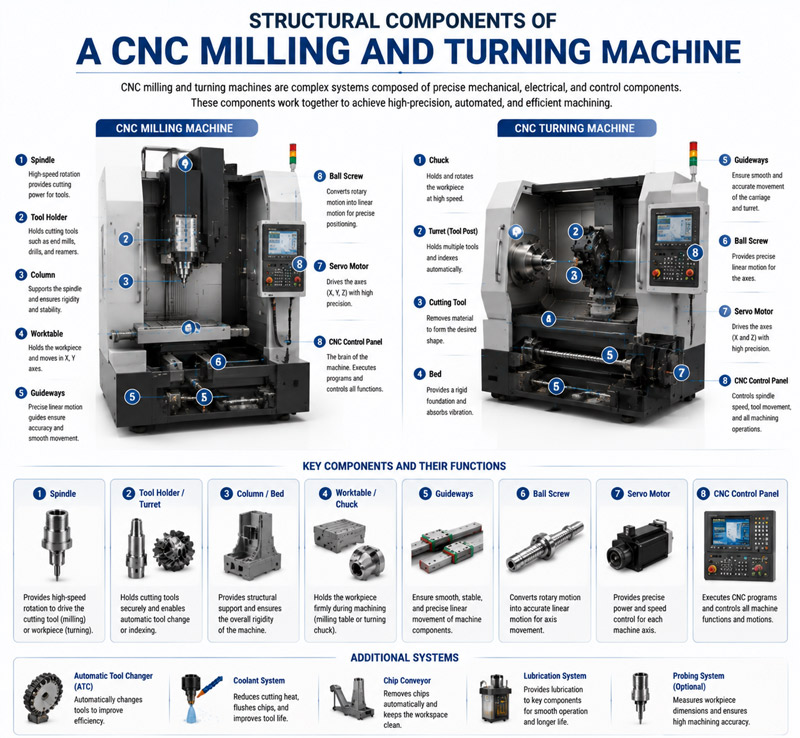
Advanced CNC machines may also include automatic tool changers, coolant systems, probing systems, and multi-axis control units. These components work together to achieve high precision, stable machining, and efficient automated production.
CNC Milling and Turning Operations
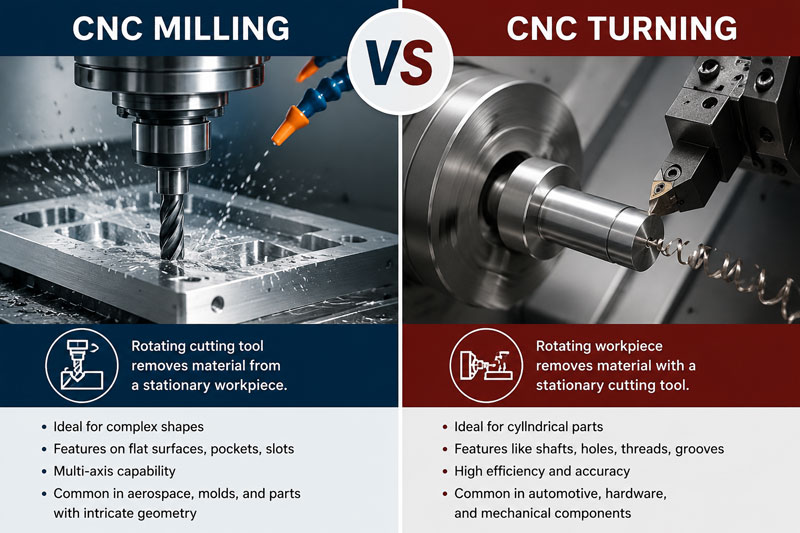
CNC milling operations use rotating cutting tools to remove material from a workpiece, including face milling, pocket milling, contour milling, drilling, tapping, and slot machining. It is suitable for manufacturing parts with complex geometries, flat surfaces, and multiple precision features.
CNC turning operations rotate the workpiece while stationary cutting tools remove material to create cylindrical features such as shafts, threads, grooves, and bores. Both processes are controlled by CNC programs, enabling high accuracy, repeatability, and consistent production quality.
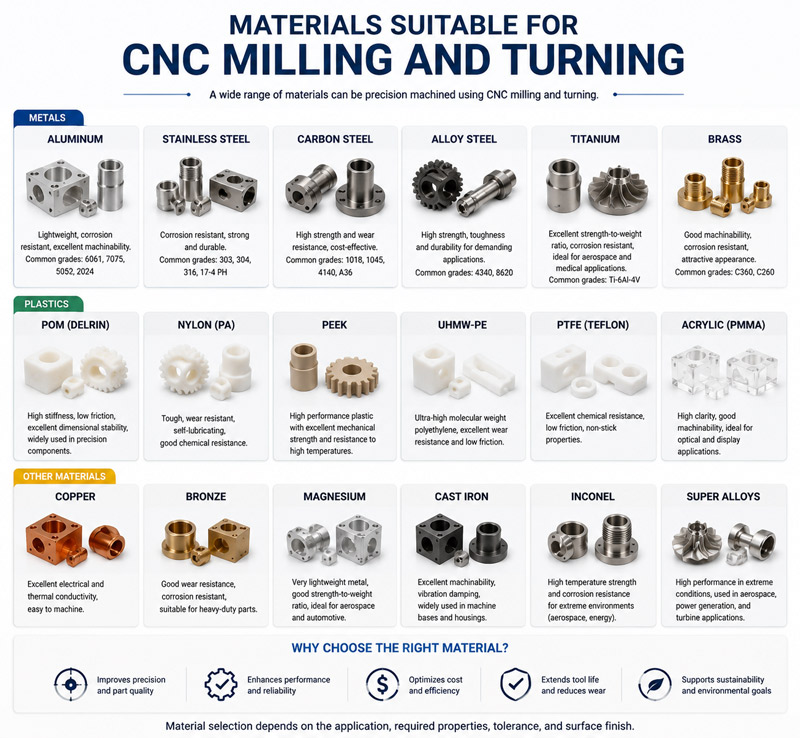
Materials Suitable for CNC Milling and Turning
CNC milling and turning can process a wide range of materials, including aluminum, stainless steel, carbon steel, titanium, brass, copper, magnesium, and engineering plastics such as POM, ABS, PC, and nylon. The material selection depends on factors such as strength, weight, corrosion resistance, temperature requirements, and application environment.
Aluminum is commonly used for lightweight precision components, titanium for aerospace and medical applications, stainless steel for corrosion-resistant parts, and plastics for low-friction or electrical insulation applications.
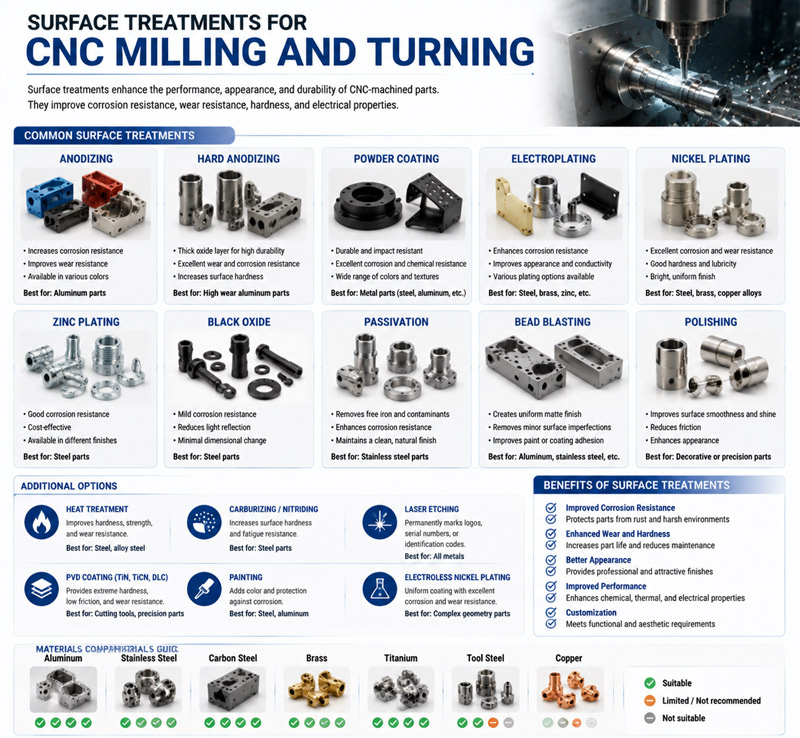
Surface Treatments for CNC Milling and Turning
Surface treatments improve the appearance, durability, corrosion resistance, and performance of CNC machined parts. Common finishing methods include anodizing, powder coating, electroplating, passivation, bead blasting, polishing, brushing, heat treatment, and PVD coating.
The suitable surface treatment depends on the material and application requirements. For example, anodizing is widely applied to aluminum parts to improve corrosion resistance and surface hardness, while passivation is commonly used for stainless steel components.
Overview of CNC Turning and Milling Characteristics
CNC milling is ideal for producing complex-shaped parts, precision holes, pockets, slots, and multi-surface components. It provides excellent flexibility and is widely used for prototypes, low-volume production, and high-precision components.
CNC turning is mainly used for cylindrical or rotational parts and offers high efficiency, excellent repeatability, and fast production speeds. Both machining methods provide advantages such as tight tolerances, automation, reduced human error, and suitability for various industries.
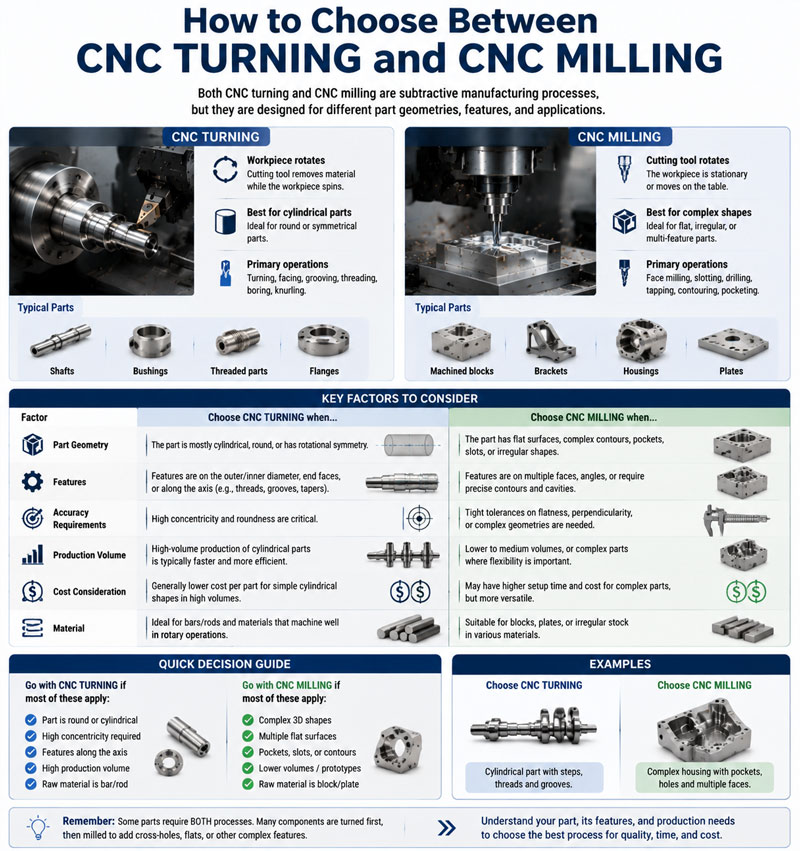
How to Choose Between CNC Turning and CNC Milling?
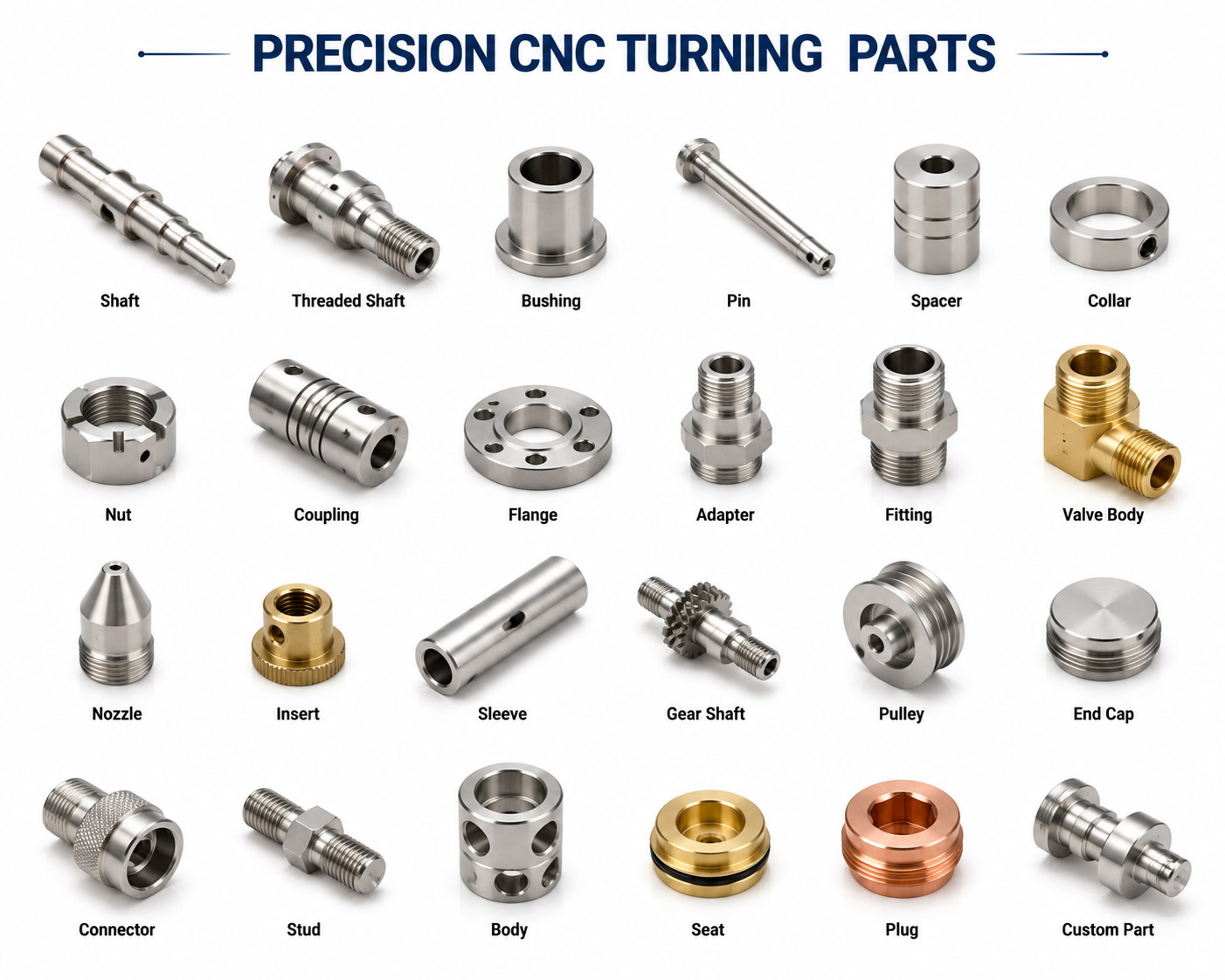
The choice between CNC turning and CNC milling depends mainly on the part design and machining requirements. CNC turning is the better choice for round, cylindrical, or symmetrical components such as shafts, bushings, and pins, while CNC milling is more suitable for complex shapes, flat surfaces, pockets, and irregular features.
For parts requiring both turning and milling operations, CNC mill-turn machines or multi-axis machining centers can combine processes, reduce setup time, and improve overall efficiency.
What Are the Similarities Between CNC Milling and Turning?
CNC milling and turning are both computer-controlled machining processes that remove material from a workpiece using cutting tools. Both require CNC programming, proper tool selection, cutting parameter optimization, and quality inspection to achieve accurate results.
They are widely used in aerospace, automotive, medical, robotics, and industrial manufacturing due to their high precision, repeatability, and ability to produce customized parts.
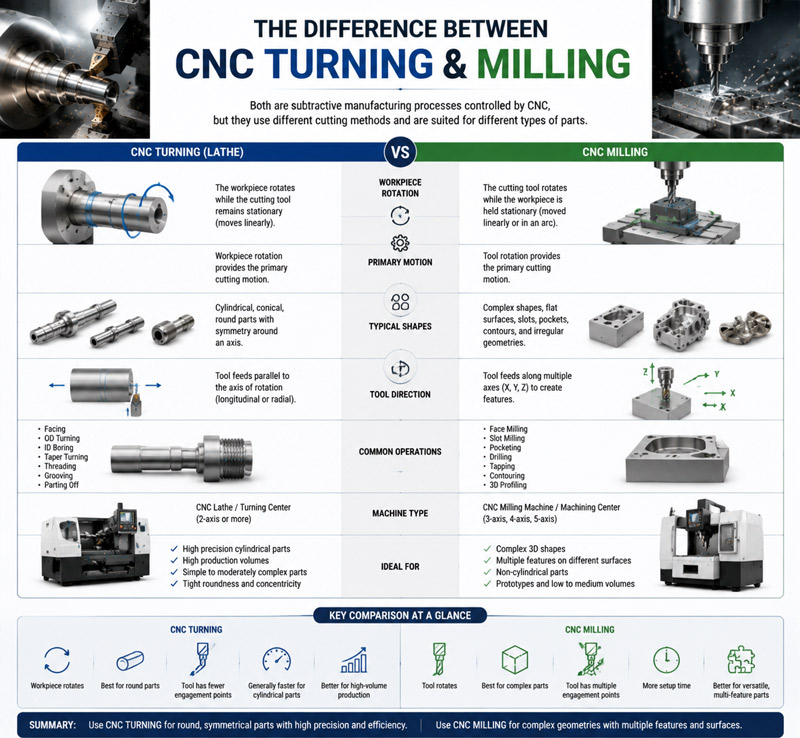
The difference between CNC Turning &Milling
CNC turning is ideal for producing cylindrical parts with rotational symmetry. It excels in applications such as manufacturing shafts, bushings, and threaded components. It is also used to machine components for the automotive, aerospace, and medical industries. CNC turning is particularly effective when handling high-volume production of cylindrical parts.
CNC milling is versatile and can be used on a wide variety of parts and materials. It is often used to create complex 3D shapes, flat surfaces, slots, and grooves. CNC milling can be applied in industries such as aerospace, automotive, electronics, and prototyping. It is particularly useful in manufacturing custom parts, complex molds, and components that require precise tolerances and complex geometries.
CNC turning excels at producing cylindrical components with excellent concentricity, surface finish, and dimensional accuracy. It is well suited for high-volume production, offers faster cycle times, and is generally more cost-effective for turned parts. CNC milling offers exceptional versatility, allowing for the creation of complex 3D shapes, intricate details, and a wide range of material compatibility. It offers design flexibility and precise tolerances for low-volume production and prototyping.
- Processing method: Lathes process by rotating the workpiece and cutting or cutting the material on the workpiece with the tool. Milling machines, on the other hand, process by rotating the tool and moving it along the surface of the workpiece to remove excess material on the workpiece surface.
- Working principle: Lathes use continuous tool feeding and workpiece rotation, and the cutting speed is generally low. Milling machines use relative movement in two directions of tool feeding and workpiece feeding, and the cutting speed is high.
- Scope of application: Lathes are suitable for processing circular workpieces, and can perform operations such as turning, boring, and drilling. Milling machines are suitable for processing workpieces with shapes such as planes, holes, and complex curves, and can perform operations such as milling, boring, and drilling.
- Structural features: Lathes usually have a spindle and a tailstock, and the workpiece is clamped on the spindle for rotation processing. Milling machines usually have an accessory table, a workbench, and a tool holder, and the tool moves on the accessory table for processing.
- Processing accuracy: Generally speaking, lathes have high processing accuracy and can achieve higher surface roughness requirements. Milling machines can perform high-speed cutting, but the processing accuracy is relatively low.
It should be noted that lathes and milling machines are the basic forms of metal processing machine tools. According to different processing needs and requirements, there are other types of machine tools, such as grinders, drilling machines, boring machines, etc.
Combination of Turning and Milling
In some cases, a combination of CNC turning and CNC milling can be used to achieve the desired results. This approach is called a turn-mill combination. Compound machining is one of the most popular machining processes in the field of mechanical machining and is an advanced manufacturing technology. Compound machining is used to realize several different machining processes on one machine tool. The most widely used and most difficult compound machining is turning-milling compound machining. The turning-milling compound machining center is equivalent to the combination of a CNC lathe and a machining center. The turn-mill combination can produce parts that require rotation and complex 3D features. By combining the advantages of both processes, manufacturers can optimize production efficiency and accuracy.
Advantages of Mill-Turning:
Mill-Turning is an advanced manufacturing technology that combines the functions of a lathe and a milling machine. It not only performs simple operations like drilling and reaming, but also enables high-precision curved surface machining.
Compared with conventional CNC machining processes, the outstanding advantages of composite machining are mainly reflected in the following aspects.
- Shorten the product manufacturing process chain and improve production efficiency. Turning and milling composite machining can complete all or most of the processing procedures in one clamping, thereby greatly shortening the product manufacturing process chain. This not only reduces the production auxiliary time caused by changing equipment, but also reduces the manufacturing cycle and waiting time of tooling and fixtures, which can significantly improve production efficiency.
- Reduce the number of clamping times and improve processing accuracy. The reduction in the number of clamping times avoids the accumulation of errors caused by positioning reference conversion. At the same time, most turning and milling composite machining equipment has an online detection function, which can realize the in-situ detection and precision control of key data in the manufacturing process, thereby improving the processing accuracy of the product.
- Reduce the floor space and reduce production costs. Although the price of a single turning and milling composite machining equipment is relatively high, due to the shortening of the manufacturing process chain and the reduction of equipment required for the product, as well as the reduction of tooling and fixtures, workshop floor space and equipment maintenance costs, it can effectively reduce the overall fixed asset investment, production operation and management costs.
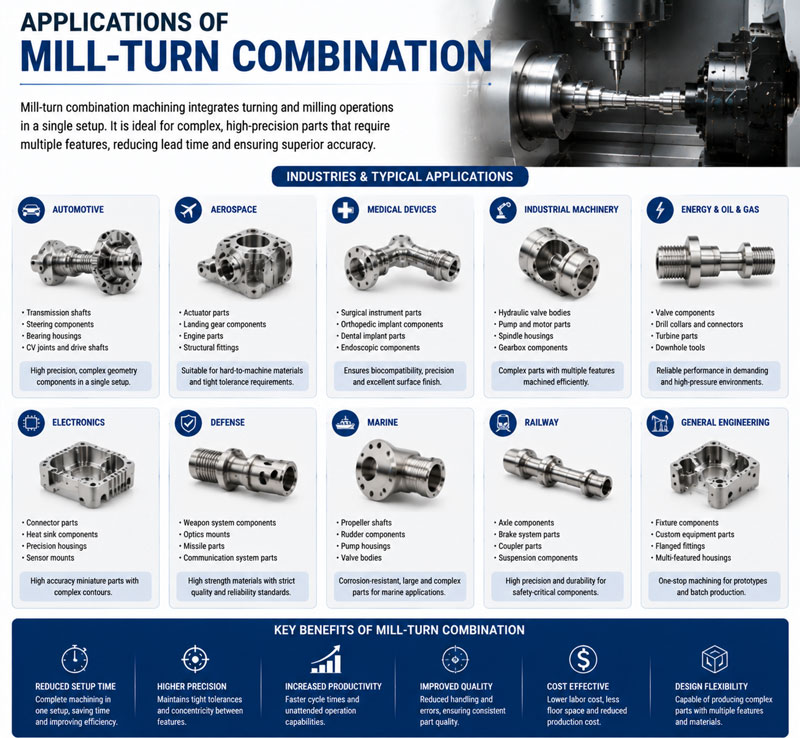
Applications of Mill-Turn Combination
CNC mill-turn machining technology combines the functions of CNC turning and milling, completing multiple machining operations in a single setup, significantly improving machining efficiency and precision. Its applications are wide-ranging, covering the following major fields:
-
Aerospace
Typical parts: Engine blades, turbine disks, aerospace structural components (such as landing gear), spacecraft shells, etc.
Advantages: High-precision machining of complex curved surfaces, irregular holes, and thin-walled parts; reduced clamping errors; meeting the stringent requirements of aerospace materials (such as titanium alloys and high-temperature alloys).
-
Automotive Manufacturing
Typical parts: Engine blocks, crankshafts, gearbox gears, steering knuckles, new energy vehicle battery housings, etc.
Advantages: Efficient machining of high-precision rotating parts and multi-faceted features (such as keyways and threaded holes); adaptable to mass production needs.
-
Medical Devices
Typical parts: Artificial joints (hip joints, knee joints), dental implants, surgical instruments, precision implants, etc.
Advantages: Capable of machining complex shapes from biocompatible materials (such as titanium alloys and ceramics), with surface roughness reaching below Ra 0.8μm.
-
Energy Equipment
Typical parts: Gas turbine blades, nuclear power plant valves, oil drilling tools, hydroelectric spindles, etc.
Advantages: Handles large, high-hardness materials, enabling deep hole and multi-axis simultaneous machining.
Typical parts: Injection molds, die-casting molds, stamping mold cores, cavities, and electrodes.
Advantages: Combines turning and five-axis milling to directly machine complex cavities and undercut structures, shortening mold delivery cycles.
-
Military and Shipbuilding
Typical parts: Missile casings, ship propellers, hydraulic steering components, etc.
Advantages: High-rigidity design adapts to heavy cutting, machining high-strength alloy steel and composite materials.
-
Electronics and Precision Instruments
Typical parts: Optical lens barrels, sensor housings, connectors, micro gears, etc.
Advantages: Micron-level precision machining of small, complex parts; supports ultra-precision milling and turning (e.g., Swiss-type machine tools).
-
General Machinery and Components
Typical Parts: Hydraulic valve blocks, pump bodies, flanges, non-standard shaft parts, etc.
Advantages: Flexible small-batch production, reduced equipment changeover time, and lower costs.

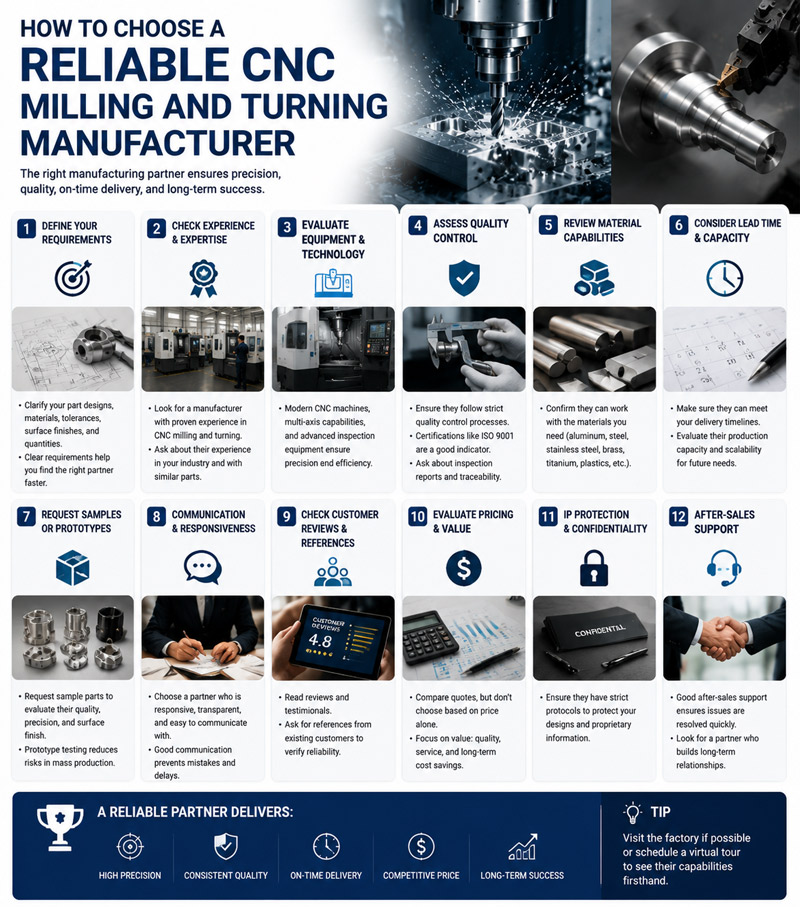
How to Choose a Reliable CNC Milling and Turning Manufacturer?
A reliable CNC milling and turning manufacturer should have advanced CNC equipment, experienced engineers, professional quality inspection systems, and strong manufacturing capabilities. Important factors include machining accuracy, material expertise, production capacity, certifications, lead time, and experience with similar projects.
Working with an ISO-certified CNC machining supplier can help ensure consistent quality, competitive costs, reliable delivery, and professional engineering support from prototype development to mass production.
Why choose NOBLE as a precision CNC machining manufacturer?
NOBLE offers customized precision CNC machining solutions at competitive prices, from prototyping to production. Leveraging advanced production equipment and an experienced engineering team, we select the appropriate processes to reduce costs and shorten project cycles.
Our Manufacturing Capabilities:
We have over 100 precision machining machines, providing precision CNC machining services at extremely low prices, including milling machines, lathes, drilling machines, and wire EDM. We can machine a wide variety of materials and offer most surface treatments.
Our Quality Certifications:
ISO 9001:2015 General Quality Management System Certification
ISO 13485:2016 Medical Device Manufacturing Certification
Comprehensive Quality Control Processes:
To facilitate our strict quality control protocols, our production facility has dedicated workshops for meticulous inspection and state-of-the-art equipment.
Conclusion
CNC turning stands as a pillar of precision manufacturing, empowering industries to create intricate components with unparalleled accuracy and efficiency. By embracing the methodologies, advantages, and best practices of CNC turning, businesses can unlock new levels of productivity, quality, and innovation in today’s competitive manufacturing landscape.
CNC Milling & Turning FAQs
1. Is milling harder than lathe?
Milling is generally more complex than lathe operations because it involves multiple axes, more tool movements, and complex part geometries. However, the difficulty depends on the part design and machining requirements.
2. What is the difference between milling and turning machines?
A milling machine uses rotating cutting tools to remove material from a stationary workpiece, while a turning machine rotates the workpiece against a fixed cutting tool to create cylindrical parts.
3. Is milling the same as machining?
No. Machining is a broad manufacturing category that includes milling, turning, drilling, grinding, and other material removal processes.
4. What are the disadvantages of CNC milling?
CNC milling has higher initial equipment and tooling costs, requires skilled programming, and may involve longer setup times for complex parts.
5. Can milling be done on a lathe?
Yes, milling can be performed on some advanced CNC lathes with live tooling capabilities, known as mill-turn machines.
6. Is CNC turning hard?
CNC turning is easier to learn than some advanced machining processes, but mastering programming, tooling selection, and precision control requires experience.
7. How to improve your CNC turning and milling skills?
Improve skills through hands-on practice, learning CNC programming, studying machining principles, optimizing cutting parameters, and gaining experience with different materials and tools.
8. How long does it take to become a CNC operator?
Basic CNC operation can usually be learned within a few months, while becoming highly skilled in programming and process optimization may take several years of practice.
9. How do I get started learning CNC machining?
Start by learning machining fundamentals, reading technical drawings, understanding G-code, practicing with CNC simulators, and gaining practical workshop experience.
10. What are the basic skills required to master CNC machining?
Essential skills include blueprint reading, CNC programming, measurement techniques, tool selection, material knowledge, and problem-solving abilities.
11. What are some common misconceptions about learning CNC machining?
A common misconception is that CNC machining is only about operating machines; in reality, it requires knowledge of engineering, programming, precision measurement, and manufacturing processes.
12. What are the main advantages of CNC turning compared to manual machining?
CNC turning provides higher accuracy, repeatability, faster production speeds, and the ability to manufacture complex parts with less manual intervention.