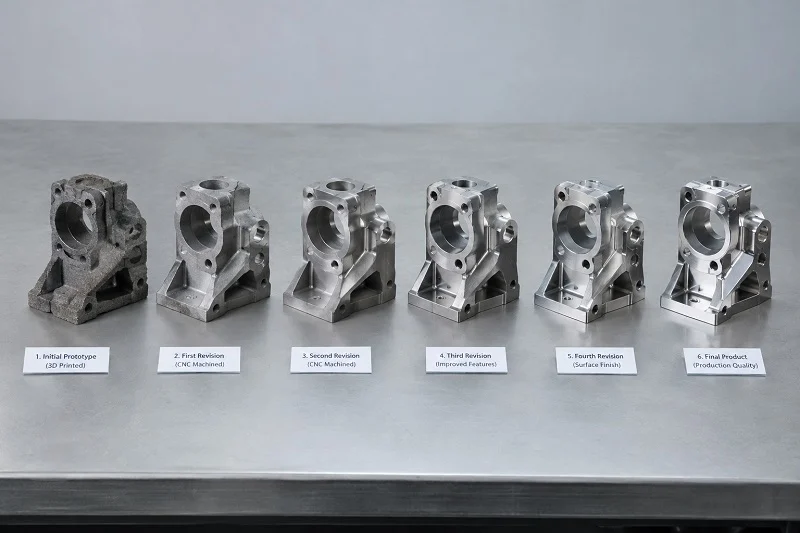
Rapid prototyping is an iterative cycle: design—manufacture—test—revise—repeat. This cycle moves quickly, producing a physical part at the end of each iteration. Each part provides new insights, leading to a more refined design in the next iteration. This cycle continues until the design reaches its ideal state.
Key Characteristics of Rapid Iterative Prototyping
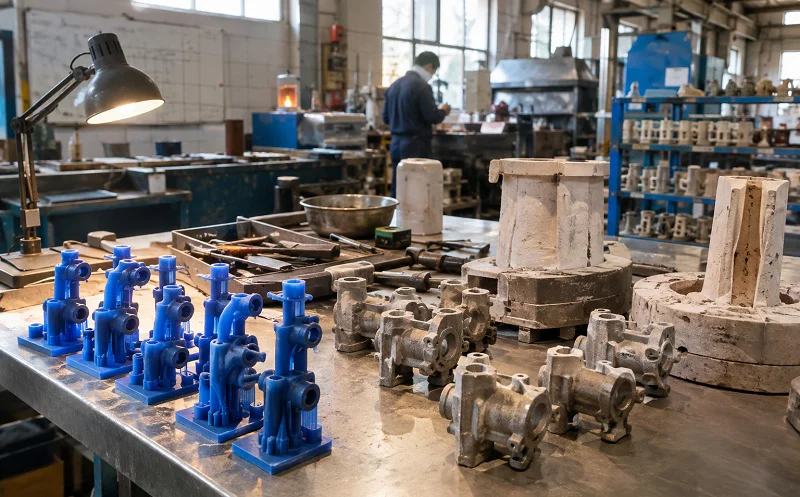
Speed
Parts come back in days. Not weeks. Feedback arrives while the design is still fresh. Changes happen before the team forgets why they mattered.
Variety
Different iterations need different methods. A concept model needs printing. A functional test needs machining. An appearance model needs casting. Rapid prototyping services match the method to the iteration.
Cost Control
Not every iteration needs the most expensive process. Early loops use cheap methods. Later loops use precise methods. The budget follows the maturity of the design.
Why Iteration Matters in Product Development
The first design is rarely perfect right from the start; very few people can get it right on the first try. Geometric errors, wall thicknesses that are too thin, and assembly misalignments—these issues are hidden within CAD models and difficult to detect, but they ultimately manifest in the physical parts.
Problems are uncovered in every iteration cycle, and each correction refines the design. It is precisely through this cycle that the final product becomes more refined. Rapid iterative prototyping shortens project timelines, allowing for more iterations in a shorter period, thereby uncovering more issues and making the product launch process smoother.
Applicable Processes for Rapid Iterative Prototyping
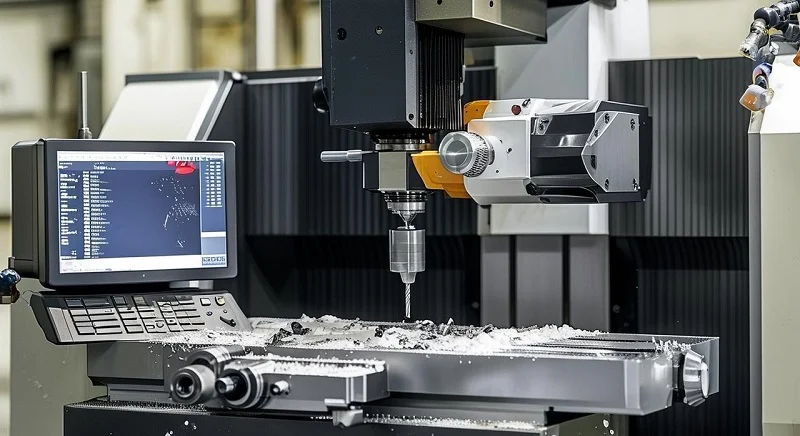
3D Printing
FDM technology manufactures parts by stacking layers one at a time. It is cost-effective and fast, making it suitable for creating concept models. SLA technology uses resin and a laser to produce parts with smoother surfaces and finer details. SLS technology uses powder and a laser to produce parts that are more robust and do not require support structures. All three technologies support rapid design modifications and allow for the printing of complex geometries without the need for molds, enabling functional testing in the early stages. Rapid prototyping methods typically begins with 3D printing due to its short iteration cycle: print overnight, test in the morning, and modify in the afternoon.
CNC Machining
CNC milling and turning involve cutting parts from solid stock. Parts feature high precision and strict tolerance control. Both metals and plastics can be machined. Dimensional verification takes place here, as do functional tests. Prototype performance matches that of production parts. Steel rapid prototyping uses CNC machining to manufacture load-bearing components. Steel rapid prototyping services offer precision that 3D-printed parts cannot match. The trade-off is time—programming takes hours, and setup takes hours as well. The turnaround time for this process is slower than for 3D printing, but the data quality is higher.
Vacuum Casting
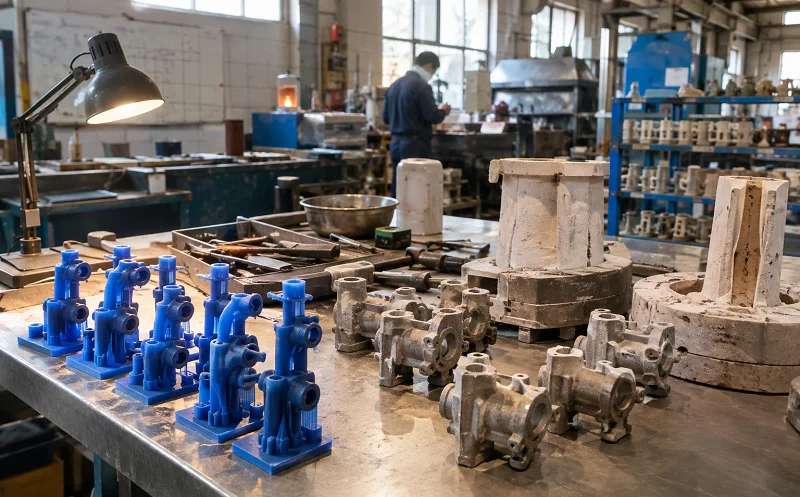
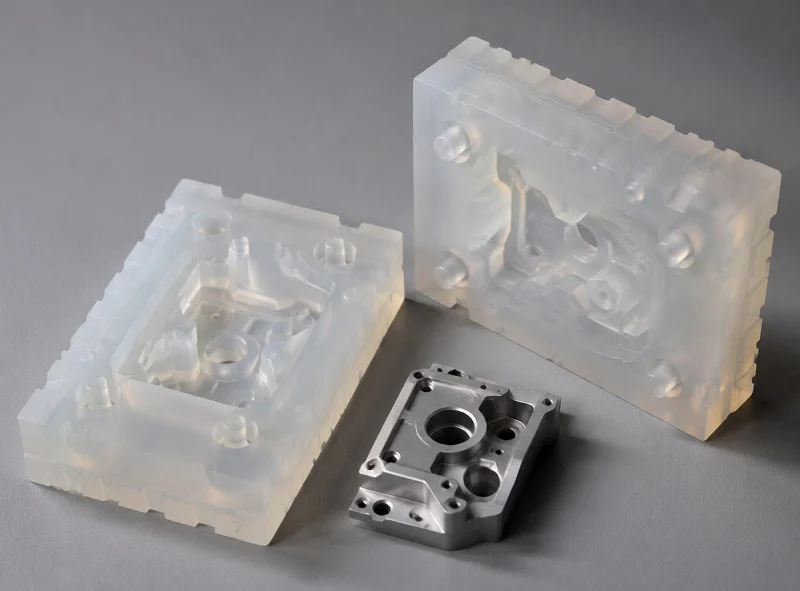
Silicone molds are formed around a master mold. Resin is injected into the mold under vacuum conditions. A single mold can produce small batches of products, ranging from 20 to 50 pieces. This process is suitable for visual inspection and color matching. Rapid prototyping services use the vacuum casting process to produce customer samples and for pre-production validation. Mold costs are low, and part quality is consistent. This process meets the needs of both marketing and engineering development.
Rapid Tooling and Injection Molding
Prototype molds are not mass-production molds. They are made of softer materials, are less expensive, and can be produced more quickly. Most are made of aluminum rather than steel, and their performance matches that of the final part. Designs can be validated under real-world conditions. Rapid prototyping is used as a step before investing in hard molds. Prototype molds are inexpensive, whereas the losses caused by faulty production molds can be significant.
Sheet Metal Fabrication
Common sheet metal fabrication processes include cutting, bending, punching, and welding. Through these processes, flat sheets are ultimately transformed into enclosures, brackets, chassis, and structural components. This process is fast and cost-effective, but it has geometric limitations: the wall thickness must be uniform, and the shapes must be simple. However, for suitable parts, sheet metal fabrication is the fastest solution. Rapid prototyping methods include sheet metal fabrication for structural prototypes.
How to Select the Right Process for Each Iteration
First, consider design complexity. Complex geometries are better suited for 3D printing, while simple geometries are better suited for traditional manufacturing.
Second, consider material requirements. Metal parts require machining or casting, while plastic parts can be printed or cast.
Precision requirements are also important. When tolerances are tight, CNC machining is necessary; when tolerances are loose, 3D printing can be used.
Turnaround time is equally important. For early iterations, 3D printing—which can be completed overnight—offers a clear advantage over machining, which takes a week. Budget is also a key factor. Low-cost methods should be used for early iterations, while high-precision methods are preferable for later iterations.
From a practical standpoint, as the design matures, the manufacturing process will evolve accordingly. It is worth noting that rapid prototyping is not a single method but a combination of various techniques. The appropriate tool should be selected for each iteration. The first iteration might use 3D printing; the fifth might use machining; the tenth might use casting; and the final iterations might use prototype molds. This process provides the appropriate advantages at each stage where speed and precision are required.
NOBLE—a leading manufacturing company in China—supports this process. Its rapid prototyping services encompass printing, machining, casting, and manufacturing. Its rapid prototyping capabilities can handle functional metal parts. In demanding applications, its rapid prototyping expertise can shorten iteration cycles. Customers need to coordinate with only one partner throughout the entire iteration cycle. There is no need to switch suppliers, no loss of knowledge, and design improvements are achieved more quickly.
Industries That Commonly Use Rapid Iterative Prototyping

Medical Devices and Laboratory Equipment
Diagnostic devices must function properly the first time. Medical device housings must be ergonomic. Fluid handling components must be tightly sealed. Precision parts must meet tolerance requirements. Rapid prototyping enables engineers to test each of these requirements. Rapid prototyping methods for medical devices include SLA printing and CNC machining. Materials must be clean, and surfaces must be smooth. Rapid prototyping service providers in this field are well-versed in regulatory pressures and document every modification.
Automotive and Transportation
Designing a robotic gripper is quite challenging. The gripper must be able to grasp and release workpieces smoothly without damaging the products. The sensor mount must be sufficiently sturdy, and the robot’s joints must be able to move smoothly and freely. Rapid prototyping methods are extremely helpful in this regard. The same iterative process was followed for the automated equipment. Speed is critical. Rapid prototyping ensures the smooth progress of the project.
Robotics and Industrial Automation
Designing a robotic gripper is quite challenging. The gripper must be able to grasp and release workpieces smoothly without damaging the products. The sensor mount must be sufficiently sturdy, and the robot’s joints must be able to move smoothly and freely. Rapid prototyping methods are extremely helpful in this regard. First, a gripper was 3D-printed and tested on the robot. The results showed that the finger joints were slipping, causing the geometry to change. A new gripper was then printed, and this time it functioned properly. The same iterative process was followed for the automated equipment. Speed is critical. Rapid prototyping ensures the smooth progress of the project.
Consumer Electronics
The casings of electronic devices must not only be aesthetically pleasing and comfortable to the touch, but also capable of protecting the circuitry. Wearable devices add another requirement: because they come into contact with the skin, they must be comfortable to wear. Heat sinks must effectively regulate temperature. Compact components must fit into confined spaces. Rapid prototyping services can provide both visual models and functional prototypes. Design concepts can be tested firsthand; buttons can be physically pressed, and surface finishes can be evaluated. The revision process is swift, leading to a more refined version.
Aerospace and Aviation
A lightweight structure can reduce fuel consumption. The bracket must be sufficiently sturdy. The air duct must be able to deliver air steadily. Rapid prototyping supports this process. From a practical standpoint, the aerospace industry utilizes rapid prototyping methods to achieve the lightest and safest designs through iterative design.
Industrial Machinery and Scientific Instruments
Equipment housings protect the machine. Fluid manifolds route liquids and gases. Fixtures hold parts during manufacturing. Optical instruments need precision. Precision mechanical assemblies need alignment. Rapid iterative prototyping fits all of these. It is faster than waiting for production tooling. It is cheaper than fixing a mold.
The Development Cycle and Process of Rapid Iterative Prototyping
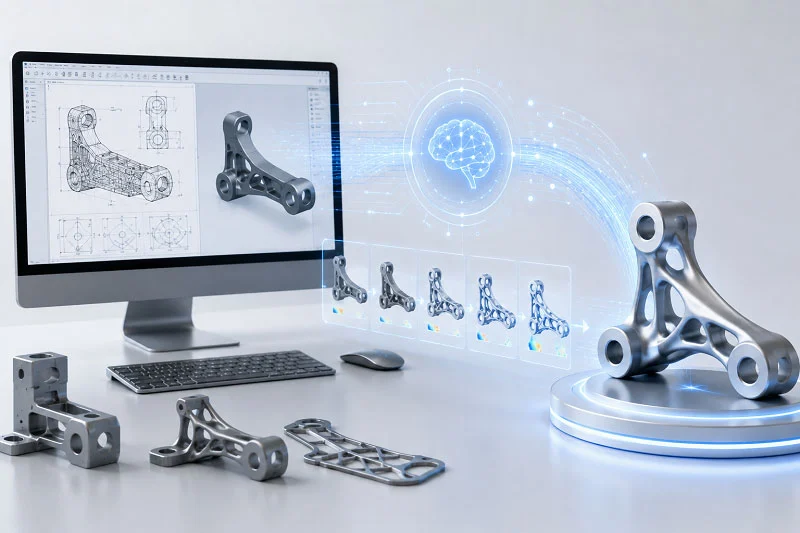
Step 1: Define Product Requirements and Design Goals
It all starts with the requirements. What functions must the component have? List the functional requirements, set performance goals, identify constraints (cost, dimensions, weight, materials, etc.), and define acceptance criteria—how will the design be evaluated? Without clear criteria, the iterative process loses its direction. Rapid iterative prototyping depends on this first step; vague goals only waste time.
Step 2: Create the Initial Design
Develop a CAD model, select materials, determine the manufacturing process, and define critical dimensions. The initial design is not flawless; rather, it serves as a starting point. Rapid prototyping methods provide guidance for the design. If a part is to be 3D-printed, its geometry must comply with printing guidelines; if it is to be machined, its geometry must meet the requirements for tooling. Design and manufacturing processes are interrelated.
Step 3: Manufacture the First Prototype
Select a process; the specific choice depends on your needs. You can print visual models or manufacture functional parts through machining. The first test sample is complete. Rapid prototyping services can deliver this sample quickly. The goal is to handle it, test it, and learn from the experience.
Step 4: Test and Evaluate the Prototype
Prototypes must undergo continuous dimensional inspections, functional testing, usability evaluations, and performance testing. Rapid iterative prototyping relies on objective evaluations. If a prototype that should have failed passes the tests, it will lead to errors in the final product.
Step 5: Collect Feedback and Identify Design Problems
Compare the test results with the requirements to identify gaps. Collect feedback, document it, and prioritize the issues. Not all issues need to be addressed; some are minor, while others are critical. The team decides which issues to focus on. Rapid prototyping provides the basis for the next iteration. What needs to change? What can stay?
Step 6: Refine the Design and Build the Next Version
Repeat the steps above so that each iteration brings the design closer to the goal. Rapid iterative prototyping is not a one-time process, but rather a cycle. This cycle continues until the design meets its requirements.
Rapid Iterative Prototyping vs. Traditional Prototyping
Differences in Development Workflow
| Factor | Rapid Iterative Prototyping | Traditional Prototyping |
| Workflow | Repeated design-test-revision cycles | Linear, sequential steps |
| Feedback loop | Short—days between iterations | Long—weeks or months |
| Design changes | Expected and encouraged | Costly and discouraged |
| Testing frequency | Every iteration | At defined milestones |
Differences in Cost and Lead Time
| Factor | Rapid Iterative Prototyping | Traditional Prototyping |
| Upfront tooling cost | Low—no hard tooling | High—steel molds, dies |
| Design change cost | Low—modify CAD, rebuild | High—rework or scrap tooling |
| Prototype quantity | Few per iteration | More per stage |
| Total cost | Lower for uncertain designs | Lower for stable designs |
Differences in Design Flexibility and Testing
| Factor | Rapid Iterative Prototyping | Traditional Prototyping |
| Design flexibility | High—changes are expected | Low—changes are resisted |
| Alternative exploration | Multiple options tested | One option committed |
| Feedback incorporation | Immediate | Delayed or ignored |
| Validation depth | Iterative, cumulative | Front-loaded, final |
When Should You Choose Rapid Iterative Prototyping?
Choose this approach when requirements are uncertain, when specifications need to be revised, or when development cycles are short.
Rapid iterative prototyping is ideal for these types of projects—medical devices, robotics, consumer electronics—any field where design must continuously evolve. Rapid prototyping services deliver speed, rapid prototyping methods provide flexibility, and iterative cycles yield results.
When Is Traditional Prototyping More Suitable?
Traditional prototyping has its appropriate applications. This approach should be chosen when specifications are stable, the design has been validated, and requirements are unlikely to change; when production methods have been established, molds are ready, and the manufacturing process is clear; and when production volume is sufficient to justify the investment.
For such projects, rapid iterative prototyping would unnecessarily extend the timeline. Traditional prototyping meets the needs of high-volume production. It is worth noting that NOBLE supports both approaches. Our rapid prototyping services cover both the iterative and mass production phases, allowing customers to choose the most suitable path based on their project requirements.
Challenges and Limitations of Rapid Iterative Prototyping
Managing Frequent Design Changes
Change drives the entire process, but it can also lead to chaos. Every revision adds to the engineering workload. Each new version generates a new file. Without strict guidelines, version tracking can become a nightmare.
Rapid iterative prototyping works only when change is controlled. Engineers need to document change orders and the reasons for changes, assign version numbers to new versions, and archive old versions. Uncontrolled revisions can waste a significant amount of time.
Controlling Costs Across Multiple Iterations
One iteration is cheap. Ten iterations add up fast. Materials, machining, printing, testing, finishing, engineering changes—each cycle stacks another layer of expense. The budget must anticipate this.
Rapid prototyping services help control the bleed. A visual model gets printed. A functional part gets machined. The right process for the right iteration saves money.
Balancing Speed, Accuracy, and Material Properties
Fast is not always accurate. A printed part is fast. But the surface is rough. The material properties fall short. A machined part is slower. But accuracy is tighter. Material matches production.
Rapid iterative prototyping must juggle these factors. Early iterations prioritize speed. Late iterations prioritize accuracy.
Ensuring Prototype Results Reflect Production Performance
Prototypes are not production parts. The materials, manufacturing processes, and even surface treatments used for prototypes may differ. Testing printed brackets does not accurately reflect the actual performance of injection-molded brackets.
Rapid prototyping methods must be tailored to the testing requirements. While the printing process can adequately meet requirements for shape and fit, production-grade materials must be used to ensure strength and durability.
Coordinating Feedback and Engineering Teams
Team communication is crucial. When the testing team identifies an issue but the design team is unaware of it—or finds out too late—or when feedback is vague and acceptance criteria are unclear, the project can come to a standstill.
Rapid iterative prototyping relies on fast, clear feedback. Delays in approving revisions can stifle the project’s momentum.
Knowing When to Stop Iterating
Iteration can become addictive. The design is already good enough, but the team keeps making adjustments. Why? Because delivering the results still seems risky.
Rapid prototyping requires predefined performance goals. Once the prototype meets these goals, the iteration cycle can come to an end.
NOBLE—one of China’s leading rapid prototyping manufacturers—helps customers tackle these challenges. Its rapid prototyping services include design support and version tracking.
How NOBLE Supports Rapid Iterative Prototyping

NOBLE offers metal and plastic prototyping services. These include CNC machining, plastic 3D printing, vacuum casting, surface finishing, and assembly. Our processes cover the entire workflow. Early iterations utilize printing technologies, while later iterations rely on machining. Materials and processes are selected based on testing requirements.
Our design team assists clients in evaluating prototypes. The manufacturing facility coordinates to ensure projects proceed according to schedule. The quality control department validates the results. Teams collaborate to optimize designs and prepare for the next phase. At NOBLE, rapid prototyping is a partnership: clients drive the iterations, and partners provide the support.
FAQs About Rapid Iterative Prototyping
What is the main purpose of rapid iterative prototyping?
The goal is to create a better prototype through continuous learning and improvement. Rapid prototyping helps reduce risk. It allows for the early detection of problems and the validation of hypotheses. The final design is superior precisely because it has undergone continuous testing.
Which manufacturing process is best for rapid iterative prototyping?
No single manufacturing process is absolutely the best. 3D printing is fast and cost-effective; CNC machining offers high precision and strength; and vacuum casting is suitable for small-batch production. The specific choice depends on the testing objectives. Speed should be prioritized during early iteration stages, while precision should be prioritized during later iteration stages. Rapid prototyping methods should be tailored to the current stage of development.
How many iterations are usually needed?
It depends on the level of complexity. A simple brace might only require one or two iterations, while a complex medical device might require ten or more. Rapid iterative prototyping can be concluded once the design has been successfully validated.
Is rapid iterative prototyping suitable for metal and plastic parts?
Yes. Both materials benefit. Metal prototypes use CNC machining or casting. Plastic prototypes use 3D printing or vacuum casting. The process depends on the material and the testing need. Rapid prototyping services cover both.
How does rapid iterative prototyping reduce product development risk?
It enables early problem detection. Design flaws identified during the first round of iteration are inexpensive to fix; however, if the same flaws are discovered only after the production molds have been completed, the cost of fixing them will be very high. Rapid iterative prototyping brings the learning process forward.
When should a prototype move to production?
Once requirements are met, testing is successful, and the design is stable, the design moves on to the next phase. The rapid iteration prototyping phase ends, and full-scale production begins.