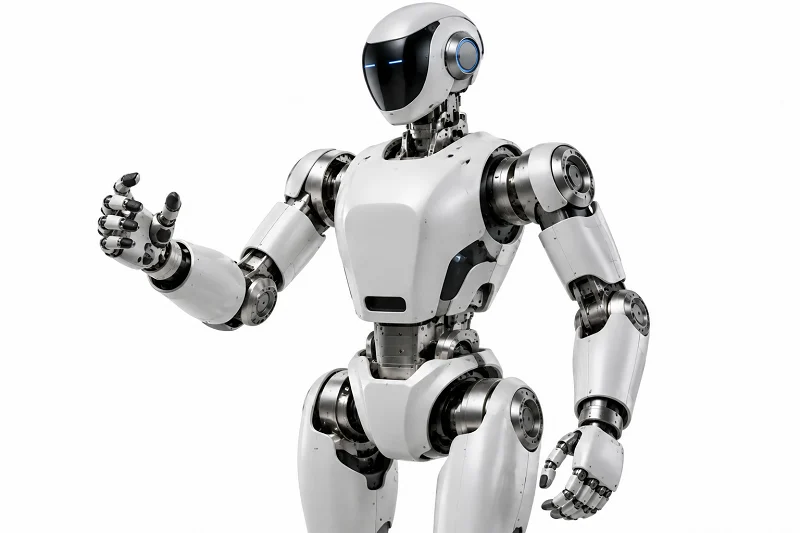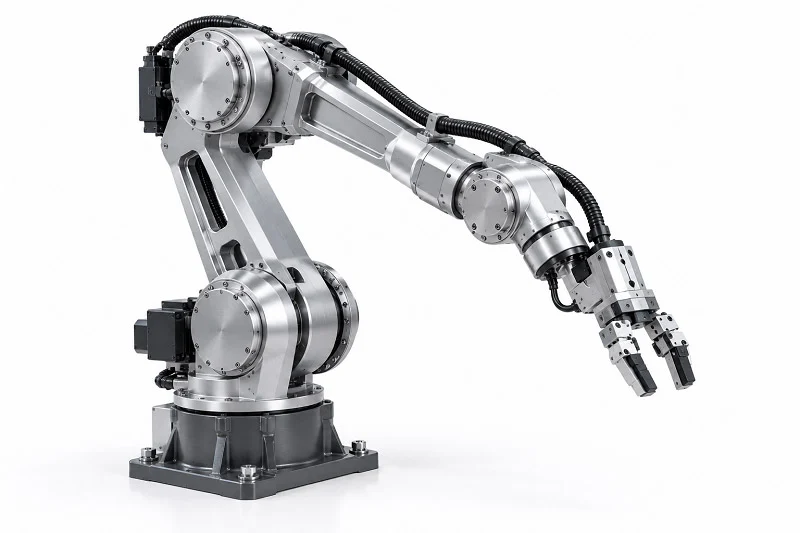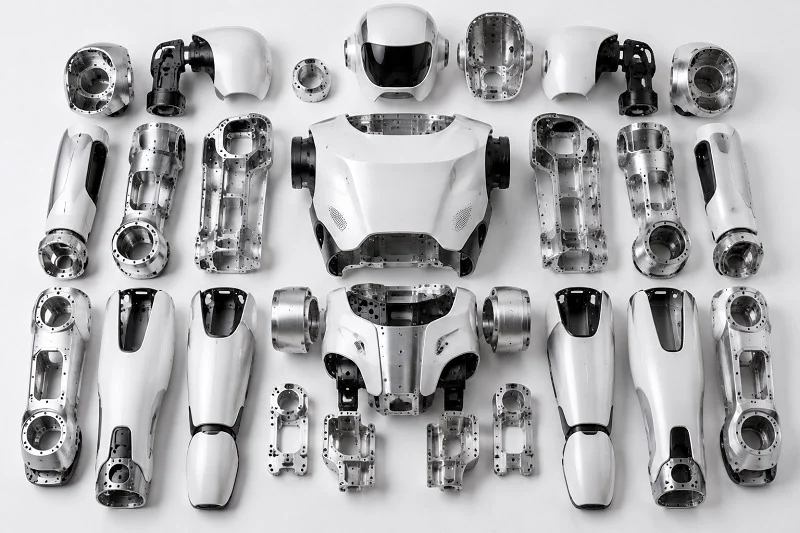
An AI robot’s performance depends on its enclosure. Precision manufacturing is the foundation. Three factors matter most: the right material, the right process, and the right design. This guide gives you a practical framework. It helps you make decisions based on cost, performance, and production volume. The goal is simple. You should move from concept to a manufacturable, high-quality AI robot enclosure. A well-built AI robot enclosure protects sensitive electronics. It also manages heat and blocks interference. The best AI robot enclosure starts with smart choices early. Good manufacturing ties everything together. You get a product that works reliably in the real world.
AI Robot Enclosure Overview

This section gets you ready for the detailed chapters coming up. You will see how material choice and process selection work together. They drive precision, cost, and performance. A good AI robot enclosure does not just happen. It comes from smart choices at every step.
The Precision Imperative
How AI and Robotics Improve Manufacturing Accuracy
AI and robotics are changing the way we build things. Machines now use vision systems and sensors to guide tools with amazing accuracy. This technology helps create a better AI robot enclosure. The same robots that need these enclosures also help make them.
Robotics manufacturing gains from this feedback loop. AI checks each part in real time. It catches small errors before they turn into big problems. This leads to steady quality across thousands of units.
Tolerance and Consistency Requirements
An AI robot enclosure must meet strict tolerance requirements. A tolerance is the allowed amount of variation in a part’s size. Tight tolerances mean very little room for error. For example, a mounting hole must line up perfectly with a circuit board. If it does not, the board will not fit.
Consistency matters just as much as accuracy. Every unit must match the first one. A small change in one enclosure can cause a big failure in the field. That is why precision is not optional for robotics.
Matching Process to Material
Compatibility Considerations
Material choice and process selection are connected. You cannot pick one without thinking about the other. Some materials work well with certain manufacturing processes and materials. Others do not. For example, aluminum machines easily on a CNC mill. Carbon fiber needs special tools and handling.
A good AI robot enclosure starts with this match. The wrong pair can lead to weak parts or high costs. It can also cause delays in your project timeline.
Performance and Cost Trade-offs
Every choice involves a trade-off. Stronger materials often cost more. Faster processes may offer less precision. You need to balance these factors for your application.
A simple AI robot enclosure for a prototype may use 3D printing. A high-volume product might use injection molding. Companies like NOBLE, a leading Chinese manufacturer, help teams navigate these decisions. They offer prototyping and mass production services under one roof. This support helps you move from idea to reality without guesswork.
Materials for AI Robot Enclosure
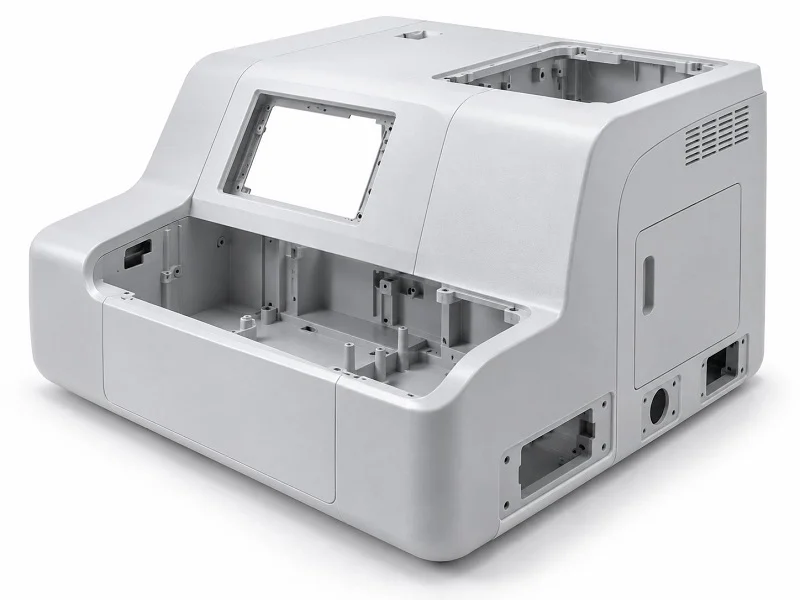
The material you pick sets the foundation for your whole project. Different materials bring different strengths. Some are strong but heavy. Others are light but expensive. The trick is matching the right material to your needs. Think of this as your material selection guide for materials for AI robot enclosure. We will walk through the most common robotics materials and their properties. Material choice drives performance, durability, and weight. Get it right, and your enclosure works great. Get it wrong, and nothing else matters.
Metals: Aluminum and Stainless Steel
Metals lead the way for structural strength and thermal management. When you need a rigid frame that also pulls heat away from electronics, metals deliver. They offer the best balance of toughness and reliability.
Aluminum Alloys: Lightweight Strength and Thermal Conductivity
Aluminum is a favorite in robotics. It is light, strong, and moves heat well. For an AI robot enclosure, aluminium helps keep internal temperatures low. The 6061-T6 alloy is a common pick. It has an ultimate tensile strength of 310 MPa. That means it can take real stress without bending.
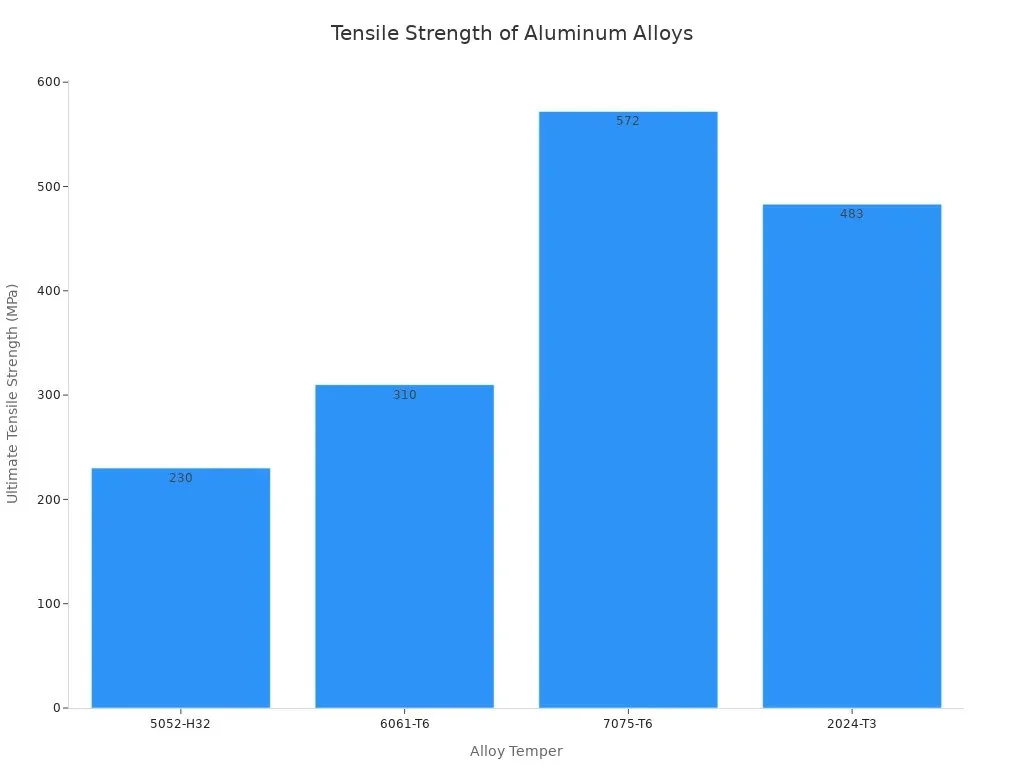
Other aluminium alloys have different numbers. 5052-H32 comes in at 230 MPa. 7075-T6 reaches 572 MPa. But 6061-T6 gives a good balance of strength, cost, and workability. That is why you see it in many machined aluminum housing solutions. A machined aluminum housing holds tight tolerances. It keeps your electronics safe and aligned. For materials for AI robot enclosure: metals and alloys, 6061 aluminium is hard to beat.
Stainless Steel: Durability and Corrosion Resistance
Some places need more protection. Stainless steel steps in where corrosion is a real risk. Type 304 works well indoors. It resists solvents and alkalis. But Type 316 adds molybdenum. That gives it better resistance to chlorine and seawater.
| Property | 304 Stainless Steel | 316 Stainless Steel |
| Molybdenum content | 0% | 2–3% |
| Corrosion resistance rating | Very Good | Excellent |
| Chloride pitting threshold | Begins pitting above ~200 ppm chloride | Withstands up to ~1000 ppm chloride |
| Resistance to chlorides/seawater | Susceptible to pitting | Far better resistance |
| Stress corrosion cracking (SCC) | Vulnerable in chloride-rich conditions | Much greater SCC resistance |
If your AI robot enclosure deals with marine or chemical exposure, pick 316. The extra cost pays off in longer life.
Polymers: ABS, Polycarbonate, and Nylon
Polymers offer lower cost and more design freedom. For many robotics projects, they are a smart choice. This part of the material selection covers the top polymer options.
ABS: Cost-Effective and Impact-Resistant
ABS is a workhorse plastic. It costs less than many alternatives. It handles normal impact loads just fine. An ABS enclosure takes bumps without cracking. ABS parts are easy to machine and glue. For a budget-friendly prototype, ABS works great. For materials for AI robot enclosure: polymers and plastics, ABS is the affordable entry point.
Polycarbonate: High-Impact Clarity and Strength
Polycarbonate is much tougher than ABS. Tests show PC has an Izod impact value of 640 to 850 J/m. ABS sits at 200 to 320 J/m. That means PC can take 2 to 3 times more impact. At equal thickness, polycarbonate passes drop tests far more often. The trade-off is cost. PC can be 50 to 80 percent more expensive. But for safety-critical parts, that extra cost is worth it.
| Material | Izod Impact Value (J/m) |
| Polycarbonate (PC) | 640–850 |
| ABS | 200–320 |
Polycarbonate also lets light pass through. That makes it useful when you need a clear window in your enclosure.
Nylon: Wear Resistance and Flexibility
Nylon brings something different. It resists wear and offers some flexibility. Moving parts inside an enclosure can use nylon components. It handles friction well. For hinges or snap-fit features, nylon is a solid pick.
Composites: Carbon Fiber and Fiberglass
Composites combine materials for the best of both worlds. They offer high strength with low weight. When evaluating materials for AI robot enclosure, composites give you options metals cannot match.
Carbon Fiber: Maximum Stiffness and Low Weight
Carbon fiber is the gold standard for lightweight strength. PAN-based industrial grade carbon fiber costs $20 to $30 per kilogram. That is a lot more than other materials. But the stiffness-to-weight ratio is unmatched. When weight matters most, carbon fiber wins.
Fiberglass: Cost-Effective Strength and Electrical Insulation
Fiberglass costs much less. E-glass fiber runs $2 to $4 per kilogram. That is 5 to 10 times cheaper than carbon fiber. Fiberglass also offers excellent electrical insulation. For enclosures that need to block electrical noise, fiberglass helps. It provides good strength without the high price tag.
When you work with composites, you need a partner who knows the materials. NOBLE, a leading Chinese manufacturer, has deep expertise in metals, polymers, and composites. They handle everything from prototyping to production. That makes the material choice process smoother. You get the right material for your application without guesswork.
AI Robot Enclosure Manufacturing Processes
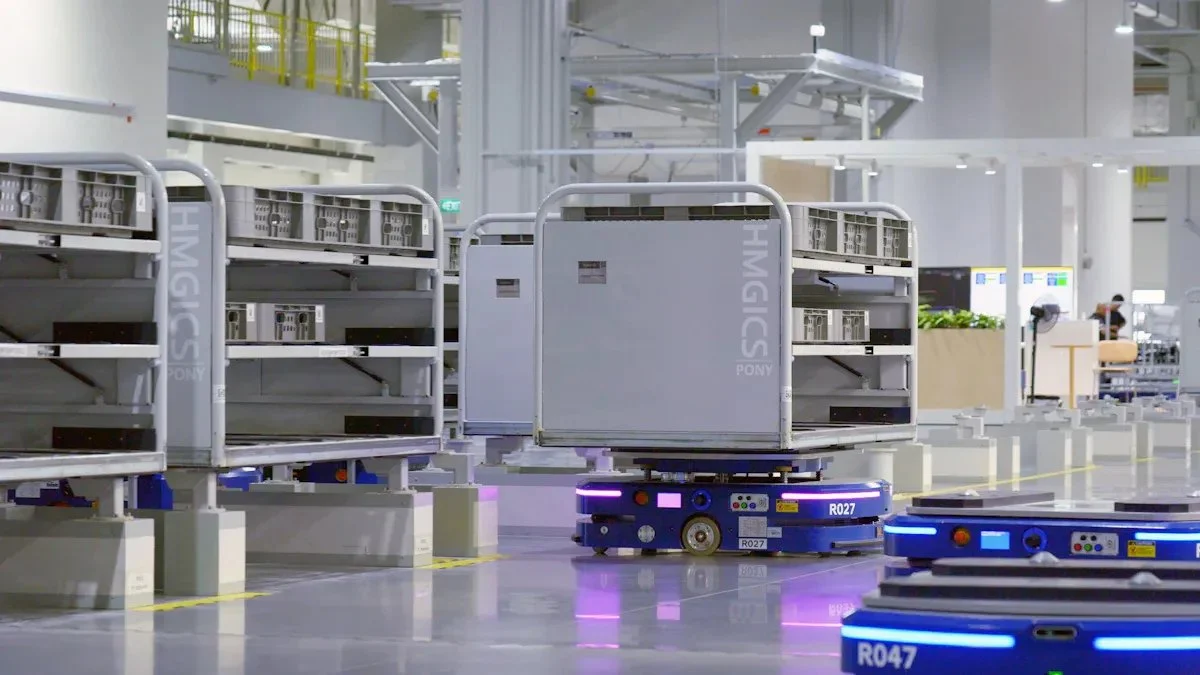
You have picked your material. Now you need a process to shape it. There are four main ways: subtractive machining, additive printing, molding, and sheet metal work. Each one has different strengths. Each one works best for different production amounts. Let’s go through them.
Subtractive Manufacturing: CNC Machining
CNC machining cuts material away from a solid block. A computer controls the cutting tools. This gives you amazing accuracy. For an AI robot enclosure, cnc machining gives the tightest results.
CNC Milling and Turning for High Precision
Milling uses spinning cutters to shape flat surfaces, slots, and pockets. Turning spins the workpiece against a fixed tool. It makes round parts like shafts and rings. Together, these methods handle complex shapes with ease. General cnc machining holds tolerances around ±0.125 mm. Detailed work reaches ±0.025 to ±0.125 mm. That level of precision keeps every component lined up. Your AI robot enclosure will fit together perfectly.
When to Choose CNC for AI Robot Enclosure
CNC is great for prototypes and low-volume runs. You pay no tooling costs. The per-part price stays steady. Lead times are fast — often just days. For 1 to 10 complex units, expect $500 to $1,500 per part. That sounds high. But you skip the upfront investment. When you need robot frames and shells with tight tolerances, cnc machining is your best choice. It also works great for bridge production before you commit to expensive tooling.
Additive Manufacturing: 3D Printing
3D printing builds parts layer by layer. It opens design freedom that subtractive methods cannot match. You can create internal channels and organic shapes. For an AI robot enclosure prototype, this speed matters.
FDM, SLA, and SLS for Prototyping and Low-Volume Production
FDM pushes melted plastic through a nozzle. It is cheap and fast. SLA uses a laser to cure resin. It gives smooth surfaces. SLS fuses powder with a laser. It needs no support structures. Each method fits different needs. SLS gives the best mechanical properties for functional parts.
Precision and Material Limitations of 3D Printing
3D printing trades accuracy for speed. SLS holds tolerances around ±0.300 mm. That is looser than cnc machining. You also have fewer material choices. Metals are limited to special systems. For an AI robot enclosure that needs a perfect seal, printed parts may fall short. Use them for fit checks and early testing. Then switch to a tighter process for production.
Molding and Forming Processes
Molding and forming take over when volume rises. These processes spread tooling costs across many units. The per-part price drops fast.
Injection Molding for High-Volume Polymer Enclosures
Injection molding melts plastic and forces it into a steel mold. The mold costs thousands upfront. But each part costs very little. For 100 to 1,000 units, bridge tooling runs $3,000 to $8,000. Per-part costs fall to $30 to $80. That is over 70% cheaper than prototype cnc machining. Injection molding also works for medical robot enclosures. It handles clean-room materials and sterilization needs. The same applies to injection molding for consumer robotics. High volume makes injection molding the clear winner. When you need thousands of identical AI robot enclosure units, injection molding delivers. It keeps costs low and quality consistent. Injection molding also supports overmolding for grips and seals. Many teams use injection molding for final production after proving the design. The tooling investment pays off quickly at scale. Injection molding remains the standard for polymer enclosures.
Sheet Metal Fabrication: Laser Cutting, Bending, and Welding
Sheet metal builds structural frames and chassis. Laser cutting creates flat patterns with clean edges. Bending forms them into 3D shapes. Welding joins the pieces into rigid assemblies. This process is fast and affordable. It works for large enclosures and mounting plates. Sheet metal also handles heat well. For robot frames and shells that need strength without excess weight, sheet metal is a smart choice.
AI-driven processes now enhance all these methods. Vision systems guide tools with sub-millimeter accuracy. Robots handle positioning and material transfer. This reduces human error and boosts consistency. Companies like NOBLE, a leading Chinese manufacturer, use these technologies. They offer advanced cnc machining, injection molding, and sheet metal capabilities under one roof. That makes the transition from prototype to production smooth.
Finishing for AI Robot Enclosure

A bare machined shell is only the start. Finishing turns it into a strong, useful AI robot enclosure. It stops rust, blocks electrical noise, and makes it look good. The right finish depends on your base material. Metals and polymers each need their own treatment.
Surface Treatments for Metals
Anodizing and Powder Coating for Corrosion Resistance
Anodizing makes a hard oxide layer that goes into the aluminum surface. That layer fights scratches and keeps water out. It also lets you add color without paint. Powder coating works in a different way. A spray gun puts dry powder on the part, then heat bakes it into a tough skin. Both methods give an AI robot enclosure strong rust protection. For outdoor robots or factory floors with chemicals, these finishes add many years of use.
Electroless Nickel Plating for EMI Shielding
Electroless nickel plating puts a metal layer on without electricity. The coating covers every corner evenly, even inside complex shapes. Nickel conducts well, so it helps with emi shielding. A plated steel or aluminum frame can block stray signals from motors and radios. This matters for robots that carry sensitive sensors. A conductive metal shell keeps internal noise from leaking out and outside interference from getting in.
Surface Treatments for Polymers
Painting and Texturing for Aesthetics and Grip
Plastic parts often need a better look and feel. Painting adds color and brand identity. Texturing creates a matte or rough surface. That texture improves grip on handles and covers. It also hides fingerprints and small scratches. For an AI robot enclosure that people touch or carry, texture makes a real difference. Molded-in texture lasts longer than applied paint. It will not chip or peel over time.
Conductive Coatings for EMI Shielding
Plastic does not conduct electricity on its own. Conductive coatings fix that problem. They spray or paint a thin metal-filled layer onto the surface. The result is a shield that blocks electromagnetic interference. Different coatings give different performance levels.
| Coating Product | Surface Resistivity (Ω/sq) | Typical Use |
| EC 75 | 50–200 | EMI shielding / grounding |
| EC 10 | 10^6 to 10^9 | Static dissipation |
| EC Coat family (general) | 50 to 10^11 | High values for static dissipation; low values for EMI shielding |
The filler inside the coating causes the numbers. Silver flake reaches 0.01–0.05 Ω/sq at 25–50 μm thickness. Nickel powder lands at 0.5–2.0 Ω/sq. Graphite sits at 5–50 Ω/sq. Lower resistivity means better emi shielding. Pick the coating that matches your noise budget and your cost target.
NOBLE, a leading Chinese manufacturing company, has deep experience with surface treatments for both metals and polymers. Their team helps you choose the right finish for your materials and your application. That support keeps your project on track from first article to full production.
Designing AI Robot Enclosure
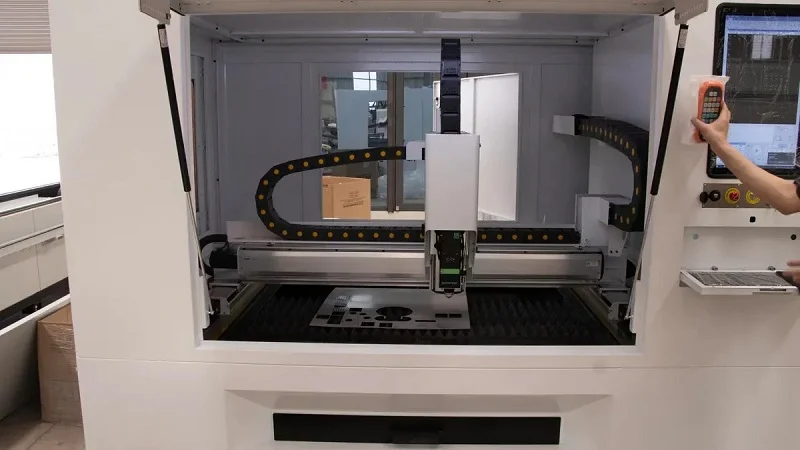
This section brings everything together. You have your material and your process. Now the design must handle heat, electrical noise, and physical stress. These three areas decide how well your robot works in the real world.
Thermal Management
Electronics make heat. Without good thermal management, they break down early. That makes this a key part of any AI robot enclosure design. You have two choices: passive or active cooling.
Passive Cooling: Heat Sinks and Ventilation
Passive cooling uses natural heat flow. No fans, no pumps, no noise. Heat sinks pull heat away from components. The heat sink material matters a lot.
| Material | Thermal Conductivity Range (W/mK) |
| Aluminum (e.g., 6061) | ~167 – 235 |
| Copper (e.g., C110) | ~385 – 401 |
Copper moves heat almost twice as well as aluminum. But aluminum is lighter and costs less. For a weight-sensitive AI robot enclosure, aluminum heat sinks are common. Copper makes sense when heat loads run high. Ventilation slots let hot air escape. Place them near heat sources. Fins on the outer shell add surface area. Good thermal management starts with simple shapes.
Active Cooling: Fans and Liquid Cooling Systems
Sometimes passive cooling is not enough. Fans move air right over hot parts. They handle moderate heat well. Liquid cooling tackles extreme cases. Coolant flows through channels near processors. The cost is complexity. Fans add noise and bring in dust. Liquid systems add pumps and seals. Active thermal management becomes necessary for an AI robot enclosure with powerful CPUs. Design the air path first. A blocked flow wastes the fan’s work.
Electromagnetic Interference (EMI) Shielding
Motors and radios create electrical noise. That noise can mess up sensor data. EMI shielding stops that from happening. It is essential for reliable operation.
Shielding Materials and Enclosure Design
EMI shielding needs a conductive surface. A metal shell provides this naturally. Plastic needs conductive coatings. Copper tape works for prototypes. Nickel paints are common in production. The entire shell must form one continuous conductor. Any gap breaks the shield. Proper emi shielding keeps wireless signals clean. Place seams where they can overlap or seal.
Sealing and Gasketing for EMI Containment
Covers and ports create openings. Conductive gaskets fill those gaps. They squeeze between mating surfaces. Beryllium copper and conductive foam are common choices. The gasket must match the gap. Effective emi shielding also needs the right materials at contact points. Anodized aluminum insulates. Remove it where gaskets touch. Planned emi shielding prevents expensive fixes later. Without good emi shielding, sensor noise becomes a constant problem.
Structural Integrity and Environmental Sealing
The enclosure must survive real-world use. Drops, vibrations, and weather all test the design.
Impact Resistance and Vibration Damping
The right materials make the difference here. Polycarbonate handles impacts well without shattering. Aluminum bends but does not crack. Rubber grommets isolate sensitive parts from chassis vibrations. Ribs and gussets add stiffness without much weight. A well-designed AI robot enclosure stays intact through rough handling.
IP Ratings for Dust and Water Ingress Protection
IP ratings measure how well an enclosure blocks dust and water. The first digit is for solids. The second is for liquids.
Robots meant for outdoor, washdown, or dusty industrial environments specify IP ratings for joints, connectors, and electronic compartments.
| Environment | Recommended IP Rating | Reason |
| Outdoor heavy rain/construction | IP66–IP67 | Short-term immersion protection |
IP66 stops dust and handles powerful water jets. IP67 can survive brief submersion. For most outdoor robots, IP65 to IP67 works well. Seals at doors and connectors are the weak spots. Choose gaskets rated for your target IP level. That strategy extends the life of your protective housings a lot.
NOBLE, a leading Chinese manufacturing company, helps teams with these design decisions. Their design for manufacturing services catch issues before production starts. They make sure your design choices are ready for production. That support saves time and money.
Selecting AI Robot Enclosure Solutions
You now know the material and process options. The next step is choosing the right combination for your project. This section gives you practical tools to make that call.
Balancing Cost, Volume, and Performance
Every project asks the same question. How do you balance cost, volume, and performance? The answer depends on how many units you need. It also depends on the precision your AI robot enclosure requires.
Low-Volume, High-Precision: CNC Machining
When you need only a few enclosures, cnc machining makes the most sense. No tooling investment is required. The per-part price stays flat whether you make one or fifty. You also get the best tolerance control. An AI robot enclosure that needs tight fits or complex features benefits from this process. Lead times run fast. You can have parts in hand within days. For prototypes and low-volume runs, cnc machining is the clear winner.
High-Volume, Cost-Sensitive: Injection Molding
Volume changes the math completely. A steel mold costs thousands of dollars. But that cost spreads across every part you make. The more parts you produce, the lower the unit price. Break-even volumes between cnc machining and injection molding typically range from 1,000 to 10,000 parts. Above 10,000 units, injection molding at volume delivers the lowest total cost of ownership. The per-part price drops dramatically. For polymer enclosures, injection molding also offers better surface finish and repeatability. The upfront investment pays off when you scale.
A Decision Framework for Process Selection
How do you know which path fits your project? A simple framework helps. You look at four factors: volume, precision, materials, and timeline. Compare your needs against what each process delivers. Injection molding handles high volume well. That is the core of a good manufacturing process choice.
Key Questions to Ask Your Manufacturing Partner
Start with clear questions. What is the expected annual volume? Does the AI robot enclosure need tight tolerances? What materials work best for your AI robot enclosure? What is the timeline from prototype to production? Consider injection molding for volumes above 1,000 units. A partner like NOBLE, a leading Chinese manufacturing company, can answer these questions based on real experience. They understand both cnc machining and injection molding, as well as injection molding for specialized polymer parts. They help you pick the right path early.
A good AI robot enclosure matches the process to the volume. When you ask the right questions, the choice becomes clear.
Prototyping vs. Production: A Phased Approach
A phased approach reduces risk. Start with a prototype. Use rapid prototyping methods for the first units. Test fit, function, and thermal performance. Make changes based on real data. Then move to production tooling. Injection molding takes over when the design is frozen. For high-volume runs, injection molding provides the consistency you need. This method avoids expensive mold changes. It also gives you a working product faster. The phased approach is standard practice for successful robotics projects. Working with a partner skilled in both prototyping and injection molding makes the transition smooth.
NOBLE: AI Robot Enclosure Manufacturing Partner
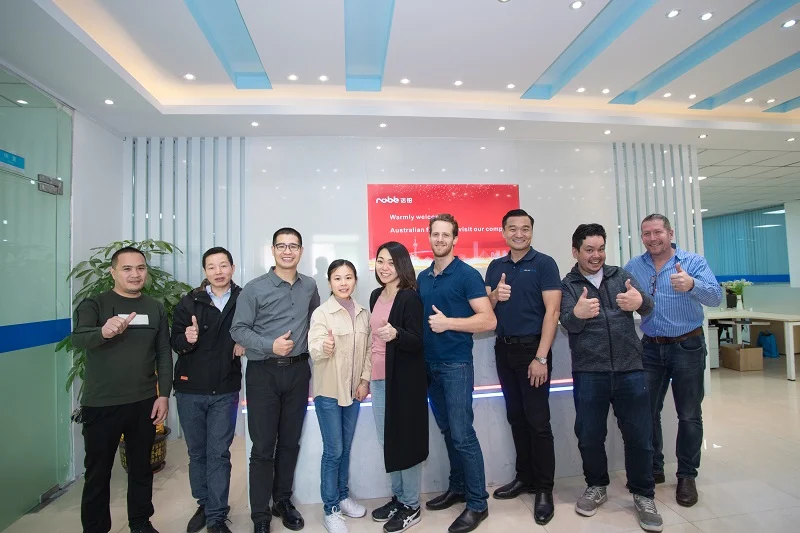
You have the design. You picked the material. Now you need a partner who can make it real. NOBLE is a Chinese manufacturing company that focuses on metal and plastic. Their expertise helps teams move from an idea to a real product. A good AI robot enclosure needs this kind of support. NOBLE provides it all from one place.
Our Expertise in Metal and Plastic Machining
NOBLE works with many kinds of materials. Your AI robot enclosure may mix aluminum parts with polymer covers. NOBLE handles all materials with the same high level of precision.
Advanced CNC Machining and Injection Molding Capabilities
CNC machining is the center of NOBLE’s metal work. They use advanced mills and lathes that hold tight tolerances. For an AI robot enclosure that needs exact fits, this is a must. They machine aluminum, stainless steel, and special alloys. Every part matches the CAD model. NOBLE uses high-speed spindles and multi-axis machines. This lets them create complex shapes in fewer setups. The result is better accuracy and faster delivery.
Injection molding is NOBLE’s strength for polymer parts. The injection molding process starts with precision steel tooling. Once the mold is ready, injection molding runs fast and reliably. NOBLE’s injection molding team handles material and mold design. They improve each injection molding cycle for speed and quality. For high-volume runs, injection molding keeps costs low. They also offer injection molding for complex shapes. This wide range of skills makes them a complete partner.
Quality Assurance and Certifications
Quality must be built into every step. NOBLE follows strict quality standards. This covers material sourcing, machining, and finishing.
ISO 9001:2015 and ISO 13485:2016 Certified Processes
ISO 9001:2015 is the international quality management standard. It covers every step from order to delivery. NOBLE’s processes are audited and certified. For an AI robot enclosure that goes into critical uses, this matters. The certification means every part can be traced.
ISO 13485:2016 is the medical device standard. It is stricter than ISO 9001. It adds rules for risk management and traceability. NOBLE adheres to strict quality management systems that meet these high standards.
Full-Service Support from Design to Assembly
NOBLE supports the whole product lifecycle. They handle design for manufacturability reviews, rapid prototyping, and full production. Assembly and testing are included too.
Design for Manufacturing (DFM) and Assembly Services
Design for manufacturability is a key service. NOBLE’s engineers review your design before production starts. They look for features that are hard to machine or mold and suggest changes that save time and money. Simple adjustments can cut costs a lot. This review catches issues early and prevents costly rework.
Assembly services complete the picture. NOBLE can assemble your AI robot enclosure with internal components. They install fasteners, attach covers, and test fit. You receive a fully assembled unit. They also run functional tests. From design for manufacturability to final assembly, NOBLE provides a complete solution.
Choosing the right materials and process for your AI robot enclosure is the first step. Design is also important. Thermal control, EMI shielding, and sealing all affect how the enclosure works in real life. A step-by-step plan works best. Make a prototype first, then increase production. Precision is not only about tight tolerances. It is a full commitment to quality at every stage. Start with clear requirements. Involve your manufacturing partner early. Make design for manufacturability a top priority. The needs for AI robot enclosure keep growing. Your AI robot enclosure needs a partner that creates new solutions with you.
FAQs of AI Robot Enclosure
What tolerances does CNC machining hold?
General CNC machining keeps tolerances near ±0.125 mm. Detailed work gets to ±0.025 to ±0.125 mm. That lines up every part for your AI robot enclosure.
When should I choose injection molding over CNC?
Above 1,000 units, injection molding spreads tooling costs over many parts. Per-part costs fall over 70% compared to CNC. For high-volume polymer enclosures, it wins.
What materials handle heat best?
Aluminum (167–235 W/mK) and copper (385–401 W/mK) are top picks. Copper moves heat almost twice as well. Aluminum is lighter and costs less. Choose based on your thermal load.
How do I choose between 304 and 316 stainless steel?
Use 304 indoors. Pick 316 for marine or chemical exposure. 316 has molybdenum. It fights chloride pitting and seawater corrosion much better.
What is the difference between IP66 and IP67?
IP66 blocks dust and takes powerful water jets. IP67 survives being underwater up to one meter. For outdoor robots, IP65 to IP67 works well.
How does EMI shielding work on plastic enclosures?
Conductive coatings spray a metal-filled layer on the plastic. Silver flake hits 0.01–0.05 Ω/sq at 25–50 μm thickness. This blocks electromagnetic interference.
Why work with NOBLE for AI robot enclosures?
NOBLE is a leading Chinese manufacturer with certifications for quality management. They do CNC machining, injection molding, and full assembly for your AI robot enclosure project.