In 2019, a badly machined connector in an infusion pump caused a nationwide recall. The problem came from a factory that skipped checking its materials. That one error put patients in danger and cost millions of dollars.
The stakes in making medical devices are life and death. Yet many buyers treat CNC medical components like any other job order. That mindset leads to disaster.
Choosing the right CNC machine factory takes more than comparing prices. You need supplier checks that look closely at precision machining skills, rules, and traceability. Getting CNC medical components requires careful testing. Every CNC medical component carries responsibility.
Here are the five mistakes that cost companies millions—and how to avoid them.
Material Certification Oversights in CNC Medical Components

Material certification sounds boring until a recall notice lands on your desk. “Medical grade” is not a single material. It depends on the application. An implant needs different properties than a surgical tool. The same alloy can come in multiple grades. Picking the wrong one puts patients at risk.
Debunking ‘Medical-Grade’ Material Claims
Many factories claim they use medical-grade materials. That claim means nothing without proof. You need the exact standard. Ti-6Al-4V per ASTM F136 is the implant-grade specification. Standard aerospace-grade titanium may not meet the same cleanliness requirements. Always specify material to ASTM or ISO biocompatibility standards in the drawing callout.
ISO 10993 Biocompatibility vs. Mechanical Properties
Biocompatibility and mechanical strength are two different things. ISO 10993 testing tells you if a material is safe for body contact. It checks for toxicity and irritation. But a material can pass ISO 10993 and still lack strength for a load-bearing implant. You need both sets of requirements on your print. Do not assume one guarantees the other.
Key Alloys and Polymers: Titanium, PEEK, Stainless Steel
Titanium alloys like Ti-6Al-4V ELI (ASTM F136) are common for implants. PEEK offers radiolucency for surgical instruments. Stainless steel 316L provides corrosion resistance for temporary devices. Each material has a specific standard. Your drawing must call out the right one. A factory that substitutes a similar grade without approval is a red flag.
Missing MTRs—A Major Red Flag
A Material Test Report (MTR) is your proof. It shows the chemical composition and mechanical properties of the raw material. Without it, you cannot verify what went into your CNC medical component. A factory that starts production without locked-down material certificates is taking a gamble.
Verifying Chemistry and Heat-Number Traceability
The MTR ties back to a specific heat number from the mill. That heat number tracks the exact batch of material. If a problem surfaces later, you can trace the issue to the source. Regulatory compliance depends on this chain of custody. Never accept a certificate without a heat number.
MTRs’ Role in FDA Audits and Device History Records
FDA auditors look for MTRs in your Device History Records (DHR). The DHR must show that every CNC medical component was made from approved material. Missing MTRs can trigger a nonconformance finding during an audit. For a CNC machine factory in medical device manufacturing, this is a basic requirement.
Auditing a Factory’s Material-Handling Process
How a factory handles materials tells you about their quality control. Walk through their facility if you can. Look at how they store, label, and move raw materials. A messy system often leads to mix-ups.
Review Their Approved Vendor List (AVL)
A good factory maintains an Approved Vendor List. This list shows which material suppliers they trust. Each supplier should have a documented qualification basis. If the AVL is missing or outdated, that is a red flag. Supplier qualification is a core part of iso 13485 certification. Ask to see their AVL.
Confirm Scrap Segregation and Contamination Controls
Metal chips and scrap must stay separate by material type. Mixing titanium chips with steel chips can cause contamination. That contamination can ruin a batch of parts. A factory that fails to segregate scrap is not controlling its process. Check their chip management and waste containment practices. These details matter when you are sourcing CNC medical components.
The right partner will have all these controls in place. Precision machining for medical devices leaves no room for shortcuts.
Precision Tolerances for CNC Medical Components

Standard machining tolerances around ±0.010 inches work fine for brackets and housings. Medical devices need tighter control. A surgical implant that moves just a few thousandths of an inch can become loose over time. A fluidic cassette with a leaking seal can fail during a procedure. These problems come from tolerance decisions made before cutting even starts.
Standard vs. Medical-Grade Tolerance Gaps
The gap between standard and medical-grade machining is big. Here is how typical tolerance levels compare:
| Tolerance Level | Common Use | Production Impact |
| ±.005″ | General industrial parts | Standard cost and cycle time |
| ±.001″ | Moving assemblies, fixtures | Moderate setup, slower feeds |
| ±.0001″ | Aerospace, medical, lab-grade | Special tools, strict QA protocols |
Medical-grade precision CNC machining usually lands at ±0.002″ or tighter. Special jig bore operations can reach ±0.0005″ for critical areas. That is twenty times tighter than standard capabilities.
How Tolerances Affect Fit, Function, and Safety
Loose dimensions cause implant loosening or fluidic cassette leakage. Those are direct failure modes. But here is the twist: unachievable tight limits increase scrap rates without helping the patient. The best range is between too loose and impossibly tight. Setting realistic medical device tolerances ensures smooth motion and stable bone bonding. That prevents device jamming or the body rejecting it.
Hidden Costs of Over-Specifying Tolerances
Every extra decimal place costs more money. Tighter tolerances need special tools, slower feeds, and more inspection time. A CNC medical component that could run at ±.005″ suddenly needs ±.0005″. Setup time triples. Scrap rates go up. Lead times get longer. Medical device manufacturing has medium cost sensitivity, unlike aerospace where cost matters less than absolute precision. Match the tolerance to the function. Do not aim for precision just for its own sake.
In-Process Inspection Beats End-Point Checks
Waiting until the CNC medical component has finished before measuring it creates a dangerous gap. If something drifts mid-run, you find out after making fifty bad parts. In-process inspection catches problems while they happen.
Why Complex Geometries Need Real-Time Monitoring
Complex geometries hide errors. A deep pocket or a thin wall can flex during machining. Tool wear changes dimensions slowly. Real-time monitoring catches these changes early. Operators can adjust before CNC medical components go out of spec. This approach reduces waste and protects your schedule.
CMM and Optical Comparators for Verification
Coordinate measuring machines (CMMs) check critical features with high accuracy. Optical comparators show magnified profiles for visual checking. Both tools belong in a serious measurement lab. Ask which machines the factory uses for your part geometry. A factory that only checks calipers and micrometers may miss small errors.
Key Questions About Metrology Factory
Your supplier’s measurement ability sets their quality control limit. Ask pointed questions before choosing.
Are Calibration Certs Current and Traceable?
Calibration certificates must follow ISO/IEC 17025 standards. Look for method identification, date of issue, and measurement uncertainty for each point. The reported uncertainty must not be smaller than the lab’s scope of accreditation. A certificate that lists as-found and as-left results after adjustment shows thorough practice.
A certificate from ANAB-accredited ISO/IEC 17025 shows as-found and as-left results and the measurement uncertainty for each point.
Can They Supply Full Dimensional Reports with FAI?
A First Article Inspection (FAI) documents every dimension on the print. It proves the first part meets all requirements before production runs. Ask for a full dimensional report with the FAI. This document becomes part of your Device History Record and helps with regulatory compliance. A CNC machine factory that hesitates to give FAI data lacks confidence in their process.
Choosing a partner for CNC medical components means checking their measurement culture. Precision machining for medical devices leaves no room for guesswork. The right factory welcomes scrutiny because they know their numbers hold up. Supplier qualification starts with these questions. Ask them before you commit.
Process Validation and Documentation Gaps of CNC Medical Components
Process validation sounds like paperwork. It is not. It is proof that your parts come out right every single time. The FDA treats this as a hard requirement. A CNC machine factory that skips validation puts your entire product line at risk.
The Regulatory Requirement for IQ/OQ/PQ
Validation has three stages. Installation Qualification (IQ) checks that equipment arrives and installs correctly. Operational Qualification (OQ) proves the machine runs within its specs. Performance Qualification (PQ) confirms the whole process makes good parts under real conditions.
Regulatory bodies such as the FDA and EMA require documented protocols and reports for every stage of equipment validation, making IQ/OQ/PQ protocols mandatory. These protocols are a direct path to compliance, ensuring equipment is safe, accurate, and approved for production.
FDA warning letters show what happens when factories skip these steps:
- A diagnostic device manufacturer had OQ/PQ protocols for a heat sealer and packaging that lacked essential seal integrity testing, relying only on visual inspection, and the calibration range of test equipment did not cover validation study conditions.
Each received citations for process validation failures.
What Installation Qualification (IQ) and Operational Qualification (OQ) Mean
IQ documents the machine, its location, and its utilities. It proves the equipment matches what the manufacturer intended. OQ tests the machine under different settings. It checks that temperature, speed, and pressure stay within limits. Both stages create records you can show auditors.
Why Performance Qualification (PQ) is Critical for High-Risk CNC medical components
PQ goes beyond machine function. It proves your process makes CNC medical components that meet every specification. Process capability scores matter here. A high Cpk value shows the process stays within tolerance. PQ protocols should also introduce variability on purpose. Different operators, new material lots, changing humidity. This testing shows the process holds up under real-world stress. That reduces batch-to-batch variability.
How to Verify a Factory’s Validation Documentation
Ask to see their validation files. A reputable factory shares them without hesitation. Look for signed protocols, completed reports, and deviation logs. Missing pieces mean gaps in their quality system.
Asking for Sample Validation Reports and Protocols
Request a sample validation report for a CNC medical component similar to yours. Check that it includes raw data, not just summaries. Look for clear pass/fail criteria. A vague report hides problems. A detailed one shows confidence.
The Role of Process Validation in Reducing Batch-to-Batch Variability
Process validation for medical device manufacturing directly controls variability. When a factory validates its process, they prove consistency. They document every variable that affects the part. This documentation becomes the baseline for every future run. Without it, each batch becomes a guess.
The Link Between Validation and Device History Records (DHR)
Your Device History Record tells the complete story of each batch. It includes materials, machine settings, operators, and inspection results. Validation ensures the DHR captures everything needed.
How DHRs Provide a Complete Audit Trail
A complete DHR traces every CNC medical component back to its raw material. It shows who made it, when, and on which machine. During an FDA audit, this trail proves regulatory compliance. Electronic DHR systems need validation too. The IQ/OQ/PQ steps ensure the software captures all required data and prevents advancement without required entries.
Ensuring the Factory Can Produce a DHR for Every Lot
Ask your CNC machine factory for a sample DHR. Check that it lists the material heat number, the process parameters, and the inspection results. Confirm they can produce one for every lot, not just the first one. A factory with iso 13485 certification should have this system in place. If they hesitate, that is a warning sign.
Choosing a partner for CNC medical components means checking their validation culture. The right factory treats validation as a daily practice, not a one-time event. Ask the hard questions now. Your patients depend on the answers.
Avoiding DFM Skipped Steps for CNC Medical Components
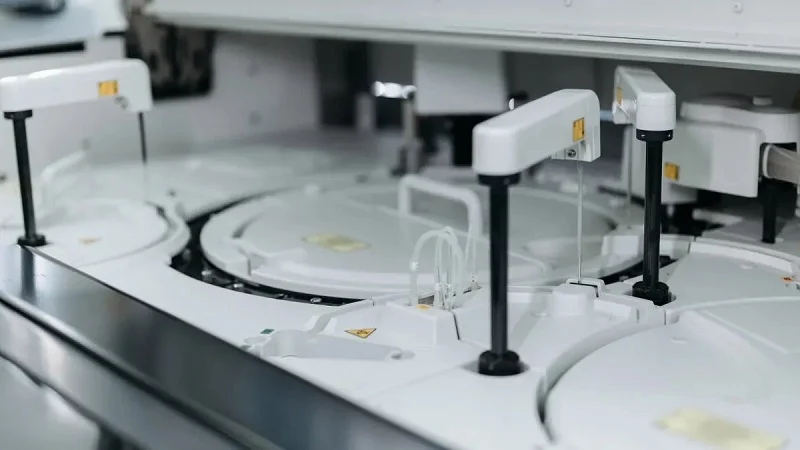
A factory that takes your print and starts cutting without asking questions might seem efficient. That silence is a warning sign. Design for Manufacturing (DFM) review catches problems before they become expensive failures. Skipping this step costs real money.
The Cost of ‘Print-to-Part’ Without Feedback
Sending a drawing straight to production without DFM feedback creates hidden costs. Redesign loops delay your launch. Wrong material choices lead to scrapped batches. Toolpaths that cannot reach internal features require rework or new tooling. Threads tear out when edges are too thin. Cosmetic faces get clamped and damaged. Each mistake wastes raw material and machine time.
The numbers tell the story. Design mistakes can significantly increase CNC machining costs. Tight tolerances everywhere add machining and inspection time. Deep, narrow pockets increase cycle time and tool wear. Small internal corner radii force slower machining. Non-standard hole sizes require extra setup. Premium surface finishes on every surface add unnecessary polishing. Features needing multiple setups add fixturing time. Difficult-to-machine materials slow cutting speeds.
How Good DFM Lowers Costs and Boosts Yield
A proper DFM review addresses manufacturing risks early. It flags assembly steps that introduce variability. Multi-step alignments, manual rework loops, and specialized tooling all get scrutiny. Tackling these issues upfront reduces defects and cycle time.
DFM also optimizes the design itself. Proper component spacing, trace routing, and thermal relief prevent assembly issues. Connector alignment and cable bend radius matter for long-term reliability. Heat paths and solder joint stress get refined to reduce thermal cycling fatigue. High-level assembly principles apply too. Avoid tight tolerances where loose ones work. Evaluate load-bearing features early. Validate sub-assemblies before full production.
Cost control happens without sacrificing quality. DFM removes unnecessary features, reduces part count, and simplifies tooling. Throughput improves. Scrap decreases. When supply issues arise, alternative CNC medical components get secured in advance.
Risks of Unnecessary Tight Tolerances or Poor Finishes
Over-defining a drawing means overpaying for machining. Tolerance correction alone can deliver substantial machining cost reductions. Every extra decimal place adds setup time, slower feeds, and more inspection. Poor finish specifications create similar waste. A matte finish on a hidden surface adds polishing time with zero patient benefit.
Red Flags in Engineering Communication
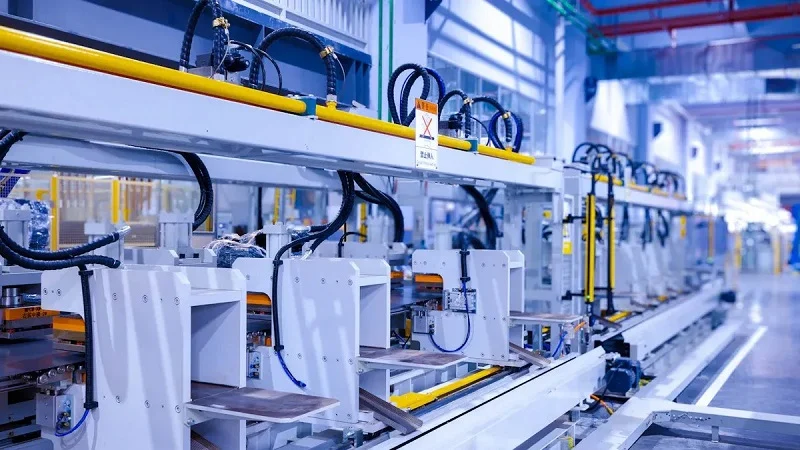
Watch how a factory responds to your print. Do they ask questions? Do they challenge assumptions? Or do they nod and quote?
Not Asking About the End-Use Environment
The end-use environment changes everything. An implant experiences different stresses than a surgical tool. A CNC medical component that touches bone needs different surface treatment than one that touches only metal. A factory that never asks where your part goes cannot make good recommendations. They are guessing.
Accepting the Print Without Suggesting Alternatives
A good factory suggests alternatives. They might recommend a different material grade. They might propose a looser tolerance that still works. They might redesign a feature for easier machining. Silence means they are not thinking about your part. They are just running code.
Value of a Collaborative Partnership
The best relationships start with engineers working together. Your design team sits with their machinists. Sample parts get produced for proof of concept. Design changes happen with on-the-fly modifications. Machinability and material selection get evaluated early to prevent quality issues.
Evaluate Their Engineering Team’s Experience
Look for a team that understands medical device manufacturing. They should know ISO 13485 requirements. They should have cleanroom capabilities. They should deliver low-volume precision parts quickly for iterative testing. DFM feedback should come with every quote, not just when you ask.
Require a Formal DFM Report Before Quoting
Make this non-negotiable. A formal DFM report shows they read your print carefully. It documents their recommendations and your decisions. It becomes part of your regulatory compliance record. A factory that refuses to provide one is hiding something.
The right partner for CNC medical components treats DFM as a standard step, not an extra service. They build robust documentation in parallel with production. They scale to high volume after approval while continuously improving. That partnership compresses your development-to-market cycle.
CNC Medical Components: Traceability and Lead Times

A serial number alone won’t save you during a recall. Real traceability means tracking every detail: the raw material batch, the machine settings, the operator who ran the job, and the inspection results. The FDA requires a written standard operating procedure for device tracking. That SOP must include a quality assurance program with audit procedures. For tracked devices, the requirement lasts for the useful life of the device. That could be years.
Traceability is More Than Just a Serial Number
The Need to Track Material, Process Parameters, and Operators
Think of traceability as a chain. Each link connects to the next. The Device Identifier (DI) tells you the manufacturer and model. The Production Identifier (PI) carries the lot number, serial number, expiration date, and manufacturing date. Together, they create a complete picture. But the chain doesn’t stop there. You also need to know who worked on the part, what test dates were recorded, and what errors or repairs happened along the way. A factory that only stamps a serial number on the box is giving you a broken chain.
How Traceability Supports Post-Market Surveillance and Recalls
When a problem surfaces in the field, speed matters. The FDA requires timely reporting of recalls, with different deadlines for undistributed and distributed devices. That is not a lot of time. A factory with solid traceability can pull up the exact batch, find the test results, and trace every device that went out. Without that data, you are digging through paper records while the clock ticks. The FDA also requires manufacturers to keep distribution records showing the name and address of each user facility. That is how you know where your CNC medical components ended up.
The Challenge of Mixed Batches and Kits
Ensuring the Factory Can Handle Multi-Component Assemblies
Multi-component kits add complexity. Each CNC medical component in the kit has its own material lot, its own history, and its own inspection record. When a factory mixes batches by accident, the whole kit becomes suspect. Common errors include batch mixing, incomplete documentation, and slower investigations. Partial implementation of changes across configurations can cause inspection failures and production delays. You need a partner who tracks every CNC medical component separately, even when they ship together.
The Importance of a Clear Labeling and Packaging Strategy
Poor packaging creates trouble. Parts can tangle, lose orientation, or get mixed with other batches. A clear labeling strategy prevents those problems. Each label should carry the lot number, part number, and quantity. The packaging should keep parts separate and protected. A factory that treats packaging as an afterthought is not ready for regulated medical device manufacturing.
How to Test Their Data Management and Lead Time Capabilities
Asking About Their ERP System and Data Retention Policies
Ask the factory how they store data. Do they use an ERP system that tracks each step? Can they pull up a batch record from three years ago? The EU Medical Device Regulation (MDR) requires long-term retention of records, with durations depending on device classification. Even if you are not in the EU, that is a good benchmark. The FDA also expects data management plans, access controls, and change control documentation. A factory that cannot explain their retention policy is a liability.
Requesting a Sample Device History Record (DHR) or Batch Record
The best test is to ask for a sample DHR. Look for the material heat number, the operator name, the machine ID, and the inspection results. The DHR should tie back to the process validation that proved the process works. A factory with ISO 13485 certification will have this system in place. If they hesitate, that is a warning sign. Lead times matter too. Ask about their average turnaround time for prototypes and production runs. A factory that can deliver fast data and fast parts is worth keeping.
You’ve now seen the six critical areas: materials, tolerances, quality systems, process validation, DFM, and traceability. Each one can make or break your product. A single supplier-related quality failure can trigger recalls costing millions. The reputational damage lingers for years.
Don’t hunt for the cheapest quote. Hunt for the most reliable partner. Someone who balances precision, compliance, and lead times. Someone who answers your hard questions with confidence.
Procurement teams that invest in rigorous upfront evaluation consistently avoid these downstream costs. That’s the smart money.
Before you send your next RFQ, use this list to audit your current or potential suppliers. The time you spend vetting now will save you from costly delays and quality issues later.
Partnering with NOBLE for Your CNC Medical Components

The selection steps above point to one clear answer: you need a partner with proven accuracy, documented rule-following, and full-service support. NOBLE delivers exactly that. As a top manufacturing company in China, NOBLE pairs strong service skills with expert machining know-how to help clients move from prototype to full production smoothly.
Our Manufacturing Capabilities
NOBLE’s production floor handles both metal and plastic with equal skill. The equipment list includes multi-axis CNC milling and turning centers, Swiss-type lathes, and 5-axis machining systems. This range means complex shapes are no problem. Whether your CNC medical component needs tight internal corners or curved implant surfaces, the machines deliver.
Precision Machining for Metal and Plastic
The material list covers the full medical range: titanium, surgical-grade stainless steel, aluminum, Inconel, cobalt-chrome, and high-performance plastics like PEEK and Ultem. Each material needs different cutting settings, tool shapes, and cooling methods. NOBLE’s machinists know these differences and adjust as needed.
- Micro machining for small CNC medical components and implantables
- Large format machining for bigger parts and housings
- Small part machining with tight tolerances
- 5-axis machining for high precision on complex shapes
- Swiss machining for small-diameter, high-precision parts
- In-process data collection and checking at every step
Tolerance control gets special attention. Standard precision holds tight tolerances. For tough jobs, precision machining reaches even tighter tolerances. Special projects can hit ±0.0002 inches when the design calls for it. This range covers everything from surgical tools to micro-components used in minimally invasive devices.
From Prototype to High-Volume Production
Moving from prototype to production often adds variation. NOBLE removes that risk with documented, repeatable processes. Prototype parts ship fast, so design checks happen without delay. Once approved, the same machines, tooling, and inspection steps scale to high-volume runs. Statistical process control watches variation in real time, catching drift before CNC medical components go out of spec. This method keeps quality steady whether you order fifty parts or fifty thousand.
Certifications and Quality Assurance
Certifications prove a factory’s commitment to quality. NOBLE holds both ISO 9001:2015 and ISO 13485:2016, covering general quality management and medical-device-specific controls. This dual certification shows readiness for regulated production.
ISO 9001:2015 and ISO 13485:2016
The two standards work together. ISO 9001 provides the general framework for customer satisfaction and ongoing improvement. ISO 13485 certification adds required medical-device controls that ISO 9001 lacks.
| Aspect | ISO 9001:2015 | ISO 13485:2016 |
| Primary Focus | Customer satisfaction | Rule compliance and patient safety |
| Risk Management | General improvement | Required, aligned with ISO 14971 |
| Design Controls | Not required | Required design files with risk outputs |
| Traceability | General identification | Batch records, Device History Records |
| Process Validation | Not required | Required for sterilization, welding |
| Cleanliness Specs | Not specified | Written cleanliness requirements |
This table shows the gap between general quality and medical-grade quality. NOBLE meets both standards, giving you confidence in every shipment.
Rigorous Inspection and Testing Protocols
Inspection happens at many checkpoints, not just at the end. First Article Inspection (FAI) checks the whole production process before full runs begin. In-process inspection uses calibrated CMM equipment to verify sizes as parts move through production. Final testing confirms surface finish, material properties, and size accuracy. Every measurement gets recorded, creating a full paper trail for regulatory audits. This careful approach meets FDA expectations and supports your own quality system.
A Full-Service Approach
NOBLE offers more than machining. The full-service model covers design support, engineering teamwork, assembly, and post-processing. This connected approach cuts your supplier count and makes project management easier.
Design Support and Engineering Collaboration
Early teamwork prevents costly mistakes. NOBLE’s engineers review your designs for manufacturability, flagging tolerance issues, material concerns, or surface finish problems before tooling starts. This Design for Manufacturing (DFM) feedback saves time and money. The engineering team also suggests other materials or processes when they offer better results. This partnership approach means you get expert input, not just a price quote.
Assembly and Post-Processing Services
Post-processing services include finishing, coating, and assembly. Cleanroom assembly handles CNC medical components that must stay sterile. Finishing operations achieve the surface roughness your design needs, whether that means a mirror polish for moving surfaces or a textured finish for bone-contact areas. Assembly services bring multiple parts together, cutting your handling and inspection work. This end-to-end ability means one service provider manages your whole production chain, from raw material to finished, ready-to-use CNC medical component.
The mix of precision machining, dual certification, and full-service support makes NOBLE a direct answer to the selection steps discussed throughout this guide. Contact NOBLE for a project consultation and see the difference that a true manufacturing partner makes.
To choose the right CNC machining partner for your CNC Medical Components, you need to understand four key areas. These are core processes like milling and Swiss machining, biocompatible materials, precision standards, and regulatory compliance. Every single choice you make directly affects patient safety and how well the device works. A reliable CNC machining service must have the proper certification and pass a very strict inspection. Complete and thorough records prevent costly recalls and help you get ready for audits. This guide works as a practical checklist when you are checking suppliers. The right service provider becomes a partner that helps you get into the market and succeed with your product. Contact NOBLE today to set up a project consultation for your needs. We offer the skills, FDA knowledge, and full support you need to make your medical device a reality. Your success is our number one priority. Let us help you achieve it with full confidence.
FAQs of CNC Medical Components
What certifications should a CNC medical factory hold?
ISO 13485 is the starting point. This standard covers quality management for making medical devices. Look for it in their marketing materials. Ask to see their certificate. A factory without it cannot show they follow regulatory rules.
How do I request a Device History Record sample?
Just ask. A good factory shares a sample DHR without delay. Check for material heat numbers, operator names, machine IDs, and inspection results. If they stall or say no, that tells you everything.
What is the difference between ISO 13485 and ISO 9001?
ISO 9001 covers general quality management. ISO 13485 adds medical-specific needs like risk management, traceability, and regulatory compliance. Medical device factories need ISO 13485. General machining factories often only have ISO 9001.
Can a small factory handle medical-grade parts?
Size matters less than systems. A small factory with ISO 13485, proper validation docs, and clean material handling can do the job. Check their process validation and metrology equipment. Those matter more than their square footage.
How long does a typical medical CNC project take?
Lead times vary by complexity and volume. Ask about their average turnaround for prototypes and production runs. A reliable factory gives you a clear timeline before you commit. If they hedge, dig deeper.
What documents should I expect with each shipment?
Expect a Device History Record, Material Test Reports, and a First Article Inspection report. The DHR should trace every CNC medical component back to its raw material lot. Missing documents mean gaps in traceability.
How often should I audit my supplier?
Audit them before the first order. Then audit annually or after any major change. A new machine, a new facility, or new personnel can shift their quality. Regular checks keep you safe.