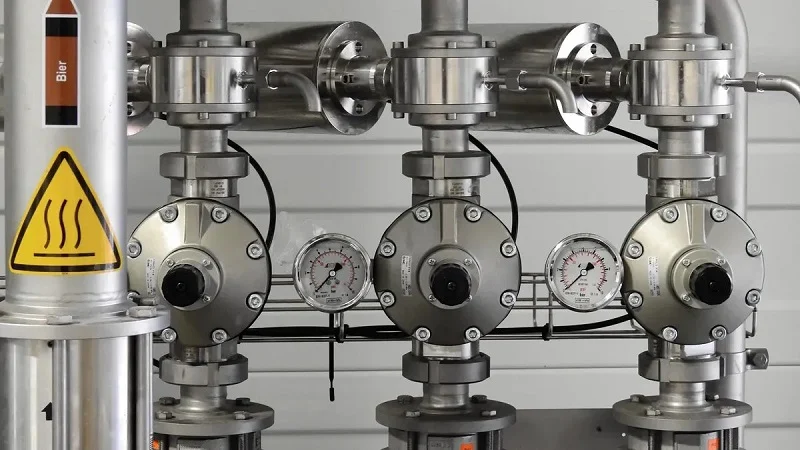
A medical manifold is a block with channels and ports that guides fluid or gas flow in devices like infusion pumps or anesthesia machines. Its precision directly affects patient safety and how well the device works. The wrong material or process can cause device failure, recalls, or harm to patients—here’s how to avoid that. How do you pick the right material and machining process to meet strict medical standards while keeping costs down? This guide covers materials, processes, design points, quality standards, and choosing a partner. Medical manifold machining requires close attention to tolerances and safety, especially when working with complex geometries and biocompatible materials. For medical CNC machining, working with NOBLE gives you expert manufacturing skills for prototypes and full production, ensuring every medical manifold machining step meets rigorous industry requirements. Making medical devices demands precision, safety, and dependable processes.
Material Selection Criteria for Medical Manifold Machining
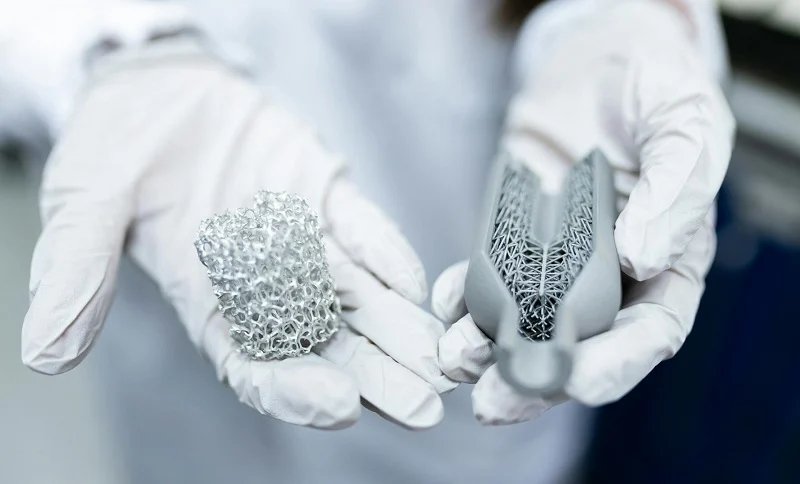
Picking the right material for medical manifold machining means balancing safety, sterilization, and cost. The main factors are biocompatibility, sterilization compatibility, and mechanical strength. Getting this balance right decides if the device works safely and reliably.
Biocompatibility and Regulatory Standards
Biocompatibility and Regulatory Standards Compliance
Every material used in a medical device must pass biocompatibility testing according to recognized standards. These tests check how a material reacts with living tissue and verify safety through implant studies. Materials that pass are safe for contact with body fluids. This matters for orthopedic implants and other medical implants. The cnc process must use materials that won’t irritate. Biocompatibility is the first filter in material selection. The cnc machining approach must not introduce contaminants that affect biocompatibility. This is critical for implants.
Implantable vs. Single-Use Device Requirements
The intended use changes the material requirements. For implantable devices, the material must last for years. It needs to resist corrosion and maintain material integrity over time. The FDA requires extensive testing for implants. The cnc machining of implantable components demands tighter tolerances. Single-use manifolds have different rules. The biocompatible materials used here can be different. A single-use manifold might use a polymer instead of metal. This choice affects the entire cnc approach. Machining polymers is different from machining metals. The tooling, speeds, and feeds all change. Orthopedic implants still need the highest quality. The cnc process must match the material’s properties.
Mechanical and Chemical Properties
Strength, Corrosion Resistance, and Thermal Stability
A medical manifold must handle pressure without leaking. Strength is critical. Stainless steel 316L offers good corrosion resistance and strength. Titanium alloys provide higher strength-to-weight ratios. This matters for portable medical devices. Thermal stability is another factor. Many medical devices go through autoclave sterilization. The material must hold its shape through repeated cycles. For orthopedic implants, this thermal stability ensures the implant doesn’t deform. The cnc method for these materials requires careful tool selection. Harder materials wear out tools faster. This affects the cnc machining cost and cycle time. The medical industry demands consistent results from every cnc run.
Fluid Compatibility and Chemical Inertness
The manifold carries fluids or gases. The material must not react with them. Chemical inertness is a must. Some drugs can corrode certain metals or swell polymers. Testing confirms compatibility. For medical applications, you need to know what fluids will flow through the device. This determines if you use a metal like 316L or a polymer like PEEK. The cnc process also changes based on the material’s chemical properties. Some materials produce harmful dust during cnc machining. This requires special ventilation. Medical device manufacturers must consider all factors.
Cost and Machinability Trade-offs
Raw Material Costs vs. Machining Time
Material cost is only part of the picture. Machining time often costs more than the raw material itself. A cheaper material that is hard to machine can drive up costs. Titanium is expensive to buy and expensive to machine. It requires slow speeds and specialized tools. But for medical applications, the benefits can justify the cost. The cnc approach must be optimized for each material. Experience with medical-grade materials pays off. Working with a partner like NOBLE gives you access to their expertise in medical device manufacturing. They help optimize the cnc approach for your needs.
Lifecycle Cost Analysis for Production Volumes
For high-volume production, small savings per part add up. A material that machines faster can save thousands of dollars. For low-volume custom manifolds, material cost is less important. The setup and programming time matters more. For orthopedic implants, the material choice is often dictated by clinical need. For single-use manifolds, cost is a bigger factor. The key is to balance biocompatibility, performance, and cost. The cnc strategy must align with the production volume.
Top Materials for Medical Manifold Machining
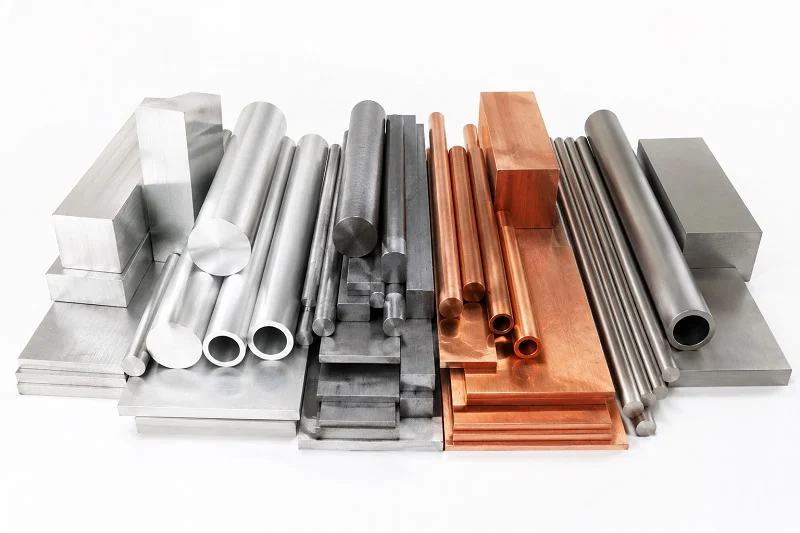
Choosing the right material for medical manifold machining comes down to three main groups. Each group has its own benefits. The choice depends on the device, the budget, and how many parts you need to make.
Stainless Steel (316L and 17-4 PH)
Properties and Common Applications
Stainless steel 316L is the standard for many medical uses. It gives a good mix of strength, corrosion resistance, and cost. The numbers show why it works so well. 316L has a tensile strength between 580 and 680 MPa. Its yield strength falls between 480 and 580 MPa. The material stretches 35 to 50 percent before breaking. That means it can take stress without snapping. Hardness sits between 200 and 230 HV.
Molybdenum (2–3%) greatly helps resist pitting and crevice corrosion in chloride-rich environments. This is what mainly sets 316L apart from 304L, making 316L much better for corrosion resistance in body fluids and the top choice for demanding implant uses.
| Property | Typical Value (As-Built) |
| Tensile Strength | 580–680 MPa |
| Yield Strength (0.2% Offset) | 480–580 MPa |
| Elongation at Break | 35–50% |
| Hardness | 200–230 HV |
This makes 316L perfect for implants that stay in the body for years. You also see it in disposable surgical tools and endoscopic devices. 17-4 PH offers higher strength for parts that need extra hardness. The cnc process for these steels needs sharp tools and good cooling. Machining for surgical tools relies on these grades for steady results. For orthopedic implants, 316L gives the toughness needed for long-term use.
Surface Finishing for Cleanliness and Corrosion Resistance
Surface finish matters a lot for medical manifolds. After machining, you must remove burrs and smooth the surface. Electropolishing is a common step. It removes a thin layer of metal and leaves a clean finish.
| Condition | Achieved Ra Value |
| Standard electropolishing (AISI 316L) | ≤ 0.4 μm |
| Standard for ultra-high purity applications | ≤ 0.38 μm (15 μin) |
| Extreme case for ultra-high purity applications | ≤ 0.25 μm (10 μin) |
For orthopedic implants, a smooth surface lowers the chance of bacteria sticking. It also helps the part resist corrosion. The cnc machining process must leave enough material for finishing steps. This makes sure the final part meets all requirements. The medical industry demands this level of precision.
Titanium Alloys (Grade 5 and Grade 23)
High Strength-to-Weight Ratio and Biocompatibility
Titanium is a top choice when weight matters. Grade 5 (Ti-6Al-4V) and Grade 23 offer excellent strength-to-weight ratios. These materials weigh about half as much as steel. They also pass biocompatibility tests with great results. This makes them ideal for implants that need to last. Many orthopedic implants use titanium because it bonds well with bone. The material resists corrosion from body fluids. For medical device manufacturing, titanium offers a unique set of benefits. The cnc approach for titanium needs experience and the right tools. The material’s biocompatibility makes it a top choice for demanding uses.
Machining Challenges and Cost Considerations
Titanium is tough to machine. It heats up quickly and wears out tools. You need slow speeds and high coolant flow. This raises machining time and cost. The raw material costs more than steel, too. But for many medical uses, the benefits justify the price. Parts that need to be light and strong often use titanium. The cnc strategy must account for this. Working with a partner that knows titanium saves time and money. NOBLE brings deep experience with these materials for medical manifold machining needs.
Advanced Polymers (PEEK, ULTEM, and Polycarbonate)
Lightweight, Chemical Resistance, and Transparency
Polymers offer a different set of benefits. They are lightweight and resist chemicals well. PEEK is a high-performance polymer that can replace metal in some uses. It handles repeated sterilization cycles. ULTEM offers good strength and heat resistance. Polycarbonate is ideal for clear manifolds due to impact resistance. You can see fluid flow through the device. This helps with diagnostics and testing. Other polymers like RADEL, acrylic, COC, and COP work well for bonded manifolds. PVC and polysulfone also appear in specific medical uses. The materials you choose depend on the device’s needs. For implants, polymers offer a lighter alternative to metals.
CNC Machining vs. Injection Molding for Polymer Manifolds
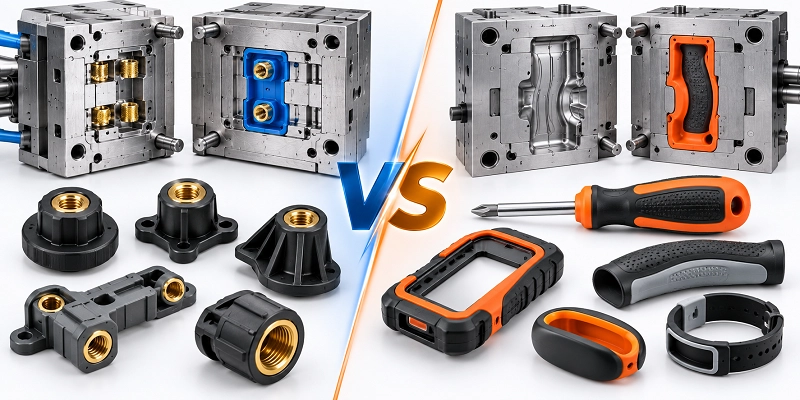
The production volume decides the best process. For low volumes, machining is the way to go. There is no custom tooling cost. For 500 units, the per-part cost ranges from $50 to $150. Injection molding makes sense for 1,000 or more units. But the tooling cost can run from $5,000 to $20,000 or more.
| Manufacturing Metric | CNC Machining | Injection Molding |
| Economical Production Range | 1 to 500 units | 1,000+ units |
| Tooling Cost | $0 (No custom tooling) | High ($5,000-$20,000+) |
| Production Volume | Per-Part Cost Range | |
| — | — | |
| Prototype (1-10 parts) | $200-500+ | |
| Low volume (10-500 parts) | $50-150 | |
| Medium volume (500-5,000 parts) | $20-50 | |
| High volume (5,000-50,000 parts) | $10-20 | |
| Mass production (50,000+ parts) | $5-15 |
For PEEK, micro-grain solid carbide tools with positive rake angles work best. The cnc process must be tuned for each polymer. Different materials cut differently. The right approach saves time and ensures quality. For implants, the machining must be clean and precise. The material choice and process work together to create a safe, reliable device. The medical industry demands nothing less.
NOBLE, as a leading manufacturing partner in China, has the skills to handle all these materials for your medical manifold machining projects. They help you move from prototype to full production smoothly.
Processes for Medical Manifold Machining
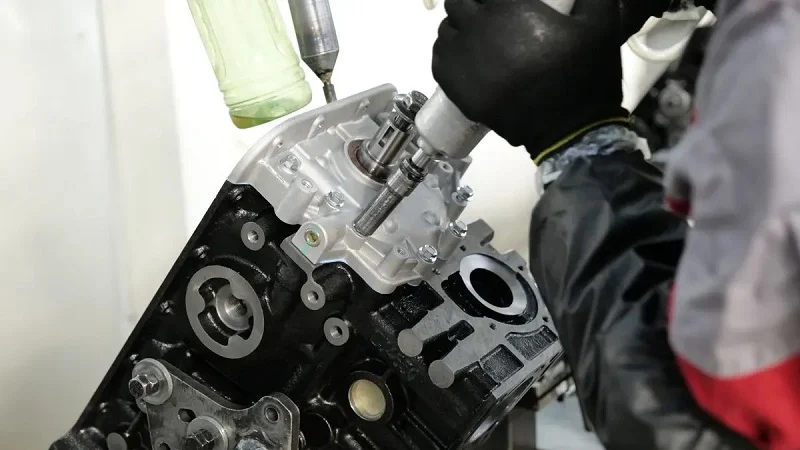
The right process for medical manifold machining depends on the part’s complexity. Simple blocks with straight channels work fine on 3-axis equipment. Complex designs with angled ports need 5-axis capability. Small, high-volume components often move to Swiss machines. Each approach has its place in medical device production.
CNC Milling and CNC Turning
CNC milling and turning form the backbone of most medical manifold production. These processes remove material from a solid block to create channels, ports, and mounting features—the choice between 3-axis and 5-axis machining changes what geometries you can achieve.
3-Axis vs. 5-Axis Machining
A 3-axis machine moves the cutting tool along X, Y, and Z coordinates. It works well for manifolds with straight channels and ports drilled from a single direction. Setup is simple, and cycle times stay predictable. Many single-use manifolds fall into this category.
5-axis machining adds rotation around two additional axes. This lets the tool approach the workpiece from nearly any angle. For medical cnc machining, this capability opens up new design possibilities. Angled ports, curved channels, and undercut features become practical. The trade-off is higher machine cost and more complex programming.
From a practical perspective, the decision comes down to geometry. If your manifold needs ports at compound angles, 5-axis is the way to go. If everything lines up on one or two planes, 3-axis saves money without sacrificing quality.
Multi-Axis for Angled Ports and Complex Geometries
Multi-axis machining shines when ports must meet at precise angles. A valve body or hydraulic manifold often requires true position tolerances of ±0.02 mm or tighter. That level of precision demands equipment that can hold tight tolerances across multiple axes. FabVector’s 5-axis service specifies positioning accuracy of ±0.005 mm for their equipment. This kind of accuracy ensures every port lands exactly where the design requires.
Specific operations in medical cnc processes include shell milling for large flat areas, profile milling for contours, drilling for through-holes, counterboring for recessed fastener heads, reaming for smooth finished holes, and thread milling for internal threads. Each operation requires its own tooling strategy and speed parameters. The machining for medical devices must account for material properties. Titanium, for instance, needs slower speeds and higher coolant flow to prevent heat buildup.
Swiss Machining for Small, Precise Components

Swiss machining offers a different approach for small parts. The workpiece rotates while sliding through a guide bushing. The cutting tools stay stationary or move only slightly. This design provides exceptional support near the cutting zone, which reduces deflection and improves accuracy.
Advantages for High-Volume, Tight-Tolerance Parts
Swiss machines excel at producing small, complex parts in high volumes. They hold tight tolerances part after part without drift. For medical manifold machining, this consistency matters enormously. Patient safety depends on every unit meeting the same specifications.
The numbers tell the story. Swiss machining reduces cycle times by 30-70% on complex parts compared to conventional multi-setup turning. Consider a part that takes 8 minutes across three setups on conventional equipment. A single Swiss setup completes it in 3 minutes. That represents a 62.5% reduction in cycle time. For high-volume production, those savings add up quickly.
Material Waste Reduction and Cycle Time Efficiency
Swiss machining also reduces material waste. The guide bushing supports the bar stock close to the cutting point, which minimizes vibration and allows for tighter nesting of parts. Less material goes to scrap. The single-setup approach eliminates the need for multiple fixtures and re-fixturing errors. This improves overall efficiency in medical device production.
For machining surgical instruments, Swiss machines handle small diameters with ease. They produce consistent results across long production runs. The medical industry relies on this reliability.
Electrical Discharge Machining (EDM)
EDM removes material using electrical sparks rather than cutting tools. This process works well for hard materials and intricate features that conventional machining cannot reach.
Wire EDM for Intricate Internal Features
Wire EDM uses a thin, electrically charged wire to cut through material. It excels at creating complex internal shapes with sharp internal corners. The wire never touches the workpiece, so there is no cutting force to cause deflection. This makes wire EDM ideal for delicate features in medical cnc machining.
For manifolds with intricate internal channels, wire EDM provides accuracy that milling cannot match. The process works on hardened materials too, which expands your material options.
Sinker EDM for Deep Channels and Sharp Corners
Sinker EDM uses a shaped electrode that descends into the workpiece. It creates deep channels and sharp corners that would break standard cutting tools. The electrode transfers its shape to the workpiece through controlled spark erosion.
This process suits manifolds with deep, narrow channels or features with tight internal radii. The surface finish after EDM may require additional polishing, but the geometric accuracy is excellent. For medical applications of cnc machining, EDM offers a solution when conventional processes hit their limits.
For PEEK and other polymers, micro-grain solid carbide tools with positive rake angles and polished flutes work best. These tools reduce heat buildup and prevent material smearing. The right tooling makes the difference between a clean cut and a ruined part.
NOBLE, as a leading manufacturing partner in China, brings expertise across all these processes. Their team helps clients select the right approach for each project, from prototyping to mass production. This guidance ensures your medical manifold machining project starts on solid ground.
Precision Requirements for Medical Manifold Machining
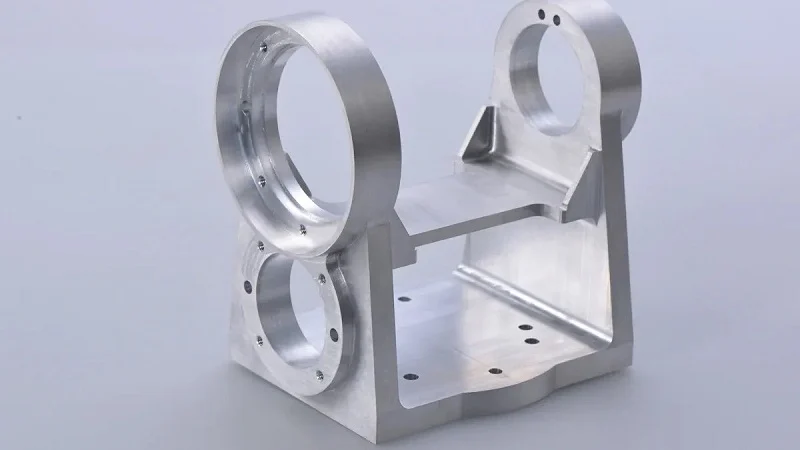
Precision isn’t just a fancy word in medical manifold machining. It’s what separates a device that works from one that fails. When a manifold sends anesthesia or delivers medication, every tiny measurement matters. The tolerances you hold and the surface finish you get directly affect patient safety and how well the device performs. Let’s look at what precision really means here.
Tolerances and Dimensional Accuracy
Typical Tolerance Ranges and Their Impact
Medical manifolds need tight tolerances. Standard practice calls for tight tolerances on important features. Some applications need even tighter limits. The table below shows common ranges:
| Feature Type | Typical Tolerance | Application Example |
| Port locations | ±0.02 mm | Fluid delivery systems |
| Channel diameters | — | Precision flow control |
| Mating surfaces | — | Sealing interfaces |
| Thread positions | — | Assembly compatibility |
These numbers aren’t random. A port that’s off by 0.02 mm can cause a leak. A channel that’s too narrow blocks flow. For implants, the stakes are higher. Orthopedic implants need micron-level tolerances to fit properly against bone. The machining process must hold these specs consistently on every part.
Measuring and Verifying Dimensional Accuracy
You can’t fix what you don’t measure. Coordinate measuring machines (CMMs) check key dimensions on medical cnc machining outputs. These devices probe the part and compare measurements to the CAD model. For high-volume runs, statistical sampling keeps quality in check. Every batch gets inspected. The data goes back into the cnc process to catch drift early. This loop keeps the machining within spec from the first part to the last.
Surface Finish and Cleanliness
Ra Values and Their Effect on Fluid Flow
Surface finish affects how fluids move through the manifold. Rough surfaces create turbulence and resistance. Smooth surfaces let fluids flow freely. For fluid channels, a surface finish of Ra 0.4 µm or better is standard. The table below shows what different finishes achieve:
| Finish Level | Ra Value | Typical Use |
| Standard machined | — | Non-critical surfaces |
| Medical grade | 0.4 µm | Fluid channels |
| Ultra-smooth | ≤ 0.25 μm | High-purity applications |
A smoother finish also reduces bacterial buildup. This matters for implants and reusable devices. The cnc approach must leave enough material for finishing steps. You can’t polish away too much without changing the part shape.
Deburring, Passivation, and Electropolishing
Raw machining leaves burrs and micro-cracks. These flaws trap contaminants and weaken the part. Deburring removes sharp edges. Passivation creates a protective oxide layer on stainless steel. Electropolishing smooths the surface at a microscopic level. For 316L stainless steel, standard electropolishing achieves Ra values of 0.4 µm or better. These steps protect the manifold’s integrity and extend its service life.
Ensuring Repeatability for Patient Safety
Process Control and Statistical Analysis
Repeatability means every part matches the last one. This consistency is a must for patient safety. Process control uses statistical methods to monitor production. Control charts track key dimensions over time. If a measurement drifts toward the tolerance limit, operators catch it before parts go out of spec. This proactive approach cuts waste and stops defective devices from reaching patients.
Reducing Variability in High-Volume Production
High-volume production makes small variations worse. A tool that wears slightly can shift dimensions across a long run. Regular tool changes and in-process inspection keep variability in check. Automated systems on Swiss machines and CNC centers maintain consistent cutting parameters. For precision parts for healthcare, this reliability is what separates trusted suppliers from the rest.
From a practical standpoint, working with an experienced partner makes a difference. NOBLE, a leading manufacturing partner in China, brings deep expertise in medical manifold machining. Their team knows how to hold micron-level tolerances while managing costs. They help clients move from prototype to mass production without sacrificing safety and functionality. When patient safety depends on your manifold, you need a partner who takes precision as seriously as you do.
Choosing NOBLE for Your Medical Manifold Machining Project

Picking the right partner for medical manifold machining can feel overwhelming. You need someone who understands the materials, holds tight tolerances, and communicates clearly. NOBLE brings all of that to the table. Their team works with you from the first sketch to full production. Let’s walk through what matters most when evaluating a machining partner.
Evaluating Technical Capabilities
Experience with Medical-Grade Materials
Not every shop knows how to handle 316L stainless steel or PEEK. NOBLE has spent years working with these materials. Their machinists know the right speeds, feeds, and tooling for each one. This experience shows up in the final part. A manifold machined by someone who understands the material will have cleaner cuts and fewer defects. The cnc process for titanium, for example, needs slow speeds and lots of coolant. NOBLE’s team knows this from experience, not from trial and error. That knowledge saves you time and money on every project.
In-House Capabilities for Finishing and Testing
Finishing steps matter just as much as the initial cuts. Deburring, passivation, and electropolishing all happen in-house at NOBLE. You don’t need to ship parts to a second vendor. That keeps the quality consistent and the timeline short. Testing also happens on-site. Coordinate measuring machines verify dimensions on every batch. This means fewer surprises down the road. The machining process stays under one roof, which simplifies communication and accountability.
Assessing Quality Management Systems
Certifications and Audit History
Quality isn’t just a buzzword at NOBLE. It’s built into their daily operations. Their certifications prove they follow strict procedures. Audits happen regularly, and the results show a track record of compliance. When you ask for documentation, they provide it without hesitation. This transparency matters in the medical field. You need to know your parts meet every requirement.
Quality Management System Certifications
Two certifications stand out for medical work. One covers general quality management. The other goes further and addresses medical device manufacturing specifically. NOBLE holds both. These certifications mean their processes are documented, repeatable, and audited. For medical manifold machining, this level of quality control is non-negotiable. It gives you confidence that every part meets the same standard.
Communication and Supply Chain Reliability
Prototyping Support and DFM Feedback
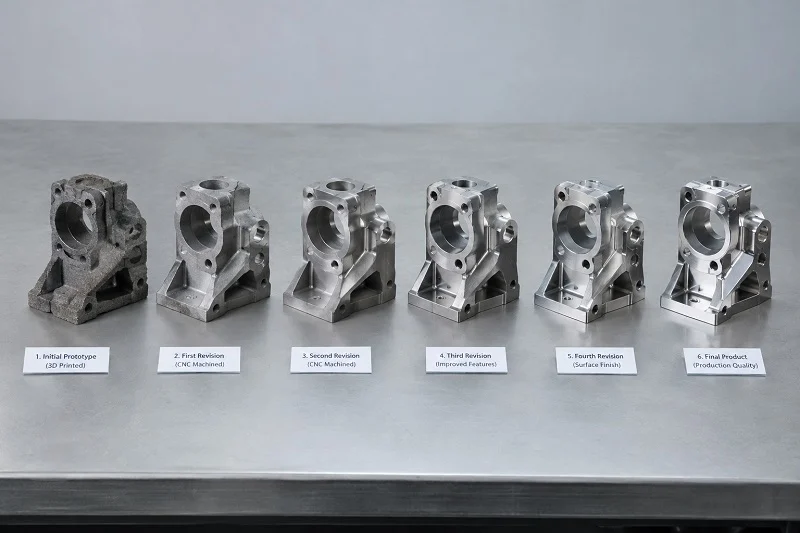
Design for manufacturability (DFM) feedback can save your project weeks. When NOBLE reviews your design early, they spot issues before production starts. The numbers back this up. DFM reviews cut design iterations by 35-40%, bringing revisions down from 3-4 rounds to just 1-2. That translates to 7-10 days saved on average per project. Their team tells you when a channel is too narrow or a tolerance is too tight. This feedback helps you fix problems on paper instead of on the shop floor.
Scalability for Production Ramp-Up
A prototype that works well still needs to scale. NOBLE handles this transition smoothly. They start with a few parts for testing, then ramp up as you validate the design. Their equipment handles both low-volume runs and high-volume production. The cnc machines run consistently across thousands of parts. This scalability means you don’t need to find a new partner when demand grows. The same team that built your prototype handles your mass production.
From a practical perspective, choosing NOBLE means getting a partner who understands the full picture. They combine technical skill, certified quality, and clear communication. That combination keeps your medical manifold machining project on track from start to finish.
Material selection and process choice must match clinical needs. For medical manifold machining, 316L, titanium, and PEEK serve different roles. CNC milling handles complex geometries. Swiss machining covers high-volume medical parts. The CNC process must meet medical requirements. Precision protects patient safety. Every CNC run follows medical standards. Patient safety depends on CNC accuracy. The CNC approach requires experience. CNC tooling matters for medical applications. Medical CNC machining delivers results. Patient safety comes first. Safety is non-negotiable for medical devices.
According to Nasto, medical device manufacturers seek partners for early DFM input to improve quality and cost. Integrating manufacturing considerations avoids costly redesigns, as stated by P&Y’s engineering team.
Engage a medical CNC partner early for medical manifold machining. Contact our CNC team for a medical design review.
FAQs of Medical Manifold Machining
What tolerance can I expect for medical manifold machining?
For medical manifold machining, typical tolerances can be as tight as ±0.02 mm (0.0008 in) on port locations. Channel diameters and mating surfaces require high precision, with values depending on the specific application. You can get tighter tolerances, but they cost more. Only ask for what your device really needs.
How do I choose between stainless steel and titanium?
Pick 316L stainless steel if you need good corrosion resistance and want to save money. Pick titanium if weight is important or you need a high strength-to-weight ratio. Titanium costs more and takes longer to machine, but it is worth it for implants and portable devices.
When should I machine a polymer manifold instead of molding it?
Machine polymers when you need fewer than 500 parts. There is no custom tooling cost, so the price per part stays low. For 1,000 or more units, injection molding is cheaper even with the $5,000 to $20,000 tooling cost. Always machine prototypes first.
What surface finish do fluid channels need?
Fluid channels in medical manifold machining need a surface finish of Ra 0.4 µm or better. This smoothness lowers turbulence and stops bacteria from building up. Standard electropolishing on 316L stainless steel gives this level. Very high-purity uses may need Ra ≤ 0.25 μm.
Can PEEK replace metal in medical manifolds?
Yes, PEEK works well for many uses. It can go through many sterilization cycles and resists chemicals. It is lighter than metal and safe for the body. When machining PEEK, use micro-grain solid carbide tools with positive rake angles and polished flutes. This stops the material from smearing.
What certifications should my machining partner hold?
Look for certifications that demonstrate quality management and medical device manufacturing capabilities. These indicate written and repeatable processes. Ask for audit history and documents. A partner who shares this information will give you consistent parts.
How early should I involve a machining partner?
Involve your partner during the design phase. Design for manufacturability feedback cuts design changes by 35-40%. It brings revisions down from 3-4 rounds to 1-2. That saves 7-10 days per project. Early input stops costly redesigns and keeps your project on schedule.