Introduction: Why Aluminum Vacuum Casting Matters for Rapid Prototyping
Product development moves fast. Design cycles shorten. Engineers need parts to test, fit, and validate. Those parts must behave like production components. Visual models are not enough.
Traditional casting methods require hard tooling. Steel dies take weeks to build. Costs run high. CNC machining offers an alternative. But complex geometries drive machining time up. Cost follows.
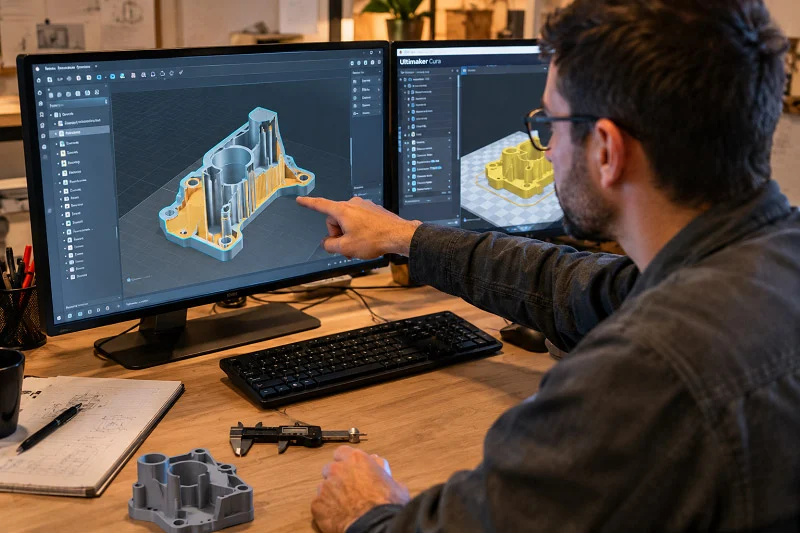
Aluminum vacuum casting sits in the middle. It produces functional metal prototypes without full production tooling. The process uses a silicone mold. The mold comes from a master pattern. The pattern can be 3D printed or machined. This cuts lead time dramatically.
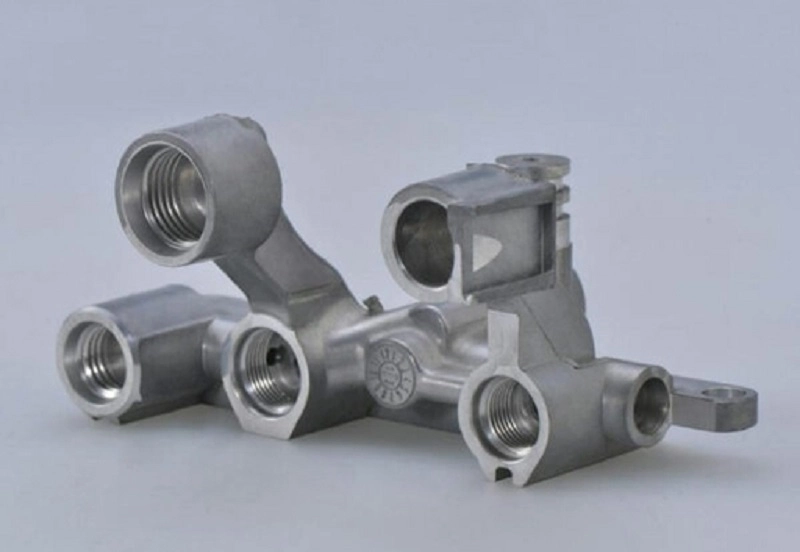
Vacuum casting rapid prototyping with aluminum delivers parts that are close to production quality. Mechanical properties match cast aluminum alloys. Surface finish is excellent. Dimensional accuracy is consistent.
What Is Aluminum Vacuum Casting?
Definition of Aluminum Vacuum Casting
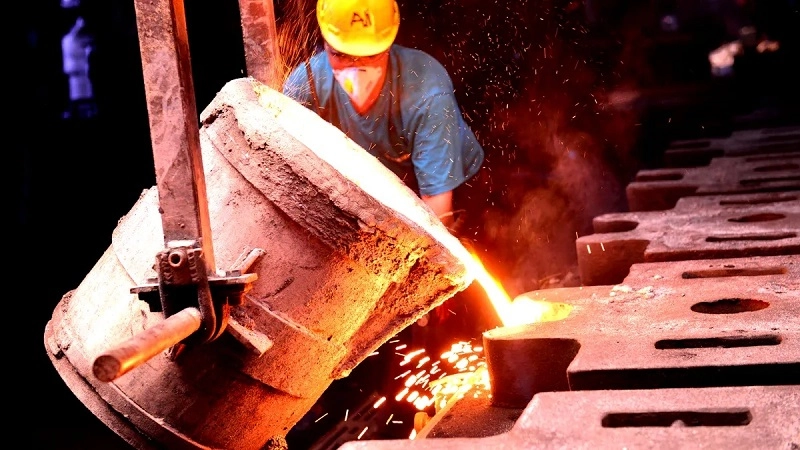
This is a metal casting process. Aluminum vacuum Casting uses reduced pressure around the mold. The vacuum removes trapped air from the cavity. It also pulls air out of the molten metal. The result is cleaner aluminum castings. Fewer defects. Less porosity. Better mechanical properties.
How Aluminum Vacuum Casting Works
The process follows a sequence. Each step affects the next.
- CAD model preparation. The part geometry is defined in 3D software. Tolerances. Draft angles. Gate locations. All are set at this stage.
- Rapid prototype pattern creation. A physical pattern is made. This can be machined from metal or resin. But vacuum casting rapid prototyping often uses 3D-printed patterns. That eliminates hard tooling for the pattern itself. Lead time drops dramatically. This is the core of aluminum prototype casting.
- Ceramic mold preparation. The pattern gets coated in ceramic slurry. Multiple layers build up. The shell is dried and hardened. The pattern is burned out. The mold is ready.
- Vacuum-assisted metal pouring. Molten aluminum is poured into the mold while the chamber is under vacuum. The vacuum pulls metal into thin sections. It removes gas bubbles. This step defines the quality of rapid aluminum casting.
- Cooling and mold removal. The casting solidifies. The ceramic shell is knocked off. The raw part is revealed. Gates and risers are still attached.
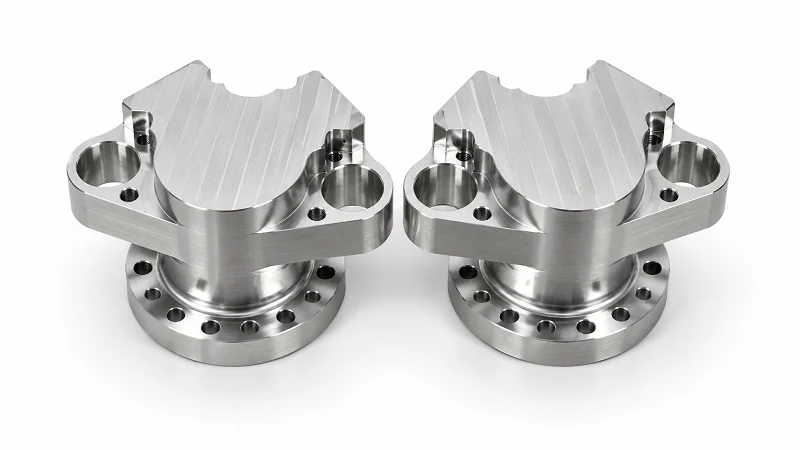
- Machining and surface finishing. Critical surfaces are machined to final dimensions. Tolerances that the casting cannot hold are cut in. Surfaces are polished or coated as needed.
Vacuum investment casting with 3D-printed patterns is the modern version of this process. No wax dies. No metal master patterns. Just a printed pattern and a ceramic shell. That is what makes metal rapid prototyping practical for aluminum components.
The complete workflow from CAD to finished part is typically two to three weeks. That is the advantage over hard tooling, which takes months. For product development, that speed matters. It enables iterative testing. It reduces risk before production tooling is committed. That is why aluminum casting prototype work is growing in engineering departments.
What Is Vacuum Casting Rapid Prototyping?
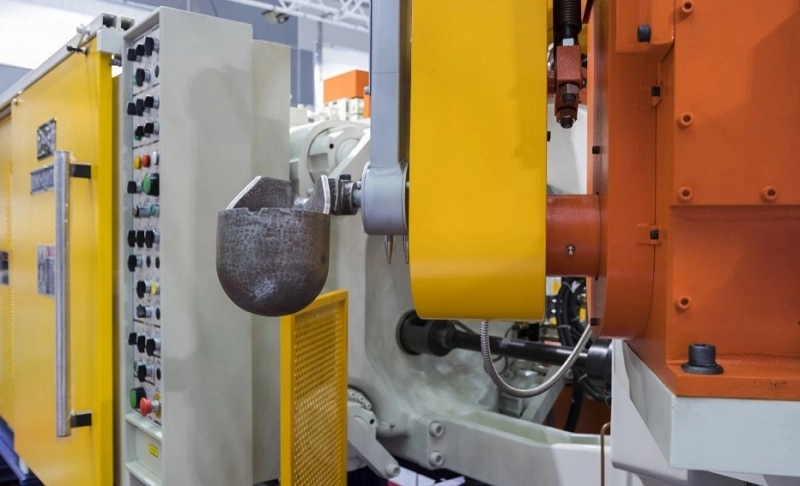
The term combines two ideas. Vacuum casting rapid prototyping means using vacuum-assisted metal casting to produce prototypes quickly. No hard tooling. No long lead times. Functional metal parts in weeks instead of months.
Vacuum Casting vs Traditional Prototyping
The choice of method depends on the need. Each approach fits a different stage of development.
| Method | Material | Best Use |
| 3D printing | Plastic, resin | Concept models, visual reviews |
| CNC machining | Aluminum billet | Precision prototypes, tight tolerances |
| Aluminum vacuum casting | Real aluminum alloy | Functional prototypes, mechanical testing |
| Die casting | Production parts | High-volume production |
3D printing gives form. CNC machining gives accuracy. Aluminum vacuum casting gives material properties. Die casting gives volume. Each method has its place.
Why Combine Vacuum Casting With Rapid Prototyping?
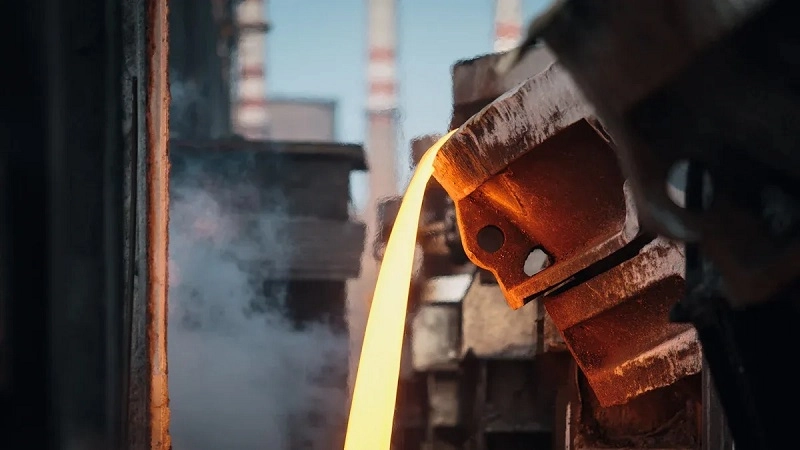
The combination delivers four distinct benefits.
- Faster design validation. A cast aluminum part can be tested mechanically. Stress, fatigue, and thermal response can be measured. The data is valid because the material is production-grade.
- Lower tooling investment. No steel dies. The mold is ceramic, made from a printed pattern. Tooling cost is a fraction of production tooling. If the design changes, the pattern is updated digitally. No sunk tooling cost.
- Production-like material testing. The alloy is the same as production. Mechanical properties match. Thermal behavior matches. Surface response matches. Testing on aluminum casting prototype parts gives data that translates directly to production.
- Complex geometry capability. Thin walls. Internal passages. Undercuts. The vacuum draws metal into intricate shapes. No draft constraints typical of die casting.
These benefits make vacuum casting rapid prototyping a practical step in product development. It sits between a plastic 3D print and a production die casting. It provides the missing link—real metal parts for real testing before committing to high-volume tooling. That is the value proposition for rapid aluminum casting. It reduces risk. It speeds development. It provides confidence in the design before production investment.
The Aluminum Vacuum Casting Process Step by Step
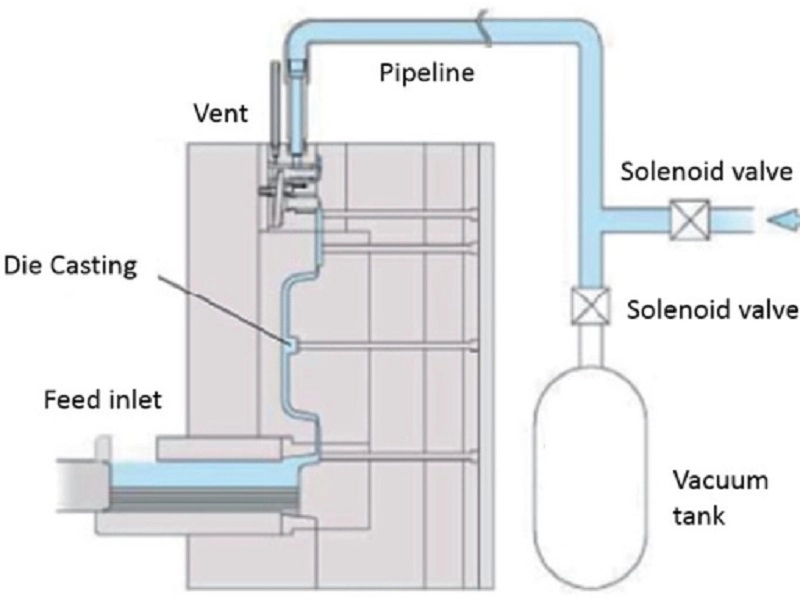
Step 1 — Create the Digital Design
Aluminum vacuum casting starts in CAD. The model defines geometry, wall thickness, and structural details. Draft angles are added—typically 2 to 3 degrees. Shrinkage allowance is built in. Aluminum shrinks about 1.5 percent during solidification. The design must compensate.
Step 2 — Produce a Rapid Prototype Pattern
Methods:
The pattern is the physical model of the part. It can be machined from metal or resin. But vacuum casting rapid prototyping relies on additive methods. SLA 3D printing is common. Other additive processes also work.
The pattern does not require hard tooling. Traditional investment casting would need a metal die for wax injection. That takes weeks. The printed pattern is ready in days. This is the key to rapid aluminum casting.
Step 3 — Build the Investment Mold
The model is immersed in ceramic slurry, and a fine layer of plaster coats the wet surface. The cycle of immersion and coating is repeated, gradually building up multiple layers of material. After each layer is applied, the shell dries during the interval between coatings.
Once the shell has reached sufficient thickness, the model is removed. It is then subjected to a burn-out process in a kiln. The printed resin melts and vaporizes, ultimately leaving behind a ceramic shell. At this point, the mold is ready for use in vacuum casting of aluminum.
Step 4 — Vacuum Cast Aluminum Into the Mold
The mold is placed in the vacuum chamber. The operator pours molten aluminum under vacuum conditions.
The vacuum environment helps improve metal flow. It allows molten aluminum to reach thin-walled areas that cannot be covered by air casting and removes dissolved gases from the melt before solidification. The resulting casting has high density and accurately reproduces fine details.
This step determines the quality of the aluminum vacuum casting prototype. Porosity is reduced, and mechanical properties are enhanced.
Step 5 — Post-Processing
The ceramic shell is knocked off. The raw casting is exposed. Gates are cut away.
CNC machining brings critical surfaces to final dimensions. Heat treatment refines the microstructure and improves mechanical properties. Surface finishing adds corrosion resistance or aesthetic quality. Inspection verifies dimensions, internal quality, and surface condition.
This completes the aluminum vacuum casting process. The final part is ready for testing, assembly, or further development. The full cycle from CAD to finished part is typically two to three weeks. That is the advantage for metal rapid prototyping. The part is real metal. The schedule is compressed. The risk is lowered.
Advantages of Aluminum Vacuum Casting for Rapid Prototyping
1. Real Aluminum Material Testing
Plastic prototypes have limitations. They exhibit different bending characteristics, have poor thermal conductivity, and tend to fracture in areas where metal would undergo plastic deformation. Aluminum vacuum casting solves this problem. The parts are made of genuine aluminum alloy and have mechanical properties consistent with those of production parts. Metrics such as tensile strength, hardness, and fatigue response all meet the requirements.
Thermal properties can be measured. Thermal conductivity, thermal expansion, and thermal cycling behavior are all accurate. Welding and machining validation can be performed. Since the same material as the final part is used, the prototype behaves exactly like the final part.
2. Faster Development Compared With Traditional Casting
Traditional casting requires hard molds. Steel molds take months to manufacture and are costly. Vacuum casting rapid prototyping bypasses these steps. Models are produced via 3D printing, ceramic shells can be completed within a few days, and parts can be cast within a week.
The transition from CAD design to a physical part is extremely fast. There is no need to lock in a design due to sunk mold costs before design validation. This is why the rapid aluminum casting process is widely used. It enables the production of functional castings based on digital designs while avoiding lengthy mold production cycles.
3. Complex Geometry Capability
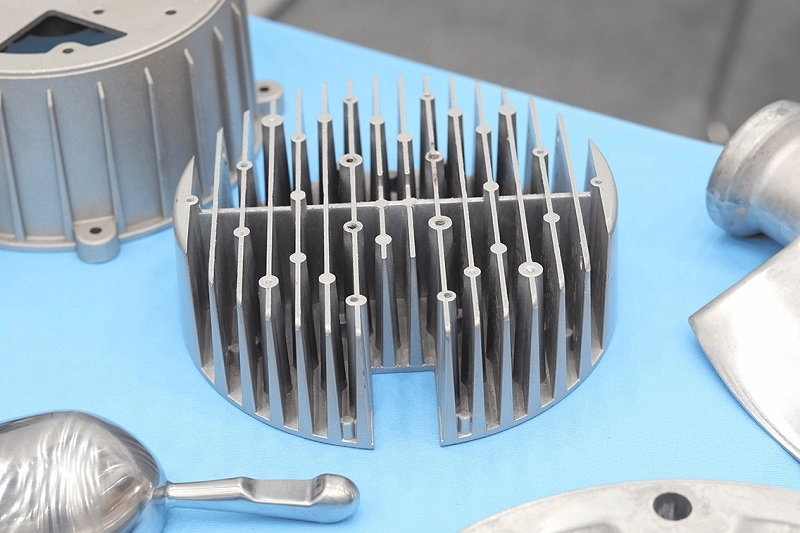
Vacuum technology facilitates the filling of thin-walled structures with wall thicknesses as low as 1 mm. Internal channels can be cast. Lightweight structures with ribbed and lattice-like features can be produced. Integrated structures reduce assembly time.
This process can handle details that are inaccessible to machining and cannot be filled by die casting. That is the geometry advantage of aluminum casting prototype work.
4. Cost Efficiency for Low-Volume Production
Mold costs are a major obstacle in metal prototyping, but aluminum vacuum casting eliminates this barrier. Ceramic molds serve as production tools and are less expensive than steel molds.
This process is suitable for small-batch production, including prototyping, engineering samples, and small-batch trial production orders. For orders with a production volume of 50 to 100 pieces, the unit cost remains within an acceptable range; for higher volumes, die casting is more cost-effective.
Small-batch aluminum part production via vacuum casting is a practical approach for pre-production and testing. It bridges the gap between single-unit 3D printing and full-scale die-casting production. This is precisely where the strategic value of rapid aluminum prototyping lies.
Aluminum Vacuum Casting vs Other Manufacturing Methods
Aluminum Vacuum Casting vs CNC Machining
Both methods produce metal parts. The path is different. The result is different.
| Factor | Aluminum Vacuum Casting | CNC Machining |
| Material | Cast aluminum alloy | Billet aluminum |
| Geometry | Excellent for complex shapes | Limited by tooling access |
| Setup cost | Lower tooling cost | Higher machining time |
| Accuracy | Good | Excellent |
| Best volume | Low-medium | Low-medium |
Machining starts with a solid block. It cuts away material. Complex internal features are difficult or impossible. Aluminum vacuum casting starts with a mold. Complex shapes are filled. The geometry is cast in, not cut out.
For prototypes requiring complex internal passages or thin walls, casting is the only practical path. For parts with simple geometries and tight tolerances, machining may be more direct.
Aluminum Vacuum Casting vs 3D Printing
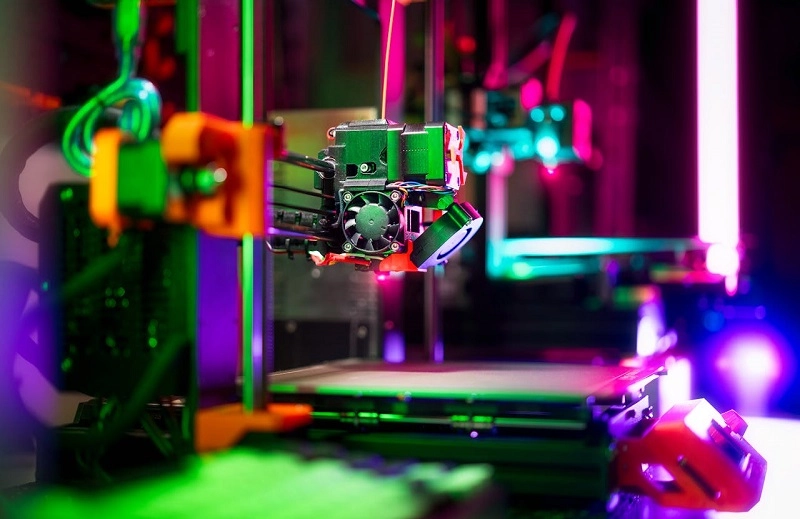
3D printing produces plastic or resin parts. Vacuum casting rapid prototyping produces metal.
The materials themselves exhibit authentic properties. The behavioral characteristics of cast aluminum are consistent with those of mass-produced aluminum, whereas 3D-printed parts are not. They have different bending characteristics and failure modes, and cannot be heat-treated like metal.
Data obtained from strength testing of 3D-printed parts reflects the properties of plastic; data obtained from strength testing of aluminum cast prototypes reflects the properties of aluminum. These results apply to mass production.
Cast parts have a better surface finish. Ceramic shells can reproduce fine details. The vacuum draws the metal into the mold, resulting in a smooth surface. 3D-printed parts, on the other hand, have layer lines and require post-processing.
Aluminum Vacuum Casting vs Die Casting
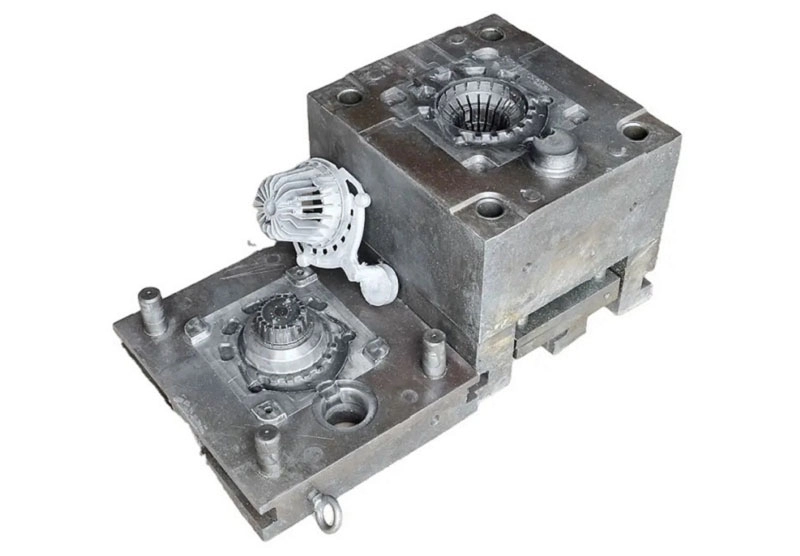
Die casting is suitable for mass production. Steel molds are expensive and have long lead times. However, the unit cost is low for large-volume production.
Aluminum vacuum casting is for prototypes and low volumes. Ceramic molds are inexpensive and have short lead times, but the unit cost is higher.
Vacuum casting supports design iterations. Simply modifying the digital model allows a new mold to be produced within a few days. In contrast, die casting locks the design into a steel mold, making modifications costly and time-consuming.
Rapid aluminum casting is the ideal choice when the design is not yet finalized; die casting is the best option when the design is finalized and the production volume is sufficient to justify the mold cost.
The comparison shows that each method has its place. Metal rapid prototyping using vacuum casting bridges the gap between 3D printing and mass-production molds. It provides real metal parts for practical testing at a reasonable cost and within a reasonable timeframe. That is where its value lies.
Partner With NOBLE for Aluminum Vacuum Casting and Complete Manufacturing Solutions
To produce high-quality aluminum prototypes, the casting process alone is not enough. Every stage is critical: design evaluation, material selection, manufacturing, surface treatment, and assembly. Each step affects the product’s performance and reliability.
At NOBLE, we offer comprehensive manufacturing solutions for metal and plastic components. We help our customers turn their ideas into production-ready products. Our expertise extends beyond manufacturing; we support the entire product development process—from design assistance and prototyping to precision machining, quality inspection, and assembly.
Comprehensive Manufacturing Capabilities From Design to Assembly
NOBLE offers a complete range of services to support different stages of product development, including:
- Product design support and design-for-manufacturing (DFM) analysis
- Rapid prototyping and low-volume production
- Metal processing and precision machining
- Plastic manufacturing solutions
- Surface finishing and secondary operations
- Component assembly and final product integration
By combining engineering support with manufacturing expertise, NOBLE helps customers reduce development time, optimize part designs, and simplify supply chain management.
Quality Management Systems and Industry Certifications
Quality is built into every stage of the NOBLE manufacturing process. Our quality management systems are designed to ensure consistency, traceability, and continuous improvement throughout production.
ISO 9001:2015: This certification demonstrates our commitment to structured quality management, process control, and continuous improvement across manufacturing operations.
ISO 13485:2016: This certification supports our ability to manufacture components for medical-related applications where strict quality controls, documentation, and process reliability are essential.
These certifications provide customers with confidence that their projects are managed under internationally recognized quality standards.
FAQ: About Aluminum Vacuum Casting Rapid Prototyping
Is aluminum vacuum casting suitable for rapid prototyping?
Yes. Especially when engineers need functional aluminum parts without investing in production molds. The process delivers real metal prototypes quickly. It fills the gap between plastic 3D prints and full production tooling.
How fast can aluminum vacuum casting prototypes be produced?
The timeline depends on part geometry and mold method. Simple shapes are faster. Complex geometries take more time. But rapid prototype patterns—SLA prints or machined masters—significantly shorten lead time. A typical project from CAD to finished part takes two to three weeks.
What aluminum alloys can be vacuum cast?
A356 is common. It offers good castability and mechanical properties. Al-Si alloys are also used. They provide excellent fluidity and corrosion resistance. Most aluminum alloy systems suitable for investment casting work with aluminum vacuum casting. The specific alloy depends on the application requirements—strength, ductility, or thermal conductivity.
Is aluminum vacuum casting better than CNC machining?
The answer depends on four factors.
- Geometry matters. Casting handles complex internal shapes. Machining cannot reach them.
- Quantity matters. For low volumes, both are viable. For high volumes, casting may be more economical.
- Required strength matters. Cast alloys have different properties from wrought alloys. The design must accommodate.
- Surface requirements matter. Machining produces smoother surfaces. Casting may require secondary finishing.
Vacuum casting, rapid prototyping, and CNC machining are not competing. They are complementary. Casting produces the near-net shape. Machining brings critical surfaces to final tolerance. The right choice depends on the part and the project goals.