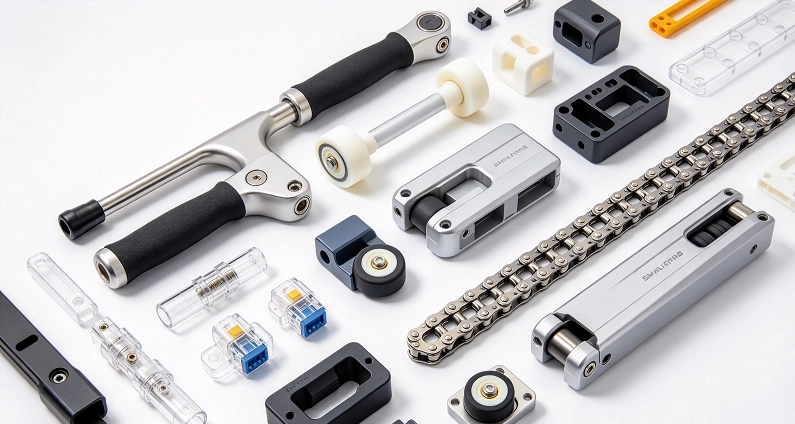
In manufacturing, 5-axis machining represents the pinnacle of precision and versatility, revolutionizing the way complex parts are manufactured across many industries. It overcomes the limitations of traditional machining, enabling tools to move simultaneously along five axes, thus producing complex geometries, superior surface finishes, and unparalleled efficiency.
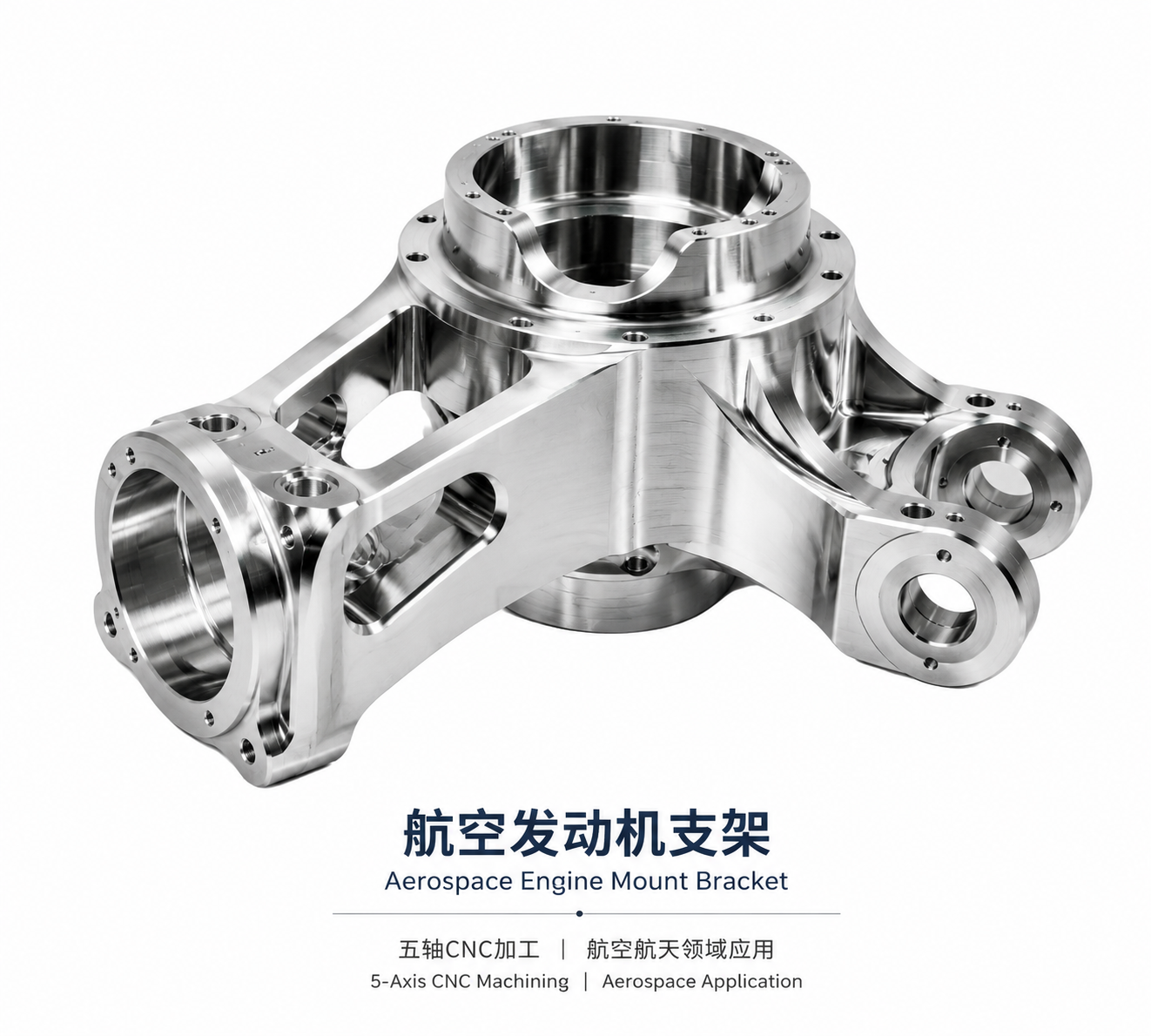
What is 5-axis machining?
According to ISO standards, the motion of CNC machine tools is described using a right-handed Cartesian coordinate system. The coordinate axis parallel to the spindle is defined as the z-axis, and the rotational coordinates about the x-axis, y-axis, and z-axis are defined as the A-axis, B-axis, and C-axis, respectively. Motion along each coordinate axis can be achieved by the worktable or the tool, but the direction of motion depends on the direction of the tool’s motion relative to the workpiece. Typically, five-axis linkage refers to the linear interpolation motion of any five coordinates (x, y, z, A, B, and C).
In other words, five-axis machining refers to machining on three motion axes (x, y, and z) and any two rotational axes. Compared to common three-axis (x, y, and z degrees of freedom) machining, five-axis machining is used to machine parts with complex geometries, requiring the machining tool to be able to position and move in all five degrees of freedom.
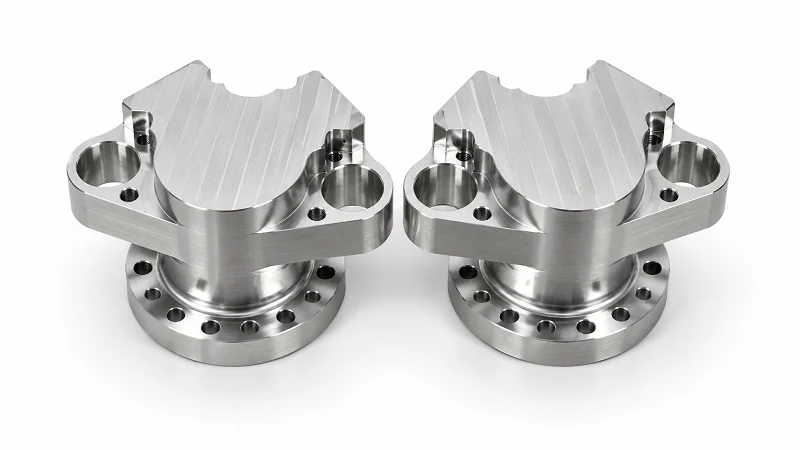
Machine tools used for five-axis machining are generally referred to as five-axis machine tools or five-axis machining centers. 5-axis machining is widely used in the aerospace industry for machining fuselage parts, turbine parts, impellers, and other components with free-form surfaces. Five-axis machine tools can machine different surfaces of the workpiece without changing its position on the machine tool, which can greatly improve the machining efficiency of prismatic parts.
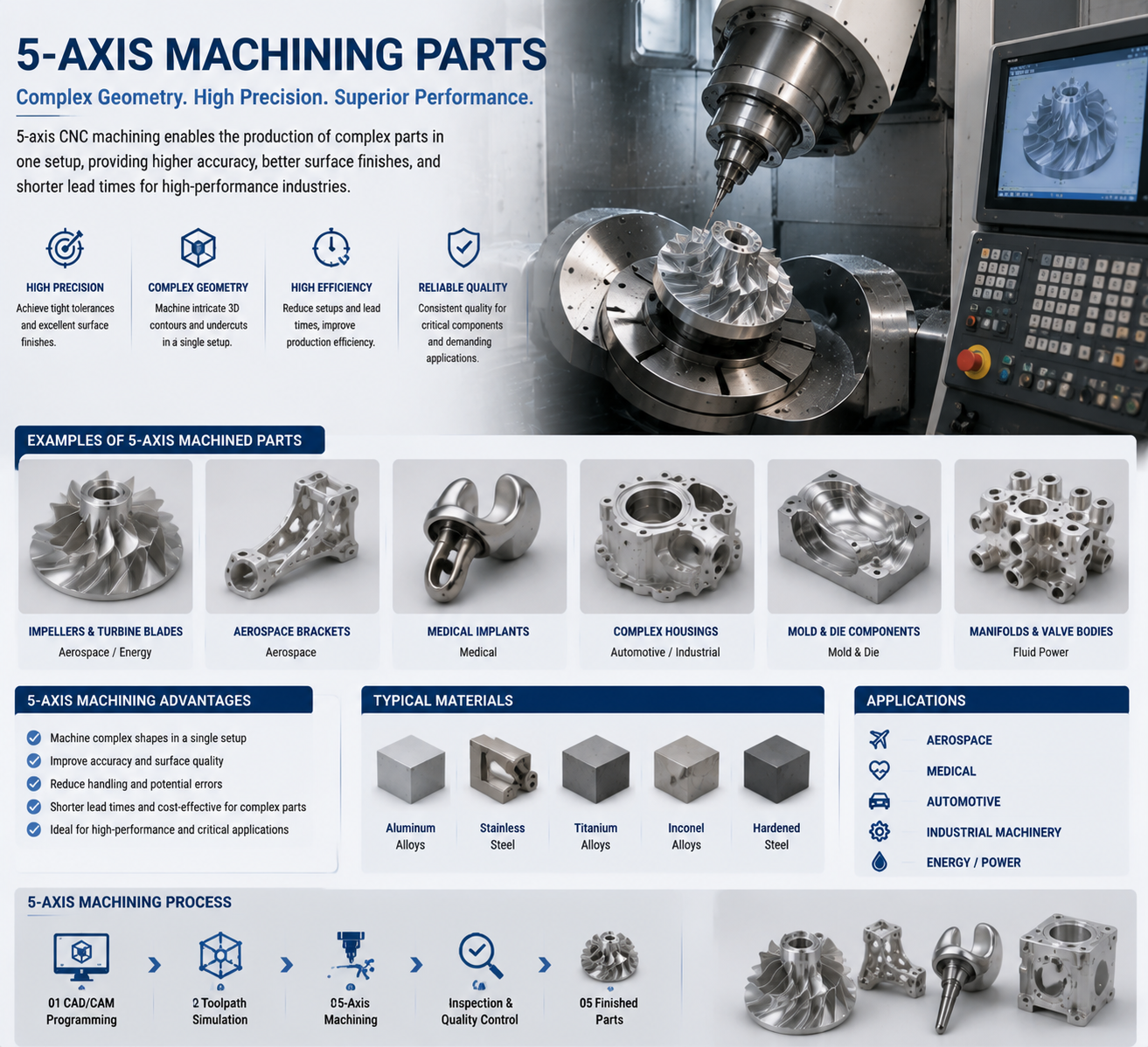
Advantages of 5-axis machining
Exceptional precision and accuracy :
The core of five-axis machining lies in its exceptional precision and accuracy, enabling the machining of complex details, contours, and tolerances that were previously unattainable. Industries such as aerospace, automotive, and medical devices benefit from the precise geometry and high-quality surface finishes achieved through five-axis machining, thereby ensuring the superior performance and reliability of components.
The vitality of design inspiration :
5-axis machining offers unparalleled design freedom, enabling the production of parts with complex geometries, chamfers, and curved surfaces that are difficult to replicate with traditional three- or four-axis machine tools. Designers can unleash their creativity without limits, push the boundaries of innovation, and bring cutting-edge concepts to life with unprecedented precision and detail.
-
Reduce setup time and the number of times tools need to be changed:
The multi-axis machining capabilities of five-axis machine tools reduce the need for multiple setups and tool changes, thereby simplifying the production process and minimizing downtime. Manufacturers can improve efficiency and productivity, resulting in shorter turnaround times and optimized workflows.
-
Excellent surface finish:
Five-axis machining eliminates the need for cumbersome post-processing steps such as polishing or grinding, achieving a superior surface finish. The perfect surface quality achieved through five-axis machining not only enhances the aesthetics and functionality of parts but also improves their overall quality.
-
Simplification of complex machining:
Despite its advanced capabilities, five-axis machining simplifies the production of complex parts by reducing the number of steps required to manufacture intricate geometries. Manufacturers can achieve complex shapes and features with a single setup, avoiding errors from multiple setups and ensuring consistency in part dimensions and quality.
-
Cost-effectiveness and waste reduction:
The high efficiency of 5-axis machining reduces material waste, optimizes cutting paths, and extends tool life, thereby helping to lower production costs. By minimizing material waste and maximizing resource utilization, manufacturers can improve profitability, sustainability, and competitiveness in a rapidly changing market.
-
Multitasking capability:
5-axis machining centers typically possess multitasking capabilities, enabling them to perform milling, turning, and other machining operations simultaneously in a single setup. This multitasking capability simplifies production processes, shortens delivery cycles, and improves overall operational efficiency, making it an ideal solution for manufacturing complex parts.
-
Prototyping and rapid iteration:
Five-axis machining technology accelerates prototyping and iteration cycles, enabling designers and engineers to quickly test and refine concepts before full production. This shortens development cycles, accelerates time-to-market, and enhances design validation, thereby improving cost-effectiveness and competitiveness in a fast-paced market environment.
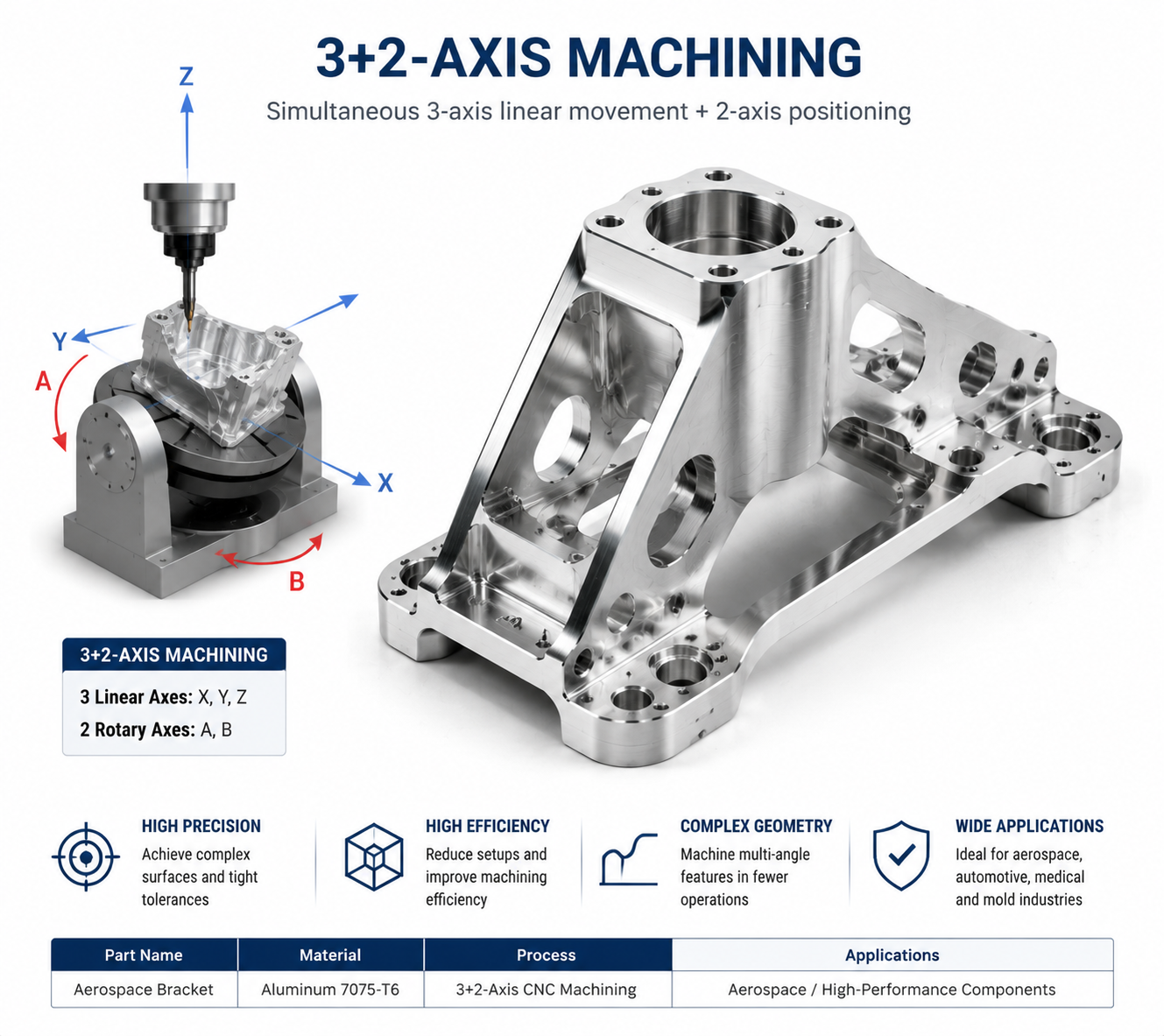
The difference between a 5-axis machining center and “3+2 axis” technology
In modern manufacturing, five-axis machining centers and “3+2 axis” technology are both important technologies for improving machining efficiency and accuracy. Although both have five-axis motion characteristics, their working principles, application scenarios, and machining capabilities differ significantly.
Basic Concept Analysis
-
5-axis machining center
A five-axis machining center, also known as a five-axis linkage machining center, is a high-tech, high-precision machining center. It has three translational axes (X, Y, and Z axes) and two rotary axes (A, B, or C axes). These five axes can work in tandem, making the machining process more flexible and enabling high-precision machining of complex curved surfaces. The core of five-axis linkage control is the Computer Numerical Control (CNC) system, which programs and controls the coordinated movement of the five axes to complete the machining of complex curved surfaces and irregular shapes.
-
“3+2 axis” technology
“3+2 axis” technology is a special machining method implemented on a five-axis machine tool. It utilizes three linear axes (X, Y, Z) for simultaneous machining and two rotary axes (A, C) to fix the tool in an inclined position. This machining method is named as such because it is essentially based on three-axis machining, while the direction of tool movement in the fixed position is determined by the two rotary axes. Simply put, after the machine tool rotates a certain angle, it still performs machining in a normal three-axis manner.
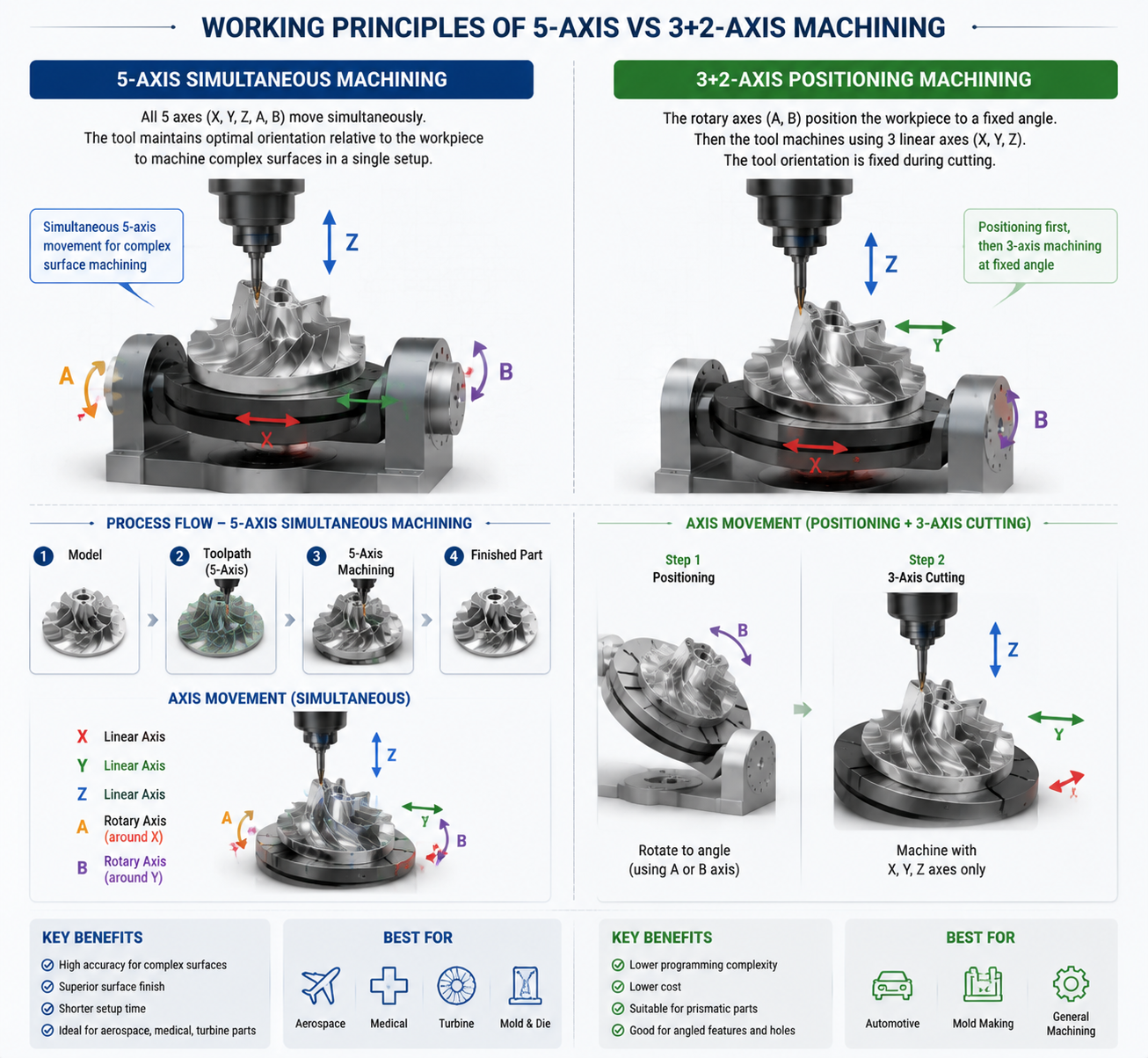
Comparison of Working Principles
-
5-axis linkage machining
The core of five-axis machining lies in the coordinated movement of the five axes. During machining, the five axes can rotate and move independently and continuously, enabling omnidirectional machining of the workpiece. This flexibility allows five-axis machining centers to handle complex geometries such as curved surfaces, chamfers, and grooves. Furthermore, five-axis machining can optimize the machining process by adjusting the tool orientation, thereby improving tool life and machining quality.
-
“3+2 axis” positioning machining
Unlike five-axis simultaneous machining, “3+2 axis” positioning machining utilizes the positioning function of two rotary axes to position the machine tool spindle and the workpiece at a fixed spatial angle before machining. Then, through the linkage of three basic linear axes, three-axis machining is performed on a specific area of the workpiece. This machining method is simple to program and can employ various three-axis machining strategies. However, because the two rotary axes are fixed during machining, “3+2 axis” positioning machining is more suitable for planar machining or parts with specific angular requirements.
Differences in Application Scenarios
Application scenarios of 5-axis linkage machining
Aerospace: Manufacturing complex components for aircraft engines, such as blades, wings, and fuselages.
Automobile manufacturing: Producing automobile parts, such as engine blocks and transmission housings.
Medical device manufacturing: Processing precision medical devices and implants.
Mold manufacturing: Manufacturing high-precision plastic molds, stamping dies, etc.
Production of art and decorative items: Achieving fine carving in the production of high-end decorative items such as sculptures and jewelry.
5-axis machining, with its high precision, high efficiency, and high flexibility, has become an indispensable tool in these fields.
Application scenarios of “3+2 axis” positioning machining
Complex mold machining: Due to the optimization of the toolpath, “3+2 axis” positioning machining can reduce the tool travel distance and improve machining accuracy.
Deep cavity machining: This tool can form a specific angle with the workpiece surface, allowing the spindle head to get closer to the workpiece, thereby improving machining efficiency.
Specific angle cutting: Suitable for applications requiring specific angle cutting, such as special angle holes and surface processing in the aerospace field.
Although the application scope of “3+2 axis” positioning machining is relatively limited, it has significant advantages in machining efficiency and accuracy in specific fields.
Comparison of Technical Features and Advantages
Characteristics and advantages of 5-axis linkage machining
High precision: Five-axis linkage machining can more accurately control the tool posture and reduce vibration and stress concentration during the machining process.
High efficiency: It can approach the workpiece from multiple angles, avoiding interference problems and speeding up the processing.
High flexibility: It can handle complex geometries and is suitable for machining complex parts in various industries.
Reduced scrap rate: Higher machining accuracy means fewer machining errors and a lower scrap rate.
Reduced labor costs: High levels of automation reduce reliance on skilled operators.
Characteristics and advantages of “3+2 axis” positioning machining
Programming is simple: Three-axis machining strategies can be used, making programming relatively simple.
Toolpath optimization: Reduce tool travel distance and number of program code lines to shorten machining time.
Improve machining efficiency: Provide higher machining efficiency in specific application scenarios, such as planar machining or deep cavity machining.
Reduce costs: Reduce the number of fixtures and special tools used to lower processing costs.
Conclusion
In summary, although both five-axis machining centers and “3+2 axis” technology involve the movement of five axes, they differ significantly in their working principles, application scenarios, and technical characteristics. Five-axis simultaneous machining, with its high precision, high efficiency, and high flexibility, has become an indispensable tool in modern manufacturing, suitable for machining complex parts across various industries. “3+2 axis” positioning machining, on the other hand, is more suitable for planar machining or deep cavity machining in specific application scenarios. The specific technology chosen depends on the specific machining requirements and workpiece characteristics.
5-Axis Machining FAQs
1. What is 5-axis machining?
5-axis machining is an advanced CNC manufacturing process that allows cutting tools to move simultaneously along five different axes (X, Y, Z, A, and B). This enables manufacturers to machine complex geometries, curved surfaces, and precision components in a single setup.
2. How does 5-axis CNC machining work?
A 5-axis CNC machine combines:
- Three linear axes:
- X-axis: Left and right movement
- Y-axis: Front and back movement
- Z-axis: Up and down movement
- Two rotary axes:
- A-axis: Rotation around the X-axis
- B-axis: Rotation around the Y-axis
The additional rotary movements allow the cutting tool to approach the workpiece from multiple angles, reducing repositioning and improving accuracy.
3. What are the main advantages of 5-axis machining?
The key benefits include:
- Machining complex shapes in one setup
- Higher dimensional accuracy
- Better surface finish quality
- Reduced setup time
- Lower risk of positioning errors
- Improved production efficiency
- Ability to manufacture lightweight structures
4. What types of parts require 5-axis machining?
5-axis machining is ideal for components with complex geometries, including:
- Aerospace structural parts
- Turbine blades
- Impellers
- Medical implants
- Mold and die components
- Automotive performance parts
- Robotics components
5. What industries use 5-axis CNC machining?
Common industries include:
Aerospace
- Aircraft brackets
- Engine components
- Turbine blades
- Structural parts
Medical
- Orthopedic implants
- Surgical instruments
- Prosthetic components
Automotive
- Engine parts
- Transmission components
- Prototype parts
Energy
- Turbine components
- High-performance equipment
Mold Manufacturing
- Complex molds
- Precision cavities
- Injection molding tools
6. What materials can be machined using 5-axis CNC?
5-axis machines can process a wide range of materials, including:
Metals:
- Aluminum alloys
- Stainless steel
- Titanium alloys
- Magnesium alloys
- Brass
- Copper
- Inconel
Plastics:
- PEEK
- POM
- Nylon
- ABS
- PC
The material selection depends on application requirements such as strength, temperature resistance, and corrosion resistance.
7. What is the difference between 5-axis machining and 3-axis machining?
| Feature | 3-Axis Machining | 5-Axis Machining |
|---|---|---|
| Movement | X, Y, Z axes | X, Y, Z + A, B rotation |
| Setup | Multiple setups often required | Usually one setup |
| Complexity | Suitable for simple parts | Ideal for complex geometries |
| Accuracy | Good | Higher precision |
| Surface finish | Standard | Improved |
| Cost | Lower | Higher |
8. What is the difference between 5-axis machining and 3+2-axis machining?
5-axis simultaneous machining:
- All five axes move at the same time.
- Suitable for complex freeform surfaces.
- Used for turbine blades, aerospace parts, and medical implants.
3+2-axis machining:
- The rotary axes position the workpiece first.
- Then traditional 3-axis machining is performed.
- Suitable for angled holes and multi-sided features.
9. What are common 5-axis machining configurations?
The two main machine structures are:
Table-Table Configuration
- Rotary axes are located on the machine table.
- Suitable for smaller workpieces.
Head-Table Configuration
- One rotary axis is on the spindle head and one on the table.
- Suitable for larger and heavier components.
Head-Head Configuration
- Both rotary axes are on the spindle head.
- Suitable for large aerospace parts.
10. What tolerances can 5-axis machining achieve?
High-precision 5-axis CNC machining can typically achieve:
±0.005 mm to ±0.02 mm
Actual accuracy depends on:
- Machine capability
- Material stability
- Part geometry
- Tool selection
- Inspection equipment
11. Why is 5-axis machining more expensive?
5-axis machining costs more because of:
- Higher equipment investment
- Advanced CAM programming requirements
- Skilled operators
- More complex tooling
- Higher maintenance requirements
However, it can reduce overall costs by minimizing setups and improving production efficiency.
12. What software is used for 5-axis CNC programming?
Common CAM software includes:
- Mastercam
- Siemens NX CAM
- CATIA CAM
- Autodesk Fusion 360
- PowerMill
- hyperMILL
These systems generate optimized tool paths for complex multi-axis movements.
13. What cutting tools are used for 5-axis machining?
Common tools include:
- Carbide end mills
- Ball nose cutters
- High-performance coated tools
- Long-reach tools for deep cavities
Tool selection depends on:
- Material type
- Surface requirements
- Cutting conditions
- Part complexity
14. How is quality controlled for 5-axis machined parts?
Quality inspection methods include:
- Coordinate Measuring Machine (CMM)
- 3D scanning
- Optical measurement
- Surface roughness testing
- First Article Inspection (FAI)
These ensure dimensional accuracy and compliance with engineering specifications.
15. Can 5-axis machining be used for prototypes?
Yes. 5-axis machining is widely used for rapid prototyping because it provides:
- Fast production of complex designs
- Functional prototype testing
- High accuracy close to final production quality
- Reduced development time
16. What are the limitations of 5-axis machining?
Main limitations include:
- Higher manufacturing cost
- More complex programming
- Requires experienced technicians
- Higher equipment investment
- Not always necessary for simple parts
17. Why choose 5-axis CNC machining?
5-axis CNC machining is the preferred solution for high-performance components requiring complex geometry, tight tolerances, excellent surface finishes, and reduced manufacturing time. It is especially valuable for aerospace, medical, automotive, and precision engineering applications where traditional machining methods cannot meet performance requirements.