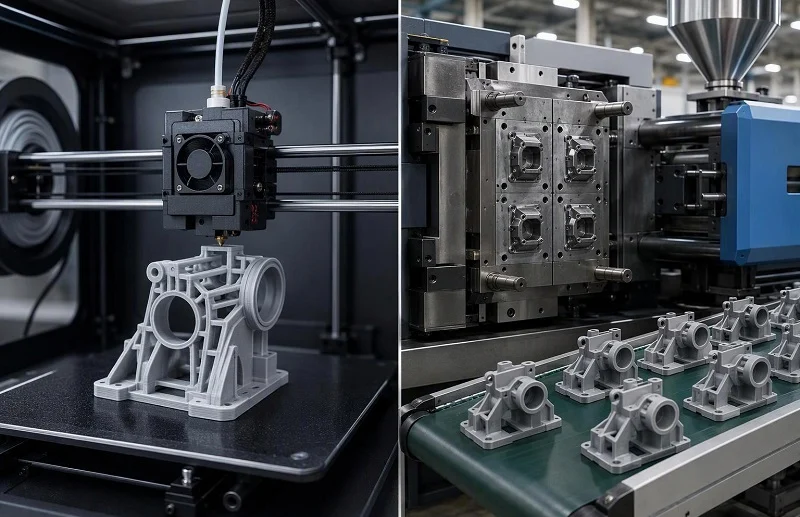
Plastik bir parça nadiren CAD dosyasından tek bir adımda kargo kutusuna geçer. İlk tasarım incelemesi ile on bininci ünite arasında bir yerde, parçanın gerçekte nasıl üretileceğine karar verilmesi gerekir ve çoğu plastik bileşen için kısa liste 3D baskı ile enjeksiyon kalıplama arasında kalır. Bu seçimi gelişmiş bir yöntem ile geleneksel bir yöntem arasındaki bir yarışma olarak çerçevelemek yanıltıcıdır. İki işlem farklı maliyet yapılarına sahiptir, farklı geometri kurallarına uyar ve farklı kalite beklentilerine göre değerlendirilir. Biri makine zamanı için ücret alır; diğeri kalıp için ücret alır.
This comparison works through the criteria that decide the route: how each process physically forms a part, what that means for lead time, where the unit-cost curves cross, which geometries each permits, what materials and tolerances you can expect, and which applications each fits. It closes with a decision rule you can apply to your own part — and with the note that the crossover point is specific to your geometry, material and volume, not a fixed number borrowed from a general guide. NOBLE supports both paths, from prototype iterations to production tooling, so the comparison is written for teams that may need either.
Hızlı Karşılaştırma: 3D Baskı Vs Enjeksiyon Bir Bakışta
Aşağıdaki tablo, yayınlanmış proses verilerinin desteklediği düzeydeki karşılaştırmayı özetlemektedir. Rakamları belirli bir parça için fiyat teklifi olarak değil, kapasite aralıkları ve referans bantları olarak değerlendirin.
| Kriter | 3D baskı | Enjeksiyon kalıplama |
| Gerekli aletler | None; a digital file is the input | Evet — satılabilir bir parça oluşmadan önce alüminyum, yumuşak çelik veya sertleştirilmiş çelik kalıp kesilir. |
| İlk parçaların tipik teslim süresi | İşlem sonrası aşamalar dahil saatler ila günler sürebilir. | Tool fabrication of roughly 2–4 weeks (aluminium prototype mold), 4–8 weeks (soft steel or bridge mold) or 8–20 weeks (full production steel mold), then trial shots and qualification |
| Unit cost behaviour | Comparatively flat; each part consumes similar machine time | Falls steeply as one-time tooling amortises over volume |
| Undercuts, internal channels, lattices | Taslak veya yarık hatları olmadan inşa edilmiştir; iç kanallar ve kafes yapılar rutin olarak kullanılmaktadır. | Alt kesimlerde yan hareketlere, kaldırıcılara veya feda edilebilir çekirdeklere ihtiyaç duyulur; bazı iç geometriler sert bir kalıpta fiilen imkansızdır. |
| Taslak ve duvar düzgünlüğü | No draft requirement; orientation-dependent properties and support marks instead | Draft angles, uniform wall transitions and shrinkage compensation are design-time obligations |
| Malzeme aralığı | Proses özelinde: fotopolimerler, naylon tozları, mühendislik filamentleri | Full range of production thermoplastics, including filled and engineering grades |
| Tipik tolerans | Published as-printed ranges vary by process — FDM coarsest at roughly ±0.5% with a floor; SLA and PolyJet finest; SLS and MJF around ±0.3% with a floor | Tekrarlanabilir, aletten alınmıştır; sıkı veya kozmetik açıdan kritik yüzeyler yine de ikincil işlemlere ihtiyaç duyabilir. |
| Yüzey | FDM'de katman adımlama; SLS ve MJF'de grenli mat görünüm; SLA ve PolyJet'te neredeyse kalıplanmış pürüzsüzlük. | Replicates the tool surface consistently across the run |
| Best-fit volumes | Prototypes, low volumes, bridge production, customised parts | Üretim hacmi yüksek, istikrarlı tasarımlar; kalıp maliyetlerinin rahatlıkla amorti edildiği durumlar. |
| En uygun uygulamalar | Tekrarlama, karmaşık veya konsolide geometri, hastaya özel cihazlar, kalıplar ve fikstürler | Production parts needing engineering thermoplastics and consistent cosmetic finish |
One caution governs the whole table: the volume at which molding becomes the cheaper route depends on part size, material, tool complexity, cavitation and cosmetic requirements. Published crossover figures differ widely for exactly that reason, and the sections below explain why rather than offering a single universal number.
How 3D Printing and Injection Molding Actually Work
Every cost, speed and geometry difference later in this article follows from how the two processes physically form a part. Establishing that mechanics first keeps the rest of the comparison grounded.
3D Baskıda Neler Oluyor?
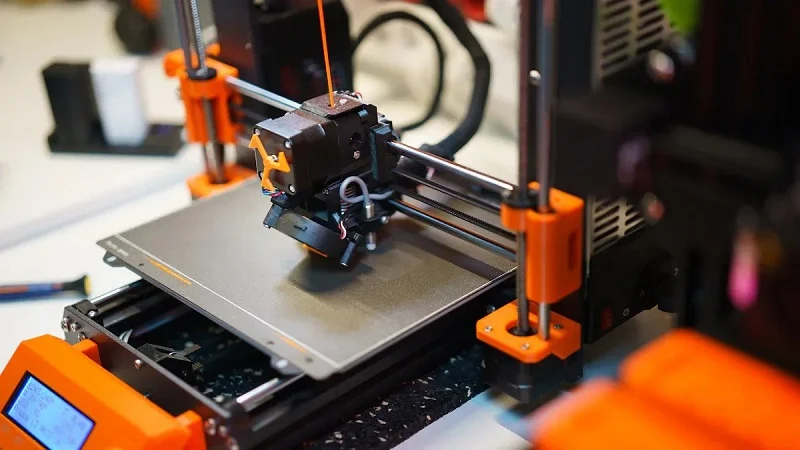
A 3D printer builds an object by depositing or fusing successive layers of raw material, each new layer attached to the one below until the part is complete. The input is a digital 3D file — a CAD model or, in medical work, imaging data — and no mold, die or other tooling is required. That absence of tooling is what allows a design change to be implemented by editing a file rather than cutting hardware.
Üretim yönünün önemi, yeni başlayanların tahmin ettiğinden daha fazladır. Yön, destek yapılarının nerede gerekli olduğunu, açılı yüzeylerde basamaklanmanın nasıl göründüğünü ve parçanın özelliklerinin eksenler boyunca nasıl dağıldığını belirler. Desteklerin kaldırılması, kürleme ve yüzey işleme, eklemeli üretim süreçlerinde zorunlu son işlem adımlarıdır ve her üretime zaman ve iş gücü ekler. Çözünürlük ve hız da doğrudan birbirini etkiler: daha ince katmanlar yüzey kalitesini iyileştirir ancak üretim süresini uzatır; bu kısıtlama hem polimer hem de metal sistemlerde geçerlidir.
Baskı işleminin hacim verimliliğini artırmasının temel yolu, baskı alanının daha iyi paketlenmesidir. Toz yataklı sistemler, destek malzemesine ihtiyaç duymadan tek bir baskıda birçok parçayı bir araya getirebilir ve baskı alanını daha tam olarak paketlemek, kilogram başına enerji tüketimini düşürür. Bu fayda gerçektir ancak sınırlıdır; baskının ekonomik yönünü iyileştirir, ancak parça başına makine-zaman ilişkisini temelden etkilemez.
What Happens In Injection Molding
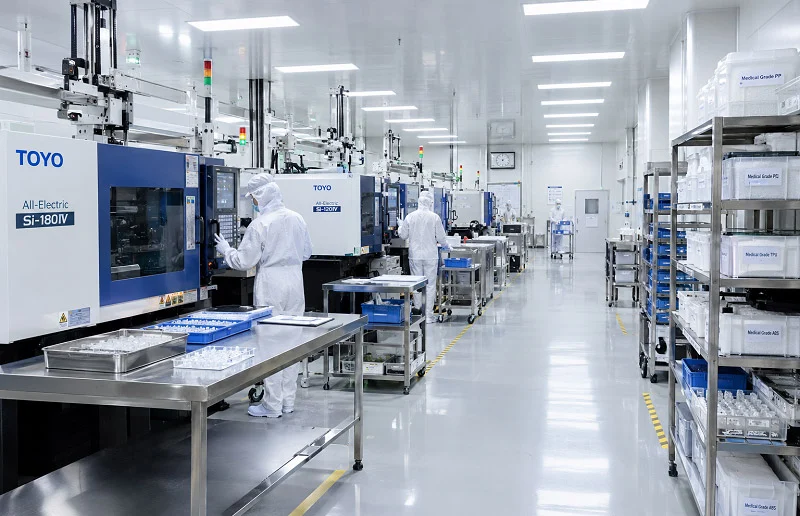
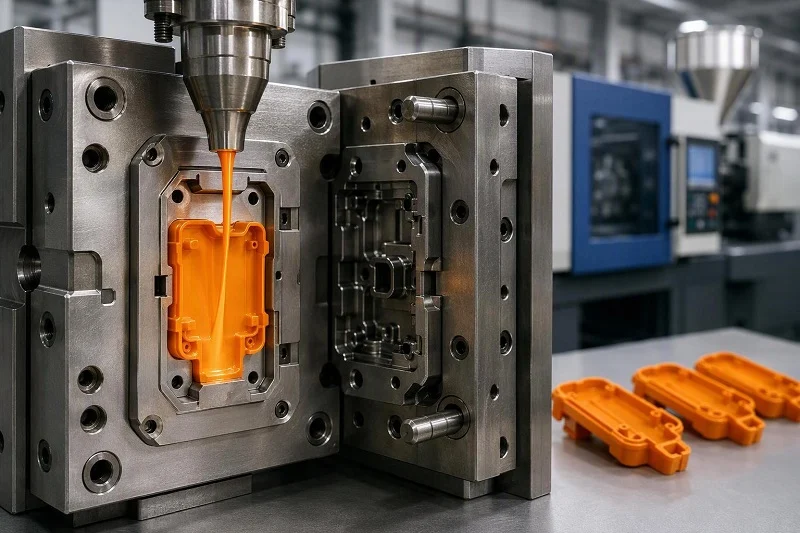
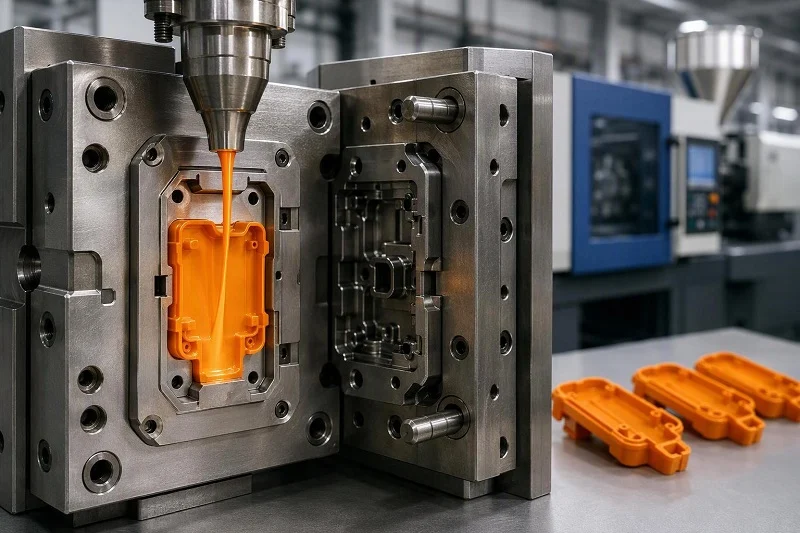
Enjeksiyon kalıplama, kapalı bir çelik veya alüminyum kalıp boşluğunu yüksek basınç altında erimiş polimerle doldurur. Boşluk hacimsel olarak doldurulduktan sonra, soğuma başladığında büzülmeyi telafi etmek için paketleme basıncı korunur ve parça daha sonra kalıp duvarlarına karşı katılaşarak dışarı atılır. Soğuma genellikle döngünün en uzun bölümünü oluşturur.
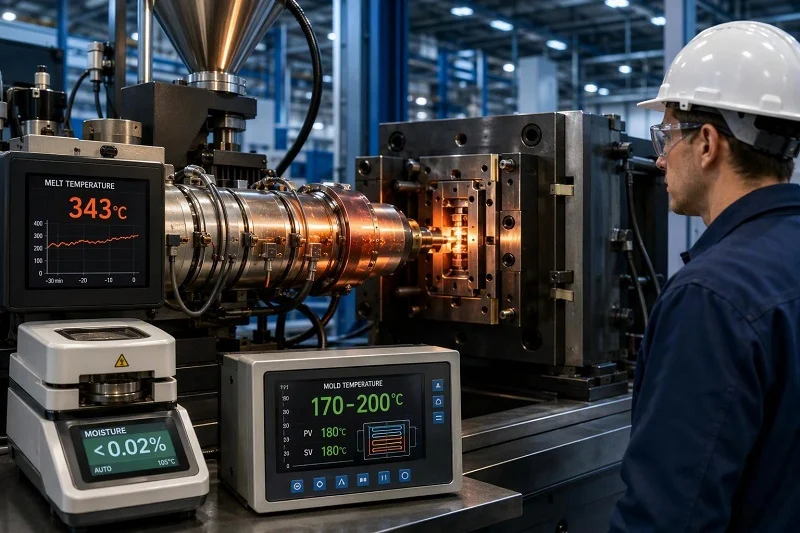
Critically, the tool must be designed and cut before the first saleable part exists. That sequencing is the source of molding’s lead time and its cost structure. It also means defects can originate in two distinct places: some are built into the geometry before the mold is ever cut — wall thickness variation, gate placement, cooling imbalance — while others emerge from temperature, pressure or timing instability on the machine, varying from shift to shift or lot to lot. Stable programs treat molding as a thermal and pressure-controlled system rather than a simple forming step; when control discipline holds, the process delivers exceptional repeatability across long runs.
Mekanik Neden Ekonomiyi Yönlendiriyor?
Printing has no tooling charge but pays machine time for every part, because each part occupies the build for a comparable duration regardless of order size. Molding inverts this: a large one-time tooling cost buys a short cycle that produces parts cheaply once the tool exists. Nothing in the volume discussion that follows is more than a consequence of that inversion — and it is why the expensive decision in a molding project is the tooling decision, not the molding step.
Süreç Akışı ve Teslim Süresinin Karşılaştırılması
The sequence a project travels through differs as much as the physics. What each step costs in calendar time determines when you hold a part in your hand.
3D Baskı İş Akışı: Dosyadan Parçaya
The workflow runs from model preparation and orientation through build scheduling, printing and post-processing. Because there is no tool to fabricate, turnaround is measured in hours to days rather than weeks. Design changes between iterations cost only a new file and a new build — no hardware is scrapped. Post-processing is the step that most often surprises schedules: support removal, washing, UV curing and finishing are mandatory and consume labour, and in metal systems sintering, cooling and depowdering can add many hours beyond the print itself.
Enjeksiyon Kalıplama İş Akışı: Kalıp Before Parts
Molding runs through mold design, tool fabrication, trial shots and qualification before production begins. Published reference bands put an aluminium prototype mold at roughly 2–4 weeks to fabricate, a soft steel or bridge mold at 4–8 weeks, and a full production steel mold at 8–20 weeks — all before any parts can be produced. These bands vary with tool complexity and supplier capacity, and they sit outside any quoted production window rather than adding neatly to it.
Kalıp üretimine başlandıktan sonra yapılan mühendislik değişiklikleri, üretim takvimlerinin aksamasına neden olur. Bir değişiklik mümkün olsa da maliyetlidir ve karmaşık revizyonlar zaman çizelgesini haftalarca geriye atabilir. Bu nedenle, kalıp üretimine başlamadan önce yapılan bir tasarım incelemesi kendini amorti eder: Çizim aşamasında bir sorunu yakalamak, kalıp üretildikten sonra yakalamaktan çok daha ucuzdur.
hacim And Unit Cost: Where The Economics Cross
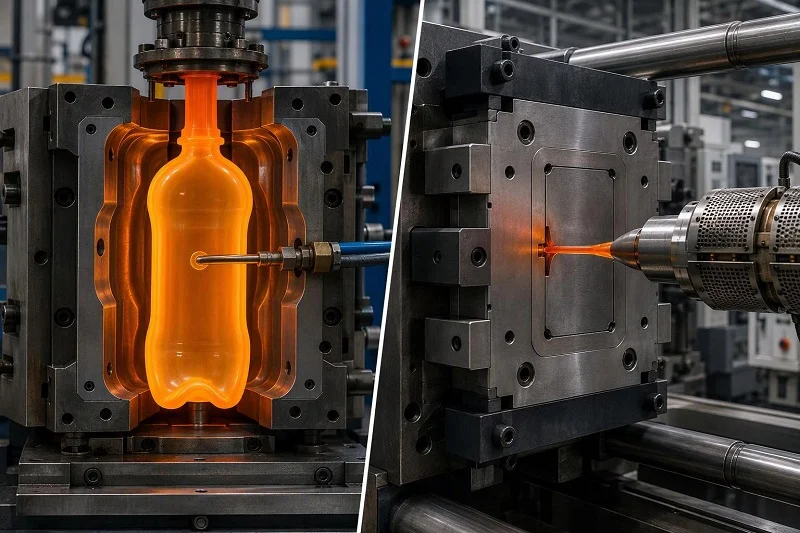
Maliyet karşılaştırması tek bir başabaş noktası rakamı değil, farklı şekillere sahip iki eğri üzerinden yapılır. Baskının parça başına maliyeti nispeten sabit kalırken, kalıplamanın maliyeti kalıp amorti edildikçe hızla düşer. Bu iki eğrinin kesiştiği nokta, parçanın büyüklüğüne göre değişir.
Why Printed Unit Cost Stays Relatively Flat
Machine time, material and post-processing labour dominate printed cost, and each part consumes a similar share of all three regardless of order size. Published ranges put printed parts at roughly $5 to $200+ each depending on material, size and process. Packing a build improves efficiency, but mainly for powder-bed processes such as SLS and MJF; other processes gain far less from nesting. The practical consequence is that printing is almost always the cheaper total-cost route for very small quantities — commonly cited as roughly 1–100 parts — because there is no tooling to amortise.
Kalıplanmış Ürün Maliyeti Hacim Artışıyla Neden Düşüyor?
Tooling, not the per-part molding step, is the largest cost driver in a molding project. Amortising an aluminium mold costing roughly €3,000–€8,000 over a 100-part run works out to €30–€80 of tooling cost per part; amortising a full production steel mold at €15,000–€80,000+ over the same run works out to €150–€800 per part. That gap closes fast as volume rises, which is why matching tooling tier to real quantity matters more than defaulting to the longest-lasting option. Multi-cavity tools and short cycle times then compound the advantage, and for programs measured in tens or hundreds of thousands of units per year, molding delivers cost efficiency at scale that printing cannot match.
Finding Your Crossover
Yayınlanan geçiş noktaları, farklı parçaları tanımladıkları için büyük ölçüde farklılık gösterir. Yaygın olarak alıntılanan bir aralık, tipik geometriler ve malzemeler için başabaş noktasını 500 ile 2,000 adet arasında belirler. Parça başına enerji ölçütünü kullanan bir seri özelleştirme çalışması, kalıp plakası malzemesine bağlı olarak 50 ila 300 temsili parça arasında bir geçiş noktası buldu ve bu rakamın o parçaya özgü olduğunu ve geometriye göre değişmesinin beklendiğini açıkça belirtti. Bir reçine yazıcı üreticisinin 1,000 parçaya ulaşma yarışında, belirli bir kilit bileşeni için başabaş noktasının 13,050 parçada olduğu bildirildi. Bunlar çelişkili değildir; farklı parçalar, farklı aletler ve farklı ölçümlerdir.
Pratik yöntem, toplam proje maliyetini (kalıp, parça, son işlem ve olası mühendislik değişiklikleri) yalnızca birim fiyatına değil, gerçekçi üretim hacminize göre karşılaştırmaktır. Yayınlanmış herhangi bir başa baş noktasını, geometrinize, malzemenize ve kavitasyonunuza karşı test edilecek bir başlangıç hipotezi olarak değerlendirin.
Tasarım Özgürlüğü ve Parça Geometrisi
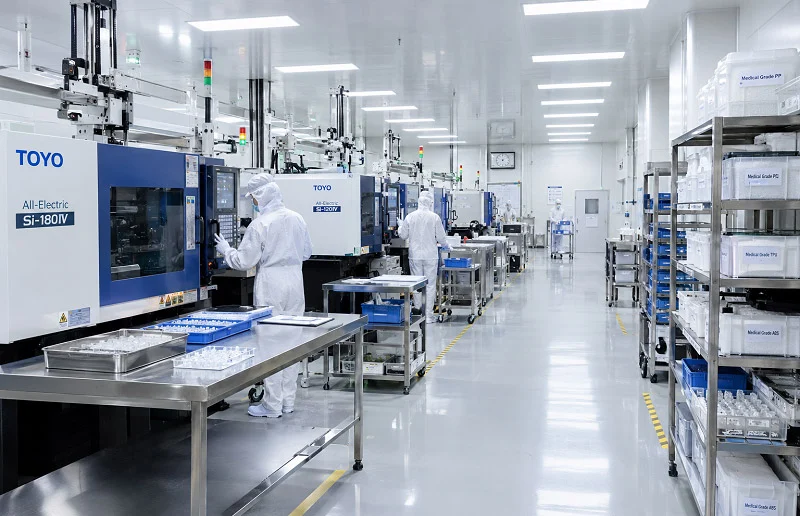
Geometri, iki sürecin en keskin şekilde ayrıldığı ve erken aşamada alınan tasarım kararlarının geri alınmasının maliyetli hale geldiği noktadır.
Alt kesimler, iç kanallar ve kafesler
Printing builds undercuts, internal channels, lattice structures and enclosed geometries without draft or split lines. Molding handles undercuts through side actions, lifters or sacrificial cores, each of which adds tool cost and maintenance, and some internal geometries are effectively impossible in a rigid mold. Where a part’s function depends on conformal cooling channels or internal lattice, printing is not merely convenient — it is the only route.
Draft, Wall Uniformity And Shrinkage
Molding imposes design-time obligations. Draft angles — typically 1° to 3° — are needed to release the part; insufficient draft causes sticking, drag marks and surface scuffing during ejection, and excessive ejection force can deform features or leave pin marks. Wall thickness must be uniform to avoid sink marks and warping, and shrinkage behaviour must be compensated in the tool. These are not defects of molding but terms of using it, and they must be settled before the mold is cut.
Printing removes draft entirely but substitutes its own constraints: properties vary with build orientation, support marks affect surfaces, and thin or unsupported features may not resolve. The constraint moves from the tool to the build setup.
Designing For Additive Versus Designing For Molding
Printing an existing molded-part design is direct part conversion — useful for legacy parts or quick fabrication needs, but it captures little of printing’s benefit. The larger gains come from re-architecting: consolidating assemblies into single parts, replacing solid sections with lattice infill, and routing channels that a mold could never form. That redesign carries its own cost in engineering time, testing and certification, and it should be scoped deliberately rather than assumed.
Malzemeler, Tolerans ve yüzey
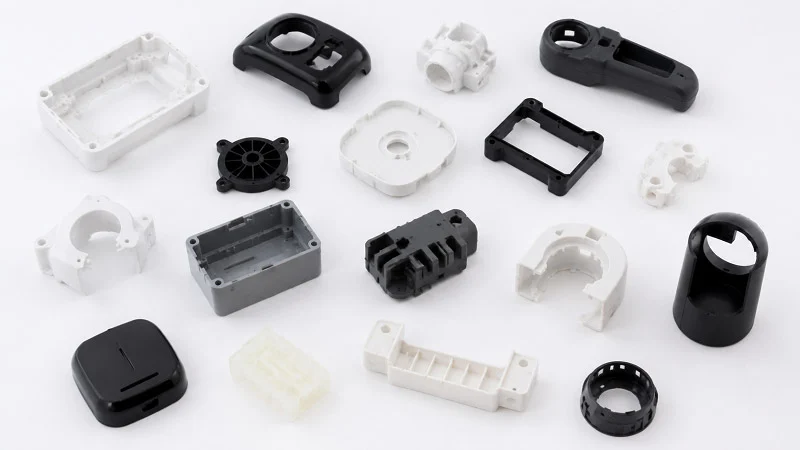
Material and quality requirements frequently override cost. A part that cannot be made in the right polymer, or held to the right tolerance, is not a candidate for the cheaper process.
Malzeme Yelpazesi ve Üretim Kalitesinde Reçineler
Molding draws on the full range of production thermoplastics, including filled and engineering grades, with properties established for the application. Material selection directly influences part strength, shrinkage, cosmetic finish, cycle time and long-term dimensional stability, and the right choice begins with functional requirements: mechanical load, temperature exposure, chemical resistance, cosmetic expectations and regulatory considerations.
Printing offers a narrower, process-specific set. Vat photopolymerisation relies on photopolymer resins that may exhibit limited mechanical strength compared with thermoplastics or metals; powder-bed systems work in nylon and similar polymers; filament systems cover engineering filaments. Where a medical-grade or production-grade material is required, confirm it for the specific material and process rather than assuming equivalence — a printed prototype in a stand-in resin does not establish that the production polymer will perform.
Tolerans ve Yüzey İşlemesi
Published as-printed tolerances vary by process. FDM is the coarsest at roughly ±0.5% with a floor (tighter on industrial systems), with visible layer stepping. SLA and PolyJet give the finest as-printed surfaces, near injection-molded quality. SLS and MJF sit around ±0.3% with a floor and produce the characteristic grainy matte nylon finish, MJF typically slightly smoother than SLS. These figures assume well-calibrated machines and as-printed parts; warping, support-removal marks, orientation and post-processing all shift the result.
Molding’s advantage is repeatability: finish is taken from the tool surface and reproduced across the run. Where tolerances tighter than roughly ±0.05 mm are needed, secondary machining is typically required in either route, and cosmetic-critical surfaces may need polishing or texturing regardless of process.
Uygulama Alanları: 3D Baskı ve Enjeksiyon Kalıplama Karşılaştırması
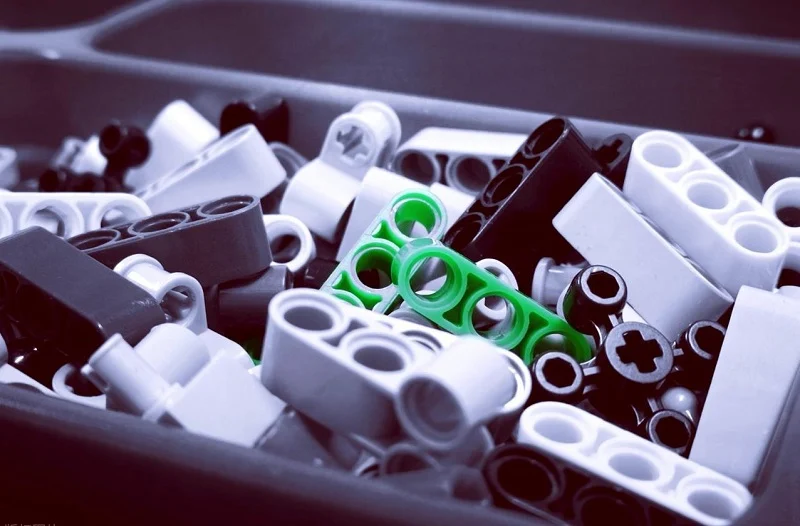
Bu kriterler, NOBLE'ın hizmet verdiği sektörlerde (otomotiv, havacılık, tıbbi cihazlar, robotik, otomasyon, endüstriyel ve iletişim ekipmanları, yeni enerji ve tüketici ürünleri) tanınabilir uygulama modellerine dönüşüyor.
3D Baskının Kazandığı Noktalar
Printing fits fast iteration during development, complex or consolidated geometry, customised or patient-matched devices, low-volume and bridge production, and jigs and fixtures. The FDA describes 3D printing as enabling devices matched to a patient’s anatomy and devices with very complex internal structures, and lists orthopedic and cranial implants, surgical guides, dental restorations and external prosthetics among printed medical devices. The same logic — geometry freedom without tooling — applies to brackets, housings and fixtures wherever complexity would make a mold expensive.
Where Injection Molding Wins
Kalıplama, yüksek hacimli üretimde istikrarlı tasarımlara, seri üretim termoplastiklerine ve tutarlı bir kozmetik görünüme ihtiyaç duyan parçalara ve kalıp maliyetinin rahatlıkla amorti edildiği programlara uygundur. Ancak dikkat edilmesi gereken nokta sıralamadır: Kalıp kesilmeden önce tasarım kesinleştirilmelidir. Yaşam döngüsü istikrarı ve öngörülen talep güçlü olduğunda, kalıplama öngörülebilir uzun vadeli ekonomik avantajlar sağlar; tasarımın hala değişebileceği durumlarda ise maliyeti erken bir aşamada sabitler.
Using Both In One Program
The common sequence is print for form, fit and function, then mold for production. A printed prototype can confirm fit, ergonomics and rough function, and it reduces the number of costly mold revisions. It does not confirm molded material properties, shrinkage behaviour, weld-line strength, tool feasibility or cycle economics — those require trial shots and qualification. Rapid tooling with printed inserts is a genuine bridge option, but with a limited cycle life; it is not a substitute for production steel.
NOBLE'ı Desteklemek İçin Seçmek Plastik Projesi
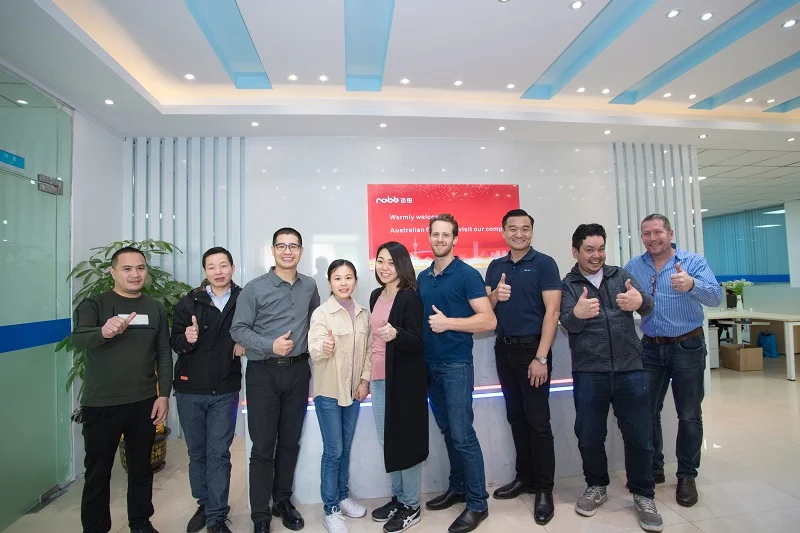
The decision this article walks through — matching process to part, volume and quality requirement — is the same decision a manufacturing partner has to help you execute. NOBLE is a Sino-British joint venture and an excellent Chinese contract manufacturer, recognised by the government as a National High-tech Enterprise. Our service capability and professional machining expertise help clients complete prototyping and volume production efficiently, carrying a project from design through assembly under one quality system rather than handing it between vendors.
We are certified to ISO 9001:2015 and ISO 13485:2016. We provide a full range of services from design to assembly — not production alone. For a plastic project, that means the process comparison above can be resolved against your actual geometry, material and quantity: printing where the design is still moving or the volume is low, molding where the design is stable and the tooling amortises, and a clear handover between the two when a program needs both. Our rapid prototyping and manufacturing capabilities cover a range of metal and plastic materials to stated specifications, supported by in-house inspection equipment and quality control.
Belirli bir parça için 3D baskı ile enjeksiyon kalıplama yöntemlerini karşılaştırıyorsanız, bir sonraki faydalı adım, o parçaya, hacmine ve kalite gereksinimine göre bir fiyat teklifi almaktır.
3D Baskı ve Enjeksiyon Kalıplama Hakkında Sıkça Sorulan Sorular
3D baskı enjeksiyonlu kalıplamanın yerini alabilir mi?
Bazı parçalar için evet, özellikle düşük hacimli, karmaşık geometrili ve özelleştirilmiş cihazlar için. Tutarlı kozmetik yüzey kalitesine sahip mühendislik termoplastiklerinde seri üretim için, kalıplama, kalıp maliyeti amorti edildikten sonra maliyet açısından en verimli yöntem olmaya devam etmektedir. İki yöntem, birbirinin yerine geçmekten ziyade tamamlayıcı aşamalar olarak ele alınmalıdır.
How do I estimate the volume at which molding becomes cheaper?
Compare total project cost — tooling plus parts plus finishing plus likely engineering changes — at your realistic volume. Published crossovers range from roughly 50–300 units in one energy-based study to 500–2,000 units in general guidance and over 13,000 in a specific component case, because part size, material, cavitation and tool cost all move the point.
Can a printed prototype be used to approve a mold?
Uygunluk, ergonomi ve genel işlevselliği doğrulayabilir ve maliyetli kalıp revizyonlarını azaltabilir. Ancak kalıplanmış malzeme özelliklerini, büzülmeyi, kaynak hattı mukavemetini, takım uygulanabilirliğini veya çevrim ekonomisini doğrulamaz. Üretim onayı öncesinde deneme üretimleri ve kalifikasyon çalışmaları gereklidir.
Can the same design be used for both processes?
Genellikle ancak değişikliklerle mümkündür. Kalıplanmış bir tasarım, baskının ihtiyaç duymadığı eğim, düzgün duvarlar ve büzülme telafisi içerir; baskılı bir tasarım, sert bir kalıbın oluşturamayacağı kafesler veya iç kanallar içerebilir. Mevcut bir kalıplanmış tasarımı basmak mümkündür, ancak baskının tasarım özgürlüğünün çok azını yakalar.
İki model arasındaki malzeme seçimi nasıl farklılık gösteriyor?
Kalıplama, dolgulu ve mühendislik kaliteleri de dahil olmak üzere, üretim amaçlı kullanılan tüm termoplastik malzemeleri kapsar. Baskı ise daha dar bir yelpazede, işleme özgü malzemeler sunar: fotopolimerler, naylon tozları, mühendislik filamentleri. Fonksiyonel gereksinimlerden yola çıkarak, belirli malzeme ve işlem için tıbbi sınıf veya üretim sınıfı uygunluğunu teyit edin.
What tolerance and finish should I expect from each?
As-printed tolerance varies by process: FDM is coarsest at roughly ±0.5% with a floor, SLA and PolyJet are finest, SLS and MJF sit around ±0.3% with a floor and a grainy matte finish. Molding is repeatable from the tool surface. Tolerances tighter than about ±0.05 mm typically require secondary machining in either route.
Verdict: matching the process to the part
Apply the rule directly. Choose 3D printing when the design is still moving, the geometry is complex or consolidated, or the volume is low enough that tooling cannot amortise. Choose injection molding when the design is stable, production-grade material and repeatable finish matter, and volume justifies the tool. Where a program needs both, print for validation and mold for production, and treat rapid tooling as a bridge rather than a destination.
Bu geçiş noktası parçaya özeldir. Pratik bir sonraki adım, gerçek parçanıza, hacminize ve kalite gereksinimlerinize göre bir fiyat teklifi almaktır; NOBLE tam olarak bunu prototipten üretime kadar sağlayabilir.