Introduction
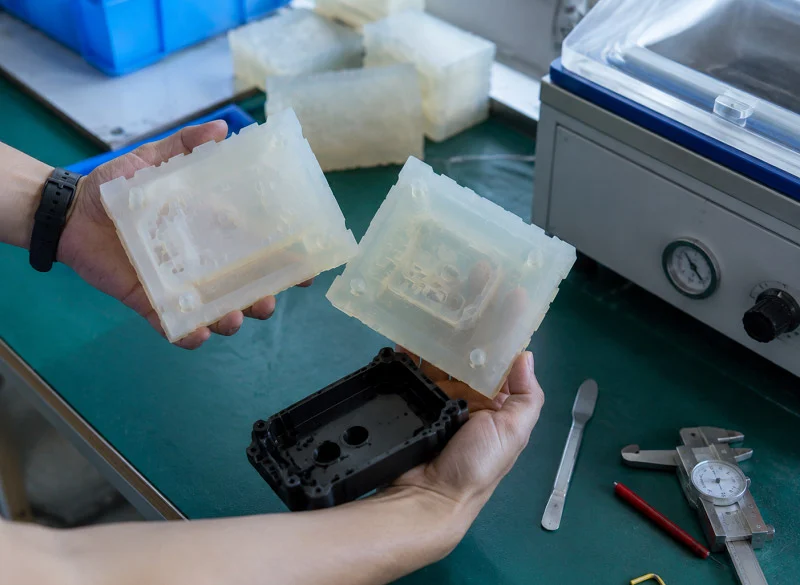
You have a design that requires prototyping several dozen parts. The cost of mass-production molds is too high; 3D printing is too slow, and the material properties are unsuitable. Silicone rapid prototyping fits that gap.
Silicone prototyping meets specific needs. It can produce multiple parts that closely match mass-produced parts in both appearance and performance. These parts can be used for testing, validation, and even small-batch production. This method bridges the gap between single-unit prototyping and large-scale production. That is its purpose, and it is why manufacturers adopt it.
Why Is Silicone Used in Rapid Prototyping?
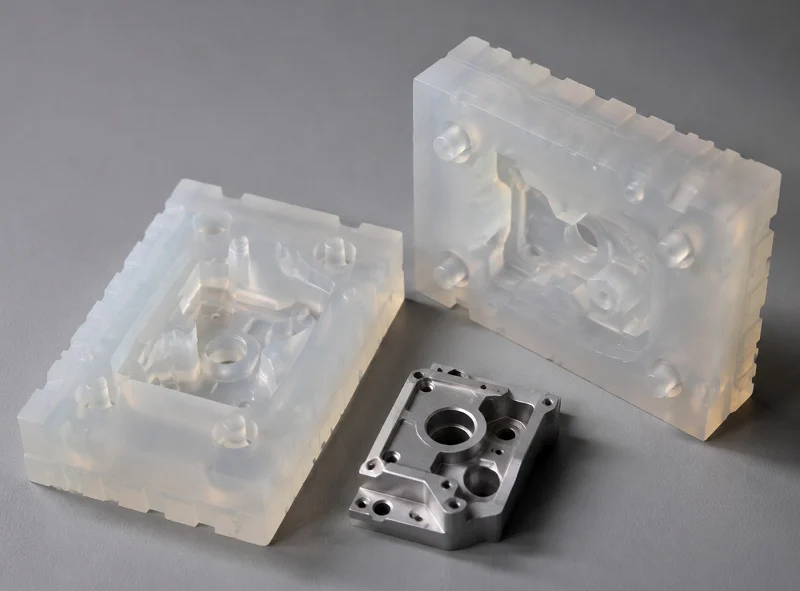
Silicone is not the only mold material. But it is the best for certain jobs. The properties fit the process.
Excellent Detail Replication
Silicone accurately captures even the finest details, faithfully reproducing surface features. Complex geometries can be reproduced without loss of detail. Whether the master mold features sharp edges, fine text, or intricate patterns, the resulting parts will match it perfectly.
Flexible Mold Properties
Silicone’s flexibility is a key advantage. Parts with chamfers can be easily demolded. Curved components are removed without damage. Complex features that would get stuck in rigid molds can be cleanly demolded in silicone molds.
The mold is pliable, allowing parts to release naturally without the need for force or risk of tearing. This makes silicone prototyping feasible for designs that are impossible to mold in rigid materials.
Low Tooling Cost and Fast Production
Metal molds can cost tens of thousands of dollars and take months to produce. In contrast, silicone molds cost only a fraction of that and can be produced in just a few days. Molds can be cut from a master mold or cast. Turnaround times are short. For prototyping and small-batch production, this cost structure offers a significant advantage.
Wide Material Compatibility
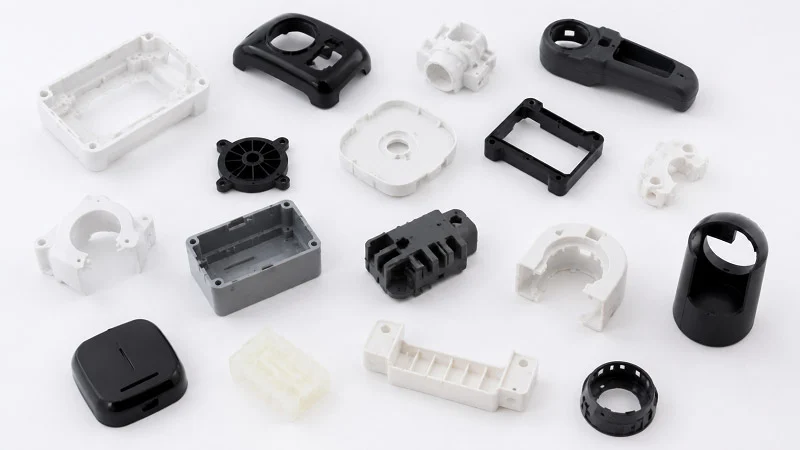
Silicone molds are compatible with a wide variety of materials. Polyurethane resins are commonly used to manufacture both rigid and flexible parts. Rubber-based materials provide elastomeric properties, while engineering plastics offer structural performance. Casting silicone elastomers into silicone molds produces soft parts suitable for skin contact. This process can be tailored to specific applications.
These four advantages make silicone the standard material for silicone rapid prototyping. It is fast, cost-effective, capable of reproducing fine details, and suitable for complex shapes. No other mold material offers all four of these advantages. That is why it dominates this field.
How Does Silicone Rapid Prototyping Work?
Create the Master Model
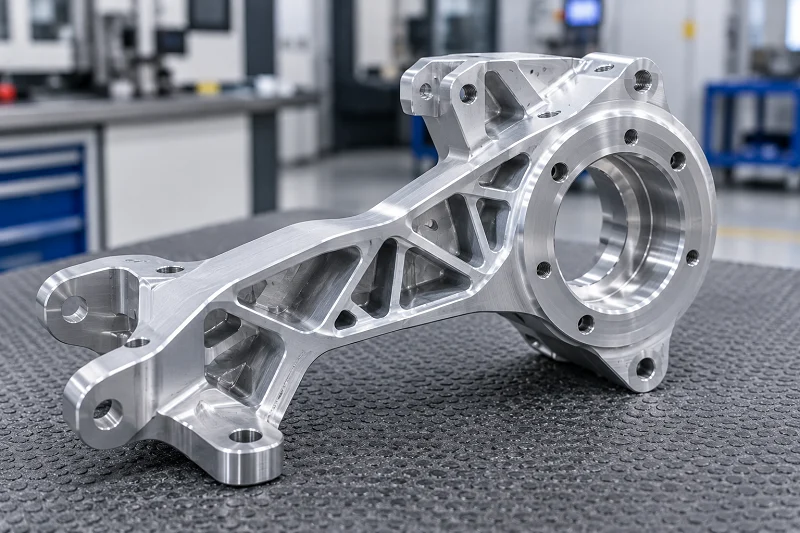
The master mold defines the part. There are three methods for creating a master mold.
| CNC Machining | Involves cutting from solid material, resulting in high precision and an exceptionally smooth surface finish. |
| SLA 3D Printing | The use of liquid resin allows for smooth surfaces and fine details. |
| SLS Printing | The use of powdered material results in higher strength than the SLA process. |
Although other rapid prototyping technologies exist, these three cover most application scenarios.
The master mold determines the upper limit of the final prototype’s precision and surface quality.
A rough master mold will produce rough castings; a polished master mold will produce polished castings. The surface finish of the master mold is directly transferred to the part. Every scratch, every layer line, and every tool mark will be replicated exactly.
Before the mold is manufactured, the master mold must be machined to the required standards.
Silicone Mold Making
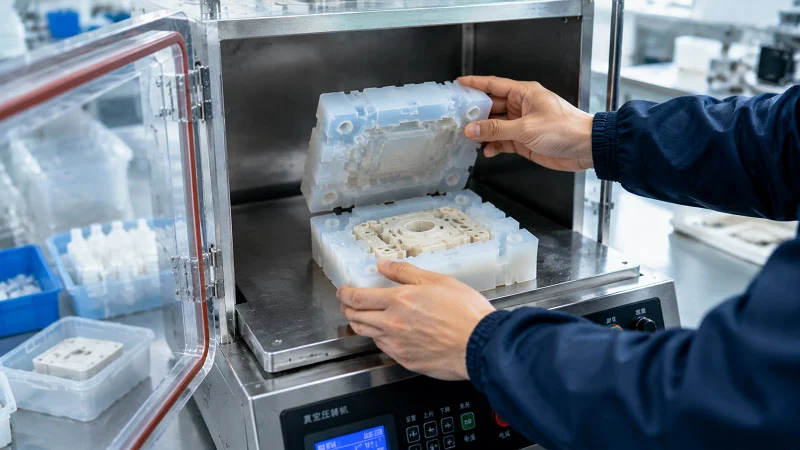
The engineer places the master mold into the mold box, then mixes the liquid silicone rubber and degasses it to remove air bubbles. Finally, the silicone is poured around the master mold. Once the silicone has cured, the master mold is removed, and the mold is complete.
The advantages are obvious: it can accurately reproduce surface details; the mold surface is smooth and can be fully transferred to the part; and it can reproduce complex shapes, including undercuts and curved surfaces.
Silicone prototyping molds typically survive 20 to 50 casts. The exact number depends on the casting material, the part’s geometry, and the care taken during demolding. This is sufficient for small-batch production. For high-volume production, multiple molds can be made using the same master mold.
Prototype Casting
Workers pour the casting material (resin or silicone) into the mold. Silicone vacuum casting removes air bubbles before and during the pour. The vacuum environment ensures that the mold is completely filled, resulting in a pore-free part. After the part has cured, it is removed from the mold and undergoes post-processing: trimming the gate and cleaning the surface. The silicone prototype parts are ready for inspection and testing.
Parts produced using this process are identical to the master mold in terms of geometry and surface finish. Their material properties are comparable to those of mass-produced parts. Although the unit cost is higher than that of injection molding, the mold cost is only a fraction of the latter. For production runs of 20 to 50 pieces, this is the most cost-effective solution. That is the value proposition of silicone rapid prototyping.
Common Silicone Rapid Prototyping Processes
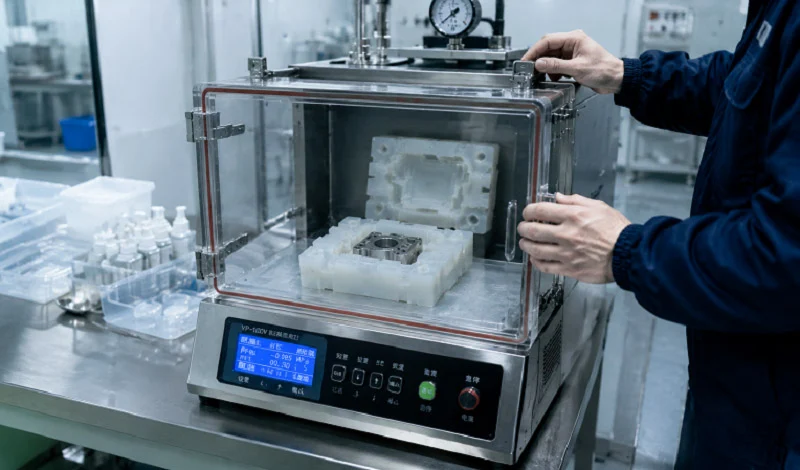
Silicone Vacuum Casting
First, create a master model, which is then used to make a silicone mold. Place the mold in a vacuum chamber, pour resin or silicone into it under vacuum to remove air bubbles, and once the part has cured, open the mold and remove the finished product.
Advantages
The mold directly imparts a high-quality surface finish to the part, ensuring its appearance matches that of the expected final product. Furthermore, because the mold is made of silicone rather than steel, the cost of small-batch production is lower.
Silicone vacuum casting produces silicone prototype parts that look and feel like production components. They feature a high surface finish with clear, sharp details. The material properties are close to those of mass-production-grade plastics and elastomers. That is why this process is the most common in silicone rapid prototyping.
Applications
Applications include housings and buttons for consumer electronics, automotive interior components and seals, as well as prototypes for medical devices requiring biocompatible materials and smooth surfaces. This process is suitable for any application where appearance, feel, and functionality need to be validated before committing to a mass-production mold.
Silicone Compression Molding
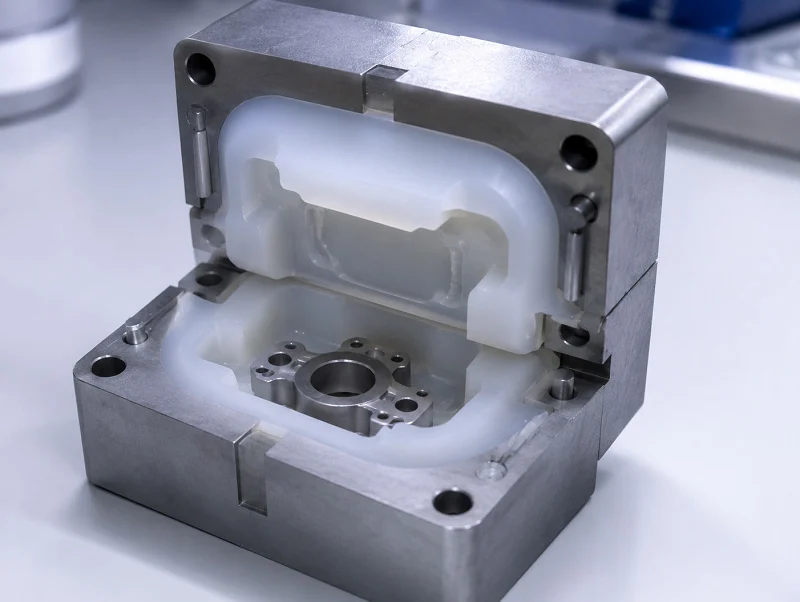
The silicone material is placed into the heated mold cavity. The mold closes. Heat and pressure cause the material to flow into the cavity, where it then cures. The mold opens, and the part is removed.
Silicone prototyping using the compression molding process is ideal for rubber parts. Seals, gaskets, and flexible components are common applications. Since this process is identical to mass production—albeit on a smaller scale—the material properties meet mass production standards.
For low volumes, compression molding is slower than vacuum casting. However, it can handle materials with poor flow properties. High-viscosity silicone, fluorosilicone, and filled compounds are easier to mold using compression molding than vacuum casting. The silicone prototype parts produced this way are functionally identical to production parts.
The trade-off lies in time. Mold fabrication takes several weeks, and setup requires several hours. For a small run of silicone rapid prototyping, vacuum casting is usually faster. However, for parts that must use the exact same materials and processes as mass production, compression molding is the best choice. The specific choice depends on the application.
Liquid Silicone Rubber (LSR) Injection Molding
Mix the two liquid components. The machine injects the mixture into a heated mold, where the silicone cures inside the cavity. Workers then remove the finished parts from the mold.
Advantages
Consistency and speed. Variations between injections are minimal, and cycle times are short. This is the production process for high-volume silicone parts. It is also used for low-volume silicone production when the part geometry justifies the tooling investment.
Silicone prototyping with LSR injection molding is rare. Mold costs are high, and the debugging process is complex. For small-batch production, vacuum casting is typically more economical; for high-volume production, LSR injection molding is the only economical option. The break-even point between the two depends on the part’s size, geometry, and material.
Silicone Overmolding
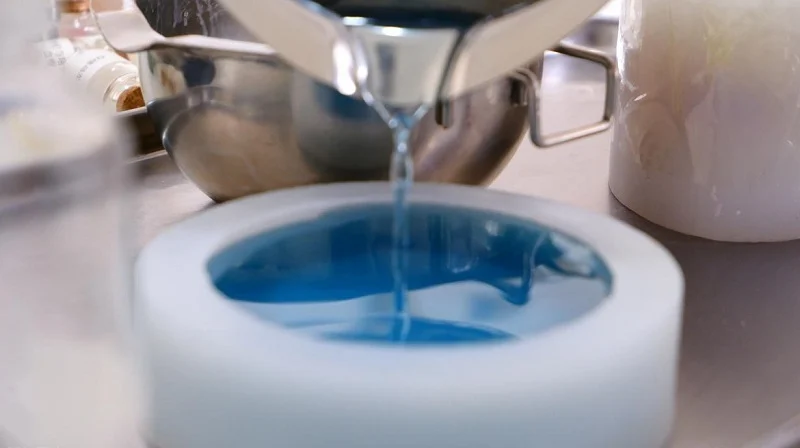
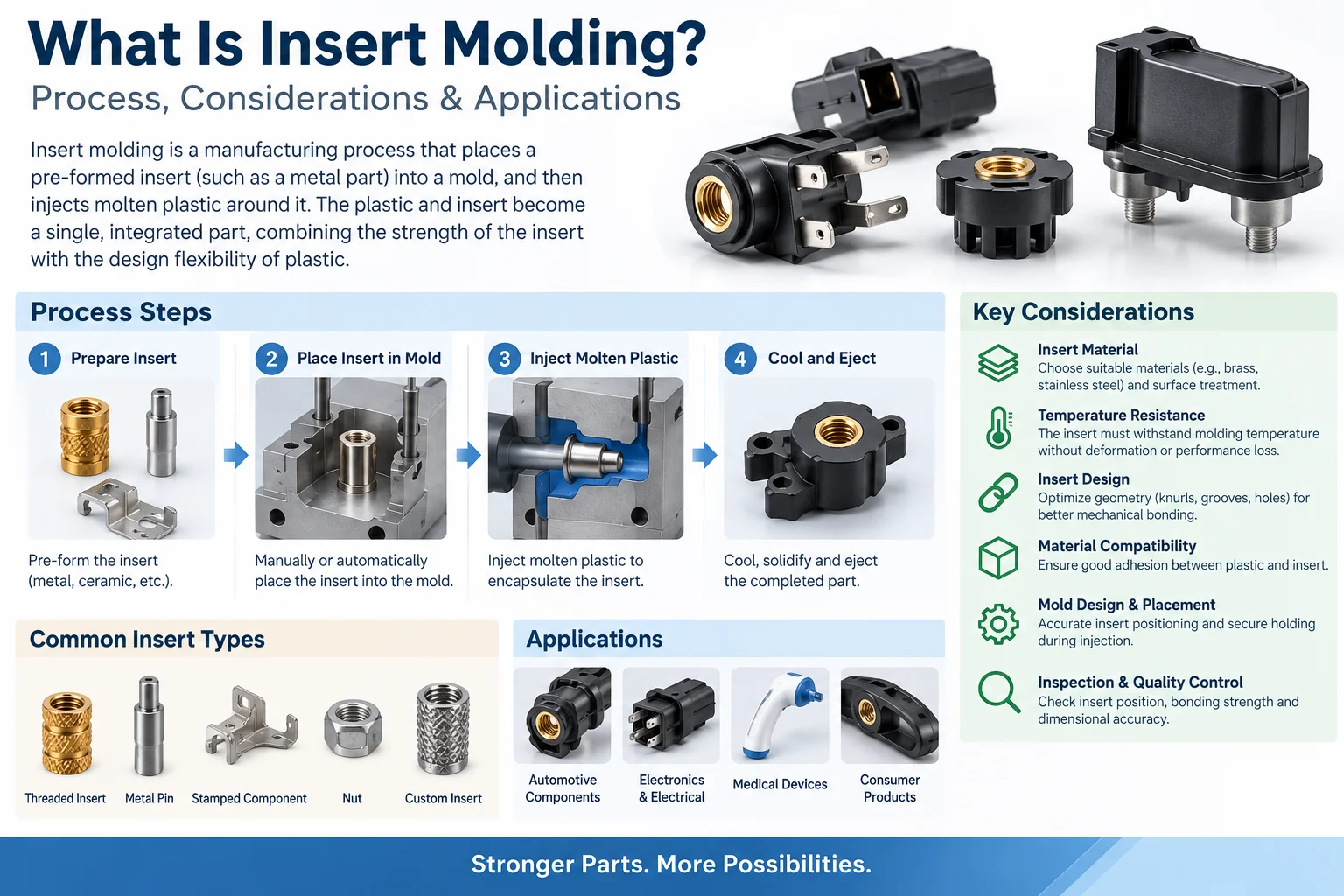
Silicone can be directly molded onto other materials, such as plastic inserts and metal components. During the curing process, silicone forms chemical bonds, eliminating the need for adhesives.
Applications
Soft-touch grips for tools and electronic devices; wearable devices with surfaces that come into contact with the skin; and medical device handles that require non-slip surfaces and are easy to clean.
For silicone rapid prototyping, overmolding is challenging. Inserts must first be manufactured, and the mold must be capable of accommodating them. The setup process is more complex than simple casting. However, for functional testing of assembled components, this is sometimes the only option. The prototype performs consistently with the final product, allowing for verification of its feel, fit, and performance before manufacturing production molds.
Silicone Rapid Prototyping Services at NOBLE

NOBLE is a leading manufacturing company. Its core business areas include metal fabrication, plastic manufacturing, rapid prototyping, small-batch production, and custom parts manufacturing. We support our clients throughout the entire product development cycle.
NOBLE helps companies turn concepts into functional prototypes and production-ready parts. Unlike suppliers that offer only prototyping services, NOBLE provides one-stop manufacturing solutions ranging from design assistance to final assembly.
NOBLE’s Silicone Rapid Prototyping Capabilities
Silicone rapid prototyping at NOBLE is integrated with other services. Design support is directly incorporated into the manufacturing process. CNC machining produces master molds. Injection molding meets mass production needs. Assembly and surface finishing bring the product to its final form. The entire process is managed by a single supplier.
Quality Standards and Certifications
The quality system has been certified and is well-documented.
ISO 9001:2015 covers general quality management. Manufacturing process controls ensure the repeatability of results; inspection procedures verify dimensions and surface quality.
ISO 13485:2016 adds the stringent requirements necessary for the manufacture of medical devices—more rigorous traceability and stricter process validation.
FAQs about Silicone Rapid Prototyping
Is silicone used as the prototype material or the mold material?
Both. Silicone can serve both purposes. In most silicone rapid prototyping applications, silicone is used to create flexible molds. These molds are used to produce prototype parts by pouring resin, polyurethane, or silicone materials into them.
How many parts can a silicone mold produce?
A typical silicone mold can produce approximately 20 to 50 parts. The actual service life depends on the part geometry, the casting material, the mold design, and the operating conditions. A greater number of parts can be produced when the geometry is simple and low-viscosity resins are used; conversely, fewer parts can be produced when the geometry is complex and filled materials are used. The mold wears out. That is expected.
How accurate are silicone prototype parts?
Silicone vacuum casting achieves excellent detail reproduction. The level of precision depends on the quality of the master mold, the choice of silicone material, the part dimensions and geometry, and the control of the casting process. A polished master mold combined with a stable silicone mold can produce parts that meet design requirements and strict tolerances; conversely, a rough master mold paired with a poorly made mold will result in defective parts.
How does silicone rapid prototyping compare with injection molding?
Silicone prototyping molds are less expensive and require less setup time, making them suitable for small-batch production. Injection molding tools are more expensive and require more setup time, but they result in a lower cost per unit for high-volume production, making them more suitable for large-scale production and long-term manufacturing.
When should I choose silicone rapid prototyping?
When you need 10 to 100 or more prototype parts, flexible or rubber components, rapid design validation, or low-cost transitional production, choose silicone rapid prototyping. This process produces parts of a quality comparable to mass-produced parts without the need for production molds.
Can NOBLE provide silicone rapid prototyping services from design to production?
Of course! NOBLE provides end-to-end support.
Design reviews help identify issues early on. Prototyping is used to validate the design. Silicone injection molding is used to create molds. Plastic and metal machining handle other components. Surface finishing puts the finishing touches on the parts. Assembly brings all the components together. Production support can be flexibly adjusted as production volumes increase.