In the world of modern manufacturing, extrusion is a versatile and efficient process that has transformed the way a wide range of products are produced. From simple plastic tubes to complex aluminum extrusion processes, extrusion plays a vital role in shaping the world around us.
What is the Extrusion?
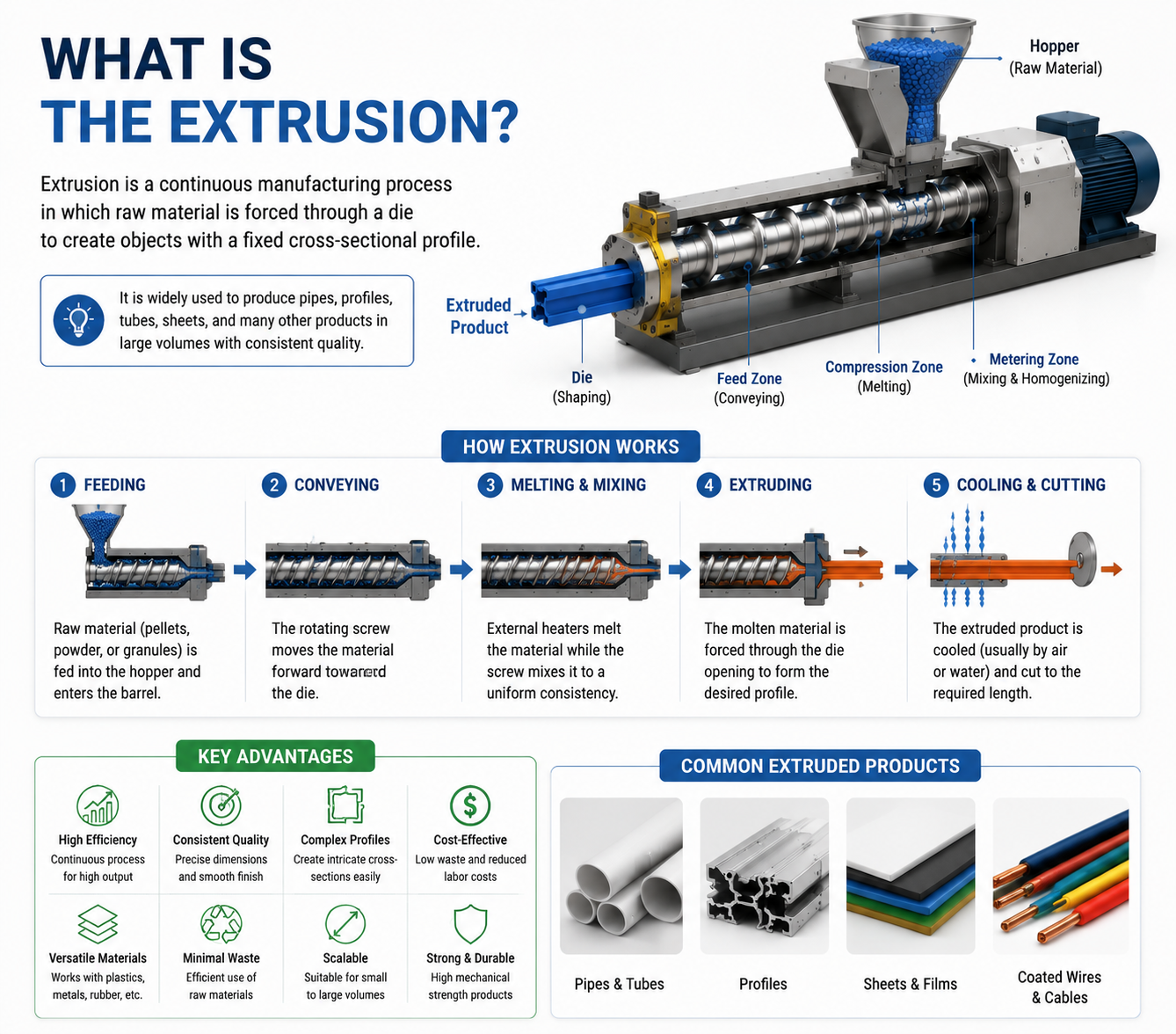
Extrusion is a manufacturing process that involves forcing a material through a die to form a continuous profile of a specific shape. The process is used extensively with materials such as plastics, metals, and food, and is able to create a variety of products with consistent cross-sectional shapes.
How does the Extrusion work?
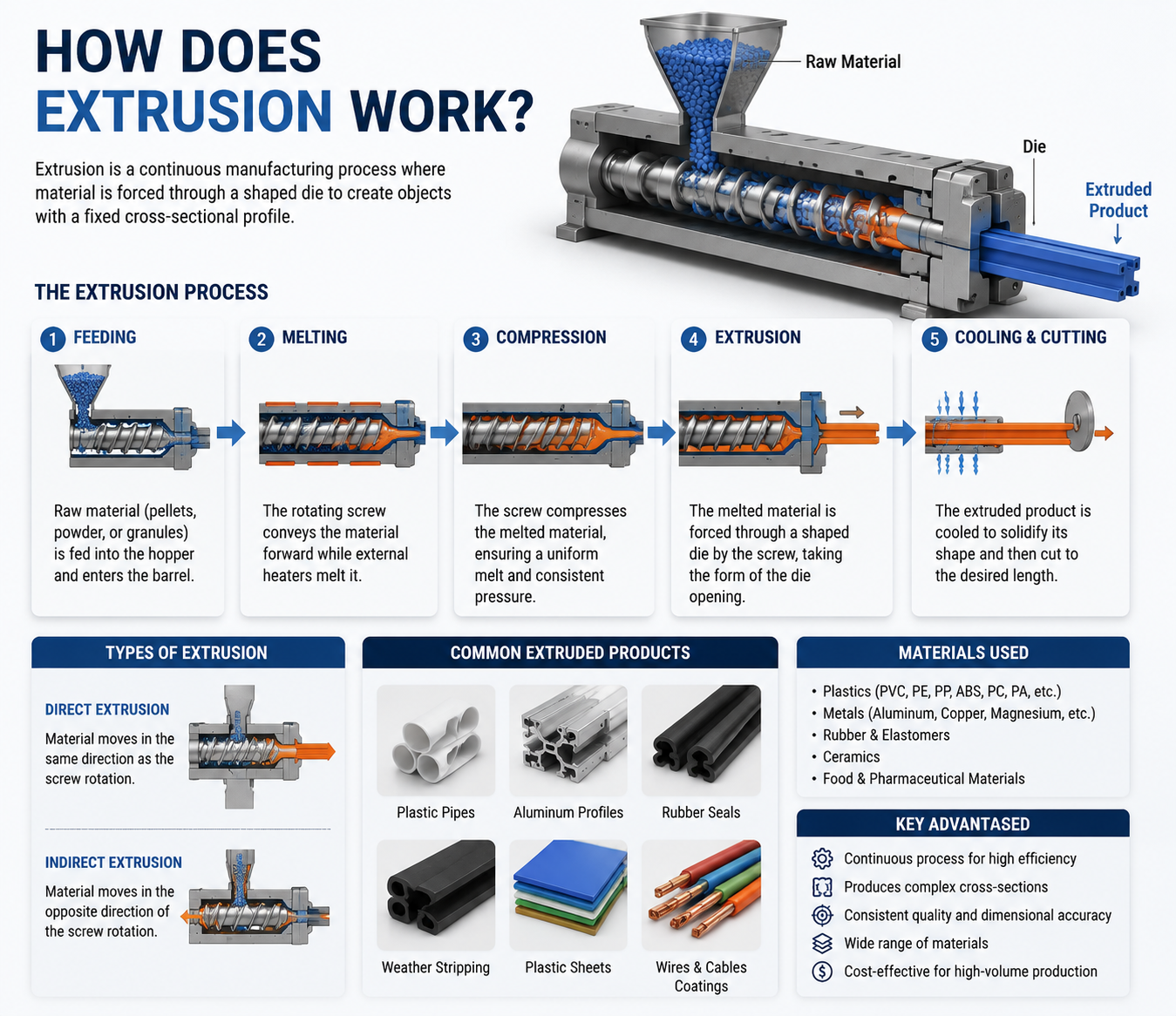
Extrusion Molding, also known as extrusion molding, mainly refers to a molding method that uses the extrusion effect of a screw or a plunger to force the hot molten polymer material through the die head under pressure to form a continuous profile with a constant cross-section. The extrusion molding process mainly includes feeding, melt plasticization, extrusion molding, shaping, and cooling.
-
Material preparation:
The materials used for extrusion, such as plastics, metals, or food ingredients, are usually in a granular, pelletized, or semi-solid state. In some cases, the material may need to be heated to a specific temperature to soften it before extrusion.
-
Feeding:
The material is fed into an extruder, which is a machine equipped with a rotating screw mechanism. The screw rotates and pushes the material forward, gradually heating and compressing it along the barrel of the extruder.
-
Heating and Melting:
As the material moves along the barrel, it is subjected to increasing amounts of heat and pressure. This heat softens and eventually melts the material, making it pliable and ready for molding.
-
Molding process:
At the end of the extruder, the molten material is forced through a shaped opening called a die. The die gives the material the desired cross-sectional shape as it leaves the extruder.
-
Cooling and Solidification:
After the material passes through the die, it is rapidly cooled using air or water to solidify it into the desired shape. This cooling process fixes the material into its final shape.
-
Cutting and finishing:
After solidification, the extruded material is cut into the required lengths by a cutting device integrated into the extrusion line. Depending on the application, additional finishing processes such as surface treatment or quality inspection may be performed.
Advantages of Extrusion:
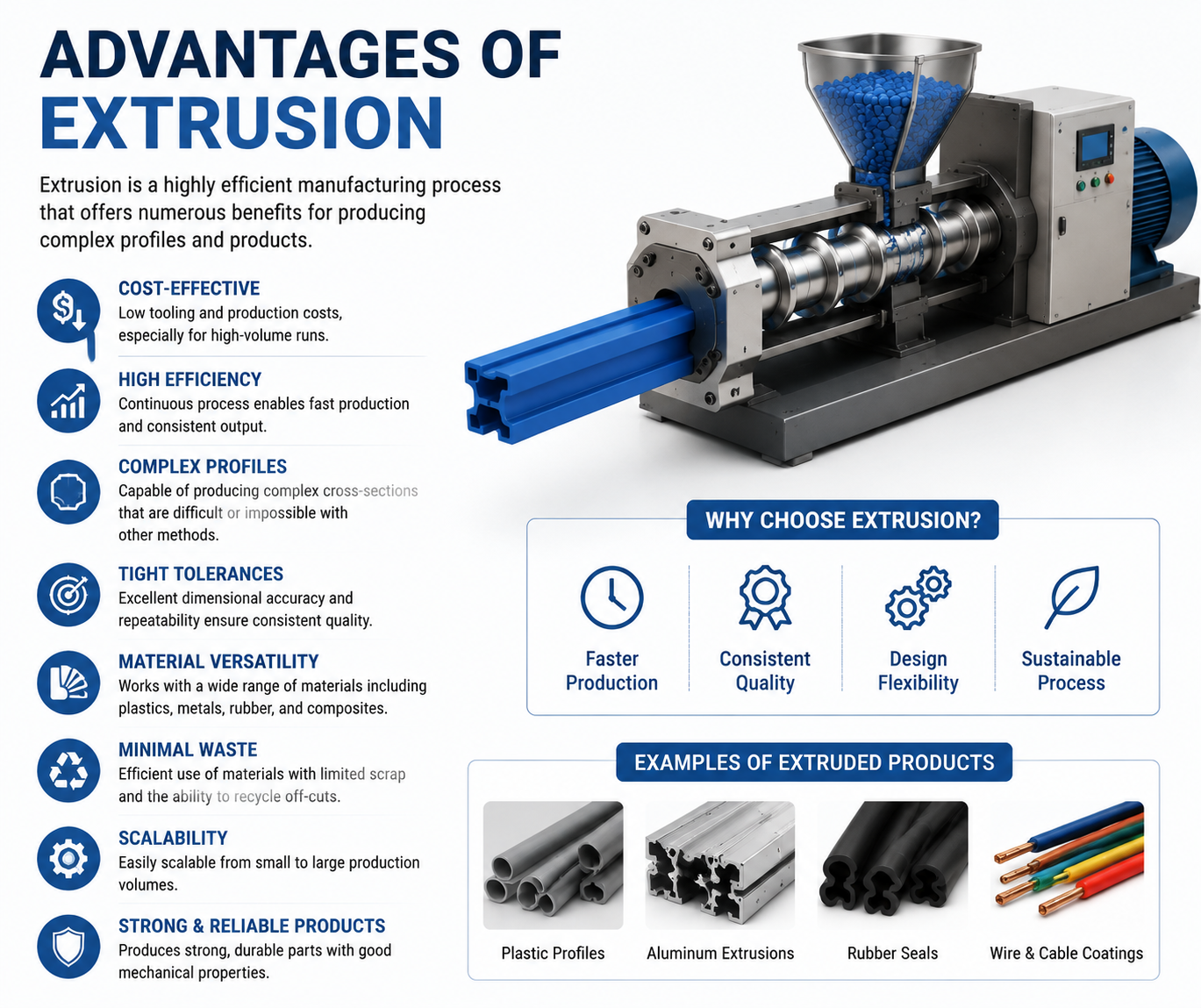
- Versatility: Extrusion supports a wide range of materials, including plastics, metals, and rubber, making it a versatile manufacturing process for different industries.
2, Cost-effectiveness: With the ability to produce a continuous extrusion process and minimize material waste, extrusion has proven to be a cost-effective solution for high-volume production.
- Customization: Extrusion can create complex extrusion processes and shapes with high precision to meet specific design requirements and applications.
- Efficiency: The continuous nature of the extrusion process enables short production cycles, which improves efficiency and reduces delivery times.
- Sustainability: Extrusion minimizes material waste through precise shaping, contributing to sustainable manufacturing practices and environmental protection.
Applications of Extrusion:
Extrusion allows for the continuous production of objects with a consistent cross-sectional extrusion process. The process is highly versatile and can be used with a wide range of materials, including plastics, metals, and food. Extrusion is commonly used in industries such as construction, packaging, automotive, and food processing. Tight control of temperature, pressure, and speed is essential to achieving the desired properties of extruded products. By utilizing the principles of extrusion, manufacturers can precisely and efficiently tailor a wide range of products to specific design requirements
Construction Industry:
In the construction industry, extrusion molding technology is widely used in the production of building materials and components. For example, extruded extrusion process, plastic pipes, plastic drainage systems, and other products are common extruded products in the construction industry. These products have the advantages of being lightweight, corrosion-resistant, and easy to machine. They can be used in various building structures and facilities to improve the quality and durability of buildings.
Packaging Industry:
From plastic films and sheets to tubes and containers, extrusion plays a key role in producing a wide range of packaging materials with different properties.
Automotive Manufacturing:
In the automotive industry, extrusion molding technology is widely used in the production of automotive parts and body components. For example, the extrusion process can be used to make automotive door and window frames, body frames, and other parts, and plastic pipes can be used in automotive cooling systems, oil systems, etc. Extrusion products have excellent strength, wear resistance, and corrosion resistance, which can meet the automotive industry’s high requirements for material performance and improve the safety and comfort of automobiles.
Food Industry:
Extrusion is used in food processing to manufacture products such as pasta, snacks, and breakfast cereals, demonstrating its versatility in shaping edible products.
Embracing Innovation in Extrusion.
What are the Extrusion Process materials on the market?
Steel
Steel is the most widely used material on the market, usually made by cold drawing, hot rolling, and other processes. Steel has high strength, strong corrosion resistance, and wear resistance, and is widely used in various industries, including construction, machinery, automobiles, ships, etc. However, steel is heavy and prone to rust and requires surface treatment.
Aluminum
Aluminum is another important profile material, which is widely used in construction, interior decoration, transportation, and other fields. Aluminum is light, corrosion-resistant, easy to process, and has good electrical and thermal conductivity. However, aluminum is relatively weak and easy to damage.
Stainless steel
Stainless steel is made of high-quality stainless steel, with the advantages of corrosion resistance, beauty, and high temperature resistance. They are widely used in food, chemical, pharmaceutical, construction, and other fields. Stainless steel is expensive and difficult to process.
Plastic
Plastics are made of various materials and have the characteristics of lightweight, corrosion resistance, insulation, etc. They are widely used in electronics, machinery, construction, and other fields. However, plastic extrusion processes have low strength, are flammable, and will deform when the temperature changes greatly.
In summary, the common Extrusion Process materials on the market include steel, aluminum, stainless steel, and plastic, etc. They each have their own characteristics and scope of application and should be selected according to specific needs.
Misconceptions about the Extrusion Process
When applying the extrusion process, many people have misunderstandings about their performance and applicability. These misconceptions can not only affect design effectiveness but also pose safety risks.
Misconception 1: Aluminum Alloy Extrusion Process Has Low Strength
Many people believe that aluminum alloy extrusion processes are weak because they are lightweight. In fact, the heat-treated aluminum alloy extrusion process can reach strengths comparable to or even exceeding those of some steels. For example, after quenching and artificial aging, the tensile strength of the 6063 aluminum alloy extrusion process can reach over 180 MPa, fully meeting most engineering requirements.
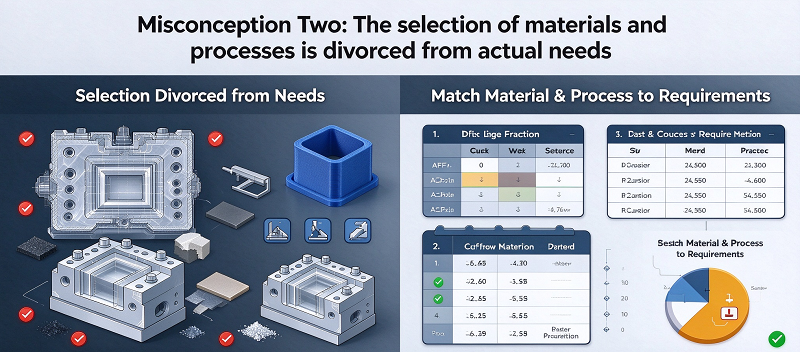
Misconception 2: The More Expensive the Extrusion process, the better the parts
The price of a profile depends primarily on factors such as material type, cross-sectional complexity, and processing technology. However, price is not the sole criterion for evaluating profile performance. When selecting a profile, consider the specific application scenario and performance requirements, rather than blindly pursuing high-priced products.
Misconception 3: Extrusion process Can Be Designed at Will
The cross-sectional shape and size of a profile cannot be designed at will. During the design process, factors such as material properties, processing technology, mechanical properties, and actual application requirements must be comprehensively considered. Otherwise, the performance of the profile may be degraded or even unable to be used normally.
Challenges:
- Tooling Complexity: Designing and manufacturing extrusion can be complex, requiring precision engineering to achieve the desired profile.
- Material Selection: Selecting the right material is critical to successful extrusion, and factors such as melt temperature, viscosity, and the desired properties of the final product need to be considered.
- Quality Control: Maintaining consistent product quality throughout the extrusion process requires meticulous monitoring of parameters such as temperature, pressure, and speed.
Conclusion:
In summary, extrusion is the backbone of modern manufacturing, offering unparalleled versatility, efficiency, and customization in the production of a wide range of products. As the industry continues to evolve and innovate, extrusion remains indispensable in realizing creative designs with precision and consistency. Whether shaping architectural extrusion processes or producing packaging materials, extrusion continues to push the boundaries of manufacturing excellence
Extrusion FAQs
1. What is extrusion?
Extrusion is a continuous manufacturing process where raw materials, such as plastic, aluminum, or other metals, are forced through a specially shaped die to create products with a consistent cross-sectional profile.
2. How does the extrusion process work?
The extrusion process typically involves five steps:
- Material feeding – Raw materials are loaded into the extrusion machine.
- Heating and melting – The material is heated until it reaches a suitable forming state.
- Compression and conveying – A rotating screw pushes and compresses the material.
- Die forming – The material passes through a die to create the desired shape.
- Cooling and cutting – The extruded profile is cooled, straightened, and cut into required lengths.
3. What materials can be used for extrusion?
Common extrusion materials include:
- Aluminum alloys (6061, 6063, 6082)
- Plastics (PVC, PE, PP, ABS, PC, PA)
- Copper and brass
- Rubber and elastomers
- Composite materials
4. What are the main types of extrusion?
The main extrusion types include:
- Direct extrusion: Material flows in the same direction as the ram movement.
- Indirect extrusion: The die moves toward the material while the material remains stationary.
- Hot extrusion: Material is heated before forming.
- Cold extrusion: Material is formed at room temperature for improved strength and accuracy.
5. What products are made using extrusion?
Extrusion is widely used to manufacture:
- Aluminum profiles
- Pipes and tubes
- Window and door frames
- Heat sinks
- Automotive structural components
- Plastic sheets and films
- Wire and cable coatings
- Sealing strips
6. What are the advantages of extrusion?
The main advantages include:
- High production efficiency
- Low material waste
- Ability to create complex cross-sections
- Consistent product quality
- Cost-effectiveness for mass production
- Wide material compatibility
7. Why is aluminum commonly used in extrusion?
Aluminum is popular for extrusion because it offers:
- Lightweight properties
- Excellent corrosion resistance
- High strength-to-weight ratio
- Good thermal and electrical conductivity
- Easy machining and surface finishing
8. What industries use extrusion components?
Extruded parts are widely used in:
- Automotive: Battery frames, roof rails, structural components
- Aerospace: Lightweight structural profiles
- Construction: Window frames, curtain walls, architectural profiles
- Electronics: Heat sinks and equipment housings
- Medical: Equipment frames and specialized profiles
- Industrial equipment: Machine frames and supports
9. What is the difference between extrusion and injection molding?
Extrusion is mainly used for producing continuous profiles such as tubes, rods, and sheets, while injection molding is used for producing discrete parts with complex three-dimensional shapes.
10. What tolerances can extrusion achieve?
Extrusion tolerances depend on the material, profile complexity, and manufacturing standards. Aluminum extrusion typically achieves tolerances around ±0.1 mm to ±0.5 mm, with tighter tolerances possible through secondary machining.
11. Can extruded parts be customized?
Yes. Extrusion dies can be customized to create unique profiles, and additional processes such as CNC machining, drilling, bending, anodizing, powder coating, and cutting can further modify the parts.
12. What surface finishes are available for extruded parts?
Common surface treatments include:
- Anodizing
- Powder coating
- Painting
- Brushing
- Polishing
- Sand blasting
- Electroplating
13. Is extrusion suitable for prototypes?
Yes, extrusion can be used for prototypes, especially when testing custom profiles or functional designs. Prototype extrusion allows engineers to validate dimensions, performance, and assembly before mass production.
14. How can extrusion manufacturing costs be reduced?
Costs can be optimized by:
- Simplifying profile geometry
- Selecting standard extrusion sizes
- Reducing unnecessary tolerances
- Choosing cost-effective materials
- Combining extrusion with efficient secondary processes
15. Why choose extrusion manufacturing?
Extrusion is an efficient and scalable manufacturing method that delivers lightweight, strong, and cost-effective components with consistent quality, making it ideal for industries requiring high-volume production and customized profiles.