Why Is Rapid Prototyping Important for Medical Devices?
Medical device rapid prototyping is not optional. The cost of design errors is too high, and time is of the essence. Prototyping allows problems to be identified and resolved before production begins.
Accelerating Medical Product Development
Rapid prototyping for medical devices shortens design cycles. Concepts that once took months to validate can now be tested within weeks. The pace of iteration is accelerated, enabling teams to identify design issues earlier. This, in turn, reduces development risks. Issues that would otherwise be exposed during production—such as mold filling, assembly interference, and ergonomic flaws—can now be identified on the test bench.
Improving Design Verification and Testing

The prototype serves as a test platform. Functional testing confirms whether the device operates correctly. Dimensional verification allows for comparison with CAD models. Assembly testing verifies the fit between components. Ergonomic evaluations ensure the device is comfortable to hold and use. Clinical workflow simulations verify the device’s suitability for real-world use.
Reducing Development Costs
Compared to the losses caused by production errors, the cost of prototyping is negligible. Investment in molds is deferred until design validation is complete. Since modifications are made early in the process rather than after the molds have been manufactured, the cost of design changes is lower.
Medical product prototyping is an investment with a clear return. It saves time, reduces risk, and prevents costly mistakes.
Common Technologies Used in Medical Device Rapid Prototyping
CNC Machining for Medical Prototypes
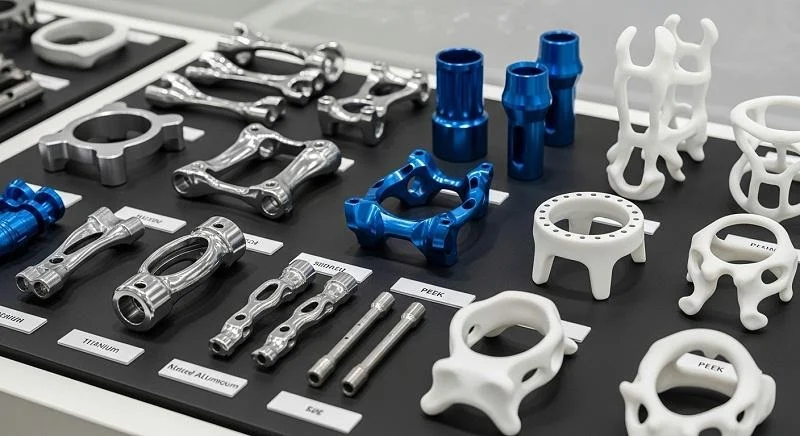
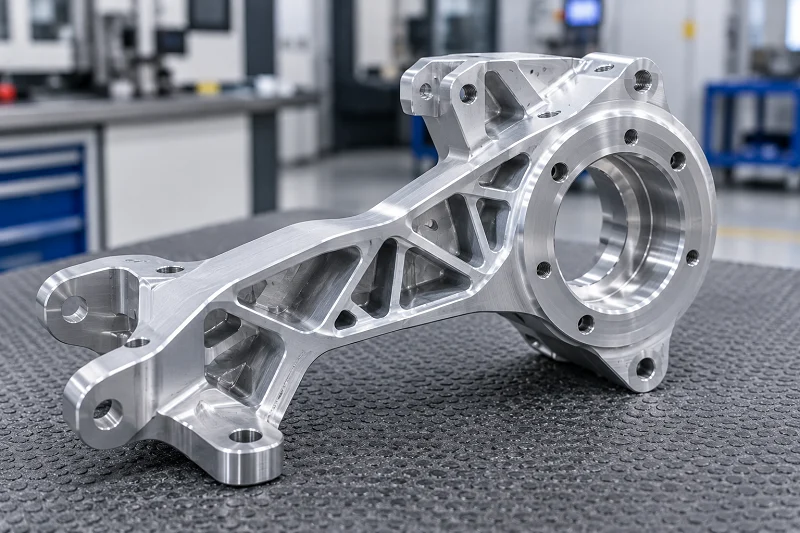
CNC machining for medical devices is a standard method. This process involves cutting parts from solid blanks, offering high precision, tight tolerances, the option to use production-grade materials, and excellent surface finish.
Common materials
Aluminum, stainless steel, titanium, PEEK, and engineering plastics. Each material has its own specific applications: aluminum is lightweight; stainless steel is corrosion-resistant; titanium is biocompatible; and PEEK combines transparency with high strength.
Applications
Surgical instruments must be machined to precise dimensions; medical device components require tight fits; diagnostic equipment components demand high precision and clean surfaces; and metal housings are used to protect sensitive electronic components.
CNC machining is a core component of rapid prototyping for medical devices. It produces functional parts with performance identical to mass-produced components, ensuring the validity of test results and enabling direct transition to mass production.
SLA 3D Printing
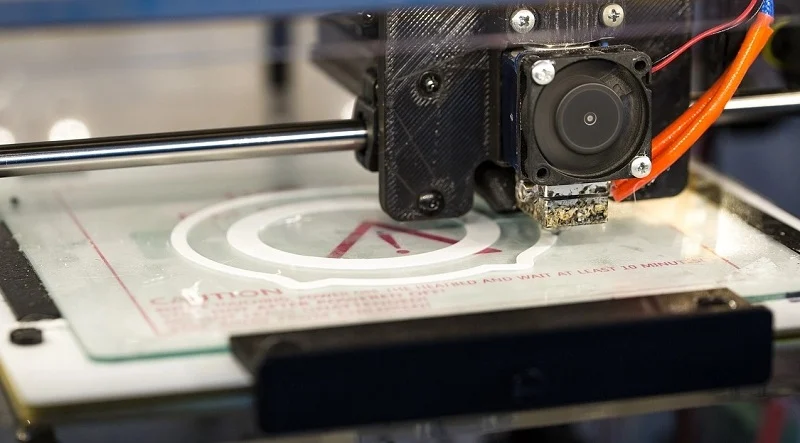
SLA technology uses liquid resin cured by a laser. It offers high detail resolution and excellent surface finish, enabling the rapid production of visual prototypes.
Advantages
SLA technology is fast but not as strong as CNC-machined parts. However, it is highly effective for visualization and assembly testing. Both technologies are part of the rapid prototyping for medical devices toolkit. They are used in conjunction with one another rather than in competition.
Fast visual prototypes
Applications
SLA 3D printing is commonly used for medical models in surgical planning. Surgeons use these models to gain an intuitive understanding of anatomical structures prior to surgery. Printed surgical planning tools can serve as references for incisions. Concept prototypes are used for design reviews and presentations to stakeholders.
SLS 3D Printing
Advantages
SLS technology uses laser-melted powder materials. The resulting parts are highly strong, feature complex geometries, and require no support structures. During the manufacturing process, the powder bed itself serves as support for the part.
Applications
Functional medical device components require high strength and durability. In addition, ergonomic test models are printed for studies on grip feel and usability. SLS fits into medical device rapid prototyping for parts that must survive handling and load testing.
Vacuum Casting for Medical Prototypes
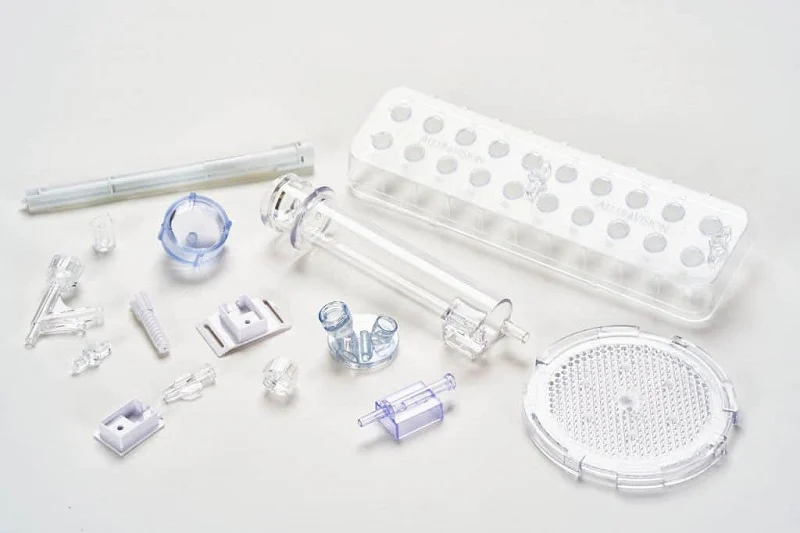
Vacuum casting is a multi-step process. First, a master model is created; then, a silicone mold is made based on the master model; finally, prototype parts are cast under vacuum conditions. A single mold can produce multiple prototype parts.
Advantages
It is cost-effective for small-batch production, the parts have an appearance similar to injection-molded parts, and it offers a wide range of material options with properties that can match those of mass-produced plastics.
Applications
Including medical device housings that require mass-production-grade surface finish. Plastic device components can be produced via vacuum casting for assembly and testing. Prototyping of handheld medical products is used for ergonomic evaluation. Vacuum casting is a key method in medical product prototyping for small-batch functional testing.
Low-Volume Injection Molding
Bridge tooling supports medical product development between prototyping and full production. Hard tooling is not yet justified. Production-like materials are used.
Benefits
Testing is more realistic because the material and process match production. Pre-production validation can be completed before committing to expensive production tooling.
Applications
Disposable medical devices that require biocompatible plastics. Plastic medical components are molded for clinical evaluation. Diagnostic products are produced in small batches for market feedback. Medical device prototype manufacturing uses low-volume injection molding to bridge the gap between prototype and production.
Materials Used in Medical Device Rapid Prototyping
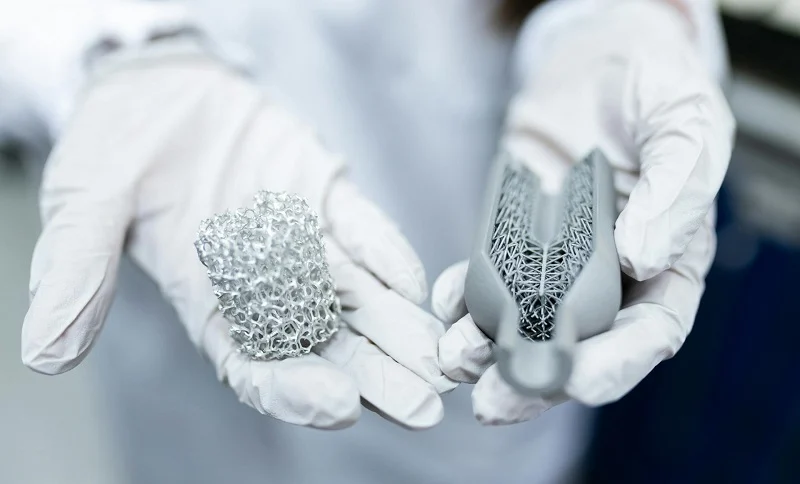
Material selection is not a minor detail. It is one of the most important decisions in medical device rapid prototyping. The ideal material depends on mechanical performance, biocompatibility, sterilization requirements, surface finish, cost, and the intended use of the prototype.
Medical-Grade Plastics for Medical Device Rapid Prototyping
| Material | Key Properties | Applications |
| ABS | Tough, affordable, easy to process | Device housings, concept prototypes |
| Polycarbonate (PC) | Strong, transparent, impact-resistant | Medical equipment covers, protective parts |
| Nylon (PA) | Durable, wear-resistant | Functional prototypes, mechanical parts |
| PEEK | High strength, chemical and heat resistance | Surgical components, implant-related prototypes |
| POM (Acetal) | Low friction, excellent dimensional stability | Precision moving parts |
| PMMA (Acrylic) | Clear, rigid, good surface finish | Transparent components, display covers |
These plastics cover the range from visual models to functional test parts. For rapid prototyping for medical devices, the choice determines what data the prototype can provide.
Metal Materials for Medical Device Rapid Prototyping
| Material | Key Properties | Applications |
| Aluminum | Lightweight, easy to machine, cost-effective | Equipment parts, device housings |
| Stainless Steel | Strong, corrosion-resistant, sterilization-friendly | Surgical tools, medical components |
| Titanium | Lightweight, strong, biocompatible | Implants, surgical prototypes |
| Cobalt-Chrome Alloy | High strength and wear resistance | Orthopedic and implant applications |
| Brass | Easy machining, good dimensional stability | Precision prototype components |
Metals are used when plastics cannot meet the mechanical or sterilization requirements. Surgical instruments, implants, and high-load components require metal.
Selecting the Right Material for Medical Device Rapid Prototyping
| Requirement | Suitable Materials |
| Visual prototypes | ABS, PC, PMMA |
| Functional testing | Nylon, PEEK, Aluminum, Stainless Steel |
| Surgical instruments | Stainless Steel, Titanium |
| Implant-related applications | Titanium, PEEK, Cobalt-Chrome |
| Lightweight components | Aluminum, Nylon, PC |
Choose the right materials early in the medical product prototyping process. The prototype must reflect the performance, usability, and manufacturing requirements of the final product. A material mismatch produces misleading data. The testing is wasted. The design is delayed. Early selection avoids that outcome.
Key Requirements for Medical Prototype Manufacturing
Precision and Tolerance Control
Prototypes must conform to the design, and key features—threads, mating surfaces, and sealing edges—must fall within tolerance limits. Assembly requirements determine tolerance stacking. Parts that do not fit together cannot be tested.
Inspection methods are used to verify dimensions. Coordinate measuring machines are used to inspect critical features. Optical comparators are used to measure contours. Manual gauges are used to verify fits. For medical device rapid prototyping, accuracy is the top priority. Prototypes that do not conform to the design are useless.
Biocompatibility Considerations
Material safety is mandatory. ISO 10993 provides the framework. Biological evaluation determines if the material is safe for contact with the body.
The difference between external-contact and implantable components is significant. External-contact parts—housings, handles, skin-contact surfaces—have lower requirements. Implantable components have the highest requirements. Cytotoxicity, sensitization, and irritation are evaluated. Long-term tests are required for permanent implants.
For rapid prototyping for medical devices, the prototype material must match the intended use. A material that passes for external contact may fail for implantable use. The testing level must match the application.
Sterilization Compatibility
The prototype must survive sterilization if it is intended for clinical use. Three methods are common.
- Autoclave sterilization uses saturated steam at high temperature. Materials must withstand 121°C to 134°C without degradation. Some plastics deform. Others hydrolyze. PEEK and metals handle autoclaving. ABS and acrylic often do not.
- Ethylene oxide (EtO) sterilization uses gas at low temperature. It is compatible with most plastics and metals. But EtO leaves residues that must be removed by aeration. Some materials absorb the gas and require longer aeration times.
- Gamma radiation uses ionizing radiation. It penetrates packaging and sterilizes sealed components. Some materials degrade under gamma radiation. Nylon and polycarbonate yellow and lose ductility. PEEK is radiation-resistant.
For medical device prototype manufacturing, sterilization compatibility must be considered early. A prototype that cannot be sterilized cannot be tested in clinical conditions. The material choice must include sterilization requirements.
Why Choose NOBLE for Medical Device Rapid Prototyping

NOBLE is a complete manufacturing partner. Our capabilities cover the full range. CNC machining for medical devices produces precision metal and plastic components. Vacuum casting creates production-like parts in small batches. Plastic injection molding scales to higher volumes. Metal processing handles custom requirements. Surface finishing adds protection and appearance. Assembly services integrate components into finished products.
From Prototype to Production
NOBLE supports the entire lifecycle. Early-stage concept prototypes visualize the design. Engineering validation models confirm performance. Small-batch production supplies parts for clinical evaluation. Final manufacturing delivers production quantities.
For medical device prototype manufacturing, the transition from prototype to production is seamless. The same engineering team handles both. The processes are validated. The quality system is consistent. Scale-up is straightforward.
Quality Certifications
ISO 9001:2015 – Covers the quality management system
ISO 13485:2016 – Adds the requirements for medical devices
One-Stop Medical Manufacturing Support
Engineering collaboration starts early. Material expertise guides the selection. Manufacturing optimization reduces cost and lead time. Quality control ensures every part meets the specification. Production scalability handles the transition from prototype to full production.
Medical device rapid prototyping at NOBLE is not a standalone service. It is part of a complete manufacturing solution. The prototype is the first step. Production is the destination.
FAQs About Medical Device Rapid Prototyping
How long does medical device rapid prototyping take?
The timeline depends on several factors. The complexity of the part affects machining or printing time. The manufacturing method determines the required preparation work. Variations in material availability and testing requirements may cause delays.
3D-printed prototypes can be completed within a few days. CNC-machined prototypes take anywhere from a few days to several weeks, depending on their complexity. Vacuum casting batches take longer due to mold preparation and curing cycles. For rapid prototyping for medical devices, the timeline must be planned with these variables in mind.
Can a medical prototype manufacturer support production after prototyping?
Absolutely! Choosing a full-service manufacturing partner offers numerous advantages. Prototype development is the first step. Through design optimization, components are refined to meet manufacturing requirements. Small-batch production meets the volume needs of clinical trials. Mass production support can scale up to commercial levels. Assembly and quality inspection round out the service.
A supplier capable of supporting the entire product lifecycle reduces transition risks. The entire process, from prototyping to mass production, is well-established. This continuity is particularly valuable for medical device prototyping.
What is the difference between medical device prototyping and medical device manufacturing?
The table below briefly outlines the differences between them to help you make the right choice.
| Medical Device Prototyping | Medical Device Manufacturing |
| Focuses on design validation | Focuses on repeatable production |
| Low quantities | Medium to high volumes |
| Faster design changes | Controlled production processes |
| Used for testing | Used for commercial products |
How do I choose the right medical device rapid prototyping partner?
You need to evaluate multiple factors. Manufacturing capabilities must match the required processes. Engineering expertise ensures design issues are identified early. Material knowledge guides selection for performance and biocompatibility. Quality certifications confirm the system is audited. Inspection capabilities verify dimensional accuracy. Ability to scale from prototype to production supports the full lifecycle.
Medical device rapid prototyping requires a partner with the full range of capabilities. Not every shop can handle both prototyping and production. NOBLE can. That is the value proposition.