Introduction: What Is Aluminum Rapid Prototyping?
If you needed to choose a manufacturing process for your aluminum rapid prototyping parts, which one would you select?
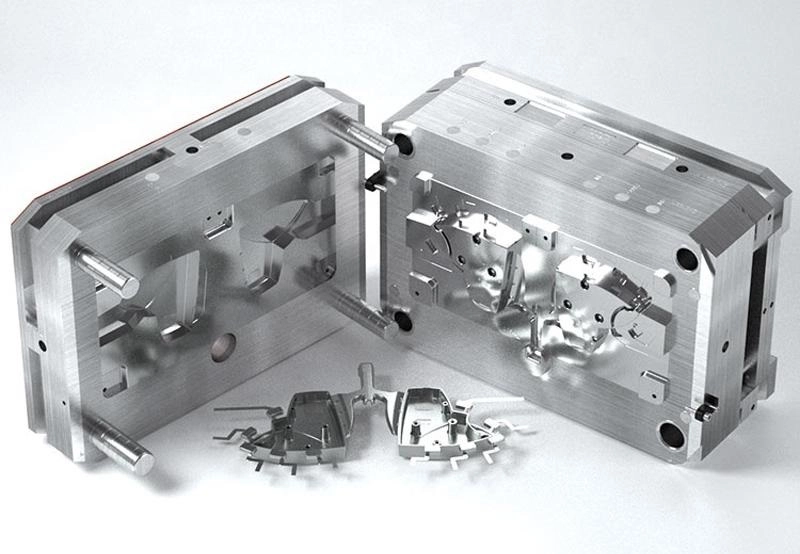
There are several methods for manufacturing these parts. CNC machining shapes the parts by cutting into a solid aluminum billet. Casting—including vacuum aluminum casting—involves pouring molten metal into a mold. Lost-wax casting can handle complex shapes and achieve a good surface finish. Die casting is suitable for high-volume production. Hybrid processes combine 3D printing with machining.
The concept is quite simple. Aluminum rapid prototyping technology enables the rapid production of functional metal parts. Validation during the design phase can be conducted early on. Production risks are reduced accordingly. Full-scale molds are manufactured only after the design has been successfully validated using actual metal. That is where its value lies.
Common Aluminum Rapid Prototyping Processes
CNC Machining Aluminum Prototypes (Most Popular Method)
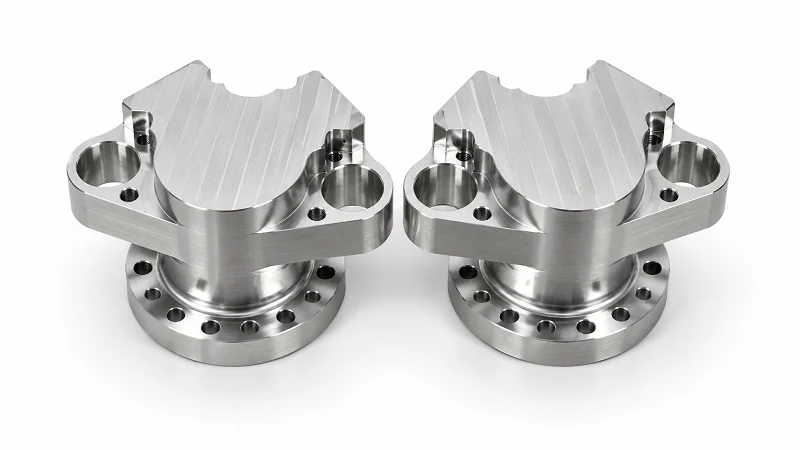
CNC machining is achieved by removing material. A rotating cutting tool follows a toolpath generated from a CAD file to machine the blank into its final shape. No molds or fixtures are required—the process relies solely on the removal of metal.
Common alloys include 6061, 7075, and 2024. 6061 is the primary material—it offers high strength and corrosion resistance. 7075 is even stronger but has poorer formability. The 2024 alloy has high fatigue resistance and is suitable for the aerospace industry. The choice of alloy depends on the prototype’s function.
Advantage
High precision—tolerances can be as tight as ±0.005 millimeters. Fast turnaround—measured in days rather than weeks. No tooling costs mean low setup investment. Production-grade materials are used. Test results can be directly applied to the final part.
Limitation
There is significant material waste—the chips are scrap. Complex internal structures (such as cooling channels or hollow cross-sections) cannot be achieved unless the design is split into separate components. While electrical discharge machining (EDM) can address this, it increases costs.
Recommended applications include aerospace brackets, electronic enclosures, fixtures, and mechanical components. Any part requiring precise dimensions and production-grade materials is suitable for this method.
CNC machining is the benchmark for aluminum rapid prototyping. Other methods—casting, additive—compete against it. But aluminum vacuum casting handles complex internal shapes that machining cannot reach. That is where casting becomes the better choice. The trade-off is tooling cost and lead time. Machining wins for simple, accurate parts. Casting wins for complex, near-net shapes.
Aluminum Vacuum Casting for Small-Batch Prototypes
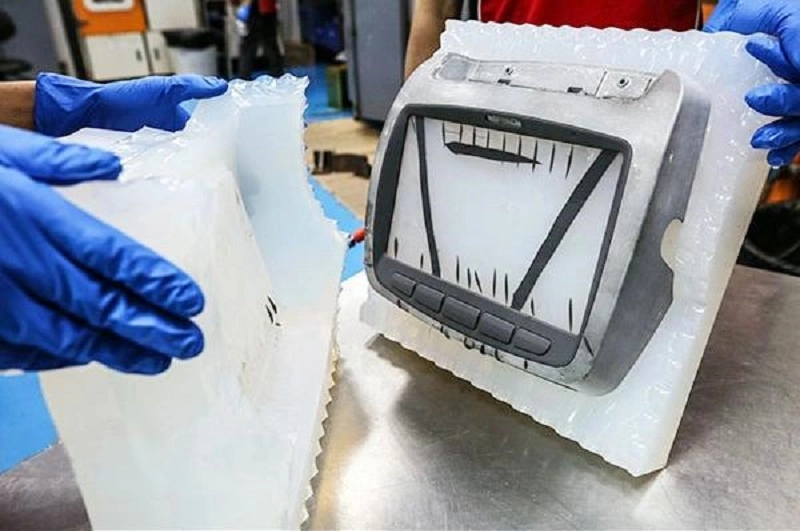
Aluminum vacuum casting is a method used to manufacture prototypes and small-batch parts. First, a silicone mold is created based on a master mold. The mold is then placed in a vacuum chamber, into which liquid material is injected. The vacuum draws the material into every detail, resulting in a finished part free of both bubbles and voids, and capable of precisely reproducing fine features.
The vacuum environment is the key distinction between this process and traditional casting methods. Gravity casting relies on gravity to fill the mold; pressure casting forces material into the mold under pressure; whereas vacuum casting removes trapped air that impedes material flow. As a result, this process yields finer details, smoother surfaces, and more consistent parts.
Aluminum rapid prototyping often uses this method because it bridges the gap between a single 3D-printed part and mass production. The lead time is short. The cost is moderate. The output is repeatable.
Advantages of Aluminum Vacuum Casting for Prototypes
- Lower Tooling Investment
Silicone molds cost significantly less than steel injection molds or die-casting molds. A steel mold can cost as much as tens of thousands of dollars, while a silicone mold costs only a few thousand dollars.
For companies testing product concepts, this reduces financial risk. If design changes are needed, the cost of replacing the mold is minimal; if product testing fails, this investment does not result in a loss. This allows for flexibility during the early stages of development.
- Faster Development Cycles
Compared to hard molds, lead times are shorter. Molds can be completed within a few days, allowing casting to begin immediately. Design validation takes place several weeks earlier than when using production molds.
Engineers can test multiple design iterations. The process from concept to market is accelerated. Each iteration provides real-world feedback before the final mold is manufactured.
- Excellent Reproduction of Complex Details
Aluminum vacuum casting allows the material to fill fine textures, minute details, and tight corners. It produces a high-gloss finish and excellent reproduction of fine details.
Aluminum vacuum casting is suitable for product appearance models, functional prototypes, and customer demonstration samples. The finished products have an exquisite appearance and feel similar to mass-produced items. Carefully polished prototypes leave a distinctly different impression on viewers.
- Cost-Effective for Small Quantities
A typical production range is 5 to 100 pieces. These are often prototype batches or pre-production samples.
For this volume, aluminum vacuum casting is more cost-effective than CNC machining. While machining is fast for single pieces, efficiency decreases when producing multiple pieces. Each workpiece requires separate setup and cycle time, whereas casting allows for parallel production.
Compared to injection molding, aluminum vacuum casting offers greater flexibility in the early stages of production. There are no lengthy lead times, no need for expensive steel molds, and no minimum order quantity requirements.
Limitations of Aluminum Vacuum Casting
- Limited Mold Life
Silicone molds wear out more quickly. The complexity of the part, the casting material, and the difficulty of demolding all affect mold life.
Typically, each mold can produce between twenty and fifty parts. For parts with simple shapes, some molds can reach up to one hundred parts. Beyond this quantity, accuracy begins to decline. At this point, the mold must be replaced.
- Differences in Material Properties
Vacuum casting materials are not always identical to production-grade forged aluminum. Although their mechanical properties are similar, they are not exactly the same. Strength and fatigue resistance are lower. Actual performance depends on the choice of material.
Design validation is suitable for assembly, function, and appearance. High-load applications may require machined or forged parts. Casting materials are suitable for validation, not for final mass production.
- Dimensional and Geometric Limitations
Large parts require specialized equipment. The vacuum chamber limits mold size. Extremely thin wall thicknesses or complex internal passages present challenges. The material must flow into the mold cavity before curing begins. Larger parts require longer flow distances, increasing the risk of incomplete filling.
Aluminum Investment Casting
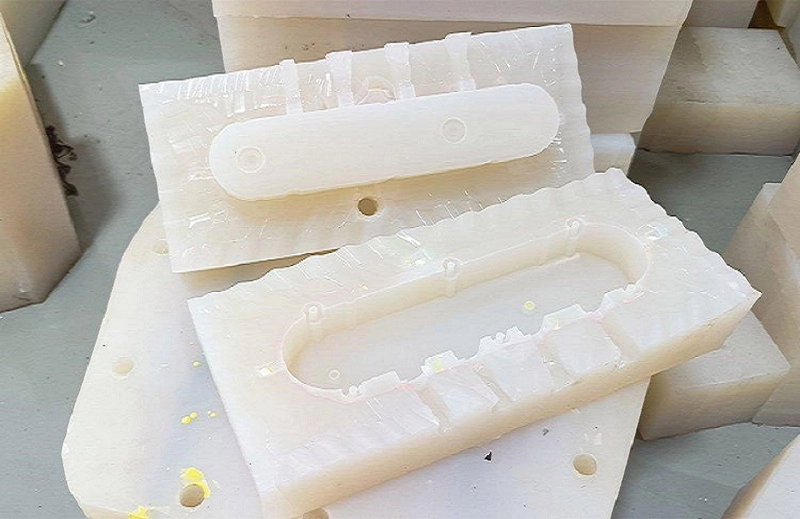
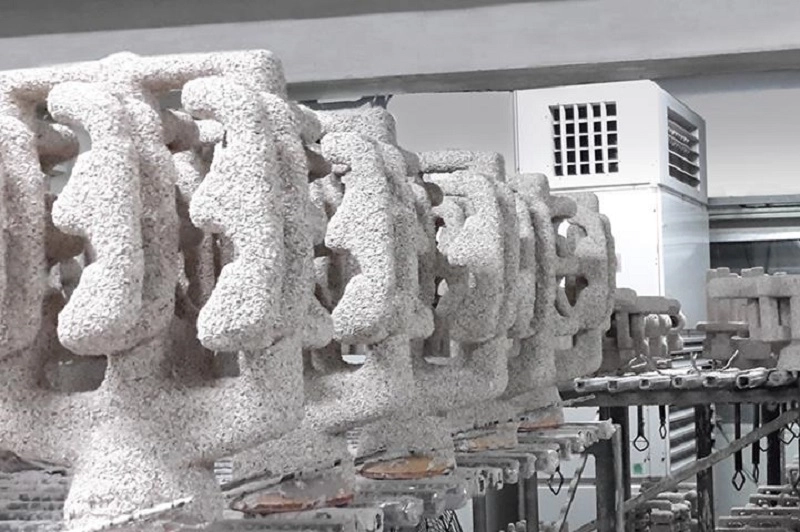
This process begins with a wax pattern. Ceramic slurry is applied to the wax pattern. The wax pattern is melted away, leaving a hollow shell. Molten aluminum is poured into the shell. The shell cracks and falls away, and the part is removed from the mold.
Lost-wax casting is chosen when a part’s shape is too complex to be achieved through machining. Examples include internal passages, curved surfaces, and thin-walled structures. Machining would require multiple setups and specialized cutting tools, whereas casting allows for one-step forming.
Advantage
ot only does it enable the production of complex shapes, but it also reduces machining requirements—as the part dimensions are already close to the final dimensions. Near-net-shape parts are manufactured using the same alloys as those used in mass production, and their mechanical properties are comparable to those of forged materials.
Application
Industrial components such as pump housings and valve bodies; automotive parts such as turbocharger impellers and suspension arms; and aerospace components such as structural brackets and engine hardware.
Investment casting occupies a middle ground in aluminum rapid prototyping. It costs more than aluminum vacuum casting but less than die casting tooling. It handles higher temperatures and larger parts. It is the bridge from prototype to low-volume production.
Aluminum Die Casting for Production Transition
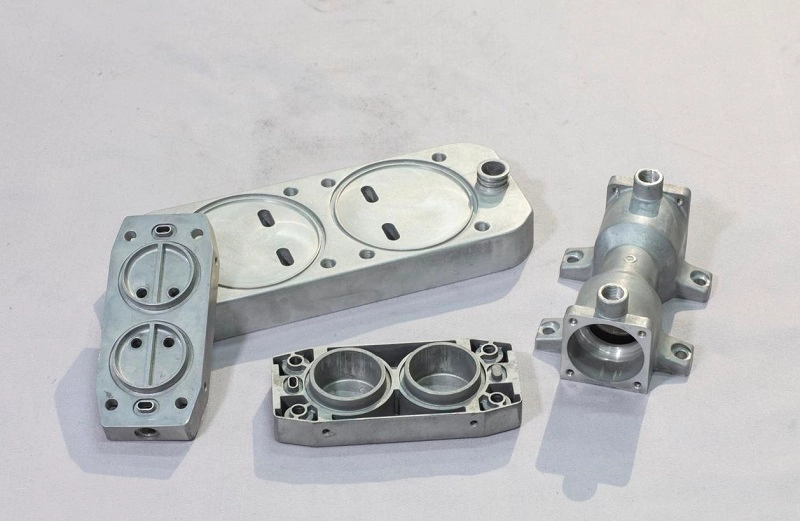
Die casting is high-volume manufacturing. Molten aluminum gets injected into a steel mold under pressure. The mold is water-cooled. Cycle times are seconds. The process is efficient.
Early prototypes rarely use die casting. The tooling cost is too high. Steel dies cost tens of thousands to hundreds of thousands. The lead time is weeks to months. Tooling changes are expensive and slow.
The investment becomes worthwhile at higher volumes. The break-even point varies. Typically above five to ten thousand parts per year. Below that, the per-part cost does not justify the tooling.
Advantages
Low unit cost. Excellent repeatability. High production rates. Consistent quality. Dimensional stability. Minimal post-processing.
For aluminum rapid prototyping, die casting is usually skipped. The prototype is made with machining, vacuum casting, or investment casting. The production process is designed separately. The transition happens after the design is frozen. The high-volume tooling gets built only when the product is ready for market. That is the practical path. Prototype first. Produce later.
Aluminum Rapid Prototyping vs Other Materials
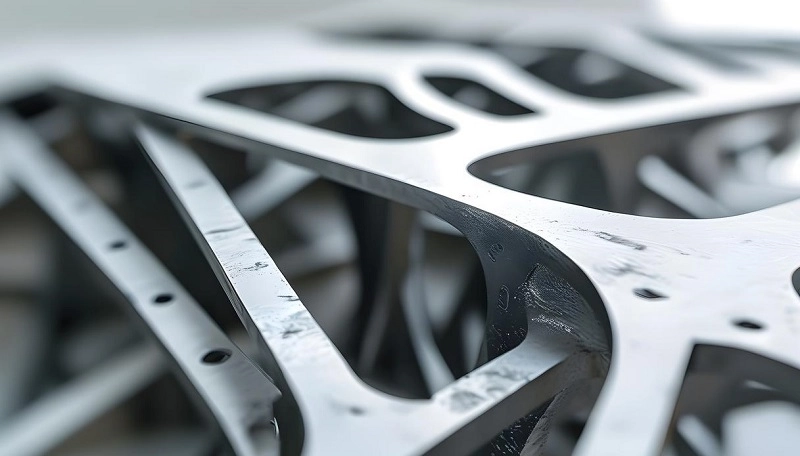
Material choice shapes the prototype. Pick the wrong one, and the test results are misleading. Pick the right one, and validation is reliable.
| Material | Advantages | Limitations | Best Uses |
| Aluminum | Lightweight, strong enough for functional testing, machinable and castable, accepts heat treatment and surface finishes | Higher material cost than plastics; requires skilled setup for machining or aluminum vacuum casting | Engineering prototypes requiring mechanical testing, thermal cycling, or structural validation |
| Stainless Steel | Very durable, high strength, corrosion resistance | More difficult to machine, heavier, slower cycle times | Heavy-duty applications—tools, brackets, high-load components |
| Plastic (ABS, PC, Nylon) | Low cost, fast production, easy to machine or print | Limited strength and stiffness, poor thermal performance | Appearance models, ergonomic studies, low-load prototypes |
| Carbon Fiber Composites | Excellent stiffness-to-weight ratio, high strength | Expensive processing, limited to simple shapes, long lead times | Performance applications—aerospace, sports equipment, structural demonstrators |
About NOBLE: Your End-to-End Aluminum Rapid Prototyping Partner

NOBLE offers comprehensive aluminum rapid prototyping solutions, with product design and engineering support as our top priority.
This integrated approach streamlines the development process, reduces communication overhead, and shortens time to market. A single supplier covers the entire supply chain.
Comprehensive Manufacturing Capabilities
We undertake single-function prototyping, produce small batches of precision components, and deliver fully assembled products. Our team selects the most appropriate manufacturing process for each project, striking a balance between performance goals, quality requirements, and cost constraints.
For aluminum rapid prototyping, CNC machining is the primary method. For products with complex geometries and multiple parts, aluminum vacuum casting may be used. The specific choice depends on the part type and production volume.
Certified Quality Management Systems
NOBLE operates under internationally recognized quality management standards, including:
- ISO 9001:2015 certification — ensuring consistent quality management, process control, and continuous improvement across our operations.
- ISO 13485:2016 certification — demonstrating our capability to meet the strict quality and regulatory requirements associated with medical device manufacturing.
These certifications reflect our commitment to maintaining rigorous quality controls throughout design, production, inspection, and delivery.
FAQs About Aluminum Rapid Prototyping
1. What is aluminum rapid prototyping?
Producing functional metal parts quickly. Machining cuts from a solid billet. Casting fills molds with molten metal. Both use real aluminum. The prototype behaves like the production part. Testing is valid.
2. Is CNC machining the best method for aluminum prototypes?
For low volumes—one to ten parts—CNC is often the first choice. No tooling cost. Fast turnaround. Real alloy properties. For multiple parts with complex geometry, casting—including aluminum vacuum casting—becomes competitive. The method depends on the part and the quantity.
3. How long does aluminum prototype manufacturing take?
Simple parts ship in days. Complex parts take weeks. Machining is faster for single parts. Casting is faster for multiple copies from one mold. Finishing adds time. Anodizing, painting, or polishing extends the lead time by a few days.
4. Can aluminum prototypes be anodized?
Yes. Anodizing increases surface hardness. It adds corrosion resistance. It provides a finished appearance. Clear or colored finishes are available. The process is standard on 6061 and 7075 alloys. Prototypes can match production aesthetics.
5. What aluminum alloy is best for prototypes?
6061 is the general-purpose alloy. Good strength. Good machinability. Good corrosion resistance. Available everywhere.
7075 is stronger—used for aerospace and high-stress parts. Harder to machine. More expensive.
2024 has higher fatigue resistance. Used for aircraft structures. Lower corrosion resistance. Requires protective coating.
Choose based on the test requirement. Machinability is best with 6061. Strength is highest with 7075. Fatigue performance favors 2024. For aluminum rapid prototyping, 6061 is the default. The others are special cases.