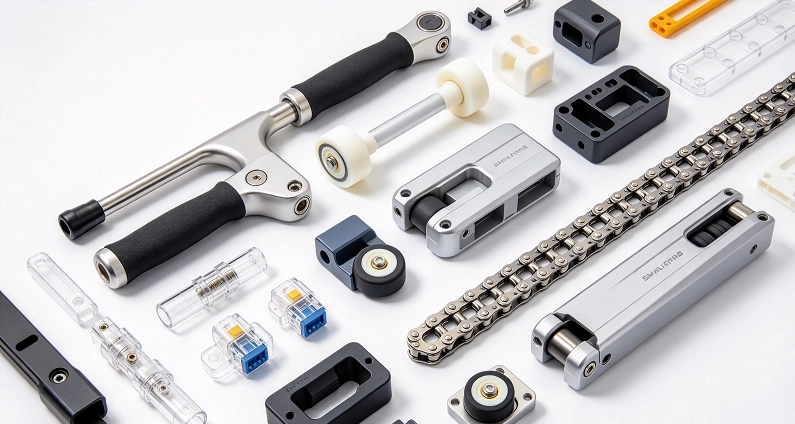
You use POM injection molding to make polyoxymethylene parts. Polyoxymethylene is a strong plastic. The process melts the plastic. Then it pushes the melted plastic into a mold. The plastic cools and gets hard in the mold. In 2026, new technology will make this process faster. It will also make it more accurate. The world market for polyoxymethylene will be about $3.8 billion in 2026. This shows that many people want these advanced parts.
Key Takeaways
- POM injection molding makes strong parts. These parts last a long time. They do not wear out fast. They keep their shape well.
- In 2026, new technology will make POM injection molding faster. It will also make it more accurate.
- Picking POM for injection molding gives high precision. It also saves money. This is because POM is tough and works well.
- New eco-friendly POM materials will be used more. These include bio-based and recycled types. This helps the planet.
- Knowing the best ways to use POM injection molding is important. It helps make better parts. It also lowers problems during production.
What is POM injection molding?
POM material properties
Polyoxymethylene is also called acetal or Delrin. This material is strong and tough. It does not break easily. It stays the same shape for a long time. When you use POM injection molding, you get parts that are strong. These parts can do hard work. POM does not wear out fast. It keeps its shape in water or heat. It is slippery, so it is good for moving parts.
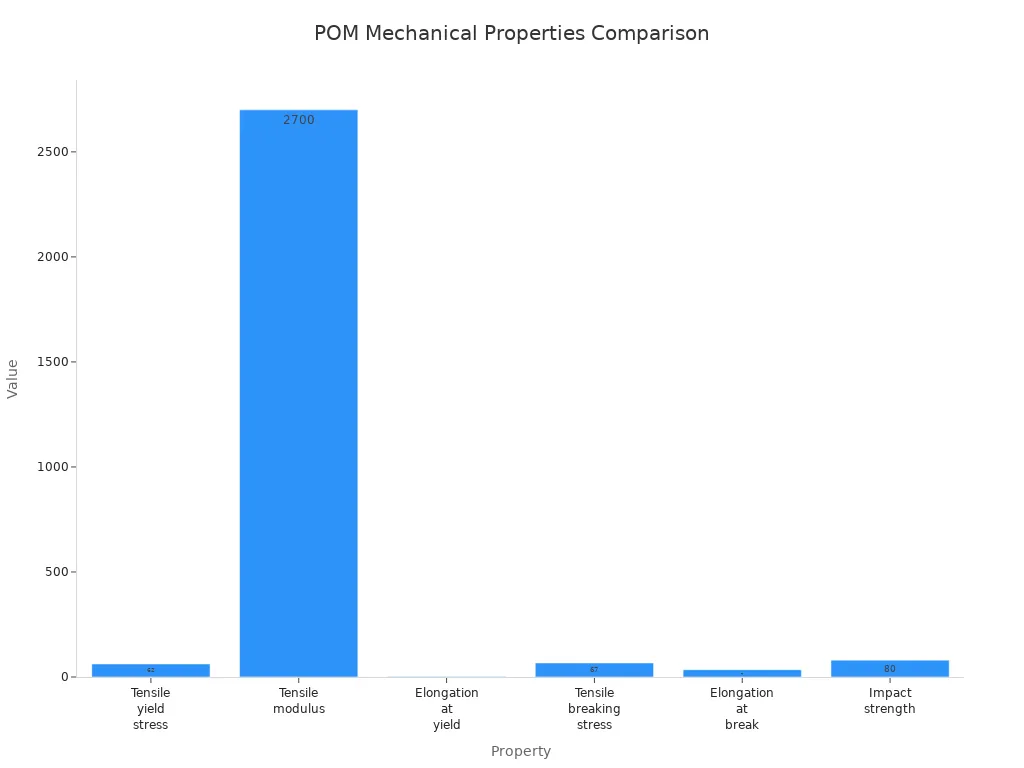
Here is a table that shows some important facts about POM:
| Property | Value | Units |
|---|---|---|
| Tensile yield stress | 62 | MPa |
| Tensile modulus | 2700 | MPa |
| Elongation at yield | 2.5 | % |
| Tensile breaking stress | 67 | MPa |
| Elongation at break | 35 | % |
| Impact strength | 80 | kJ/m2 |
POM does not get damaged by oils, fuels, or alcohols. Some types are even better in hot water and strong cleaners. POM is smooth and does not soak up much water. This helps parts stay the right size and shape.
Tip: POM parts last a long time. They do not break even if they move or hold weight many times.
Why choose POM for injection molding
You pick POM injection molding when you need parts that fit well. POM is stiff and keeps its size. It is great for parts that must be exact and strong. POM does not get bigger or change shape in wet air like nylon. Your parts stay strong and do not bend.
People use POM to make many things:
- Automotive components
- Medical devices
- Industrial machinery
- Marine equipment
- Precision fluid handling systems
POM does not get tired or break when it bends a lot. It also stops electricity, so it is safe for some wires. If you want parts that last and work well, POM injection molding is a good choice.
POM injection molding process
You follow steps to make strong and precise parts with POM injection molding. Each step helps you control how good your parts are. The process uses the special features of POM to make sure your parts turn out right.
Material preparation
First, you get the POM material ready. This is important because water in the pellets can cause problems. You want less than 0.2% water in the pellets. If you skip this, your parts might have marks or weak spots.
Here is how you get the material ready:
- Dry the POM pellets. Use a special dryer to remove water.
- Put the dry pellets into the injection molding machine.
- Melt the pellets in the barrel until they are smooth.
Note: Always check for water before you start. Too much water can mess up your parts.
Machine setup and melt temperature
You need to set your machine with the right settings for POM injection molding. The melt temperature is very important. If you use the wrong heat, you can damage the material or make bad parts.
Here is a table that shows the best melt temperatures for different POM types:
| POM Type | Optimal Melt Temperature Range (℃) |
|---|---|
| Homopolymer | 190 – 230 |
| Copolymer | 190 – 210 |
You should also set the mold heat between 80°C and 120°C. This helps you get a good look and a strong part. If you want to save power, you can use a lower mold temperature. But you must make sure the part is still strong.
Tip: Change the injection speed if your part is thick. Thicker parts need slower speeds to fill the mold well.
Molding cycle
The molding cycle is the main part of POM injection molding. You control how the material moves, cools, and forms in the mold. Each part of the cycle changes how good your part is.
- Injection: You push melted POM into a hot, two-part metal mold with high pressure. This shapes the part.
- Packing and holding: You keep pressure on the material to fill the mold and stop dents or holes.
- Cooling: You let the part cool and get hard. The mold heat and cooling time change the part’s strength and look.
- Opening: You open the mold when the part is hard enough.
The molding cycle also changes how strong your parts are. If you keep the mold heat steady and use the right time, you get better parts and a smoother look. Lower mold heat can save power, but you must check that your parts are still good.
Part ejection and finishing
When the part is cool, you take it out of the mold. This is called ejection. You use pins to push the part out. Sometimes, you might see problems at this step.
Here is a table of common problems and how to fix them:
| Defect Type | Description | Causes and Solutions |
|---|---|---|
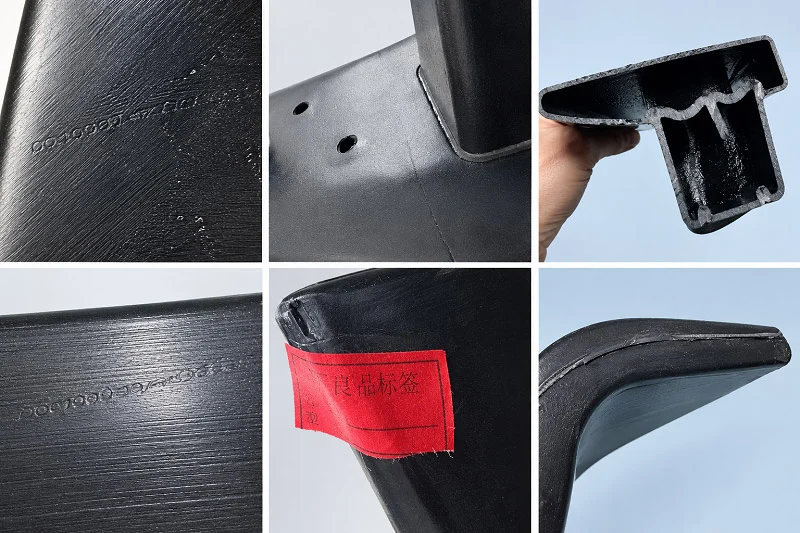
| Sink Marks and Voids | Small dips or dents on the surface from uneven cooling. | Use more hold pressure, cool longer, and move the gate. |
| Warping | Twisting or bending after ejection from uneven shrinking. | Balance cooling and use mold flow checks. |
| Flash | Extra plastic along the mold’s edge from high pressure. | Check clamp force and look at mold surfaces. |
| Short Shots | Mold not filled all the way, so parts are missing. | Change injection settings to fill the mold. |
After ejection, you may need to cut off extra plastic or smooth the part. You should check each part to make sure it is good before sending it out.
Tip: If you see problems, check your machine and mold design. Small changes can help make better parts.
By following these steps, you can get good at POM injection molding and make strong parts for many things.
POM compared to other materials in injection molding
When you choose a material for injection molding, you want to know how each one performs. POM stands out for its unique mix of properties. You can see how it compares to other common plastics like ABS, polycarbonate, and nylon.
- POM is very hard and gives a shiny, smooth finish. You often see it in gears and moving parts because it is slippery and tough.
- ABS is less rigid but easier to bond and paint. You find ABS in toys and electronic cases.
- Polycarbonate is strong and clear. You use it when you need parts that will not break easily, like safety glasses.
- Nylon is flexible and absorbs water. It works well for parts that need to bend but can change size in wet places.
Here is a table to help you compare these materials:
| Property | POM | ABS | Polycarbonate | Nylon |
|---|---|---|---|---|
| Hardness | High | Medium | High | Medium |
| Finish | Glossy | Matte | Clear | Matte |
| Water Absorption | Very Low | Low | Low | High |
| Chemical Resistance | Good | Moderate | Good | Good |
| Bonding Ease | Difficult | Easy | Moderate | Moderate |
| Cost per Pound ($) | 2.50–3.50 | 1.50–2.50 | 2.50–3.00 | 1.50–2.50 |
Note: POM has excellent rigidity and keeps its shape even in wet or hot conditions. You can use it for precision parts that must fit exactly.
You also want to think about cost and processing. POM resin costs more than nylon, but you save money because it molds faster and wears down tools less. For 1,000 pounds of material, you might pay $250–350 less for nylon, but POM can have 5–15% lower processing costs. Nylon works well for simple, high-volume parts because it needs less finishing.
If you need parts that move, last a long time, and stay the same size, POM injection molding is a smart choice. You get strong, slippery, and precise parts for many uses.
Surface treatment of POM injection molding
When you finish making a part with POM injection molding, you might want to improve the surface. The right surface treatment can help your part look nicer and last longer. There are different choices, and each one has its own good points.
Here is a table that lists common surface treatments for POM parts:
| Surface Treatment | Description | Benefits |
|---|---|---|
| As-Machined Finish | Cheap option with a kind of smooth surface and tool marks you can see. | Good for saving money and for parts inside things where people do not see them. |
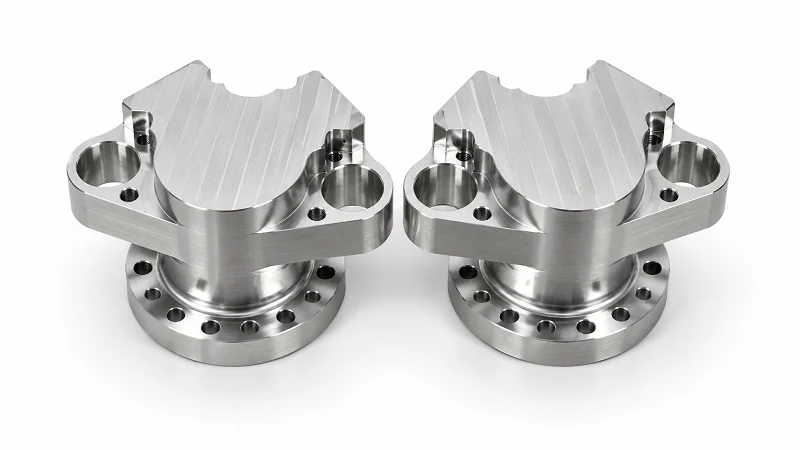
| Polished Surface Finishes | Makes the surface smoother, with roughness from Ra 0.2μm to 0.8μm. | Helps parts slide better and look shiny. |
| Bead Blasting | Gives a flat, matte look and hides small mistakes. | Makes it easier to hold, cuts down on glare, and looks nice. |
| UV Protection Coatings | Thin layers that keep sunlight from hurting the part. | Makes outdoor parts last longer without changing their size much. |
| Laser Marking | Puts marks on the part by changing its color. | Keeps the part strong and gives clear marks for names or numbers. |
| Surface Texturing | Adds special patterns for certain jobs. | Can make the part less slippery or add cool designs for brands. |
Tip: Pick a surface treatment based on how you want your part to look and what you need it to do.
Surface finish does more than just change how a part looks. It also changes how well the part works. A smooth finish can reduce rubbing. This helps parts move better and last longer. A rough finish can help you hold the part or make seals work better. You can see how different treatments change how fast POM wears out in the chart below.
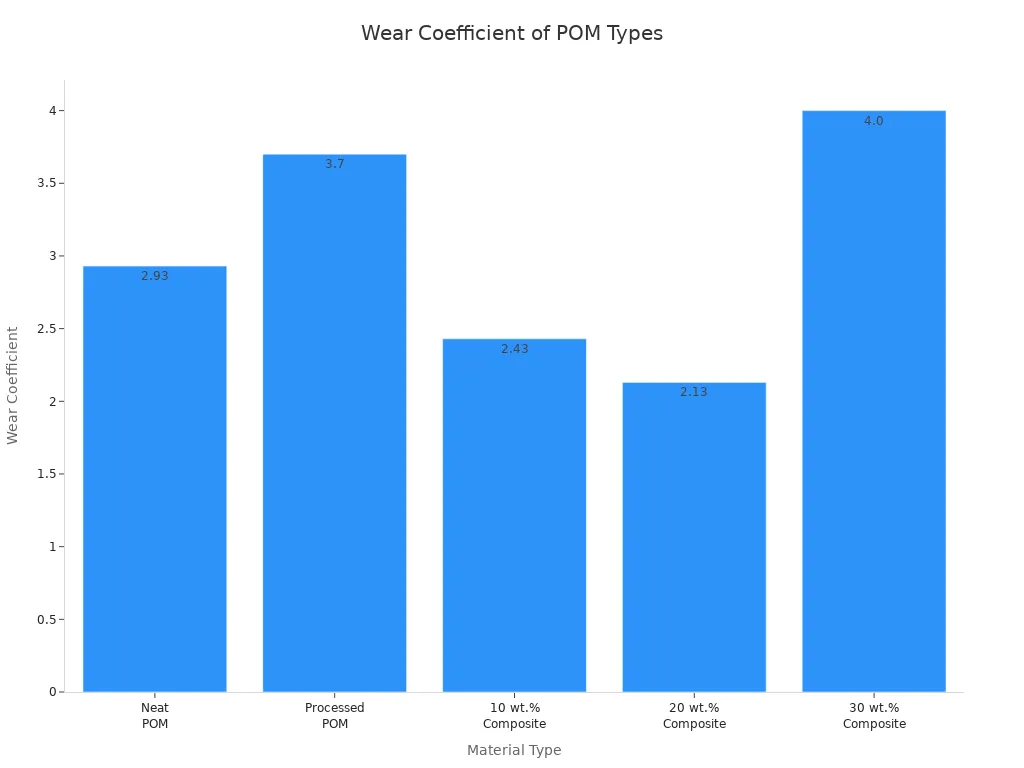
You should know that surface finish can also help with sealing, stopping rust, and making the part last longer. If you need a part for outside, UV coatings can keep sunlight from hurting it. If you want to put logos or numbers on your part, laser marking makes them clear and hard to remove.
When you pick a surface treatment, think about where and how you will use your part. The right choice can help your POM injection molding project work out well.
Advantages and disadvantages of POM injection molding
When you choose POM injection molding, you get many benefits for your projects. This process helps you make strong and precise parts quickly. You can see the main advantages in the table below:
| Advantage | Description |
|---|---|
| High precision | You get products with accurate and consistent dimensions. |
| Cost savings | Fast production lowers time and labor costs. Durable parts need less fixing. |
| Superior durability | POM parts last longer, so you do not replace them often. |
| Flexible design | You can create complex shapes without a lot of extra work. |
You can trust POM injection molding for parts that must fit exactly and last a long time. The process also lets you make many parts in a short time, which saves money.
However, you should know about some disadvantages before you start. Here are the main things to watch out for:
- POM can shrink a lot when it cools, usually about 2%. This can make it hard to get the exact size you want.
- Nitric acid can damage POM quickly, so you should not use it where this chemical is present.
- POM does not resist sunlight well. If you use it outside, it may get weak or change color.
- If you process POM with halogens, it can break down fast and even explode.
Note: Always check where and how you will use your POM parts. This helps you avoid problems and get the best results.
By understanding both the advantages and disadvantages, you can decide if this process is right for your needs. You get strong, precise parts, but you must plan for the few limits POM has.
What’s new in 2026
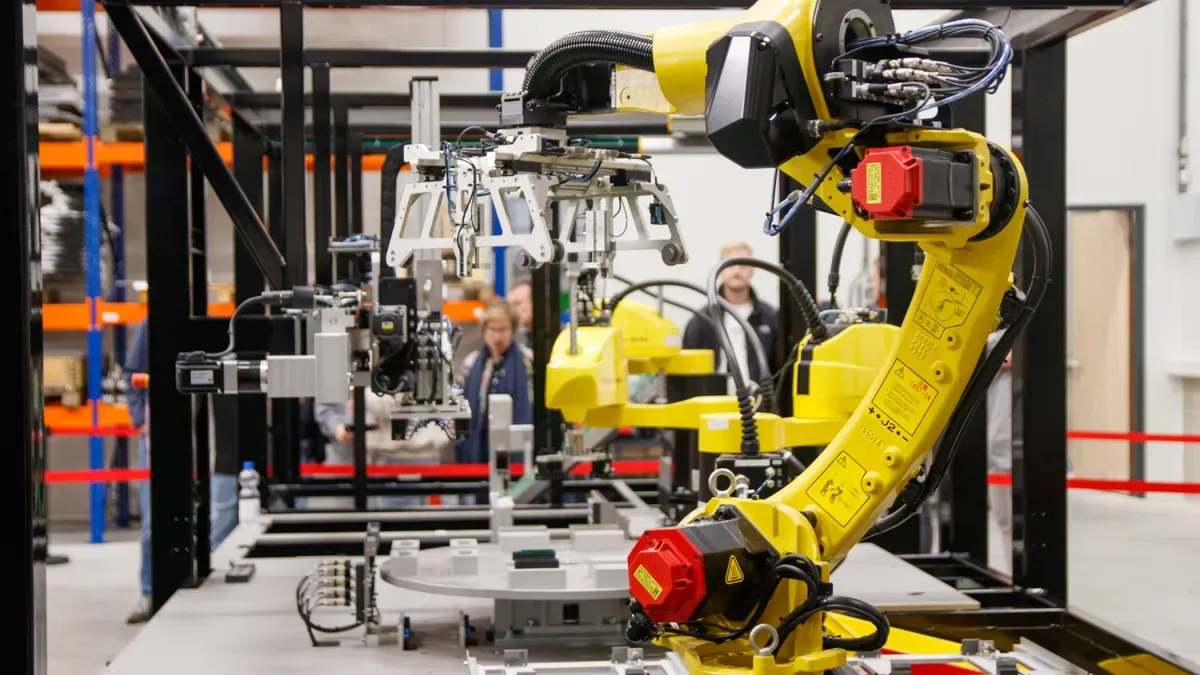
Latest technologies
Factories now have new machines with smart sensors and AI. These sensors check every part as it is made. They find mistakes right away. You can fix problems before they get big. Robots move materials and parts around the factory. This makes things faster, and there are fewer mistakes. Digital twins let you test designs on computers first. This helps you save time and money.
New POM materials
In 2026, there are new types of POM. Some have bio-based fillers that come from plants. These parts are strong and better for the earth. Recycled POM is used more often now. Old parts can be used to make new ones. Some new POM grades can handle sunlight and heat. You can use them for outdoor parts. These materials help you follow safety and environmental rules.
Process improvements
Closed-loop systems help cut down on waste. These systems recycle scrap and runners. You do not need as much new material. Mold designs last longer and are easier to fix. You can take molds apart and recycle them. Energy-saving machines use less power. You can control heat and pressure better. This saves money and helps the planet. You also use natural fillers instead of fake ones.
Tip: Try energy-saving settings on your machines. You can lower costs and help the earth.
Industry trends
More companies care about being green. They use bio-based and recycled materials. Waste reduction systems are now normal. There is more automation in factories. Robots and smart controls make things faster. There are stricter rules for safety and recycling. Companies must show how they protect the earth. More people want POM injection molding because it makes strong parts with less waste.
| Trend | What You See in 2026 |
|---|---|
| Sustainability | More bio-based and recycled materials |
| Automation | Robots and smart controls everywhere |
| Waste Reduction | Closed-loop and recycling systems |
| Regulation | Stricter safety and recycling rules |
POM injection molding applications
Key benefits
POM injection molding makes parts that last a long time. These parts keep their shape and work well. They do not break when they move a lot. The surfaces are smooth, so parts slide easily. This helps parts roll or move with little friction. Less friction means less noise and less wear. These parts resist many chemicals. They do not soak up water. You can use them in machines, cars, and medical tools. They are strong and reliable.
Tip: Pick POM parts if you need something tough, slippery, and dependable.
Common uses
You see POM parts in many places. They work well in hard jobs. You find them in machines, cars, and small devices. Here are some common parts made with pom injection molding:
- Gears
- Bearings
- Rollers
- Sliding parts
- Clips
- Levers
- Pump components
- Precision mechanical parts
- Small functional components
POM parts are used in many industries. Medical and healthcare companies use more than 45% of these parts. They need tiny and exact pieces for new medical devices. Other big users are the automotive, electronics, telecommunications, and aerospace industries.
| Industry | Market Share (2024) | Projected Growth (2025-2034) |
|---|---|---|
| Medical and Healthcare | Over 45% | High demand for small parts because of new medical devices |
| Automotive | N/A | N/A |
| Electronics | N/A | N/A |
| Telecommunications | N/A | N/A |
| Aerospace and Defense | N/A | N/A |
POM injection molding helps many fields make safer and better products.
Costs and lead times of POM injection molding
When you plan a POM injection molding project, you need to think about both the costs and how long it will take to get your parts. The price can change a lot based on what you want to make and how many parts you need. For most projects, costs can range from $10,000 to $100,000. If you order more parts or choose a complex design, the price goes up.
Tooling is a big part of the cost. You pay for the mold that shapes your parts. For a mid-level order of 1,000 to 2,000 parts, the mold can cost up to $10,000. If your part has a tricky shape or you need a lot of parts, the mold price can reach $100,000. The mold must be strong and keep its shape, so it lasts through many cycles. This makes tooling a key part of your budget.
Note: The mold is a one-time cost, but it sets the base for your whole project. A good mold helps you save money in the long run, especially if you make many parts.
You also need to think about lead times. Making the mold takes the most time. It can take four to eight weeks to build a new mold. After that, making the parts is much faster. Once the mold is ready, you can get thousands of parts in just a few days. If you change your design or order more parts later, you may need to wait for new tooling or setup.
Here is a quick list of what affects your costs and lead times:
- Size and shape of your part
- Number of parts you order
- Type of POM material you pick
- How complex your mold design is
- Any special finishes or treatments
If you plan and know what you need, you can save money and get your parts faster.
Best practices and tips
Optimizing results
You can get good results with POM injection molding if you follow some simple steps. First, set up your machine the right way. Make sure all your tools are clean before you start. Draw your part designs carefully so they fit well. Watch the temperature because POM can break down if it gets too hot. Keep the melt temperature under 210°C so the material stays strong. Do not let the melted plastic sit too long in the machine. Try to use less regrind material, or make sure it is clean. Clean out your machine often to get rid of burnt plastic. Keep your work area neat.
Here are some best practices you should follow:
- Set up your machine for the same results every time.
- Make sure your designs are exact for good parts.
- Watch the temperature because POM is sensitive to heat.
- Do not let the melted plastic stay too long in the machine.
- Use less regrind or make sure it is filtered well.
- Clean your machine often to get rid of burnt plastic.
- Keep your work area clean and safe.
Tip: Dry POM resin for three to four hours before you use it. This helps keep water out and makes your parts better.
Common challenges
You might have some problems when you use POM injection molding. If the plastic gets too hot, it can turn brown and lose strength. If POM takes in water, it can get weak and break down. Sometimes, parts can shrink or bend and not be the right size. It can also be hard to get parts out of the mold. Cracks can show up if the part is under stress. Gas can form if the plastic breaks down while heating.
You can fix these problems by doing a few things:
- Change your machine settings so the plastic does not get too hot.
- Make your molds so air and heat can move out easily.
- Add things to the plastic to make it work better.
- Use special steps after molding to help the part.
- Keep the melted POM under 210°C.
- Set your mold heat between 60°C and 100°C.
- Use a short heating time so the plastic does not sit too long.
Note: POM does not take in much water, only about 0.2 to 0.5%. Dry the resin before you use it so your parts do not have problems.
POM Injection Molding FAQs
You may have questions about POM injection molding. Here are some of the most common ones people ask in 2026:
What is polyoxymethylene (POM)?
POM is a strong plastic. You may also hear it called acetal or Delrin. It has high strength and does not wear out fast. You use it to make parts that need to last a long time.
Why is POM used for technical components?
You choose POM for technical parts because it keeps its shape and size. It does not absorb much water. It works well in machines and tools that move a lot. You can trust it for gears, bearings, and clips.
What are the properties of POM?
POM is tough and slippery. It resists chemicals and heat. It does not break easily. You can use it in wet or hot places. It also gives a smooth finish to your parts.
What is POM injection molding used for?
You use POM injection molding to make many things. These include car parts, medical devices, and machine pieces. You see POM in pumps, rollers, and small gears. Many industries pick POM for its strength and smooth surface.
Tip: If you need a part that must move smoothly and last a long time, POM is a smart choice.
If you have more questions, you can ask your supplier or a molding expert. They can help you pick the right material and process for your project.
Remember: Learning about new technology keeps your work sharp and your products top quality.
What is the best temperature for POM injection molding?
You should keep the melt temperature between 190°C and 215°C. This range helps you avoid burning the material and keeps your parts strong.
Can you recycle POM parts?
Yes, you can recycle POM. Many factories use recycled POM pellets to make new parts. This helps you save money and protect the environment.
Why do POM parts sometimes warp?
- Uneven cooling
- Mold design issues
- Incorrect mold temperature
You can fix warping by balancing the cooling and checking your mold settings.
Is POM safe for food contact?
Some POM grades meet FDA standards for food contact. Always check with your supplier to make sure your material is approved for your use.
How do you store POM resin?
Store POM resin in a dry, cool place. Use sealed containers to keep out moisture. This helps you avoid problems during molding.