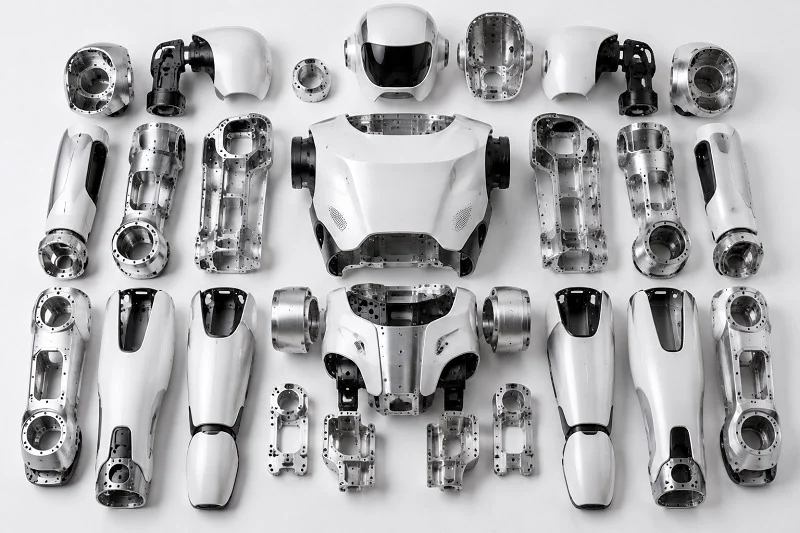
Take a look at any product on the shelf. A car door panel. A sealed tray of meat. It’s a circuit board. At some point during the production process, an industrial vacuum cup lifted it, held it, or moved it. These cups are everywhere in modern automation. They work automatically. Until they fail.
This guide will show you how to make them right. We take a close look at every component.
What Parts Do Industrial Vacuum Suction Cups Consist Of??
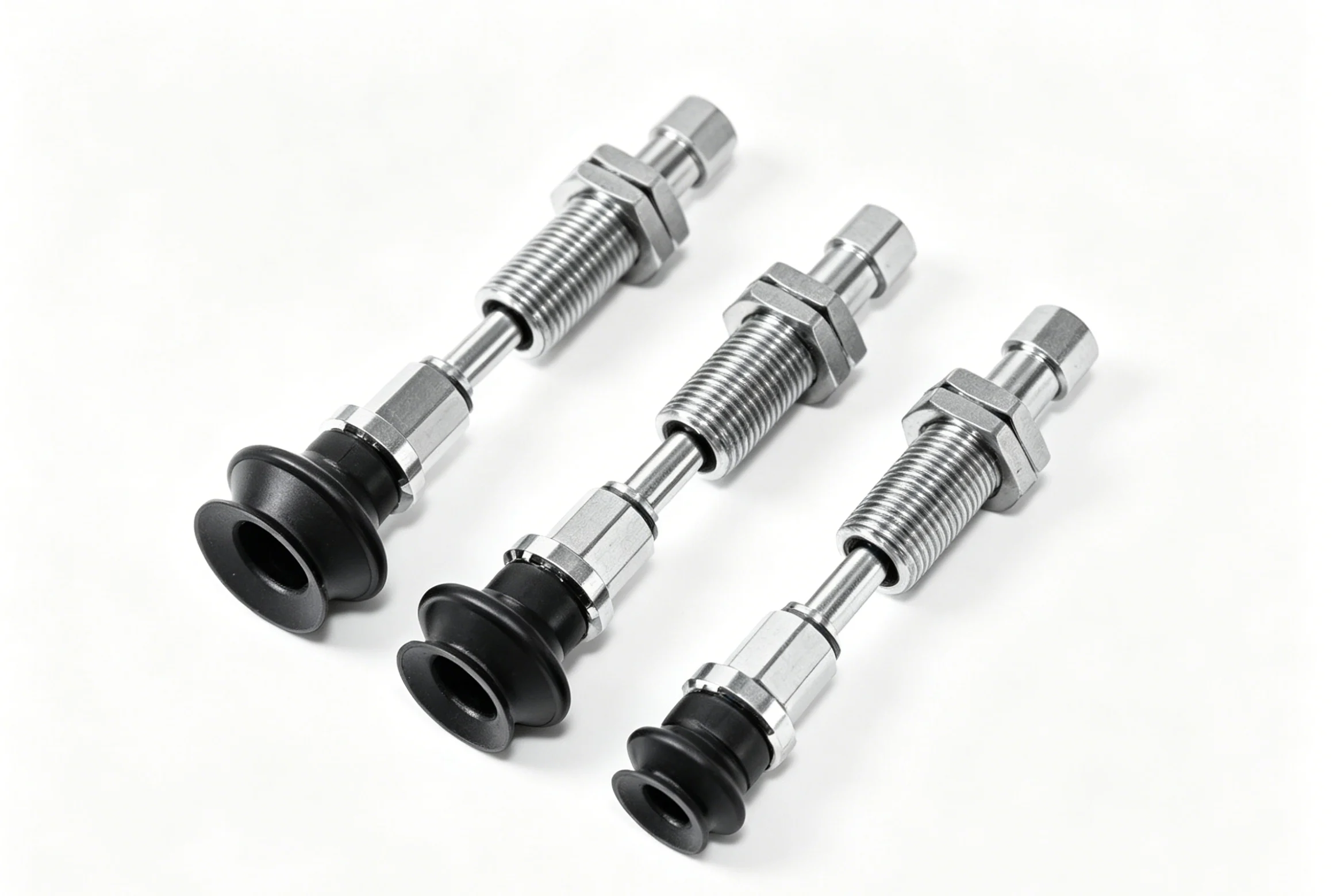
Break down industrial vacuum cups. Three main categories emerge. The pad touches the product. The fitting connects to the machine. The rest is hardware.
The Suction Cup (The Pad)
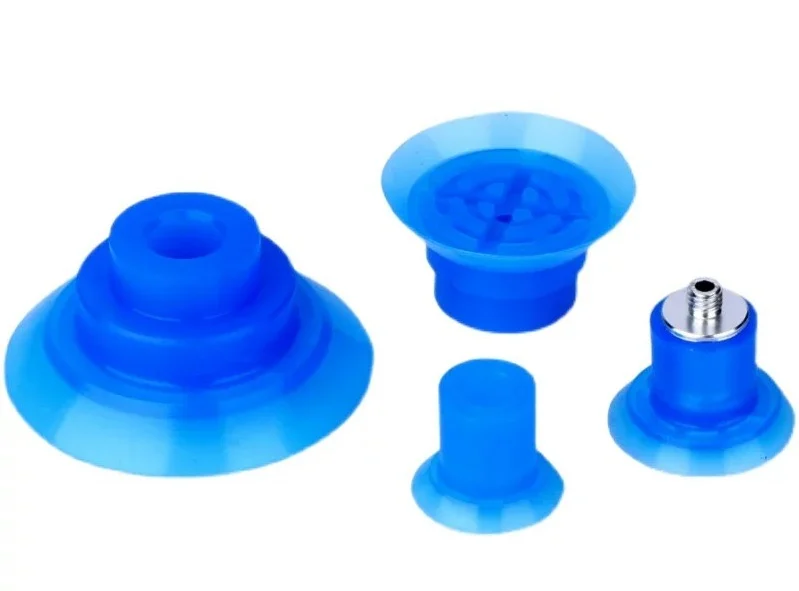
This is the business end. Two jobs get done here. First, sealing against the part surface. Second, gripping hard enough to lift without dropping. Different shapes suit different jobs.
Flat pads work on smooth, flat surfaces like glass or metal sheets. Maximum contact area. Good for thin materials that cannot flex.
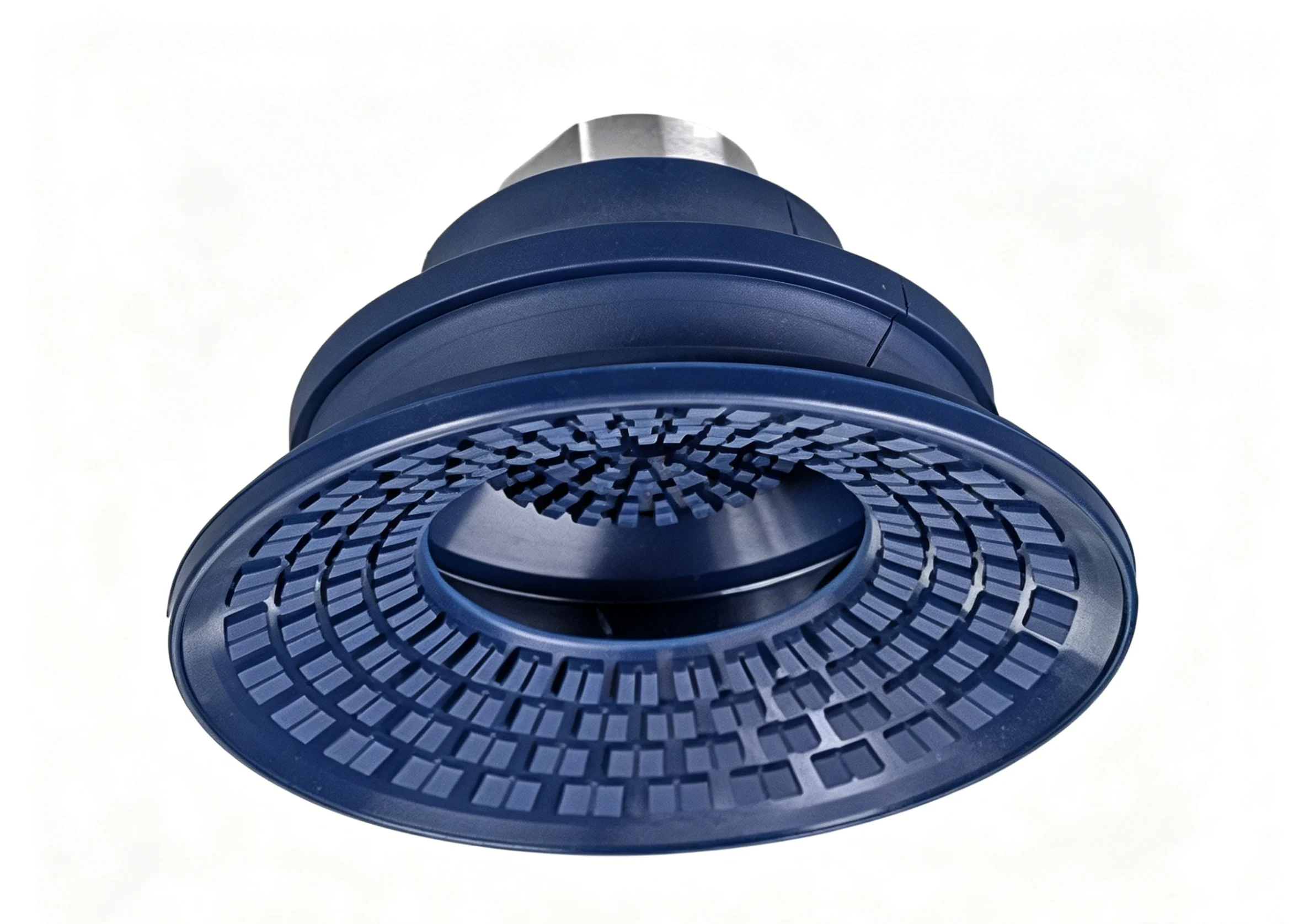
Bellows cups have folded walls. They collapse and extend. This allows height compensation. Pick a warped board or an uneven box top. The bellows absorbs the difference.
Oval cups handle long, narrow parts. Think of a wooden trim piece or a channel-shaped component. A round cup would miss half the surface. An oval cup covers the length.
The Holder / Fitting (The Connector)
The pad alone is useless. It needs attachment to the robot arm or the pick-and-place system.
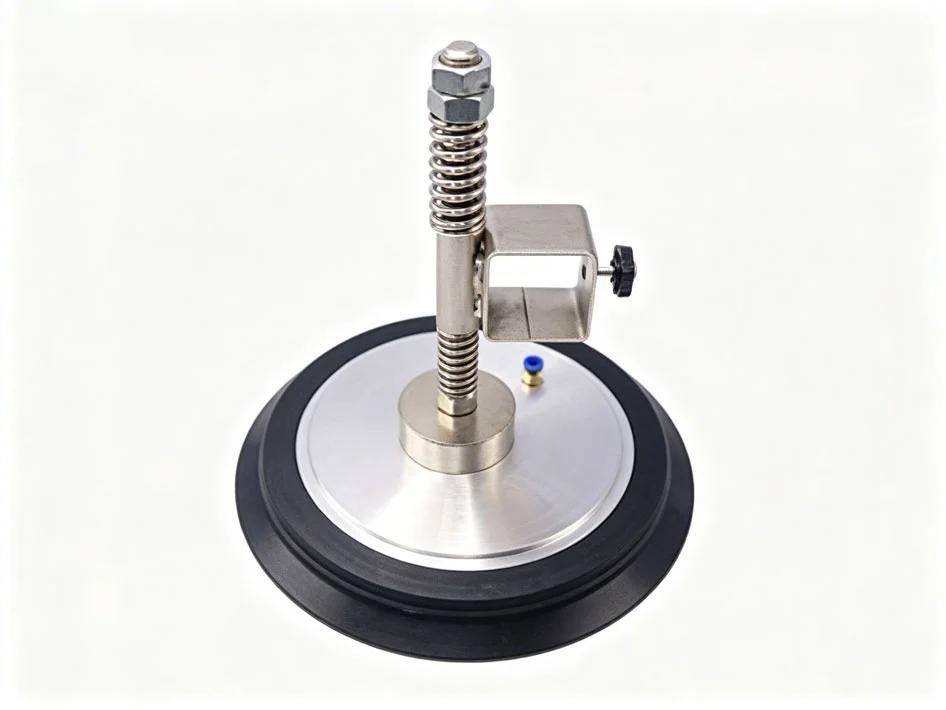
A metal stem threads into the pad. Often machined from brass or aluminum—here, CNC machining for vacuum cups produces the precision threads and sealing surfaces. Sometimes the stem includes a spring mechanism. This gives vertical compliance. The cup touches down gently instead of slamming into the part.
Anti-rotation features are another addition. A hex flat or a keyway stops the cup from twisting when the nut gets tightened. Small detail. Big difference in production.
Additional Components
The assembly does not stop at the stem and pad.
Fittings connect the vacuum line. A barbed fitting for soft tubing. A threaded fitting for rigid pipe.
Reducers step down the bore size. A large cup might need a small fitting. The reducer makes the connection possible.
Valve stems go inside some designs. These are flow control or release valves. They break the vacuum quickly when the part needs to drop.
All these vacuum cup parts must work together. A poorly machined stem ruins the seal. A badly molded pad collapses unevenly. The whole vacuum cup manufacturing process depends on getting each piece right.

How Are Industrial Vacuum Cup Parts Manufactured?
Different processes for different pieces. The rubber pad follows one path. The metal holder follows another. The small plastic bits take a third route.
Manufacturing the Rubber Suction Cup
Three molding methods dominate here. Each suits a different volume and performance need.
Compression molding works for large pads or low quantities. A preform of rubber gets placed into a heated cavity. The press closes. Squeeze and heat do the work. Simple tooling. Low startup cost. But cycle times run long.
Injection molding takes over for high volume. The rubber material—usually nitrile, silicone, or urethane—gets shot into a closed mold under pressure. Faster cycles. Tighter tolerances. Better consistency across thousands of parts. Most vacuum cup manufacturing for standard sizes uses this method.
Two-component molding, or 2K molding, makes dual-durometer cups. A hard rubber base gets molded first. Then a soft rubber lip gets overmolded onto it. The hard part holds shape. The soft part seals. This is an advanced plastic injection molding suction cup design. One machine. Two materials. One finished part.
CNC Machining for Metal Holders
Rubber pads need metal stems to connect to machinery. That is where chip-cutting comes in.
CNC lathes produce the stems and the threads. Bar stock feeds in. The spindle spins. A cutter shapes the outside. Then a threading tool cuts the internal or external threads. Clean, precise, repeatable.
CNC milling adds the non-round features. Hex flats for a wrench. Keyways for anti-rotation. Flat spots for set screws. Often, a part moves from a lathe to a mill. Sometimes a single multi-axis machine does both operations in one setup.
Common vacuum cup materials for these holders include brass for corrosion resistance and easy machining, aluminum for light weight, and stainless steel for food-grade or cleanroom environments. Each metal machines differently. Each suits a different application.
Plastic Injection Molding for Accessories
The small parts—fittings, reducers, valve bodies—rarely get machined from metal. Too expensive. Too slow.
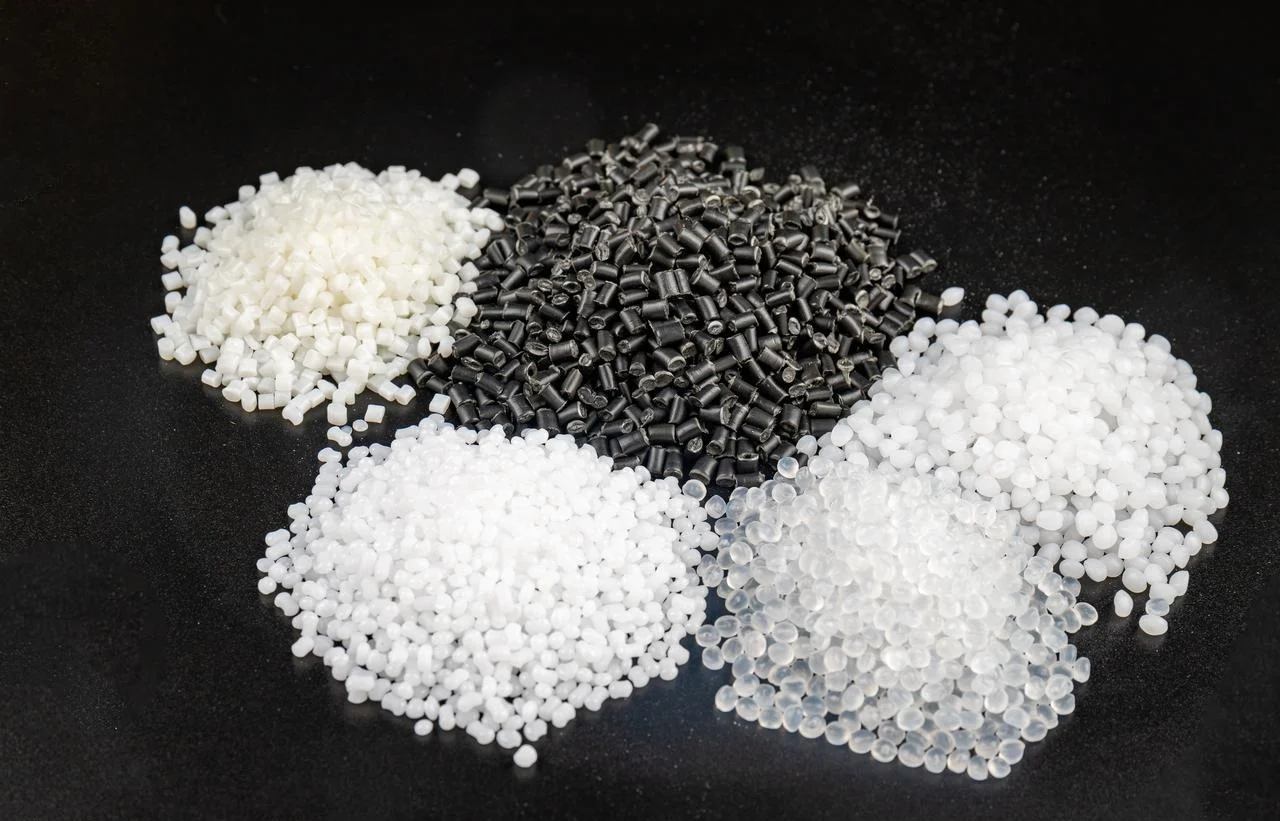
Instead, plastic injection molding suction cup components are produced from engineering plastics. PEEK handles high heat and aggressive chemicals. POM, also known as acetal, offers low friction and good stiffness. Nylon provides toughness and fatigue resistance. These vacuum cup parts get molded in multi-cavity tools. One shot makes four, eight, or sixteen pieces. Low per-part cost. High consistency.
Knowing which process applies to which component is half the battle in vacuum cup manufacturing. The rubber needs molding. The metal needs machining. The small plastic bits need injection. Mix them up, and costs spiral.
Do Industrial Vacuum Cups Require Special Post-Processing?
Yes. Molding or machining a part is not the end. The part coming out of the tool is raw. It needs finishing before it works reliably.
Post-Processing for Rubber Cups
Two steps are pretty much always used for molded rubber pads.
First, deflashing. The rubber flows into the mould cavity. Some of them always end up squeezed out between the mold halves. That thin excess is flash. It has to go. When it comes to small, delicate parts, cryogenic trimming is the way to go. So, the parts just sort of tumble around in the barrel. Liquid nitrogen makes the flash brittle. Use small plastic pellets to blast it off. The cup itself stays intact because the material it’s made from is thicker and tougher.
Second, post-curing. The freshly moulded cup goes into the oven. Heat makes the rubber cross-link more. This is called post-vulcanization. If you skip this step, the properties of the cup will change over time. Things can get a bit more difficult as time goes on. Compression sets make things worse. Oven treatment keeps everything stable.
If you miss these steps when making vacuum cups, you’ll end up with faulty field units. Flash can mess up the sealing. Uncured rubber doesn’t last very long.
Post-Processing for Metal Holders
The machined stem looks good off the lathe. It’s not finished yet.
Plating is the first step. Zinc or nickel plating makes them resistant to corrosion. An unplated steel stem will rust in a humid factory environment. Rust can damage the sealing surface. It also locks the fitting into the holder. Zinc plating is standard. Nickel plating costs more, but it can handle harsher chemicals.
Then it’s on to thread deburring. Cutting threads can leave sharp edges. Those burrs can cut into the rubber pad during assembly. Even worse, they cross-thread with mating fittings. You can use a wire wheel or a vibratory tumbler to knock the burrs down.
Thread rolling is a great alternative for high-strength stems. Instead of cutting, the threads are formed by rolling. No chips. And there are no burrs. The threads are stronger because the metal grain flows around the profile. This is pretty standard in premium CNC machining for vacuum cup operations.
Special Cleanroom & Food-Grade Finishing
Some apps need a few extra steps.
When it comes to cleanroom use, like for semiconductor handling and medical assembly, ultrasonic cleaning is the way to go. The parts go into a bath of deionized water. High-frequency sound waves create tiny bubbles that collapse and scrub every surface. It gets rid of dust, oils, and loose particles.
Food-grade applications add FDA-compliant rinsing. The cleaning agents and final rinse water must meet FDA regulations. Residual chemicals cannot contaminate food products. Sometimes a separate, dedicated production line is used just for these parts.
A normal industrial vacuum cup for an automotive plant is used for plating and deburring. The cup used for the cookie packaging line gets cleaned ultrasonically and rinsed with FDA-approved liquids. The base vacuum cup materials might be the same. Post-processing is what makes the difference.
What Materials Are Commonly Used for Industrial Vacuum Cups?
Rubber is a bit of a misnomer. Different compounds behave in completely different ways. If you pick the wrong materials for the vacuum cup, it’ll fail, no matter how well the cup was made.
Rubber is not one thing. Different compounds behave completely differently. Selecting the wrong vacuum cup materials guarantees failure regardless of how well the cup was molded.
| Material | Key Properties | Best Applications |
| Nitrile (NBR) | Oil resistance, good abrasion, general purpose | Machine shops, automotive assembly, oily surfaces |
| Silicone (VMQ) | Extreme temperature range (-60°C to 230°C), food-grade grades available | Baking lines, freezer applications, and medical devices |
| Polyurethane (PU) | Outstanding abrasion resistance, high tear strength, durable | Rough surfaces, concrete blocks, recycled materials |
| Natural Rubber (NR) | High friction coefficient, good elasticity, inexpensive | Cardboard boxes, corrugated fiberboard, paper goods |
How to Choose: A Practical Selection Guide
Three questions drive the decision.
- Is the environment hot or cold? Silicone works across the widest range. Nitrile gets stiff below -20°C. FKM handles heat but fails in the cold.
- Surface texture. Smooth glass needs a different material than coarse concrete. Polyurethane resists cutting on sharp or rough surfaces. Natural rubber grips smooth cardboard best.
- What chemicals are present? Oil demands nitrile or FKM. Outdoor exposure demands EPDM. Food contact demands FDA-grade silicone.
The right vacuum cup materials match the application. There is no universal compound. A cup that works perfectly on an oily engine block fails instantly on a frozen food box. Match the material to the job.

About NOBLE: Your Partner in Precision Manufacturing
Core Manufacturing Capabilities
- CNC Precision Machining (For Metal Holders & Fittings)
Multi-axis CNC turning and milling. Swiss lathes for small, complex stems. Live tooling enables hex flats and cross holes to be created in one setup.
Materials available: Brass (free-machining), aluminium (lightweight), stainless steel (304 and 316 for corrosion resistance) and alloy steel (for high-strength applications).
Tolerances down to ±0.005 mm on critical features. That is five microns. For comparison, a human hair is about 75 microns.
- Plastic Machining & Injection Molding
Rigid components need rigid plastics. Threaded bodies. Valve stems. Connector housings.
Prototyping runs through CNC machining first. Quick turnaround for design validation. Once the design locks, production moves to injection molding for lower per-part costs.
Materials available: PEEK (high heat and chemical resistance), POM/Delrin (low friction), Nylon PA6/66 (tough), ABS (general purpose), Polycarbonate (impact resistant).
The Direct Connection to Vacuum Cups
All these parts—the machined stem, the molded plastic fitting, the threaded adapter—go directly into suction cup assemblies. A custom vacuum cup tooling project often starts with the metal stem design. That is where NOBLE enters.
Quality Certifications
ISO 9001:2015 means consistent quality for general industrial parts. Automotive. Packaging. Electronics. Repeatable processes. International standards. A customer in Germany receives the same part as a customer in Texas.
ISO 13485:2016 steps up the requirements. Medical-grade quality. Full traceability from raw material batch to finished part. Cleanliness protocols. Risk management documentation. If the vacuum cup goes into medical device assembly or pharmaceutical packaging, this certification matters.
Why Partner with NOBLE?
- Vertical Integration. Raw material comes in one door. Finished parts go out to another. CNC machining, plastic injection, inspection, and shipping all happen under one roof. No handoffs to unknown subcontractors.
- Engineering Support. A DfM analysis runs on every new design. Can the holder be machined faster? Can the plastic part be molded with simpler tooling? The analysis happens before quoting. Customers receive lower costs and shorter lead times as a result.
- No MOQ Pressure. A research team needs five pieces for a prototype. A production line needs fifty thousand. NOBLE handles both. Start small. Scale up. No penalty for low volume at the beginning.
Our Commitment to Quality
Inspection Equipment. CMM (coordinate measuring machine) for complex geometries. Optical comparators for thread profiles. Digital micrometers and bore gauges for daily checks.
Traceability. For ISO 13485 parts, every batch gets a unique number. Material certs stay on file. Process parameters get logged. A recall scenario—should one ever happen—is contained and controlled.
Surface Finishing. Deburring happens on every machined part as standard. Plating (zinc, nickel) available in-house. Ultrasonic cleaning for cleanroom applications. No need to ship parts to a third party and hope for the best.
This is the offer. Precision components for industrial vacuum cup assemblies. No rubber. No empty promises. Just machined and molded parts that fit, seal, and last.
FAQ
Can I 3D print a vacuum suction cup?
Yes for prototyping. Use TPU filament. The flexible material works.
But do not use printed cups in production. The layer lines create microscopic channels. Air leaks through. The cup loses vacuum. A molded cup has solid walls. A printed cup has thousands of tiny gaps.
What is the difference between a bellow cup and a flat cup?
A flat cup seals against a smooth, flat surface. Glass. Sheet metal. Plastic panels. The lip contacts evenly. That is all it does.
A bellows cup has folded walls. These bellows compress and extend. This allows height compensation. Pick a warped board. Lift a box with an uneven top. The bellows absorb the difference. The cup also lifts with a short vertical stroke. That helps with fragile parts.
How do I stop silicone cups from leaving marks on glass?
Standard silicone leaves residues. Oils from the curing process transfer to the glass surface. The result is a cloudy ring or a greasy spot.
The fix is halogenated silicone. Some suppliers call it “traceless” or “mark-free” treated. The surface gets modified during molding. No oil migration. No marks. The glass stays clean.
Are brass or stainless steel holders better?
Brass machines easily. It resists corrosion in dry factory air. It costs less. For a standard assembly line picking plastic parts, brass works fine.
Stainless steel handles wet conditions. Washdown environments. Food processing lines. Cleanrooms with aggressive cleaning agents. 304 stainless resists rust. 316 stainless handles salt and stronger chemicals.
Choose brass for dry and cheap. Choose stainless for wet and regulatory. There is no universal “better.” Only what fits the application.