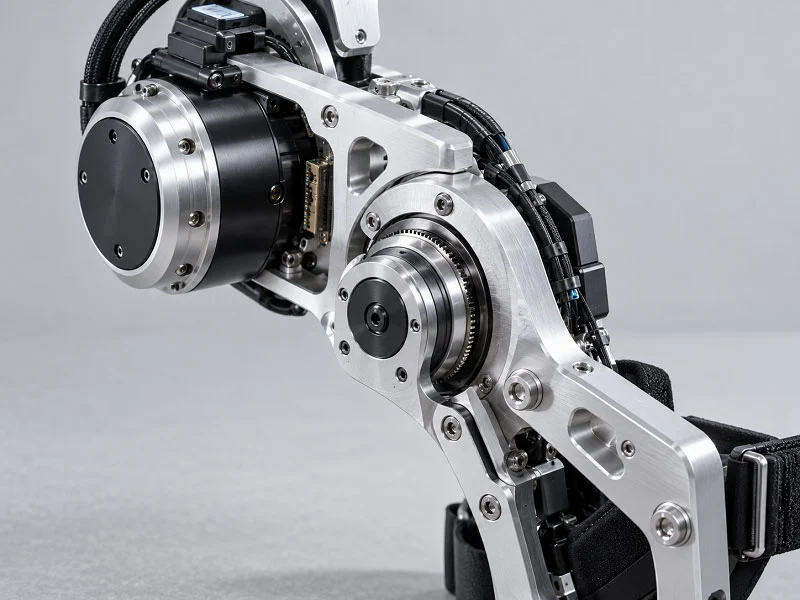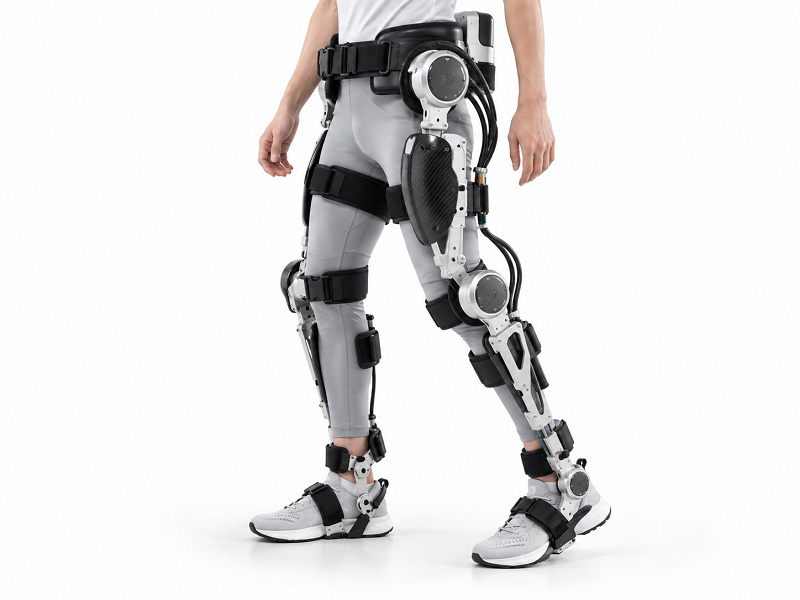
Elder care robots work hard. They run all day, get cleaned with strong chemicals, and gently lift weak people. That mix of constant motion, moisture, and human contact wears parts down quickly. So how do you balance cost, weight, and long-lasting strength in elder care robot parts? It’s a real puzzle. The answer often lies in two things: smart material choices and careful manufacturing. Get those right, and a robot keeps working safely for years. Get them wrong, and you face cracked housings, worn joints, and costly repairs. This article explores that important link between processes, materials, and long-term reliability.
Manufacturing Processes for Elder Care Robot Parts
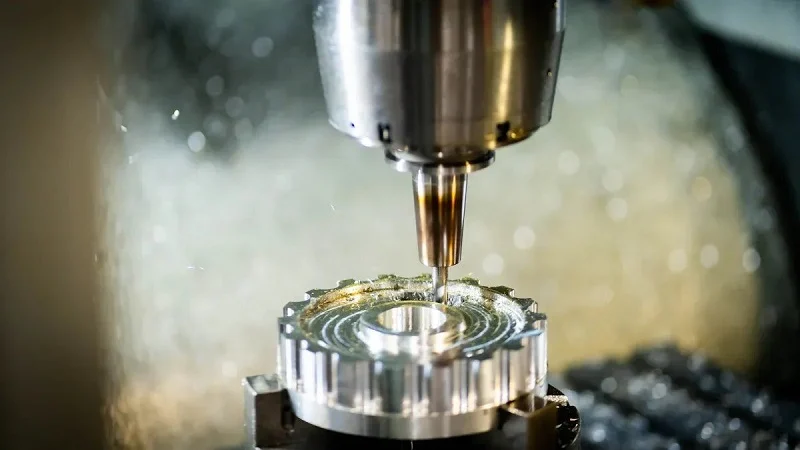
Elder care robots are hybrid systems. They mix custom elder care robot parts with standard ready-made components. The strength of these machines relies a lot on three manufacturing processes: CNC machining, injection molding, and sheet metal fabrication. Each process gives different benefits to the final assembly. Picking the right process for each component matters just as much as choosing the material. The precision parts handle movement and sensing. The molded elder care robot parts give protection and comfort. The sheet metal forms the load-bearing frame.
數控加工
CNC machining gives the manufacturing precision that makes elder care robot parts reliable. For any robotic joint assembly, the housing must hold bearings and seals in exact alignment. A small deviation means friction, noise, and early failure. That is why engineers choose machining over casting or 3D printing for these critical parts. The robot arm moves thousands of times each day. Every cycle puts stress on each joint.
關節和執行器的嚴格公差
For robot actuator housings, bores that accept bearings need tolerances of about ±0.01 mm or tighter. Critical sealing surfaces, bearing seats, and mounting interfaces often need just a few microns. A tight bore tolerance on the dual bearing seats stops micro-fretting. It also makes sure the load spreads evenly across the joint. This allows for precise positioning of the actuator within the housing. This level of precision comes from high-precision CNC machining. Elder care robot parts like actuator housings and joint cores gain the most. Even a tiny error at this stage grows into a big problem at the end of the arm.
Here is what a typical robotic joint housing demands:
| 獨特之處 | Achieved Tolerance / Specification |
| Cylinder bore diameter | ±0.0003英寸 |
| Bearing bore dimensions | ±0.0005英寸 |
| 同心度 | 0.001英寸 |
| 孔表面光潔度 | Ra ≥ 0.2 微米 |
These numbers show why CNC machining is essential for critical motion-control features. Positioning accuracy in a robotic arm starts with the housing. Without tight tolerances, repeatable positioning is simply not possible. The robot cannot deliver consistent results if the joints are sloppy. Each cut must be precise and repeatable across every part.
Surface Finishes for Wear Resistance
Surface finish matters just as much as dimensional accuracy. A bore surface finish of Ra 0.2 microns or better cuts friction in moving joints a lot. Dry film lubricants like MoS2 or PTFE go on internal sliding surfaces. These coatings keep wear low and stretch out service intervals. CNC machined robotics components also get surface treatments. Anodizing shields aluminum from corrosion. Passivation protects stainless steel from rust. A smooth surface also makes cleaning easier in a healthcare setting.
For high-precision motion-control applications, these finishes are vital. They keep precision motion components running smoothly for many years. This machining process turns raw metal into a durable, long-lasting asset.
CNC machined parts for robotics often include bearing seats, actuator housings, and mounting brackets. Each one needs careful attention during setup and cutting. CNC machined robot components demand the same thorough approach. The result is a subsystem that holds perfect alignment through thousands of cycles.
注射成型
大規模生產的一致性
Injection molding offers a stable and repeatable production process. Once the mold is right, every part comes out identical to the last one. This repeatable production process is vital when making hundreds of covers or housings for a robot line. The consistency removes variation that could affect fit over time. This manufacturing method works well for high-volume production runs. It keeps costs low while maintaining tight quality standards.
Material Flow for Structural Integrity
Material flow through the mold affects part strength in a direct way. Engineers set gate locations and cooling channels to avoid weak spots. The right flow prevents sink marks and voids inside the part. Mold designers use simulation software to predict how the material will behave. This step catches problems before steel is cut. The result is a component that handles repeated stress without cracking. Parts like outer shells and internal brackets benefit from good flow design.
鈑金加工
Bending and Welding Techniques
Sheet metal builds the structural backbone of many robots. Careful bending creates frames that hold heavy loads without excess flex. Welding joins pieces into rigid assemblies that resist twisting. Skilled operators control heat input to avoid warping thin sections. This process delivers precision-machined components at a lower cost than cutting from solid blocks. Thicker gauge steel works for base frames. Thinner material works for covers and skins.
Cost-Effective Solutions for Robot Bases
Robot bases often use bent and welded sheet metal. It costs much less than machining a base from solid metal stock. Yet it still provides the stiffness needed for stable operation. This manufacturing approach frees the budget for high-precision cnc machined elder care robot parts in the arm and gripper. These precision-machined parts go where accuracy matters most. The base does not need micron-level precision, but the joints do.
For teams moving from concept to full production, an experienced partner helps greatly. NOBLE, a leading manufacturing company in China, offers exceptional service capabilities and professional machining expertise. They help clients complete prototyping and mass production of elder care robot parts efficiently.
Metals for Elder Care Robot Parts
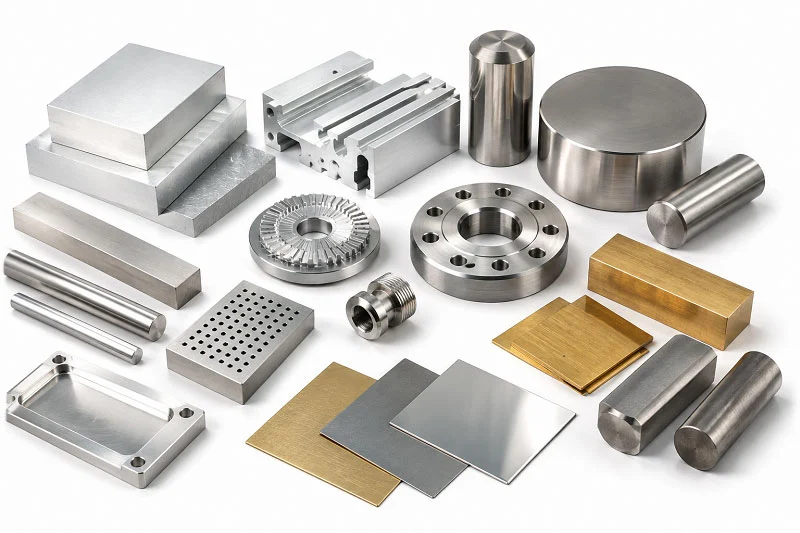
The metal you pick shapes everything about an elder care robot. It affects how well the robot works, what it costs, and how easily it moves around a room. Aluminum, stainless steel, and titanium each offer something different. Choosing the right one for each part is a key decision in robotics engineering.
Aluminum Alloys for Weight Reduction
Aluminum is the top choice when weight matters. It weighs about one-third as much as steel. That light weight helps mobile robots move faster and respond quicker. A lighter arm needs less torque from its motors. This saves energy and lets smaller actuators do the job. Motor brackets and support plates made from aluminum keep the robot light without losing too much strength. Aluminum also melts at a lower temperature than steel. This makes casting faster and uses less energy. The metal bends easily, so it forms complex shapes with little trouble. Rapid prototyping with aluminum is quick and cheap. Raw material costs stay low too. For elder care robot parts that move often, aluminum is a smart first pick.
Anodizing for Corrosion Resistance
Aluminum fights corrosion on its own. That helps in humid rooms or when cleaning chemicals are in the air. Anodizing makes that protection even stronger. The process builds a hard oxide layer on the surface. This layer handles repeated wiping and sanitizing. It also gives a smooth finish that is easy to clean. For a robotic joint housing or an end-effector frame, anodized aluminum gives a good mix of weight and toughness.
Stainless Steel for Hygiene and Strength
Stainless steel brings great strength to the table. It resists bending under high torque and stress. That makes it perfect for high-wear joints and load-bearing elder care robot parts. The material also fights corrosion well in most environments. It is worth noting that stainless steel can still rust in some harsh settings. A protective coating may be needed there. In a practical sense, stainless steel shines in hygiene-critical areas. It does not hold onto bacteria easily. It stands up to harsh disinfectants. Support plates and structural brackets made from stainless steel give the robot a rigid, stable frame.
Applications in High-Wear Joints
High-wear joints need a material that lasts. Stainless steel delivers that durability. It keeps its shape after thousands of cycles. The metal also holds precision under repeated stress. That keeps positioning accuracy stable over time. A robotic joint housing made from stainless steel will not warp or wear out quickly. This reliability matters when the robot helps a person get out of a chair. The joint must not fail.
Titanium for Critical Components
Titanium offers top-level durability. It has a high strength-to-weight ratio. That means it is strong like steel but much lighter. Titanium also resists corrosion extremely well. It handles harsh chemicals and moisture without breaking down. These traits make it perfect for critical components. End-effector frames and high-stress motor mounts benefit from titanium. The material keeps its precision even under heavy loads. It also lasts a very long time.
Justifying the Cost for Premium Durability
Titanium costs more than aluminum or steel. The raw material is expensive. Machining it takes longer too. So why use it? For some elder care robot parts, the extra cost pays off. A critical joint that cannot fail justifies the investment. A component that needs to last for many years without maintenance makes titanium worth it. The trade-off is clear. Heavier metals increase durability but also raise weight and expense. Titanium finds the sweet spot for parts where failure is not an option.
From a manufacturing standpoint, metal choice affects efficiency. Aluminum casts faster and uses less energy. Steel takes longer and demands more energy. But steel gives longer lifespan and lower maintenance in demanding settings. CNC machining for metals allows tight tolerances down to 0.01 mm. That precision is vital for precision structural elder care robot parts. Additive manufacturing enables complex geometries too. Both processes impact manufacturing efficiency and part precision.
It is worth noting that material choice also affects sustainability. Aluminum is highly recyclable with a lower energy recycling process. Steel is infinitely recyclable but needs more energy per cycle. These factors matter for companies watching their environmental footprint.
Here is a quick comparison of aluminum and steel for elder care robot parts:
| 方面 | 鋁合金 | 鋼鐵 |
| Manufacturing efficiency (casting) | Lower melting point, faster and more energy-efficient | Higher melting point, energy-intensive and longer cycles |
| 製造靈活性 | High malleability, complex shapes and rapid prototyping | Less malleable, longer lead times |
| Part performance – weight | Lightweight, about one-third of steel | Heavy, provides stability and rigidity |
| Part performance – strength | Moderate strength, good for moderate loads | Exceptional strength, resists deformation |
| Part performance – durability/corrosion | Naturally corrosion-resistant | High wear resistance but prone to rust |
| 經濟影響 | 降低前期成本 | Higher upfront cost but longer lifespan |
The right metal for each part depends on the job. Aluminum for movement. Stainless steel for hygiene and strength. Titanium for critical, long-life components. Each choice affects how the robot performs and how long it lasts. Precision-machined parts from these metals form the backbone of any reliable elder care robot.
Plastics and Elastomers for Elder Care Robot Parts

Metal takes the heavy loads. Polymers deal with the touching. Today’s plastics and elastomers handle most of the daily wear in elder care robot parts. They soak up impact, reduce vibration, and lower weight. They also form the surfaces that a patient actually feels. That blend of usefulness and comfort makes polymer choice a key engineering decision.
Engineering Plastics for Structural Applications
POM and Nylon for Gears and Bearings
POM and nylon are the go-to materials for motion. Both stand up to repeated sliding contact. Both keep their shape under steady load. POM gives low friction and great dimensional stability. Nylon adds toughness and good fatigue resistance. Gears molded from these plastics run quieter than metal ones. They also need no outside lubrication in many designs. That matters in a care setting where grease stains are not acceptable.
Precision makes these elder care robot parts stand out. Molded gear teeth must hold tight tolerances to mesh cleanly. A wobbly tooth profile causes noise, heat, and early failure. The same precision applies to bearing seats and bushing bores. Good tooling and controlled shrinkage keep every cavity the same.
Polycarbonate for Impact-Resistant Covers
Polycarbonate takes a hit without cracking. It offers outstanding impact strength across a wide temperature range. Robot covers face bumps from wheelchairs, door frames, and dropped objects. Polycarbonate shrugs those off. It also lets light through, so indicator panels can sit behind a single cover. In a practical way, this plastic protects both the electronics and the people nearby.
Medical-Grade Plastics for Safety
ABS and PC/ABS Blends for Housing
Hygiene drives material choice in care robotics. Medical-grade ABS and PC/ABS blends resist repeated cleaning with disinfectants. They handle alcohol wipes and harsh chemicals without hazing or cracking. These grades also meet biocompatibility expectations for skin contact. External shells, control panels, and sensor housings all benefit. The blend balances ABS toughness with polycarbonate strength. Making these housings by injection molding keeps wall thickness even and surfaces smooth. Smooth surfaces leave nowhere for bacteria to hide.
Elastomers for Grip and Sealing
Silicone and TPE for Soft-Touch Interfaces
Silicone and TPE give robots a gentle touch. Both feel soft against skin. Both grip well, even when wet. Silicone handles high temperatures and stays flexible in cold rooms. TPE bonds easily to rigid plastic in a two-shot molding process. Handles, armrests, and lift straps use these elastomers. Sealing components rely on them too. Gaskets and O-rings keep moisture out of joint cavities and electronics bays.
Wear still happens at contact points. Researchers are exploring self-healing polymers that repair damage on their own.
Researchers are actively exploring the potential of self-healing materials, such as polymers, that can repair themselves after damage, extending the lifespan of robotic skins and reducing maintenance costs. Such materials are particularly valuable in companion robots that frequently engage in tactile interactions where wear and tear are inevitable.
That direction points to longer service life and fewer repairs down the road.
Design Considerations for Elder Care Robot Parts

Good design decides how long elder care robot parts last. A robot is a system of moving parts. Friction, weight, and alignment all threaten precision. Design for Manufacturability (DFM) and Design for Assembly (DFA) tackle these threats early. DFM is not just about saving money. It drives performance and reliability. Poor DFM creates thin walls that vibrate during machining. That leads to bad surface finish and shorter fatigue life. Good DFM optimizes designs for standard tooling and simple setups. The result is higher repeatability and more consistent part quality. That repeatability matters in robotic components. Small differences between identical elder care robot parts cause misalignment, extra wear, and eventual failure.
Design for Manufacturability and Assembly
Reducing Part Count to Minimize Failure Points
Every extra part adds a new chance for failure. Fewer elder care robot parts mean fewer joints, fasteners, and alignment steps. DFM and DFA push engineers to combine functions into single components. A machined bracket that also serves as a heat sink removes a separate piece. This approach cuts assembly time and lowers the risk of loose connections. It also improves precision across the whole assembly. A robotic joint housing with fewer sub-components holds alignment better over thousands of cycles.
Designing for Easy Maintenance
Robots in care settings need quick service. Parts should come out without special tools or full teardown. DFM supports this by grouping wear items near access panels. Modular joints let technicians swap a worn unit in minutes. That keeps downtime low and extends the robot’s useful life. It also protects positioning accuracy because the replacement part drops into the same precision interface.
Integrating Off-the-Shelf Components
Balancing Custom and Standard Parts
Elder care robots are hybrid systems. They mix custom precision elder care robot parts with standard components. Motors, sensors, cameras, and microphones often come off the shelf. Custom CNC machined parts handle the critical interfaces. This balance saves cost and time. It also lets engineers focus tight tolerances where they matter most. A standard gearbox bolted to a custom housing gives both reliability and fit.
NOBLE, a leading manufacturing company in China, helps clients strike this balance. Their team supports DFM and DFA reviews from the first sketch. They guide projects from design through production of elder care robot parts.
Ergonomic and Safety-Centric Design
Rounding Edges and Pinch-Point Prevention
Safety requirements shape every surface a person might touch. ISO 13482 mandates pinch-point protection. Joints and hinges must be enclosed or padded to prevent finger trapping. Rounded corners and soft outer materials lower impact force during unexpected contact. Stability and a low center of gravity also resist tipping when a person leans on the robot. These features are not extras. They are core design rules for any machine working near frail users.
From a practical perspective, safety and durability go hand in hand. A rounded, padded joint housing protects the user and the mechanism inside. Good manufacturing makes those shapes repeatable at scale.
Quality Assurance for Elder Care Robot Parts

Quality assurance keeps elder care robot parts working well. Two main standards lead the work: ISO 9001:2015 and ISO 13485:2016. These rules say how parts are made and tested. Without them, a robot could break when it is needed most.
ISO 9001:2015 品質管理
This standard covers each step of making elder care robot parts. Raw materials are checked when they arrive. Machines get regular tuning. Workers follow written steps. The goal is simple: make each part the same way every time. The standard tells how to run the process, not what to make.
過程控制和可追溯性
Process control means each step has a clear goal. A CNC machine cutting a housing checks its own sizes during work. If a size changes, the machine stops. Traceability goes further. Each part gets a date code. You can find when it was made and what material batch it came from. That helps if a problem appears later.
ISO 13485:2016 for Medical Device Standards
This standard builds on ISO 9001. It adds rules just for medical devices. Elder care robots touch people directly. So they must meet medical-grade standards. This certification shows a maker knows the extra care these elder care robot parts need.
Risk Management and Biocompatibility
Risk management looks at each way a part could break. A crack in a housing could show electronics. A worn seal could let water into a joint. The team finds these risks and makes tests to stop them. Biocompatibility checks that materials are safe for skin touch. ISO 10993 often guides these checks. The result is a robot that stays safe even after years of use.
Testing Protocols for Durability
Good making gives a strong starting point. Testing proves the part lasts over time. Makers run several types of tests before sending out a design. These tests push elder care robot parts to the edge of breaking.
Lifecycle Testing and Environmental Stress Screening
Lifecycle testing runs parts through many cycles to see when they break. A robot joint might open and close fifty thousand times in a test setup. Engineers measure wear at set times. ISO 9283, updated in 2017, gives the rules for these performance tests. It helps check actuator and joint durability. ASTM standards add steps for environmental conditioning and fast life tests.
Environmental stress screening puts elder care robot parts in extreme conditions. High heat, freezing cold, and high humidity are all tested. A housing that cracks under heat change fails the screening. That finds problems before the robot goes into a care home.
Precision bearing seats get extra care during these tests. A bearing seat with even a little wear changes alignment. That causes noise and early failure. Careful testing measures these issues. That step shows how far testing and making have come.
NOBLE: Manufacturing Elder Care Robot Parts

NOBLE is a manufacturing partner that focuses on metal and plastic processing for elder care robot parts. The company takes care of everything from a first sketch to a tested assembly. That range matters when a robot must run all day and stay safe near frail users.
Comprehensive Metal and Plastic Processing
From Rapid Prototyping to Full-Scale Production
Prototyping leads to better design. NOBLE runs iterative rapid prototyping so engineers can refine a part, test it, and refine it again before launch. A working prototype lets the team check real behavior and make changes early. Rapid injection molding then makes identical durable elder care robot parts for testing and backups.
The shop floor covers several processes under one roof.
| 過程 | 製程能力 | 材料種類 | Applications in Elder Care Robots |
| 數控加工 | Swiss machining tolerances to ±0.005 mm; surface finish Ra 0.4–0.8 µm; roundness 0.005 mm | Aluminum 6061-T6, 7075-T6, stainless steel, engineering plastics | Gears, shafts, actuator housings, bearing seats, joint yokes |
| 注射成型 | High-cavitation tools; ribs, bosses, snap fits; wall thickness 2–4 mm | Engineering plastics, PEEK, Ultem; ISO 10993-compliant grades | Complex housings and covers |
| 鈑金加工 | Frames, brackets, enclosures; 3–5 day lead time for small batches; EMI shielding near 60 dB attenuation | Aluminum 5052/6061, copper, stainless steel 304/316 | Robot frames, brackets, EMI-shielded electronics housings |
That mix of high-precision cnc machining and molding gives each part the right process. It also creates a repeatable production process across every batch.
Certified Excellence in Manufacturing
Commitment to ISO 9001:2015 and ISO 13485:2016
NOBLE holds ISO 9001:2015 and ISO 13485:2016 certifications for medical devices. These standards govern our manufacturing for medical robots. ISO 13485:2016 adds requirements for medical applications. We control contamination risks for surgical tools. We maintain traceability for high-precision medical robot parts. Every batch from precision CNC machining comes with full documentation.
ISO 13485 adds risk management aligned with ISO 14971, design controls, and process validation for welding and heat treating. Batch records and Device History Records back every unit. Post-market surveillance feeds complaints back into the system.
End-to-End Services from Design to Assembly
Supporting Your Project Beyond Production
NOBLE supports projects past the production line. Design review, prototyping, volume manufacturing, assembly, dimensional testing, and documentation all sit in one workflow. Traceability runs through it.
- Robotic arms receive updated toolpath instructions from CAM software.
- In-process measurements feed back to adjust machining parameters.
- All output logs to the ERP system, creating a feedback loop from design to delivery.
- Dimensional drift triggers an automatic adjustment or alarm, stopping defective elder care robot parts.
That loop cuts lead times, lowers error rates, and keeps quality steady from first article to final delivery.
Durability in elder care robot parts comes down to balance. You weigh strength against weight. You weigh hygiene against cost. Then you match each part to the right process. CNC machining holds tight tolerances. Injection molding scales up cleanly. Sheet metal keeps bases affordable. None of this happens by accident. It takes deliberate design choices and strict quality control at every step. Standards like ISO 9001:2015 and ISO 13485:2016 keep that work honest. So pick a manufacturing partner who knows the elder care industry. They should understand the rules, the risks, and the real demands of robots working near frail users every day.
FAQ of Elder Care Robot Parts
Which manufacturing process gives the best precision for elder care robot parts?
CNC machining is the winner here. It keeps tolerances as tight as ±0.01 mm on bearing seats and actuator housings. That level of precision keeps joints lined up through thousands of cycles. Injection molding and sheet metal work fine for covers and frames, but critical moving elder care robot parts need machining.
Why does surface finish matter on elder care robot parts?
A smooth bore lowers friction in moving joints. A finish of Ra 0.2 microns or better helps a great deal. Dry film lubricants like MoS2 or PTFE then stick better. The result is less wear and longer gaps between repairs.
When should I pick titanium over aluminum or stainless steel?
Titanium costs more and takes longer to machine. But it has a high strength-to-weight ratio and resists corrosion very well. Use it for critical parts where failure is not an option, like end-effector frames or high-stress motor mounts. Aluminum is good for saving weight. Stainless steel handles hygiene and wear.
Are medical-grade plastics really necessary for elder care robot parts?
Yes, for any surface a person touches. Medical-grade ABS and PC/ABS blends stand up to repeated disinfectant wiping without hazing or cracking. They also meet biocompatibility expectations for skin contact. External shells, control panels, and sensor housings all gain from these grades.
What standards should a manufacturer hold for elder care robot parts?
Look for ISO 9001:2015 and ISO 13485:2016. The first covers process control and traceability. The second adds medical device rules like risk management and biocompatibility. Together they show a maker understands the extra care these parts demand.
How do I test whether elder care robot parts will last?
Lifecycle testing runs joints through many cycles, often fifty thousand or more, while measuring wear. Environmental stress screening adds heat, cold, and humidity. ISO 9283 gives rules for performance tests. Precision bearing seats get extra attention because small wear changes alignment.
Can I mix off-the-shelf components with custom elder care robot parts?
Absolutely. Motors, sensors, and gearboxes often come standard. Custom CNC machined parts handle the critical interfaces. This balance saves cost and time. It also lets engineers focus tight tolerances where they matter most, like joint cores and actuator housings.
What design features keep elder care robot parts safe for frail users?
Rounded edges and enclosed joints prevent pinching. ISO 13482 mandates pinch-point protection. Soft outer materials lower impact force during unexpected contact. A low center of gravity resists tipping. These features protect the user and the mechanism inside, so safety and durability reinforce each other.