How do you choose the right ways to make mobile robot chassis parts and the right materials for them? That choice affects everything—cost, strength, weight, and how fast you can make more units. Choose wrong, and your robot might be too heavy, too weak, or too costly to build. Get it right, and your mobile robot chassis works well without going over budget. This matters whether you’re building one prototype or thousands of units. In robotics, every chassis decision affects the whole design. So, what should guide your choice? You’ll want to think about part shape, how many you’ll make, and environmental needs together. Let’s break down the options so you can match each robot part to the best process and material.
Common Manufacturing Processes for Chassis Parts
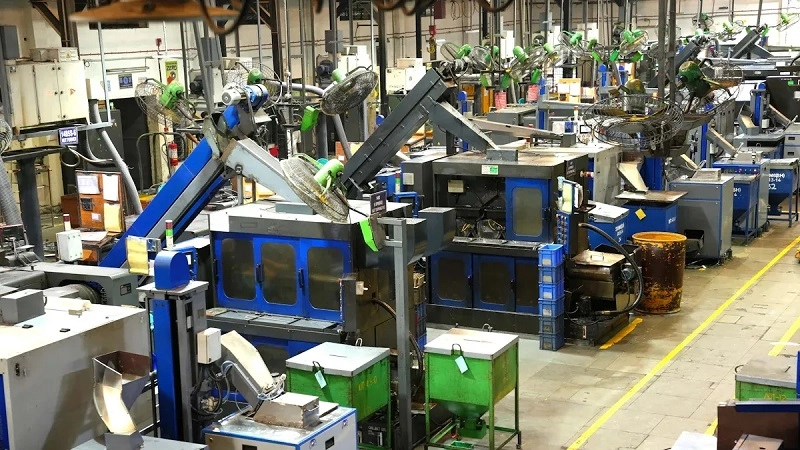
Four main ways cover most mobile robot chassis parts: CNC machining, injection molding, sheet metal fabrication, and off-the-shelf components. Each one fixes a different problem. It is worth noting that real production rarely picks just one. A typical robot frame mixes sheet metal fabrication, CNC work, welding, finishing, and assembly into a single build.
CNC Machining for Chassis Parts
CNC machining cuts metal or plastic from a solid block. A computer controls the tools, so the shape follows a program. This subtractive method works best when a part needs tight tolerances and repeatable geometry.
When CNC Machining Fits
CNC fits motion-critical hardware. Actuator housings, joint bodies, and motor mounts all depend on it. The process gives high dimensional accuracy, and that accuracy repeats across every unit. For core precision components, a stable tolerance of ±0.01 mm can be reached. Critical features can hit ±0.003 mm with proper environmental controls and inspection. One aluminum 7075-T6 robotic joint housing, for example, held ±0.005 mm with concentricity between dual bearing seats. Those numbers matter in robotics, where a wobbly joint ruins navigation.
Cost and Lead Time Trade-Offs
CNC needs no mold, so upfront costs stay low. That makes it good for prototypes and low-volume runs. Parts arrive in days. The downsides? Someone must write the CNC code, material gets wasted, and single units carry a high investment per part. Still, for one-off brackets or a short bridge run, nothing beats the speed.
Injection Molding for Chassis Parts
Injection molding pushes melted plastic into a metal mold. The mold shapes every part the same way. Cycle times are fast, and material waste is minimal.
Volume Thresholds for Molding
Molding pays off at scale. Aluminum tooling works for volumes under 50,000 parts. Steel tooling becomes best from 100,000 to 1M+ parts, where per-part cost drops sharply. Below those thresholds, the math rarely works.
Tooling Costs and Design Constraints
Tooling drives the decision. Aluminum molds cost $2,000 to $10,000 for low-to-medium complexity single-cavity work. Steel molds run $10,000 to $100,000+, and multi-cavity hardened steel can go past $200,000. Changing an aluminum mold costs about 10% of a steel change, which runs $5,000–$20,000. Molding also limits you to moldable plastics, and tolerances are looser than CNC. These parts usually carry no structural load, though integrated clips, ribs, and cable-routing features come free in the mold.
Sheet Metal Fabrication for Chassis Parts
Sheet metal fabrication shapes flat stock into frames and brackets. It is fast, cheap, and stiff enough for most chassis work.
激光切割、折弯和焊接
Laser cutting handles the profile. Bending creates the folds. Welding locks everything together. MIG suits structural frames and brackets, though high heat can warp thin gauge. TIG works well on stainless and aluminum with visible seams. Resistance spot welding joins lap panels fast but needs electrode access on both sides. Laser welding keeps a narrow heat-affected zone for tight distortion budgets. On thin sheet, thermal distortion is the real enemy, not joint strength. Stitch welding, balanced sequencing, and rigid fixturing keep flatness.
Suitability for Frames and Brackets
Standard stock thicknesses keep design simple. Aluminum comes in 0.020, 0.032, 0.040, 0.050, 0.062, 0.080, 0.093, 0.100, 0.125, 0.190, and 0.250 inches. Steel spans 0.018 up to 0.375 inches. These sizes cover most chassis and bracket applications.
Off-the-shelf components round out the picture. Bearings, fasteners, and extrusions arrive ready to bolt on. Buying them beats machining every small piece. From a practical perspective, manufacturing for robotics is a mix-and-match game. The right blend of processes keeps cost, weight, and performance in balance.
Common Materials for Chassis Parts
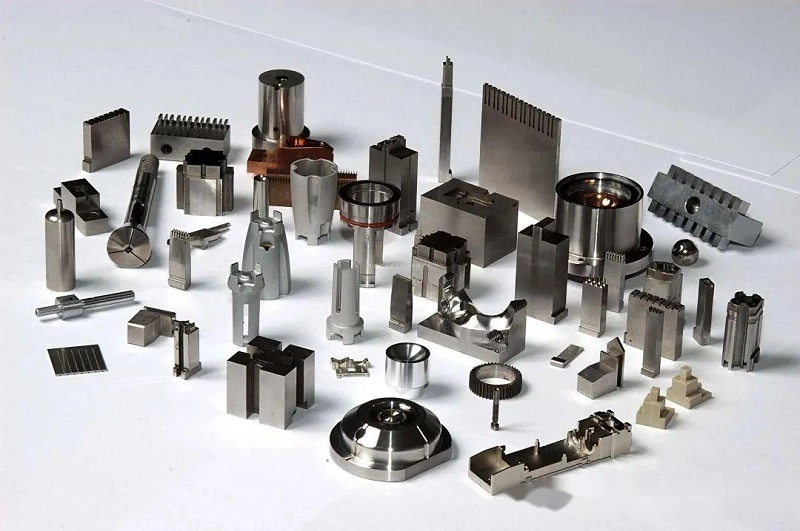
The material you pick for mobile robot chassis parts affects the whole build. A welded frame, a plastic housing, and a 3D-printed bracket each need a different material. The right choice balances strength, weight, cost, and how you plan to make the parts. For robotic systems, every gram and every dollar matters. Picking good materials early prevents costly redesigns later.
Metals for Chassis Parts
Aluminum Alloys: Strength-to-Weight Balance
Aluminum is the top choice for most robot chassis builds. Alloys like 6061-T6 machine well. Its strength-to-weight ratio beats steel, so aluminum works great for frames and brackets. For parts that need more strength, 7075-T6 offers higher yield strength while keeping weight low. Picking aluminum usually comes down to cost versus strength needs.
Steel and Stainless Steel: Durability and Cost
Steel costs less per kilogram than aluminum. It offers higher stiffness and lasts longer under shock loads. But it weighs almost three times as much. Stainless steel 17-4 PH stands out for robotic systems. It resists rust and can be heat-treated for high strength. Many robot builders use it for brackets, mounts, and custom fasteners. Making steel parts usually involves welding and machining.
Titanium: High Strength, Low Weight
Titanium Ti-6Al-4V offers high strength with a significant weight reduction, but at a high cost. Machining titanium is challenging and wears tools quickly. You see titanium only on weight-critical parts like high-performance drone frames or precision arms. For most chassis builds, aluminum or steel makes more sense.
Plastics for Chassis Parts
ABS: Impact Resistance and Cost
ABS handles impact well and keeps costs low. It works great for covers, housings, and non-structural brackets. ABS costs about $1.40 to $1.80 per kilogram in volume. That makes it a baseline material for indoor robot housings. The trade-off? Lower stiffness than metals. For lightweight AMR robot parts, ABS hits the right balance of cost and toughness.
Nylon: Wear Resistance and Flexibility
Nylon 6/6 with 30% glass fill (PA66 GF30) jumps to $3.50–5.50 per kilogram. Unfilled PA6 sits at $2.80–3.80/kg. For gears, bushings, and structural brackets, the added wear resistance and durability justify the cost. Nylon handles repeated stress better than ABS. These materials for AMR robot parts offer better mechanical performance than commodity plastics.
Commodity tier (ABS, PP, HDPE): $1.20–2.00/kg in 1–5 ton annual volume. First true engineering tier (PA6, POM, PC, PBT): $2.50–5.50/kg. Glass fiber adds roughly $0.80–1.50/kg; flame retardant adds $0.50–2.00/kg. Prototype quantities (under 500 kg/year) run 2–4× these numbers due to compounder minimums.
Composites and 3D-Printed Materials for Chassis Parts
碳纤维和玻璃纤维
Carbon fiber offers an excellent stiffness-to-weight ratio. A carbon fiber frame provides significant weight savings over aluminum. But the material cost runs high, and production needs skilled layup. Fiberglass is a more affordable alternative with good stiffness for its weight. Both materials work well where weight and performance matter more than cost.
DMLS and 3D-Printed Parts
Direct Metal Laser Sintering builds parts layer by layer from metal powder. For complex shapes you cannot machine, DMLS unlocks new design options. Stainless steel 17-4 PH prints well. The as-sintered condition gives 800 MPa yield strength with only 4% elongation. Heat treatment to H900 pushes yield to 1100 MPa and elongation to 7%. Finer 20-micron resolution delivers 1227 MPa yield and 10% elongation after heat treatment. For small runs of complex AMR robot parts, DMLS competes with machining.
| Condition | 屈服强度 (MPa) | 伸长率(%) |
| As-Sintered | 800 | 4 |
| Heat-Treated (H900) | 1100 | 7 |
| 20 μm Resolution, H900 | 1227 | 10 |
| 30 μm Resolution, H900 | 1234 | 13 |
Material selection for robot parts comes down to matching the material to the part’s job. Load-bearing frames need metals or composites. Covers and light brackets work fine in plastics. For robotic systems, good material selection makes the difference between a robot that works and one that fails.
Design Considerations for Chassis Parts
Geometry and Load Paths
Ribs, Gussets, and Wall Thickness
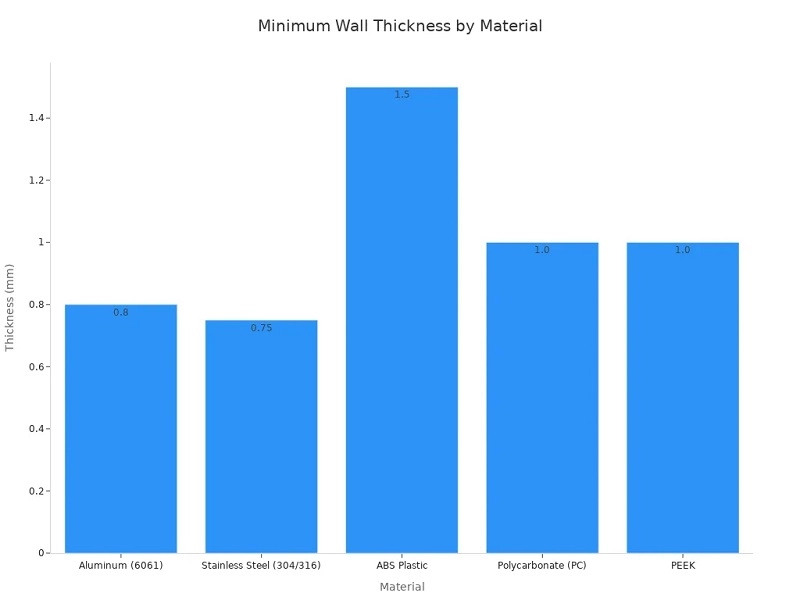
Wall thickness sets the starting point. For CNC machined aluminum, the safe minimum is 0.8 mm. Most robot links run between 2 and 4 mm to save weight while keeping strength.
Ribs make a part stronger without making it heavier. For CNC parts, keep the height-to-thickness ratio between 5:1 and 10:1. Height should not be more than 4 times width. Add a fillet radius of R2 to R4 mm at the base. Three long ribs can more than double bending strength with no added weight.
Injection molded parts follow different rules to avoid sink marks and ensure ejection. Ribs are typically thinner than the main wall, and draft angles are added to the mold.
Stress Concentration and Fatigue
Every sharp corner creates stress. Fillets fix that. Keep pocket depth-to-width at 4:1 or less. For holes, depth should be limited relative to diameter to maintain tool access and accuracy. In robotics, constant vibration is a fact of life. Ribs and gussets spread loads across wider areas to lower peak stress and improve long-term durability.
装配特点
Fasteners, Snap-Fits, and Adhesives
Each joining method has trade-offs. Threaded fasteners create high stress at bolt locations. Vibration can loosen them over time. For metal-to-plastic joints, thermal differences concentrate stress at fasteners.
Adhesive bonding solves many problems. It spreads load evenly across the joint. Adhesives resist vibration and create watertight seals. They weigh less by skipping extra hardware. This approach improves durability and performance.
| 因素 | 螺纹紧固件 | 胶粘结合 |
| 应力分布 | High at fastener points | Even across joint |
| 抗疲劳 | 需要特别护理 | (卓越)等级 |
| 抗振性 | Can loosen | 良好 |
| 腐蚀风险 | 高 | 低 |
| 异种材料 | 展会 | (卓越)等级 |
| 耐温性 | 高 | 差 |
| 重量影响 | 较重 | 打火机 |
Adhesives handle heat poorly. They can creep under constant load. Good designs use adhesives for shear loads and fasteners where disassembly matters.
Tolerance Stack-Up and Alignment
Every part has a tolerance. Stack them up and error can push the robot out of alignment. Different materials make it worse.
Aluminum, carbon steel, and stainless steel have different coefficients of thermal expansion, which must be accounted for in assemblies with mixed materials.
A steel ball screw can expand significantly during a duty cycle, affecting alignment and backlash.
For critical assemblies, match CTE values or design clearance for the full temperature range. Good material selection prevents many alignment problems.
环境和热因素
腐蚀和化学物质暴露
The operating environment guides material selection. Aluminum resists most conditions. Stainless steel offers high strength in harsher settings. Plastics like ABS and nylon resist common chemicals.
Heat Dissipation and Material Stability
Metal chassis parts support loads and conduct heat from motors. Aluminum conducts heat much better than steel, making it advantageous for thermal management.
Material stability under temperature change affects long-term performance. Parts that expand each cycle can drift out of alignment. Use materials with similar CTE to reduce drift. When that is not possible, add compliance to the design. For robotic systems, this attention to detail improves performance.
These design considerations for AMR robot parts must come early in the project. Wall thickness, ribs, assembly method, and material choice all work together. Get them right and the robot delivers high strength without excess weight. Get them wrong and you fight drift and fatigue.
Decision Framework for Chassis Parts
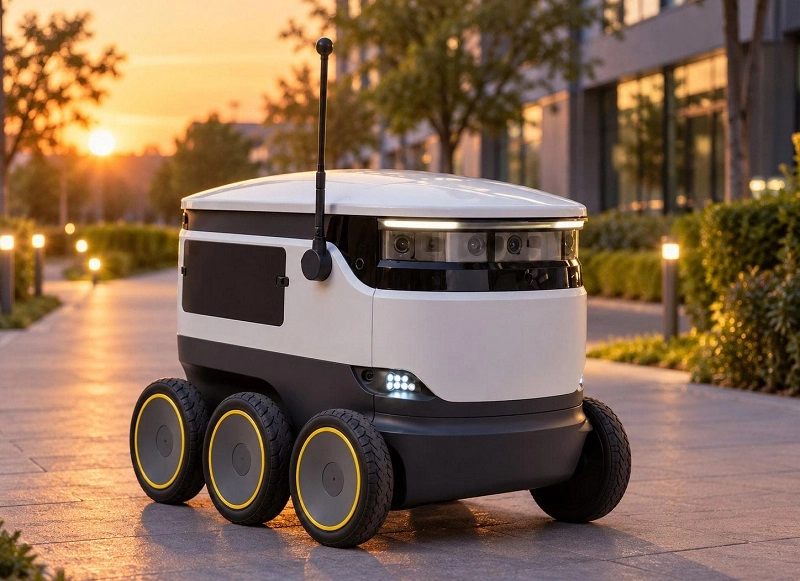
This framework connects shape, quantity, and budget for mobile robot chassis parts. It turns part features into real manufacturing choices. The goal is to avoid expensive mismatches between design and production.
Matching Process to Part Complexity
Part shape often decides which processes you can use. Complex inner features rule out some methods completely.
Simple Brackets vs. Complex Housings
A flat bracket works with any process. A housing with inner channels does not. The table below shows how cnc machining and injection molding compare.
| 特性 | 数控加工 | 注射成型 |
| 内部通道 | Limited by tool access; often need multiple setups or 5-axis machining, which raises cost | Complex inner shapes can be molded directly, cutting secondary operations |
| 咬边 | Hard to machine because tools cannot reach, driving up cost and complexity | Can be molded directly, removing secondary operations |
| Overall cost/feasibility impact | High complexity and cost for inner channels and undercuts; better for low volumes or shapes that cannot pop out of a mold | More workable for complex inner features, but undercuts may make ejection harder and raise mold costs |
It is worth noting that cnc machining is preferred when part complexity includes shapes that cannot easily pop out of a mold. This makes cnc good for low-volume production. For example, a housing for a robotic system might have deep cavities and sharp inner corners.
The part geometry includes deep cavities, sharp internal corners, or features that require 5-axis simultaneous machining.
This shape requires 5-axis machining. Injection molding would have trouble with ejection here.
Feature Size and Surface Finish
Small features and tight finishes push a part toward cnc machining. Surface finish needs also affect processes. Material selection matters here. A smooth finish is easier to get in some materials than others. Sheet metal fabrication is limited by bending radii. It fits structural frames where exact precision matters less.
Matching Material to Production Volume
The best material is useless if you cannot afford to make it. This is where material selection meets production planning.
Low-Volume Prototyping vs. Mass Production
For low volumes, cnc machining leads. There are no molds to build. You can iterate overnight. For mass production, molding becomes the norm. The high upfront tooling cost is spread across millions of parts. Sheet metal fabrication sits in the middle. It gives high strength and moderate cost.
Bridge Tooling and Hybrid Approaches
Many teams use bridge tooling. They prototype with cnc or sheet metal to test the design. Then they use a softer aluminum mold to make pre-production parts. This lets them test the market before committing to a steel mold. A hybrid approach works well: a molded part is machined on critical surfaces. This balances cost savings with tight tolerances.
比较成本和交货时间
Unit cost is only one factor. Total cost of ownership includes tooling, scrap rate, and lead time.
Unit Cost vs. Total Cost of Ownership
A CNC part has no tooling cost, but higher unit cost. An injection molded part has high tooling cost, but low unit cost. The right choice depends on total production count. Performance and durability also affect total cost. A stronger part might let you cut weight elsewhere. Selecting the right process for amr robot parts depends on these trade-offs.
Lead Time Drivers by Process
Lead time is driven by setup. Manufacturing processes each have different lead times. A partner like NOBLE, a leading manufacturing company in China, provides outstanding service. Their expertise helps clients produce amr robot parts. NOBLE excels at manufacturing for robotics, ensuring high strength and low weight in every robot component. Their reliable parts serve demanding applications. They understand that robotics requires precision. NOBLE works with clients to improve performance in every robotic system they build. Every robot benefits from their expertise in material selection. The right material makes all the difference. A good robot designer knows this. A great robot builder chooses NOBLE.
NOBLE: Mobile Robot Chassis Parts Manufacturing Partner
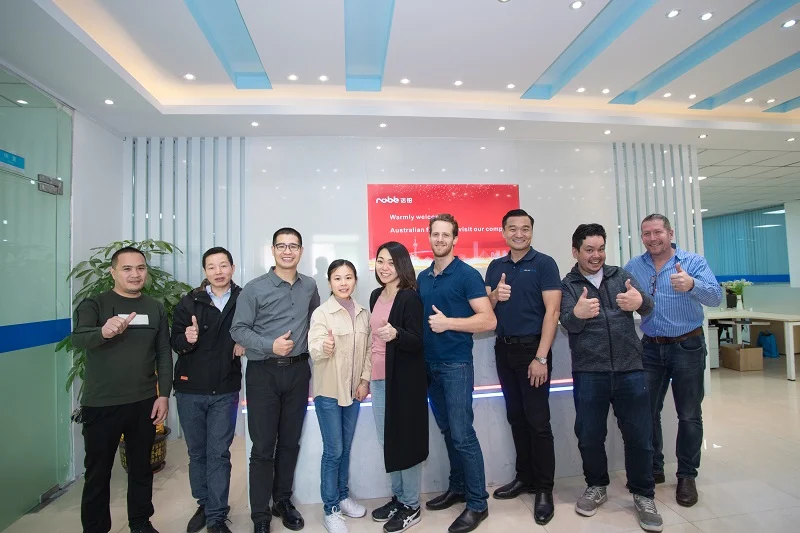
NOBLE works on metal and plastic processing for mobile robot chassis parts. The company takes care of everything, from checking the design to putting the final product together. For robotic systems, having all that in one place saves time and stops mix-ups. Their robotics knowledge helps make every step of production and material selection better.
金属和塑料加工技术
CNC Machining, Injection Molding, and Sheet Metal
NOBLE does three main processes right in its own shop. CNC machining covers 3, 4, and 5-axis milling plus turning, achieving high precision suitable for robotic components.
Injection molding takes care of plastic and metal parts. NOBLE uses steel and aluminum molds, with steel molds lasting for high-volume production and aluminum molds for shorter runs. Press tonnage is selected based on part size and material.
Sheet metal fabrication completes the set. NOBLE offers bending, welding, cutting, and stamping, with tight tolerances appropriate for chassis frames and brackets.
| 制造工艺 | 关键能力 |
| 数控加工 | 3, 4, 5-axis CNC milling, CNC turning, post-processing |
| 注射成型 | Plastic injection molding, metal injection molding, mold making, post-processing |
| 钣金加工 | Bending, welding, cutting, stamping, surface finishing |
Design Support Through Assembly
NOBLE’s services go past just making parts. The team helps with part design, material selection, and assembly planning. They suggest the right process for each component to get the best performance based on your volume and timeline.
For low-volume runs, they use CNC machining or vacuum casting. For high-volume production, they switch to high-volume molding or sheet metal fabrication. Secondary machining like polishing, powder coating, and painting is done in-house. Parts show up ready to assemble.
认证和质量标准
NOBLE holds quality management certifications that ensure process control and traceability. Inspection records back up every shipment. You can trace each part back to its production batch.
Full-Service From Prototype to Production
You can start with a prototype and grow to thousands of units without switching suppliers during the robot build. NOBLE handles low-volume manufacturing with CNC machining and high-volume work with injection molding and sheet metal fabrication.
In-house quality control catches issues early. The team understands manufacturing for robotics. They balance strength and weight and pick the right material for each robot application.
Every way of making mobile robot chassis parts fixes a different problem. CNC machining is best for tight tolerances and small batches. Injection molding lowers the cost of each part when you make many. Sheet metal fabrication gives you stiff frames quickly. Ready-made parts save time on small hardware. In real life, most builds mix several processes together.
Picking materials works the same way. Aluminum balances weight and strength. Steel lasts longer but weighs more. Titanium saves weight but costs a lot. Plastics and composites cut cost or weight. Match your material to your volume, then let the decision framework guide you. Check what your part needs before you decide.
FAQs of Mobile Robot Chassis Parts
How do I pick between CNC machining and injection molding for mobile robot chassis parts?
It comes down to volume and shape. CNC wins for low runs and tight tolerances. Molding pays off past 50,000 parts with aluminum tooling. Complex inner channels favor molding, while undercuts and deep cavities push you toward cnc work.
What material works best for a lightweight robot frame?
Aluminum 6061-T6 or 7075-T6 usually hits the sweet spot. Both offer a strong strength-to-weight ratio. For applications requiring even lighter weight, advanced composites can be considered, though they may involve higher cost and more complex manufacturing.
When does sheet metal fabrication make sense for chassis parts?
Sheet metal shines for frames and brackets. Laser cutting, bending, and welding turn flat stock into stiff structures fast. Standard aluminum thicknesses run from 0.020 to 0.250 inches. Steel spans 0.018 to 0.375 inches. It is cheap and quick.
How many units do I need before injection molding becomes worth it?
Aluminum tooling works under 50,000 parts. Steel tooling becomes best from 100,000 to 1M+ parts. Below those thresholds, the tooling cost rarely pays off. Bridge tooling with a softer aluminum mold helps test the market first.
What causes tolerance stack-up problems in mobile robot chassis parts?
Every part carries a tolerance, and errors add up. Mixed materials make it worse because different materials expand at different rates. For critical assemblies, match CTE values or design clearance for the full temperature range to keep alignment tight.
Why do ribs and gussets matter in chassis design?
Ribs add strength without adding weight. For CNC parts, keep the height-to-thickness ratio between 5:1 and 10:1. Three long ribs can more than double bending strength. In molded parts, ribs are typically thinner than the main wall to avoid sink marks.
What certifications should a manufacturing partner hold for robotics work?
Look for a manufacturing partner with quality certifications that ensure process control and traceability. NOBLE provides design support through final assembly.
Can one supplier handle both prototyping and mass production?
Yes, and it saves time. NOBLE starts with CNC machining or vacuum casting for low volumes. They switch to injection molding or sheet metal fabrication for high-volume runs. In-house secondary operations like polishing and powder coating mean parts arrive ready to assemble.