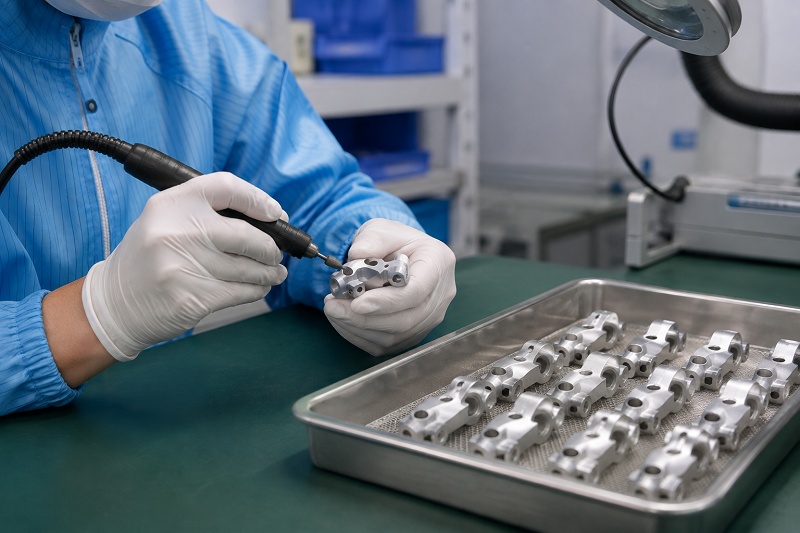
Medical components and parts that have undergone basic forming processes such as CNC precision machining, injection molding, sheet metal bending, and stamping often have surface defects and cannot be directly put into clinical use.
Therefore, it is necessary to optimize the surface performance, internal structure, cleanliness standards, and clinical use safety of the parts through professional post-machining techniques, and ultimately make the product meet multiple compliance standards such as the ISO13485 medical device quality management system, FDA medical material certification, and domestic medical device production norms.
It is smoothly adapted to various strict medical scenarios such as short-term contact with the human body, clinical surgical operations, and long-term in-body implants.
This article will summarize and review the six major machine sections, namely surface treatment machine, multi-stage precision cleaning machine, heat treatment and stress relief machine, precision assembly and testing machine, terminal sterilization machine, and pre-treatment basic deburring machine, to answer the mainstream post-treatment machine types, technical characteristics, and key points of clinical application of medical components and equipment.
Basic deburring machine for medical components
Deburring is a pre-treatment process for medical components after they are formed.
All medical parts that have undergone mechanical cutting, injection molding, laser welding, and other treatments will inevitably have defects at the corners, inner walls of through holes, sealing grooves, and other positions. These minor defects, which only affect the appearance of ordinary industrial products, can cause serious safety hazards in medical scenarios.
To thoroughly avoid risks, medical-grade deburring strictly adheres to the high-standard machining principles of zero burrs, no sharp edges, no dimensional loss, and no debris residue, to prevent clinical problems such as burrs on parts scratching human tissues, blocking precision infusion pipelines, and hiding dust and bacteria causing cross-infection.
At present, the mainstream deburring methods in the medical industry include manual fine finishing, vibration grinding, and precision deburring with centrifugal discs, among others. These machines can be flexibly adapted according to the complexity of the part structure, dimensional accuracy requirements, and production batch.
Manual finishing is mostly used for minimally invasive surgical instruments, irregular-shaped precision sensor accessories, small medical connectors, and other complex-structured high-precision small parts.
Vibration grinding is suitable for a large number of standard parts such as medical screws, small fixed brackets, and standard metal gaskets.
Deburring of centrifugal discs is specifically designed for ultra-thin tube walls, micro-implanted components, and precision parts that are prone to deformation. The machining loss can be precisely controlled within the medical tolerance range without damaging the original accuracy of the parts.
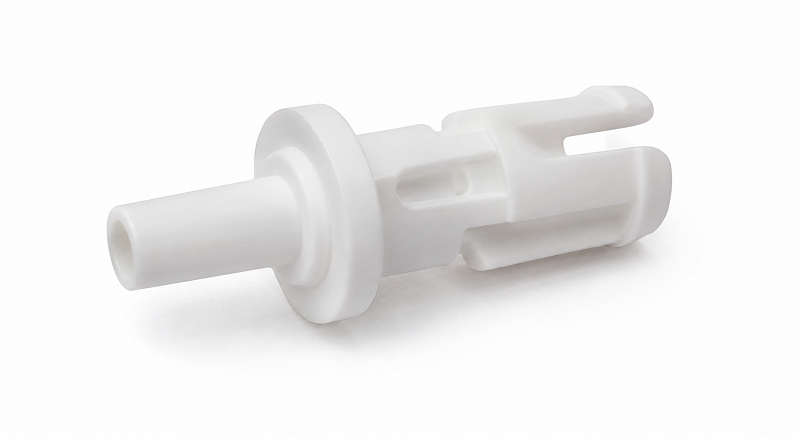
Surface treatment machine for medical components
Surface treatment is a fine machining technology that optimizes the corrosion resistance, wear resistance, biocompatibility, and special functionality of medical components. It can fundamentally improve the physical and chemical properties of the surface of parts, significantly enhance the clinical adaptability and service life of medical devices, and is a core machine for improving the quality and compliance of medical components.
The machine can be selected specifically based on the material of the parts, application scenarios, and medical functional requirements. It mainly covers five core sub-machines: electrolytic polishing, passivation, sandblasting, oxidation electroplating, and medical coating. It is widely used for various medical stainless steel, titanium alloy, aluminum alloy, and other components.
Electrolytic polishing precisely flattens the microscopic protrusions on the surface of parts based on the principle of electrochemical dissolution, effectively eliminating machining tool marks and microscopic cracks, significantly enhancing surface flatness and corrosion resistance. The industry has strict medical roughness control standards. The Ra value of conventional surgical instruments that come into contact with skin and tissues is < 0.4 μm, and the requirements for interventional instruments that directly contact blood and blood vessels are even higher.
With Ra < 0.1 μm, the extremely smooth surface can effectively reduce platelet adhesion and lower the risk of thrombosis.
Passivation treatment mainly targets implantable metal materials such as 316L stainless steel and titanium alloy. Through chemical reactions, a dense and stable oxide protective film is formed on the surface of the parts, isolating corrosion from external media, significantly improving the biocompatibility of the parts, and effectively avoiding problems such as rejection and inflammation after implantation. It is an essential machine for implantable medical devices.
The Sandblasting machine uses high-pressure sterile abrasive to spray and clean water scale, oxide scale, oil stains, and fine burrs on the surface of parts. At the same time, it can precisely control the surface roughness. The bone-contact surface of orthopedic implants is generally treated by sandblasting roughening, which greatly increases the contact area between the bone and the prosthetics, promotes bone growth and fusion, and improves the stability of the implant.
In addition, anodizing can effectively enhance the surface hardness and corrosion resistance of medical aluminum alloy shells. Electroplating processes such as chromium and nickel plating can form a uniform metal protective layer, improving the wear resistance and surface gloss of the parts. Special medical antibacterial coatings can form a safety protective layer on the surface of the parts, achieving functions such as anti-corrosion, antibacterial, and insulation, and are suitable for various special medical application scenarios.
Meet the clinical use and long-term reuse requirements of different medical devices.
Precision cleaning machine for medical components
Precision cleaning is a machine that eliminates residues from part machining, prevents secondary pollution, and ensures aseptic production. It determines the subsequent sterilization effect and the safety of clinical use of medical devices. It is an indispensable finishing machine after the formation of all medical components and also serves as a link between surface treatment and the sterilization machine.
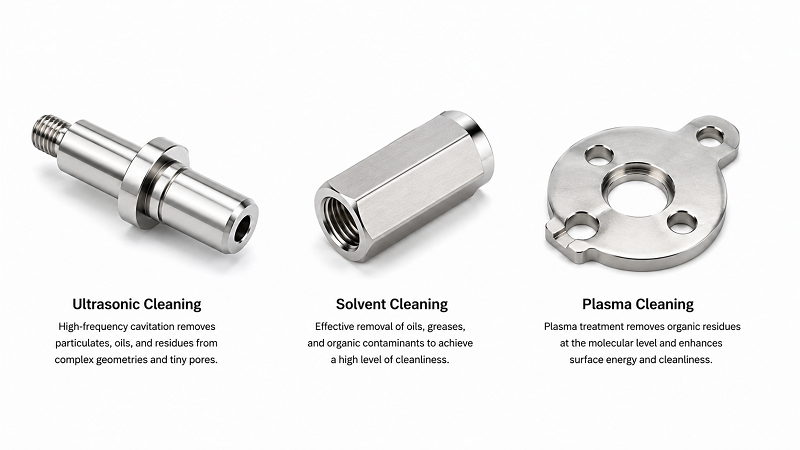
Medical-grade cleaning discards the rough method of ordinary water washing and forms a precise cleaning system with multi-machine collaboration, including three types of machines: ultrasonic cleaning, solvent cleaning, and plasma cleaning, which are suitable for precision components of different structures and materials.
Ultrasonic cleaning, relying on the shock waves generated by high-frequency vibration, can penetrate deep into the pores, grooves, and complex cavities of parts, remove fine dirt and tiny burrs, and is suitable for precision instruments with complex structures.
Solvent cleaning uses medical organic solvents such as alcohol and acetone as media, specifically to dissolve and remove organic contaminants such as grease and lubricants from the surface of parts, solving the problem of oily residues that cannot be removed by ordinary cleaning.
Plasma cleaning is a high-end precision cleaning machine. It uses low-temperature plasma active particles to decompose nano-scale organic residues. The entire machine is residue-free and does not require secondary rinsing. It will not damage heat-sensitive materials and is especially suitable for high-end medical components with micro precision and complex structures, ensuring that the cleanliness of the parts meets the standards in all aspects.
Standardized precision cleaning procedures can avoid problems such as bacterial growth, cross-infection, and material corrosion caused by machining residues, meeting the ISO13485 medical production cleanliness standard and laying a solid clean foundation for the sterile release of medical devices from the factory.
Heat treatment and stress relief machine for medical components
Heat treatment and stress relief machines are mainly used to optimize the internal metallographic structure of medical components, stabilize dimensional accuracy, enhance material performance, and solve problems such as deformation, cracking, and insufficient strength of parts after machining. They are widely applied to metal and special plastic medical parts and are functional machines that ensure the long-term stable use of high-precision medical devices.
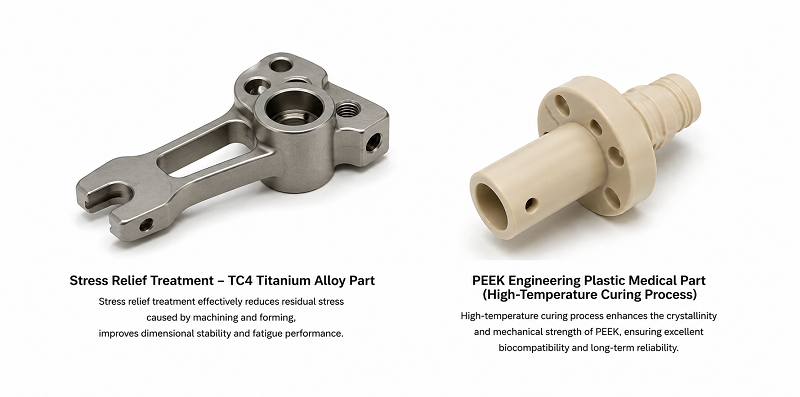
Among them, stress relief treatment is a machine for metal precision parts. For TC4 titanium alloy and high-precision stainless steel components, after machining, vacuum annealing and natural aging treatment are carried out to eliminate the internal residual stress generated by mechanical machining, 3D printing and welding, avoiding deformation and failure of the parts during long-term use and repeated sterilization, and ensuring the dimensional stability of precision instruments.
For medical parts made of special engineering plastics such as PEEK, a high-temperature curing machine is adopted. Through treatment in a precisely temperature-controlled high-temperature oven, the material’s density, tensile strength, and structural stability are effectively enhanced, and the durability and anti-aging performance of plastic components are optimized.
Medical-grade heat treatment is carried out throughout in a sterile vacuum environment, strictly controlling temperature errors to prevent oxidation, contamination, and material variation of parts. It meets the production standards of high-end implantable devices and high-precision medical structural components, enhancing the reliability and service life of medical devices from within the materials.
Precision assembly and performance testing technology for medical components
Assembly and testing are the post-machining procedures for the formation and integration of medical devices. They carry forward the pre-machining procedures such as surface treatment, cleaning, and heat treatment, achieving the finished product integration and quality verification of scattered components. They are the links that control the quality of medical device finished products and eliminate batch defects.
Medical equipment is mostly composed of multiple precision components. It relies on precise assembly machines in a dust-free workshop to complete the alignment of accessories, sealing assembly, and structural splicing in accordance with industry standards and design parameters, ensuring the assembly accuracy and overall compatibility of the equipment, and eliminating problems such as loose assembly, poor sealing, and structural misalignment.
After assembly is completed, comprehensive performance and safety tests need to be carried out, covering multiple dimensions such as dimensional accuracy tests, sealing tests, and mechanical property tests, to verify the performance, stability, and safety of the equipment in use.
All testing procedures strictly follow the industry norms for medical devices. Unqualified products will be returned for rework to avoid potential risks in clinical use from the production terminal. We ensure that every finished device and every set of component assemblies meet the design and medical compliance standards, providing comprehensive quality assurance for clinical use at the terminal.
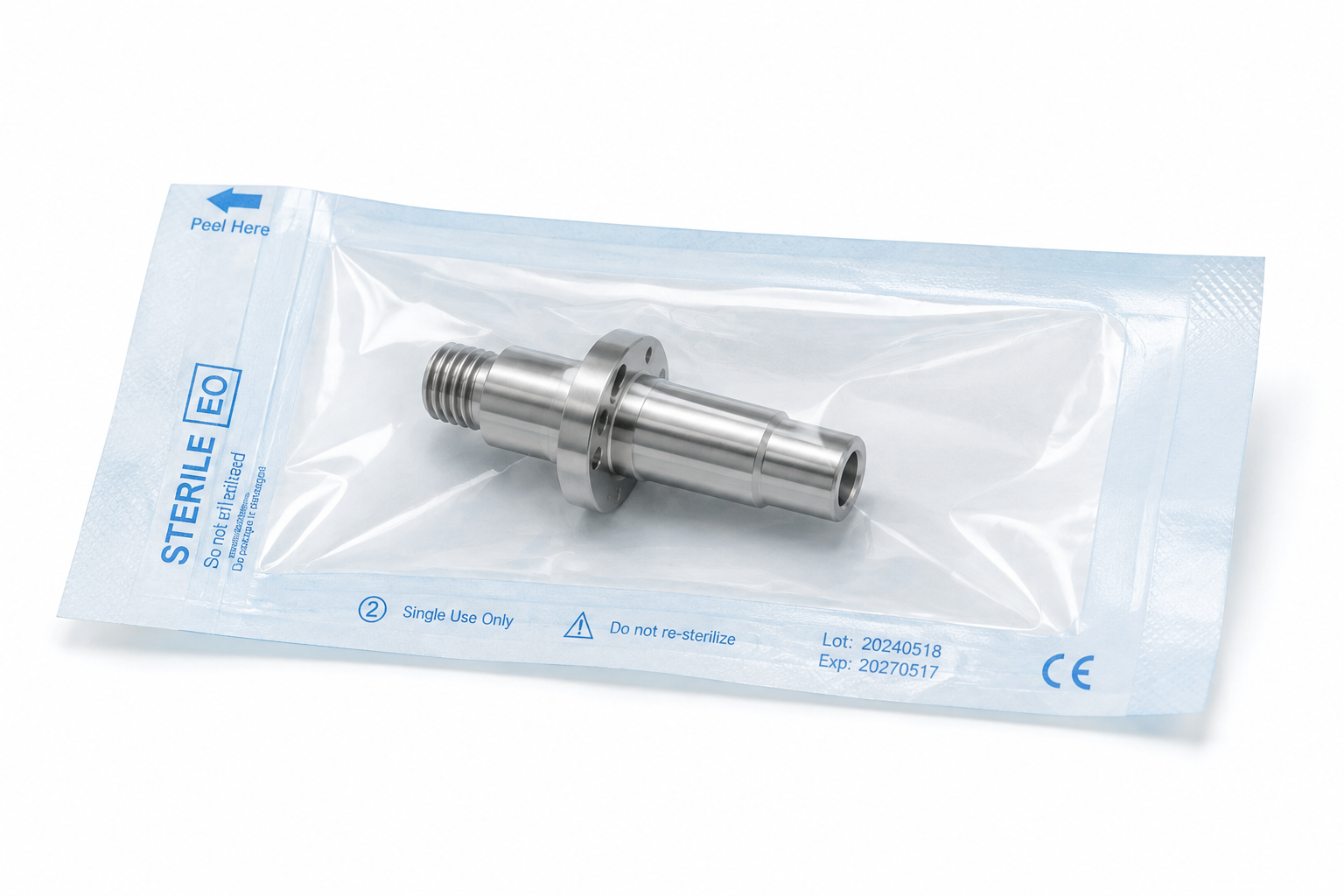
Sterilization treatment machine for medical devices
The sterilization machine is the last core procedure before medical components and equipment leave the factory. It serves as a barrier to prevent the spread of bacteria, viruses, and other microorganisms, ensuring the safety of clinical use. It is also the key to the compliant listing of sterile medical devices and directly determines the safety of clinical use of medical devices.
Medical sterilization machines should be selected differently based on the material of components, structural characteristics, and application scenarios. The mainstream machines in the industry include pressure steam sterilization, ethylene oxide sterilization, and low-temperature plasma sterilization.
Pressure steam sterilization has wide applicability, thorough sterilization, and high safety. It is mostly used for conventional products such as metal surgical instruments and stainless steel parts that can withstand high temperatures and high pressures.
Ethylene oxide sterilization has extremely strong adaptability and can be used for plastics, silicone, and precision electronic and medical components that are not resistant to high temperatures or high pressures. It has strong penetration and can achieve all-round sterilization of complex structures.
Low-temperature plasma sterilization is a high-end aseptic treatment machine. It is highly efficient at low temperatures, leaves no residue, and causes no pollution. It is suitable for high-end precision and highly sensitive minimally invasive instruments and implantable components, and can protect the performance of parts from damage to the greatest extent, meeting the aseptic usage requirements of medical institutions at all levels.
Why choose NOBLE as your medical parts manufacturer
NOBLE is a Sino-British joint venture awarded by the government as a “National High-tech Enterprise”. We have two major business directions: “Smart Manufacturing” and “Care Products”. The “Smart Manufacturing” business specializes in providing customers with project support services, including parts machining and manufacturing.
More than 10 years of professional manufacturing and rapid prototyping experience. Our efficient team provides strong support for your new projects to 100% realize your requirements; Standardized management brings strict quality control of parts & products; a reasonable workflow lowers costs with the same quality.
After years of hard work and development, NOBLE has gradually transformed from a precision parts machining and manufacturing enterprise with complete industrial chain supporting service capabilities to a service-oriented enterprise that provides full support for customers’ entire projects.
NOBLE is your trusted one-stop custom manufacturing solution, from prototype design to manufacturing, through huge manufacturing resources, suitable technology, streamlined machines, expert guidance, and perfect quality inspection machines to turn your ideas into reality.
NOBLE has the following qualification certificates:
ISO 9001: 2015 – Robust quality management for general manufacturing. Consistent machinery. Documented control. Traceable inspection.
ISO 13485: 2016 – Stricter quality standards for medical device parts. Rigorous machine validation. Full traceability. Required for implantable and surgical parts.

Conclusion
In summary, the post-machining of medical components is a progressive and rigorous precision manufacturing system. The six core machine each perform their own duties and work in coordination to form a complete closed loop for the machining of medical parts. Each machine strictly adheres to the ISO13485 and FDA medical compliance standards to address issues such as physical defects, insufficient performance, and substandard cleanliness of the parts.