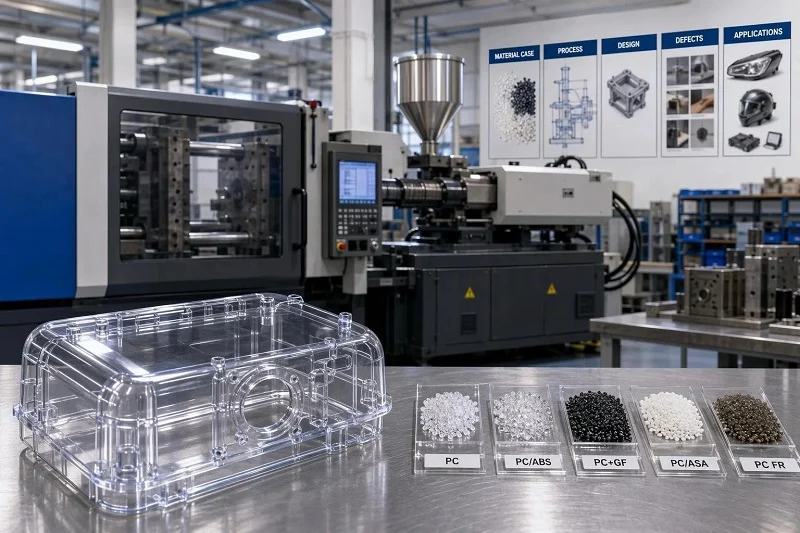
Polycarbonate injection molding sits at the demanding end of thermoplastic processing: the resin rewards careful drying, high melt temperatures and hot molds, and in return delivers impact strength, transparency and heat resistance that few commodity plastics match. That combination makes it a frequent candidate for housings, lenses, guards and precision components — and a frequent source of expensive mistakes when a project treats it like ABS.
This guide works through the decisions in the order a project meets them: whether polycarbonate fits the part at all, how the molding process actually runs, what the design must respect, which defects signal which failure, where the material is used, how it compares with alternative resins and processes, and what to verify in a supplier before releasing a tool. Each section stands on its own, but the fit test in the first section governs everything after it.
What Is Polycarbonate Injection Molding and When Does It Fit Your Part?
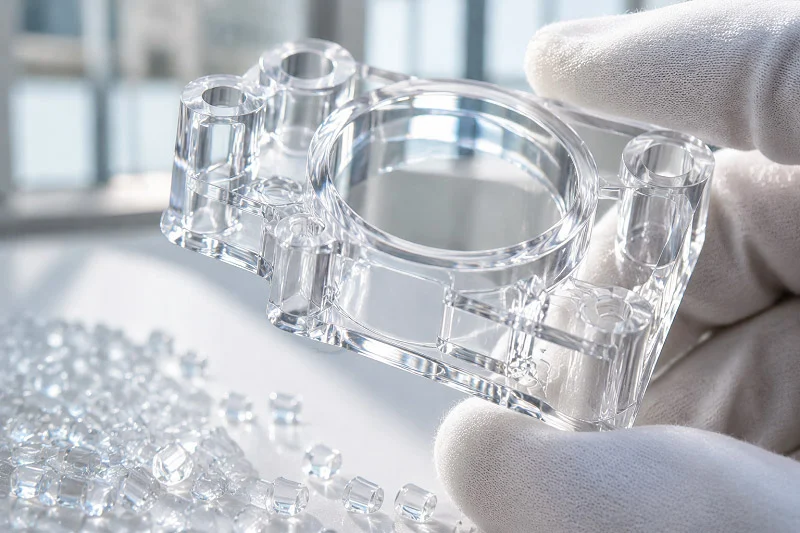
Polycarbonate injection molding is the process of melting polycarbonate pellets at roughly 280–320 °C and forcing the melt into a temperature-controlled mold at 80–100 °C, where it cools into a finished part. It fits when the part needs high impact resistance, transparency or heat resistance at the same time, and when the geometry and volume justify a steel tool. It fits poorly when the part will sit in aggressive solvents, face long-term UV exposure in an unstabilized grade, or must be produced at the lowest possible resin cost.
The Property Profile That Drives the Decision
A representative general-purpose grade illustrates the case. Its datasheet reports 89% luminous transmittance, Charpy impact strength showing no break at both +23 °C and −30 °C, a heat deflection temperature of 124 °C at 1.80 MPa, and a glass transition temperature of 143 °C (grade datasheet). Category-wide ranges run wider — glass transition around 150 °C and heat deflection of 130–150 °C at 1.82 MPa across unfilled and glass-filled variants (material data). Datasheet values come from standardized test specimens, so confirm against the specific grade and color you intend to mold.
Signs Polycarbonate Is the Wrong Choice
Stop before tooling if the part will be cleaned repeatedly with aggressive solvents, since polycarbonate’s chemical resistance is limited and stress cracking follows. Reconsider if the application demands years of outdoor exposure in a grade without UV stabilization, or if thick sections must hold tight flatness. A living hinge or a joint that must survive repeated ultrasonic welding is better served by another resin. Finally, where a cheaper material already meets every requirement, the polycarbonate premium buys nothing.
The Polycarbonate Injection Molding Process, Step by Step
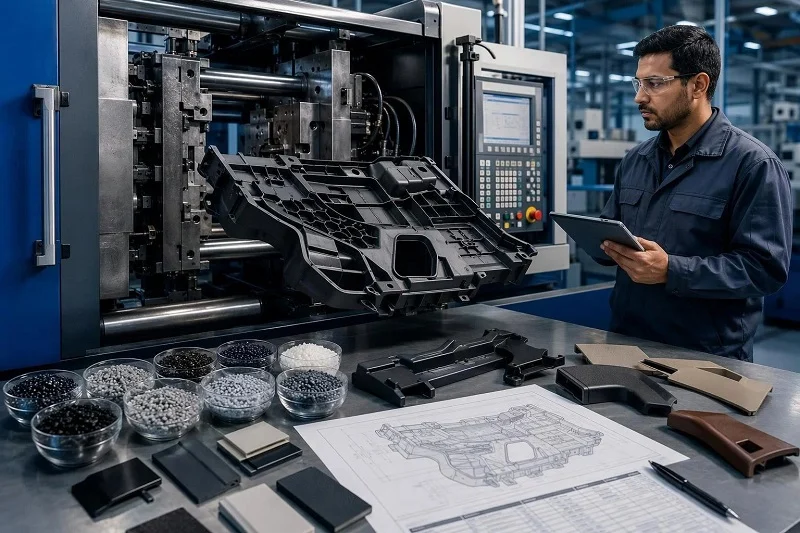
From pellet to packed part, polycarbonate injection molding differs from commodity-resin molding mainly in how unforgiving it is about moisture and temperature. The four stages below set the working conditions.
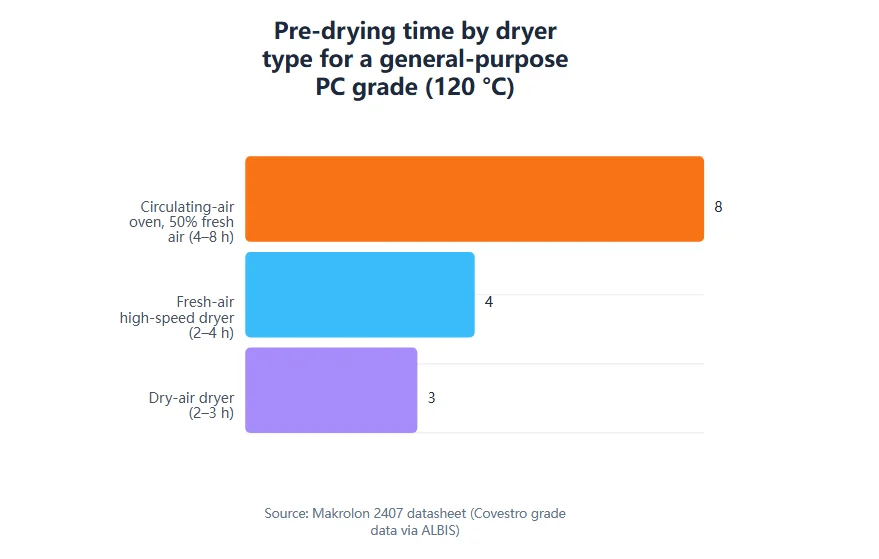
Supplier-recommended pre-drying times for one general-purpose polycarbonate grade, all at 120 °C to a processing moisture of ≤0.02%. Times are dryer-dependent starting values from the grade datasheet; follow the datasheet for the specific grade, color and additive package you intend to mold.
Drying: The Step That Decides Whether the Part Comes Out Clean
Polycarbonate absorbs moisture, and wet pellets hydrolyze in the barrel, cutting molecular weight before the part is even formed. The datasheet specifies pre-drying at 120 °C for 2–3 hours in a dry-air dryer, 2–4 hours in a fresh-air dryer, or 4–8 hours in a circulating-air oven, with processing moisture held at or below 0.02%. Verify dryness with a moisture reading rather than a timer; splay and silver streaks are the visible symptom of skipping this step.
Melt and Mold Temperature Windows
The working window is 280–320 °C melt and 80–100 °C mold; the datasheet’s own test specimens were molded at 280 °C melt and 80 °C mold. Mold temperature matters more for polycarbonate than for commodity resins: a hot mold improves surface finish, reduces molded-in stress and stabilizes dimensions. Drop too low and you get flow lines and high stress; run too hot and you risk degradation and longer cycles.
Injection, Packing and Cooling
Polycarbonate’s high melt viscosity calls for generous gates and runners and a fill profile that does not shear the melt excessively. Shrinkage is relatively low and, in the reference unfilled grade, equal in both directions at 0.7% parallel and normal; glass-filled grades behave differently, so treat that figure as grade-specific. Pack until the gate freezes, then cool long enough that ejection does not distort the part.
Ejection, Annealing and Stress Relief
Adequate draft and well-placed ejectors prevent the marks and hairline cracks that appear when a stiff, notch-sensitive part is pushed off the core. Where the design concentrates stress or the part must hold dimensions through later machining or chemical exposure, a stress-relief anneal is a design-dependent option rather than a universal requirement. Decide it from the stress analysis and the service environment, not by habit.
Designing Parts for Polycarbonate Injection Molding
Design for polycarbonate injection molding is largely design against notches and against uneven sections. Polycarbonate is notch-sensitive: a sharp internal corner concentrates stress and becomes the origin of a crack under impact or chemical attack. Uniform walls, generous radii and gradual transitions do more for part survival than any press adjustment. Run the checks below before releasing a tool, because each one is far cheaper to fix in CAD than in steel.
Wall Thickness, Ribs and Bosses
Thick sections cool slowly and shrink unevenly, producing sinks and internal stress; thin sections may not fill at polycarbonate’s viscosity. Keep walls as uniform as the function allows and step between thicknesses gradually. Ribs should stay thin relative to the main wall and be drafted, with generous fillets at the base, and bosses should be supported by ribs rather than standing as isolated thick columns. Confirm final proportions with a mold-flow analysis for your geometry rather than a generic ratio.
Gates, Runners and Tooling Considerations
Gate into the thickest section where possible and avoid gating directly into a high-stress area. Hot runners reduce scrap on engineering resins but add residence-time risk at polycarbonate’s melt temperatures, so balance the two against your volume. The datasheet recommends an open nozzle. Tool steel and venting must tolerate the high melt temperature, and vents need enough depth to release the air polycarbonate traps in fast fills.
Common Defects in Polycarbonate Injection Molding and What Causes Them
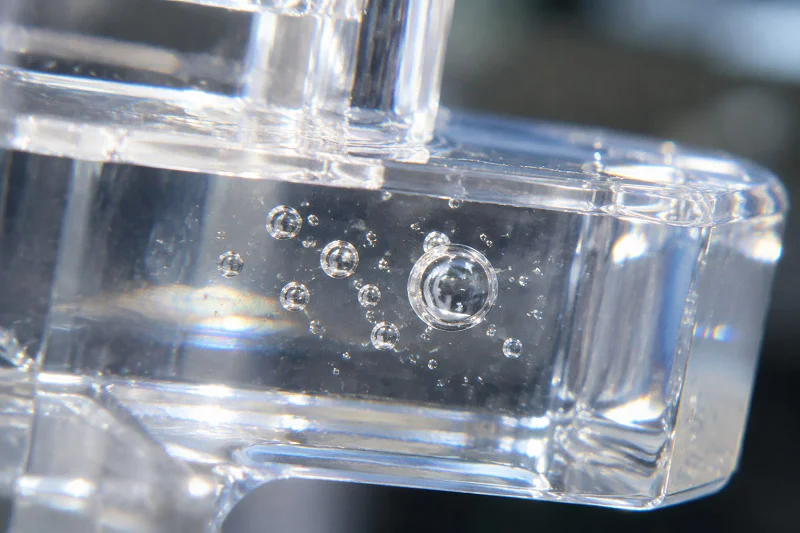
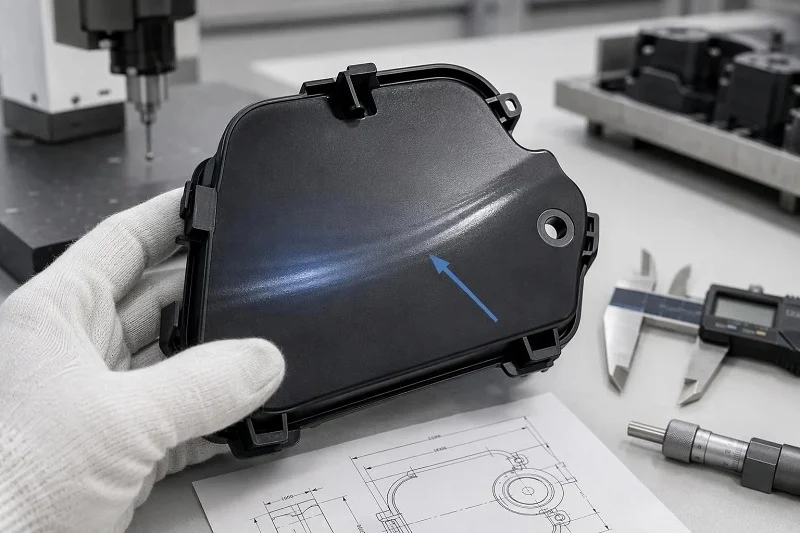
Most polycarbonate defects trace back to one of three causes: moisture, excessive heat history, or stress locked into the part. The table below maps the common symptoms to their likely causes and the first check to run at the press.
| Defect | Likely causes | First check |
| Splay / silver streaks | Wet resin, low back pressure, contaminated regrind | Moisture reading against the ≤0.02% limit |
| Black specks, yellowing | Melt over-temperature, long residence time, poor purge | Actual melt temperature and shot size vs. barrel capacity |
| Short shots | Low melt or mold temperature, restricted gates, insufficient pressure | Fill profile and gate size |
| Sink marks | Thick sections, insufficient packing | Wall uniformity and pack pressure/time |
| Warping | Uneven cooling, differential shrinkage, high molded-in stress | Mold temperature balance and cooling layout |
| Stress cracking | Molded-in stress plus chemical exposure | Annealing history and contact chemicals |
| Flow lines | Low mold temperature, slow fill front | Mold temperature at the cavity surface |
| Ejection marks | Insufficient draft, poor ejector placement | Draft angles and ejector layout |
Moisture-Related Defects
Splay, bubbles and surface haze share one root cause: resin that entered the barrel above the allowable moisture level. The fix is upstream of the press — confirm the dryer actually reaches 120 °C, that the dew point is where it should be, and that dried resin is not sitting exposed before use. Re-check the moisture reading before blaming the mold.
Thermal Degradation and Color Shift
Polycarbonate left too long above its processing window degrades: yellowing appears first, then black specks as burnt material breaks free. Check the actual melt temperature against the 280–320 °C window rather than the setpoint, size the shot to the barrel so residence time stays short, and purge thoroughly when switching grades or colors. Once degraded material is in the system, only a full purge clears it.
Stress Cracking After Molding
Environmental stress cracking is a post-molding failure: a part that passed inspection cracks days or weeks later where molded-in stress meets a chemical — a cleaning agent, a solvent, a lubricant. The levers are design (remove notches and sharp transitions), process (hotter mold, gentler packing, adequate annealing) and material selection (a grade suited to the chemical environment). Investigate the combination, not one factor alone.
Where Polycarbonate Injection Molding Is Used
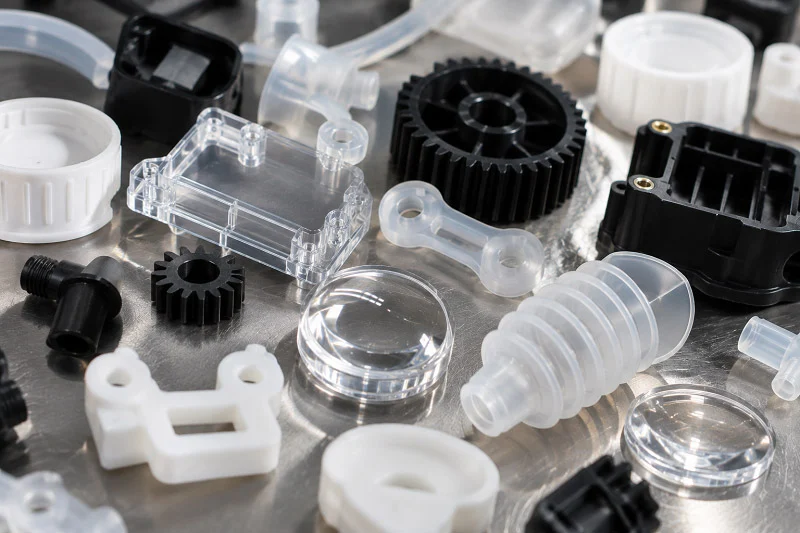
Polycarbonate injection molding appears wherever a part must absorb impact, transmit or resist light, or hold dimensions at elevated temperature — often all three at once. The property that justifies the choice changes by industry, and so does the grade: a UV-stabilized grade for outdoor lighting, a flame-retardant grade for electrical housings, a medical-grade resin for healthcare equipment. The application notes below follow that logic.
Medical Devices and Healthcare Equipment
Device housings, fluid-handling components and equipment parts use polycarbonate for its toughness and transparency, and because it can be sterilized in some configurations. Grade selection is decisive: not every polycarbonate grade is intended for healthcare use, and the resin supplier’s own assessment governs. Equally, the molder’s quality system matters — medical work is normally supported by a quality management system aligned with ISO 13485:2016, the standard for medical device quality management systems, which emphasizes regulatory requirements, risk management and process validation.
Automotive, Electronics and Industrial Applications
Polycarbonate injection molding serves lighting lenses and covers, where the grade’s 89% luminous transmittance and impact strength that shows no break in Charpy testing at +23 °C and −30 °C combine transparency with toughness. Electrical housings and power-tool components draw on a heat deflection temperature of 124 °C at 1.80 MPa and volume resistivity above 1E13 Ω·m; transparent machine guards rely on impact resistance. Flame-retardant and UV-stabilized grades change these answers, so confirm the specific grade.
Polycarbonate vs. ABS, PC/ABS and PMMA: Choosing the Right Resin
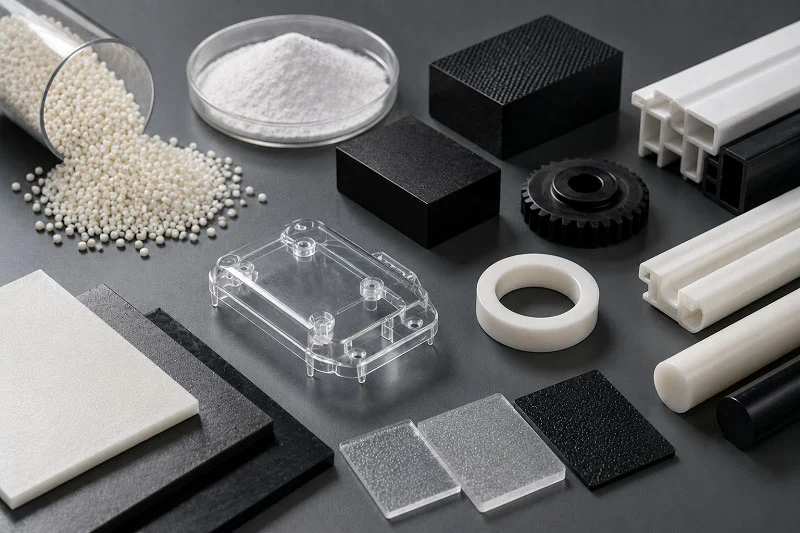
Choose polycarbonate when you need the combination of high impact strength, transparency and heat resistance; choose ABS, PC/ABS or PMMA when one of those properties is not actually required. The two comparisons below cover the trade-offs that usually decide the question.
When ABS or PC/ABS Is the Better Economic Choice
ABS generally costs less and processes at lower melt temperatures, so it wins where toughness and heat resistance demands are moderate — appliance housings, cosmetic enclosures, low-stress brackets. PC/ABS blends PC’s impact and heat performance with ABS’s easier processing, making it a practical middle option for automotive interior trim and business-machine housings. The PC premium is hard to justify when a part never sees impact, heat above roughly 90–100 °C, or transparency requirements.
When PMMA Beats PC on Optics
PMMA offers superior optical clarity and markedly better UV stability, which is why it dominates signage, display lenses and outdoor light covers where long-term color and clarity hold matter more than impact. Its trade-off is brittleness: PMMA cracks under impact that PC absorbs. Where a lens may be struck — safety eyewear, machine guards, vehicle lighting — PC’s toughness outweighs PMMA’s optical edge, and UV-stabilized PC grades narrow the weathering gap.
Polycarbonate Injection Molding vs. Thermoforming, Machining and 3D Printing
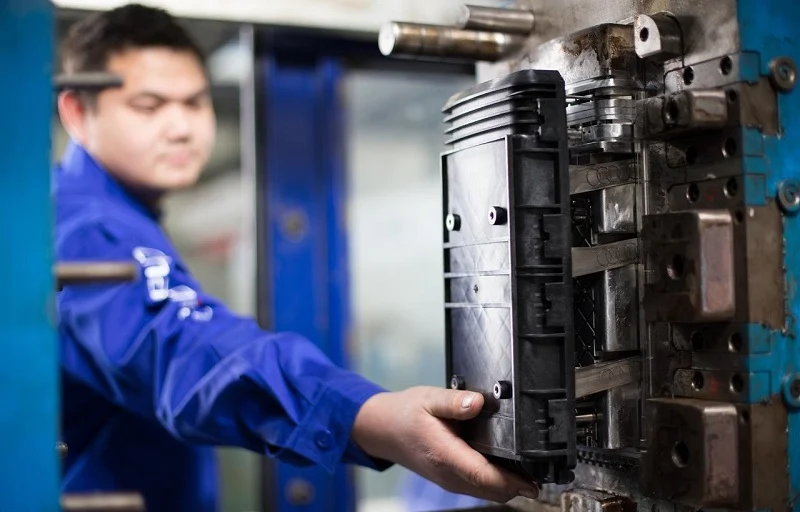
The four processes differ mainly in tooling cost, geometry freedom and how well they retain PC’s properties. Thermoforming uses low-cost molds for large, shallow parts; machining needs no tooling and suits prototypes and low volume; 3D printing handles complex prototypes and bridge quantities; polycarbonate injection molding carries the highest tooling cost but delivers the best cycle economics and repeatability at volume.
Matching the Process to Your Volume and Geometry
Match the process to both quantity and shape. For one to a few hundred parts, machining or 3D printing avoids tooling and accommodates deep draws and undercuts that thermoforming cannot. For large, shallow panels at low-to-moderate volume, thermoforming is economical. Once annual volume justifies a mold and the geometry is draft-compatible with ejection, polycarbonate injection molding gives the lowest per-part cost and the tightest repeatability.
Moving from Prototype to Volume Without Re-Tooling Surprises
Prototype in the production-intent grade wherever possible, because a substitute resin can mask drying, shrinkage and stress behavior that later causes rework. Design draft, wall uniformity and gate location for molding from the start rather than adapting a machined or printed shape afterward. Then validate the tool and process — drying, temperature windows, first-article inspection — before committing to volume, so the transition does not reopen design decisions.
Selecting a Polycarbonate Injection Molding Supplier
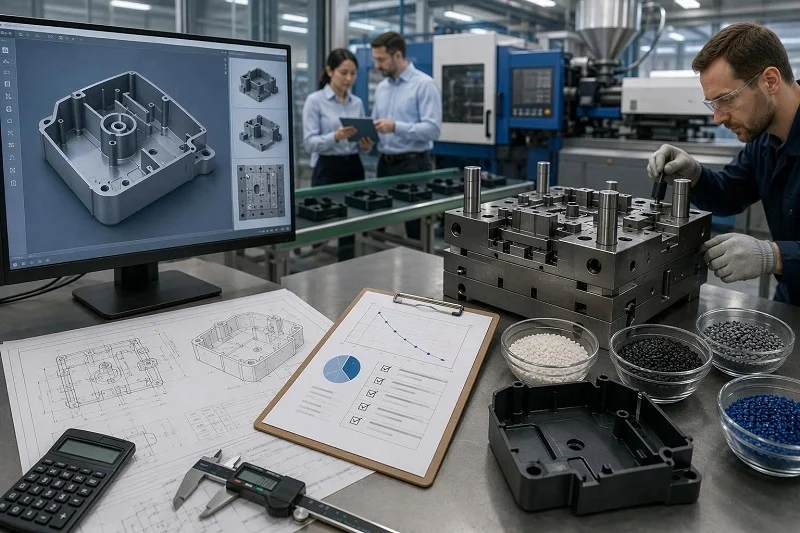
Verify four capabilities: material handling and drying, process monitoring, tooling quality, and inspection. For medical work, look for a quality management system aligned with ISO 13485:2016, the internationally recognized standard for medical device quality management systems, which emphasizes regulatory requirements, risk management and process validation more than ISO 9001. ISO 9001:2015 provides the general quality management framework.
Quality System Evidence to Request
Ask for the certificates themselves and read their scope, since a certificate covers only the activities listed. Request sample inspection records, material and lot traceability, the change-control procedure, and how nonconforming parts are handled and dispositioned. For medical projects, ask how risk management and process validation are documented.
Questions That Reveal Real Processing Capability
Ask which dryer type is used and how dryness is verified against the ≤0.02% processing-moisture limit; whether melt temperature and pressure are monitored per shot; how grade changes and purging are handled; and what regrind policy applies to PC, whose molecular weight degrades with repeated heat history. Specific answers separate a capable molder from a general-purpose one.
Choosing NOBLE to Support Your Polycarbonate Injection Molding Project
NOBLE is a China-based contract manufacturer with strong service and processing capability that helps customers move efficiently from prototyping to volume production. We hold ISO 9001:2015 and ISO 13485:2016 certification, and we offer a full scope of service from design through assembly — not production alone. Our engineering and quality teams support the drying, temperature and inspection discipline that polycarbonate injection molding demands, so you can validate a design quickly and scale it without rebuilding the plan.
FAQs about Polycarbonate Injection Molding
Short answers to the questions that come up most often when planning a polycarbonate injection molding project.
Is polycarbonate the right material for my part?
Likely yes if you need high impact strength, transparency and heat resistance together. Likely no if the part sees aggressive solvents, unstabilized UV exposure, or demands easy ultrasonic welding or living hinges.
What processing steps matter most?
Drying and temperature control. Dry to ≤0.02% moisture at 120 °C, and hold melt at 280–320 °C and mold at 80–100 °C.
How does PC compare with ABS, PC/ABS and PMMA?
PC leads on impact, heat and transparency together; ABS wins on cost and ease; PC/ABS balances the two; PMMA wins on optical clarity and UV stability but is brittle.
Should I mold, thermoform, machine or 3D print?
Machine or print for prototypes and low volume; thermoform large shallow parts; choose polycarbonate injection molding once volume justifies tooling and geometry allows ejection.
Which defects should I expect?
Splay and silver streaks from moisture, black specks and yellowing from over-temperature, short shots, sink, warping and stress cracking. Check drying and temperature first.
What should a medical-grade supplier demonstrate?
An ISO 13485:2016 certificate with a scope covering your device work, plus documented risk management, process validation and traceability.
How do I go from prototype to volume?
Prototype in the production-intent grade, design for molding from the start, and validate tool and process before committing to volume.