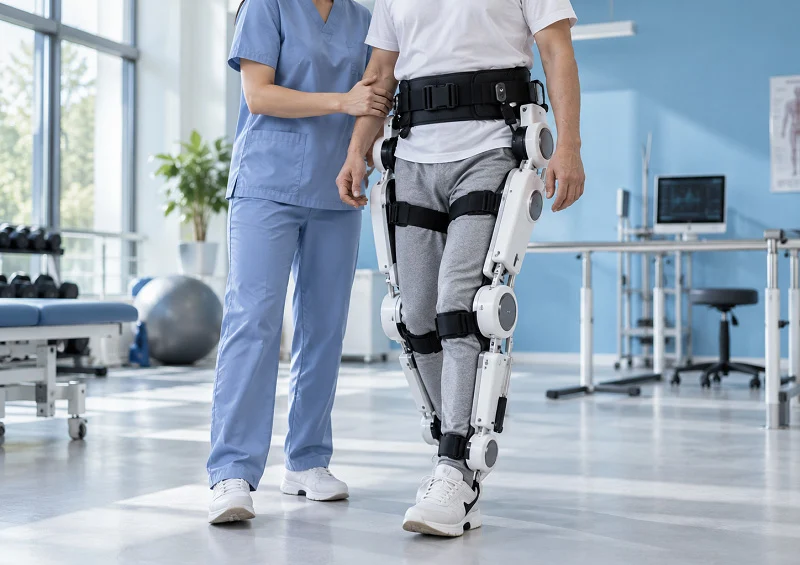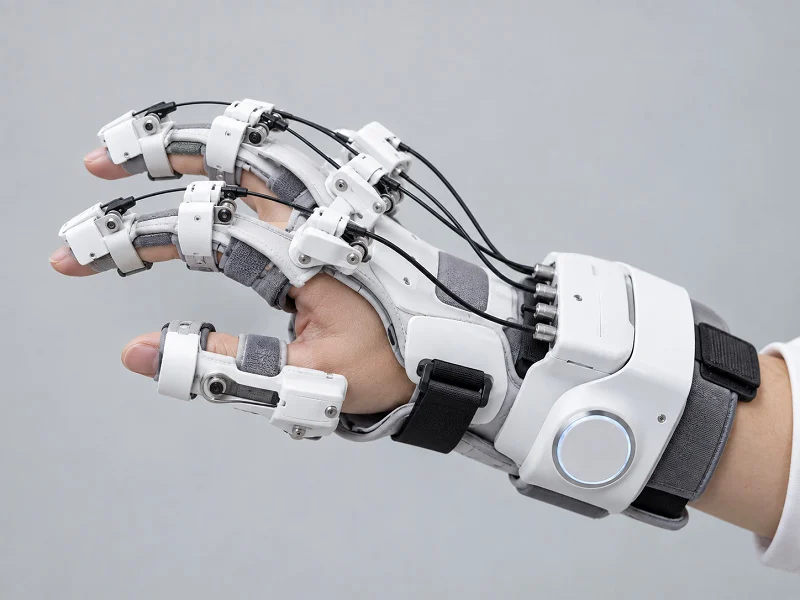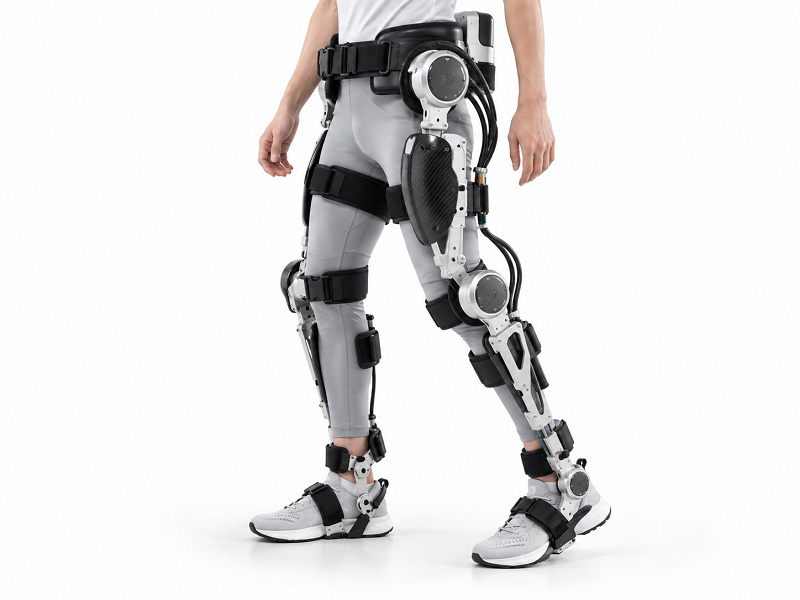
Designing medical exoskeleton parts means balancing weight, durability, and medical safety. Engineers face real challenges. It is hard to measure how much muscle help a user needs. Electromyography works only for large muscle groups. Multi-directional joints, like the ankle, make things more complex. Power sources, weight goals, and user comfort also matter. So what are the key structural parts? Which materials and methods work best? How do you go from idea to product? This guide takes you through finding medical exoskeleton parts, choosing materials, making them, and picking partners step by step. It is a practical guide for engineers building medical exoskeletons.
Essential Exoskeleton Components for Medical Exoskeleton Parts
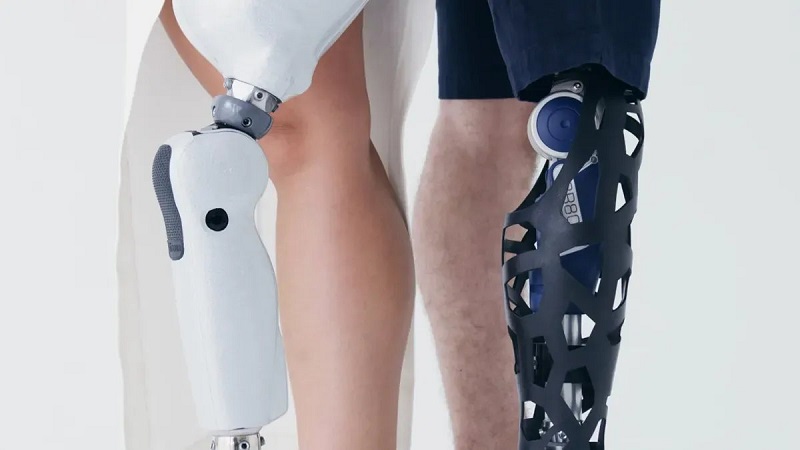
Every exoskeleton needs a few main systems to work. The frame holds the weight and force. The joints let parts move. The human-machine interface connects the device to the person using it. Getting these medical exoskeleton parts right decides if the device helps or hurts the user. Understanding these medical exoskeleton parts is the first part of making a good design.
Frames and Chassis
Load Bearing Role
The frame sends forces from the ground up through the legs and into the user’s body. Frame materials must have densities below 3.0 g/cm³. They must hold tensile strengths above 500 MPa. They must last for more than one million load cycles without breaking from tiredness. For safety, materials need biocompatibility per ISO 10993. They must also work well in environments from -20°C to 60°C. Manufacturing must be easy to scale for both prototypes and large production runs.
Typical Frame Designs
Most frames use hollow tubes or lattice shapes to cut weight. Top materials include aluminum 7075, titanium, and carbon fiber composites. Carbon fiber often appears in leg supports, chest supports, and powered arm parts. One patent shows a carbon fiber frame for spinal cord injury patients. It uses a sandwich structure with 3-axis milling for adjustable, lightweight medical exoskeleton parts. Another patent covers a non-metallic frame with Young’s modulus over 20 GPa. It can handle autoclave sterilization for neurosurgical use.
These modular designs support rehab devices made for each patient. You can adjust parts to fit each user perfectly. A modular frame also serves as the base for a custom orthosis. Designers use 3D printing for frame prototypes and custom brackets before moving to production tooling.
Joints and Actuators
Rotary and Linear Actuation
Joints connect frame parts and allow controlled motion. Rotary actuators handle rotation at the hip, knee, and ankle. Linear actuators manage straight-line movement for height adjustment or other linear tasks. A good rotary actuator gives up to 10 Nm of torque at 100 RPM. The right choice can boost operation speed by up to 30%. These actuators, motors, and power transmission systems drive the whole active exoskeleton.
Power and Backdrivability
Backdrivability tells how easily you can move the actuator backward when power is off. High backdrivability is very important for patient safety. If power cuts, the joint must move freely so the user is not stuck in place. Static backdrive torque should be between 0.4 and 2 Nm. Control bandwidth should reach 62 to 73 Hz. Medical rehab units need zero cogging torque and low noise under 50 dB.
Many teams 3D print actuator housings during early prototyping. It lets them quickly test fit and mounting points before moving to metal parts.
Menneske-maskin-grensesnitt
Cuffs and Contact Points
The HMI is where the exoskeleton touches the user. Cuffs and contact points need padding to spread forces across shoulders, back, hips, and legs. Ergonomic shapes prevent pressure points during long use. These medical exoskeleton parts often need customization for each person. You can 3D print custom cuff liners to match each person’s body. That method works well for patient-tailored medical equipment where one size does not fit all.
Sensor Integration (IMUs, Force Sensors)
Sensors detect the user’s intent and tell the control system how to respond. IMUs track joint angles, velocity, and acceleration. Force sensors measure the forces between device and user. Angle sensors track joint position. The Honda Walking Assist Device uses IMU sensors, force sensors, and angle sensors for real-time gait help. Its special algorithms analyze walking patterns and adjust help levels on the go.
The interface combines ergonomics with real-time systems engineering. Users see feedback through head-up displays or AR overlays showing joint angles and force spread. Haptic feedback uses vibration patterns for direction guidance. Audio gives alerts for state changes and hazards.
For custom medical exoskeleton parts, the HMI must adapt to each user’s body and movement patterns. Sensor mounts made with 3D printing ensure a precise fit every time. Prototyping with 3D printing helps check sensor placement before production. All these functional medical exoskeleton parts must work together smoothly. Building reliable medical exoskeleton parts requires attention to every detail.
Materials for Medical Exoskeleton Parts
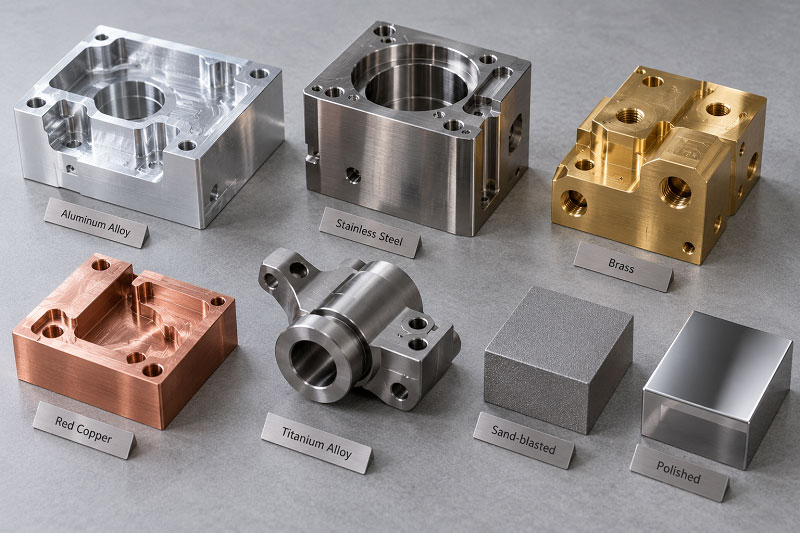
Choosing the right material is one of the biggest choices you will make. It affects the weight, the strength, and the final cost of every medical exoskeleton part. Pick the wrong one, and your device feels heavy, breaks early, or fails safety checks. Pick the right one, and you get strong, lightweight exoskeleton structures that patients can wear all day. Let’s go through the main groups: aerospace metals, high-performance plastics, and composites.
Metaller for luftfart
Aluminium 7075
Aluminum 7075-T6 is a workhorse for exoskeleton frames. Its yield strength reaches 503 MPa. That is strong enough for main load paths in exoskeleton structures. It machines well, but work hardening makes it tricky. You need rigid setups and sharp tooling to hold tolerances. Anodization and plasma electrolytic oxidation add wear resistance and biocompatibility. These finishes matter for safety and skin contact. Many teams also use 3D printing to prototype aluminum brackets before committing to production machining.
Titan Ti-6Al-4V
Titanium is lighter than steel and stronger than most aluminum, but it is expensive and difficult to machine. It is biocompatible, which makes it a natural fit for implants and rehabilitation exoskeletons. Its elastic modulus can be tailored to match human biomechanics. That means less stress on the user’s joints. The catch? Machining titanium generates serious heat and causes tool wear. For medical rehab devices built in low volume, that premium is often worth it.
Here is a quick side-by-side look at both metals:
| Materiale | Strekkgrense | bearbeidings | Typisk bruk |
| Aluminium 7075-T6 | 503 MPa | Challenging due to work hardening | Primary load paths in frames |
| Titanium | Not specified (superior strength-to-weight) | Difficult to machine; high tool wear | Biocompatible rehab structures |
Høyytelses plast
Carbon-Fiber PEEK
Carbon-fiber PEEK is a star among 3D printing materials made mainly for biomedical uses. It offers high stiffness, chemical resistance, and it survives autoclave sterilization. For cuffs, housings, and sensor mounts, it replaces metal without adding bulk. Material properties like tensile strength and fatigue resistance hold up under cyclic loading. That matters when a patient takes thousands of steps per day.
Nylon 12 (PA12)
Nylon 12 (PA12) is the go-to for Multi-Jet Fusion and selective laser sintering. It is tough, flexible, and absorbs impact well. Custom cuff liners, cable guides, and connector housings all benefit. You can 3D print complex geometries that would be impossible to mold. For patient-specific fits, PA12 is hard to beat. It also keeps material selection simple when you need many identical medical exoskeleton parts fast.
Sammensatte strukturer
Karbonfiber Prepreg
Carbon fiber prepreg delivers the highest stiffness-to-weight ratio of any option here. Layup, compression molding, and resin transfer molding (RTM) turn prepreg into strong, thin-walled tubes and plates. Leg braces and chest supports often use this approach. The trade-off is cost and labor. Each ply must be placed by hand or machine, then cured in an autoclave or press. For low-volume medical exoskeleton parts, that effort pays off in performance.
Glass Fiber Hybrids
Glass fiber hybrids cost less than pure carbon fiber. They offer good strength and better impact resistance. Mixing glass and carbon plies lets you tune stiffness and save money. You can also 3D print hybrid composite tooling for prototypes. This speeds up iteration before you cut steel molds. For non-critical brackets and covers, glass hybrids are a smart middle ground.
Material selection always comes down to trade-offs. Metals give you strength and precision. Plastics give you lightness and design freedom. Composites give you the best stiffness-to-weight ratio. Your choice depends on load, volume, budget, and regulatory needs. And 3D printing ties it all together, letting you test each option before you commit.
Exoskeleton Manufacturing Processes for Medical Exoskeleton Parts
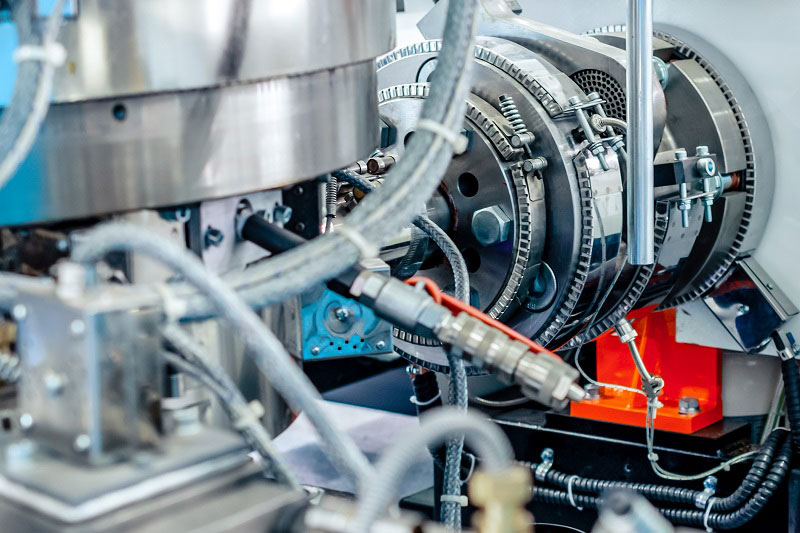
Choosing manufacturing processes is a big step for any exoskeleton project. The manufacturing processes you choose control how strong, how light, and how costly each part becomes. Knowing these choices early in the design phase saves major rework later. Let us go through the main categories.
CNC-maskinering og metallfabrikasjon
5-Axis Milling for Frames
5-axis CNC machining is the top method for metal frame components. It cuts complex shapes from a solid block in one setup. Tolerances reach ±0.005 mm to ±0.02 mm for critical features like bearing bores and instrument docking interfaces. That level of precision is what makes medical exoskeleton parts work reliably under load. The machine comes in from any angle, so you get undercuts and organic curves without extra setups. Hip mounts and ankle brackets gain the most from this method.
Swiss Turning for Small Medical Exoskeleton Parts
Swiss-type turning handles small medical exoskeleton parts like pins and sensor housings. It holds tight tolerances without any problem. The bar stock spins while the tool moves along the axis to cut features. That setup works well for long, thin parts with tight tolerances. Fasteners, actuator shafts, and alignment pins often come from this process. The high spindle speed and precise guide bushing give clean surface finishes right off the machine.
Additiv produksjon og 3D-utskrift
Additive manufacturing and 3D printing open up shapes you cannot get with cutting tools. You build internal channels, lattice infill, and organic forms that save a lot of weight. These manufacturing processes allow shapes that are impossible to machine in one piece. Additive manufacturing and 3D printing have grown fast, and two main technologies now lead the field. Most engineers now treat additive manufacturing and 3D printing as key tools for early checks of fit and function.
Selektiv lasersmelting (SLM)
SLM builds metal medical exoskeleton parts layer by layer. A laser fuses metal powder into solid geometry. This process works great for complex brackets that would take too long to machine. You get high strength with less weight because you can improve the internal structure. The exoskeleton manufacturing processes here need careful control of powder quality and laser power. With 3D printing, you skip the need for custom tooling on every new design. This approach to 3D printing cuts lead time for prototype medical exoskeleton parts a lot.
Multi-Jet Fusion (MJF)
MJF prints nylon parts quickly with steady mechanical properties. It is ideal for cuffs, sensor mounts, and cable guides that need toughness and flexibility. The manufacturing processes for these medical exoskeleton parts use specific 3D printing process settings like layer thickness and cooling rate to dial in the right strength. Material and process settings must be tracked for each build to ensure repeatable results across all production runs. Good 3D printing controls keep part quality from the first unit to the last.
Many teams build complete 3D-printed exoskeletons for testing before moving to production. These prototypes prove the fit and function of customized medical exoskeleton parts for each patient. The mix of additive manufacturing with machining gives a fast path from design to delivery. These 3D-printed exoskeletons are especially useful in rehab devices where every user has different body shapes. Additive manufacturing processes let you iterate without waiting for costly tooling. Other 3D printing methods like binder jetting and stereolithography also have their place. Matching the right 3D printing technology to your material and geometry goals makes all the difference.
Injection Molding and Composite Molding
Injection Molding for Volume Medical Exoskeleton Parts
Injection molding is the cheapest per-unit option when you need thousands of identical plastic medical exoskeleton parts. The tooling cost is high up front, but the per-unit price drops fast at scale. Covers, handles, and non-structural brackets all work well here. Safety requirements for medical devices mean you must track every material batch and process setting. This method gives excellent surface finish and tight dimensional control.
Layup, Compression Molding, RTM
For high-strength, lightweight structures, composite molding manufacturing processes are the top choice. Layup, compression molding, and resin transfer molding turn carbon fiber prepreg into stiff leg supports and back braces. These processes keep structural integrity while cutting weight. The orientation of each ply matches the load path. That balance of durability and lower cost makes composites a smart pick for production frames.
En hybrid tilnærming
A single exoskeleton uses several manufacturing processes together. You may 3D print the custom cuffs, machine the aluminum frame, and injection mold the covers. Most teams depend on these exoskeleton manufacturing processes to move from prototype to production. For early prototypes, 3D printing is fast and cheap. For production runs, machining and molding give better repeatability at scale. Knowing how these manufacturing processes fit together saves both time and budget. More teams now build 3D-printed exoskeletons for patient-specific testing as a standard development step. These 3D-printed exoskeletons let clinicians check the fit before machining final metal parts. Good 3D printing practices combined with proven machining methods create the most efficient development path for complex devices.
Design Considerations for Medical Exoskeleton Parts
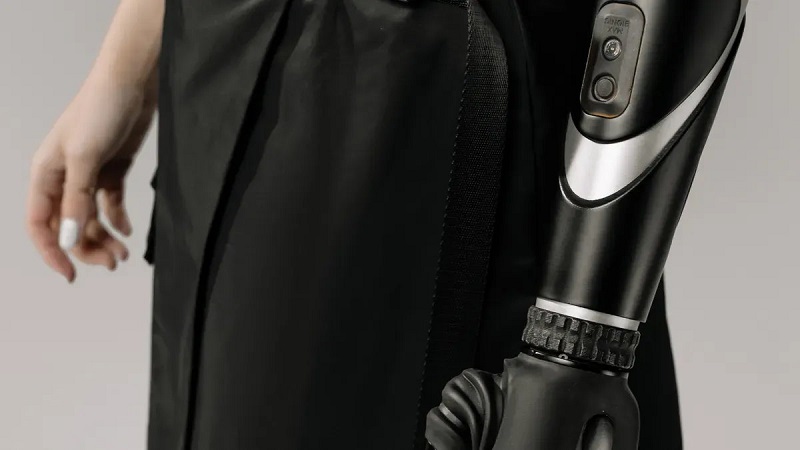
Weight, durability, and cost guide every design choice. Get these three right, and your medical exoskeleton parts will work well in real use. Miss one, and you risk hurting the user or building a product that never leaves the lab.
Vektreduksjonsstrategier
Topologioptimalisering
Topology optimization uses software to remove material from places where stress is low. The result is a natural-looking shape that keeps strength where you need it. This method works well with 3D printing because the software often makes complex shapes. Regular machining cannot easily cut these shapes. With 3D printing, you build the part layer by layer without extra tooling. That saves both weight and time.
Gitterstrukturer
Lattice structures swap solid infill for a grid of tiny struts. They cut mass while keeping stiffness high. You can adjust the lattice density to match local load paths. 3D printing handles this shape better than any other method. For cuffs and housings, a lattice core inside a solid skin gives strong, lightweight exoskeleton structures. Material selection matters here too. A stiff material with good tensile strength lets you use a thinner lattice.
Utmattelsesliv og holdbarhet
Material Selection for Cycles
Medical exoskeleton parts face thousands of load cycles every day. Material selection must think about fatigue, not just peak strength. Materials must handle repeated stress cycles and keep load spread safe. That is a key safety and durability requirement. Look at mechanical properties like fatigue limit and crack growth resistance. A material with high static strength may still fail early under repeated loading. Test samples before you commit to a full design.
Surface Treatments (Anodizing, Shot Peening)
Surface treatments add a protective layer or create compressive stress. Anodizing builds an oxide layer on aluminum. It improves wear resistance and biocompatibility. Shot peening blasts the surface with small media. This creates compressive stress that delays crack start. Both treatments extend fatigue life without changing the base material. They also help meet biocompatibility standards like ISO 10993 for skin contact.
Kostnad og skalerbarhet
Hybride produksjonsmetoder
No single process fits every part. A hybrid approach combines manufacturing processes to balance cost and performance. You might 3D print the custom cuff, machine the aluminum frame, and injection mold the covers. Each manufacturing process plays to its strength. 3D printing handles customization. Machining delivers precision. Molding keeps per-unit cost low at volume. This mix of manufacturing processes shortens development time and controls budget.
Batch Size vs. Process Choice
Batch size drives process choice more than any other factor. For 10 to 100 units, 3D printing and CNC machining make sense. Tooling costs stay low, and you can iterate fast. For thousands of units, injection molding wins on per-unit price. The upfront tool cost is high, but it drops fast at scale. Composite molding sits in the middle. It suits structural medical exoskeleton parts in moderate volumes. Match your manufacturing processes to your batch size, and you avoid wasting money on the wrong tooling.
ISO 13485:2016 sets the quality-management requirements for medical-device design and manufacturing. It works alongside ISO 14971 for risk management and IEC 80601-2-78 for medical robots. Certification alone does not replace product clearance or clinical evidence.
Selecting NOBLE for Medical Exoskeleton Parts
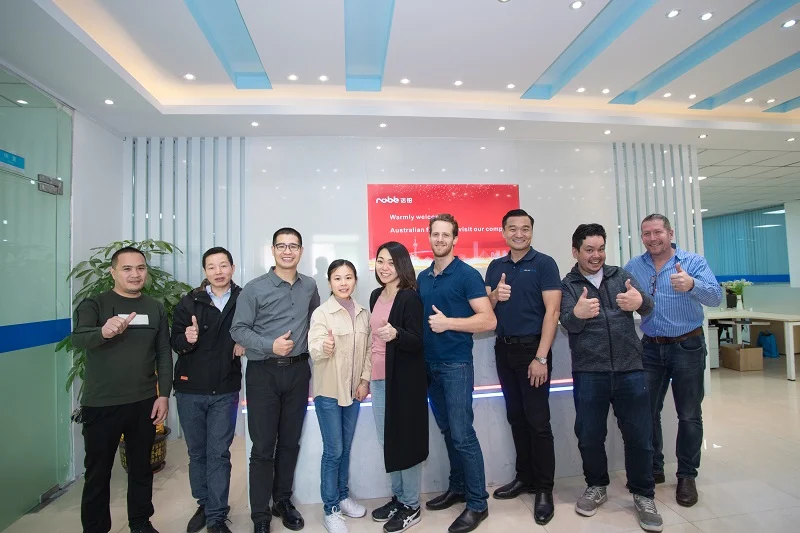
You have the medical exoskeleton parts, materials, and processes figured out. Now you need a partner who can really build them. NOBLE works with engineers on medical exoskeleton parts every day, from the first sketch to the finished assembly.
Sertifiseringer som betyr noe
ISO 9001:2015 (General Quality)
ISO 9001:2015 covers general quality management. It shows the factory runs on written process controls and inspection steps. NOBLE holds this certification, so you know every batch follows a repeatable path.
ISO 13485:2016 (medisinske enheter)
ISO 13485:2016 goes further. It sets the standard for medical-device traceability and validation. NOBLE carries this certification too. That matters when your device needs FDA registration or CE-MDR approval for export. The team also knows the FDA Quality System Regulation, EU MDR 2017/745, Japan’s PMDA/MHLW rules, and Australia’s TGA channels. They handle material certifications, risk management under ISO 14971, and post-market monitoring support.
NOBLE’s Core Capabilities
Presisjonsmetallbearbeiding
Five-axis CNC machining handles joint housings, arm connectors, motor mounts, sensor brackets, and precision shafts. Common materials include aluminum alloy, titanium alloy, stainless steel, and PEEK engineering plastic. Five-axis work cuts down repeated clamping errors and keeps complex structures consistent. A tight shaft-bore fit is critical here. Get it wrong, and you add motion resistance, mechanical errors, and lost positioning accuracy. Minimum wall thickness usually runs 2–3 mm, with local areas down to 1.5 mm after structural and loading review.
Advanced Plastic Molding and 3D Printing
Silicone rapid prototyping pairs with CNC-machined master molds, injection molding, assembly, and surface finishing. Metal 3D printing builds lightweight integrated structures, custom connectors, and complex internal medical exoskeleton parts. For cuffs and housings, 3D printing delivers patient-specific fits fast. Teams use 3D printing to test form before cutting steel. That 3D printing step saves weeks. Prototype 3D printing also validates sensor mounts. Production 3D printing then scales the proven design. Each 3D printing run follows tracked process settings. Good 3D printing controls keep quality steady. This is how 3D printing supports medical-grade exoskeletons from day one.
Fullservicestøtte
DFM and Design Collaboration
NOBLE joins early in your development cycle with Design for Manufacturability support. They flag thin walls, tight tolerances, and features that fight the chosen process. Material certification management covers test reports, biocompatibility declarations, and RoHS/REACH compliance.
Clean-Room Assembly and Validation
Controlled-environment machining or validated cleaning removes particles, coolant residues, and cross-contamination risks. Integrated measurement includes CMM, optical comparators, and surface roughness testers. Every step supports safety and full batch traceability from bar stock to finished assembly.
You have gone through the whole process now. You started with the main medical exoskeleton parts, then looked at material choices, and compared manufacturing methods. To succeed, you need a partner who knows both technical needs and medical rules together. NOBLE handles metal and plastic work in one place. Their ISO 9001:2015 and ISO 13485:2016 certificates show they follow quality and medical device tracking rules. They use 3D printing at every step, from start to finish. Their full service covers everything from design to assembly and testing. Ready to move forward? Upload your CAD file or request a DFM review today.
FAQ of Medical Exoskeleton Parts
Which material works best for medical exoskeleton parts?
No single material wins every time. Aluminum 7075-T6 gives you 503 MPa yield strength for main load paths. Titanium adds biocompatibility and a better strength-to-weight ratio. Carbon-fiber PEEK and nylon 12 work great for cuffs and housings. Your load, budget, and volume decide the pick.
How tight do tolerances need to be on joint housings?
Five-axis CNC holds ±0.005 mm to ±0.02 mm on critical features like bearing bores. Swiss turning reaches tight tolerances on small pins and shafts. A loose shaft-bore fit adds motion resistance and ruins positioning accuracy. Tight tolerances keep medical exoskeleton parts running smoothly under load.
When should I choose 3D printing over CNC machining?
Pick 3D printing for prototypes, custom cuffs, and lattice shapes that cutting tools cannot reach. Choose CNC when you need tight tolerances on metal frames. Many teams use both together. 3D printing handles the custom fit, and machining delivers the precision. That hybrid path saves weeks.
What does backdrivability mean for patient safety?
Backdrivability measures how freely a joint moves when power is off. Static backdrive torque should sit between 0.4 and 2 Nm. If power cuts, the user must not get stuck. High backdrivability keeps medical exoskeleton parts safe during unexpected shutdowns.
Which certifications should my manufacturing partner hold?
Look for ISO 9001:2015 for general quality management and ISO 13485:2016 for medical-device traceability. The second one matters when your device needs FDA registration or CE-MDR approval. Ask about ISO 14971 risk management support too. Certification alone does not replace product clearance or clinical evidence.
Can 3D printing produce a full working exoskeleton prototype?
Yes. Many teams build complete 3D-printed exoskeletons for fit and function testing before production tooling. 3D printing lets you iterate fast without waiting for steel molds. Clinicians can check the fit on real patients. Once the design proves out, you move to machining and molding.
How do I cut weight without sacrificing strength?
Topology optimization removes material from low-stress zones. Lattice structures swap solid infill for tiny struts. Both shapes suit 3D printing better than machining. A stiff material with good tensile strength lets you use a thinner lattice. The result is strong, lightweight exoskeleton structures.
What drives the cost of medical exoskeleton parts the most?
Batch size drives process choice more than anything else. For 10 to 100 units, 3D printing and CNC machining keep tooling costs low. At thousands of units, injection molding wins on per-unit price. Titanium machining can push part price up 40-60% over aluminum.