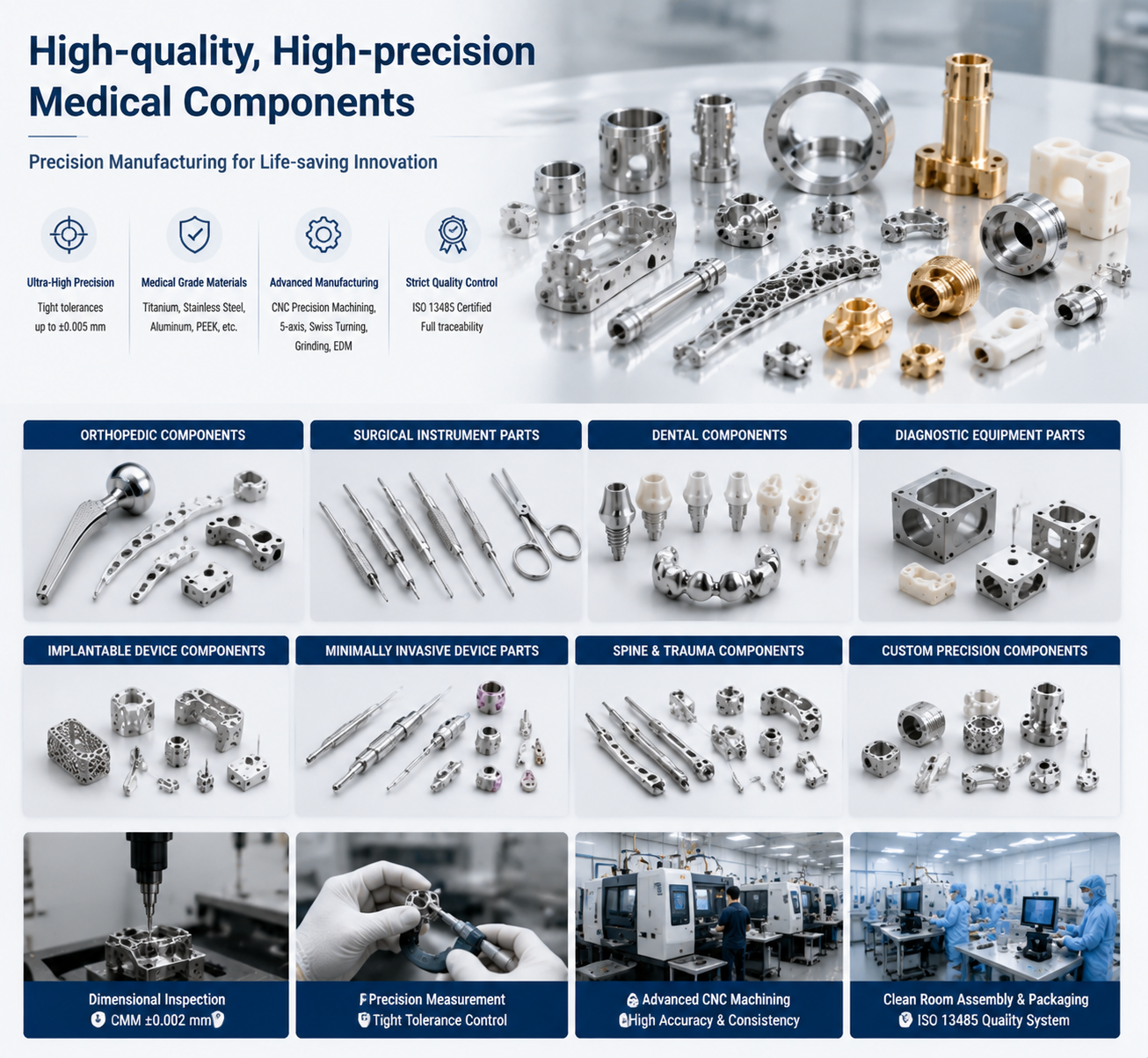
Medical component manufacturing is the core foundation of the medical device industry, directly determining the precision, safety, stability, and compliance of medical devices. It is widely used across multiple fields, including surgical instruments, diagnostic equipment, and medical consumables.
This article will disassemble the key technologies and control points of modern medical component precision manufacturing from eight dimensions: manufacturability design analysis, injection molding medical applications, sheet metal machining and welding, rapid prototyping iteration of multi-cavity molds, metal 3D printing of complex component manufacturing, precision processing selection, establishment of standardized quality systems, and rapid quality inspection. Provide systematic references for medical manufacturing enterprises to improve quality and efficiency and achieve compliant production.
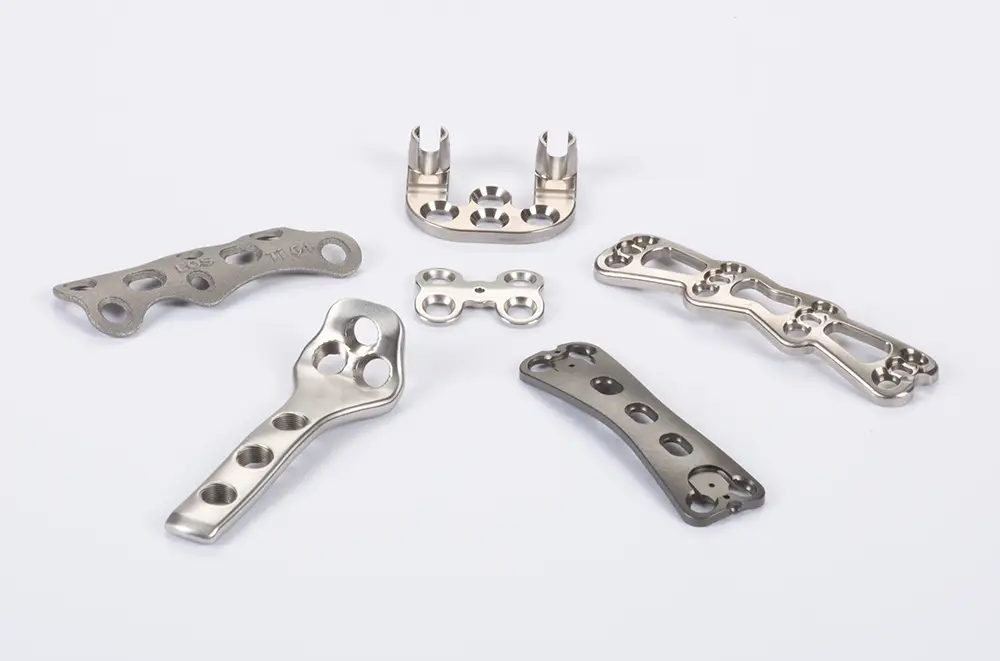
Use Design for Manufacturability Analysis
Design for manufacturability is a prerequisite for the mass production and application of medical components. Its goal is to avoid manufacturing defects in advance during the product design stage, optimize production processes, reduce production costs, and shorten the R&D cycle, ensuring the production accuracy and compliance of medical components from the source.
Unlike the design of ordinary industrial products, the DFM analysis of medical components needs to take into account four core principles simultaneously: functional practicality, medical compliance, process feasibility, and batch stability, running through the entire process from CAD modeling, structural optimization, material selection, to process matching.
In actual design analysis, technicians need to rely on the automated DFM analysis system and professional design review teams to conduct all-around optimization of the structural parameters of medical components.
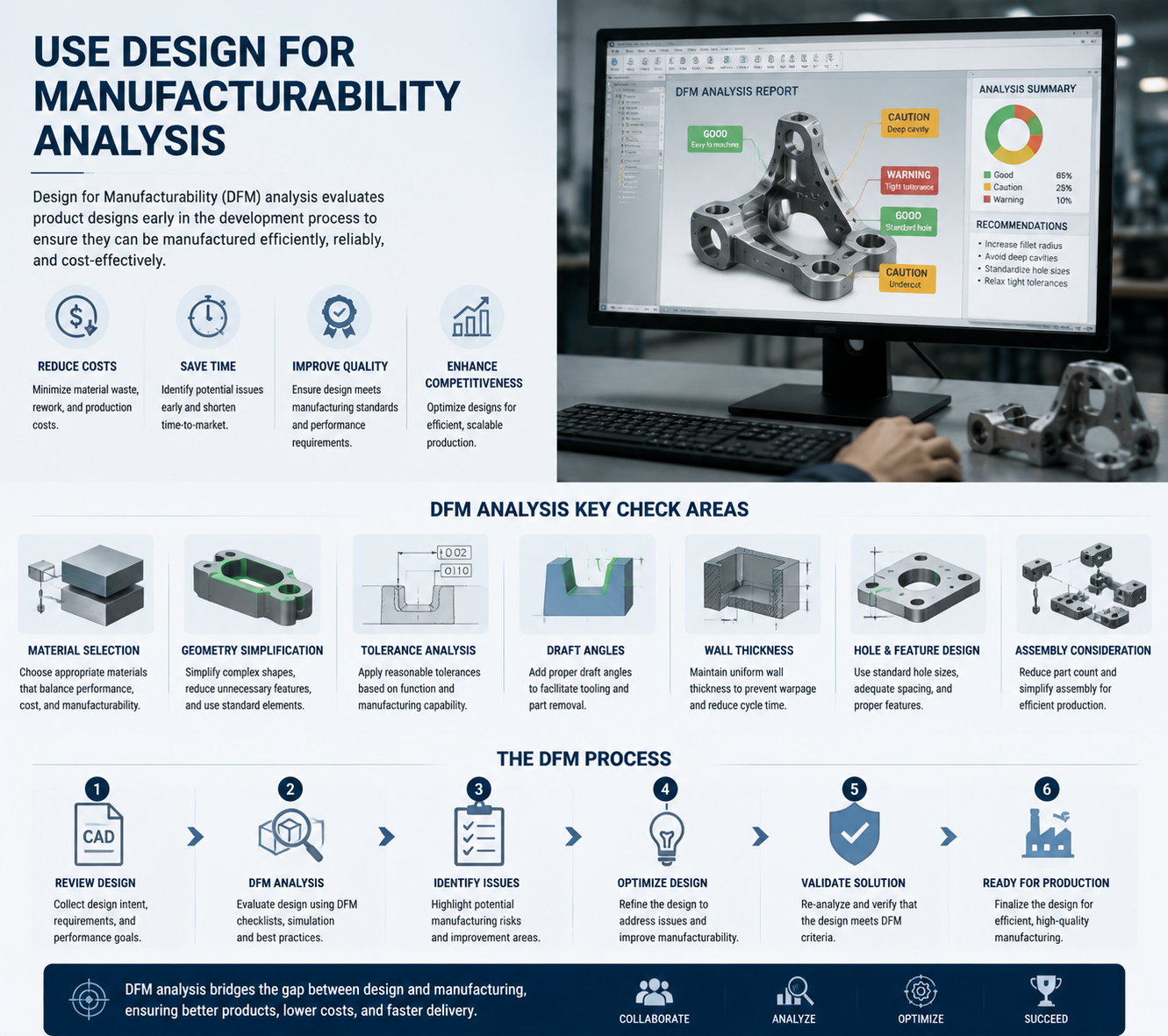
Optimize core parameters such as product wall thickness, draft Angle, fillet structure, and hollow layout in accordance with the characteristics of different manufacturing processes.
For instance, medical injection-molded parts require uniform wall thickness to avoid defects such as shrinkage, warping, and deformation caused by uneven wall thickness.
Sheet metal medical stents and fixed components need to optimize the bending structure to avoid designs, such as sharp corners and narrow grooves, that are difficult to process and prone to stress concentration.
Compliance optimization should be carried out in accordance with the special requirements of medical scenarios. All design schemes must be compatible with the characteristics of medical-grade materials to ensure that the components are non-toxic, disinfected, and corrosion-resistant, and meet the ISO 10993 biocompatibility standard.
Medical applications of injection molding
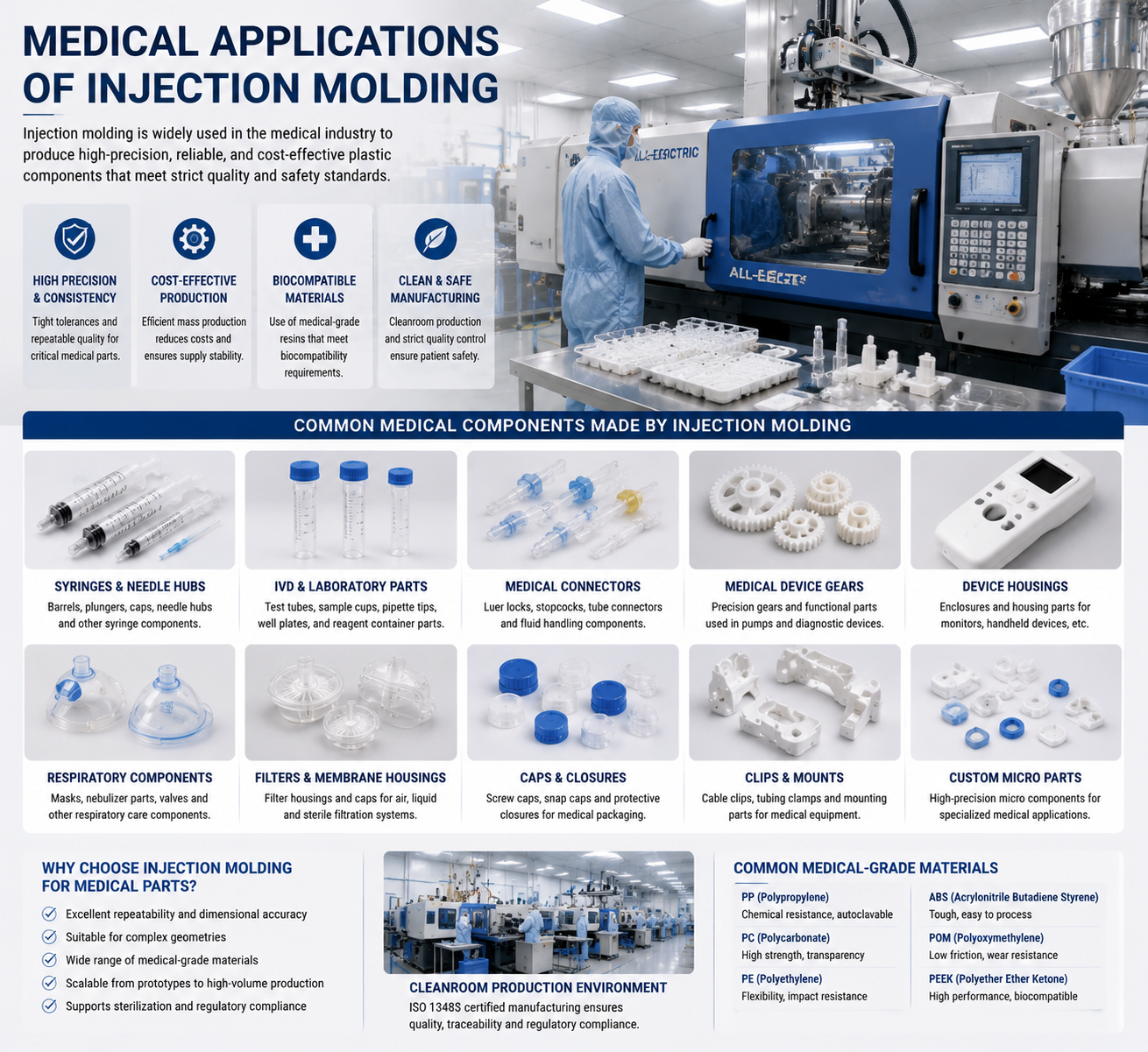
Injection molding is the core process for the large-scale production of medical components. With its advantages of high precision, high consistency, high efficiency, and adaptability to various types of medical materials, it has become the preferred solution for the mass production of medical plastic and silicone components.
This process involves injecting medical-grade raw materials in a molten state under high pressure into precision molds, followed by cooling, solidification, and demolding to form. It can mass-produce medical components with complex structures and precise dimensions and is widely used in medical consumables, medical device shells, surgical accessories, catheter joints, sealing components, and other products.
Injection molding can achieve a two-way adaptation between the large-scale mass production of standardized consumables and the small-batch production of customized precision components.
For standardized consumables such as disposable syringes, infusion connectors, and medical masks, the injection molding process can achieve high-speed continuous production, ensuring product consistency and supply stability.
For customized components such as minimally invasive surgical instrument accessories, precision seals, and medical catheter assemblies, high-precision dimensional requirements can be met by fine-tuning mold parameters and optimizing injection pressure and cooling time.
Meanwhile, with the maturation of liquid silicone rubber injection molding technology, various flexible medical components, such as medical sealing gaskets, bionic catheters, surgical protective accessories, etc., can all be precisely injection molded, greatly expanding the application boundaries of injection molding technology in the high-end medical field.
With stable molding effects and extremely low defect rates, injection molding has always occupied a core position in the large-scale manufacturing of medical components.
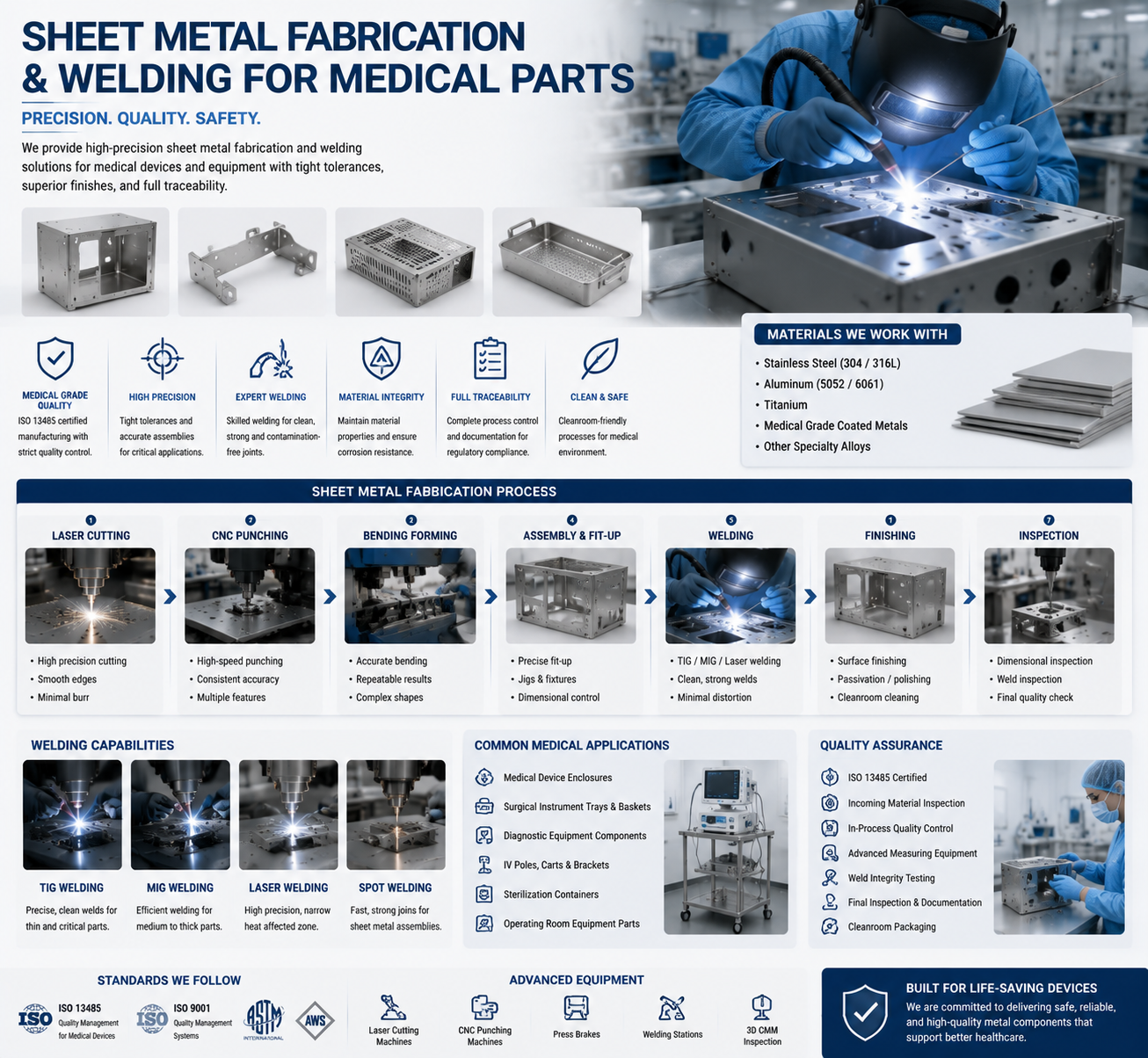
Sheet Metal Fabrication & Welding for Medical Parts
Sheet metal machining and welding are manufacturing processes for medical metal structural components, mainly used for the production of medical device frames, equipment shells, medical fixed brackets, and other structural components.
Medical sheet metal components are mainly made of medical metal materials such as stainless steel, aluminum alloy, and titanium alloy. They are required to have a smooth surface free of burrs and rust, high structural strength, corrosion resistance, and be easy to clean and disinfect, making them suitable for the high-cleanliness and high-disinfection-frequency usage scenarios in hospitals.
Sheet metal processing involves the entire process of procedures such as blanking, bending, and punching.
During the processing, precision CNC sheet metal equipment should be used. The bending Angle, punching size, and flatness of the sheet metal should be strictly controlled to avoid problems such as deformation, scratches, and sharp edges.
All sheet metal components must undergo meticulous deburring treatment to eliminate the risk of scratches on medical staff and patients caused by sharp edges, while ensuring that the surface of the components is free of residual impurities and meets medical cleanliness requirements.
The process is the shaping procedure of medical sheet metal components. It is adapted to advanced welding techniques such as laser welding, argon arc welding, and precision spot welding for different medical metal materials.
Among them, laser welding has become the mainstream process for medical sheet metal welding due to its advantages of small thermal deformation, smooth weld seams, and high precision.
After welding is completed, post-treatment processes such as polishing, pickling, and passivation are required to eliminate weld marks, enhance the corrosion resistance and surface finish of the components, and at the same time prevent welding residues from remaining.
Iterate Prototypes Rapidly with Multi-Cavity Tooling
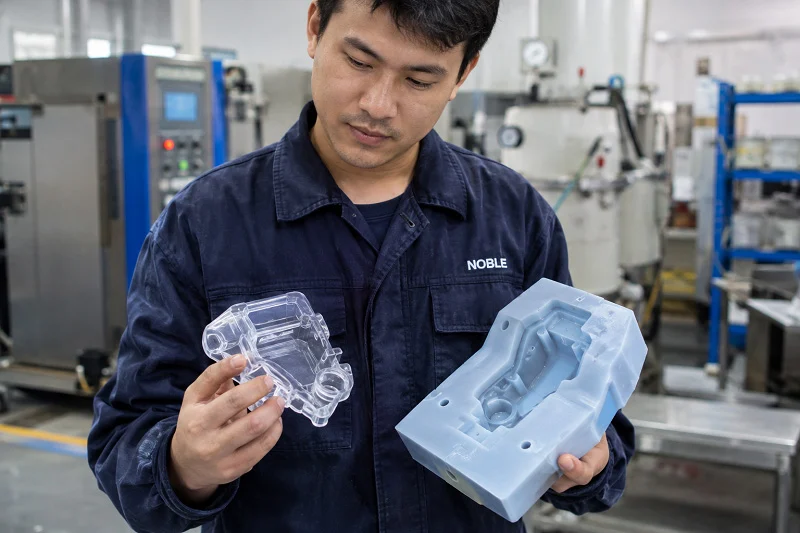
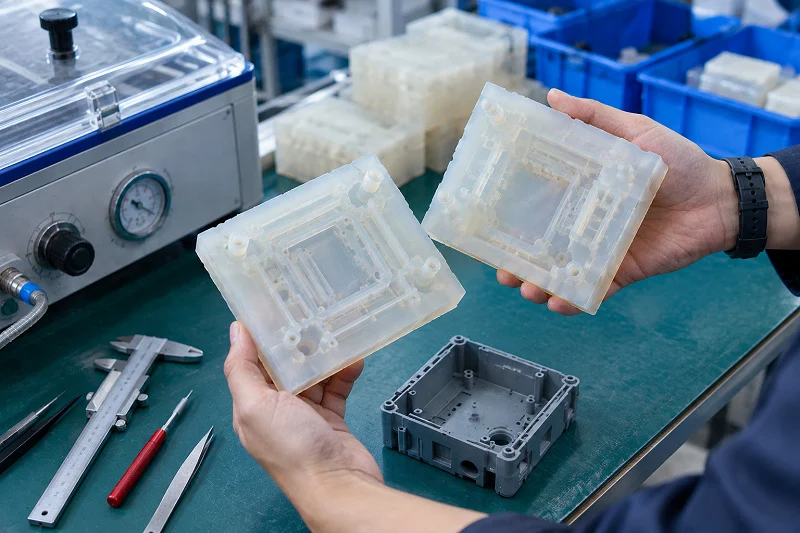
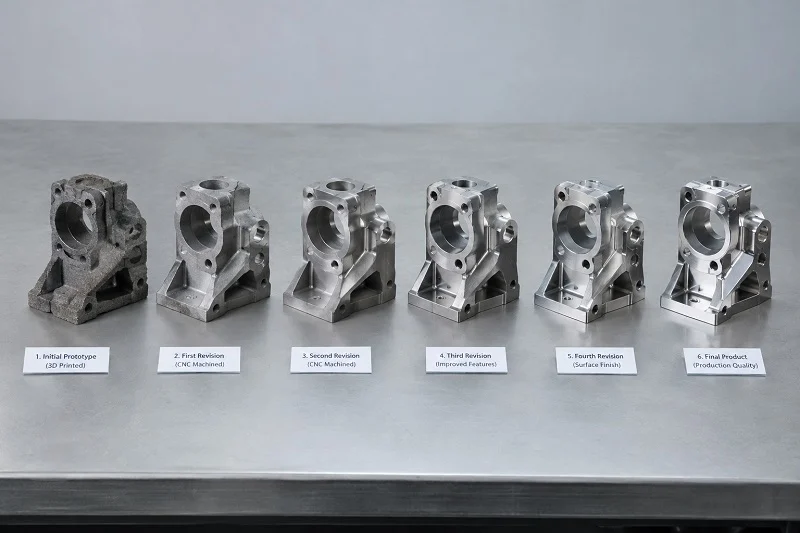
Multi-cavity mold technology is the core solution for achieving rapid iteration of medical component prototypes, small-batch trial production, and mass production. By designing multiple independent cavities in a single mold, multiple medical components of the same or different specifications can be formed at one time, perfectly meeting the high-frequency iteration requirements of the medical product research and development stage.
Multi-chamber molds can produce dozens of prototype samples at a time, which can quickly meet the sample demands of various scenarios such as performance testing, reliability verification, and clinical trials, significantly reducing the R&D iteration cycle.
Meanwhile, the multi-cavity mold can flexibly adjust the cavity layout according to the R&D requirements, support the simultaneous trial production of medical components of different specifications in the same series, and meet the R&D needs of personalized medical components.
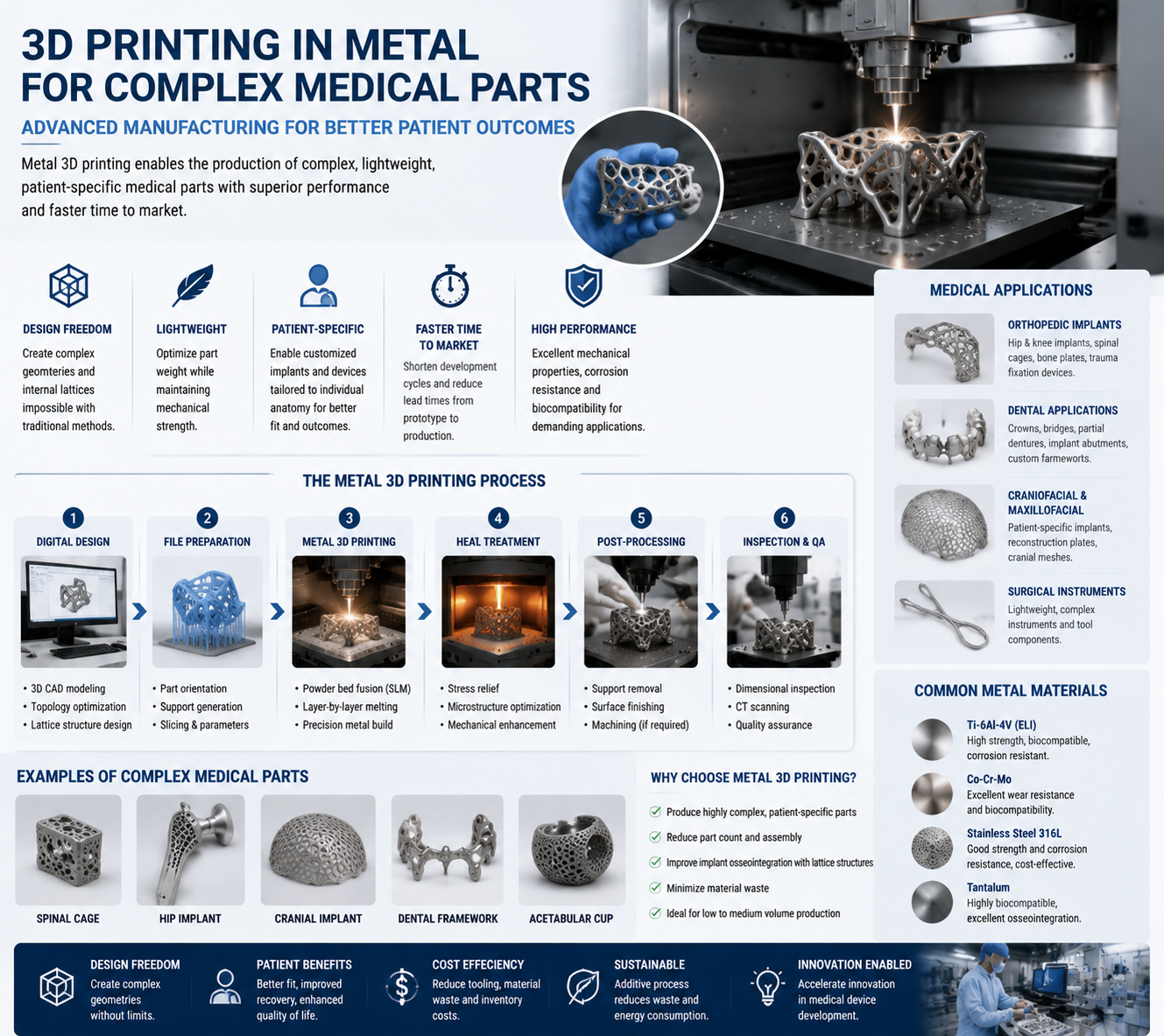
3D Printing in Metal for Complex Medical Parts
Injection molding, sheet metal processing, and machining processes are restricted by molds, cutting tools, and processing trajectories, making it difficult to complete the processing and production of different customized medical components.
Metal 3D printing, with its advantages of free forming, mold-free, and high customization, has become an innovative process in the manufacturing of high-end medical components and is widely used in complex parts such as implantable medical devices, orthopedic prostheses, and dental restoration components.
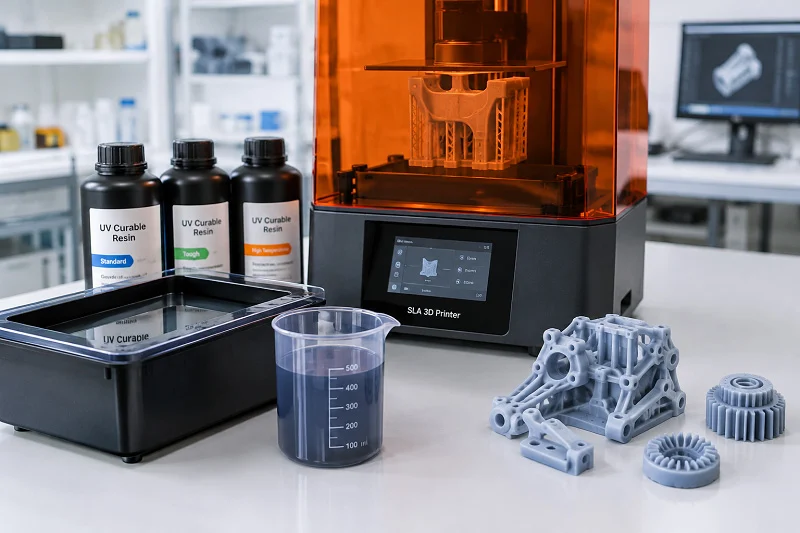
3D printing uses high-end medical metal powders such as titanium alloys, cobalt-chromium alloys, and medical stainless steel as raw materials. Through technologies like selective laser melting and electron beam melting, the materials are stacked layer by layer to form the shape.
3D printing does not require mold development and can quickly respond to personalized customization demands. The production cycle of single-piece and small-batch complex components is much shorter than that of traditional processes, which is in line with the development trend of medical precision and personalization.
During the metal 3D printing process, it is necessary to strictly control the powder purity, laser power, scanning speed, and layer thickness parameters to avoid defects such as pores, cracks, and residual stress.
After printing is completed, it needs to undergo heat treatment and hot isostatic pressing to eliminate internal stress in the components and enhance structural strength and stability.
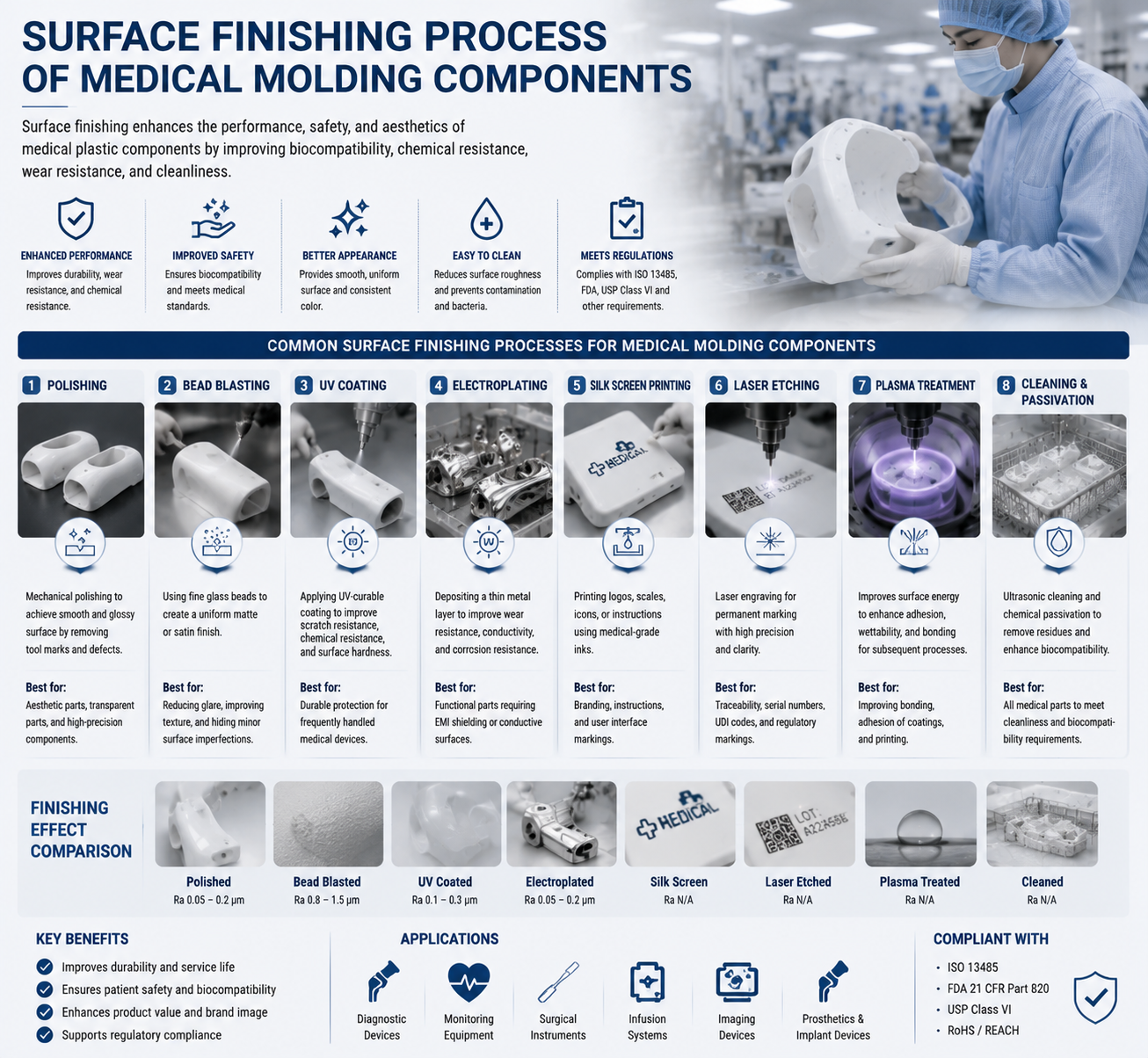
Surface Finishing process of medical molding components
Finishing is the final process in the production of medical molding components, directly determining the surface quality, dimensional accuracy, cleanliness, and usage safety of the components.
Medical components produced by different forming processes vary greatly in surface condition, structural characteristics, and application scenarios. It is necessary to scientifically select the precision processing plan in combination with the product’s purpose, material, precision requirements, and medical compliance standards to eliminate product scrapping and compliance risks caused by improper post-treatment.
For injection-molded medical plastics and silicone components, common finishing processes include dust-free polishing, mirror grinding, deburring, ultrasonic cleaning, sterilization treatment, etc.
For sheet metal and welded metal medical components, the fine processing mainly involves precise polishing, wire drawing, anodizing, and other procedures, which can enhance the corrosion resistance and oxidation resistance of the components while meeting the appearance cleanliness requirements of medical equipment.
For complex medical components printed on metal 3D, the precision processing is the most challenging. It is necessary to combine processes such as laser polishing, precision CNC milling, and sandblasting to eliminate printing layers, surface pores, and residual powder, and optimize dimensional accuracy and surface finish.
Implantable medical components need to undergo additional ultra-precision polishing and biological cleaning treatment to ensure that the surface is free of any impurities and cytotoxicity, fully meeting the standards for human implantable medical treatment.
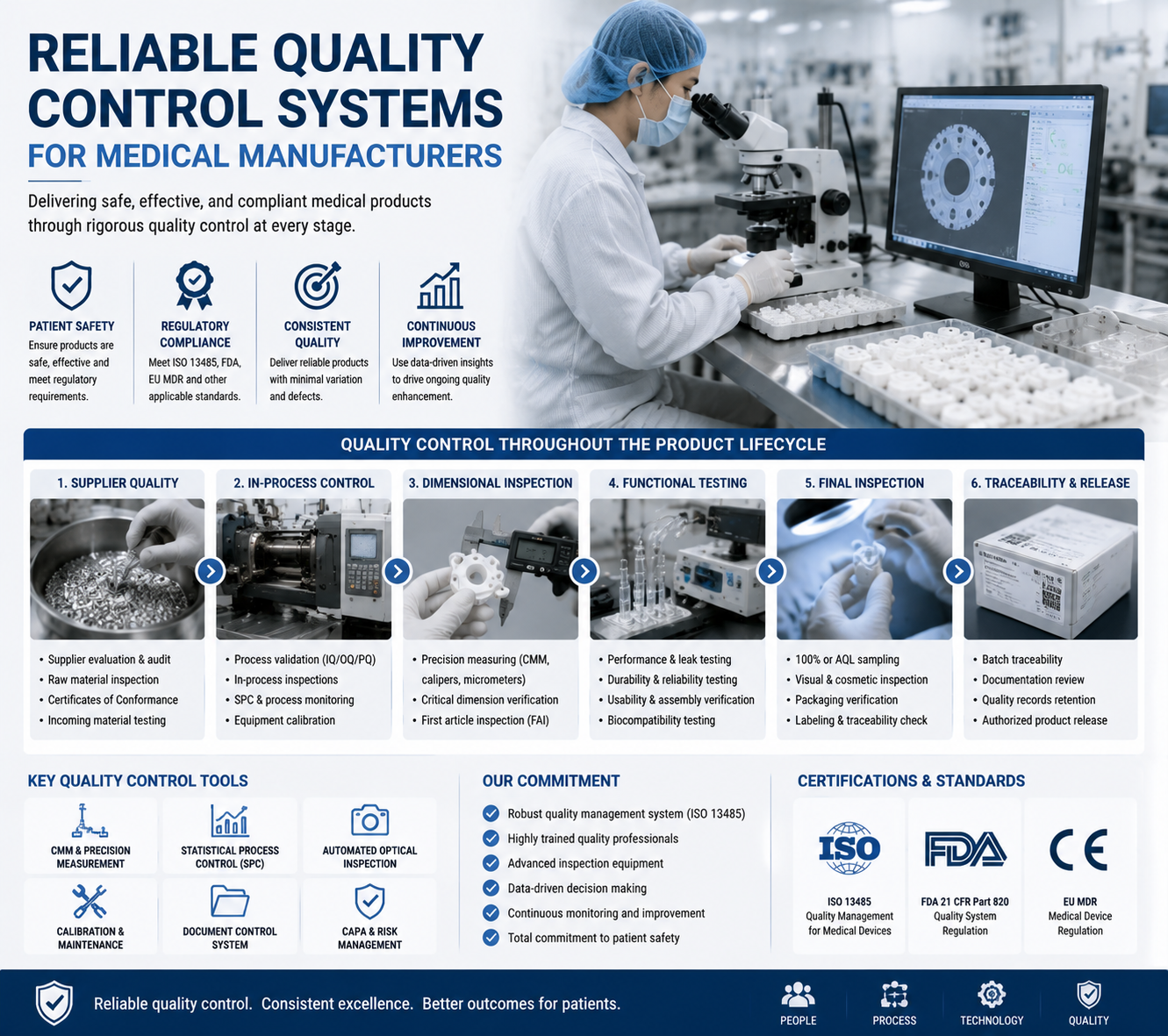
Reliable Quality Control Systems for Medical Manufacturers
Medical components are high-precision and high-risk medical products. Quality compliance is the core bottom line of production and operation. A complete and reliable quality system is the core foundation for ensuring that products stably meet standards and pass domestic and international medical certifications.
Medical manufacturing enterprises must strictly adhere to the ISO 13485 medical device quality management system standard, establish a standardized quality control system covering the entire process from R&D, design, procurement, production, processing, post-treatment, inspection, warehousing to delivery, and achieve full traceability, controllability, and source-tracing throughout the process.
Establish a standardized document control system, clearly define the operation norms, process standards, and inspection standards for each process, and formulate exclusive quality control details for different processes to eliminate production arbitrariness.
Secondly, implement strict control over access to raw materials. All medical raw materials and excipients must have medical-grade certification reports and biocompatibility test reports. Before being stored in the warehouse, strict spot checks must be conducted to prevent substandard raw materials from being put into production.
In the production process, Statistical process control (SPC) is implemented to monitor the fluctuations of process parameters in real time, predict batch quality risks in advance, and achieve preventive quality control.
At the same time, improve the equipment and personnel control mechanism. Workers must be certified to work, and regular specialized training on medical manufacturing norms, quality control, and compliance standards should be conducted.
It is also necessary to establish a complete product traceability system, recording the raw material batch, production equipment, process parameters, operators, and inspection data of each batch of products, to achieve full life cycle traceability.
In addition, regular internal audits and compliance self-inspections are carried out to continuously optimize the quality system, adapt to the updated requirements of domestic and international medical device regulations, and ensure that the enterprise has a stable and sustainable compliant production capacity.
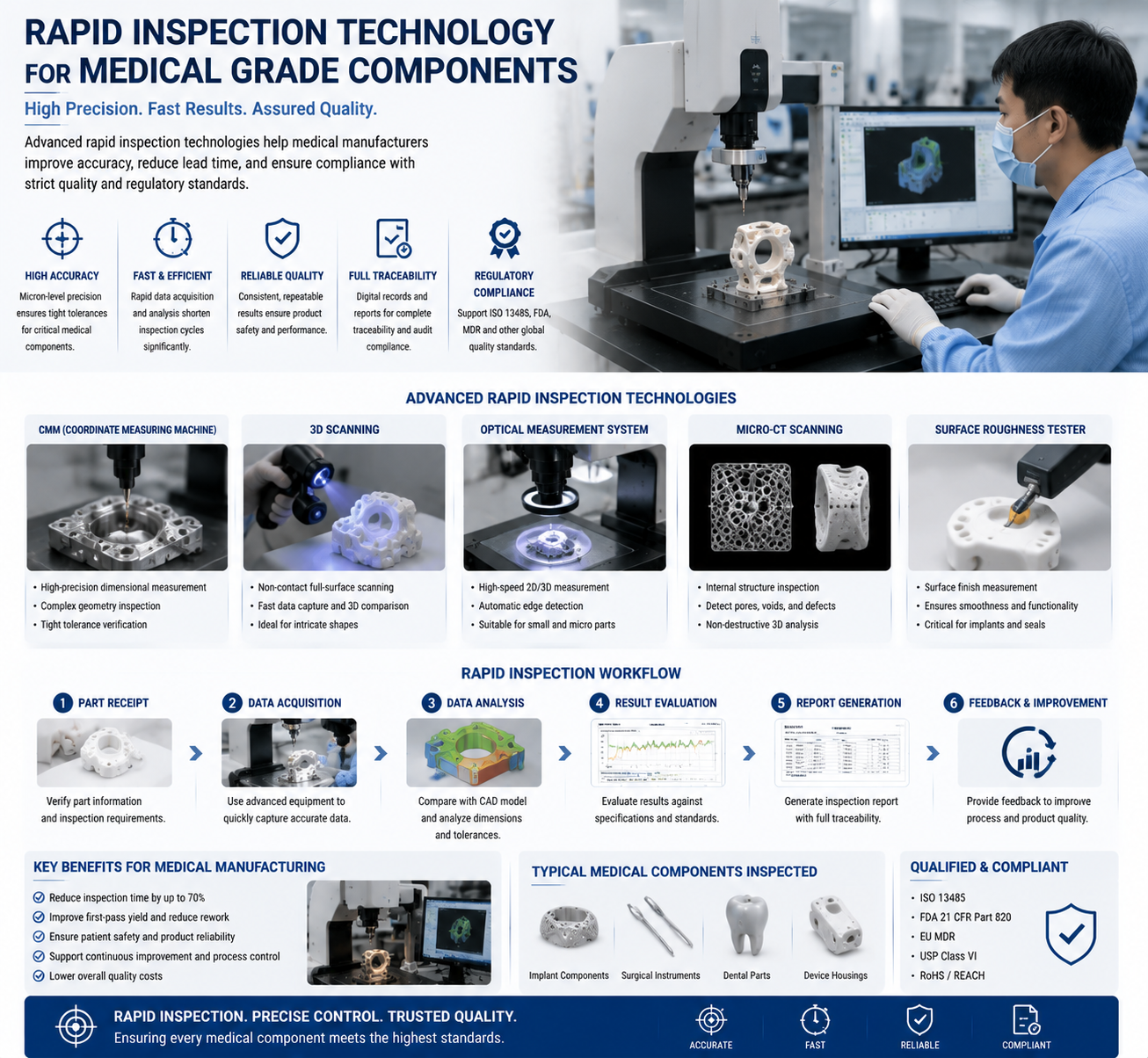
Rapid Inspection Technology for Medical Grade Components
Rapid quality inspection is a crucial link in the mass production process to control product quality, eliminate defective products, and ensure delivery efficiency. It can quickly complete all-round inspections of dimensional accuracy, appearance quality, performance indicators, and cleanliness without affecting the production rhythm, meeting the production demands of high-frequency mass production and rapid iteration of medical components.
Online rapid inspection relies on automated detection equipment to achieve real-time screening during the production process.
Through visual inspection systems, laser dimension detectors, online flatness testers, and other equipment, common problems such as appearance defects, dimensional deviations, and deformation flaws of components can be quickly detected. Single-item inspection can be completed in milliseconds, defective products can be removed in real time, and the basic quality of batch products can be effectively controlled.
For typical problems such as shrinkage and warping of injection-molded parts, deformation and weld defects of sheet metal parts, and surface pores of 3D printed parts, precise screening can be achieved through automated rapid inspection, significantly reducing the error of manual inspection.
Offline precision inspection conducts meticulous testing on high-precision and high-risk medical components. Relying on precision equipment such as three-coordinate measuring machines, roughness testers, and biocompatibility testers, it completes specialized inspections including micron-level dimensional accuracy testing, surface finish testing, and mechanical property testing.
All inspection data are recorded in real time, archived, and analyzed to form batch quality reports, providing data support for process optimization and quality traceability.
Conclusion
Modern medical component manufacturing is a systematic project that integrates multiple processes, requires high precision, and is subject to strong compliance constraints. From the pre-optimization of manufacturability design in the early stage, to the collaborative production of multiple processes such as injection molding, sheet metal, and 3D printing, and then to precision processing, full-process quality system control, and rapid quality inspection, every link affects the quality and clinical safety of medical components.
With the continuous upgrading of the medical industry, manufacturing enterprises need to constantly optimize the full-process technological system, integrate advanced manufacturing technologies and standardized quality control models, and continuously improve product precision and compliance levels, laying a solid manufacturing foundation for the innovative development of the high-end medical device industry.
Why choose Noble as your medical parts manufacturing partner
NOBLE is a Sino-British joint venture awarded by the government as a “National High-tech Enterprise”. We have two major business directions: “Smart Manufacturing” and “Care Products”. The “Smart Manufacturing” business specializes in providing customers with project support services, including parts machining and manufacturing.
More than 10 years of professional manufacturing and rapid prototyping experience. Our efficient team provides strong support for your new projects to 100% realize your requirements; Standardized management brings strict quality control of parts & products; Reasonable workflow gets lower cost with the same quality.
After years of hard work and development, NOBLE has gradually transformed from a precision parts machining and manufacturing enterprise with complete industrial chain supporting service capabilities to a service-oriented enterprise that provides full support for customers’ entire projects.
ISO 9001:2015 – Robust quality management for general manufacturing. Consistent processes. Documented control. Traceable inspection.
ISO 13485:2016 – Stricter quality standards for medical device parts. Rigorous process validation. Full traceability. Required for implantable and surgical parts.
FAQs
1. What certifications do exported medical parts need apart from ISO13485?
They should pass FDA registration and REACH hazardous substance inspection.
2、 How should manufacturers store unused medical-grade metal powder?
Keep them sealed under low-humidity surroundings away from oxygen.
Why can’t disposable medical parts be reused?
Internal microcracks form after sterilization and raise infection risks.
What common sterilization methods apply to metal medical components?
High-temperature steam sterilization and EO disinfection are widely adopted.
What factors affect the delivery cycle of customized medical components?
Material lead time and third-party biocompatibility testing mainly control it.