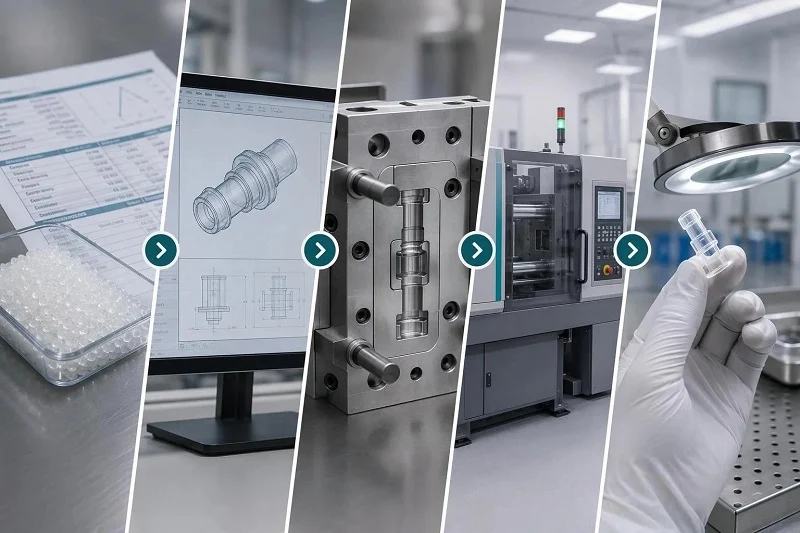
Medical injection molding is not a single manufacturing step. It is a chain of linked decisions — material, part design, tooling, molding environment and validation evidence — and each decision constrains the ones after it. A polymer chosen for autoclave exposure narrows the design window for wall thickness and draft; a tool cut for a prototype geometry fixes the process window that later has to be validated; a cleanroom class chosen by default rather than by contamination risk adds cost without adding protection.
This guide serves device developers, OEM engineers and procurement teams who need to move from concept to a validated molded component. It follows the order in which those decisions actually arrive: what medical injection molding demands beyond ordinary molding, how to select a polymer, how to design for small and tight-tolerance parts, how production is set up and controlled, and what quality evidence should accompany the parts. Requirements vary by device classification, contact category and market, so the standards referenced here are treated as frameworks to apply to a specific device — not as checklists to copy wholesale. Readers can move directly to the section matching their current stage, or read in sequence to see how the decisions connect.
What Medical Injection Molding Requires Beyond Standard Molding
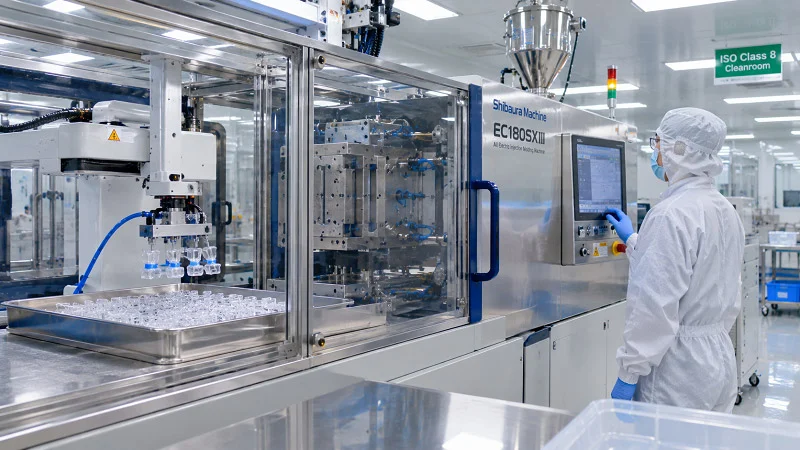
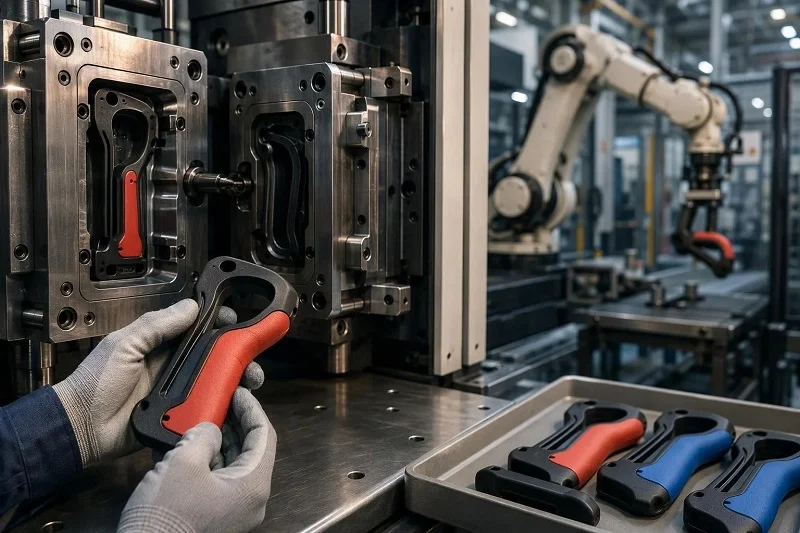
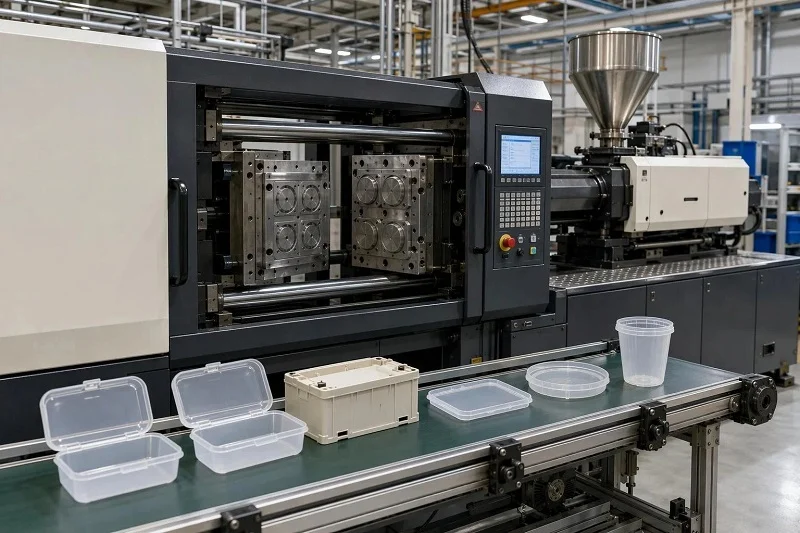
The molding cycle itself is unchanged: clamp the mold, inject molten resin, cool the part, eject it, and repeat. What changes in medical injection molding is the evidence attached to each of those stages. Material identity and lot must be documented before the resin reaches the barrel; process parameters must be established deliberately rather than tuned by trial and error; the molding environment must be controlled where contamination risk warrants it; and the whole system must be able to demonstrate, on request, that it consistently produces parts meeting specification. That expectation is what separates a medical program from an industrial one, and it is the thread running through the rest of this guide.
How Medical Molding Differs from Industrial Molding
Four practical differences recur. First, material documentation: the exact grade, not just the polymer family, is recorded and traceable by lot, because a supplier’s grade change can shift flow, shrinkage and sterilization response. Second, process validation: the process is qualified against objective evidence rather than accepted because the first samples looked acceptable. Third, cleanliness controls, applied where the device’s contamination risk justifies them rather than universally. Fourth, change control: resin, tool, machine or site changes are assessed and, where they affect the validated state, trigger revalidation. The molder is expected to produce this evidence, not merely conforming parts.
The Regulatory Framework a Molder Operates Within
The framework is layered, and each layer answers a different question. Quality management is governed by ISO 13485:2016, which sets requirements for the organization’s quality management system, with emphasis on risk-based decision making and supply-chain controls. In the United States, the FDA Quality Management System Regulation, effective February 2, 2026, amends 21 CFR Part 820 and incorporates ISO 13485:2016 by reference, harmonizing the FDA framework with the international standard. Biological safety is a separate layer, addressed through ISO 10993-1 and evaluated within a risk management process. Cleanliness, where relevant, belongs to contamination-control and cleanroom standards. Knowing which layer governs a question keeps the answer scoped: a QMS certificate says nothing about a specific material’s biocompatibility, and a material’s test data does not qualify a process.
Material Selection for Medical Injection Molding
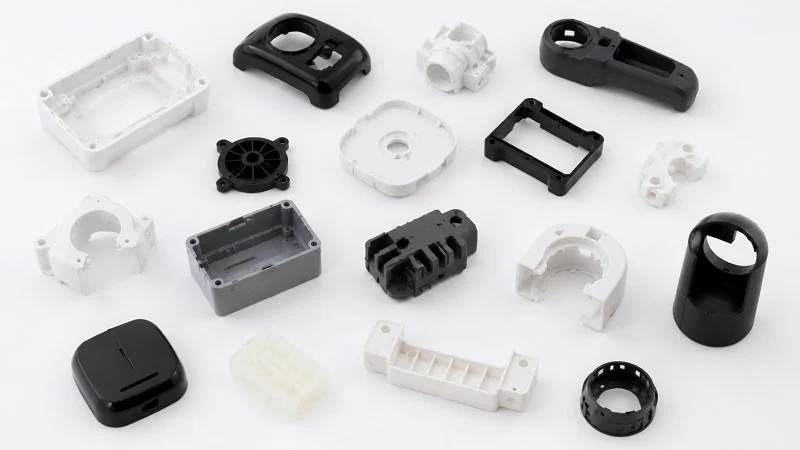
Polymer selection in medical injection molding follows a sequence rather than a preference: contact type and duration first, then sterilization exposure, then mechanical and chemical demands, then processing behavior, and finally documentation. Each step eliminates candidates, and the survivors are confirmed by testing rather than by datasheet alone.
Start With Contact Type and Duration
The device’s body-contact category — surface device, external communicating device or implant — combined with contact duration sets the biological evaluation endpoints. The FDA’s biocompatibility endpoints reference organizes these by limited, prolonged and long-term contact periods. ISO 10993-1:2018 restructured evaluation to sit within a risk management process aligned with ISO 14971, and the FDA’s September 2023 guidance describes a risk-based approach in which testing is not always required.
Match the Polymer to the Sterilization Method
Sterilization is where many otherwise suitable polymers fail. Steam autoclave cycles typically run 15 to 30 minutes at 121 °C to 134 °C; per Solvay’s sterilization compatibility overview, PP, PA and PC suit fewer than 100 cycles, while PPSU, PEEK and PAEK grades withstand more than 1,000 cycles without significant loss of mechanical properties. Radiation, typically 20 to 40 kGy, can shift color and mechanical properties, though most plastics can be stabilized against color change. Vaporized hydrogen peroxide plasma suits dry, compatible geometries. Cycle counts are grade-specific, so confirm against the actual resin.
Weigh Mechanical, Chemical and Processing Requirements
Chemical resistance, stiffness, impact, lubricity, clarity and moldability then narrow the field. Semi-crystalline and amorphous polymers behave differently in shrinkage, chemical resistance and stiffness, and resistance is a property of the polymer itself — additives and reinforcements do not significantly change it. HCLTech’s material selection paper frames the step as translation: express design requirements as constraints and objectives, narrow to two or three candidates, and settle the final choice by testing.
Confirm Documentation and Traceability
Resin should arrive with grade identity, lot traceability, certificates of analysis and a commitment to notify the customer of formulation changes. This documentation is not administrative overhead; it is the first item in the evidence package a regulated device will eventually need, and it is what allows a material-related issue to be traced and contained. Confirm these commitments before the first production run, not after.
Design Considerations for Medical Injection Molding
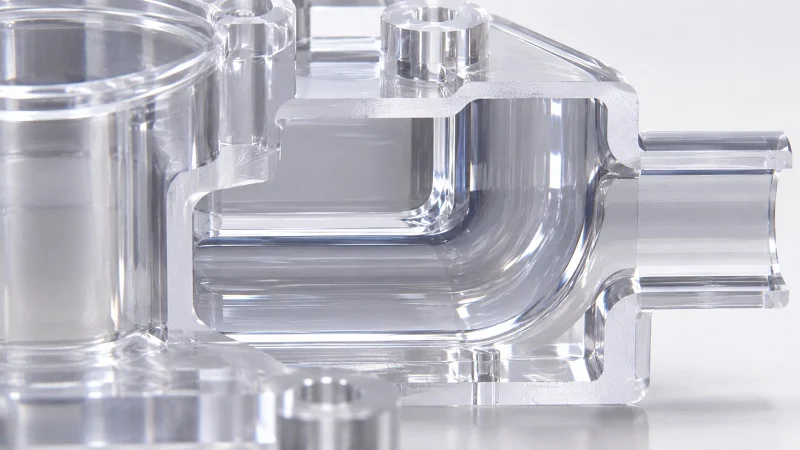
Design for medical injection molding applies the same molding fundamentals as any other part, under harder constraints: small features, tight tolerances, single-use economics and, often, exposure to sterilization and cleaning. Most defects trace back to geometry decisions made before the tool is cut, which is why design review is cheaper than tool correction.
Design Rules That Prevent Common Molding Defects
The recurring defects and their design causes are well catalogued in a publicly available injection molding design guide: sink marks from thick walls and heavy bosses, warping from uneven wall thickness and cooling imbalance, voids from thick sections cooling unevenly, flash from poor shutoffs, short shots from thin walls and long flow paths, and jetting from resin entering open space too quickly. The underlying principles are consistent: uniform wall thickness, gradual transitions, ribs instead of solid mass, adequate draft and generous radii.
Designing Small Medical Parts and Tight-Tolerance Features
Small parts concentrate the difficulty. Flow length relative to wall thickness limits how far melt reaches before freezing, gate location drives orientation and jetting risk, and multi-part assemblies accumulate tolerance stack-ups. Scientific molding addresses this by establishing a validated, narrow process window from polymer physics rather than trial and error, which protects nominal mating clearances across production lots.
Designing for the Intended Environment
Geometry and material must be designed together for the environment the part will see. Reusable devices need shapes that drain, dry and tolerate repeated cleaning chemicals without traps that retain residue; single-use devices can be optimized for cost and function instead. Features that affect cleanability — blind holes, tight crevices, textured surfaces without draft — should be resolved at design stage, because they are expensive to change once the tool exists.
Production Considerations in Medical Injection Molding
Production in medical injection molding follows a sequence: tooling strategy, process characterization, environment control and the transition to validated mass production. Each stage locks in constraints for the next, so the decisions are best made with the eventual validation evidence in mind.
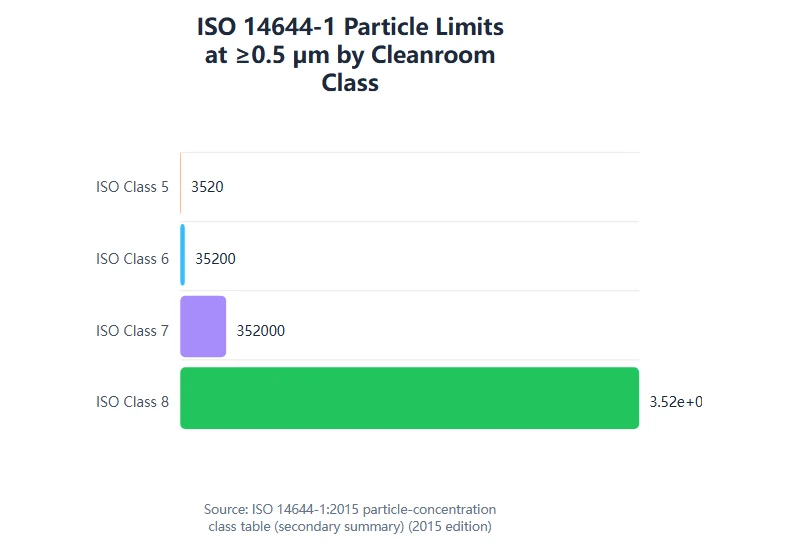
ISO 14644-1:2015 maximum allowable particle concentration at ≥0.5 µm by class. Each class permits ten times the particles of the class below. Classification also depends on occupancy state (as-built, at-rest or operational), so a quoted class is only meaningful with the state it describes.
Tooling Strategy from Prototype to Production
Tooling choice follows the development stage. Aluminum tooling can support early validation through production stages, as Protolabs describes, while steel tooling is typically reserved for higher-volume production where tool life and cycle consistency matter more. The tool design — gate location, cooling layout, parting line, shutoffs — fixes the process window that later has to be validated, so tooling decisions are quality decisions.
Process Characterization and Scientific Molding
Before production release, a qualified molder runs structured characterization studies — a viscosity curve to find the stable processing range, a design of experiments to identify which variables actually affect quality, and shrinkage and cooling analysis to predict dimensional behavior. The expectation is that the molder can explain how each study was conducted and provide the underlying data, which then becomes objective evidence for the validation stage that follows.
Cleanroom Requirements and ISO 14644-1 Classification
A cleanroom is warranted when the device’s contamination risk justifies it — typically where parts contact sterile fluids, tissues or the bloodstream, or where the device is assembled and packaged in a controlled state. Class selection follows that risk assessment rather than a default. ISO 14644-1:2015 defines the classes by particle concentration; at ≥0.5 µm, ISO Class 7 permits 352,000 particles/m³ and ISO Class 8 permits 3,520,000, each class ten times the one below. Note that classification also depends on occupancy state — as-built, at-rest or operational — so a quoted class means little without the state it describes.
Scaling from Prototype to Validated Mass Production
The handoff from prototype to validated production follows a sequence: freeze the design, qualify the tool against the frozen drawing, validate the process, then monitor it in routine production. Each step depends on the previous one being closed out, because a design change after tool qualification reopens the validation. Treat the sequence as a gate structure rather than a schedule — the question at each gate is whether the evidence exists to proceed, not whether the calendar allows it.
Validation and Quality Evidence for Medical Injection Molding
Validation is where a medical injection molding program proves it can do what it claims. The distinction that matters is between inspecting output and demonstrating that a controlled process reliably produces conforming parts; regulated device programs generally require the latter for features affecting fit or function. The evidence should exist before production starts, be traceable to specific tools and material lots, and remain live as the process ages.
Process Validation: IQ, OQ and PQ
The three qualification stages build on one another. Installation qualification (IQ) confirms equipment, utilities and instrumentation are installed as specified and calibrated. Operational qualification (OQ) challenges the process across its intended operating range to establish the window that produces conforming parts. Performance qualification (PQ) then runs the process under routine conditions to show it consistently meets specifications. Each stage produces its own protocol, data and report, and the completion of a satisfactory OQ should permit a formal release of the PQ — a written authorization rather than an informal go-ahead.
Verification, Validation and Ongoing Monitoring
Verification means testing or inspecting output — reliable for processes whose result can be checked completely, but costly when it means testing every device. Validation instead demonstrates that a process operated within specified limits consistently produces conforming product. Validation is also not a one-time event: changes to specifications, methods, equipment, key components or location can trigger revalidation, and periodic revalidation may be defined in the validation plan even when nothing has changed. As process validation guidance puts it, validation is never complete for long — performance must be monitored and maintained, and revalidation requirements belong in the original approval.
The Evidence Package a Molder Should Provide
A device developer can reasonably ask any molder for the following, and should expect a clear answer on each:
- QMS certification and scope — which standard, which certificate, and whether the scope covers molding of the relevant device type.
- Material traceability — grade identity, lot records and certificates of analysis linking resin to molded lots.
- Process characterization data — the studies behind the process window, with the underlying data rather than conclusions alone.
- Validation protocols and reports — IQ, OQ and PQ documentation for the specific tool and process.
- Change notification — a commitment to inform the customer before material, process, tooling or site changes.
A supplier that can produce this package is demonstrating the evidence trail a regulated device will eventually need.
Conclusion: Building a Medical Injection Molding Program That Holds Up
Medical injection molding holds up when material, design, production and validation are treated as one connected chain rather than four separate workstreams. Each decision should be made with the evidence it will eventually have to produce: a polymer chosen for its contact category and sterilization exposure, a part geometry that fills and ejects cleanly at small scale, a tool and process window that were characterized rather than tuned by trial and error, and a validation package that documents all of it and stays under change control.
That logic is what separates a program that passes its first article inspection from one that still meets specification two years into production. The failure mode is rarely a single bad choice; it is a decision made early without knowing what it would later need to prove. A material picked from a datasheet without sterilization testing, a wall thickness that only works at one set of process conditions, or a tool cut before the design was frozen each create a gap that surfaces later, when correcting it is expensive.
Where you start depends on your stage. If the device concept is still open, begin with contact type and duration, then work through sterilization compatibility and mechanical demands before committing to a grade. If the design is drawn but not tooled, the defect and tolerance guidance is the more useful entry point. If you are preparing for production release, focus on process characterization, cleanroom classification and the evidence package your validation plan will require. If you are already in production and seeing drift, the scientific molding and revalidation material explains where to look.
For projects within its stated scope, NOBLE supports medical injection molding work as a China-based contract manufacturer certified to ISO 9001:2015 and ISO 13485:2016, offering full-scope service from design through assembly and support for both prototyping and volume production. Bring the stage you are at and the evidence you will need to produce, and the earlier sections give you the questions to ask.
Choosing NOBLE to Support Your Medical Injection Molding Project
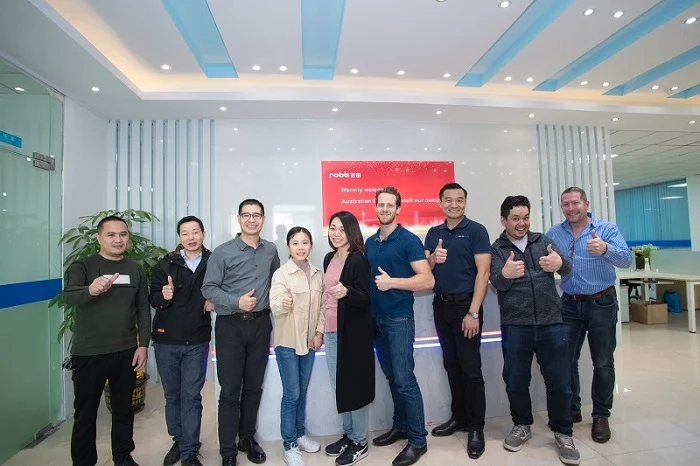
NOBLE is a China-based contract manufacturer with ISO 9001:2015 and ISO 13485:2016 certification, offering full-scope service from design through assembly rather than production alone. For a medical injection molding project, that combination maps directly onto the decisions this guide has walked through: material and design support at the front, continuity from prototype to volume production in the middle, and a quality system aligned with the evidence expectations described above.
Certifications and Quality System Alignment
The two certifications signal different things. ISO 9001:2015 covers quality management fundamentals — documented processes, corrective action, management review and continual improvement. ISO 13485:2016 is the medical device quality management standard, with greater emphasis on risk-based decision making and supply-chain controls. Together they indicate that the quality system a medical injection molding project depends on is documented and auditable, which is the foundation the validation evidence in the previous section rests on.
Full-Scope Service from Design to Assembly
NOBLE’s service span runs from design support through assembly, not just molding. In a regulated project, every handoff between separate suppliers is a place where specifications, tolerances and documentation can drift. Keeping design, tooling, molding and assembly within one organization reduces the number of interfaces a device developer has to manage and keeps the evidence trail continuous from the design intent to the finished assembly.
Prototyping Through Volume Production
NOBLE supports both prototyping and mass production, which matters for the transition described earlier in this guide. A prototype that is molded under conditions unrelated to production tells you little about how the part will behave at volume. Working with a manufacturer that spans both stages gives the design freeze and tool qualification a realistic basis, and keeps the process knowledge built during prototyping available when production begins.
FAQs About Medical Injection Molding
These are the questions that recur most often when a device team begins a medical injection molding program. Each answer stands alone, but all of them trace back to the same principle: decide with the evidence the device will eventually need to produce.
How Do I Choose a Polymer for a Medical Part?
Work through the sequence: establish contact type and duration to set the biological evaluation endpoints, identify the sterilization method the device will face, then weigh mechanical and chemical demands and processing behavior. Narrow to two or three candidates and settle the final choice by testing — a datasheet alone does not confirm suitability for a specific device.
Which Sterilization Method Suits Which Polymer Family?
Steam suits PPSU, PEEK and PAEK grades for repeated cycles; PP, PA and PC tolerate only a limited number of steam cycles. Radiation can shift color and mechanical properties, though most plastics can be stabilized against color change. Vaporized hydrogen peroxide is limited by moisture-absorbing materials and small lumens. Cycle counts are grade-specific, so confirm against the resin supplier’s data for the exact grade.
What Design Features Cause Defects in Small Medical Parts?
Thick walls and heavy bosses cause sink marks and voids; uneven wall thickness causes warping; poor shutoffs cause flash; thin walls and long flow paths cause short shots; and resin entering too quickly into open space causes jetting. The fixes are consistent wall thickness, gradual transitions, ribs instead of solid mass, adequate draft, generous radii and gate placement that controls fill.
What Validation and Quality Evidence Should a Molder Provide?
Ask for QMS certification and its scope, material traceability records, process characterization data, IQ/OQ/PQ protocols and reports for the specific tool, and a change-notification commitment. A supplier that can walk through how each study was conducted — not just present conclusions — is demonstrating the evidence trail a regulated device will need.
When Is a Cleanroom Needed, and How Is the Class Chosen?
A cleanroom is needed when the device’s contamination risk justifies it — typically where parts contact sterile fluids or tissues, or are assembled and packaged in a controlled state. The class follows that risk assessment, not a default; ISO 14644-1:2015 defines the particle limits, with ISO Class 7 permitting 352,000 particles/m³ at ≥0.5 µm and Class 8 ten times that.
How Does Prototyping Transition to Validated Mass Production?
The transition runs through four gates: design freeze, tool qualification, process validation, and production monitoring. Prototype tooling proves geometry and assembly; production tooling is then qualified, the process is validated against its specified limits, and routine monitoring keeps it inside that window. Change control ties the sequence together, because any later change to material, tool or process reopens the evidence.